Wearable Tech
Hypershell Exoskeleton Pro Review: Wearable Assistance for Walking, Hiking and Cycling
A wearable lower-body exoskeleton that claims up to 30% more power. We look at what it actually delivers on foot, on stairs, and on the bike.
Introduction
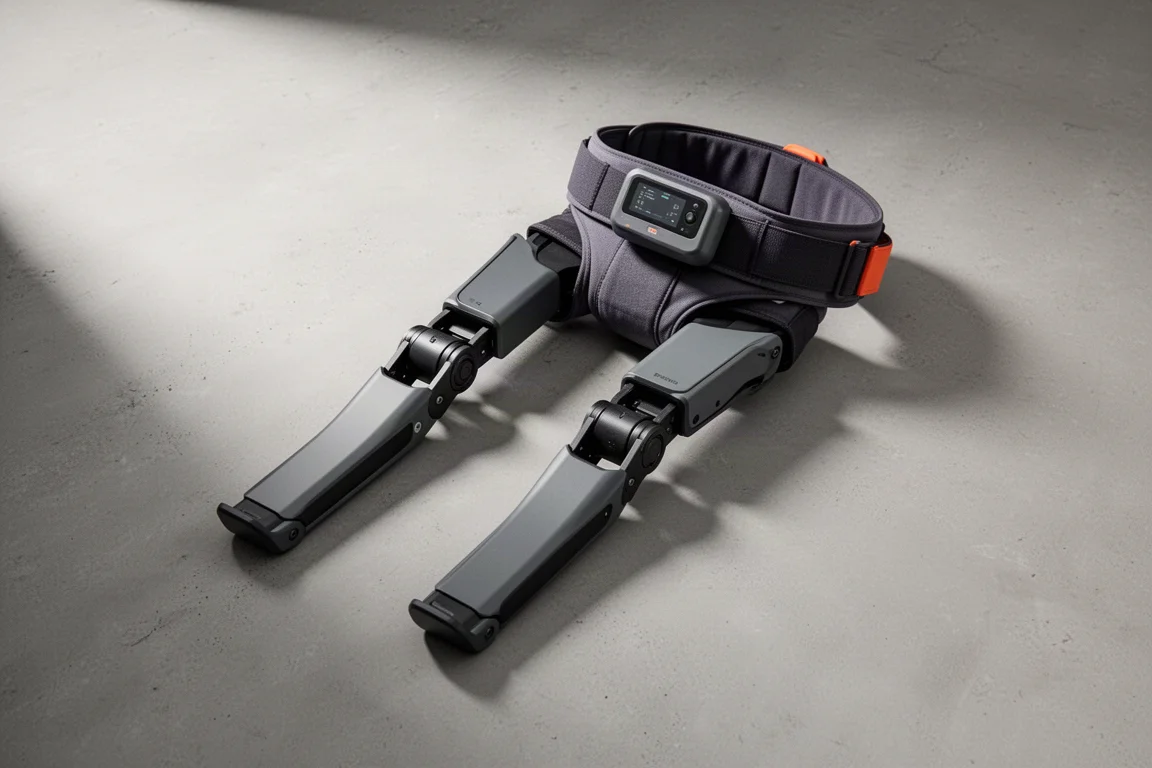
The Hypershell Exoskeleton Pro is a wearable lower-body device that straps around the waist and legs and is designed to give the wearer a measurable push with every step. The headline claim is bold: up to 30% more power and up to 800 W of assistance in its most aggressive setting. That is the kind of number that makes people ask whether this is a genuine rival to an electric bike or simply an expensive novelty.
The Pro version is priced at around £860, and it is intended for far more than cycling. Walking, hiking, climbing mountains and riding a bike are all listed as use cases, which is exactly why it deserves a closer look. Most assistance products do one job. This one is trying to follow you across several.
Setup runs through a companion app, and the unit has three main operating modes: a transparent mode that leaves your natural movement alone, an eco mode that adds adaptable power for moderate activity, and a hyper mode that delivers the maximum assistance the hardware can offer.
Who This Is For
The clearest fit is someone who wants help across multiple activities rather than in one narrow discipline. If you want to walk up a hill in the morning and ride in the afternoon, a single device that covers both is a genuinely different proposition from an electric bike, which only helps when you are actually on the bike.
It also makes sense for riders who want a boost away from a standstill. On a bike, the assistance gives you an extra shove when pulling away from traffic lights or when speed has dropped on a gradient, which is where a small amount of help tends to feel most useful.
It is a less obvious match for riders whose main goal is speed or efficiency over long distances. For pure cycling performance, an electric bike or a conversion kit does the job more comfortably and more predictably, even if the price is higher in many cases.
Main Strengths
The most convincing part of the experience is how quickly the assistance registers. The device uses adaptive motion recognition and identifies what you are doing, with profiles for walking uphill, going upstairs, gravel, running, race walking, downhill, going downstairs, cycling and mountain terrain. It reports the current activity as you move, and the change in feel between modes is immediate and obvious.
In the lightest setting it is barely noticeable, which is the point. Step into eco mode and the unit starts lifting the leg for you on the way up. The descent feels completely normal, and you still have to initiate the movement yourself, but once you do, the leg comes up with noticeably less effort. Mobility stays surprisingly good, and long strides are still possible.

On stairs the benefit is easier to feel than anywhere else. The device helps pick the leg up on each step, and taking two steps at a time appears to be roughly the limit of what it will support. It also pulls the opposite leg back down as you lift the other, which takes some adjustment, and it stops pushing once it recognises that you no longer want the help.
Hyper mode is where the strongest assistance lives. Walking suddenly requires noticeably less energy, and the unit reacts to movement in a way that feels almost like being carried forward. In eco mode it offers adaptable power for moderate activities, and in hyper mode the effect is much more pronounced.
Things to Consider Before Buying
The physical fit is the first practical issue. The straps need to be done up very tight around the waist for the assistance to work properly, and that tightness makes deep breaths difficult. On a long ride or a long climb, that is a real limitation rather than a minor annoyance.
The device also sits over your pockets, so there is nowhere convenient to carry a phone, a gel or keys. Anything you would normally keep in a jersey pocket needs another home.
Heat builds up around the waist area because the assembly is not very breathable. Sweating under the belt becomes noticeable fairly quickly, and that is not ideal over longer distances.
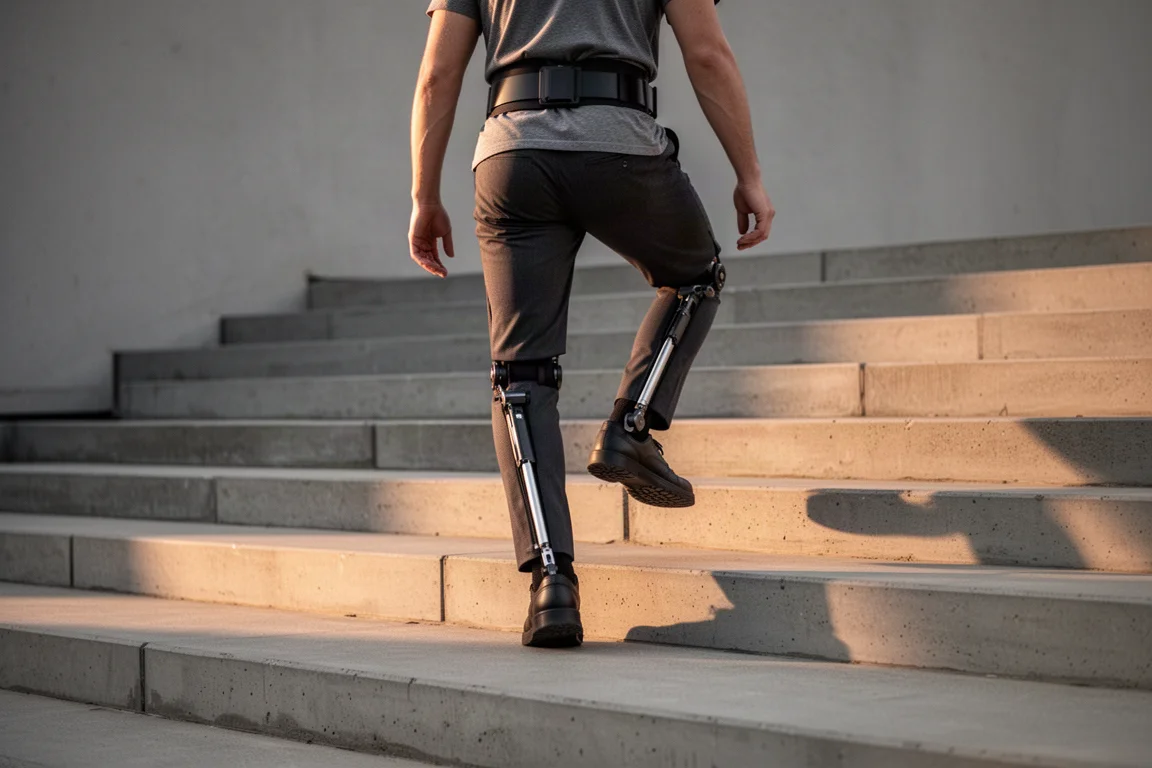
The assistance claim is worth treating with some caution. The quoted figure of 800 W does not match what you feel in practice. Measuring against an electric bike with roughly 350 W of assistance, that bike is still clearly faster, which suggests the real-world contribution in hyper mode is closer to 200 W at the very top end.
There is also the question of how this fits into rules for assisted cycling. In the UK, pedal assistance on an electric bike cuts out at 25 km/h, and it is not clear whether a wearable device that adds power to your legs falls inside or outside that framework. That is worth resolving before committing, particularly if you plan to use it on the road regularly.
Assistance on the Bike
On the bike, the transparent mode leaves you to ride exactly as normal, and the difference in effort under eco mode is immediate. Even at a very gentle pedal, the bike keeps moving at a pace that does not match the input going through the cranks. Switching to hyper mode increases that effect sharply and encourages a faster and faster cadence.
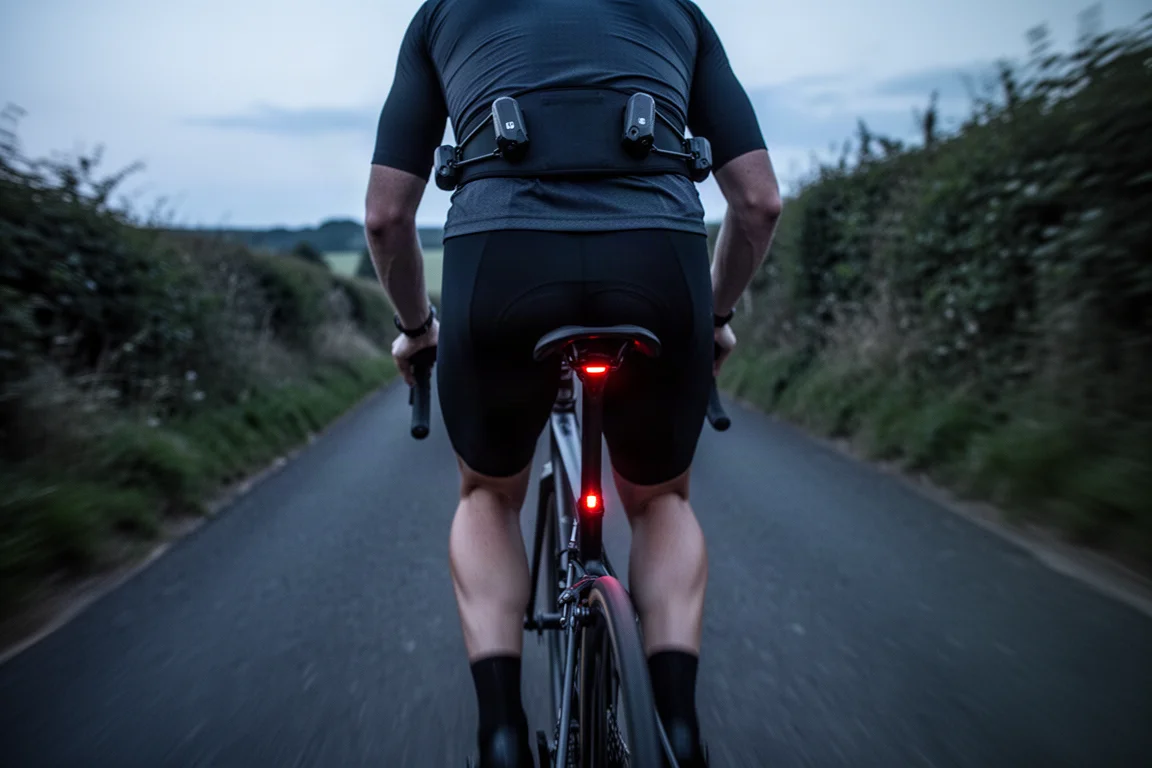
There are limits. Shift down a gear and the resistance drops away, so the assistance has less to push against and becomes less effective. Turning around or moving in a way the sensor reads as a step can produce an unexpected nudge upward, though it does back off once it understands the movement was not a step. Away from a traffic light, though, the extra shove is exactly the kind of help that makes the device feel purposeful.
Buying Advice
The honest framing is this: if your only goal is to ride faster or further with less effort, an electric bike or a conversion kit is the better tool. It is more comfortable, more predictable, and works with the bike rather than around your waist.
Where the exoskeleton earns its place is versatility. It helps on foot, on stairs and on hills, and it brings that same assistance onto the bike when you want it. Nothing else in this price bracket follows you from a hike to a ride. If you want one device that covers all of it, the value case is much stronger.
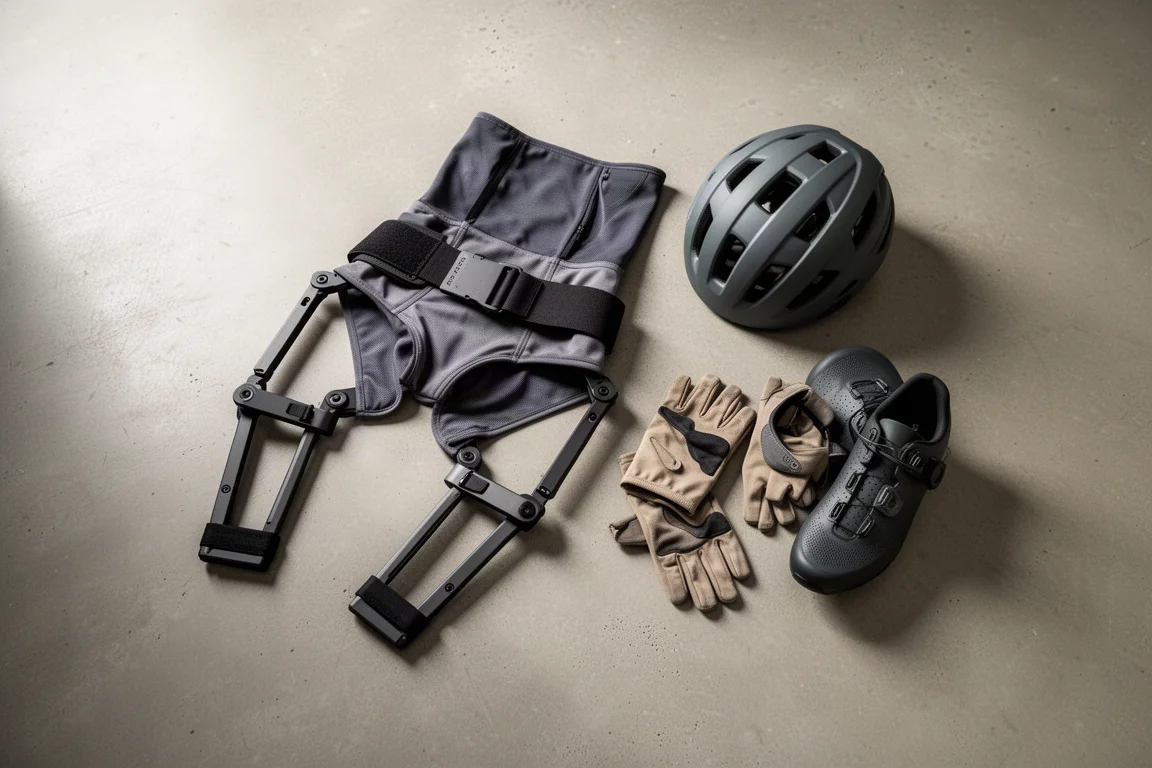
Before buying, decide how much of your riding happens on roads and how the local rules apply to wearable assistance. Then think about breathability and pockets, because both affect how often you will actually wear it. This is interesting technology that works, but it is not yet a finished answer for serious cyclists. As a first attempt at a genuinely useful wearable, it is compelling, and it is easy to imagine a version a few years from now that is hard to argue with.
Conclusion
The Hypershell Exoskeleton Pro does what it claims at a basic level: it adds assistance to your movement, and it does so across walking, climbing stairs and riding. The assistance is real, the modes are clearly distinct, and the range of recognised activities is broader than most buyers would expect.
The trade-offs are equally real. The harness is warm and restrictive, the waist straps limit deep breathing, pockets are covered, and the assistance is well below the headline figure. For cyclists, an electric bike remains the more comfortable and more effective option. For anyone who wants help on foot and on the bike from the same device, this is a genuinely interesting proposition and a strong signal of where wearable assistance is heading.
Product link
View more details for Hypershell Exoskeleton Pro
This product is mentioned in the review. Check the specifications, options, and compatibility before buying.
View more details for Hypershell Exoskeleton ProFurther reading
Related Reviews
Wearable Tech
Triathlon Wearable Tech Guide: Eight Devices Worth Understanding
A practical tour of eight wearable devices for triathletes, from swim goggles with in-lens metrics to core temperature sensors, portable metabolic testing, and recovery trackers.
Hi-Fi Speakers
Acoustic Energy AE1 40th Anniversary Review: A Modern Take on a British Classic
A compact standmount that revives a 1980s favorite with all-new parts, a warm mid-centric balance, and a price of £1,499 per pair.
Studio Monitors
ADAM Audio A8H Review: A Three-Way Studio Monitor That Also Knows How to Have Fun
A three-way active studio monitor with an 8-inch woofer, a handmade AMT tweeter, and two distinct tunings, the ADAM Audio A8H aims to satisfy both critical work and everyday listening.