Studio Monitors
ADAM Audio A8H Review: A Three-Way Studio Monitor That Also Knows How to Have Fun
A three-way active studio monitor with an 8-inch woofer, a handmade AMT tweeter, and two distinct tunings, the ADAM Audio A8H aims to satisfy both critical work and everyday listening.
Introduction
Studio monitors are usually sold on one promise: accuracy. The ADAM Audio A8H makes a slightly different pitch. It is a three-way active loudspeaker built for revealing, neutral monitoring, and it also carries a second voicing designed for the simple pleasure of listening. At around $3,000 per pair, it sits in serious territory, so the question is whether one pair of speakers can genuinely cover both jobs.
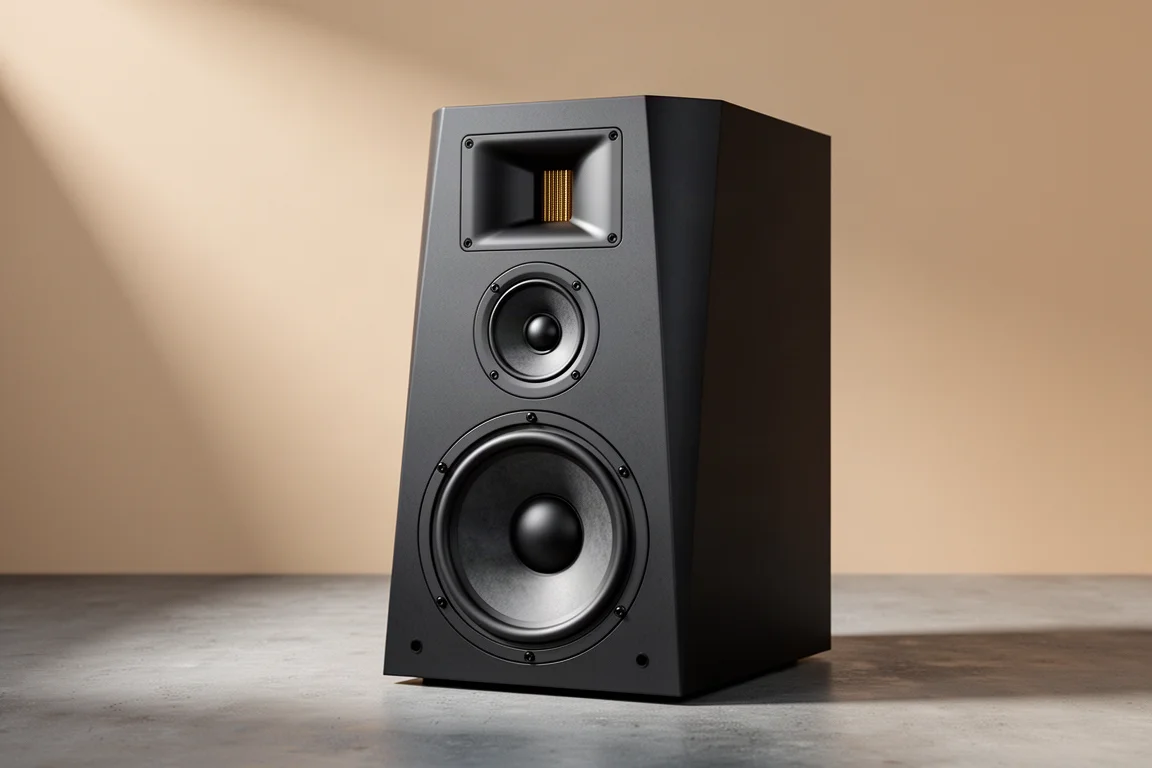
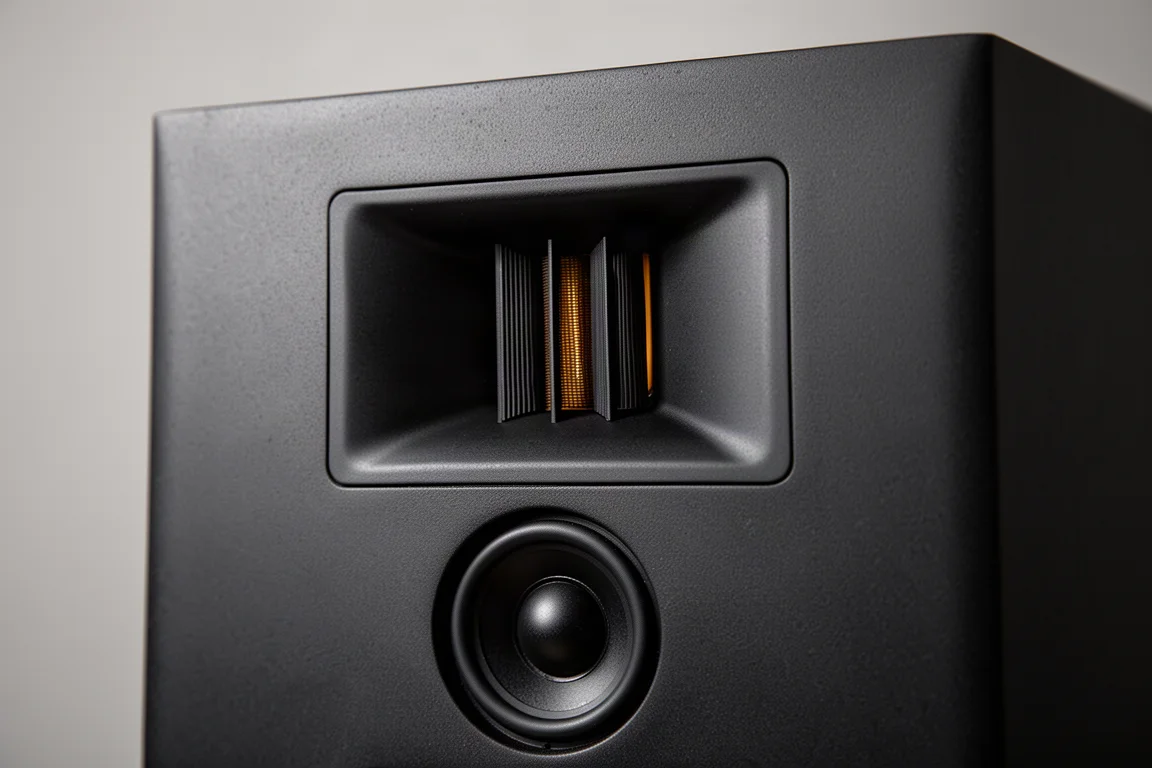
Physically, the A8H pairs an 8-inch multi-layer mineral fiber woofer with a 3.5-inch midwoofer and the company’s handmade AMT tweeter, which ADAM Audio calls X-ART. Each driver has its own dedicated internal amplifier: 15 watts of class AB for the tweeter, 55 watts of class AB for the midwoofer, and 200 watts of class D for the bass driver. A single port sits on the front of the cabinet.
Who the ADAM Audio A8H Is For
The A8H is aimed at two overlapping audiences. The first is studio engineers and producers who want a transparent, revealing monitor for editing, mixing and critical listening. The second is anyone building a high-quality desktop or room system who wants that same accuracy but does not want to be punished by it.
The cabinet gives you options. The speaker can be positioned vertically or horizontally, and the waveguide can be unscrewed and rotated so the tweeter sits correctly in either orientation. The ADAM Audio logo is the reference point here: it should always read horizontally, which confirms the waveguide is aligned properly.
Construction is MDF with a vinyl wrap and painted front baffles, and the baffle edges are angled slightly on both sides to reduce baffle diffraction while giving the otherwise plain box some character. The result is a clean, purposeful studio look that does not draw attention to itself.
Main Strengths
Neutral Accuracy Without the Fatigue
In its Pure setting, the A8H is intended to be the most neutral and analytical voicing, the one meant for dissecting tracks. The reported frequency response runs from 34 Hz to 41 kHz, with 34 Hz as the F3 point. That is a strong figure for a three-way speaker of this size, and the low end holds up in practice: bass reaches down to roughly 30 Hz or lower with room gain and placement, to the point that a subwoofer does not feel necessary.
What stands out is that this neutrality does not arrive with the brightness or leanness that some studio monitors use to sound revealing. Detail retrieval is high without becoming fatiguing over long sessions, the bass stays controlled, textured and punchy rather than muddy or boomy, and the midrange keeps instruments with proper body and weight. The highs extend with fine micro-detail and stay balanced.
That balance matters for long working sessions. A monitor that sounds impressive for twenty minutes but wears you down after two hours is a poor tool, and the A8H avoids that trap while still exposing problems in a mix.
The UNR Setting: More Bass, Still Controlled
The second voicing is UNR, a more entertaining tuning intended for pleasure rather than accuracy. Switching from Pure to UNR produces an immediate, substantial lift in bass and a modest lift in the treble. The bass increase is the headline: it is generous and genuinely enjoyable, yet it stays well controlled with no boominess or muddiness creeping in. For anyone who likes a fuller low end, this is a compelling setting.
The treble shift is subtler. It moves slightly forward but does not become bright, and it remains comfortable to listen to even with modern, loudly mastered recordings.
Notably, neither setting is brutally unforgiving. Poor recordings are revealed for what they are, but they are not exaggerated or made unlistenable, while well-recorded material clearly stands apart. The AMT tweeter here does not follow the typical character of some ribbon designs: it is neither unusually airy and extended nor lean and snappy, but it delivers strong micro-dynamics and detail inside a full, room-filling sound.
Driver Integration and a Stable Center Image
The most impressive technical achievement is coherence. Despite using three separate drivers, the A8H behaves like a single point source, with seamless driver integration and phase coherency across the range. The HPS waveguide around the tweeter is designed to limit the narrowing directivity, or beaming, that high frequencies otherwise develop.
The practical benefit is a phantom center that holds its position even when you move left or right, or walk around the room. Off-axis behavior is strong enough to keep imaging and separation intact, and instruments remain easy to pick out with pinpoint placement. Soundstaging stays largely within the plane of the two speakers rather than wrapping around the listener, but layering and depth are excellent, with vocals and instruments never crowding each other and depth extending well past the screen or the wall behind it.
Things to Consider Before Buying
There are a few honest caveats. Like almost every active or powered speaker, the A8H emits a faint hiss in a very quiet room when nothing is playing. It is the quietest such noise encountered among comparable designs, and it disappears as soon as anything plays, but it is audible if you leave the speakers powered on for long periods in a silent space.
The rear panel carries XLR and RCA inputs, along with an AC socket, a power switch and a per-channel volume dial. XLR is the sensible choice for studio use or long cable runs. The rest of the back panel is where the real flexibility lives: bass, desk, presence and treble controls act as room adaptation EQ. ADAM Audio publishes recommended starting points for different scenarios, but every room and setup differs, so treat those recommendations as a baseline and fine-tune by ear or with measurement tools if accuracy is the priority.
Room Adaptation, Software, and Setup
Registering the product on My ADAM Audio brings a 5-year warranty along with access to A Control, the companion software that mirrors the rear-panel settings so you do not have to reach behind the speaker every time you want to change something. The catch is that both speakers must be connected with an ethernet cable, and Windows users need to install Bonjour.
Two further calibration options push things deeper. An advanced EQ mode lets you shape the response yourself, and SoundID preference by Sonarworks measures the in-room response and corrects it, similar in spirit to calibrating a television. Activating either of these moves the speaker out of Pure or UNR and into the EXT setting on the back panel.
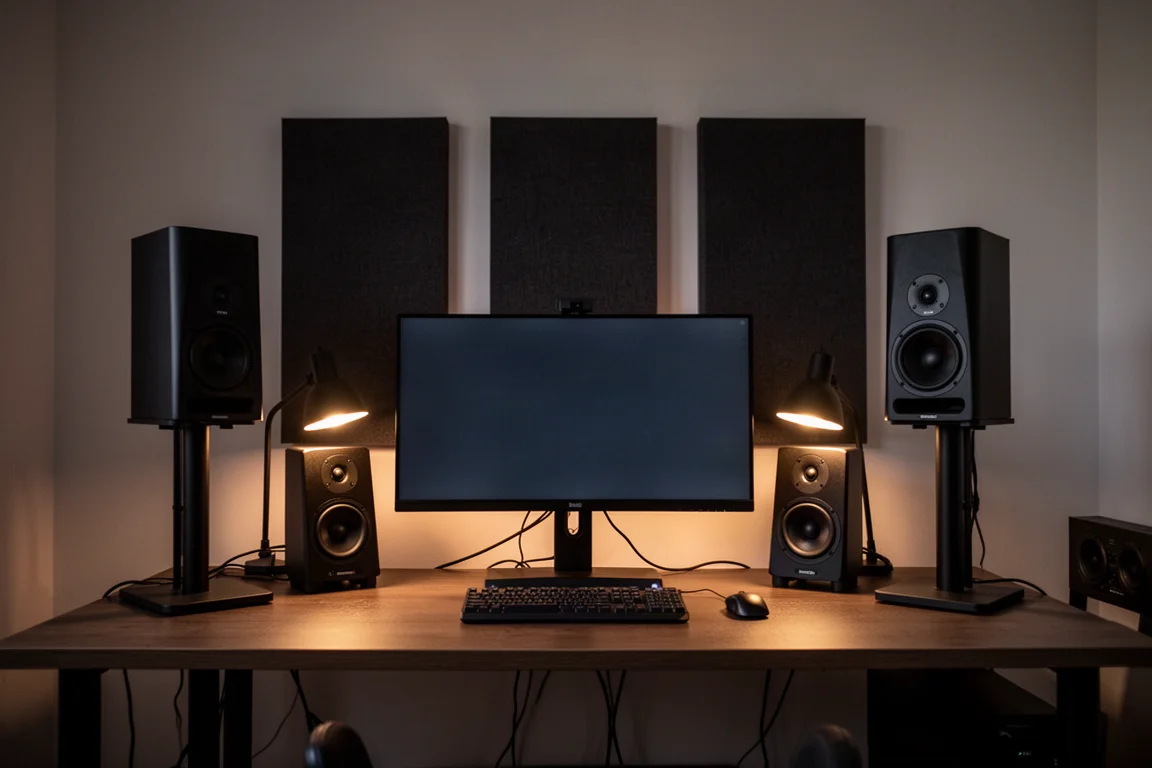
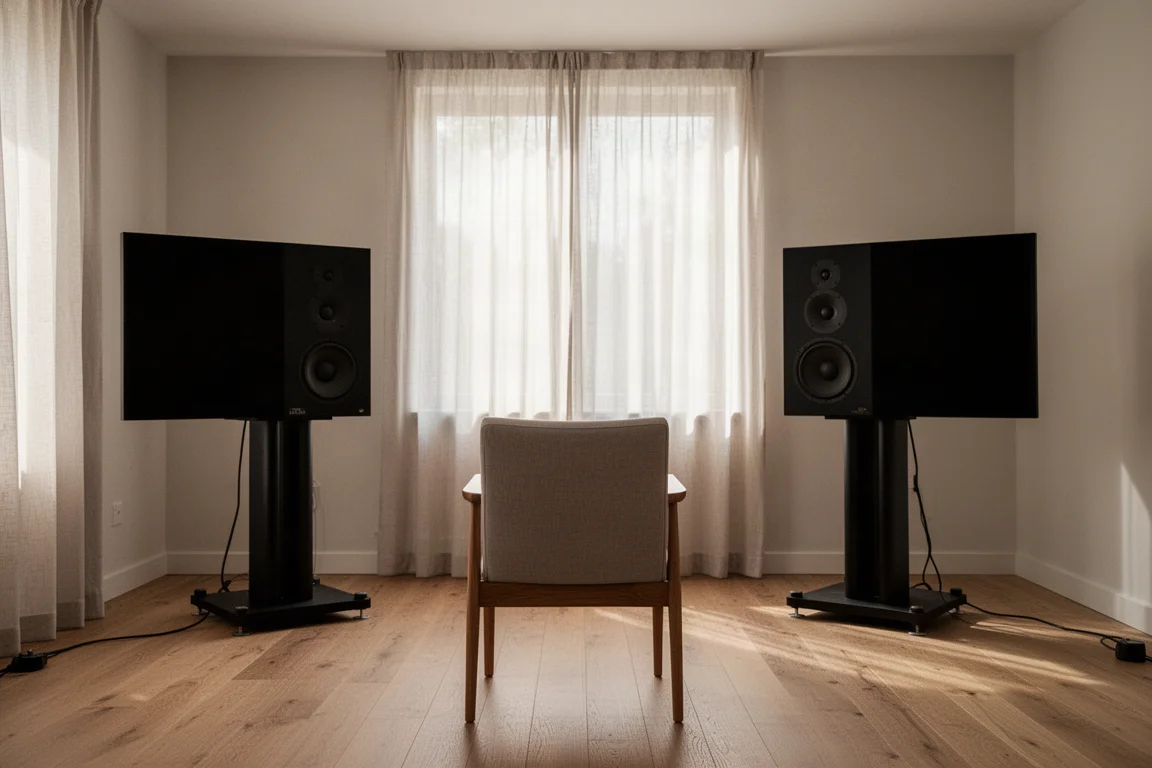
Setup itself is flexible. In a nearfield desktop arrangement, tall stands with isolation bases and a fairly close placement to the wall, with the speakers toed in heavily toward the listening position, deliver maximum on-axis accuracy. In a larger room, placing the speakers further from the wall behind them and easing off the toe-in produces more depth and a wider stage. The overall sound character stays consistent between the two, with the room simply trading some bass weight for a larger, deeper presentation.
Buying Advice
The A8H makes the most sense for buyers who want one pair of speakers to serve two roles. If you need a genuinely revealing monitor for editing and mixing, the Pure setting delivers that without the harshness that makes long sessions tiring. If you also want to sit back and enjoy music or films afterwards, UNR adds weight and fun while staying controlled.
The value case rests on what is included rather than on a low price. You get three dedicated amplifiers, a three-way driver array with a handmade AMT tweeter, switchable vertical or horizontal orientation, a full set of room adaptation controls, companion software, optional advanced calibration, and a 5-year warranty on registration. For a pair of speakers at this level, that is a lot of adjustability to work with.
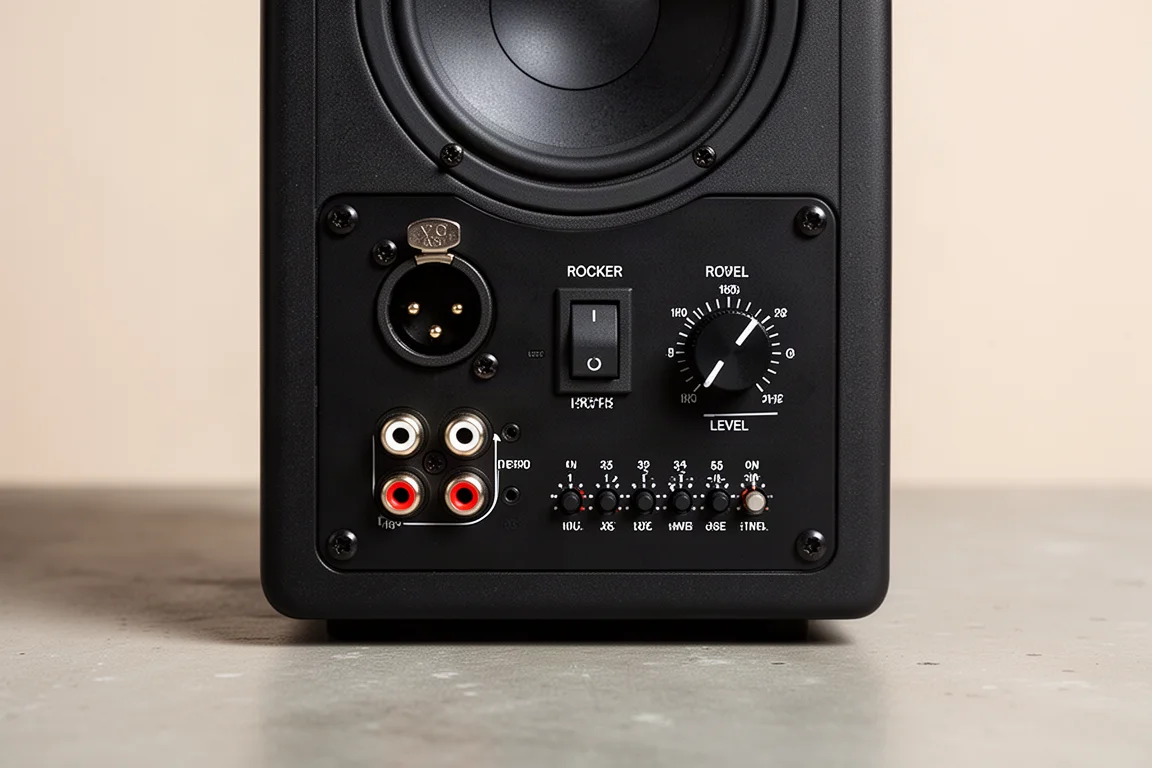
If you are considering them, think about your room before your budget. The rear-panel EQ and the software calibration are what let these speakers settle into a desk setup or a dedicated listening room, and using them well is the difference between good sound and excellent sound.
Conclusion
The ADAM Audio A8H is an unusual proposition: a three-way active studio monitor that takes accuracy seriously and still remembers that listening should be enjoyable. Its measured low-frequency reach, coherent driver integration, stable center image and two distinct voicings make it flexible enough for a working desk and a listening room alike.
The caveats are minor and predictable. A faint idle hiss is present in very quiet rooms, the software requires an ethernet connection between speakers, and the room adaptation settings reward a little patience. For anyone who wants professional-grade transparency without giving up the pleasure of the music, this is a persuasive package.
Product link
View more details for ADAM Audio A8H
This product is mentioned in the review. Check the specifications, options, and compatibility before buying.
View more details for ADAM Audio A8HFurther reading
Related Reviews

Studio Monitors
Best Studio Monitors 2026: Six High-End Options Compared
We tested six premium studio monitors in a real studio space to see which ones deliver the best mix of accuracy, musicality, and value.
Studio Monitors
Focal Alpha 65 Evo Review: An Honest Studio Monitor With Real Bass
A bi-amplified active studio monitor with deep bass, useful tone controls and a truthful, uncoloured voicing, assessed for small studios and home setups.
Studio Monitors
Four 8-Inch Studio Monitors Compared: What Accuracy Actually Looks Like
A close look at four 8-inch powered studio monitors, from a well-engineered pair that measures flat to a flawed design that cannot do the job it is sold to do.