Ski Resorts
Hunter Mountain Review: A Convenient Catskills Day Trip With Catches
Hunter Mountain is the largest ski resort in the Catskills and an easy day trip from New York City, but crowding, lift reliability, and ticket pricing temper the appeal.
Introduction
For skiers within roughly three hours of New York City, Hunter has long been a go-to day trip option. This Catskill resort pairs a convenient location with high-speed lifts and reasonably varied terrain, and it has made real progress in recent seasons. At the same time, it exemplifies many of the pitfalls that plague ski areas near major cities, from weekend crowding to inconsistent lift operations. Here is a full look at what the Hunter experience is actually like, and where the mountain stands in our category-based rankings.
Who Hunter Mountain Is For
Hunter sits further south than every major East Coast destination resort, so natural snowfall totals are modest and storms can bring rain as easily as snow. The resort compensates with extensive snowmaking, opening trails one by one through the early season, and by late December most critical runs are typically open. Not every trail is equipped for snowmaking, though, and it has likely been over a decade since the mountain fully opened 100 percent of its terrain.
Beginners are a core audience here. Hunter offers isolated beginner pods at Hunter East plus a handful of green trails off the new Broadway Express, and for the first time beginners can reach green terrain from a high-speed lift. Be aware that most of the rest of the mountain has no green terrain at all, and the beginner runs that exist get especially slammed with inexperienced guests on weekends and holidays. One bright spot: the Otis Quad’s trails are rated blue but ski notably easier than the rest of the resort’s blues, making them low-key excellent for riders who have graduated from the bunny hill and want to avoid congestion.
Main Strengths
Hunter’s biggest advantage is arguably its convenience. The mountain is roughly two and a half hours from the New York metropolitan area, and even closer from some New Jersey and Westchester suburbs. Bus service connects the resort with Manhattan, Brooklyn, Queens, and Hoboken: daily service runs to and from Manhattan during the season, and the other areas see direct buses at least three times a week. Off-peak weekdays are essentially empty, which can feel like having the mountain to yourself.
The lift network has also genuinely improved. The former Broadway Quad was replaced by the Broadway Express, a new high-speed six-pack that created a second detachable route out of the main base, complementing the existing Catskill Flyer. The old quad was reinstalled as the Otis Quad in a new alignment, opening up a refreshed low-intermediate terrain pod. The results were noticeable: lines at the main base dropped substantially, and the Otis area stayed relatively quiet all season, offering something close to real crowd relief.
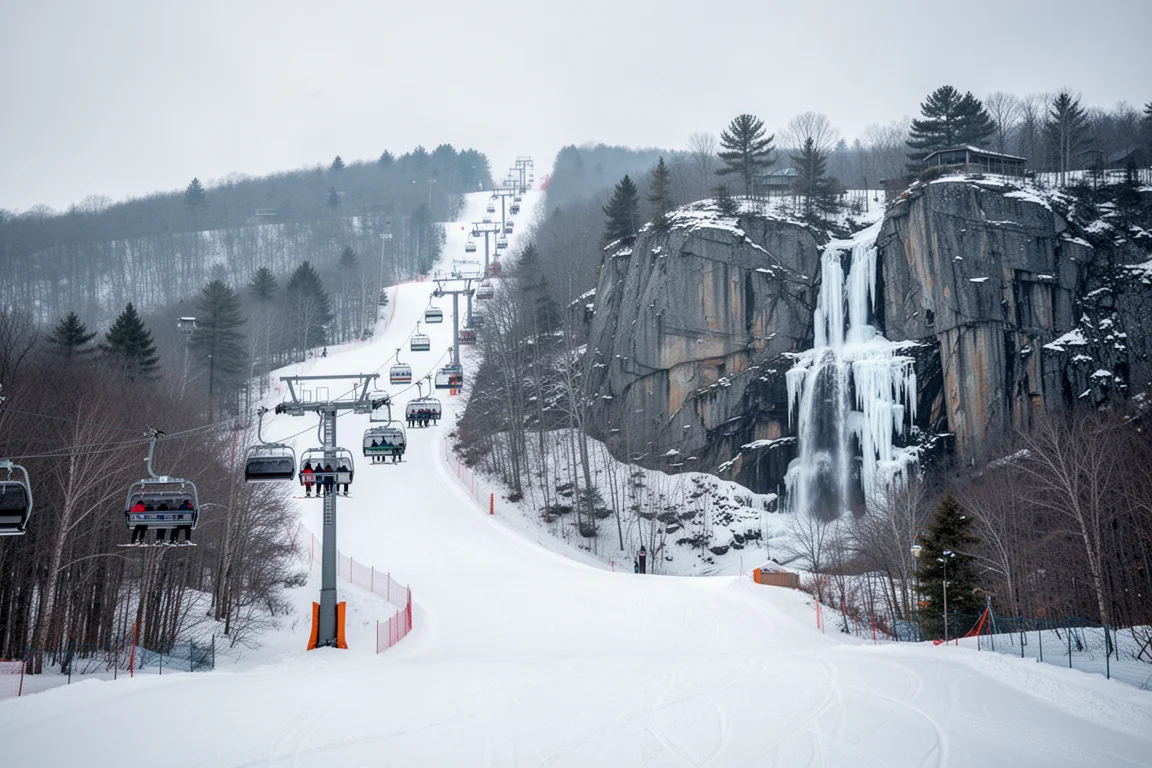
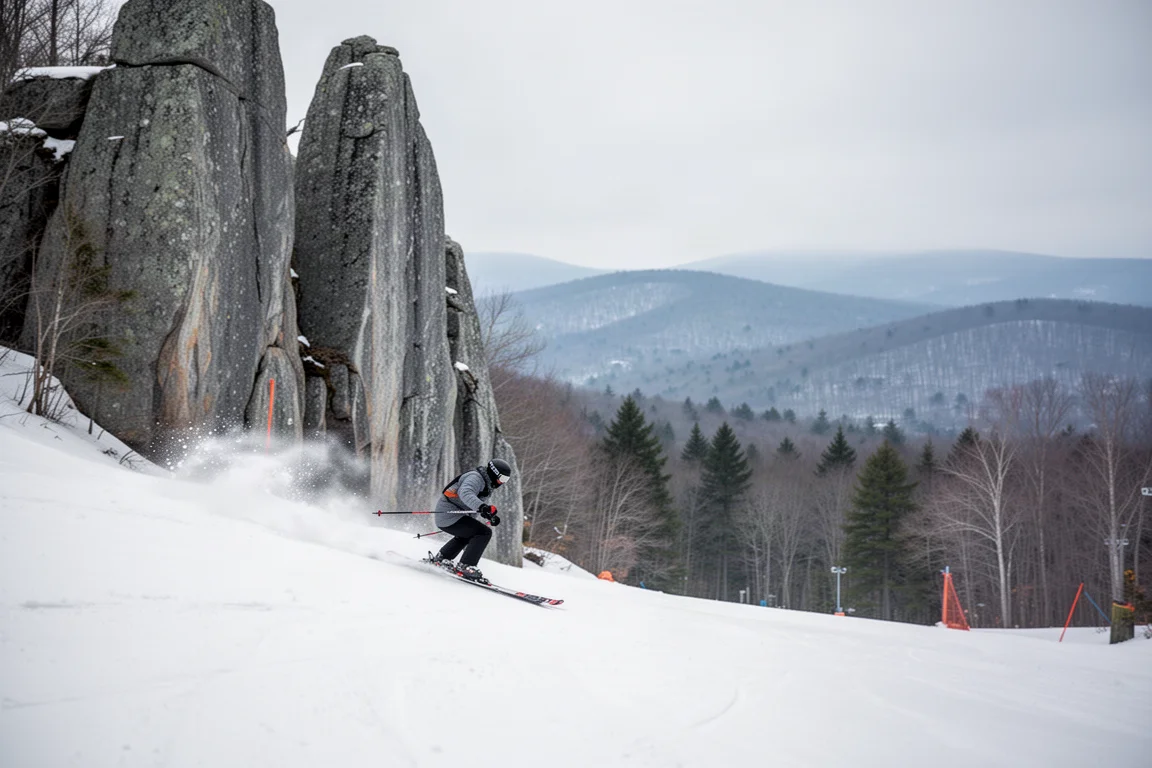
Terrain is more distinct than you might expect for a mountain this size. At 320 skiable acres, Hunter is the largest resort in the Catskills, and some trails feel genuinely unique rather than cookie-cutter, with a few cutting beside tall, dramatic rock faces where frozen waterfalls are not uncommon in midwinter. The main face hosts a series of moderately steep single black runs, some left ungroomed at times, and a handful of fairly challenging double blacks that outclass several other flat New York City-area mountains.
Things to Consider Before Going
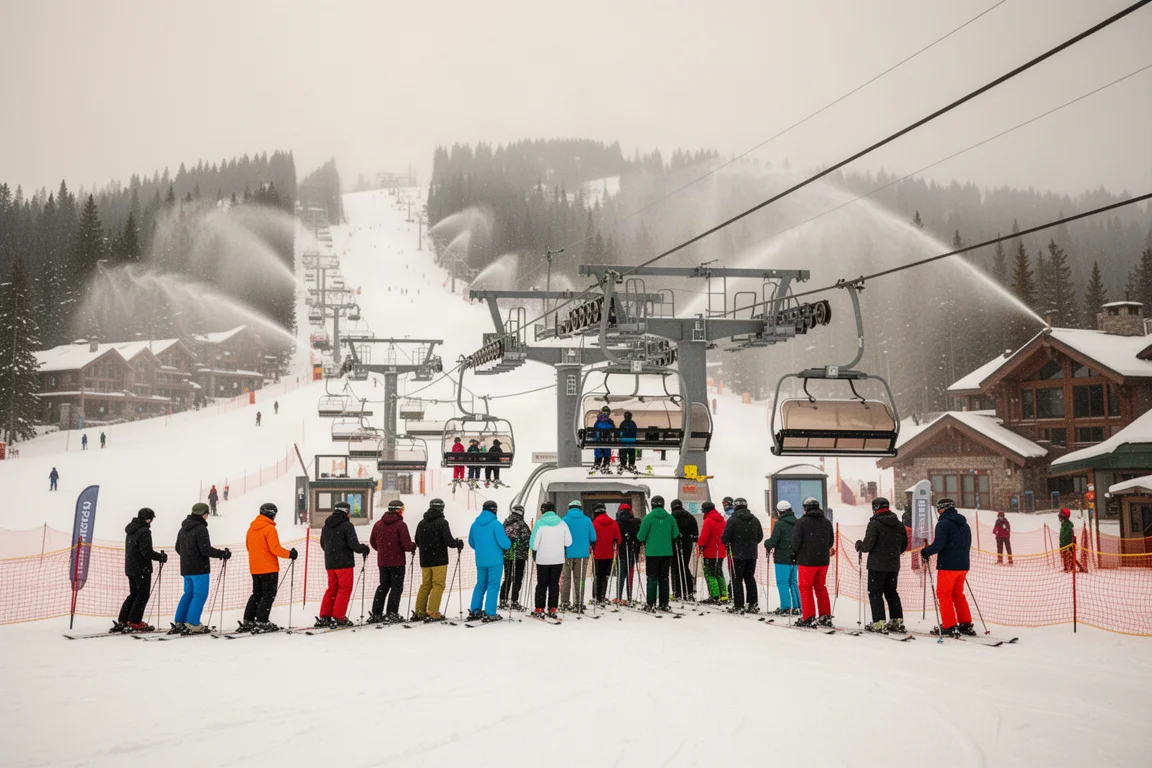
Crowding remains the defining challenge. On weekends and holidays, Hunter generates enormous crowds with an amusement park ambiance nearly everywhere. Even the bunny hill lifts at Hunter East can see lines over 20 minutes on a typical Saturday. Wait times tend to peak between 11 a.m. and 2 p.m., and are better in early morning and late afternoon. Crowding has not vanished, but if you know where to look, waits are finally manageable.
Lift reliability is another persistent issue. Some lifts remain chronically offline even on busy days. The expert-oriented Zephyr Express at Hunter West is closed the vast majority of the time, and the surface lift above the Otis Quad is largely abandoned despite still appearing on the trail map. The prominent double blacks on the trail map in the Hunter West zone are a case study: the runs are longer than the main-face double blacks, but both they and the Zephyr Express are almost never open. If you do score a rare day when Zephyr spins, it is almost certain that only one double black, Claire’s Way, will be open. It is steep and regularly groomed, while the other two trails there lack consistent snowmaking and have not opened in years.
Where Hunter Falls Short
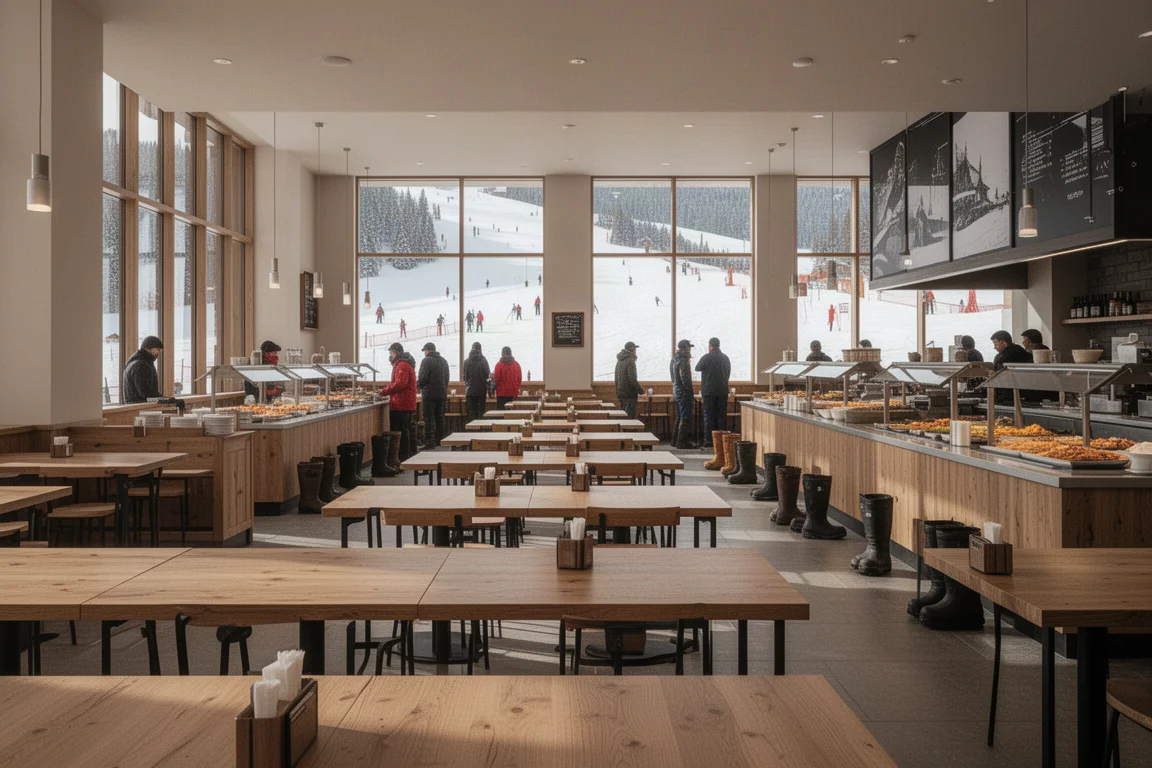
On-mountain facilities look solid at first glance but strain under pressure. The main base lodge is generously sized with plenty of tables and cafeteria-style dining, yet there still is not enough seating during peak times, and the lunch hour can be a fight for space. The ski school building offers another cafeteria with standard food options, but it is typically packed on weekends and closed on weekdays. There are two bar-restaurant establishments in the main base complex, and at the satellite Hunter North base there are no facilities except port-a-johns. The charming Summit Lodge is woefully underbuilt for Hunter’s volume, with a small second-floor snack shack, first-floor bathrooms and vending machines that are not always stocked, and a third floor that is effectively storage.
Navigation is easy overall thanks to the compact size, but signage has gaps. Some trail markings sit too far off to the side or are not prominent enough, and signs do not always indicate which base area or lift a path leads to. Hunter North is surprisingly easy to miss for such a key part of the resort: you need to be on Belt Parkway or one of the seldom-open Hunter West advanced trails to get back there, and the two blue trails to Hunter North, Way Out and Sleepy Hollow, peel off from Belt Parkway in ways that look like they merge with the run rather than diverge. Miss them and you will be funneled back to the packed main base, which can be maddening on a busy weekend.
Buying Advice: Passes, Tickets, and Timing
For such a regional mountain, one-day lift tickets are a poor value. Even off-peak weekday tickets start above $100, and same-day holiday tickets now reach $179. Thankfully, Hunter is part of the Epic Pass suite of products, including the heavily discounted Epic Day Pass with flexible access for as little as one day. Epic-branded products are really the only reasonable form of access to the mountain.
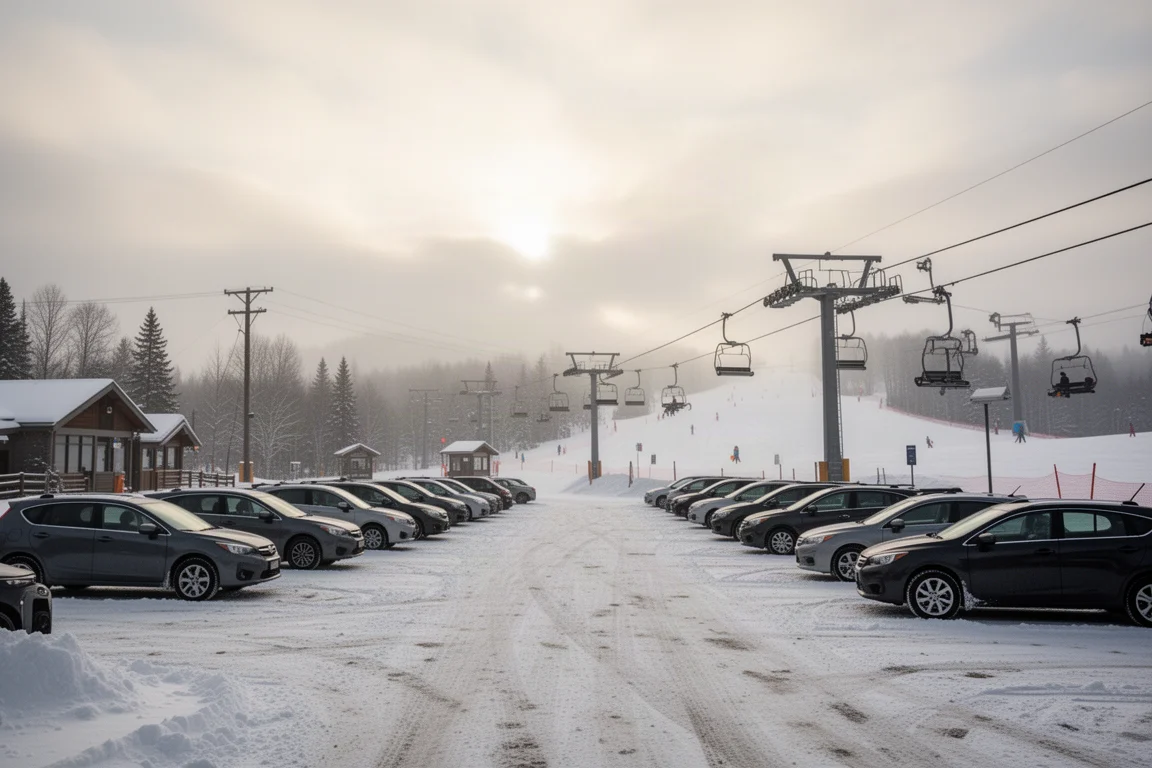
If you drive on weekends, plan ahead. Main base lots fill quickly, and arriving after 10 a.m. likely means an overflow lot with a shuttle or a long walk. A local trick: if you do not need lessons or beginner terrain, the Hunter North parking lot is far less busy, often has space even midday on weekends, and puts you within walking distance of the Northern Express six-pack. There is no road signage pointing to it, but it can save significant hassle. Aside from a handful of premium spots at the main base, same-day parking is entirely free.
Slopeside lodging exists, including the upscale Catskill Mountain Club and some condo complexes. None of it is cheap, though two-bedroom condos can be reasonably economical for a large group, and cheaper inns and motels sit within a short drive. Nightlife is scant, with a few bars and restaurants near the base that get reasonably lively on weekends, plus a family-popular tubing hill with its own lodge.
Conclusion
The Hunter experience is ultimately a mixed bag. It is closer than Vermont resorts, offers some surprisingly diverse terrain, and has finally made real strides on its worst crowding issues. But weekend crowds, inconsistent natural weather, and sporadic lift operations limit its overall potential. In our category rankings it scores 42 overall, placing it fifth in New York State, behind Whiteface, Gore, Holiday Valley, and Windham, all of which are either harder to reach from New York City or carry their own value issues. For locals who can sneak in weekday laps, Hunter is a great convenience option. For anyone planning a weekend trip, nearby alternatives or even a longer drive north will provide a better overall experience.
Product link
View more details for Hunter Mountain
This product is mentioned in the review. Check the specifications, options, and compatibility before buying.
View more details for Hunter MountainFurther reading
Related Reviews
Ski Resorts
Alyeska Resort Review: Alaska's Largest Ski Resort, Worth the Journey?
A deep look at Alyeska Resort: heavy snowfall, expert terrain, an Icon Pass connection, and the trade-offs of a near-sea-level mountain in the Last Frontier.
Ski Resorts
Bear Valley Ski Resort Review: Northern California's Quiet Sierra Alternative to Tahoe
A lesser-known Sierra resort with over 1,300 skiable acres, surprisingly strong expert terrain, and crowd levels Tahoe can only dream of. Here is what to know before you go.
Ski Resorts
Colorado Ski Resorts Ranked: The Best Destination Mountains for Overall Experience
A ranked guide to Colorado's destination ski resorts, covering terrain, snow, logistics, crowds, and cost so you can pick the right mountain for your trip.