Cycling Wheels
Hunt 52mm Carbon Rim Brake Wheelset Review: Are Expensive Carbon Wheels Worth It?
A deep-section carbon rim brake wheelset tested back to back against stock alloy wheels, with real gains in speed, weight, and stiffness plus a few honest trade-offs.
Introduction
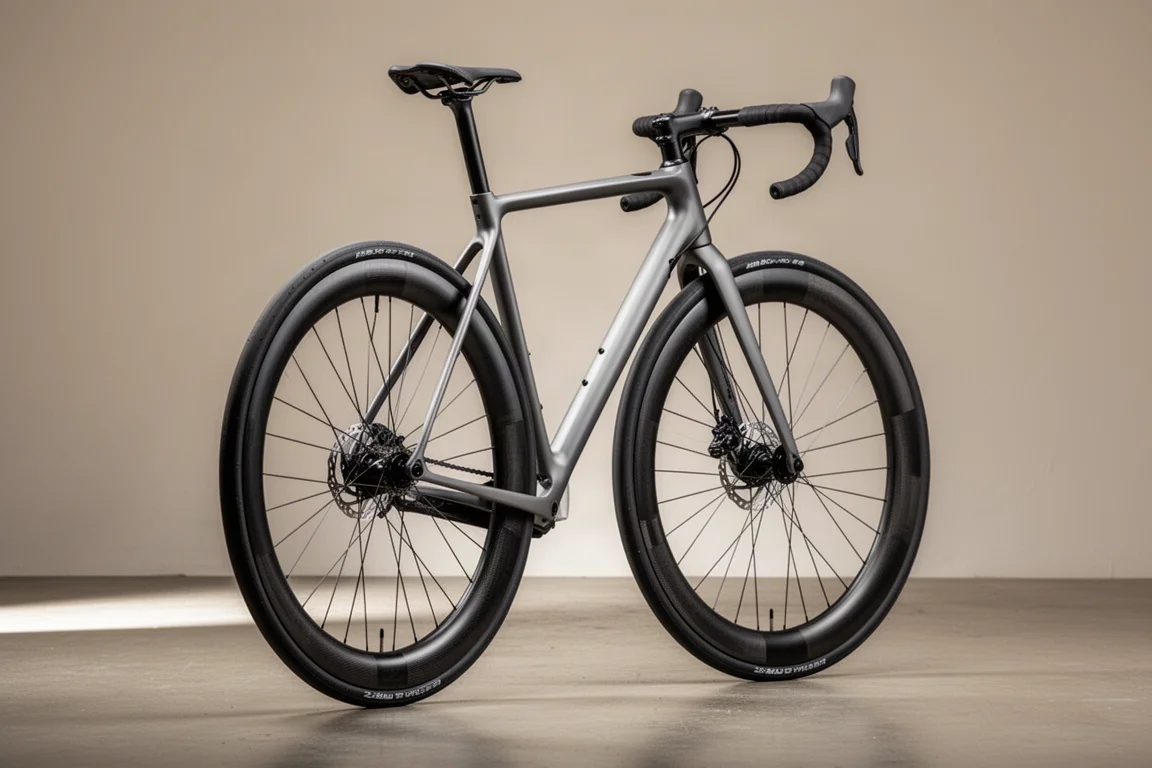
Deep section carbon wheels sit in an awkward place in the road bike market. They cost as much as a very good complete bike, they only make sense on frames that are worth upgrading, and plenty of riders quietly suspect the whole category is more about looks than speed. So it is worth asking the blunt question directly: does a premium carbon rim brake wheelset actually make you faster, or does it just photograph well?
A 52mm deep carbon rim brake wheelset from Hunt makes a useful case study, particularly when it is fitted to an aluminium road frame that originally shipped with budget alloy wheels. The gains here are measurable rather than imagined, and they show up in two places at once: the power needed to hold a given speed, and the way the bike behaves underneath you.
The Wheels Being Replaced: Mavic Aksium and Aksium Elite
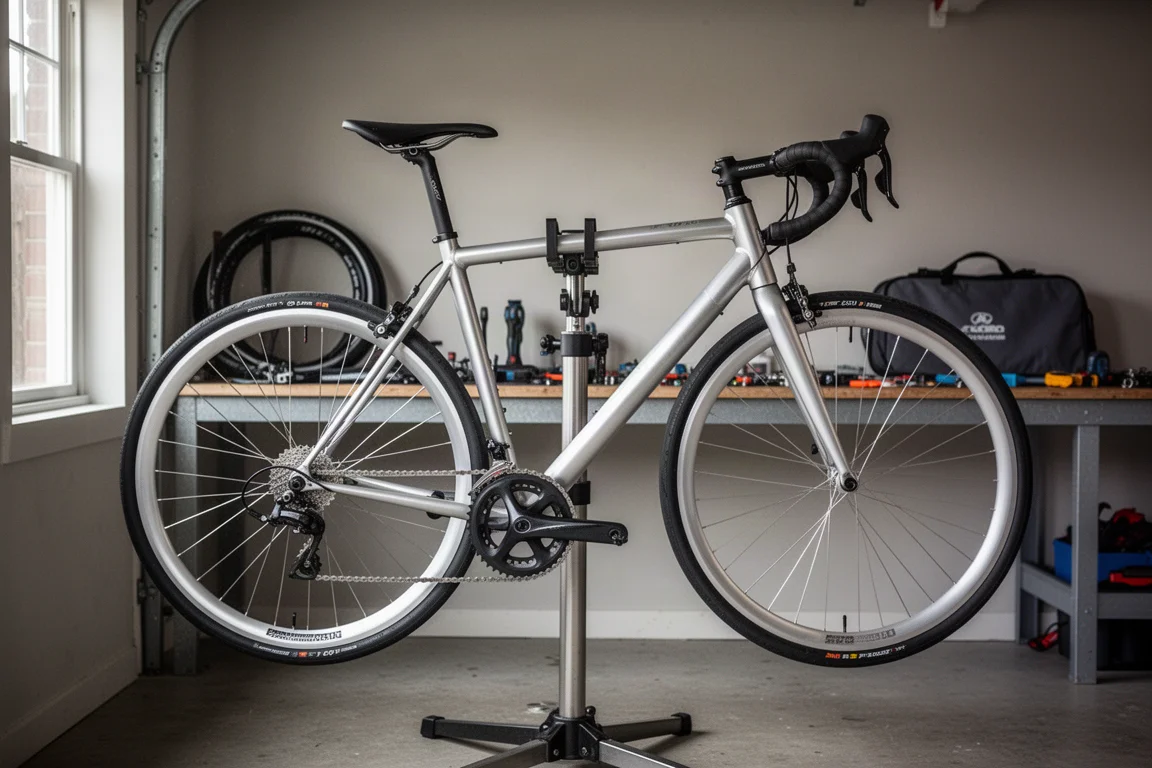
The starting point is a 2016 Cannondale CAAD12, a bike widely regarded as a strong aluminium frameset let down by cost-cutting elsewhere. It runs a Tiagra groupset and a HollowGram crankset, so the frame and drivetrain are respectable. The wheels are the compromise.
That original setup is a mixed pair, with a Mavic Aksium at the front and a Mavic Aksium Elite at the rear. They retail around £250 in the UK, weigh close to two kilograms as a set, and measure 17mm internally, which is narrow by current standards and makes them a poor match for wide tires. They are not tubeless compatible, so inner tubes are the only option. The step from the rim edge out to a 28mm tire is abrupt, which does the aerodynamics no favours at all.
The redeeming details are aero bladed spokes and hubs of reasonable quality. These are not bad wheels, they are simply entry-level ones, and they are the single easiest place to find performance on a bike like this.
Main Strengths: Aero Depth, Lower Weight, and Stiffness
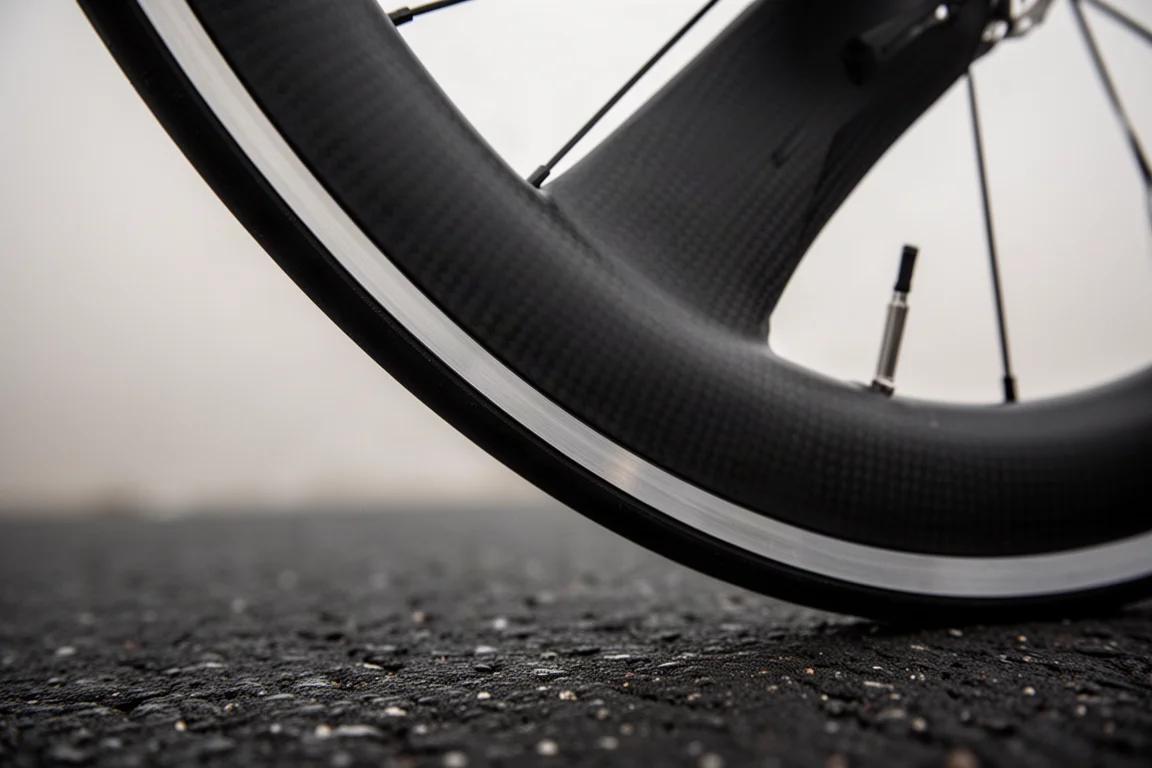
Hunt’s flagship rim brake wheelset is built around a 52mm deep carbon rim, and the brand positions it as the fastest rim brake set it has made. The profile is wide, with a smooth transition from the brake track across to the tire, which is exactly the shape that works better with the 28mm tires fitted here.
The weight figure is the other headline. Just over 1,500 grams claimed is a meaningful drop from a wheelset approaching two kilograms, and it arrives alongside a much deeper rim rather than instead of one. That combination, more aero depth and less rotating mass, is the reason the upgrade feels so different from the saddle.
There is a stiffness story too. Under hard efforts the rims give no hint of flex and there is no brake rub to be heard, which keeps the braking surface true and the power going into forward motion.
Real-World Speed Testing at 30 and 40 km/h
To put numbers on the difference, the wheelsets were compared back to back on a quiet one mile stretch of road, using an out and back format. The approach was simple and deliberately realistic: hold a fixed speed and measure the power required to do it. The outward leg was ridden at 30 kilometres per hour, the return at 40 kilometres per hour, with several runs completed on each wheelset.
The carbon wheels required less power at both speeds. That is the practical translation of aerodynamics into everyday riding: the same speed for less effort, which is exactly how most riders experience a fast wheel rather than by chasing a personal best. The test also made clear how noisy real world data can be, with power fluctuating even inside controlled runs, so the sensible reading is a consistent advantage rather than a precise number.
On the road, over several weeks of familiar local routes and climbs, the faster the bike went, the better the wheels felt. Acceleration and sprinting produced the distinctive whooshing sound associated with deep rims, and the bike carried speed noticeably more easily.

Ride Feel and Stability on Local Roads
Ride quality with these wheels is close to the original alloy set, perhaps a fraction smoother with the same tires and pressures, though the wheels were run tubeless while the Mavic pair used inner tubes. The underlying character comes mostly from the frame, which remains firm and occasionally jittery over rough tarmac, as aluminium frames tend to be.
Where the upgrade is unmistakable is agility. The bike feels more lively and changes direction with real precision, and it can be thrown into corners with confidence. Whether that comes from the lower weight, the stiffness, or the aerodynamics is hard to separate, but all three point the same way.
Wind stability is the usual concern with deep sections, particularly the front wheel tugging at the handlebar in gusty conditions. These handle crosswinds reasonably well. They are not the most stable deep wheels around, nor the worst, which lands right about where a wheel of this depth should be.
The one genuine annoyance is the freehub, which is loud enough to encourage constant pedalling. That noise is a matter of taste, and it sits alongside an otherwise very refined package.
Who This Wheelset Is For
This is a wheelset for riders on rim brake frames who want a genuine performance step rather than a cosmetic one. If your bike came with heavy, narrow alloy wheels and the frame and groupset are worth keeping, a deep carbon set is one of the few upgrades that changes speed, weight, and handling at the same time.
It also suits riders who prefer to ride by speed and feel rather than by staring at a power meter. The benefit here shows up as less effort at a familiar pace, which is easy to notice without any data at all. Anyone looking for a quieter, more understated wheel might want to look elsewhere, since the freehub announces itself constantly.
Things to Consider Before Buying
The most obvious trade-off is braking. Rim brakes are a reminder of how strong disc brakes have become, particularly in wet conditions, and no carbon rim changes that. Riders who ride in poor weather should weigh this carefully.
Wind is the second consideration. A 52mm rim is stable enough in most conditions, but exposed routes and gusty days will still ask more of you than a shallow alloy wheel would. The third is value relative to the bike. At around £1,000 retail, with a current offer near £850, the wheels cost several times what the original set did and can easily exceed what the frame is worth second hand. On a modest aluminium build, that is a decision to make deliberately rather than by accident.
Buying second hand is tempting at this price, but rim brake carbon wheels carry real risk. It is difficult to judge how much braking life is left on a used brake track, and that uncertainty is a fair reason to prefer new.
Buying Advice
For a rim brake road bike with entry-level alloy wheels, this wheelset is a straightforward answer to the question of whether expensive carbon wheels are worth the money. The speed, weight, and handling improvements are real, and the bike looks transformed in the process. It is a premium purchase that makes most sense when the frame is a keeper and the rest of the build is already sorted.
If the budget is tighter, tubes and tires remain the cheapest meaningful gain, and a used set from a trusted seller can work if the brake tracks are genuinely sound. If the goal is a single upgrade that lifts the whole bike, this is the one.

Conclusion
On looks, performance, and speed, the case for a deep carbon rim brake wheelset is convincing. Just over 1,500 grams against nearly two kilograms, a 52mm aero profile against a shallow 17mm alloy rim, and a stiffness that holds up under hard efforts all add up to a faster, more agile bike that holds speed with less effort. The caveats are honest ones: louder freehub, rim brake performance that trails discs, and a price that dwarfs the original wheels. For the right bike and the right rider, that trade is worth making.
Product link
View more details for Hunt 52mm Carbon Rim Brake Wheelset
This product is mentioned in the review. Check the specifications, options, and compatibility before buying.
View more details for Hunt 52mm Carbon Rim Brake WheelsetFurther reading
Related Reviews
Cycling Wheels
Aero vs Lightweight Carbon Wheels: Hunt 60 Limitless and Hunt 32 Aerodynamicist Compared
Deep-section aero wheels and featherweight climbing wheels promise different things. Controlled real-world testing on flat laps and a steep climb shows where each set actually gains time.
Cycling Wheels
Best Carbon Road Bike Wheels 2026: Six Standouts From Entry Level to Premium
A practical guide to carbon road bike wheels across six price brackets, covering rim width, rim depth, hub engagement and what each step up actually buys.
Cycling Wheels
Best Rim Brake Road Wheels: Six Options From Budget to Premium
Six rim brake road wheelsets covering nearly every price point, from a value alloy set to sub-kilogram tubulars, plus advice on custom builds and buying secondhand.