Bookshelf Speakers
HTD Level Three Bookshelf Speaker Review: Ribbon Tweeter Value in the Middle
A front-ported two-way with a 6.5-inch woofer and a ribbon tweeter, the HTD Level Three Bookshelf brings a neutral, linear sound to a $480 to $550 price point.
Introduction
Home Theater Direct, better known as HTD, has been selling direct to consumers for roughly two decades and is based in Plano. Its catalog reaches well beyond loudspeakers: the company also builds amplifiers and home automation gear, including ceiling-mounted voice assistant hardware. For listeners, the interesting part is the speaker range, which is organized into a few straightforward tiers. Level Three is the top tier, covering bookshelf, tower, and center models.
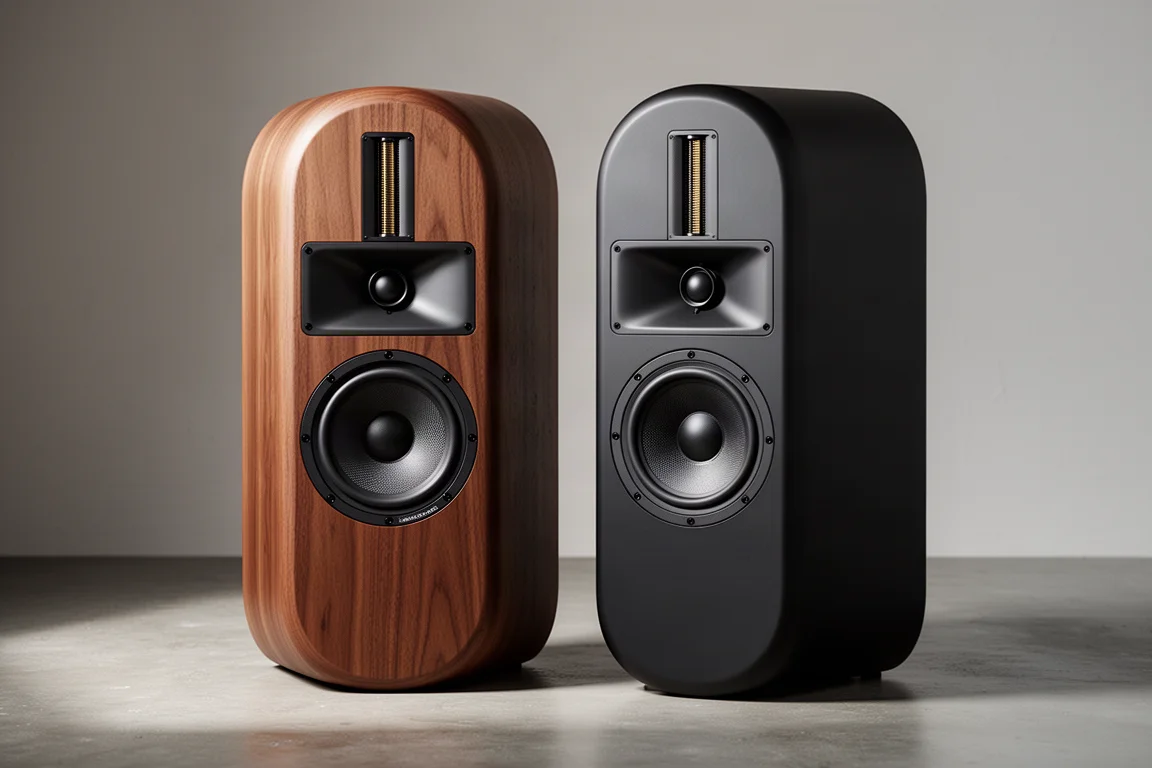
The Level Three Bookshelf is a two-way design pairing a 6.5-inch woofer with a ribbon tweeter, offered in either black paint or brown veneer. HTD prices it between $480 and $550.
Who This Speaker Is For
The brand name gives the intent away. Home Theater Direct builds speakers with home theater as the first priority and music as the second, so the Level Three Bookshelf is designed with the expectation that most owners will add a subwoofer. Rated extension reaches 44 Hz, which is respectable for a bookshelf but not the deepest around.
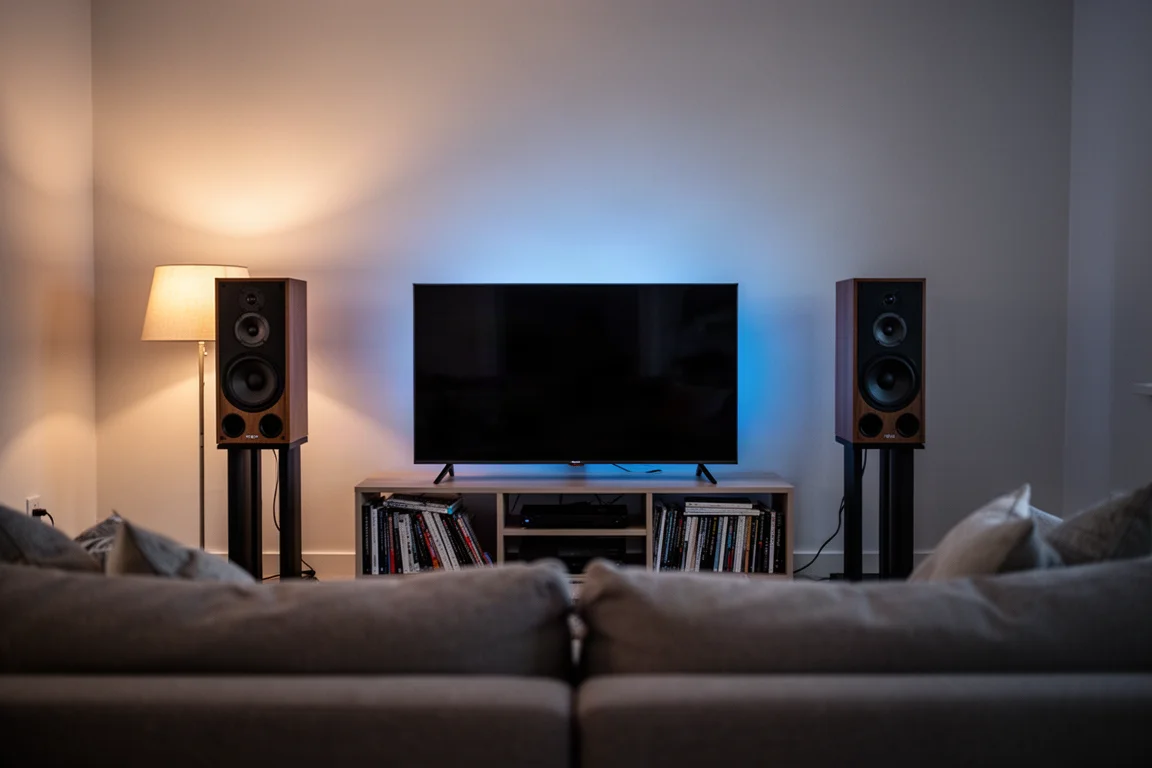
That makes it a natural fit for a compact home theater system, a television setup in a smaller room, or a desktop near-field rig where the speakers sit close and the listener sits closer. During a month of television and movie duty in a bedroom system driven by a 50-watt-per-channel receiver, the speaker handled dialogue and effects without strain, and it also performed well in near-field use with a dedicated preamplifier and power amplifier, and with a compact integrated amplifier rated near 40 watts into 8 ohms.
If you are chasing a V-shaped, bass-forward presentation, this is not that speaker. Its whole character is linear, and that is the point.
Design and Build Quality
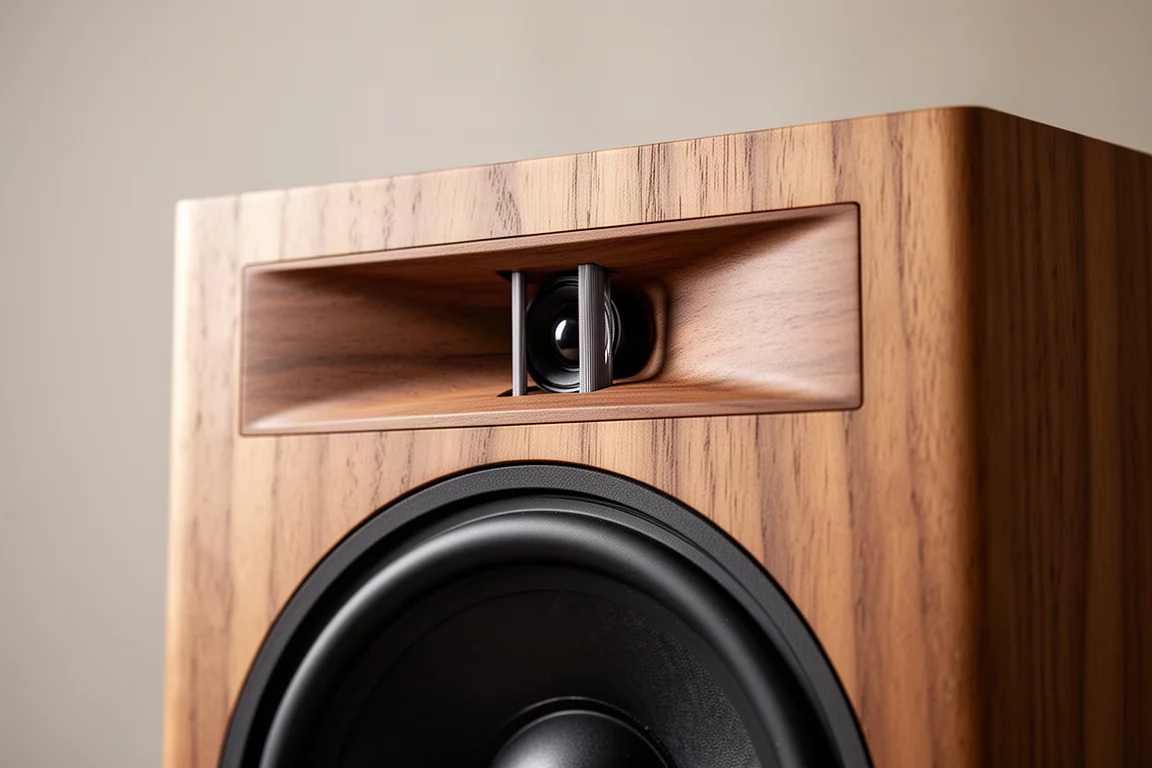
The cabinet is built from 3/4-inch MDF and braced more thoroughly than most speakers in this class, which becomes obvious the moment you lift one. The front baffle carries the 6.5-inch woofer and a ribbon tweeter set into a wide waveguide with a gentle vertical flare. Exposed hardware around the drivers gives the speaker an industrial feel, and the oval baffle shape invites comparison with Klipsch’s RB-612.
The woofer uses a fabric cone with a ceramic coating for added stiffness and a polymer doping intended to add warmth. The crossover sits at 2,500 Hz with a third-order slope, roughly 18 dB per octave, so the tweeter is rolled off fairly steeply. The port fires forward, which lets the speaker sit closer to a wall than a rear-ported design. Two threaded inserts on the back allow wall mounting, and the cabinet’s weight makes hitting a stud essential. The rear panel also supports bi-wiring and bi-amping.
Sensitivity is around 87 dB with a nominal 8-ohm impedance and a rated range of 44 Hz to 40,000 Hz. That combination is not difficult to drive, but it is not especially efficient either, so a little power headroom helps.
Soundstage and Imaging
Ribbon tweeters have a reputation for a wide lateral stage and a narrower vertical window, and the Level Three Bookshelf follows that pattern. Move your ears above or below the tweeter axis and the presentation changes noticeably. It is less pronounced here than on some other ribbon designs, but a soft dome, aluminum dome, or titanium dome tweeter with a different waveguide will usually hold up better off axis.
Inside the sweet spot, imaging is solid. Most of the stage sits between the speakers, and a firm center image comes together without much fiddling. On Fleetwood Mac’s “The Chain” the vocal locked dead center, and Tool’s “Chocolate Chip Trip” moved around the room almost seamlessly, close to a 360-degree effect.
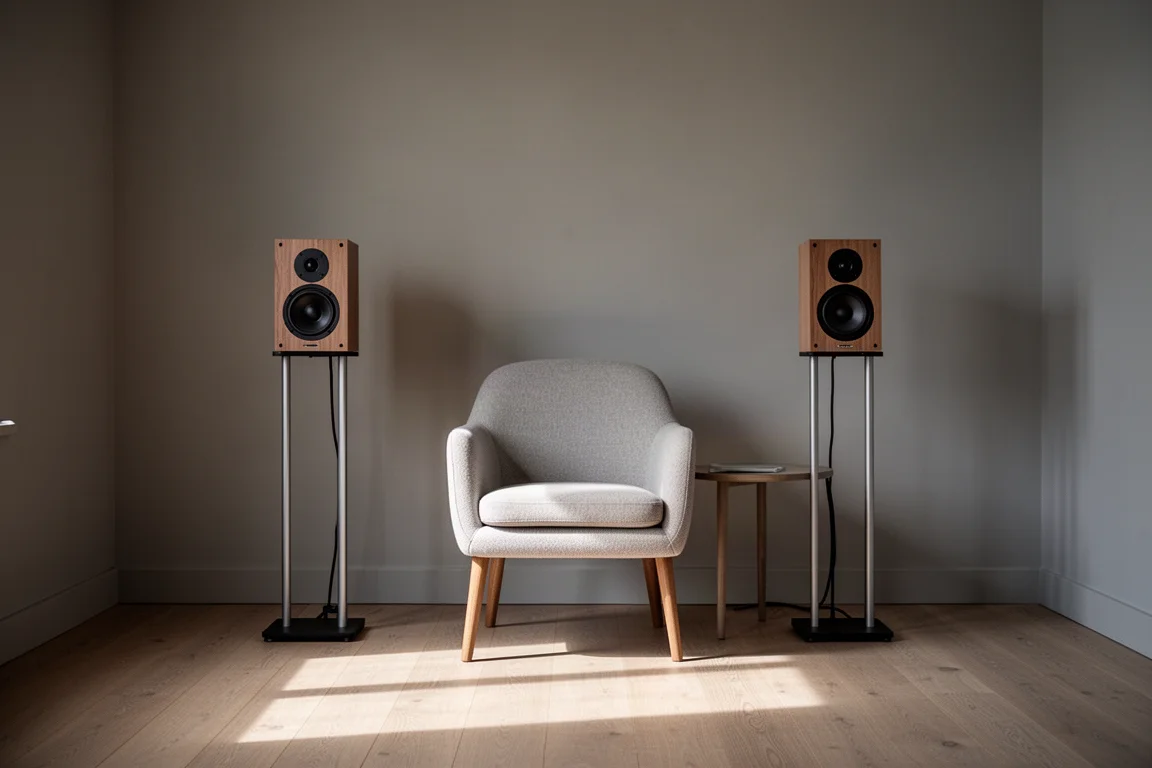
Room and electronics matter a great deal here. Driven by a dedicated preamplifier and power amplifier, the speaker showed it has the foundation to stage and image very well, and it did not hold anything back.
Bass and Mid-range Character
Bass is neutral rather than extended. The speaker is rated down to 44 Hz and does not add a bump to sound bigger than it is. Very low passages, such as the deep drop around the one-minute mark of a bass-heavy electronic track, simply do not register the way they would on a larger or more bass-forward speaker. “What’s Up Danger” from the Into the Spider-Verse soundtrack landed with less punch than expected.
None of that makes the speaker thin. On Miles Davis’s “So What,” the upright bass had a genuine sense of space, stayed clear rather than muddy, and never smeared the mid-range. Tonally it is very well behaved. Listeners who want a punchy low end will get more from tone controls or a loudness switch than from the speaker itself, and it responds well to both.
The mid-range leans warm and smooth. Adele’s “Hello” and Tracy Chapman’s material both came across as easy and natural rather than clinical, and Bob Marley’s “Redemption Song” was flawless. Because the crossover sits at 2,500 Hz, the 6.5-inch woofer carries most of the mid-range duty, and it handles that job better than most woofers manage. Push higher into a female vocal, though, and the character changes: on Alanis Morissette’s material the top of her range shifted toward the more detailed, clinical side of the tweeter. A touch of resonance showed up around the crossover point in near-field listening, though it was not audible in a larger room.
Treble, Detail, and Air
The ribbon tweeter is the most distinctive part of the package. On a Nina Simone recording built on rapid 16th notes, it delivered detail and clarity alongside a real sense of realism, with decays that hang around for exactly as long as they should rather than sounding clipped short.
There is some sibilance to be aware of. It showed up on Alanis Morissette’s recordings and on Nirvana’s “You Know You’re Right,” though it was never constant and never aggressive. The speaker also has a genuine sense of space and air, and live and unplugged recordings conveyed the character of the room they were captured in.
Things to Consider Before Buying
The vertical listening window is the biggest practical consideration. Because the ribbon tweeter’s output narrows above and below the axis, ear height matters, and a taller or shorter listening position will change what you hear.
Bass extension is honest rather than dramatic. If home theater is the priority, plan on a subwoofer to cover the bottom octave.
The grille mounts deserve a mention too. They use small posts with a rounded catch that can bend or break when the grille is pulled off and pressed back on. Magnetic grilles would be a simpler solution, and it is the one small detail worth knowing before you start removing them.
Buying Advice
At $480 to $550, the Level Three Bookshelf represents enormous value. It slots neatly between two well-known voicings: the Emotiva B1+ is the more clinical, detail-forward speaker, while the Wharfedale Evo 4.1 is the smoothest of the group. The HTD takes a position in the middle, which is a genuinely useful place to land.
Priced against its neighbors, it costs roughly twice as much as the B1+ but is a considerably larger speaker, and it undercuts the Wharfedale Evo 4.1, which sits closer to $700. It also holds its own against the ELAC Uni-Fi Reference, a speaker that sells for around $1,100, even though the HTD’s styling is simpler, with fewer curved surfaces and decorative flourishes.
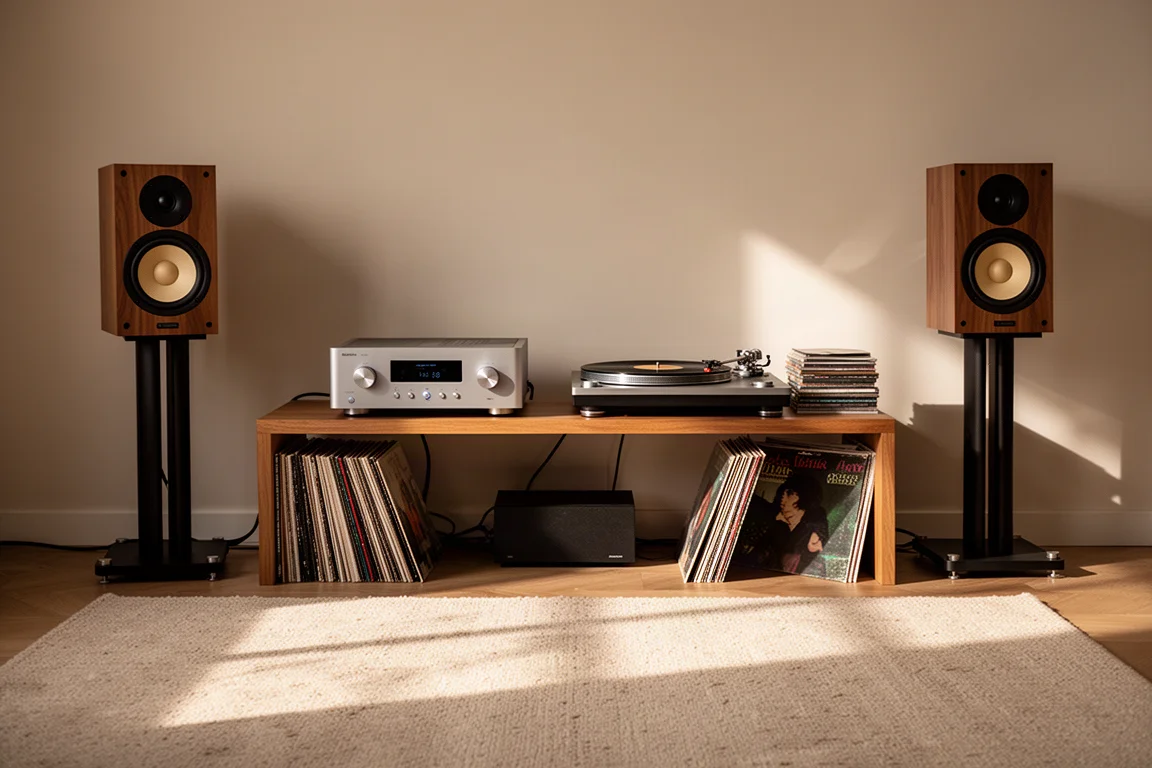
The speaker is transparent enough that electronics make an audible difference, and it scales as you move up the chain. It is also one of very few designs combining a ribbon tweeter and a 6.5-inch woofer in this price bracket, which is part of why it feels like it fills a gap. HTD backs it with a generous return policy, so trying one at home carries little risk. If you are building toward a tower system, the matching towers run about $1,000 per pair.
Conclusion
The HTD Level Three Bookshelf gets the fundamentals right: a heavily braced cabinet, a linear tonal balance, a warm and smooth mid-range, and a ribbon tweeter that adds detail without turning harsh. It is not the most extended or the punchiest speaker at its price, and its vertical off-axis behavior rewards careful placement, but those are trade-offs rather than flaws. For listeners who want one speaker that handles both movies and music and who are willing to add a subwoofer, it is easy to recommend.
Product link
View more details for HTD Level Three Bookshelf Speaker
This product is mentioned in the review. Check the specifications, options, and compatibility before buying.
View more details for HTD Level Three Bookshelf SpeakerFurther reading
Related Reviews
Bookshelf Speakers
Acoustic Energy A100 Mark II Review: A Compact Standmount With an Expansive Soundstage
The Acoustic Energy A100 Mark II brings clarity, natural tonality and a wide soundstage to an entry-level standmount, with a few setup details worth knowing first.
Bookshelf Speakers
Acoustic Energy AE-100 Mark II Review: Compact Bookshelf Speakers With Standout Imaging
A compact British two-way bookshelf speaker with deep, layered imaging, fast bass, and a slight treble lift to weigh against a crowded $500 field.
Bookshelf Speakers
Acoustic Energy AE100 MK2 Review: Measured Performance and Four Alternatives
A close look at the Acoustic Energy AE100 MK2 bookshelf speaker, what its measured performance reveals, and four alternatives with different trade-offs.