Subwoofers
Hsu Research VTF-TN1 vs VTF-15H Mark II: What the New Flagship Subwoofer Changes
A practical look at the new Hsu Research VTF-TN1 flagship subwoofer, how it compares with the VTF-15H Mark II it replaces, and which model makes sense for a given room.
Introduction
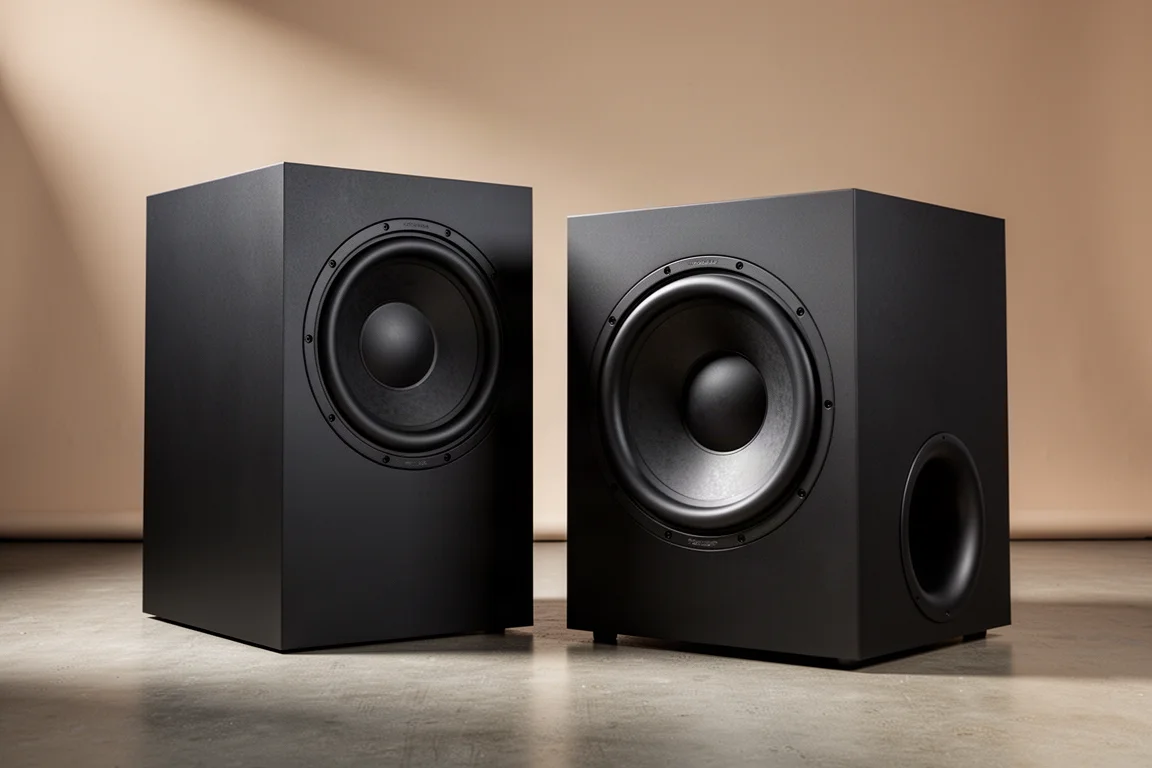
Hsu Research has a new flagship subwoofer. The VTF-TN1 takes over from the long-running VTF-15H Mark II, keeping the same 15-inch driver and broadly similar amplifier power while reworking the cabinet and the ports around it. The result is a subwoofer that is easier to place, cheaper to ship, backed by a longer warranty, and priced at around $1,200.
This guide covers what actually changed, what the published performance figures show, and which of the two models makes sense depending on what you already own.
What Changed in the New Flagship
The VTF-TN1 keeps the core formula: a 15-inch driver and an amplifier of roughly the same capability as the outgoing model. Most of the work has gone into the enclosure. The cabinet is now taller than it is deep, which shrinks the footprint without shrinking the driver. A depth of 18.5 inches with a 15-inch driver is an unusual combination at this size.
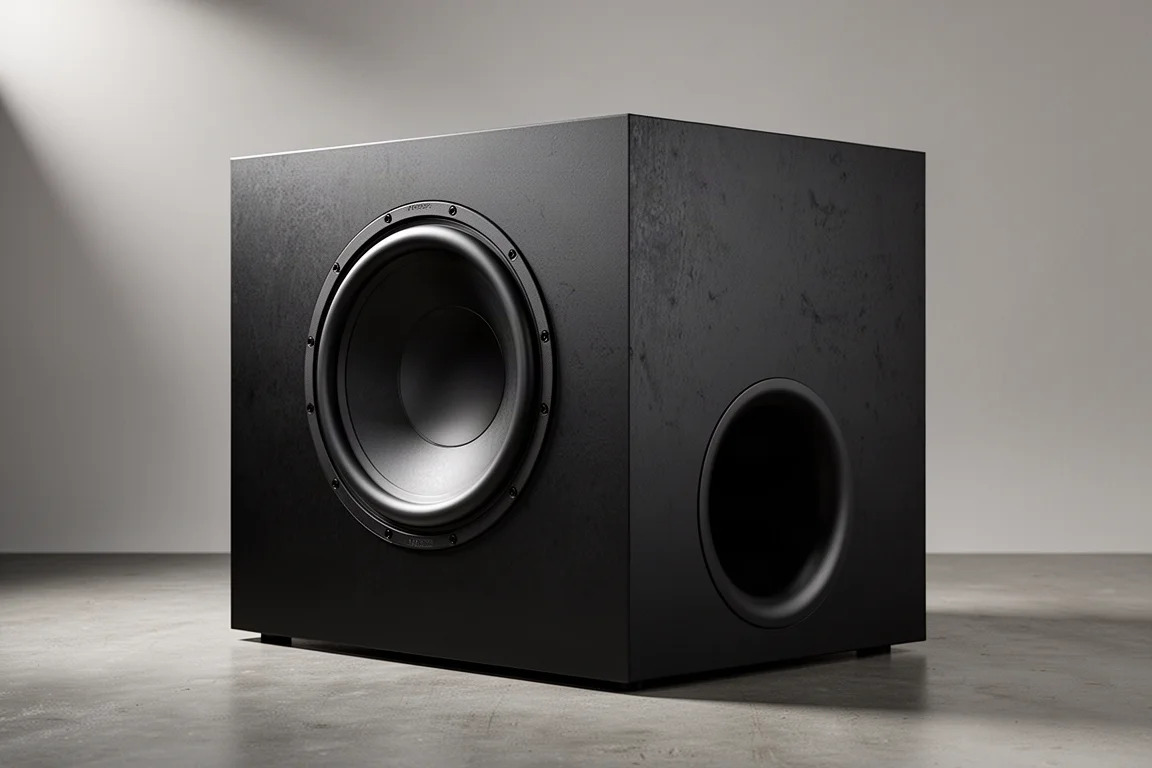
The ports have also been reconfigured. Rather than running through the cabinet, the VTF-TN1 uses large flared ports that fire downward. Because there are no bends in the port path, Hsu Research was able to tune the cabinet lower than before, which is where much of the deep-bass gain comes from.
Downfiring ports bring a second benefit. With the port opening close to the floor, low-frequency energy couples with the surface below for extra reinforcement, and the floor itself acts a little like a low-pass filter that masks port noise before it reaches the listening position. Since the port does not fire directly at the listener, any chuffing is far less likely to be audible.
The practical upshot is a subwoofer that should be easier to live with: a smaller patch of floor, a lower shipping cost, a five-year warranty, and a price of roughly $1,200. Hsu Research has also published data for the new model that goes beyond what was available for the previous flagship, including a passing result at 12.5 Hz. That figure sits below the cabinet’s tuning frequency, so it is not a promise of usable output that low, but it does show how far the design reaches.
Hsu Research VTF-TN1: The New Flagship
The VTF-TN1 is a variable-tuned design with two operating modes. In maximum extension mode, with one port sealed, the cabinet is tuned to about 15 Hz. In maximum output mode it is tuned to about 18 Hz. Both are deep tunings, and both sit lower than the modes offered by the model it replaces, so either setting is a reasonable starting point for listeners who care about extension.
Hsu Research’s published burst-test comparison puts the difference in plain numbers. The VTF-TN1 shows gains of roughly 3 to 4 dB at 16 Hz and 20 Hz compared with the VTF-15H Mark II, which is close to a doubling of perceived loudness in a band where subwoofers usually struggle. The trade-off appears around 40 to 50 Hz, where the new model gives up roughly a decibel.
Deep bass between 16 Hz and 20 Hz is far harder to produce than output in the 40 to 50 Hz region, so exchanging a decibel there for several decibels lower down is a sensible trade for anyone chasing infrasonic extension. These are published figures rather than in-room results, so the exact outcome will depend on your room, placement, and settings.
Hsu Research VTF-15H Mark II: The Previous Reference
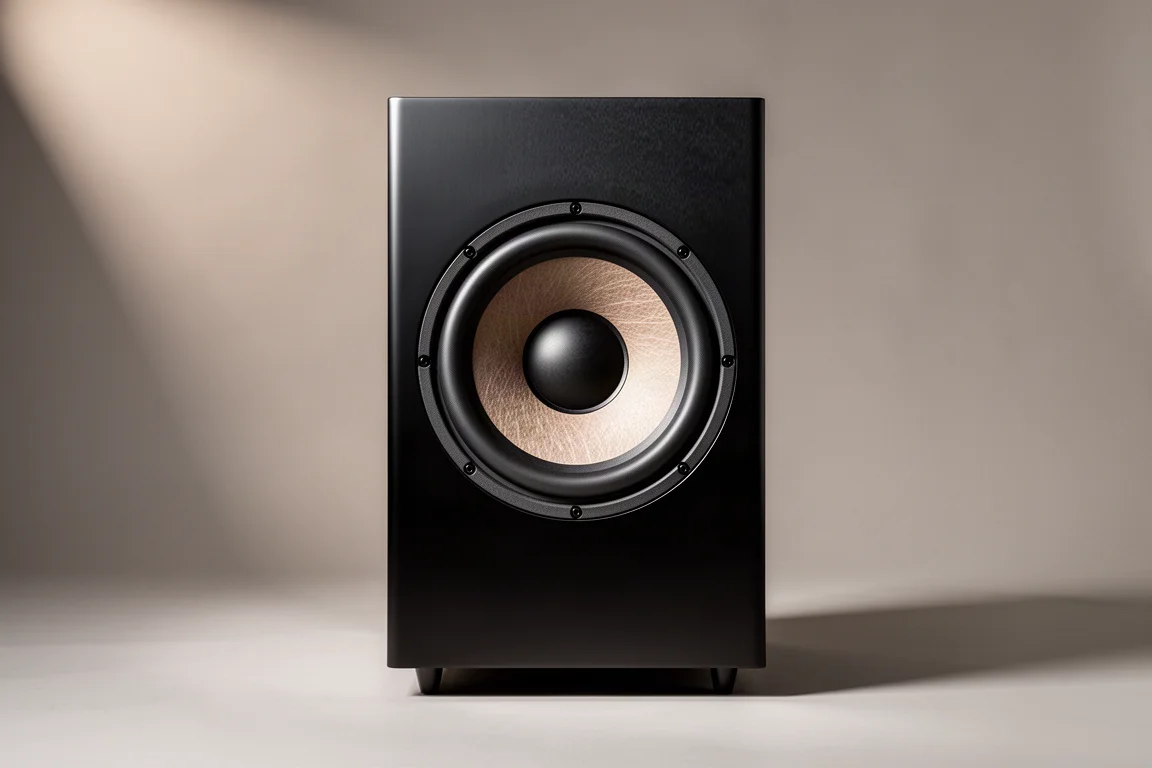
The VTF-15H Mark II served as the Hsu Research flagship before the VTF-TN1 arrived, and it is built around the same 15-inch driver that carries over to the new model. It remains a capable subwoofer, and it is the natural point of comparison for anyone who already owns one.
The differences are mostly a matter of degree. The new model digs deeper in both of its tuning modes, offers a longer warranty of five years rather than the shorter coverage that came with the previous flagship, and occupies less floor space. It also costs less than the model it replaces.
That does not make the VTF-15H Mark II obsolete. The generational step is not a dramatic one, and there is little reason to replace a working example. If you already run one, the more interesting question is whether a second subwoofer would even out the low-frequency response across your seating rather than whether the new model is worth swapping in.
Deep Bass Performance and the Trade-Offs
The published comparison between the two models tells a clear story. Below 25 Hz, the VTF-TN1 pulls ahead by margins that sit well outside normal measurement variation. Between 40 and 50 Hz, it gives back around a decibel. For home theater use that is a favorable exchange, because the deepest octaves are the hardest to reproduce and the hardest to find in a subwoofer at this price.
Port noise is the other area where the redesign should help. A downfiring port keeps its output away from the listener, and the floor boundary masks much of what remains. The outgoing model’s port design was already a strong performer in this respect, so the new arrangement improves on something that was not a weakness to begin with.
The measurements referenced here come from Hsu Research’s own published data. In-room results will vary with placement, room gain, and how the tuning mode is set.
Cabinet Size, Port Design, and Placement
The most practical change is the cabinet proportions. At 18.5 inches deep, the VTF-TN1 takes up far less floor space than its driver size would suggest, because the extra volume is stacked vertically instead. In most rooms, giving up height is easier than giving up depth, particularly when the subwoofer has to sit beside a media console or in a corner.
The downfiring port layout is what makes the shallower cabinet possible. With the ports firing at the floor, the air path can run straight out of the cabinet without bends, which frees up internal volume that a curved or folded port would otherwise consume. That extra room is what allowed Hsu Research to tune the cabinet lower while keeping the enclosure compact.
Placement still matters. Corner loading will reinforce the lowest frequencies, and the smaller footprint makes it easier to experiment with positions instead of committing to a single spot.
Warranty and Long-Term Value
The VTF-TN1 carries a five-year warranty, a longer term than the previous flagship offered. For a heavy, high-excursion subwoofer that is likely to see years of use, that coverage is a meaningful part of the value calculation.
Price is the other half of the story. At around $1,200, the new model undercuts the subwoofer it replaces while offering deeper published output and a smaller footprint. Hsu Research also expects the new cabinet to cost less to ship, which helps when freight on large enclosures is a real part of the final bill.
Taken together, the VTF-TN1 is a rare case of a replacement product that improves on its predecessor in performance terms while asking less money and taking up less room.
Who Each Model Suits
If you are buying a subwoofer now and want serious output with genuine infrasonic extension, the VTF-TN1 is the obvious starting point. It combines a 15-inch driver, a compact footprint, two deep tuning modes, and a price that sits well below what this level of low-frequency capability usually costs.
If you already own a VTF-15H Mark II, the calculus is different. The step forward is real but not dramatic, so there is little reason to sell a working subwoofer and start over. A second subwoofer, whether a VTF-TN1 or another example of what you already have, is often the more useful upgrade because it evens out bass response across multiple seats.
Buying Advice: Matching the Subwoofer to Your Room
Start with the room. A subwoofer this capable will pressurize a medium to large space, and the taller cabinet makes it easier to fit into a corner or alongside furniture than a deep, boxy design would. Measure the depth you can spare before anything else, since 18.5 inches is the number that matters most for the VTF-TN1.
Then decide how you want the cabinet tuned. Maximum extension mode prioritizes the deepest output, while maximum output mode trades a little depth for more headroom. Both settings are deeper than what the previous flagship offered, so neither is a compromise in the usual sense.
Finally, weigh the warranty and the price together. A five-year term and a price around $1,200 put the VTF-TN1 in a strong position for listeners who want deep, clean low frequencies without a premium flagship outlay.
Conclusion
The VTF-TN1 is a focused update to a long-running flagship design. It keeps the 15-inch driver and the general character of the VTF-15H Mark II, then reworks the cabinet and ports to gain roughly 3 to 4 dB in the 16 to 20 Hz range, shrink the footprint to 18.5 inches of depth, extend the warranty to five years, and bring the price to around $1,200.
For anyone building a system from scratch, that combination is easy to recommend. For existing VTF-15H Mark II owners, the new model is a worthwhile option rather than a required upgrade.
Further reading
Related Reviews
Subwoofers
Arendal 1961 Subwoofer 1S Review: Beautiful Build, Modest Punch at $1,000
A sealed $1,000 subwoofer with a gorgeous cabinet, plus three lower-priced alternatives that deliver more impact for movie nights.
Subwoofers
Arendal Sound 1723 2V Subwoofer Review: Dual 13.8-Inch Drivers Under $3,000
A flagship ported subwoofer with dual opposing 13.8-inch drivers, a 1,200W RMS amplifier, app-based DSP, and a 10-year warranty.
Subwoofers
Ascendo 16 Sub Active Sealed Review: Sealed Bass Built on Real Engineering
A close look at the Ascendo 16 Sub Active Sealed, a 16-inch sealed home theater subwoofer with independently verified measurements, a purpose-built driver, and genuinely controlled output.