Subwoofers
HSU Research VTF-TN1 Review: A 15-Inch Ported Subwoofer Built for Deep, Clean Bass
A close look at the HSU Research VTF-TN1, a 15-inch ported subwoofer with flexible port tuning, a low-distortion analog amplifier, and a footprint that stays surprisingly small.
Introduction
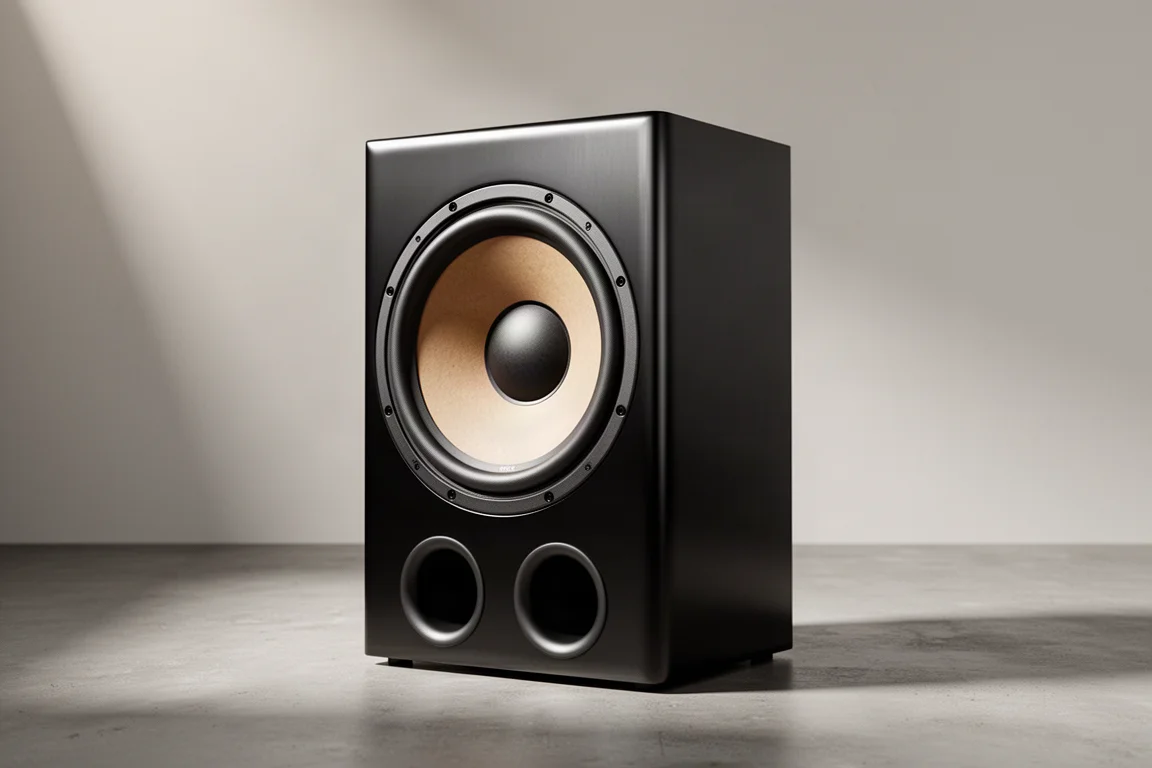
The HSU Research VTF-TN1 is a 15-inch ported subwoofer that now sits at the top of the company’s lineup, taking the place of the VTF-15H Mk2. It is a bigger cabinet in one dimension, it reaches deeper, and it costs less than the model it succeeds. The MSRP is $1,200, with roughly $100 for shipping, which puts a delivered unit near $1,300.
The TN in the model name honors Tom Nousaine, a widely respected figure in the subwoofer world and a personal friend of the company’s founder. The approach behind the design is refreshingly simple: keep the proven driver, keep the analog amplifier, reshape the cabinet, and improve the ports.
This article looks at the measured behavior, the build quality, the tuning options, and the practical questions worth settling before you buy.
Who This Subwoofer Is For
This is a subwoofer for listeners who want serious low-frequency output without giving up floor space or paying a premium price. The cabinet trades depth for height, so it stands tall rather than reaching far into the room. The result is a footprint about the same as the company’s sealed 15-inch model, even though this is a ported design.
It suits home theater owners who want chest-level punch in action soundtracks, and two-channel listeners who want a subwoofer that blends cleanly with small speakers thanks to a response that stays flat up to 200 Hz. It also appeals to anyone who prefers a straightforward analog design over app-based control and digital correction.
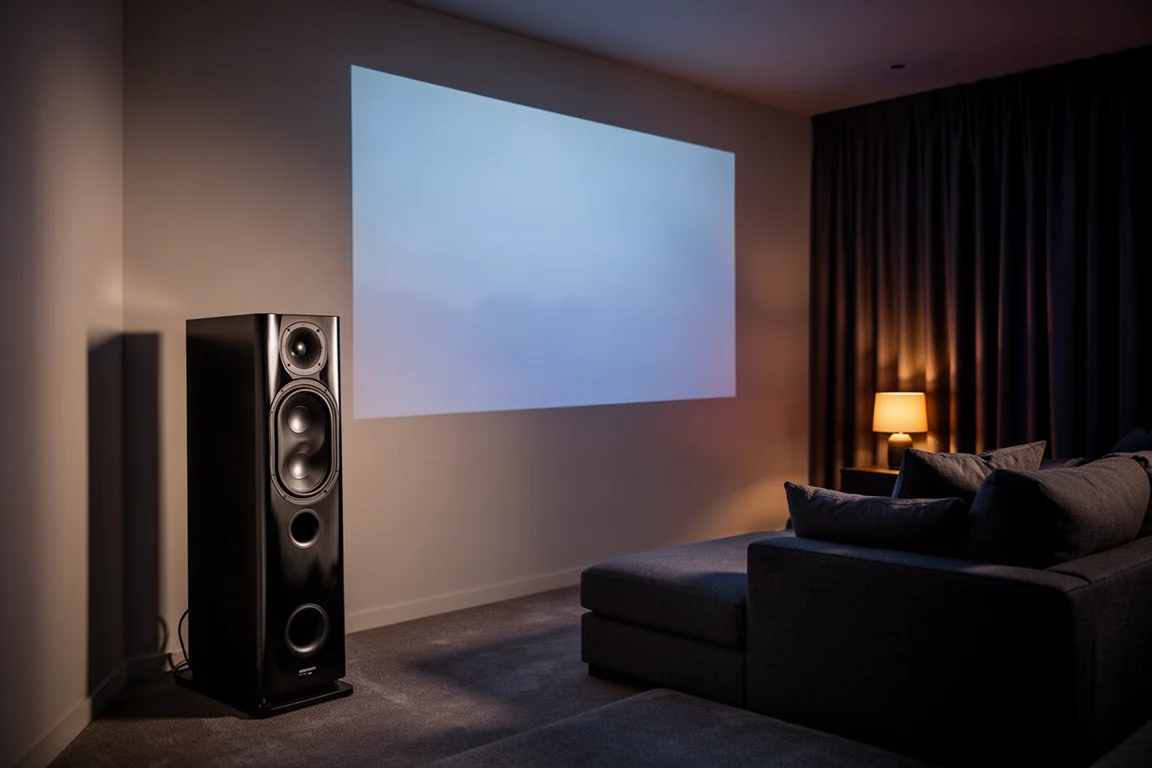
Because the ports fire downward, the design also works well in rooms where the cabinet sits close to a wall or in a corner, where that loading can add a little extra depth.
Main Strengths
Three areas stand out: measured linearity, the quality of the driver and cabinet, and the flexibility of the port tuning.
Deep Bass Without Digital Processing
The frequency response is remarkably flat for a subwoofer with no digital signal processing on board. It stays linear up to 200 Hz, which points to a low-inductance driver and a cabinet sized correctly for it. In practice that means a clean, high-fidelity low end and an easy blend with smaller main speakers.
In burst testing with both ports open, output lands in the top tier for this class. Continuous output holds above 110 dB through most of its range with one port open, with mild compression beginning around 105 dB and mostly in the low end. Harmonic distortion sits near 1 percent at normal listening levels and only climbs when the subwoofer is driven to its absolute limits, where odd-order distortion rises at the lowest frequencies.
Time-domain behavior is just as impressive. Group delay stays under 10 milliseconds across the range where hearing is most sensitive, with a worst case of about 20 milliseconds below 40 Hz. That is part of why this subwoofer sounds quick rather than boomy.
Driver, Cabinet, and Port Design
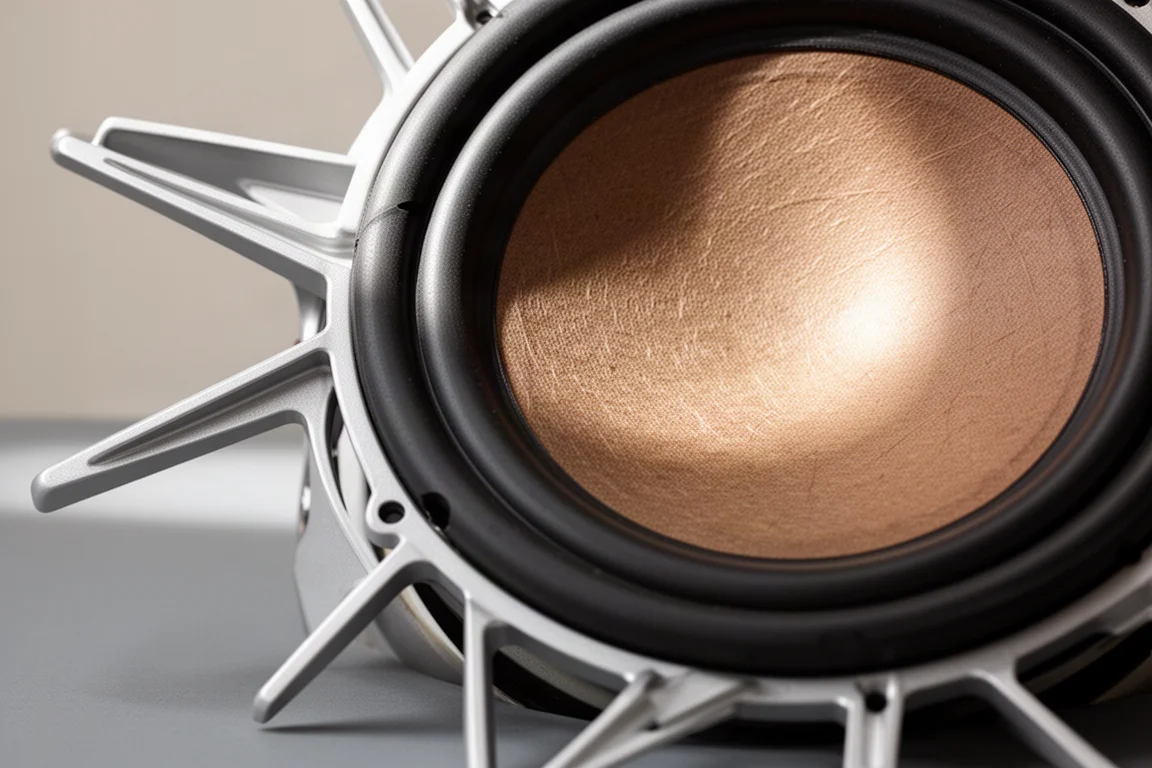
The driver is a substantial unit: cast aluminum frame, dual magnets, and venting under the spider, with a treated pulp cone. It is essentially the same driver used in the VTF-3 and the VTF-15H, and there was little reason to change it.
The cabinet is well braced, with damping on the walls and bracing along the top, bottom, and corners. It is not an especially heavy subwoofer for its output, but it is stout, and cabinet vibration is not a concern. The ports are large, roughly 4 inches in diameter, and they fire downward, which helps mask port noise and adds a measure of loading against the floor.
The amplifier is a 600-watt class AB design with heat sinks. Controls include volume, phase, and a Q control that trims or boosts the very low end to suit the room. XLR and speaker-level inputs are both provided. The finish is a true satin black rather than a vinyl wrap, and it is the only finish offered. A grill is included and attaches with tabs. The amplifier carries a five-year warranty, and shipping protection is thorough, with polyethylene foam, corner protectors, and edge protectors.
Flexible Port Tuning
Variable tuning is a core feature. You can run both ports open, or plug one to lower the tuning frequency to about 15 Hz instead of 18 Hz. When you plug a port, you also switch the amplifier to its EQ1 mode so the driver protection filter matches the new alignment. It is a quick adjustment.
The trade-off is straightforward. Both ports open gives maximum output and less compression in the deep bass. A single port open gives deeper extension, lower distortion, and more headroom for room gain at infrasonic frequencies. In measurements the subwoofer stays nearly flat down to about 15 Hz with one port open, so it can chase true infrasonic content. Downward-firing ports also extend the effective port length and add loading, which can produce even deeper bass in a real room than anechoic numbers suggest.
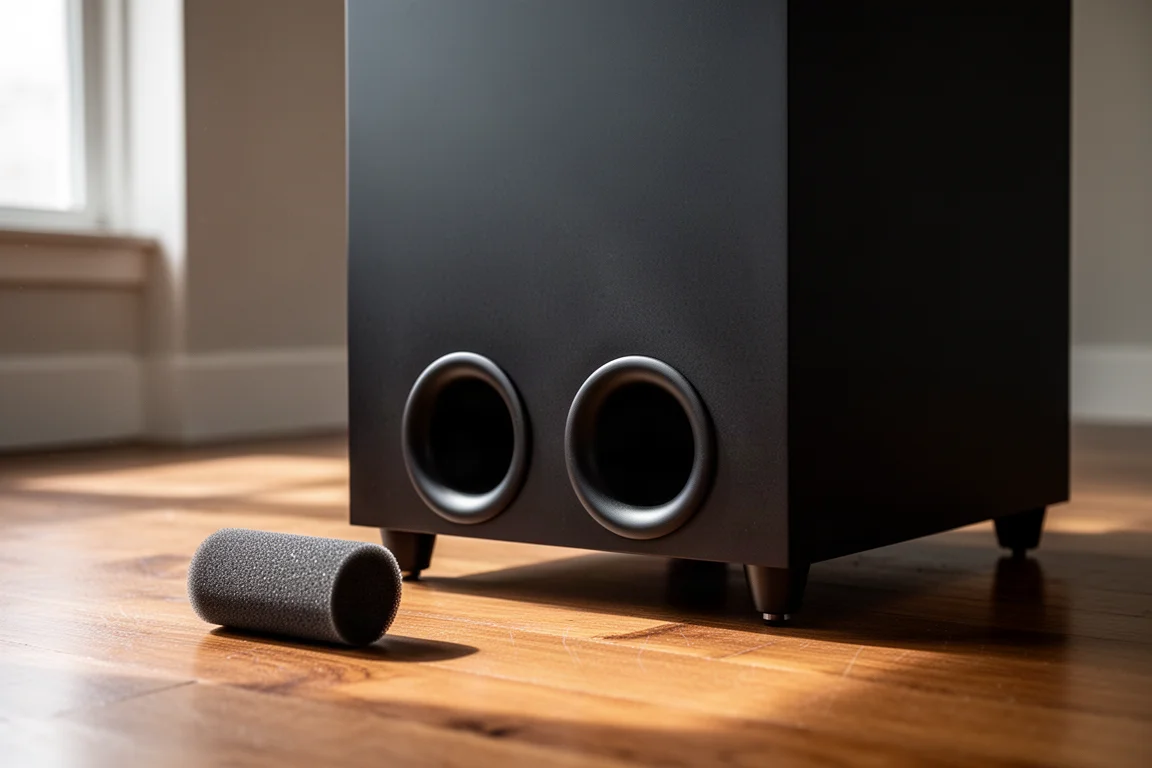
For most rooms, one port open is the more musical choice: deeper, cleaner, and better behaved at the bottom, with two ports available whenever maximum output matters more than extension.
Things to Consider Before Buying
The main trade-off is height. The cabinet stands about 30 inches tall, which some listeners find more visually prominent than a deeper, lower box. It is a deliberate exchange: smaller footprint, taller profile.
There is no digital signal processing. The analog amplifier keeps the response flat without it, but DSP could have tapered output at the very highest drive levels to hold distortion in check. Doing so would cost dynamic range, so the design keeps the output instead. Distortion is very low at normal levels and only becomes a factor near the limits.
The finish is satin black only, and the subwoofer weighs roughly 80 to 85 pounds, so plan for a two-person lift and a stable spot on the floor. Other options in this price neighborhood include the Monoprice Monolith M15 V2, the SVS PB-3000, the Rythmik FV15HP, and larger Klipsch models, each trading depth, output, cabinet size, and feature set differently.
Buying Advice
At $1,200 plus about $100 shipping, the VTF-TN1 delivers a lot of subwoofer for the money: a well-built cabinet, a serious driver, downward-firing ports, and measured performance that is unusually flat without any digital correction.
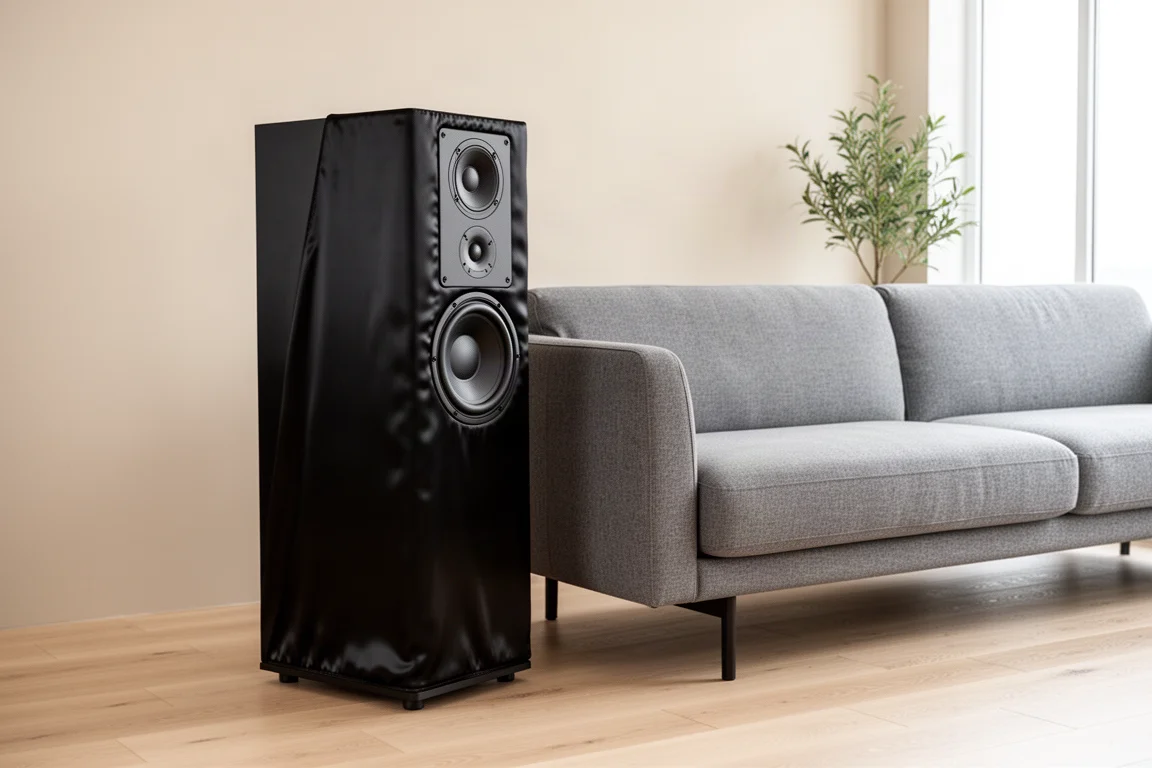
Match it to your room. If you have space for a tall cabinet and want the deepest, cleanest extension, run one port open. If you prioritize maximum output for a large room or very high playback levels, run both ports open. Either way, the small footprint makes it easier to place than most ported 15-inch designs.
Paired with capable main speakers and a little care with placement and level matching, it should handle both movie and music duty without asking for much in return.
Conclusion
The HSU Research VTF-TN1 is a convincing flagship. It replaces the VTF-15H Mk2 with a smaller footprint, deeper extension, better ports, a lower price, and a longer amplifier warranty. Its response is flat without DSP, its distortion stays low at normal levels, and its time-domain behavior avoids the boominess often associated with ported designs. If you want deep, clean, punchy bass and you can live with a tall cabinet, this is a strong place to put your budget.
Product link
View more details for Hsu Research VTF-TN1
This product is mentioned in the review. Check the specifications, options, and compatibility before buying.
View more details for Hsu Research VTF-TN1Further reading
Related Reviews
Subwoofers
Arendal 1961 Subwoofer 1S Review: Beautiful Build, Modest Punch at $1,000
A sealed $1,000 subwoofer with a gorgeous cabinet, plus three lower-priced alternatives that deliver more impact for movie nights.
Subwoofers
Arendal Sound 1723 2V Subwoofer Review: Dual 13.8-Inch Drivers Under $3,000
A flagship ported subwoofer with dual opposing 13.8-inch drivers, a 1,200W RMS amplifier, app-based DSP, and a 10-year warranty.
Subwoofers
Ascendo 16 Sub Active Sealed Review: Sealed Bass Built on Real Engineering
A close look at the Ascendo 16 Sub Active Sealed, a 16-inch sealed home theater subwoofer with independently verified measurements, a purpose-built driver, and genuinely controlled output.