Subwoofers
Hsu Research VTF-2 Mk5 Review: Deep, Clean Bass Without the Extra Features
A 12-inch subwoofer with a 16 Hz rated response, variable port tuning, and a deliberately stripped-down control set, priced at $689.
Introduction
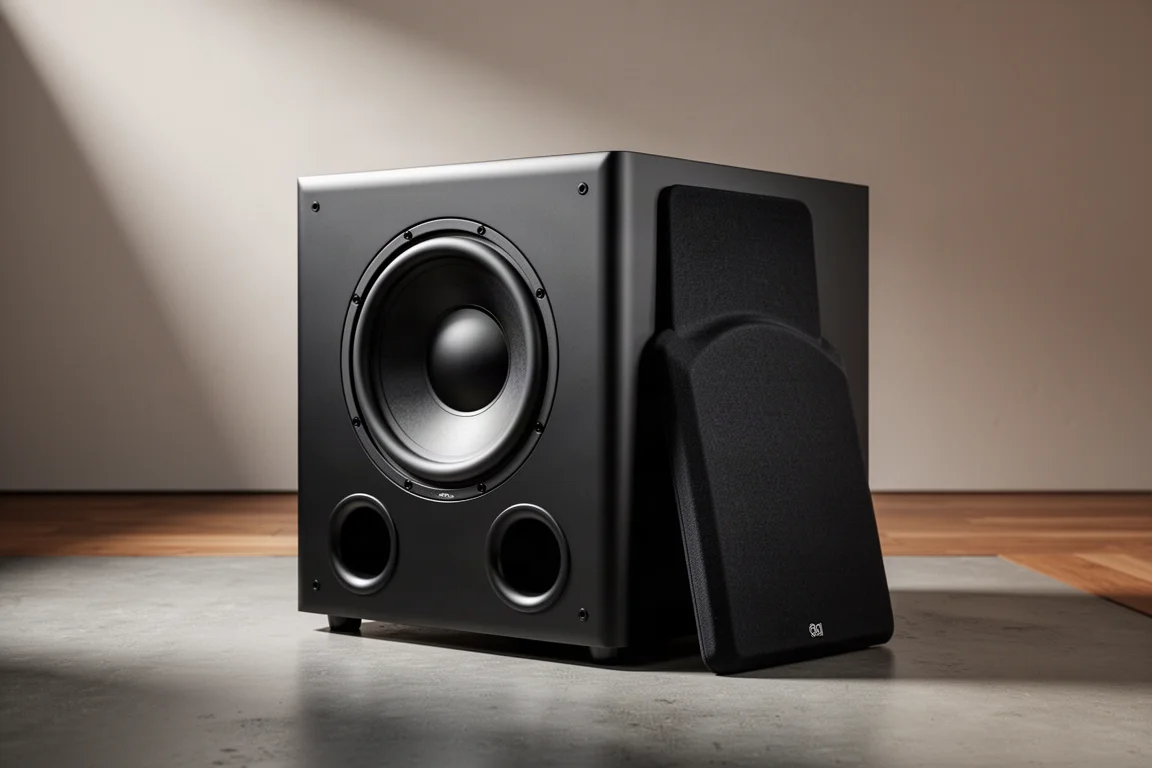
The Hsu Research VTF-2 Mk5 is the most affordable subwoofer in the company’s current range, a 12-inch model priced at $689. Hsu Research builds four subwoofers today, and the other three use 15-inch drivers while sitting only a little higher on the price ladder. Going with the smallest option is a deliberate choice: you give up some driver surface area and cabinet volume, and in return you get a compact, no-frills subwoofer that is simple to integrate into a wide range of systems.
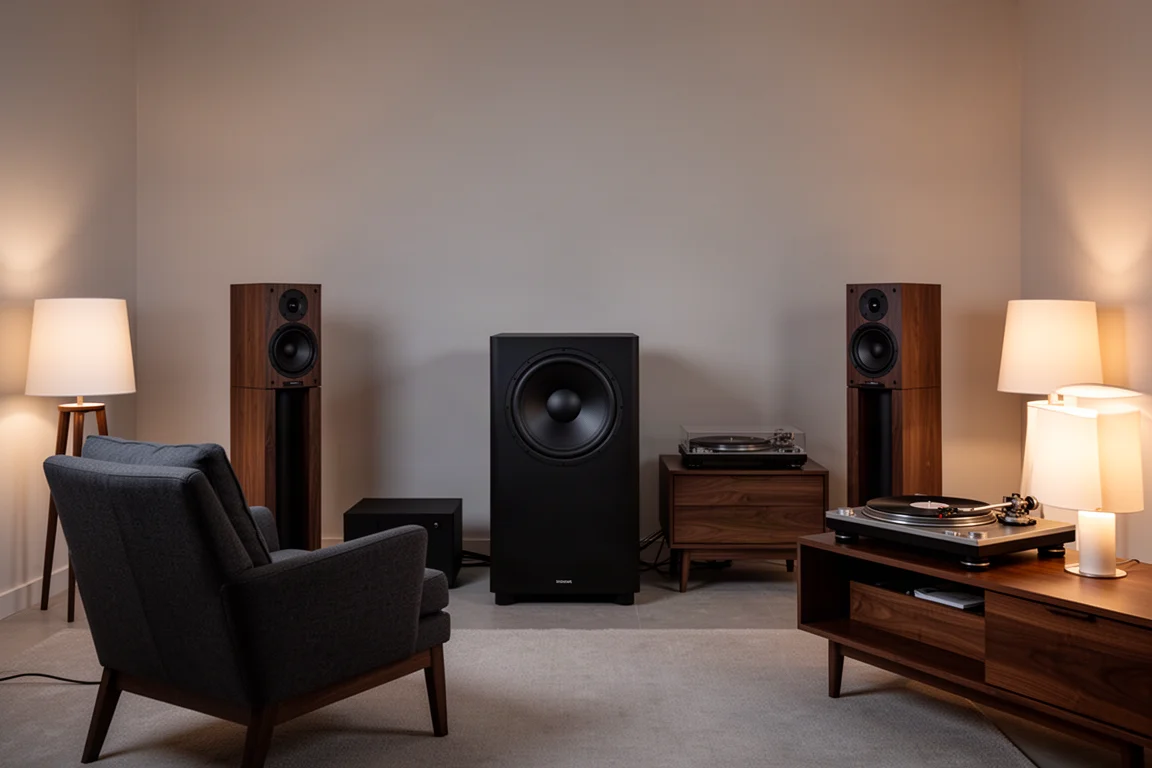
In practice, the VTF-2 Mk5 was used in a two-channel setup with Magnepan LRS Plus panel speakers, which are open and detailed but essentially stop producing meaningful output below roughly 50 Hz. Blending the subwoofer with those speakers took almost no effort at all, and the combination made the panels sound like substantially larger loudspeakers. The same subwoofer was later paired with KEF LS50 Meta standmounts and with Pure Audio Project Duet 15 open-baffle speakers, and in both cases it added weight, depth, and scale that the speakers could not deliver on their own.
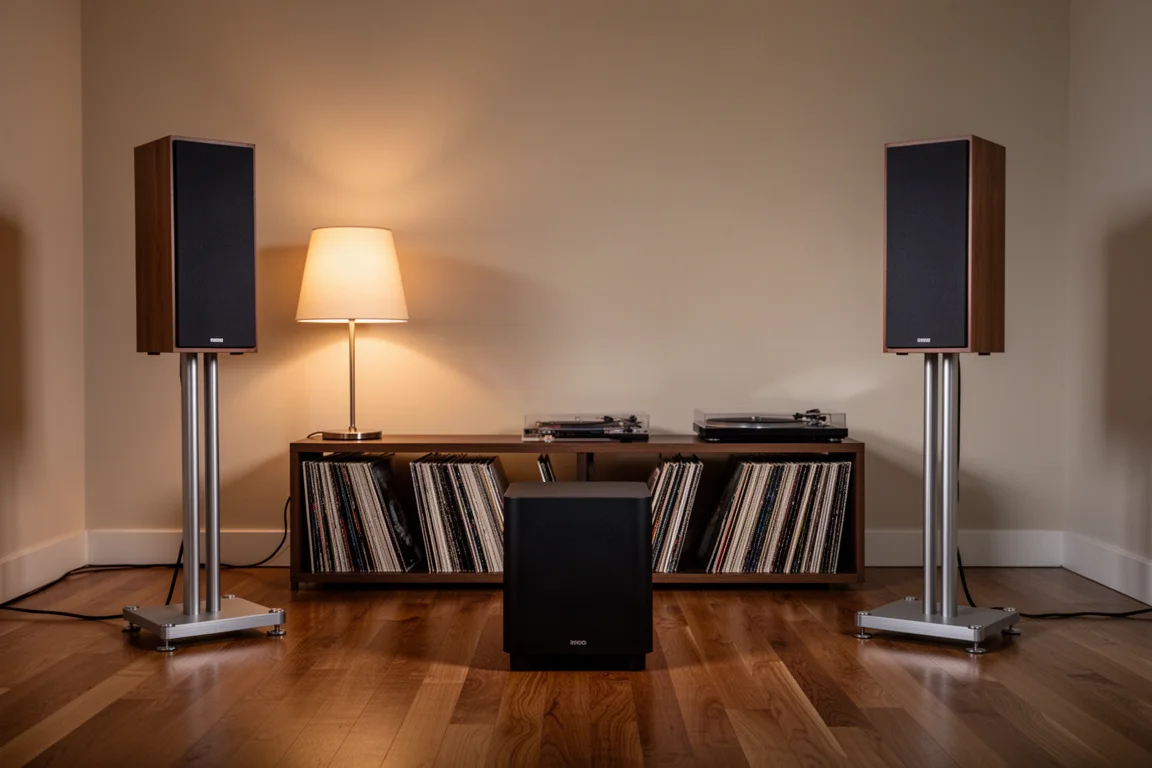
That flexibility is the heart of the story. The VTF-2 Mk5 is not a feature-packed product and does not try to be. It is a purpose-built bass engine that rewards a little patience during setup.
Who This Product Is For
This subwoofer makes the most sense for listeners running two-channel systems, particularly ones built around speakers with real strengths in the midrange and treble but limited low-frequency extension. Panel speakers and small standmounts are the obvious candidates, and the VTF-2 Mk5 proved comfortable with both.
It also suits anyone who wants deep bass without handing control of their system over to software. There is no automatic calibration routine to run, no app to pair, and no processing sitting between the source and the driver. You set the crossover, the level, the phase, and the tuning yourself, and the result is only as good as the effort you put in. For listeners who enjoy dialing in a system by ear, that is a feature rather than a drawback.
Finally, it is a reasonable fit for someone who wants more low-frequency output in a room where a pair of large tower speakers is not practical. The cabinet is substantial, but it remains a single box that can be placed and adjusted to taste.
Main Strengths
The headline specification is unusual at this price. The rated response extends down to 16 Hz with a tolerance of plus or minus 2 dB, which is a genuinely deep figure for a 12-inch subwoofer. A 350-watt amplifier drives the driver, and the design is rated to deliver up to 1,400 watts on peaks, so there is plenty of headroom available when a recording asks for it.
That capability is not only about rumble. Large organ recordings demonstrated how controlled the low end can be: each pedal note arrived as a distinct, clearly defined event with no blurring, no muddiness, and no boom. Deep bass came through with air around it rather than as a single indistinct mass, which is a far harder thing to achieve than raw output.
There is a second benefit that is easy to overlook. With a competent subwoofer blended into the system, the stereo sound stage itself grows. Images take on more depth, the presentation feels more spacious, and the recording becomes more immersive overall. That effect showed up consistently with every speaker the VTF-2 Mk5 was used alongside.
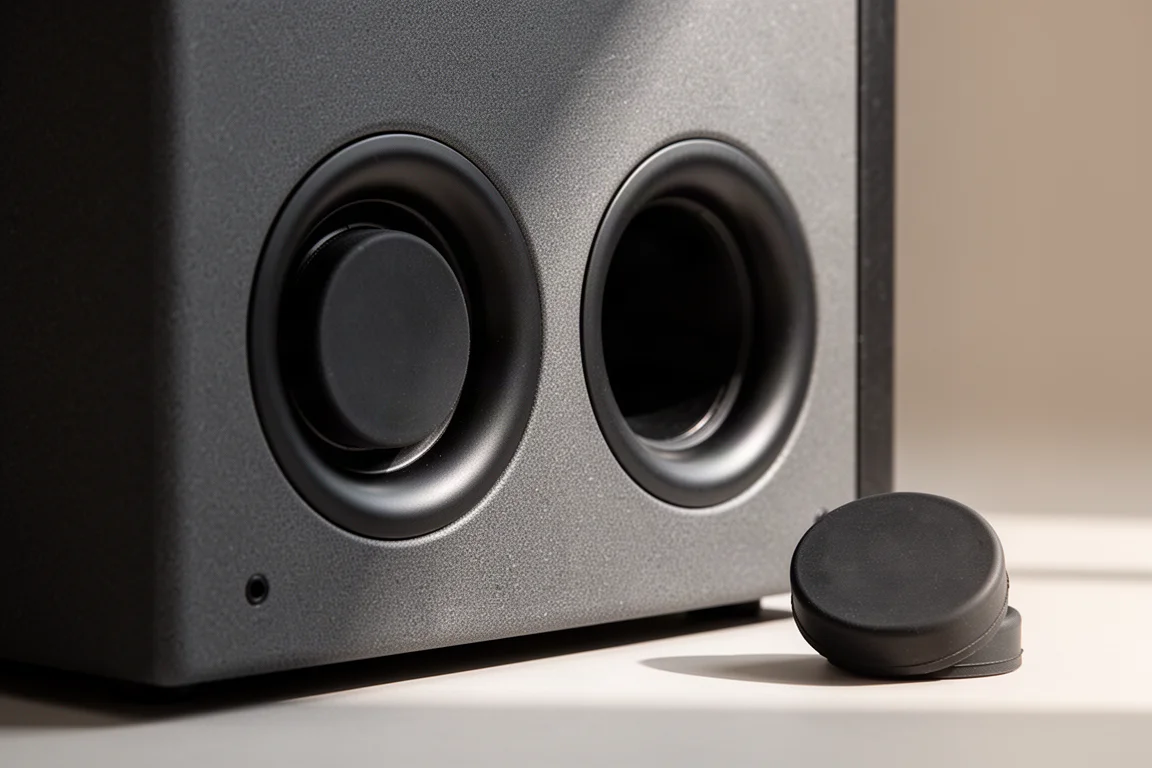
Build quality supports the asking price as well. The cabinet uses 3/4-inch MDF with substantial internal bracing, and the cloth grille sits in a heavy-duty frame held in place by solid metal plugs rather than plastic pins that snap under pressure. The variable tuning system, covered below, is the other major strength, because it makes a seamless blend with almost any speaker far easier to achieve.
Variable Tuning and Setup
The VTF-2 Mk5 is more flexible than most subwoofers in its class thanks to a variable tuning design. The front baffle carries two 3-inch ports, and each can be left open or sealed with a plug. Both open, both closed, and one of each are all valid configurations, and equalization switches let you fine-tune the response further to match the port arrangement you choose. Hsu Research documents the combinations thoroughly in the owner’s manual, which is unusually detailed about placement and adjustment.
The character changes noticeably between settings. With both ports open, the bass becomes thicker, punchier, and more forceful, with a real sense of weight and slam. With both ports sealed, that extra thickness gives way to speed and clarity, and some of the definition the design is capable of returns. The half-open option sits between the two. Personal taste decides the winner, and here both ports closed delivered the fastest and cleanest bass.
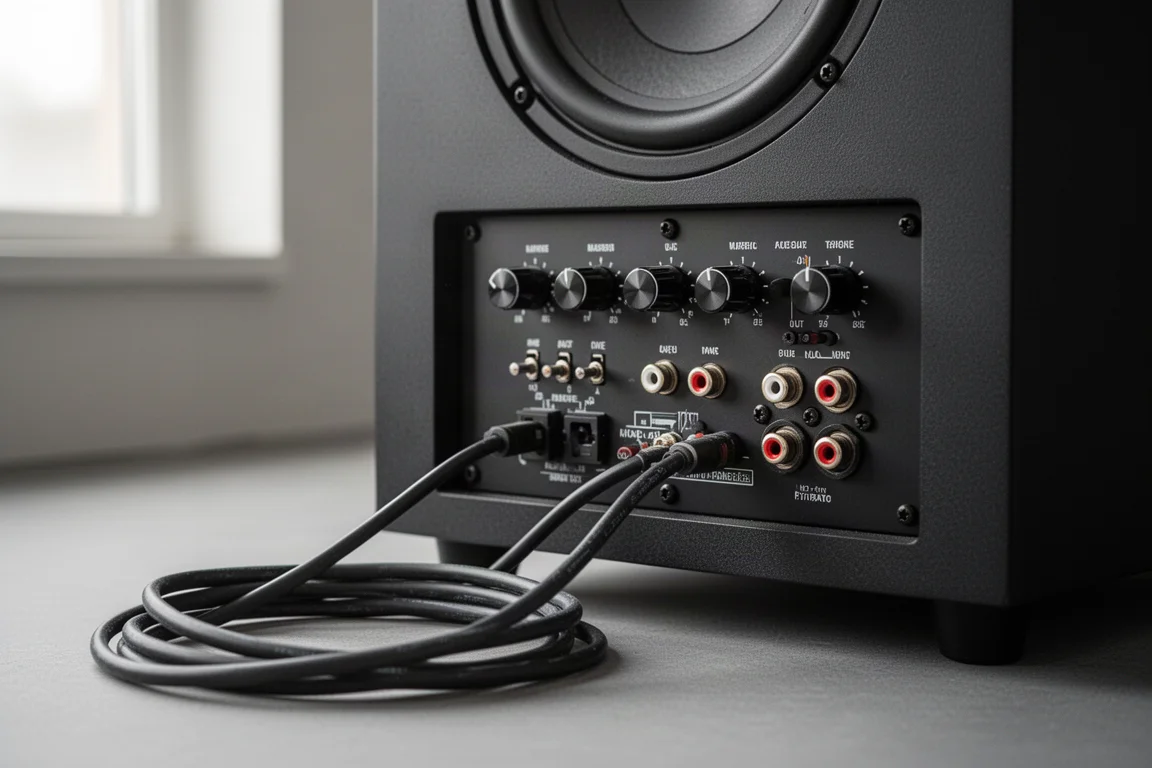
The rear panel keeps the control set practical. From left to right you get speaker-level inputs for systems without a subwoofer output or a spare set of preouts, left and right RCA line-level inputs, a subwoofer volume control, a 0/180 phase switch, an EQ Q operating mode switch, a Q control, and a crossover adjustable from 30 to 90 Hz with a 24 dB per octave slope. A crossover bypass switch is there for receivers and processors that handle bass management internally, and a power/standby switch completes the layout.
Things To Consider Before Buying
The VTF-2 Mk5 is deliberately stripped down. There is no remote control, no DSP, no room correction, and no automatic setup of any kind. Everything from level to crossover to port configuration is a manual decision, and the subwoofer will not flatter a careless installation. Expect to spend real time adjusting placement and controls before it sounds its best.
It is also worth being clear about what a subwoofer can and cannot fix. Adding the VTF-2 Mk5 to a small speaker does not make that speaker more dynamic or more capable of large power swings. What you gain is deeper bass and a bigger sense of space. If the goal is a system that plays loud, dense music with authority, a subwoofer alone will not get you there.
The cabinet is large for a 12-inch design, so it needs a genuine footprint in the room. Plan for the space before you buy, and expect to experiment with a few positions before the blend locks in.
Speaker Pairing Notes
With the Magnepan LRS Plus, the subwoofer was transformative. A 12-inch extended mix of a classic rock track made the case immediately: the bass line drove the song forward with weight and momentum, and the drums took over the room in a way the panels simply could not manage alone. Without the subwoofer, the same track sounded like a shadow of itself.
With the KEF LS50 Meta, the addition was less dramatic because that speaker is already closer to full range, but the improvement was still obvious. A dense, energetic rock recording gained drama and excitement, and the speakers seemed to loom larger in the room.
With the Pure Audio Project Duet 15, the result was more interesting than expected. Those speakers use 15-inch woofers, but they are tuned for balance as full-range designs rather than for maximum low-frequency extension. Adding the VTF-2 Mk5 pushed the system deeper and expanded the sound stage further, making an already large presentation feel bigger and more powerful.
Buying Advice
At $689, the VTF-2 Mk5 is difficult to argue with. It is hard to think of another single addition that changes the sound of a system this much for the money, and the change is not limited to extra bass. The sound stage opens up, images gain depth, and speakers with limited extension start to sound like considerably more expensive designs.
The warranty is generous for the category, with seven years of coverage on the subwoofer itself and two years on the electronics. Combine that with the variable tuning system, which makes a clean handoff to almost any speaker achievable without measuring equipment, and the value proposition becomes stronger still.
The right buyer is someone who wants deep, clean, well-defined bass and is willing to spend an evening or two dialing it in. If you would rather press a button and let software handle everything, this is not the subwoofer for you. If you enjoy shaping the sound of your system yourself, the VTF-2 Mk5 rewards the effort.
Conclusion
The Hsu Research VTF-2 Mk5 earns its recommendation by doing one job exceptionally well. It produces deep, controlled, articulate bass, it blends easily with a wide range of speakers thanks to its tuning options, and it costs far less than its capabilities suggest. The absence of a remote, DSP, and room correction is a conscious trade, and for listeners who like to tune by ear, it is the right one.
Product link
View more details for Hsu Research VTF-2 Mk5
This product is mentioned in the review. Check the specifications, options, and compatibility before buying.
View more details for Hsu Research VTF-2 Mk5Further reading
Related Reviews
Subwoofers
Arendal 1961 Subwoofer 1S Review: Beautiful Build, Modest Punch at $1,000
A sealed $1,000 subwoofer with a gorgeous cabinet, plus three lower-priced alternatives that deliver more impact for movie nights.
Subwoofers
Arendal Sound 1723 2V Subwoofer Review: Dual 13.8-Inch Drivers Under $3,000
A flagship ported subwoofer with dual opposing 13.8-inch drivers, a 1,200W RMS amplifier, app-based DSP, and a 10-year warranty.
Subwoofers
Ascendo 16 Sub Active Sealed Review: Sealed Bass Built on Real Engineering
A close look at the Ascendo 16 Sub Active Sealed, a 16-inch sealed home theater subwoofer with independently verified measurements, a purpose-built driver, and genuinely controlled output.