Home Audio
How to Pick a Soundbar: Sonos Ray and Devialet Dione Explained
A practical guide to soundbar categories, room placement, and connections, with the Sonos Ray and the Devialet Dione as two clear examples.
Introduction
Televisions keep getting thinner, and there is simply less room inside the cabinet for the speakers that used to do the heavy lifting. The result is that many modern TVs sound noticeably worse than older sets, which is why a soundbar has become one of the most practical upgrades for a living room.
A good soundbar makes dialogue easier to follow, gives soundtracks more weight, and adds bass that a television speaker cannot produce. The best examples can even place effects around and above you for a more immersive experience.
This guide covers the three broad soundbar categories, how room size and placement shape the decision, and two models that illustrate what each level of the market can deliver.
How to Choose the Right Soundbar Category
Start with one question: what matters most about your TV experience? Buyers tend to fall into three groups.
The first group has a hard time hearing and understanding dialogue. Almost any soundbar will improve speech intelligibility dramatically, and if deep bass and immersive effects are not a priority, a basic model will do the job.
The second group wants clear dialogue plus a sense of immersion and fuller bass. This is the most common category of soundbar buyer.
The third group wants something close to a dedicated home theater system with separate components, but prefers the simplicity, the smaller footprint, or the lower cost of a soundbar.
Within those groups, decide whether the bar will handle music as well as television. Most current soundbars stream music over Bluetooth, AirPlay, or Chromecast, so confirm the option exists if you plan to listen that way. Voice control is worth checking too, but it should not be the deciding factor. Choose the bar that suits your taste and your room first.
Channel notation is worth learning before comparing models. A designation such as 3.1 means three channels plus a subwoofer, while longer numbers such as 5.1.4 describe main and surround channels, a subwoofer, and height channels.
Basic Soundbars: Clarity First and Flexible Placement
Basic soundbars are the least expensive group, and they make voices clearer, more natural, and easier to understand than built-in TV speakers. They come in 2.0, 3.0, 2.1, and 3.1 configurations.
Two-speaker versions play back in stereo. Three-speaker versions add a dedicated center speaker, and because so many soundtracks are mixed in surround, these models can decode the center channel and send dialogue straight to that speaker for extra clarity.
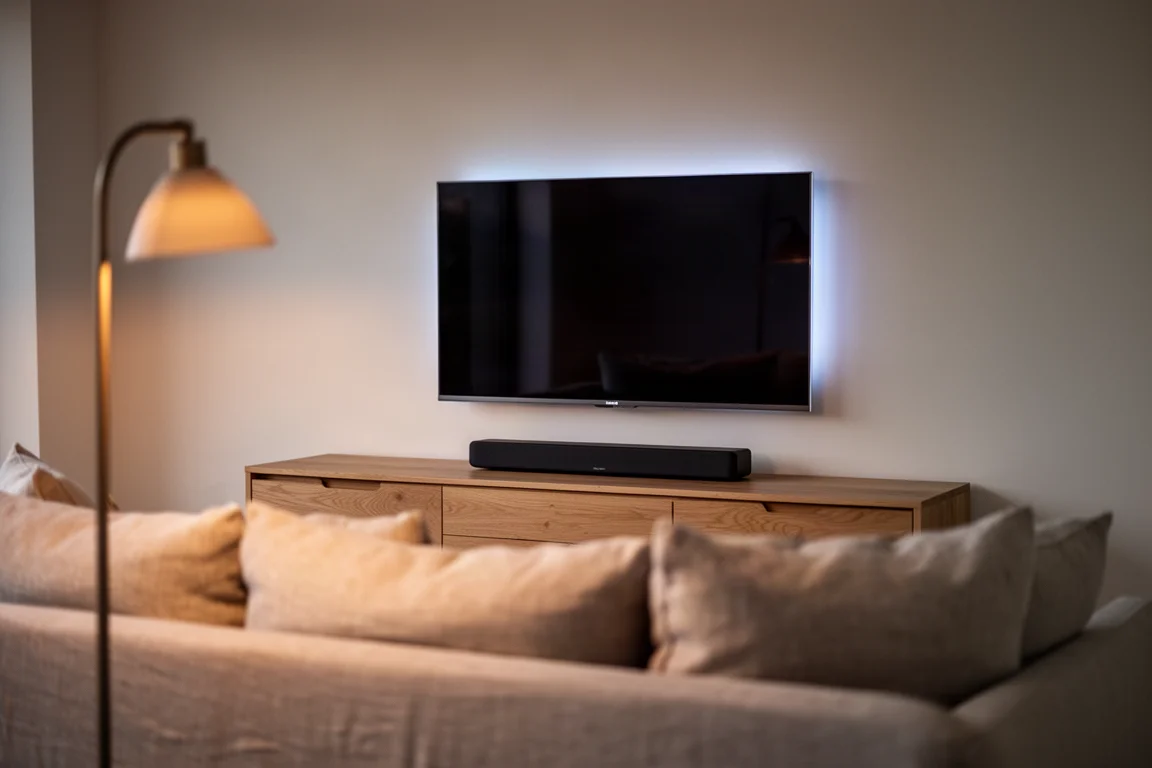
Drivers sit in the front of the cabinet on most of these models, which makes placement easy. They can be wall-mounted above or below the TV, rested on the furniture the TV stands on, or fitted inside a cabinet. Versions with a subwoofer deliver much more bass and suit larger rooms or music listening, and some allow a subwoofer to be added later.
Connections are straightforward: optical or HDMI ARC, which keeps these bars compatible with nearly any TV. Check the rear panel of your television for one of those outputs before you buy. This category works well in a main entertaining space, a bedroom, or an exercise room where better TV sound matters more than a full surround experience.
Best Basic Option for Clear Dialogue: Sonos Ray
The Sonos Ray is a compact example of the basic category. It is small enough to sit neatly under a television, it slots into the Sonos music ecosystem, and a subwoofer can be added later if you want more low end.
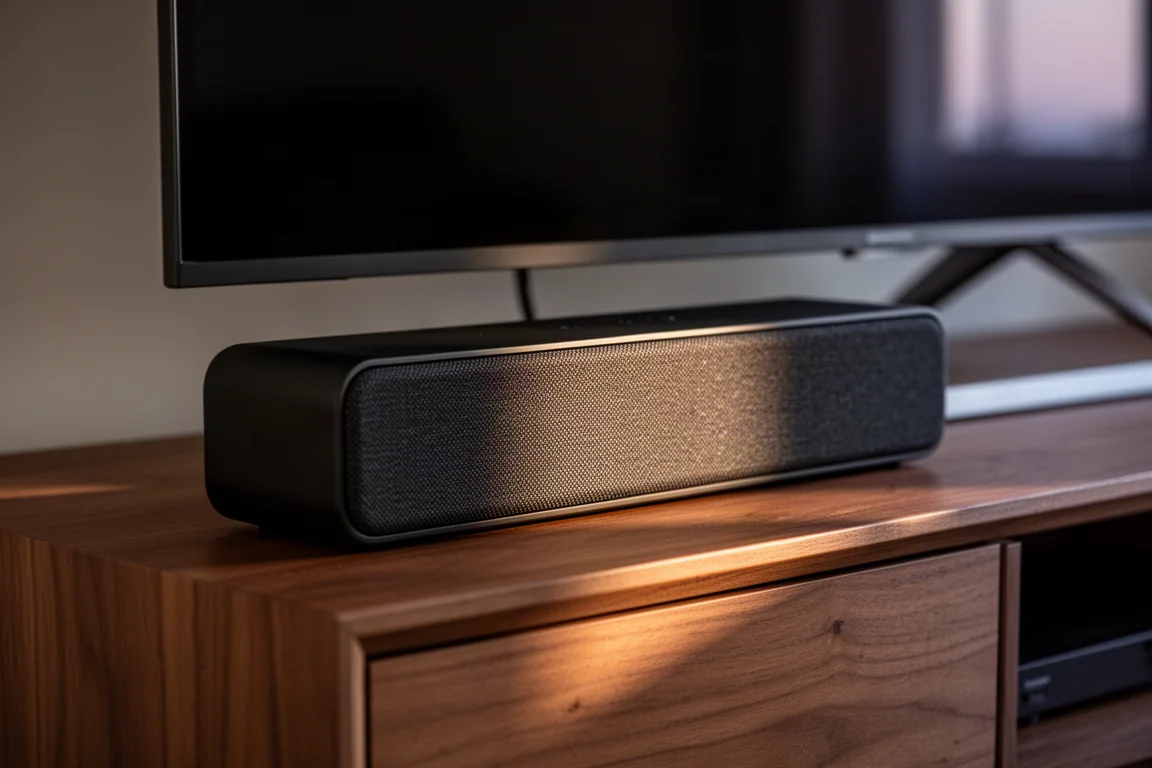
Two practical notes apply to any bar in this group. If the bar lives inside a cabinet, push it as close to the front edge as possible so the cabinet does not block the drivers. Taller models generally house larger drivers, which tends to produce a fuller sound. If you add a subwoofer, experiment with its position in the room, because placement changes bass performance more than most people expect.
Surround Sound Soundbars: Immersion With Placement Trade-Offs
This is the largest selection of soundbars and the widest spread of prices. Most are wider than the basic models, and if appearance matters, a bar that is about the same width as the television, or narrower, tends to look better.
Designations run from 5.1 up to 9.1.4. The first number counts main and surround channels, the second indicates a subwoofer, and a third number indicates height channels. Extra drivers fire sound upward, sideways, or both to build a sense of immersion, and some models keep everything in one cabinet while others use separate surround speakers and a subwoofer.
Upward-firing drivers create height effects by bouncing sound off the ceiling, which is how height channels in immersive formats such as Dolby Atmos are reproduced. In most rooms this works well, and the better implementations are convincing enough to make you look up. Until you reach the upper end of the range, dialogue is usually not much better than the best three-channel models, but the surround effects transform action and spatial content.
Placement matters more here. Do not put this type of bar inside a cabinet, because you would block a large part of the output. If you wall-mount one, keep it at least four inches below the bottom of the television. Upward-firing drivers work best with flat ceilings under about twelve feet high. In rooms that do not fit that description, separate speakers mounted to the wall or ceiling are the alternative, and upward-firing drivers remain a reasonable compromise when a full separates system is not an option.
Best Immersive All-in-One: Devialet Dione
The ultimate category is the no-compromise end of the market, and it elevates every part of the TV audio experience, dialogue included. Some of these models rival separate center channel speakers at revealing subtle nuances in a dialogue track. They start at 5.1.2 and reach well beyond, with a wide array of effect channels.
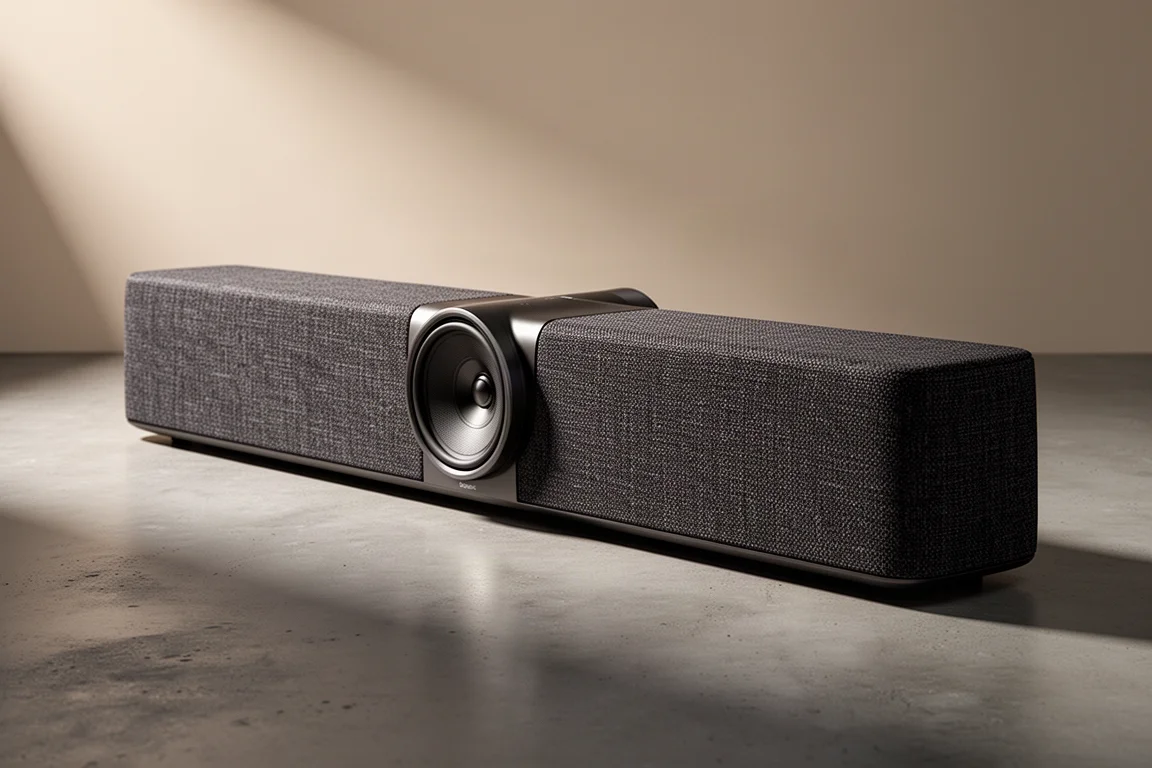
What separates them is pure audio quality: better speaker components, and designs from companies known for sound engineering. A few manage to keep everything, including the subwoofer, inside a single box while still producing deep bass and immersive surround effects. The Devialet Dione is one of those self-contained designs, and it stood out as the strongest sounding bar in its class.
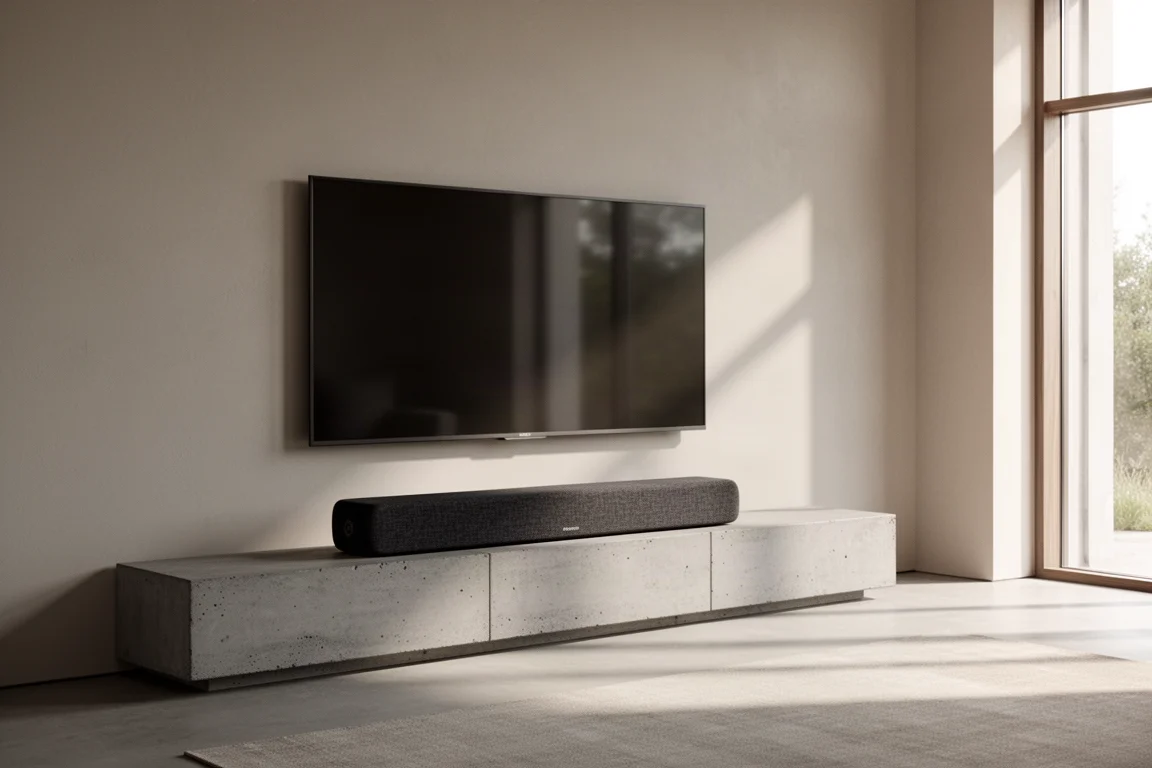
The usual setup advice applies with extra force at this level. Sit the bar toward the front of the cabinet and keep it as far as possible from the television surface. Where the TV offers HDMI ARC or eARC, use that instead of optical so you get uncompressed surround sound when the content provides it. With external surround speakers, try positions from the sides of the couch to behind it, and spend time on subwoofer placement.
Room Correction, Connections, and Placement Details
Active room correction has improved a great deal in recent years. Using a microphone on a phone or the one supplied with the soundbar, the system measures the acoustic character of the room and reduces peaks at specific frequencies. In many rooms the difference is significant, so if your bar includes room correction, use it.
Cabling is the other detail worth planning. HDMI ARC or eARC carries uncompressed surround sound when the source supports it, while optical remains a reliable fallback that works with almost any television. Check which outputs your TV has before choosing a model.
Buying Advice: Matching a Soundbar to Your Room and Habits
Match the bar to the answer you gave at the start. If clearer dialogue is the whole goal, a basic 3.0 or 3.1 model is the sensible spend. If you want immersion and bass for films and series, move up to a surround model with upward-firing drivers and accept the placement rules that come with it. If you want the closest thing to a home theater without separate components, the ultimate category is where the money goes.
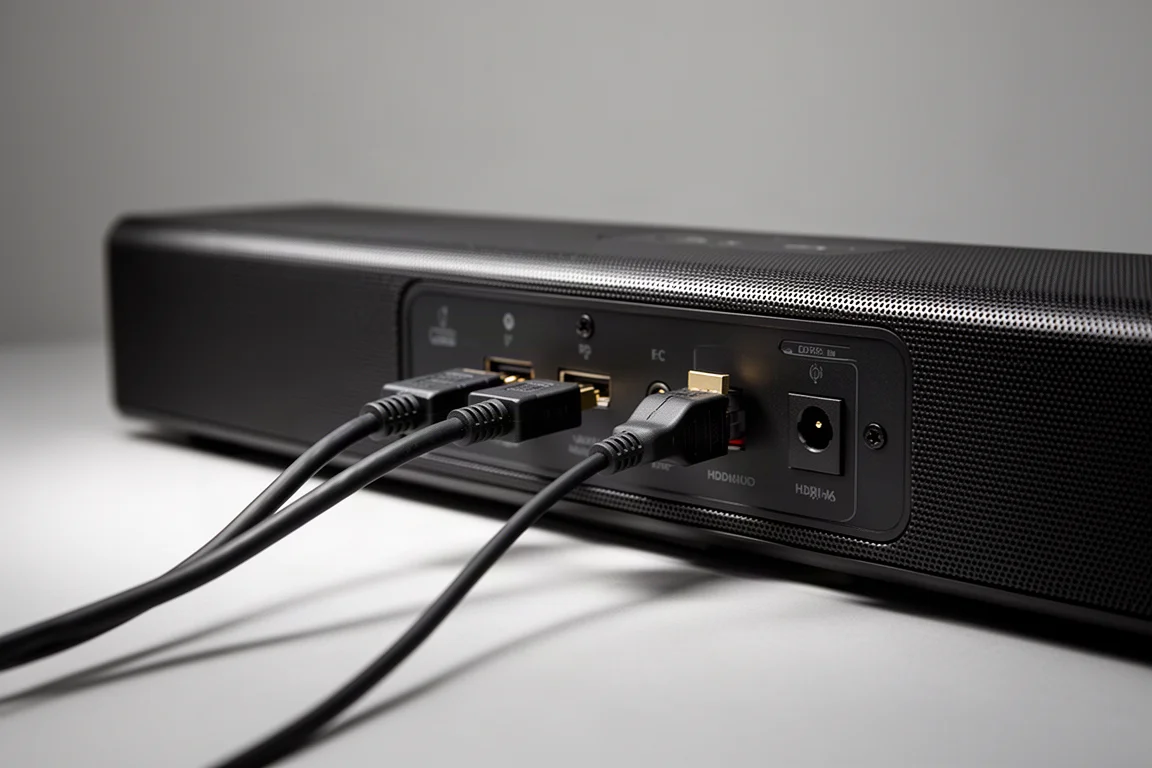
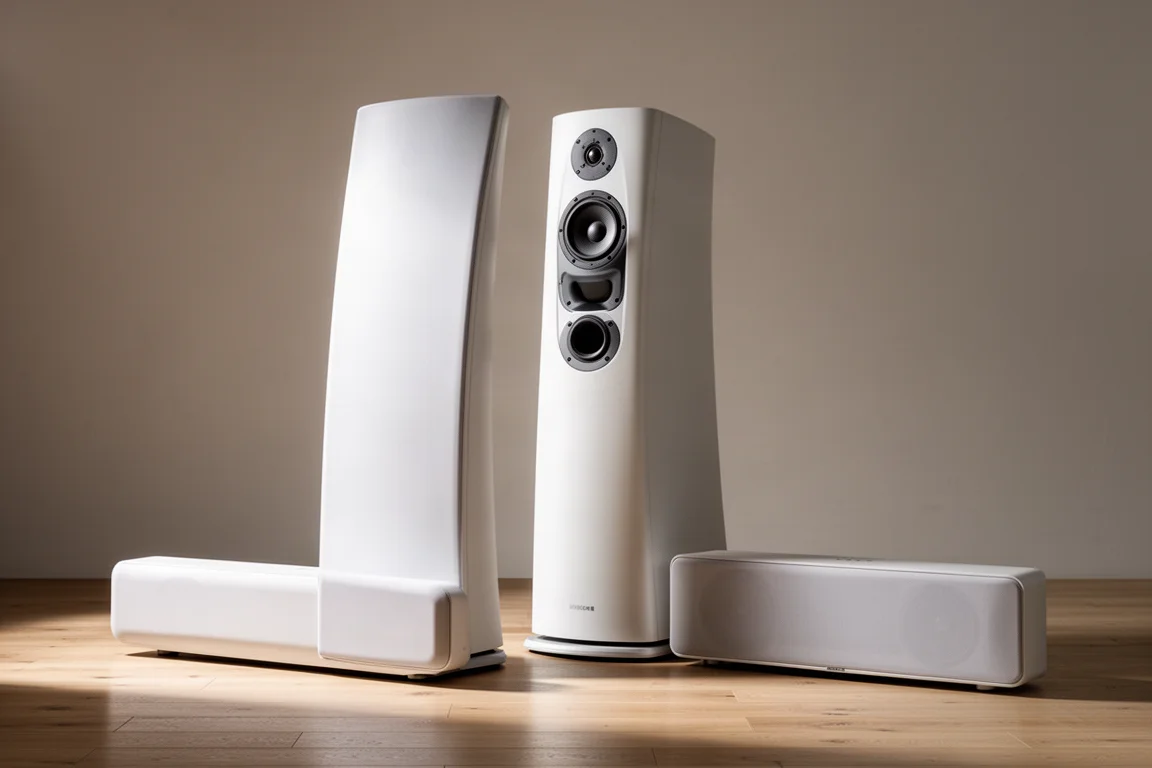
Room size and shape matter as much as the specification sheet. Larger rooms benefit from a subwoofer, and rooms with high or irregular ceilings limit what upward-firing drivers can do. If music matters more to you than television, a pair of powered stereo speakers is a genuine alternative. Look for optical or, ideally, HDMI ARC inputs so the TV can feed them, and above roughly $350 to $400 a pair they tend to sound better with music than a soundbar while keeping dialogue clear. The trade-off is two larger speaker boxes instead of one slim bar.
Then finish the setup properly: front-edge placement for cabinet-mounted bars, HDMI ARC or eARC where available, and a little experimentation with subwoofer and surround speaker positions.
Conclusion
The right soundbar comes down to what you actually want from your television. Basic models solve dialogue clarity with almost no setup fuss, surround models add real immersion for a modest increase in placement care, and self-contained high-end options such as the Devialet Dione bring home theater style impact into a single box. The Sonos Ray shows how much a compact, well-integrated bar can do at the entry level. Decide on the category first, then choose the model that fits your room.
Further reading
Related Reviews
Home Audio
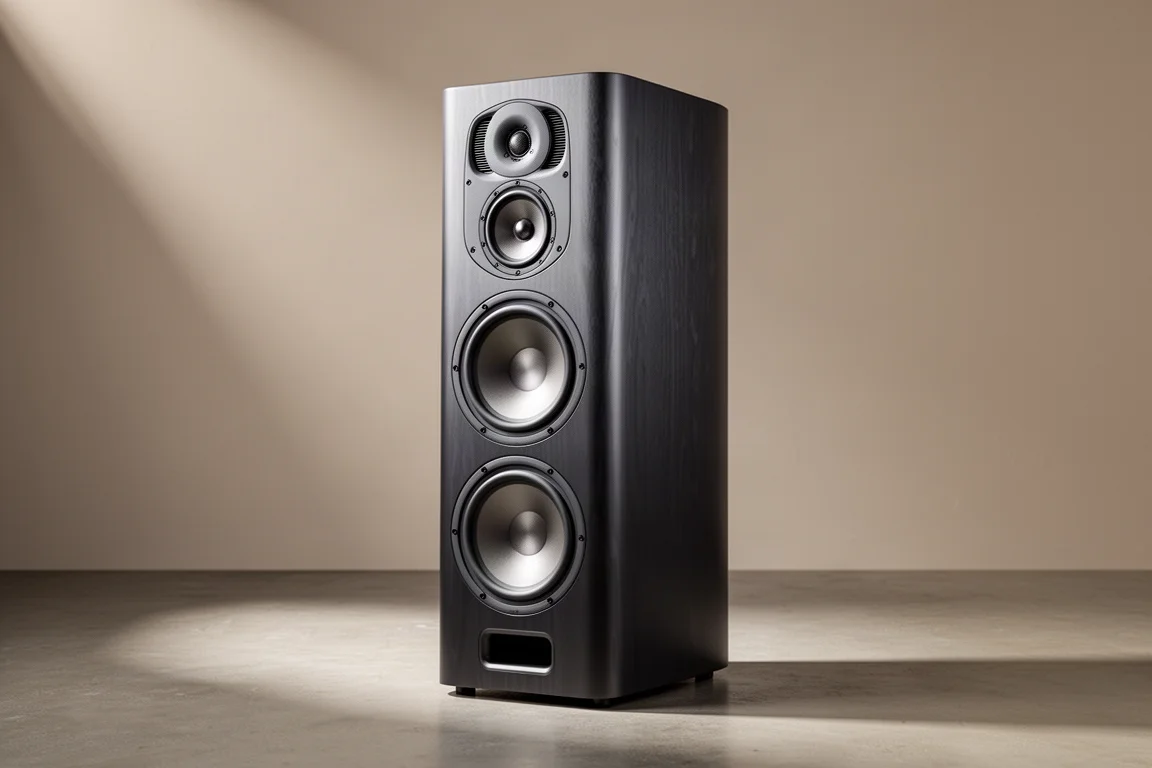
Aperion Novus Tower and Center Review: Punchy Home Theater Sound With Real Refinement
A close look at the Aperion Novus tower and center speakers, from their layered paint finish and punchy bass to the 4-ohm load and what the price actually buys.
Home Audio
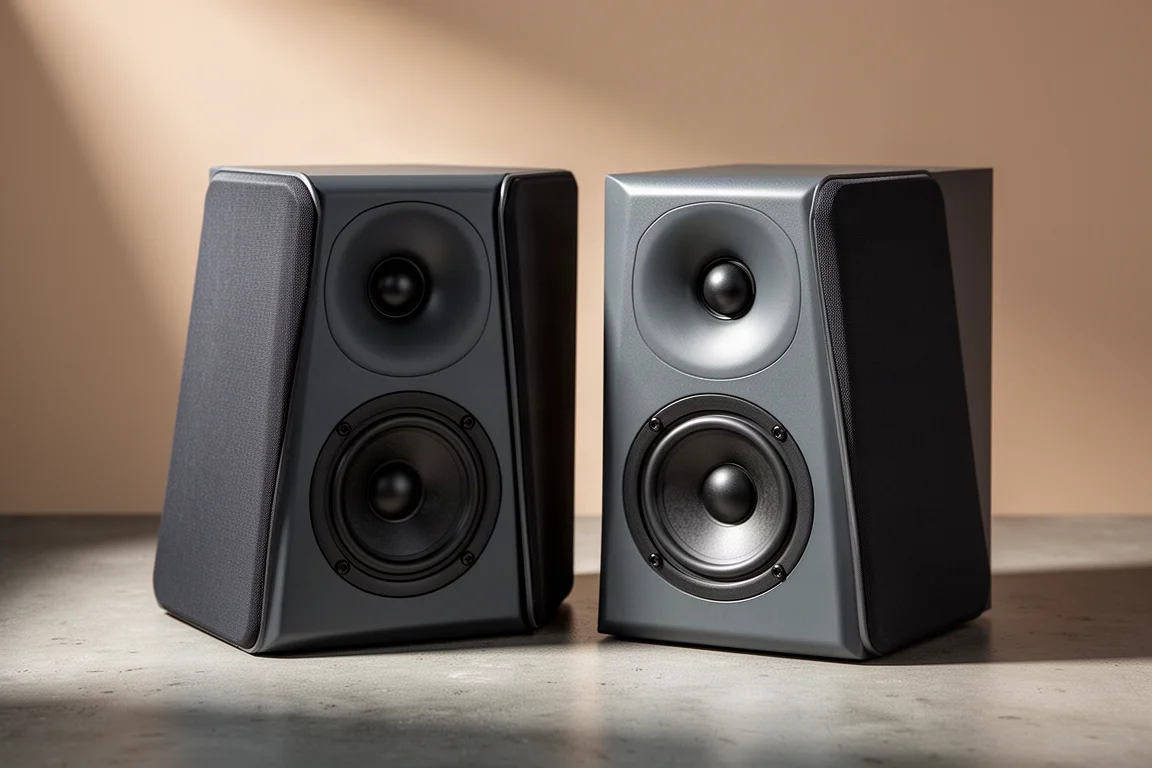
Arendal 1610 Tower Review: Flagship Dynamics in a Room-Friendly Tower
A compact floorstanding tower with three 8-inch aluminium woofers, a 5-inch carbon midrange, and the kind of bass heft usually reserved for much larger speakers.
Home Audio
Arendal 1723 S THX Review: A Reference Speaker Built Like a Tank
A practical look at the Arendal 1723 S THX, a sealed, THX-certified speaker with exceptional build quality, a very flat top end, and a midrange that responds beautifully to EQ.