Cycling Components
How to Choose the Right Bike Saddle: Selle Italia SLR, Flight and Novus Compared
A practical guide to saddle choice, using three Selle Italia models to show how riding position, sit bone width, profile, cutouts and materials shape comfort.
Introduction
An uncomfortable saddle can shape your whole experience as a cyclist, and replacing it with the wrong one rarely solves the problem. The reassuring part is that saddle choice follows a handful of clear principles: your position on the bike, the width of your sit bones, the profile of the saddle, whether it has a cutout, and the materials used in the padding and rails. Get those right and most riders end up with something they can ride for hours without thinking about it.
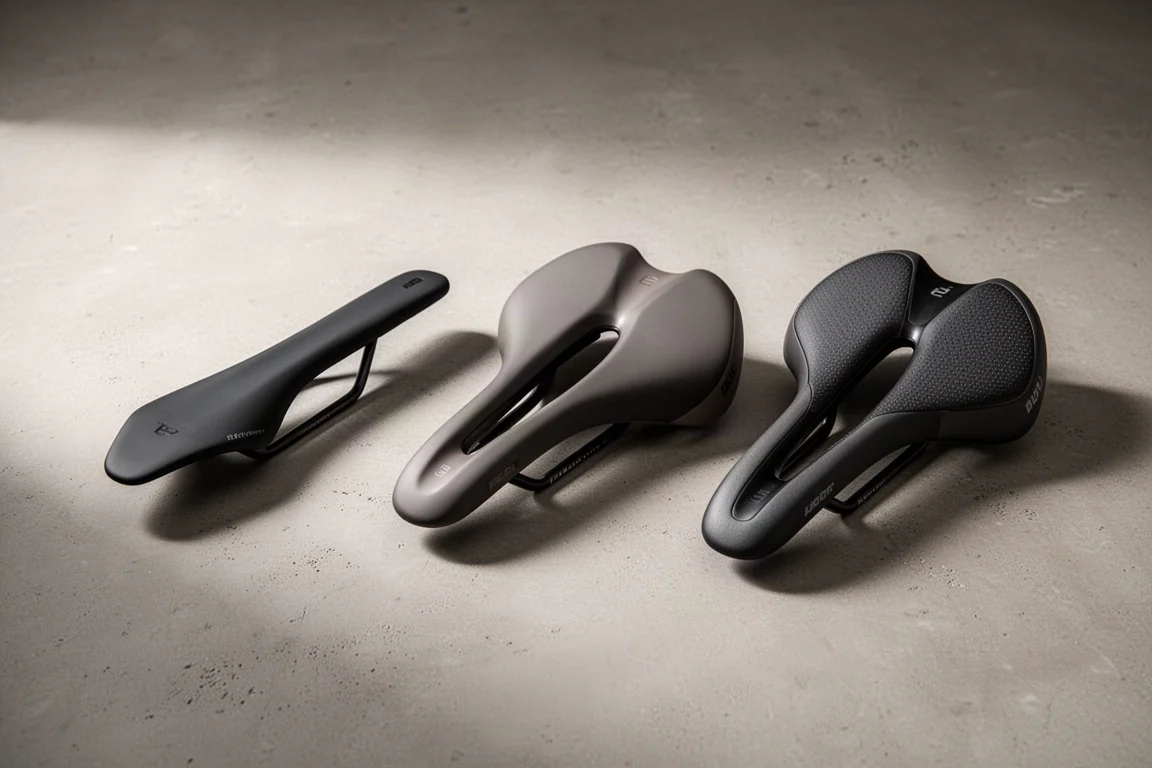
This guide uses three saddles from a long-established Italian maker, Selle Italia, to show how those principles play out in practice. The SLR, the Flight and the Novus share a design heritage but sit at different points on the spectrum of shape and padding, which makes them a useful comparison for anyone trying to work out what they actually need.
How to Choose the Right Bike Saddle
Start with your position on the bike. A newer rider typically sits far more upright than an experienced road cyclist, and that changes how weight is distributed into the saddle. City and shopping bikes are built for an upright posture, so they generally use wide saddles with plenty of padding, partly because they are not designed to be ridden with padded shorts. A road saddle such as the SLR is comparatively narrow and thin with much less padding, and it stays comfortable because it is designed for a more aggressive riding position.
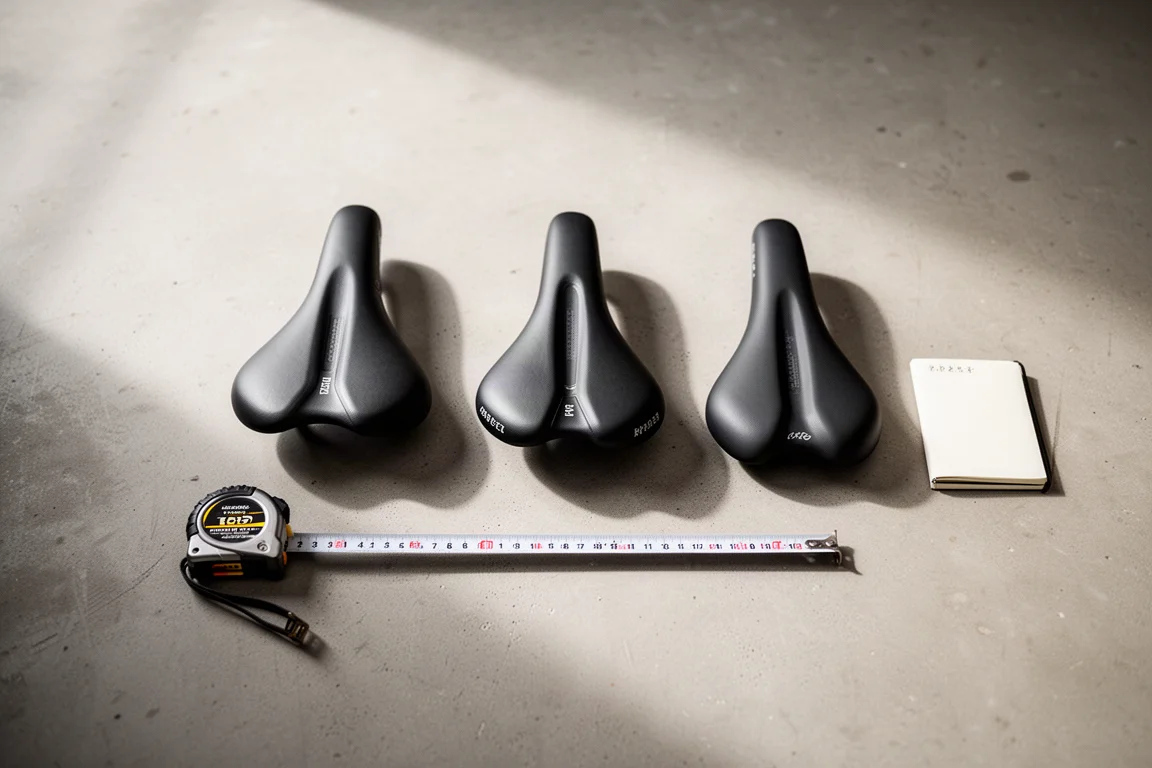
Width comes next, and it is largely determined by the width of your sit bones, since those two bones carry most of your weight on the bike. Not every brand offers saddles in multiple widths, but Selle Italia does, and a bike fitter can measure your sit bone width with dedicated equipment. Pressure mapping is another useful tool: it shows where your weight is actually landing, and it often reveals that a rider is sitting on the nose of the saddle, loading soft tissue instead of the sit bones.
Shape matters more to comfort than padding does. Saddle profiles have evolved continuously since the earliest bicycles, and modern road saddles have generally become shorter at the nose. That is a helpful change, because a shorter nose encourages riders to sit properly on the sit bones rather than sliding forward onto the nose. Beyond length, profiles range from very flat to strongly curved, and each suits a different style of riding.
Cutouts are the fourth consideration. A cutout is a slot cut into the centre of the saddle that relieves pressure on soft tissue, and for riders who experience numbness or discomfort after a few hours it can make a real difference. Not everyone needs one, and the same saddle shape is often sold both with and without a cutout, so the choice comes down to your body, your flexibility and your position. Even so, the large majority of saddles sold today have a large cutout, which suggests most riders get along well with them.
Finally, materials and padding. The same shape and profile is frequently offered in several versions, from bare carbon shells through foam and gel to 3D printed padding. Rails vary too, from entry level steel to manganese, higher grade steel alloys and carbon. Rail material affects weight and price, and it also affects ride feel: carbon rails are typically harsher, while manganese and alloy rails tend to be more comfortable.
Selle Italia SLR: A Balanced All-Rounder
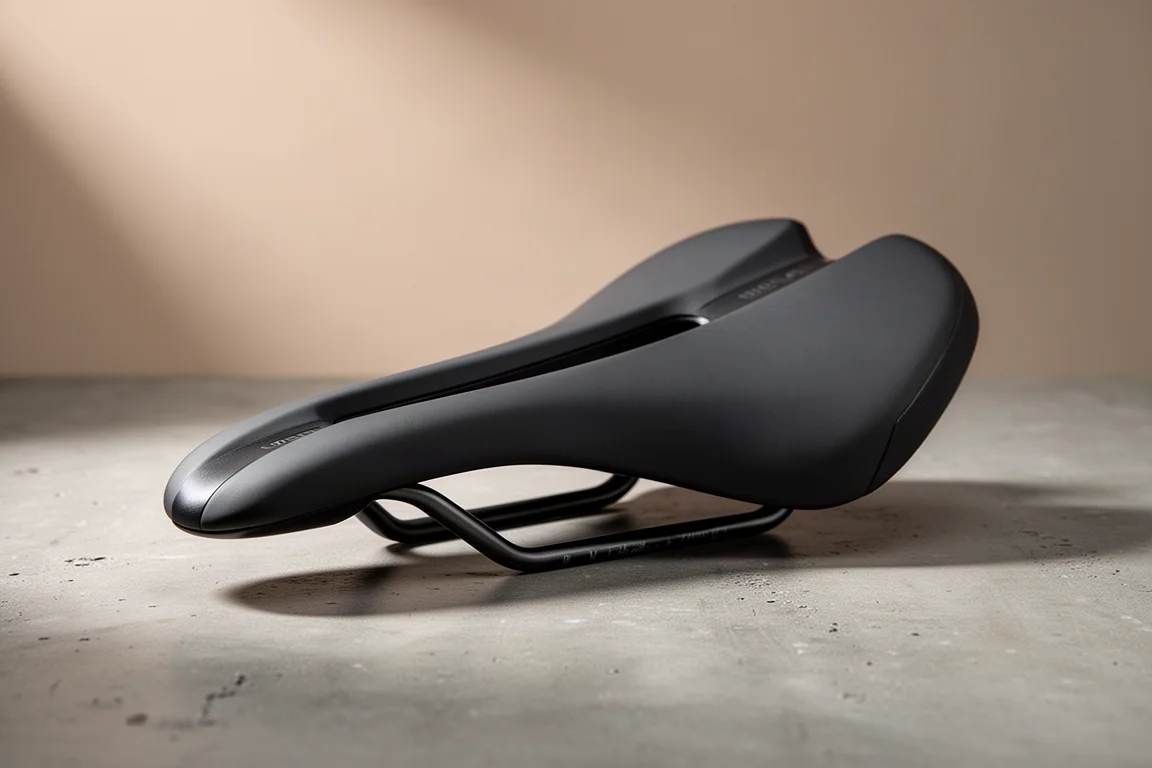
The SLR is a narrow, thin road saddle with a slight curve through its profile, placing it between the very flat Flight and the strongly curved Novus. It is offered in more than one width, including a 145 mm option, so riders can match the saddle to a sit bone measurement rather than accepting whatever single size happens to be in stock.
Much of the SLR’s appeal is the number of versions built on the same shape. A bare carbon model is very light and minimalist, aimed at hill climbs, and surprisingly comfortable to sit on for a saddle with essentially no padding. Foam-padded versions are the common middle ground, and a further step up adds gel inserts, which suits endurance riding, gravel, and beginners who want a little more vibration damping.

At the top of the range, the SLR is also available with 3D printed padding. That construction allows the density to change across the profile, so the padding is firmer where the sit bones rest and softer toward the nose where heavy support is less useful. A cutout version uses a large central slot, and the identical shape is available with a solid centre for riders who prefer a bit more support in that area.
Selle Italia Flight: Flat Profile for Aggressive Positions
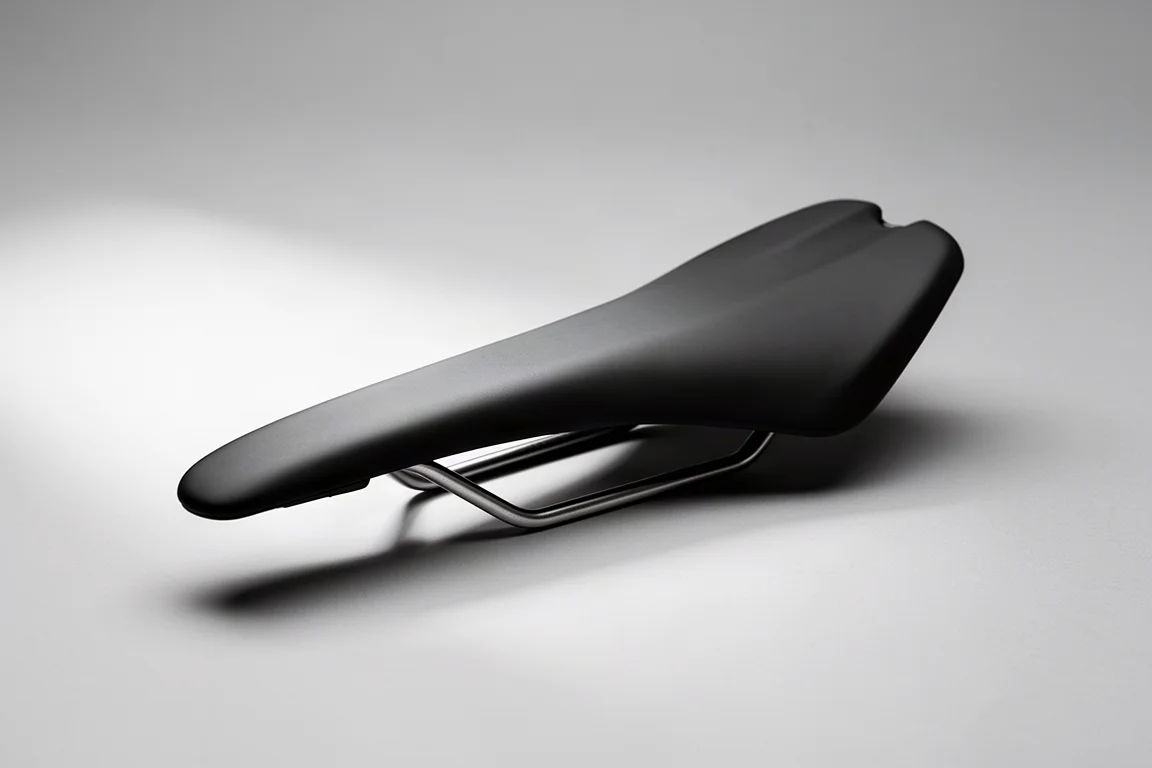
The Flight is a very flat saddle in profile, narrow where the sit bones go, and designed for riders who hold a low, aggressive position on the bike. Because it is flat and narrow at the rear, it lets riders shuffle along its length and settle in slightly different places depending on how they are riding at that moment.
Modern versions of the Flight are also shorter at the nose than earlier ones, a difference of a couple of centimetres. That shorter nose encourages riders to sit properly positioned on the saddle rather than drifting forward, and it brings a small weight benefit since less material is used. Riders who move around on the saddle and spend most of their time in an aerodynamic position are the natural audience for this shape.
Selle Italia Novus: Curved Profile and Softer Padding
The Novus sits at the opposite end of the shape spectrum from the Flight. Its strongly curved profile is designed to hold the rider in the correct position, with the sit bones placed firmly in the widest part of the saddle, rather than allowing much movement along its length. For riders who tend to drift forward, or who prefer the saddle to guide their posture, that curvature does a lot of the work.
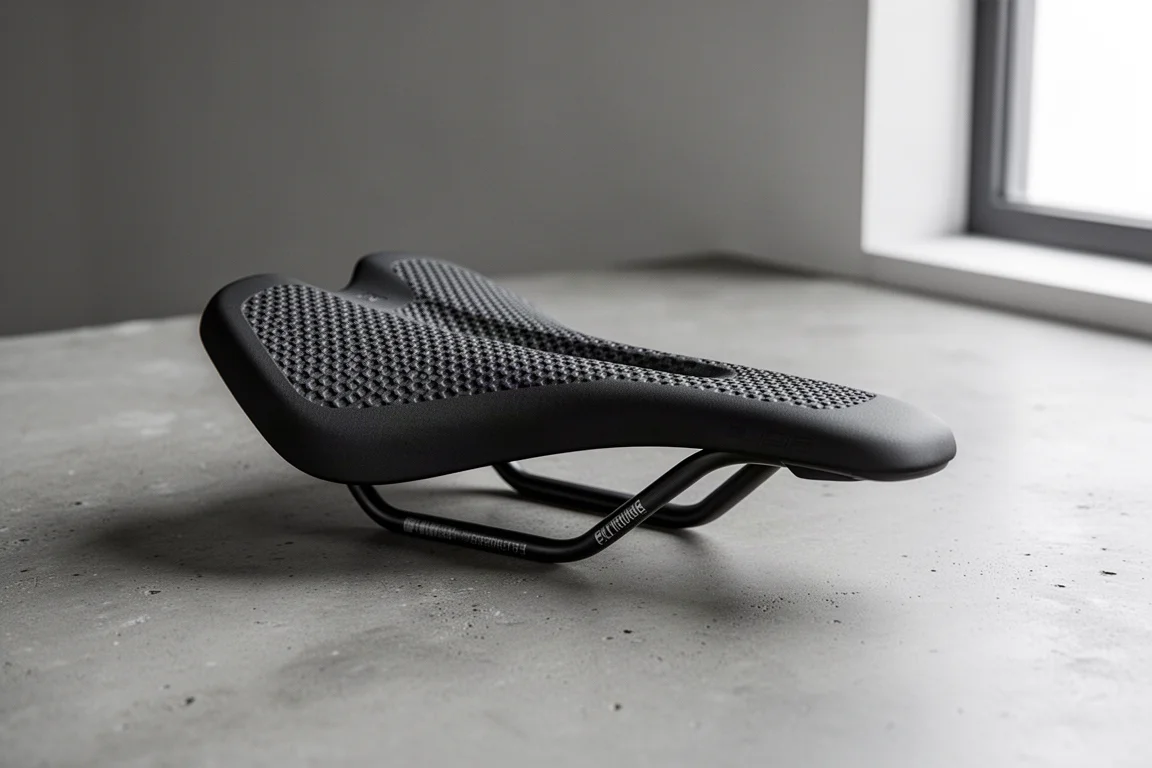
The version shown here uses 3D printed padding, and it feels noticeably softer than the equivalent SLR. Because 3D printing allows density to be tuned across the profile, the padding can be firmer under the sit bones and softer elsewhere, which is exactly the kind of variation that matters over longer distances.

Riders who prioritise comfort and a stable seated position, including those doing endurance work or mixed-surface riding, tend to get along well with this combination of a curved shape and softer padding.
Buying Advice: Matching the Saddle to Your Riding
Shape and profile matter more to comfort than the amount of padding on top, so start there and treat padding as a secondary refinement. A flat, narrow saddle suits an aggressive position and riders who like to move around. A curved saddle holds a more stable position. A slight curve sits between the two and works for a broad range of road riders.
Width should follow your sit bone measurement, so it is worth having that checked rather than guessing. If you experience numbness or discomfort on longer rides, a cutout is worth trying, and remember that the same saddle shape is usually available with and without one. On padding, foam is the common choice, gel inserts add damping for endurance and gravel riding, and 3D printed padding offers density that varies across the profile.
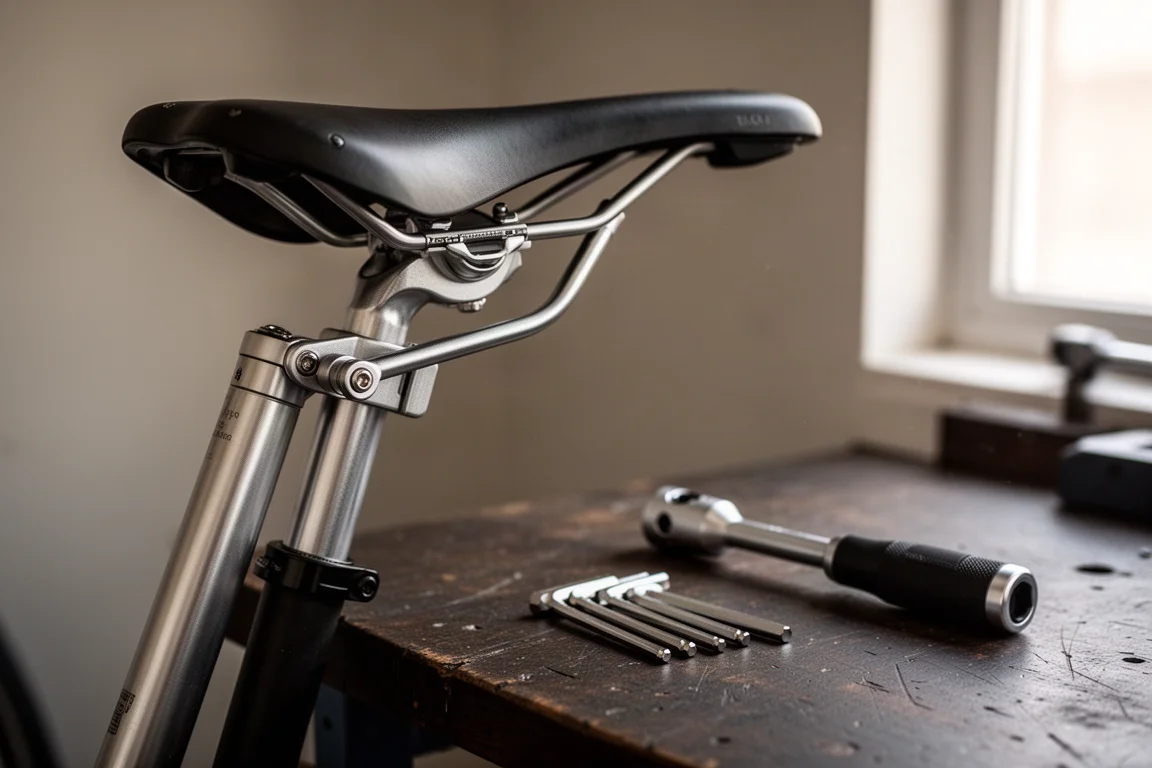
Rails are the final piece. Steel is the entry level option and is heavier; manganese and higher grade steel alloys are more premium; carbon is the lightest but typically feels harsher, which can reduce overall comfort. If comfort is the priority, a manganese or alloy rail is often the better trade.
One more thing worth remembering: a saddle that suits you can still feel uncomfortable if it is not set up correctly. Position on the bike is something a good bike fitter can help with, and many fitters keep test saddles you can try before committing to a purchase.
Conclusion
Choosing a saddle comes down to five things: your position on the bike, the width of your sit bones, the shape and profile, whether there is a cutout, and the materials used in the padding and rails. The SLR covers the middle ground with a slight curve and a wide choice of padding and rail options. The Flight is the flat, narrow choice for aggressive positions and riders who like to move around. The Novus uses a curved profile and softer 3D printed padding to hold a stable, comfortable seated position. Match the saddle to how you actually ride and you are most of the way to a comfortable bike.
Further reading
Related Reviews
Cycling Components
A 20,000-Mile Budget Race Bike Build: Five Parts Worth Knowing
A rim brake race bike assembled from low-cost components and ridden for 20,000 miles. Here is what delivered real speed, what caused problems, and what to weigh before copying the formula.
Cycling Components
7 Bike Fit Products Fitters Avoid: What to Check Before You Buy
Seven bike components that regularly cause knee, foot and saddle problems, with the specific concerns behind each one and what to look for instead.
Cycling Components
Four Affordable Bike Upgrades That Improve Ride Feel
Four low-cost cycling products that make a real difference to ride feel, plus the free setup changes worth trying first.