Cycling Shoes
How to Choose Cycling Shoes: Road vs Off-Road, Entry Level to Top End
A practical guide to cycling shoe types, retention systems and sole materials, with six DMT models illustrating every price tier.
Introduction
If you have started riding regularly and you are thinking about moving to a dedicated cycling shoe for clipped-in pedals, the payoff is straightforward. Riders using modern cycling shoes and a clipped-in pedal system have been shown to produce significantly more power than riders on flat pedals and trainers. That efficiency gain is the main reason most riders eventually make the switch.
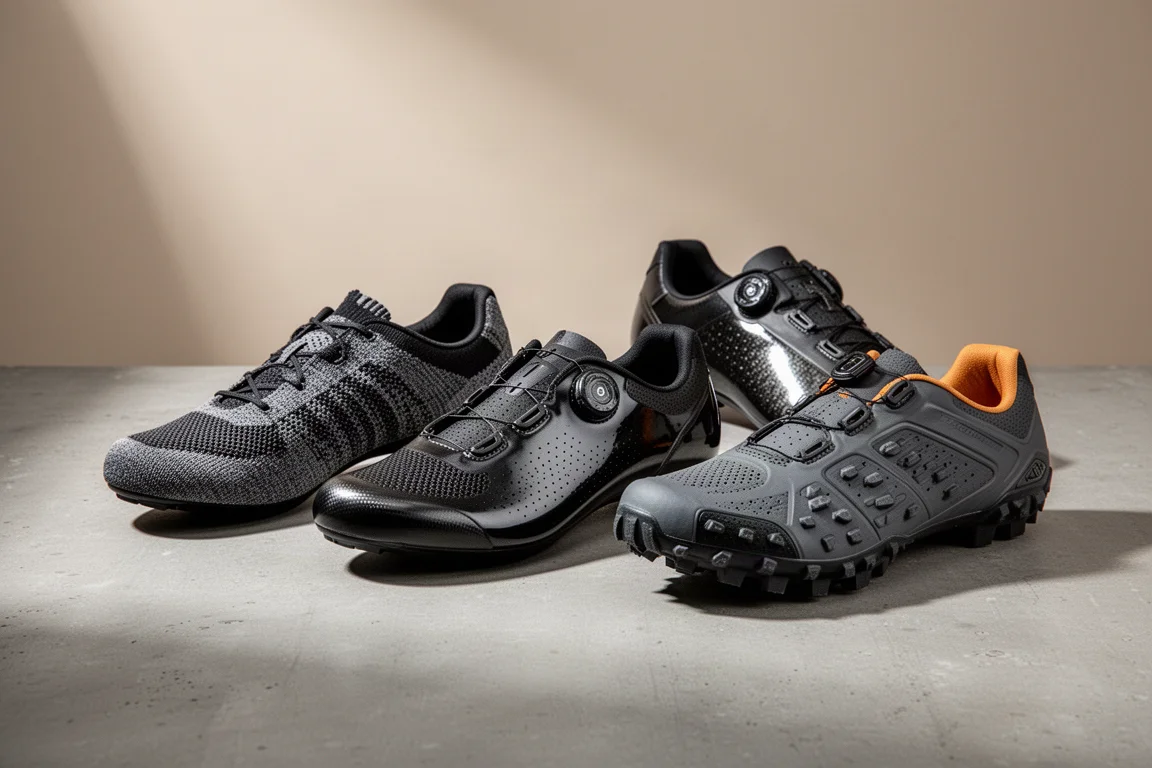
The harder question is which shoe. Road and off-road designs solve different problems, retention systems range from straps to dials to laces, and sole materials change considerably as the price rises. This guide covers the main categories and the features that matter at each tier, using six DMT models to illustrate the differences.
Road Shoes vs Off-Road Shoes: Which Do You Need?
The first decision is road or off-road, and it should be driven by the majority of the riding you actually do.
Road shoes are built around road pedal systems and their cleats. The larger contact patch gives greater engagement with the pedal, which tends to feel more stable when you are putting power down, and many riders find it more comfortable as well. The trade-offs are practical: road cleats clog with dirt easily and will not engage once contaminated, and road soles and cleats are not designed for walking any distance. They feel slippery underfoot and wear at an accelerated rate when you walk in them. In exchange, road shoes are generally lighter and sleeker than off-road equivalents.
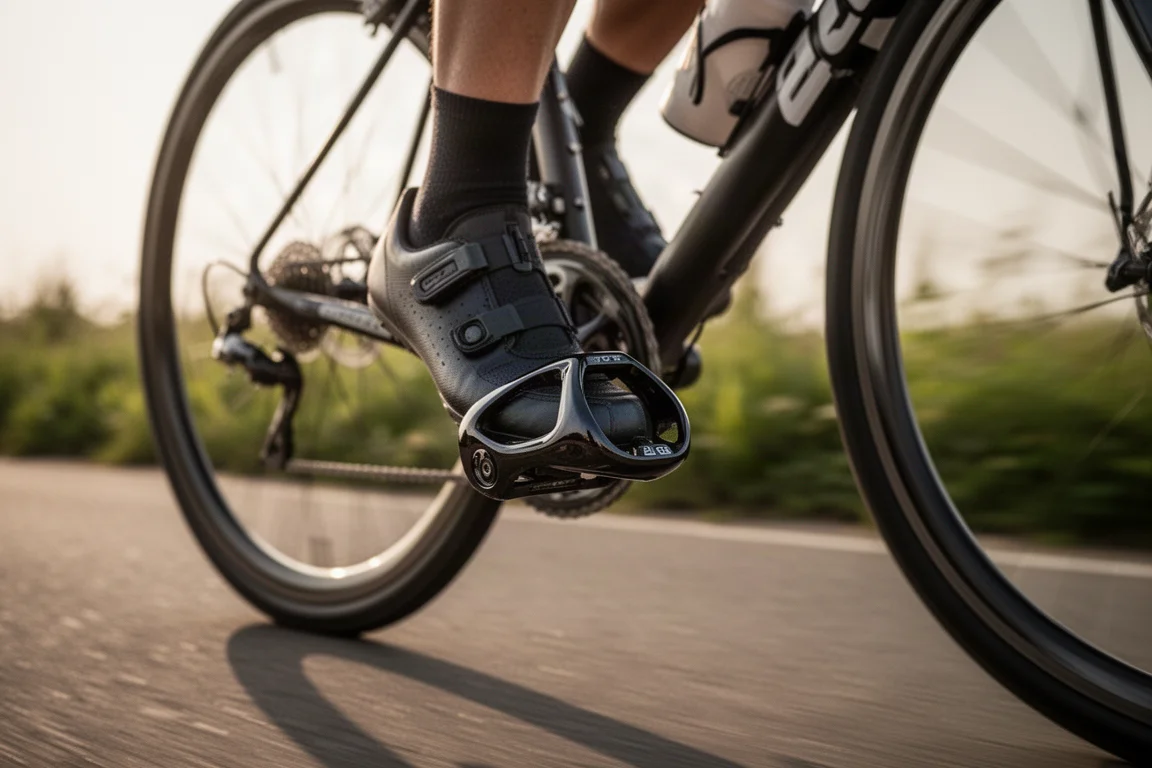
Off-road shoes are designed for two-bolt cleats and off-road pedal systems such as Shimano SPD. Those cleats clear dirt far more effectively, and the sole is built up and reinforced, often with rubber grips, so the shoe can be walked in. Off-road shoes are heavier duty and more robust overall, with extra reinforcement around the toe box to protect the shoe from trail debris.
Beyond those two categories there are a few specialised options. Triathlon shoes are essentially a pared-back road shoe designed to go on and off quickly, with holes that let water drain after the swim. For winter, most road riders pair a standard road shoe with an overshoe, though dedicated winter shoes combine a road shoe with insulation and a waterproof membrane in one. Flat mountain bike shoes use a large flat sole for a wide platform pedal, and the recess can be removed to fit a two-bolt cleat if you later want a cleated setup.
As a rule: if your riding is performance road cycling, whether sportives, gran fondos, long road rides or racing, a dedicated road shoe is worth it. If you ride gravel, cyclocross or mountain bikes, choose an off-road or mixed-surface shoe with an off-road cleat. Commuters who walk at any point in their journey tend to favour mixed-surface or off-road shoes for the same reason.
What Changes as You Spend More
Across almost every brand, more money buys lighter and stiffer shoes.
Entry-level shoes sit around 60 pounds or 80 dollars. They typically use hook-and-loop straps because straps are cheaper, though dial closures do appear at this level too. The sole is usually plastic and the upper uses less expensive materials, which makes the shoe less stiff and slightly heavier than the tiers above.
Mid-level shoes run from roughly 100 to 200 pounds, euros or dollars. The sole is no longer plastic: expect a carbon composite or nylon composite construction, which is usually stiffer. Uppers become more sophisticated, and the better materials typically bring a weight saving as well. Retention at this level is usually a dial, sometimes a ratchet, and occasionally laces.
Top-end shoes cost around 200 to 350 pounds, euros or dollars and represent the lightest, stiffest equipment available. Soles are carbon fiber, construction quality and upper materials are very high, and some models are built down to around 205 g for a pair. Dial closures at this level are a higher specification than mid-range versions, lighter and more adjustable. Carbon soles are also stronger, so they can be thinner, which reduces stack height, the distance between the bottom of your foot and the pedal axle. A lower stack height can make you feel more connected to the pedal.
Two details are worth knowing before you choose a closure. Laces are very light and let you tune exactly where the shoe is tight along its length, but they are not easy to adjust on the move, which matters on long rides in hot weather when riders often want to loosen a shoe. Dials make that adjustment simple. On sole stiffness, the benefit is most obvious to sprinters, who can feel a plastic sole flex under hard efforts, though how much stiffness contributes to efficiency is still debated.
Entry Level: DMT R6
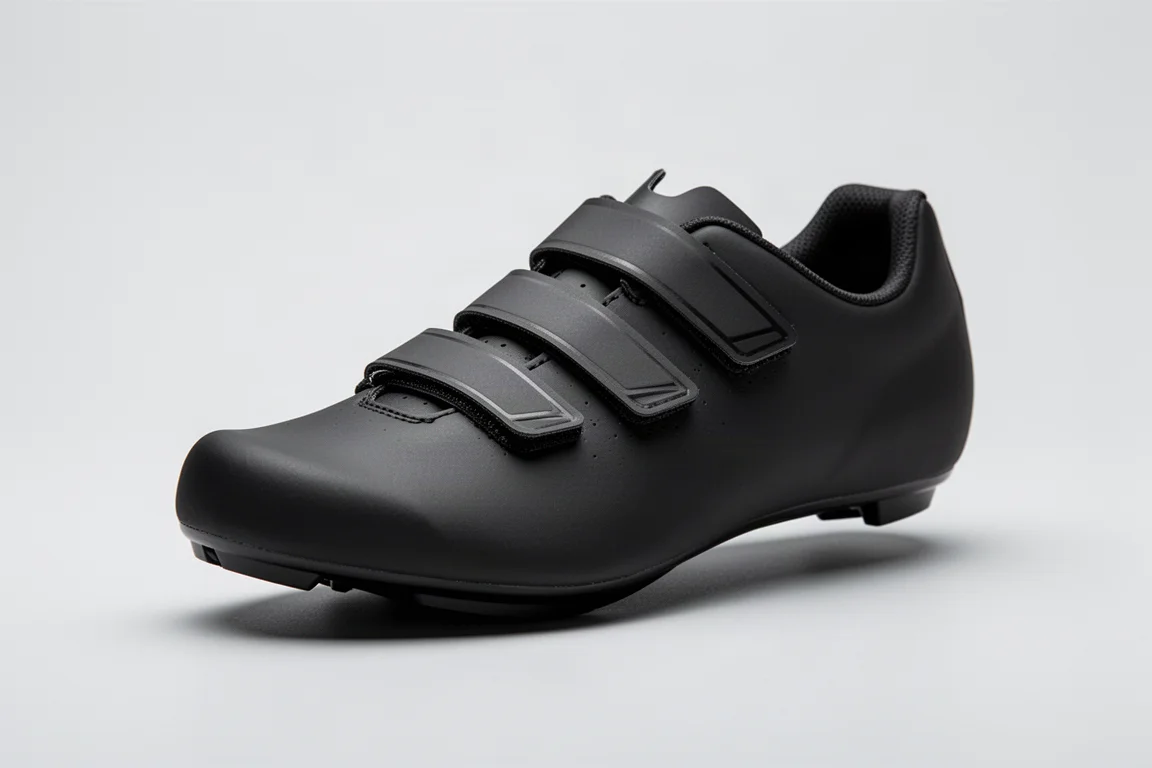
The DMT R6 is a clear illustration of the entry tier, priced at around 60 pounds or 80 dollars. It uses hook-and-loop straps and a plastic sole, which means it is less stiff and slightly heavier than composite or carbon alternatives.
For a first pair, that is not a problem. If you are new to clipped-in pedals, an entry-level shoe with a plastic or composite sole should meet your needs, and you can move up to a stiffer or lighter shoe once you find the limits of what you have.
Entry Level with BOA Dials: DMT R5
The DMT R5 shows that a dial closure does not have to be reserved for expensive shoes. The BOA dial allows adjustment in millimetre increments and, importantly, can be operated easily while you are riding.
That on-the-move adjustability is the main reason riders prefer dials. It makes it simple to fine-tune tension as your feet swell or as conditions change, without stopping.
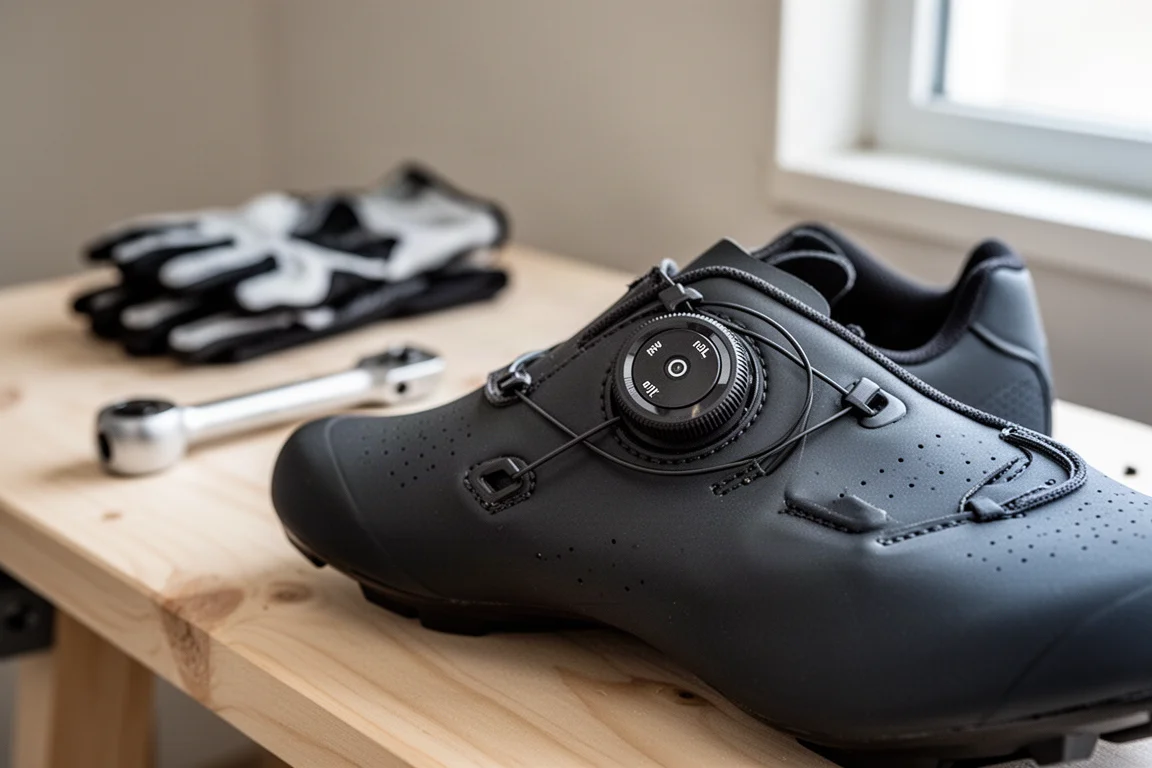
The rest of the shoe sits in the entry-level bracket, so the sole and upper materials follow the same approach as other shoes at this price. If the closure system is the feature you care about most, this is the tier where that trade-off is easiest to accept.
Mid-Range: DMT KR4
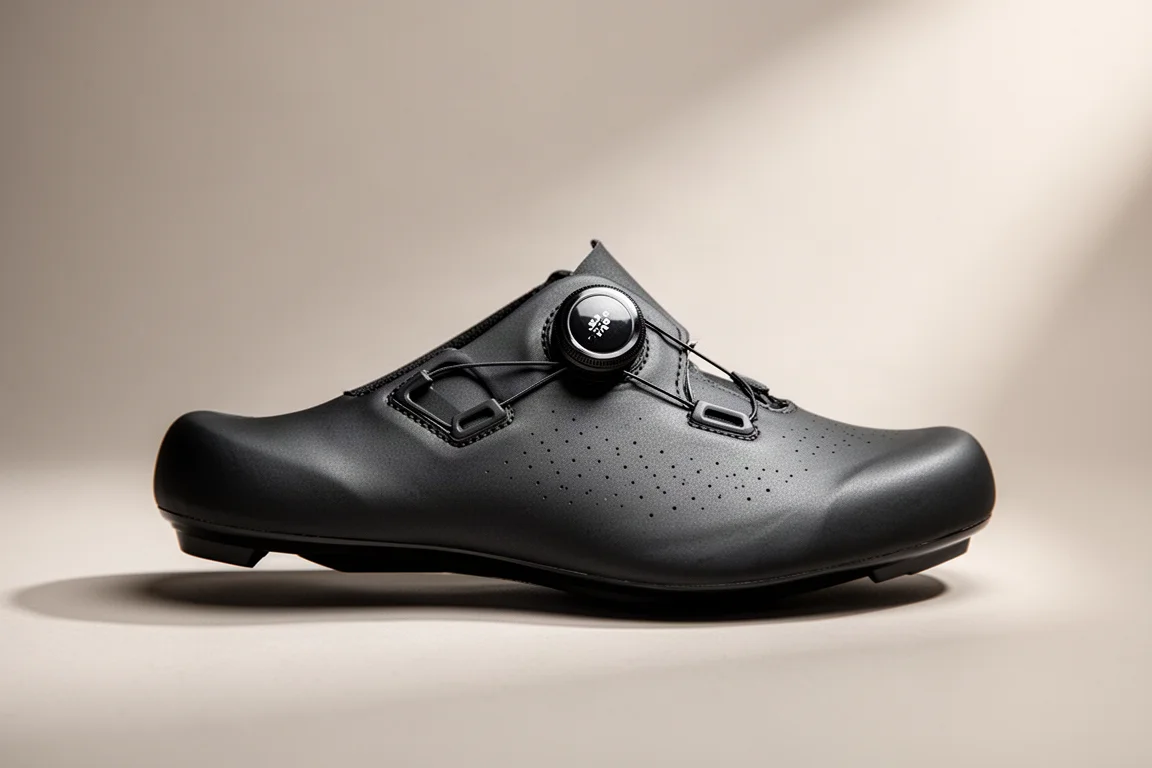
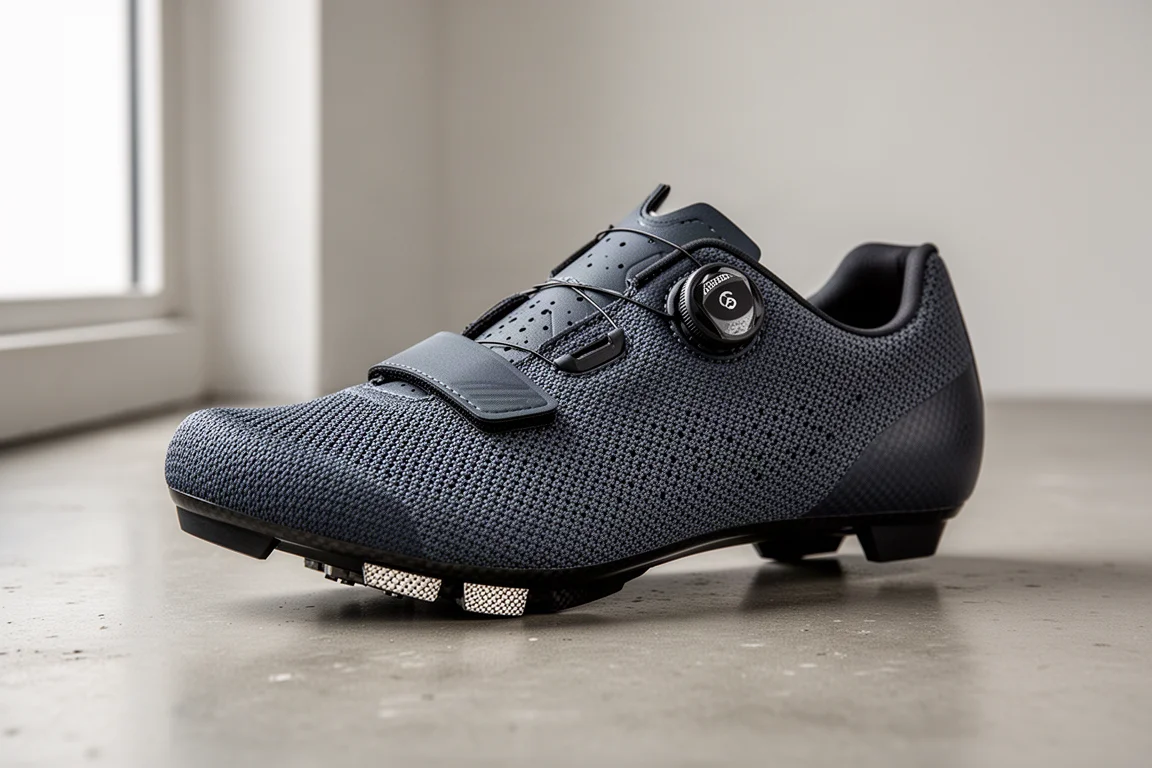
Moving up a tier brings a composite sole and more sophisticated upper materials. The DMT KR4 sits here, with a claimed weight of 230 g for a pair in size 42.
That combination of a stiffer sole and lighter construction is what most riders notice first when they step up from an entry-level shoe, particularly on longer rides where a heavier shoe becomes tiring.
Top End: DMT KR SL
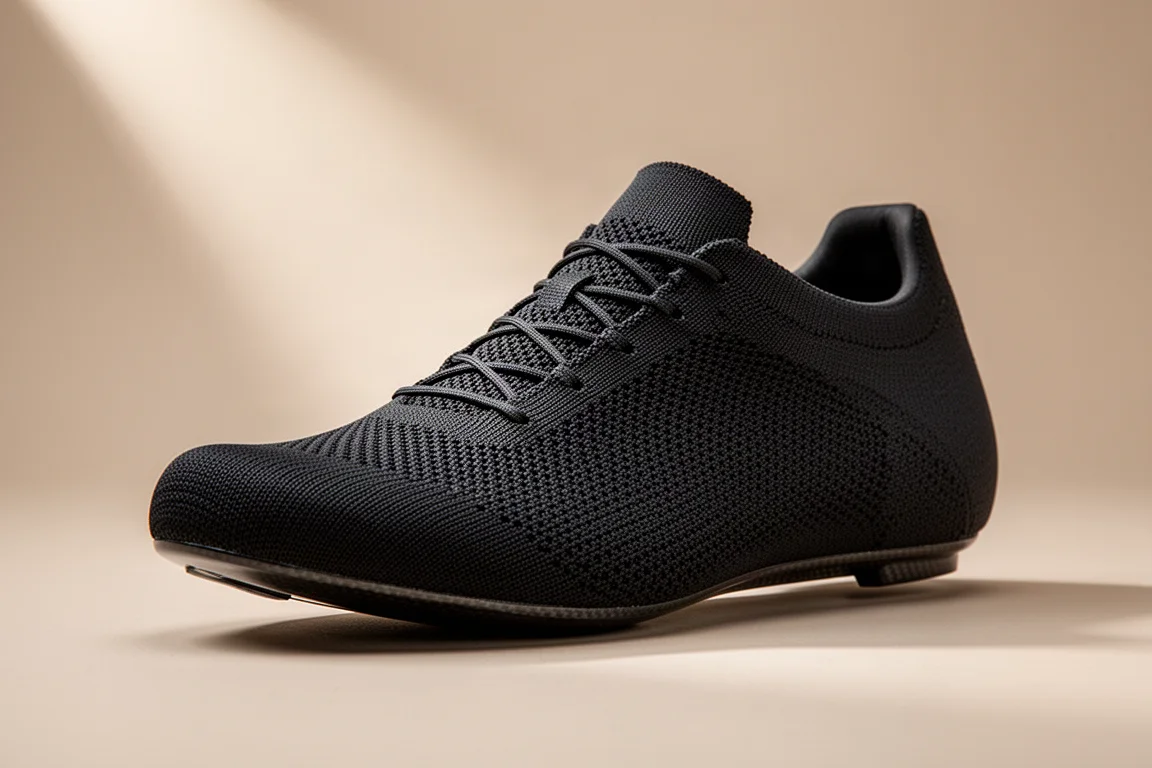
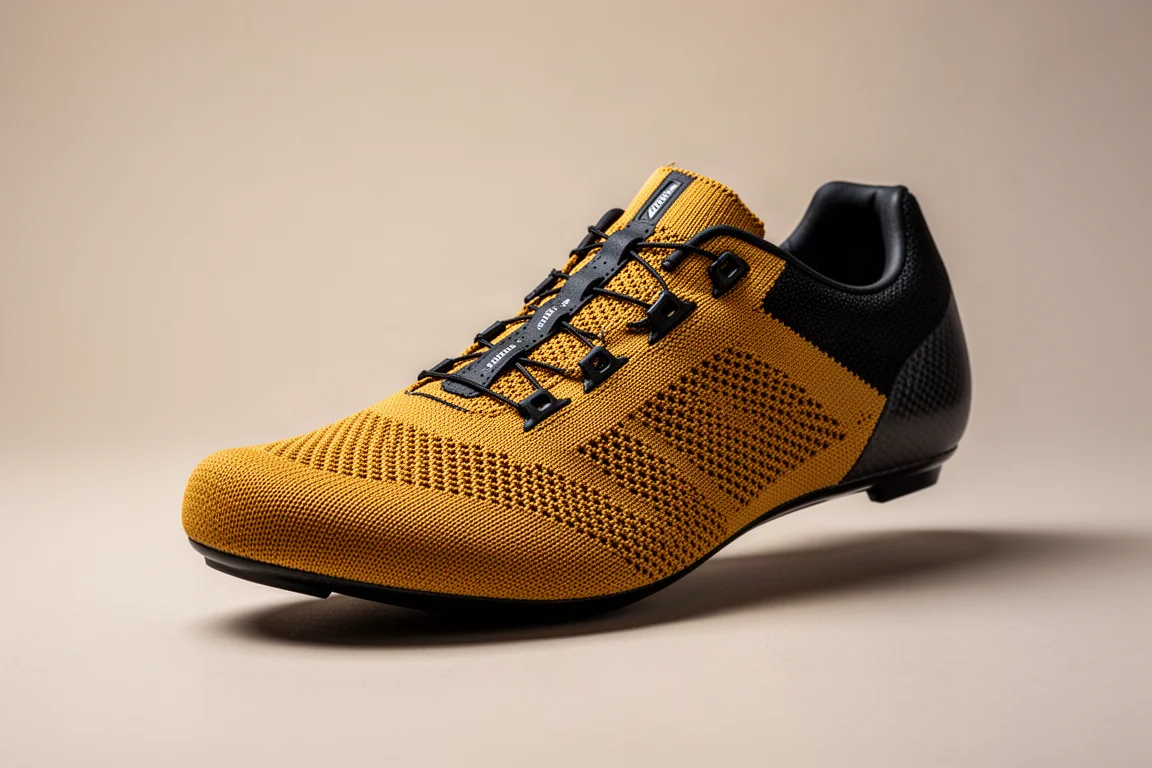
The DMT KR SL is a top-end road shoe and the model used by Tour de France champion Tadej Pogačar. It uses a full one-piece, multi-layered 3D knit upper designed to encapsulate the foot like a glove: comfortable and breathable, with good support across the top of the foot. Retention is by laces, which keeps weight down and allows the fit to be tuned precisely along the length of the shoe.
The trade-off with laces is on-the-move adjustment. If you like to loosen your shoes during long, hot rides, a dial is quicker to work with.
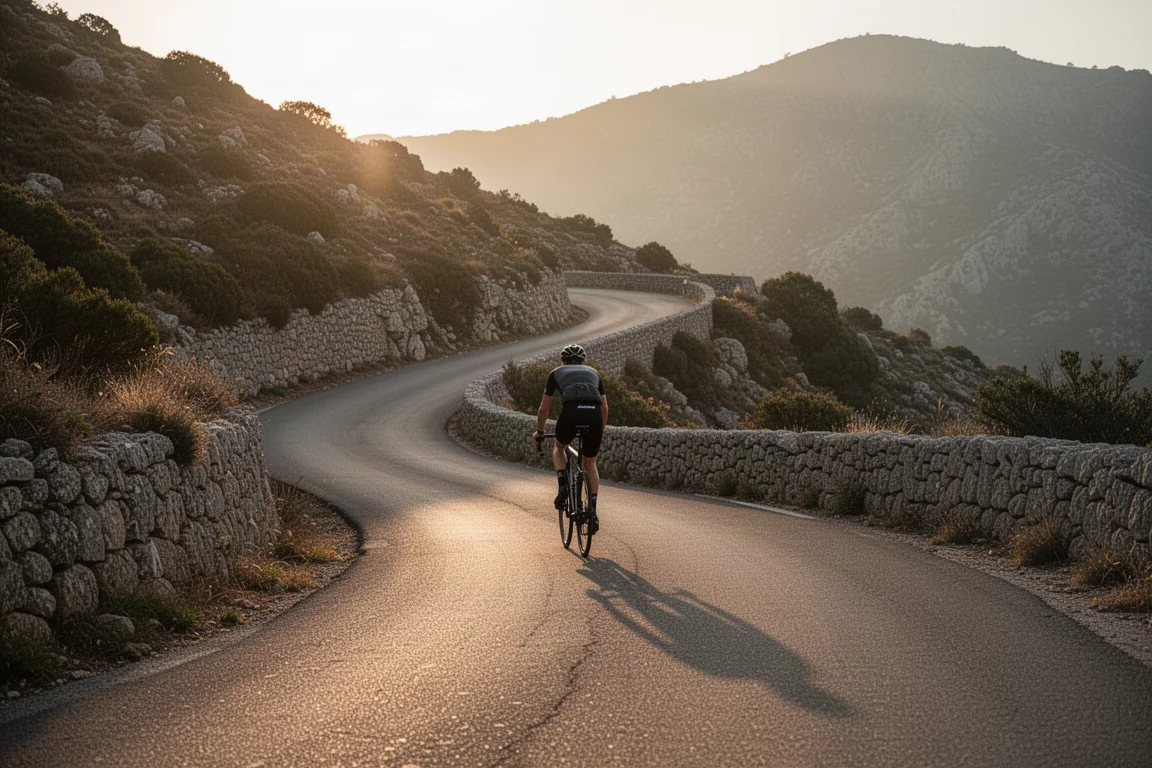
A carbon fiber sole keeps the shoe light and stiff, and the thinner sole that carbon allows reduces stack height for a more connected feel at the pedal. This is the tier aimed at riders who want the very best equipment available.
Gravel Top Spec: DMT KM0
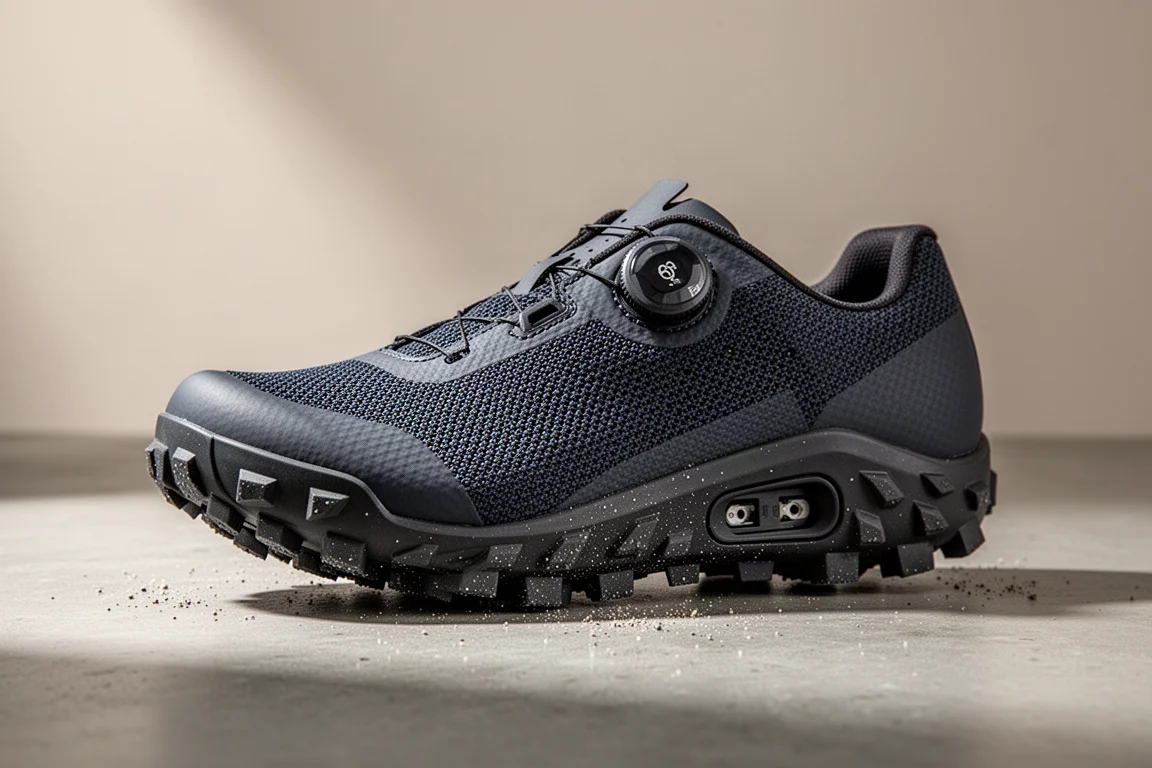
The DMT KM0 is a top-specification gravel shoe, which means off-road cleat compatibility and a more robust build than a road model. It uses BOA dials of the higher specification found on top-end shoes: lighter than the versions on mid-range models and with greater levels of adjustability.
For gravel and mixed-surface riders who want the same standard of equipment as a top-end road shoe, this is the category to look at.
Tour de France Edition: DMT KR Tour de France
The DMT KR Tour de France is a version of the top-end road shoe, finished in the same colourway used by the Tour de France champion and carrying his signature. It shares the one-piece multi-layered 3D knit upper, which wraps the foot closely, breathes well and supports the top of the foot.
It follows the same underlying design approach as the KR SL, with a distinctive finish that will appeal to riders who follow the professional side of the sport.
Overall Buying Advice
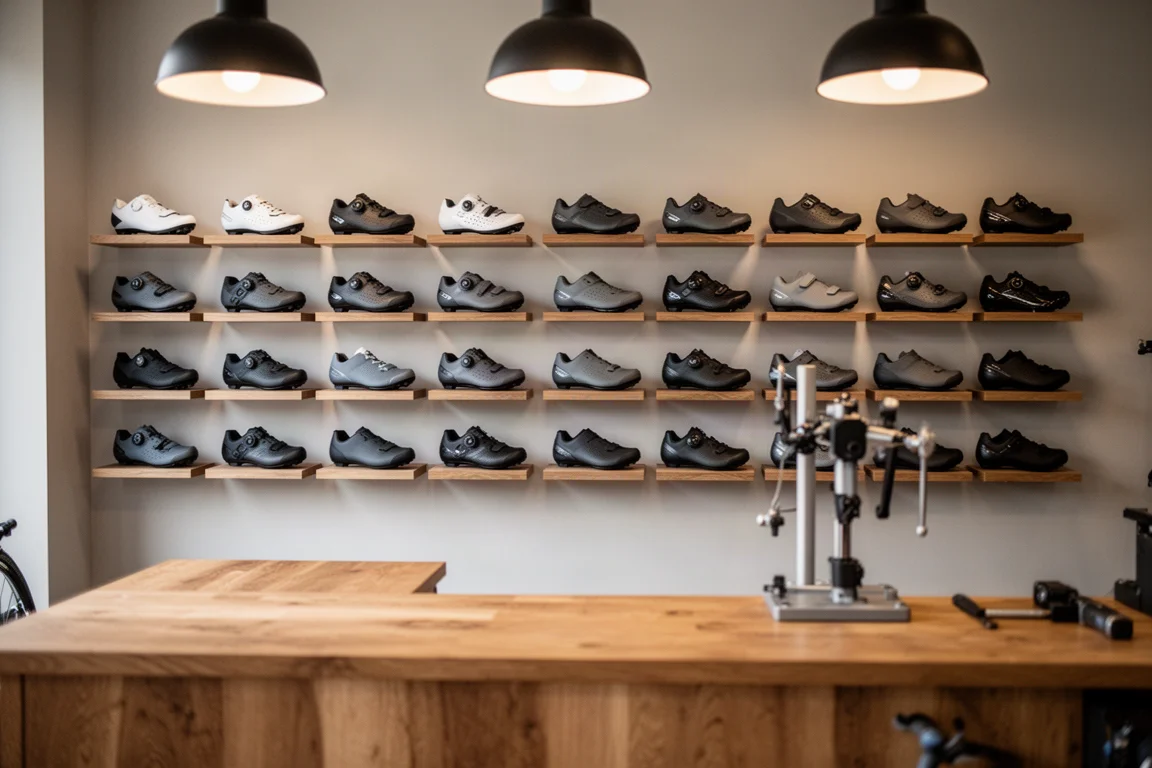
Fit matters more than any specification on this page. Comfort in a cycling shoe is highly individual, and the only reliable way to know whether a shoe suits your feet is to try it on. Visit a local bike shop, get the size right and walk around in the shoes before deciding.
If you are buying your first pair, start at the entry level with a plastic or composite sole. It will cover your needs, and you can progress to a stiffer or lighter shoe when your current pair wears out and you know what you want from an upgrade.
Conclusion
Cycling shoes make your pedalling more efficient, and the right pair depends on where you ride and how much you want to spend. Match the shoe to your surface first, then choose the tier that fits your ambitions. Entry-level shoes with a plastic or composite sole are a sensible starting point, composite soles and better uppers define the mid-range, and carbon soles with knit uppers sit at the top.
Further reading
Related Reviews
Cycling Shoes
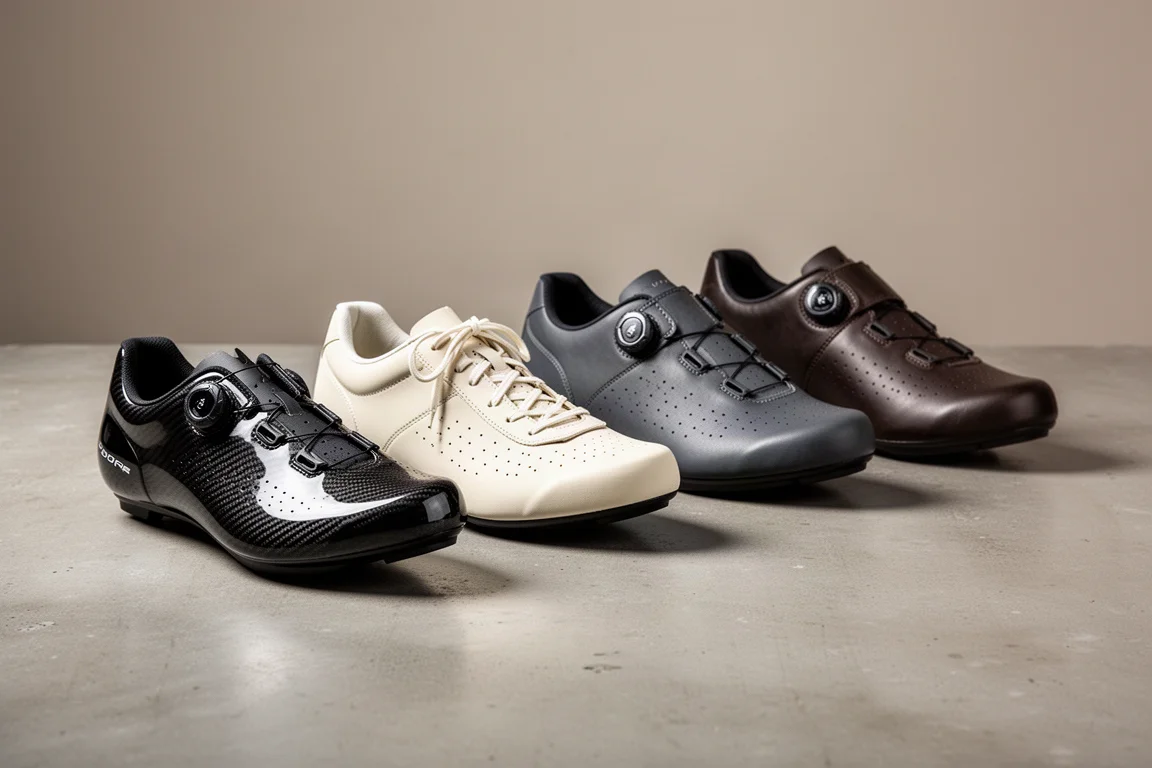
Best Cycling Shoes Ranked: Fit, Cleat Position and What to Check Before Buying
A practical ranking of cycling shoes by cleat position and fit neutrality, from the models that most often cause problems to the ones that fit best.
Cycling Shoes
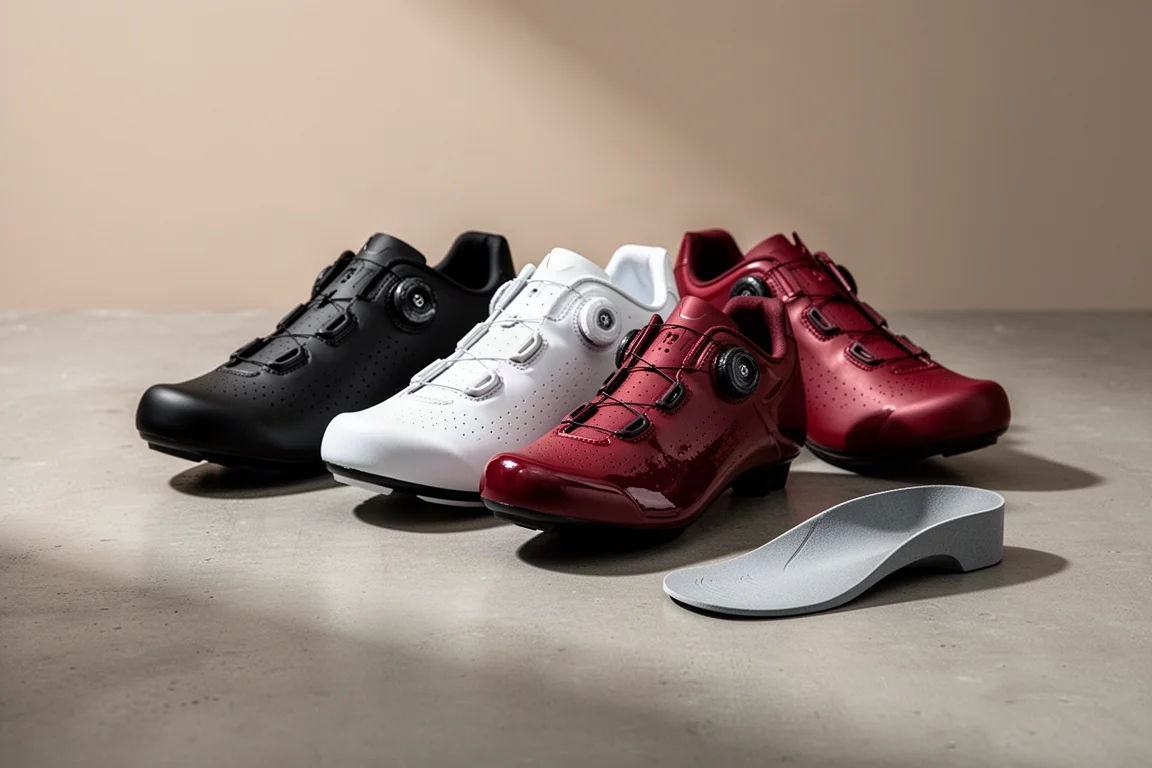
Best Cycling Shoes Ranked: Fit, Cleat Position, and Stability Compared
A practical ranking of road and off-road cycling shoes based on cleat position, foot shape, arch support, and long-ride stability.
Cycling Shoes
Best Wide Fitting Cycling Shoes: Four Options Worth Knowing
A practical guide to wide fitting cycling shoes, covering the Lake CX239, Lake CX242, Shimano RC903 wide fit and G8 2620 arch support.