Cycling Shoes
Best Wide Fitting Cycling Shoes: Four Options Worth Knowing
A practical guide to wide fitting cycling shoes, covering the Lake CX239, Lake CX242, Shimano RC903 wide fit and G8 2620 arch support.
Introduction
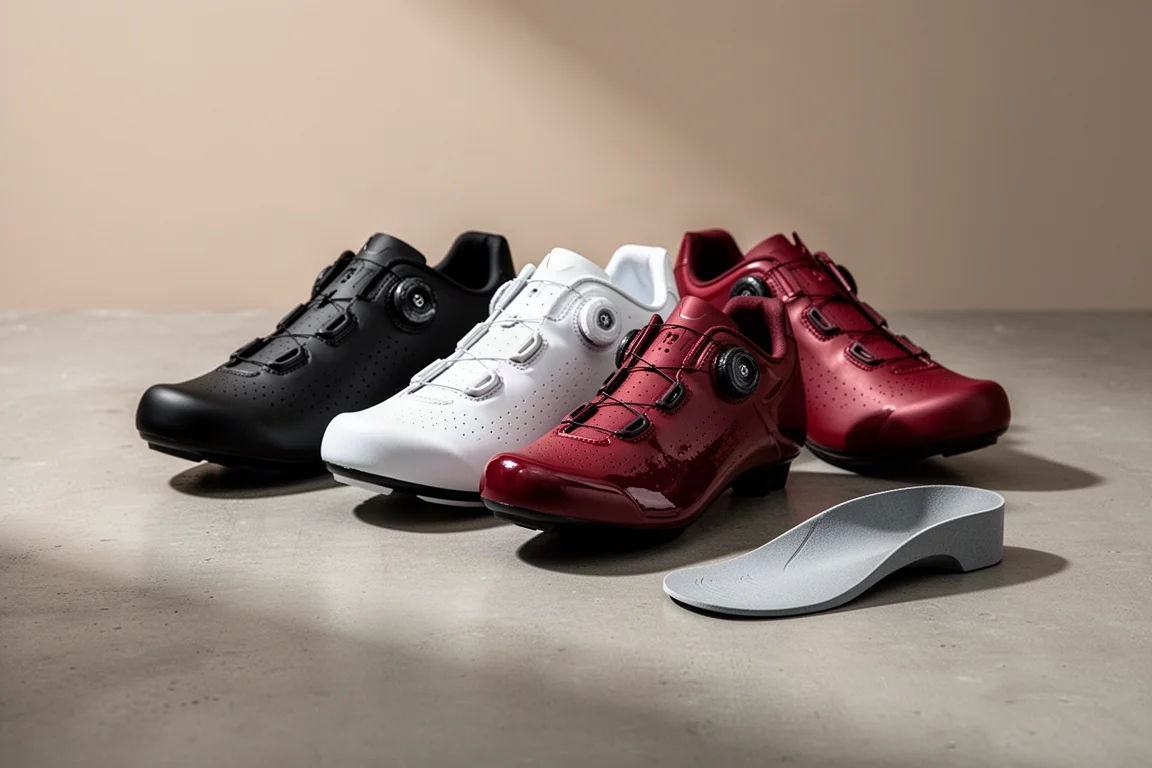
A cycling shoe is one of the most important pieces of equipment on the bike, and for riders with wide feet it is also one of the hardest to get right. The goal is simple in principle: the foot should be completely enveloped by the shoe, with contact across the whole foot but no pressure points and no hot spots. The shoe should not feel saggy, and the foot should not wash around inside it, because that usually translates into instability rather than comfort.
The most common mistake is sizing up to accommodate width. In everyday shoes that can be forgiven. In a cycling shoe it cannot, because the cleat position is fixed in relation to the shoe. Going up a size moves the cleat further forward relative to the foot, which loads the delicate structures of the forefoot. That area carries a dense capillary network and a great deal of neural tissue, and excessive loading tends to produce hot foot and numbness, with knock-on effects further up the kinetic chain through the knees, hips and pelvis.
The alternative is straightforward. If your feet are narrow, buy a narrow fitting shoe. If your feet are wide, buy a genuinely wide fitting shoe.
What to Look For in a Wide Fitting Cycling Shoe
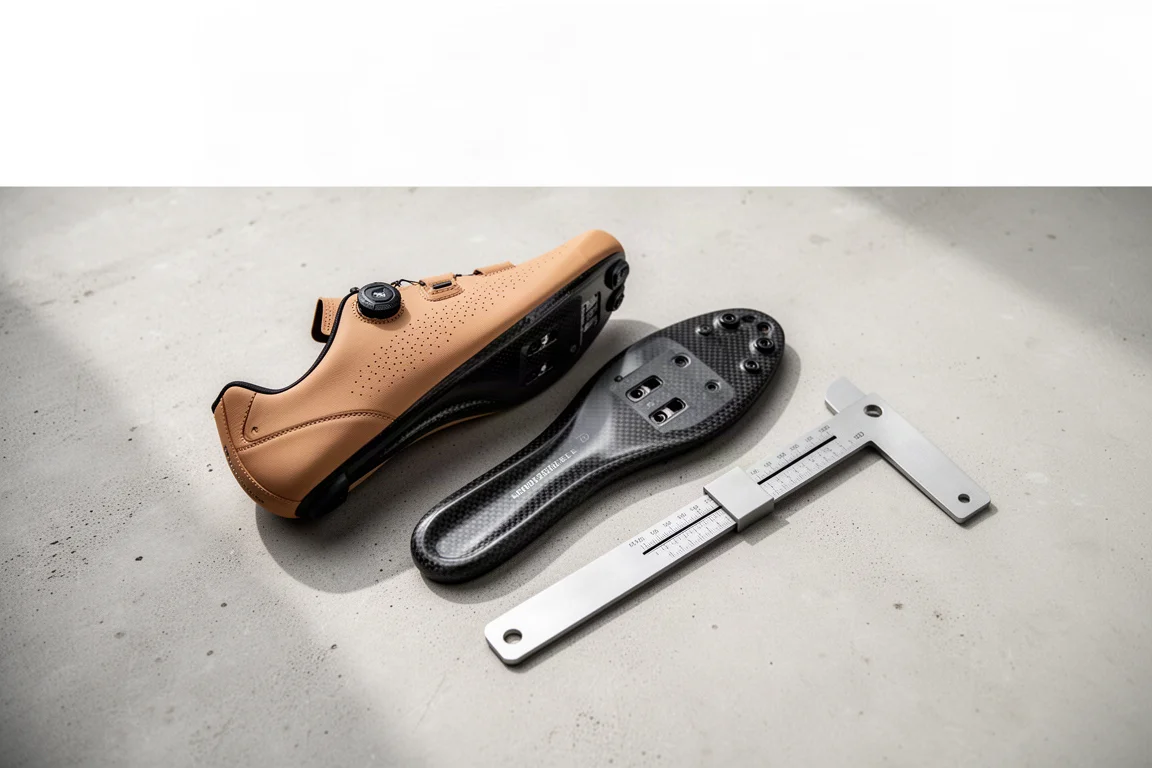
Measure the foot before buying anything. Not every rider who feels pressure on the outside of the foot has wide feet; that symptom can also come from the feet sitting too close together. Standard measurement devices record foot length, foot width and arch length, and place the foot on a width scale that runs from triple A to triple E, with roughly 75 percent of people falling between a C and an E.
Size with arch support in place. Never size a shoe in isolation, because correcting the foot changes how much room is left inside the shoe. A shoe that feels generous with an uncorrected foot can become tight once support is added, and a shoe that feels snug without support can become cramped with it.
Width is not the only metric worth considering. Forefoot drop matters too. Feet with a high longitudinal arch, a high instep and a relatively broad forefoot tend to behave differently from flatter, more malleable feet, and a shoe that is very flat from heel to toe will suit one shape better than the other. It also pays to check whether a brand’s wide option is a true wide last or simply a slightly roomier version of a narrow shoe, because genuine wide lasts are still relatively rare.
Lake CX239: A True Wide Last
The CX239 is the third iteration of a shoe that has become a reference point for wide fitting cycling footwear, and it remains the natural starting point. It is built on a very wide last. The standard fit is already extremely wide, and the wide fit is wider still, with a slightly more rounded toe box that reduces pressure on the ball of the foot and the big toe for riders with squarer feet.
The upper is leather, which gives it a useful amount of give, and there is a vegan friendly PU version that is firmer by comparison. Closure is a double dial system and the sole is carbon fibre. This generation also has a slightly revised, slightly narrower heel cup.
It comes in road and mountain bike versions with exactly the same fit and the same last, in both standard and wide options and in a wide range of colours. Sizing is unusually comprehensive, running from 36 to 52 with half sizes through the middle of the range, so most riders can find a workable fit without compromising on width.
Lake CX242: For Bunions and Difficult Foot Shapes
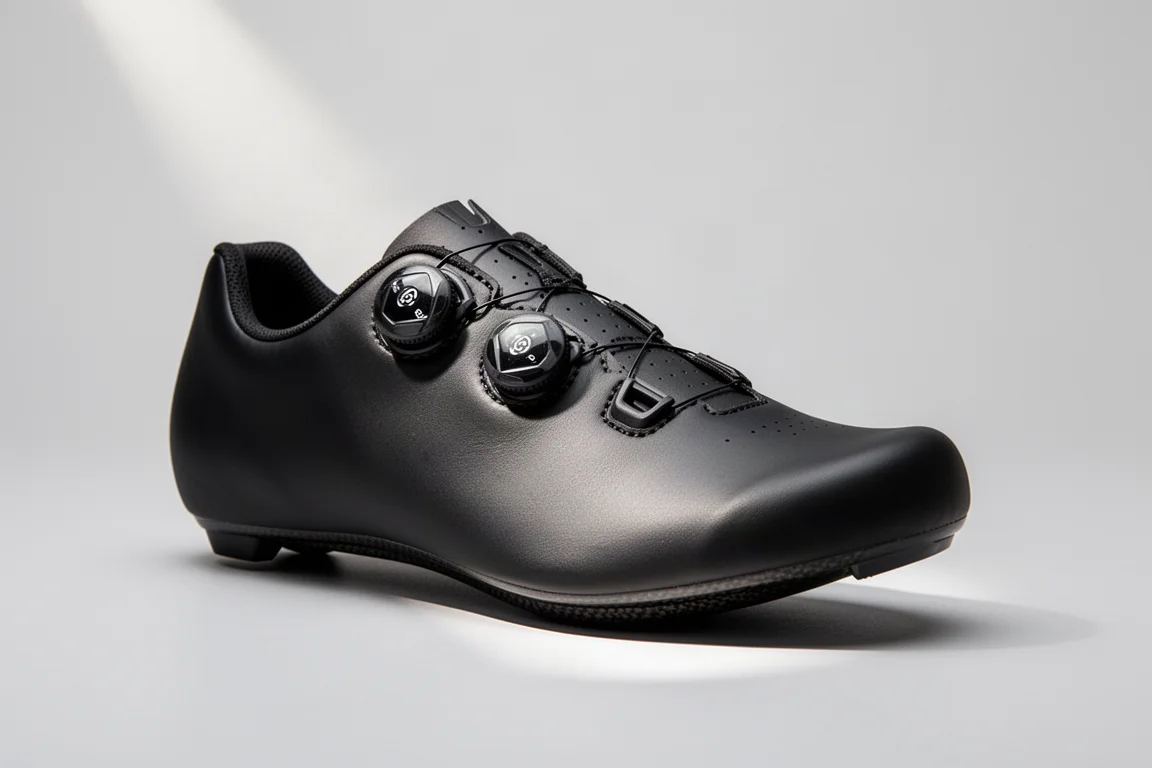
Where the CX239 covers most wide feet, the CX242 is aimed at feet that are genuinely awkward: pronounced bunions, very square forefeet, or deformities that press against a conventional upper.
The design is modular. The shoe is made up of a series of separate components, which allows the whole structure to open up and then close around the shape of the foot rather than forcing the foot into a fixed shell. For riders with bunions this can be a genuine game changer, because the upper envelops the deformity instead of pressing into it. It uses a carbon heat mouldable heel cup and a double dial closure, and it is available in road and mountain bike versions.
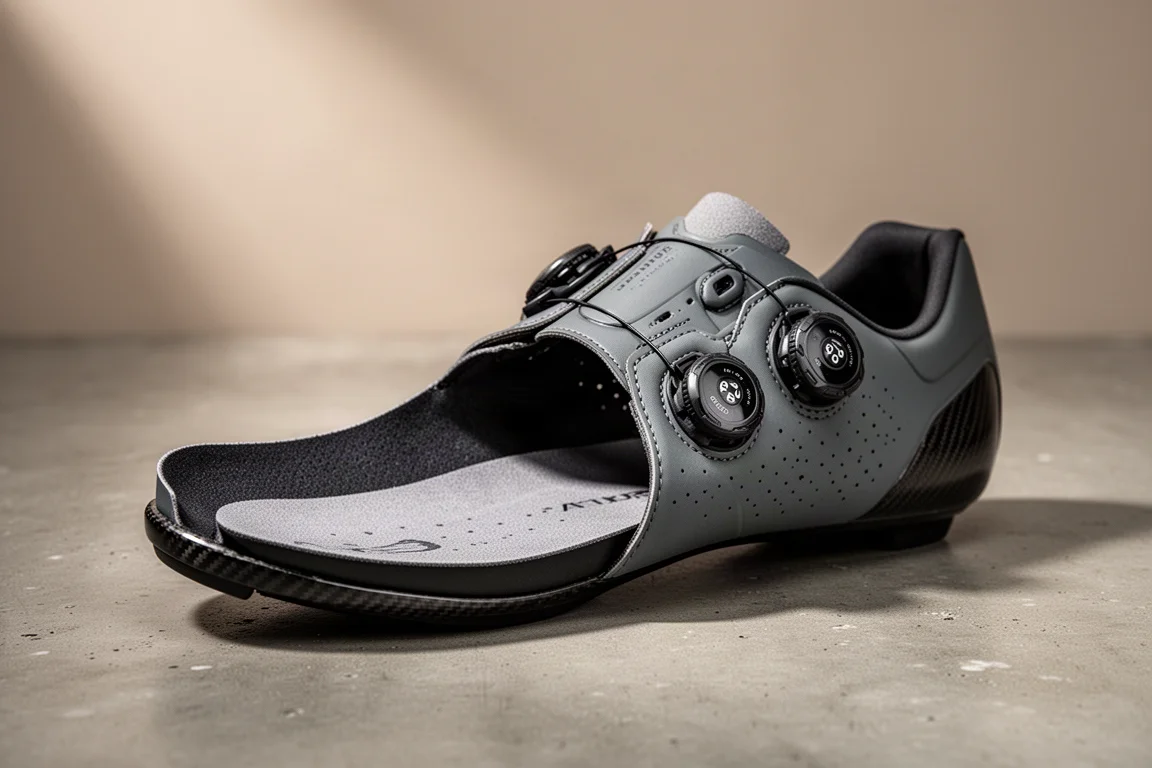
Because the CX242 shares its last with the CX239, the two can often be sized together, which makes it easier to confirm sizing in one model and buy the other.
Shimano RC903 Wide: Wide in Name, Average in Width
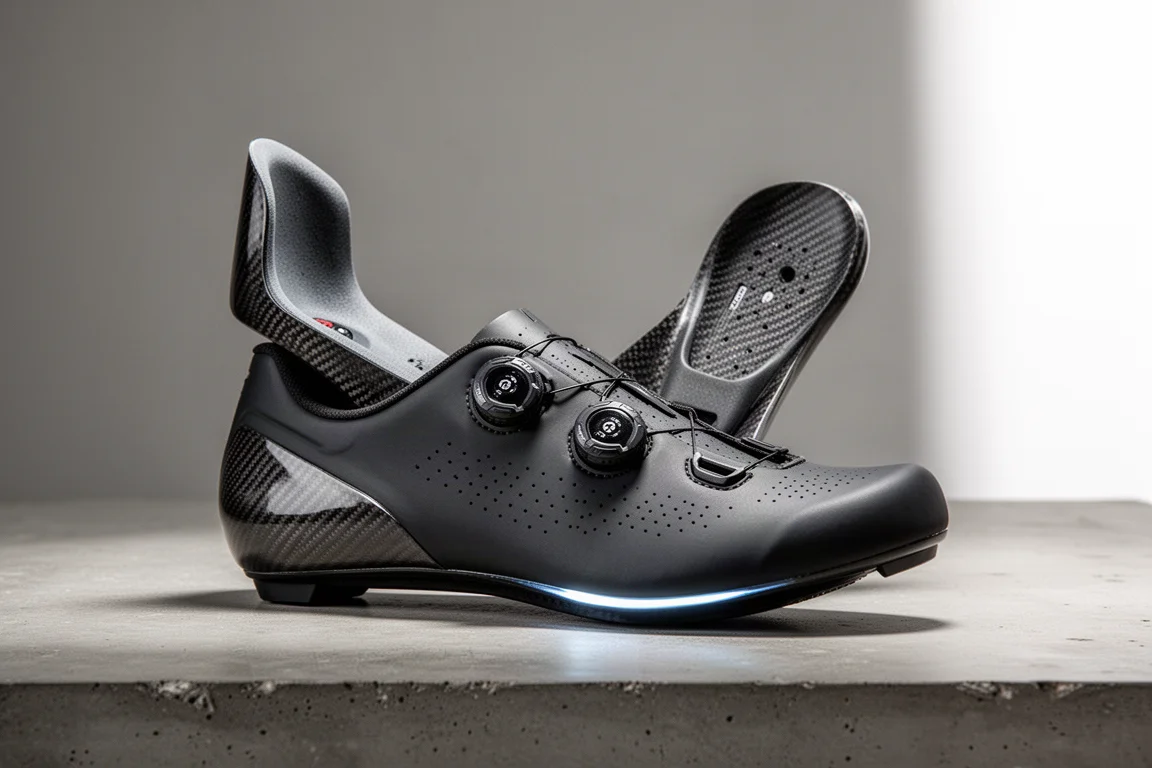
Not every wide fitting shoe is created equal, and the Shimano RC903 wide fit is the clearest example. The base shoe is extremely narrow, and the wide option sits closer to average width than to a true wide last. It is a well regarded shoe in its own right, but riders who need genuine width should not assume the wide version will deliver it.
That is why it is worth treating a wide fit label as a starting point rather than a promise, and why measuring the foot first matters so much. Availability of wide options also varies between models and seasons, so it is worth confirming what can actually be obtained before committing to a shape.
G8 2620: Arch Support That Reshapes the Fit
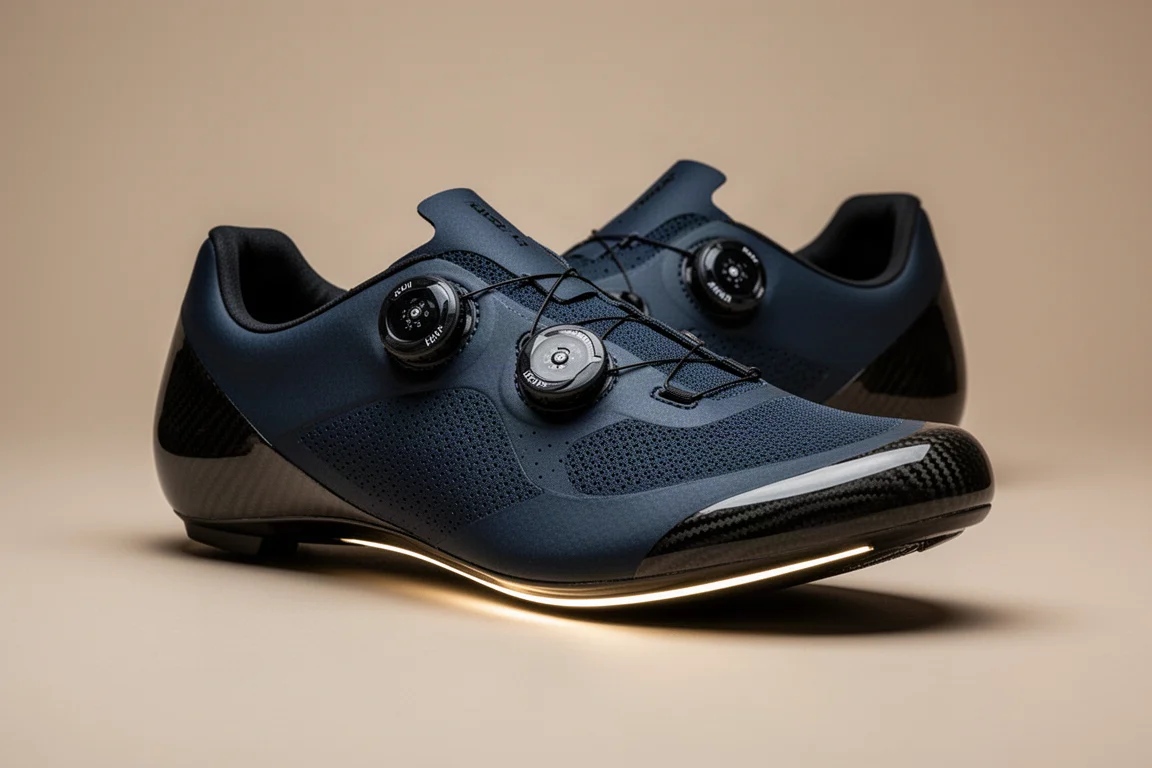
Arch support is not something to think about after the shoe. It changes the amount of space inside the shoe, and therefore the size you need. The G8 2620 offers five different arch heights that can be moved medially and laterally in four planes, so the support can be tuned to the foot rather than accepted as it comes.
Its most useful detail is a flat heel cup. Some supports are domed at the rear, which lets the support roll underneath the foot and makes wedging less stable. A flat heel cup sits flush inside the shoe.
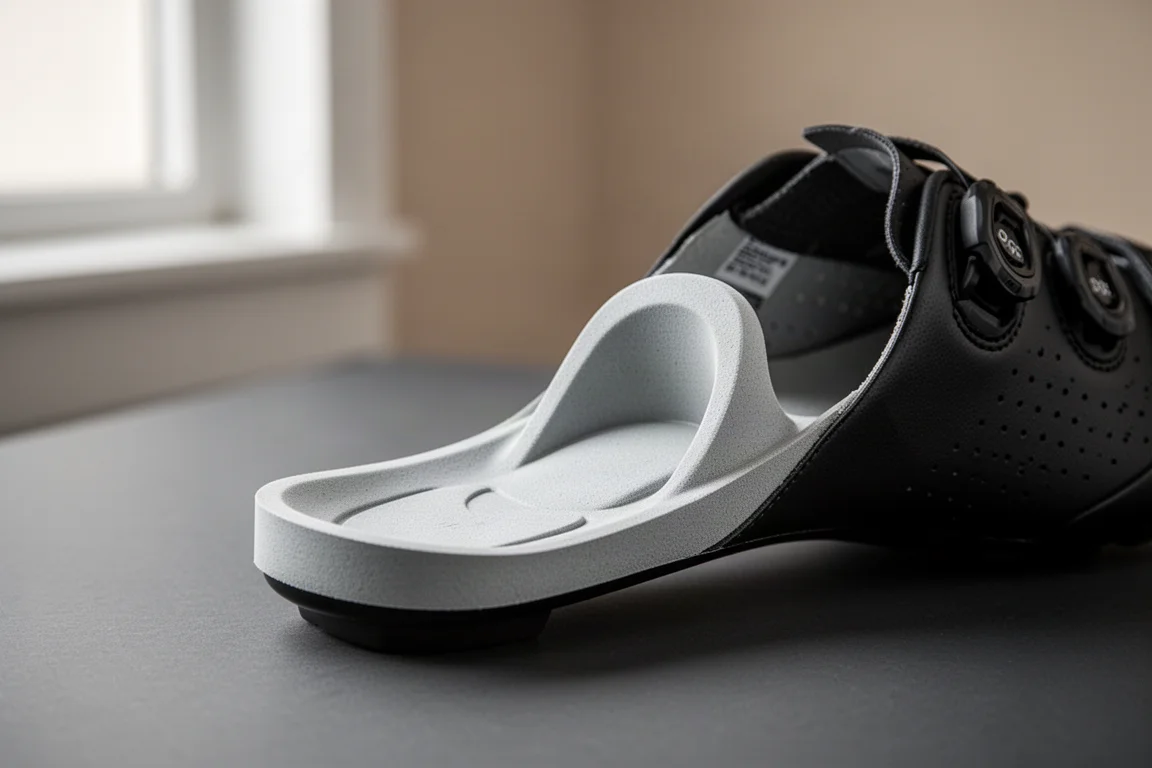
Because the arch piece is adjustable rather than fixed, it can be used as a proprioceptive cue that gives the rider feedback, while the same unit also provides the mechanical support the foot needs under load.
Why Sizing With Arch Support Matters
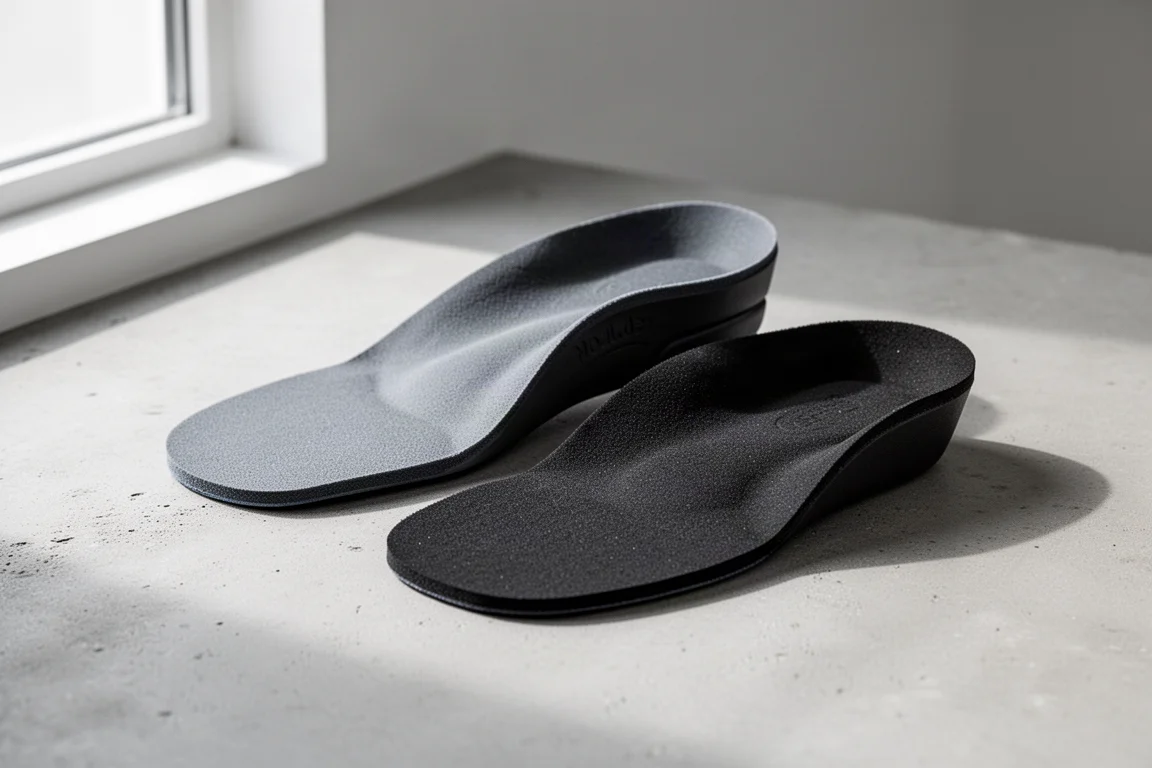
Most instability does not come from the longitudinal arch but from the ankle joint and the subtalar complex. Posting the medial side of the support helps block pronation of the ankle joint, and combining that with a proprioceptive arch piece has a practical benefit: riders can often drop half a size while keeping the same amount of wiggle room at the front of the shoe.
This is the reason a shoe should always be sized with the support in place. Riders who buy a shoe first and add support later frequently run out of room inside it, and end up replacing a pair that was otherwise fine. Getting the support and the shoe right together is the difference between a comfortable fit and an expensive second attempt.
Buying Advice
Start with a measurement, not a model. Foot length, foot width and arch length all influence which last will work, and pressure on the outside of the foot is not always a width problem.
Once you know your measurements, look for a brand with a genuinely wide last rather than a wide label on a narrow shoe, and check that a broad enough range of sizes and models is available to find a real fit. Half sizes matter more than they appear to, particularly for riders in the middle of the size range.
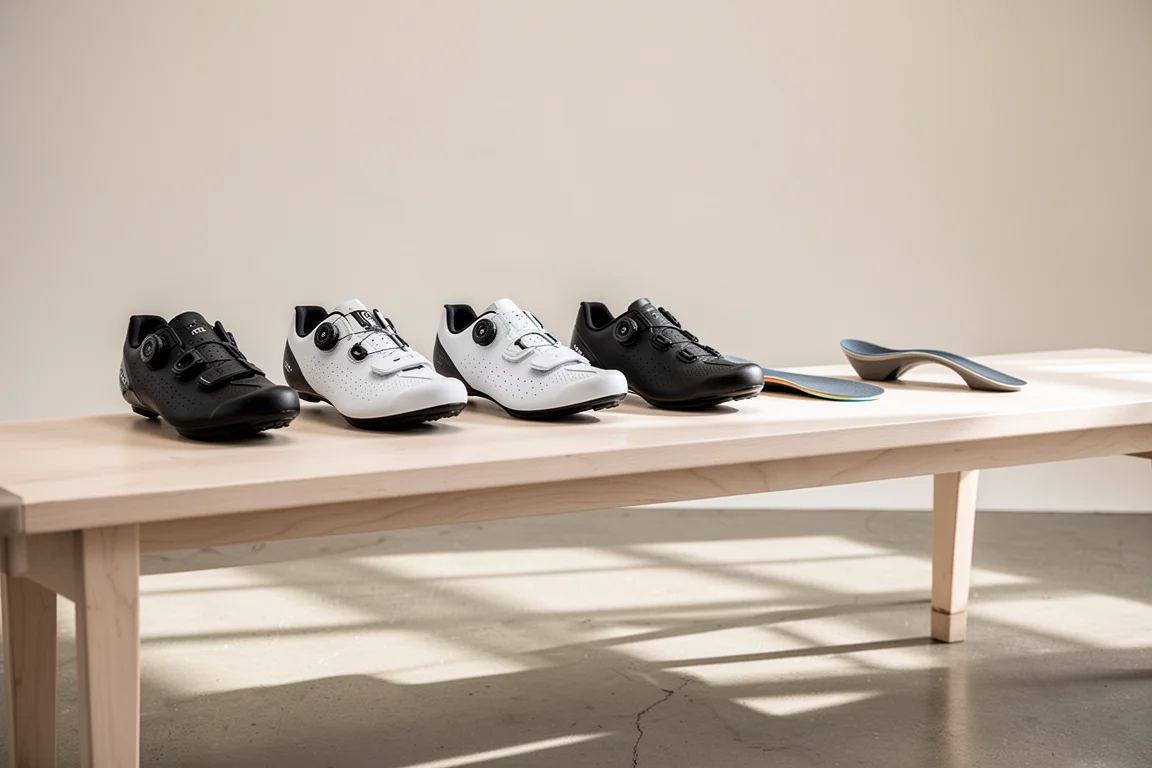
Finally, never size up to accommodate width. If a shoe is the right length and still too narrow, the answer is a wider last, not a longer shoe. Bring your arch support to the fitting, or have it fitted at the same time, and let the two be chosen together.
Conclusion
Wide feet do not have to mean compromised cycling shoes. The Lake CX239 is the benchmark for straightforward wide fitting, with a very wide standard last and an even wider option. The Lake CX242 steps in when foot shape rather than width alone is the challenge. The Shimano RC903 wide fit is a reminder that wide labels vary enormously in what they actually deliver. And the G8 2620 shows how much of the final fit comes down to what sits under the foot. Measure first, size with support in place, and buy the last that matches your foot rather than the size that seems to make room for it.
Further reading
Related Reviews
Cycling Shoes
Best Cycling Shoes Ranked: Fit, Cleat Position and What to Check Before Buying
A practical ranking of cycling shoes by cleat position and fit neutrality, from the models that most often cause problems to the ones that fit best.
Cycling Shoes
Best Cycling Shoes Ranked: Fit, Cleat Position, and Stability Compared
A practical ranking of road and off-road cycling shoes based on cleat position, foot shape, arch support, and long-ride stability.
Cycling Shoes
Canyon Tempr CFR Review: Canyon's First High-End Road Race Shoes
A close look at Canyon's first premium road race shoes, from the carbon sole and wrap-around upper to the trade-offs worth checking before you buy.