Hi-Fi Audio
How to Build a Budget Hi-Fi System: Sources, Amplifiers and Speakers That Deliver
A practical guide to building a clean-sounding hi-fi system for a few hundred dollars, covering streaming sources, compact amplifiers, bookshelf speakers, and a budget DAC upgrade.
Introduction
Building a hi-fi system for a few hundred dollars is more realistic now than it has been in years. Affordable streaming sources, compact amplifiers, and budget bookshelf speakers have all improved at the same time, so a system assembled from modest parts can sound clean and detailed.
The useful part is that you do not need to buy everything at once. Each component can be added or improved on its own, which keeps the initial outlay low and leaves a clear upgrade path.
What Makes a Good Budget Hi-Fi System
Three things have to work together: a source that gets music into the chain, an amplifier that drives the speakers cleanly, and speakers that suit your room and your listening habits.
The affordable amplifiers available now are clean enough that differences between sources become audible. That matters for planning. Instead of replacing the whole system when you want better sound, you can improve one link at a time, starting with whichever part is limiting the result.
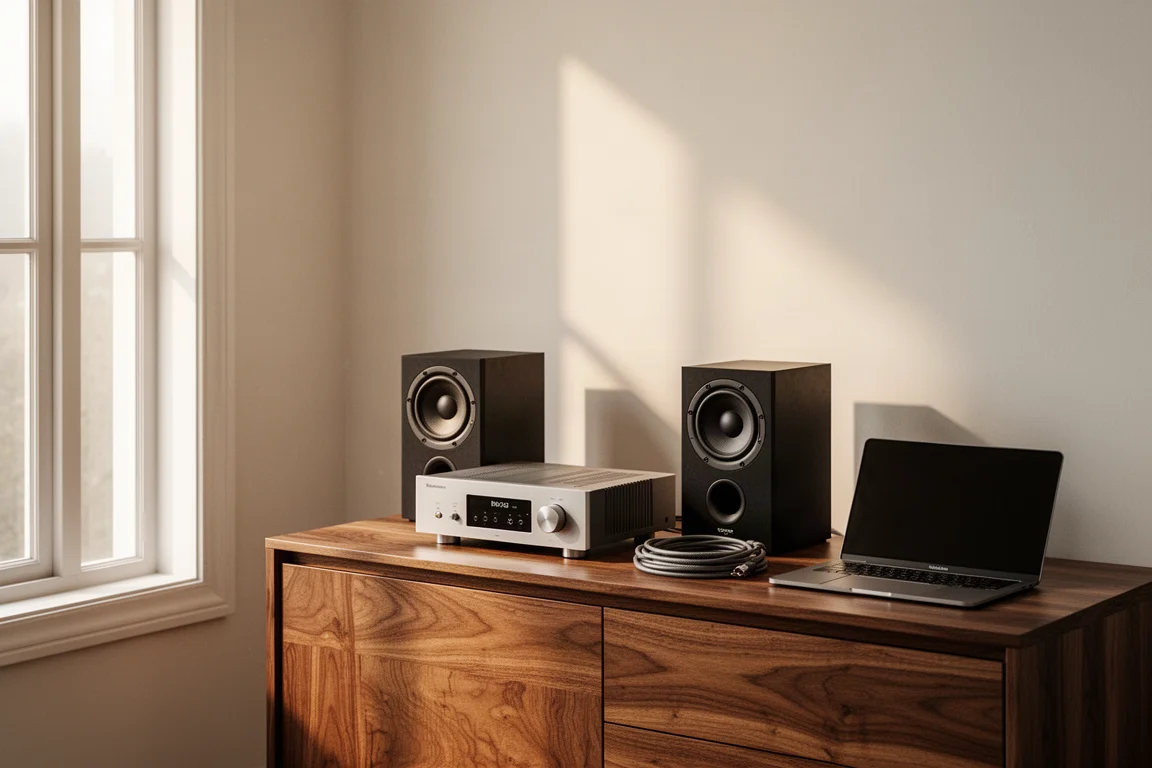
Connection options are worth thinking about early as well. Outputs on the source and inputs on the amplifier decide what you can add later, and the power supply on a compact amplifier decides how much output it can deliver when you ask for it.
Sources: Streaming and Connectivity
A streaming source is the simplest way into a modern budget system, and the two options below cover most needs.
WiiM Mini
The WiiM Mini is the affordable entry point, normally around $80 and often less on the street. It covers Bluetooth and Apple AirPlay 2, plus a full streaming platform with Amazon Music, Tidal, Qobuz, and Spotify. Outputs are 3.5mm analog and digital optical, which means you can add an external digital to analog converter later without changing the streamer. It runs from a 5V supply, and a linear power supply can be fitted later if you want to.
WiiM Pro
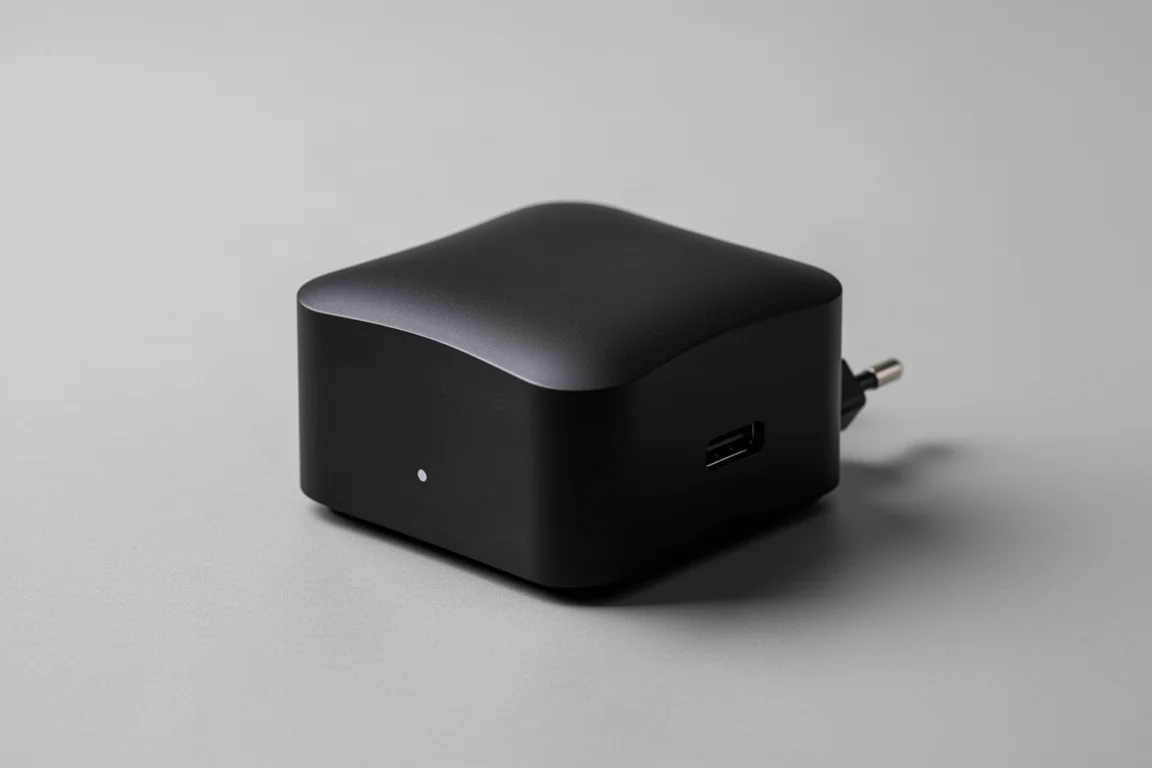
The WiiM Pro sells for $150 retail and can often be found closer to $125. It adds full-size RCA outputs, a digital optical output, a digital coaxial output, full-size RCA inputs, and a trigger output that can switch on a power amplifier remotely. It also accepts a wired network connection. The power supply arrangement is the same 5V design, and sonically it sits close to the WiiM Mini.
Amplifiers: Power and Flexibility
Amplification is the area that has moved on most. Both amplifiers below accept an external supply, can be run in mono mode if you add a second unit, and allow op-amp chips to be upgraded later. Both want a 48V 5A supply to reach maximum output, although that is not necessary to drive the speakers covered in this guide.
Fosi Audio ZA3
Around $130, and frequently discounted below that. Balanced XLR or TRS inputs and a full-size subwoofer output give it the most flexible connections of the two. Inside there are five op-amp chips, two of which sit on the subwoofer output path, leaving three as practical upgrade targets.
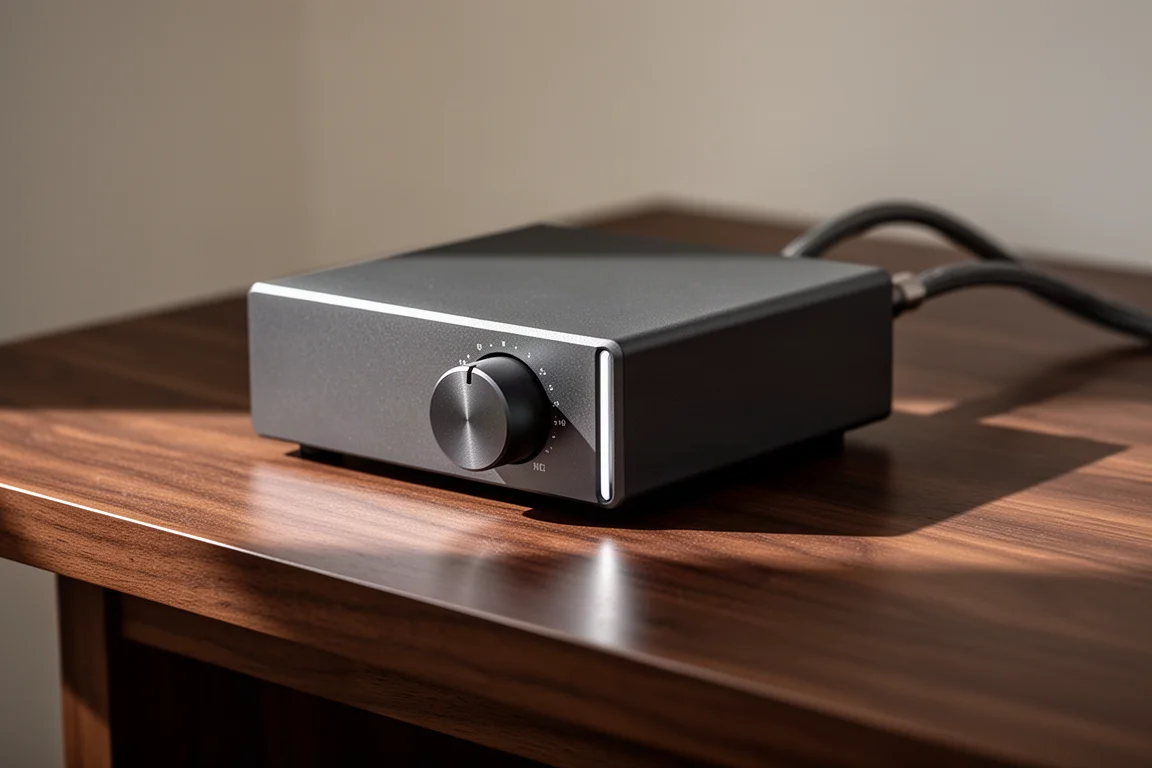
If you plan to add a subwoofer, or simply want balanced connections available from the start, the ZA3 is the one to choose, and the price difference against the alternative is small.
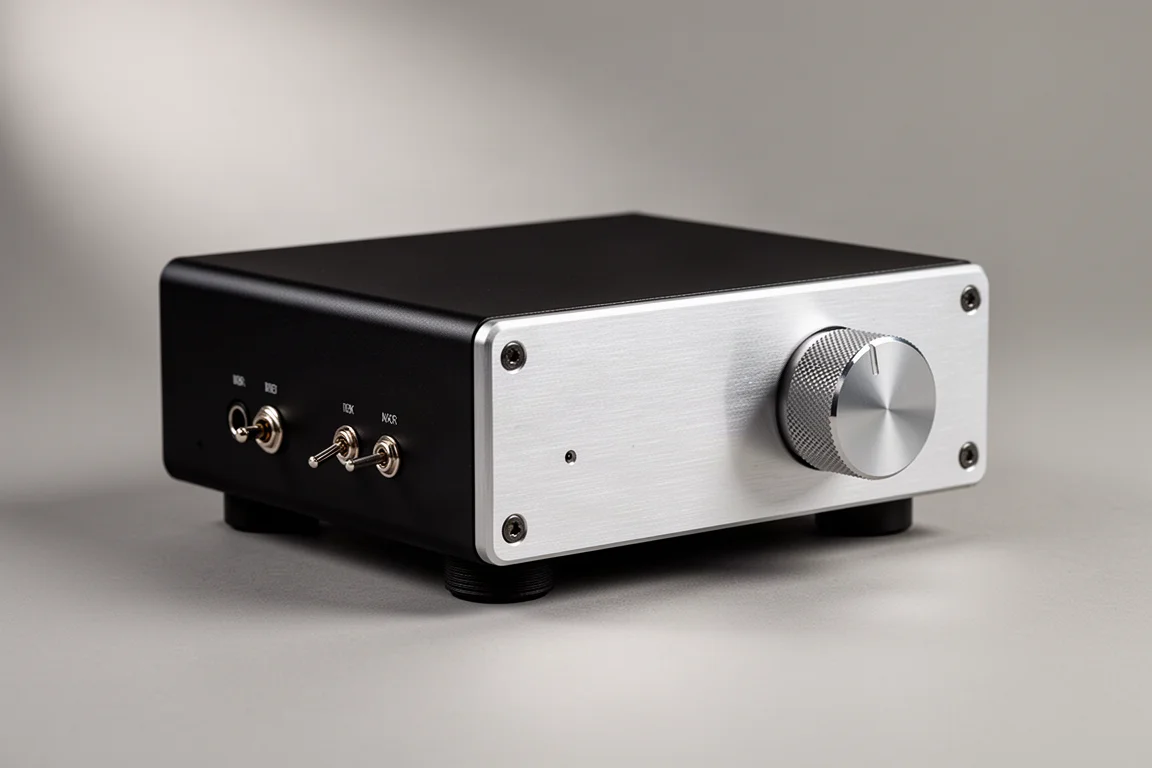
AIYIMA A07 Max
The A07 Max is roughly $30 cheaper, and with coupons it often lands in the $70 to $80 range. There are no balanced XLR or TRS inputs, and the rear output is an auxiliary connection rather than a dedicated subwoofer output. Mono mode and op-amp upgrades work the same way as on the ZA3.
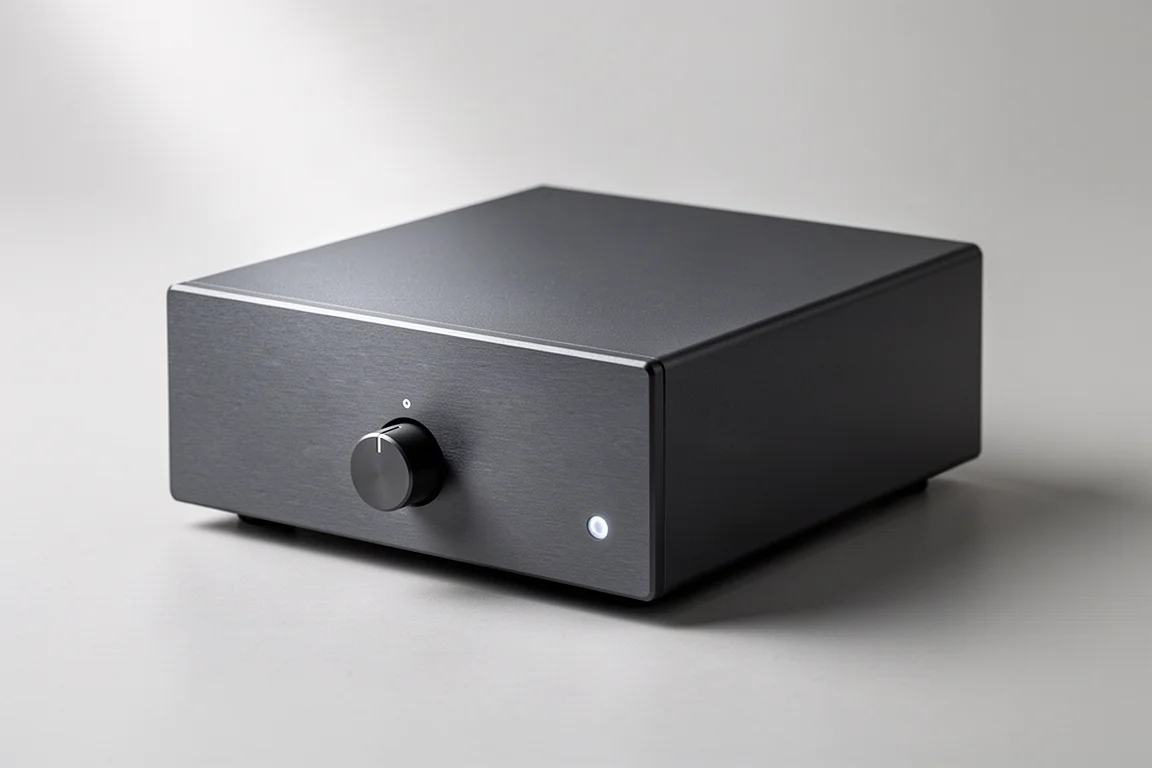
Speakers: Where the Sound Comes From
Speaker choice sets the tonal character of everything else, and the models below are the ones that stand out at these prices.
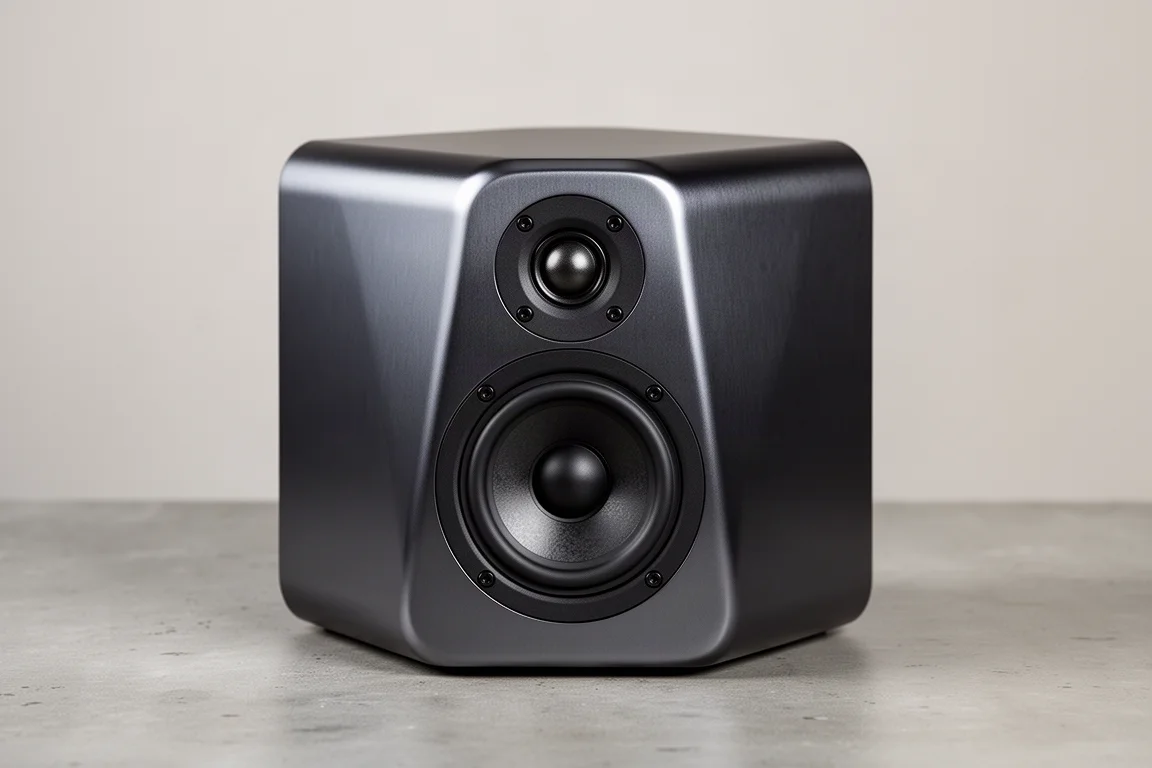
Sony SSCS5
The SSCS5 is a 2.5-way design with a super tweeter and a 5.25-inch woofer. It gives a little punch at the bottom and plenty of air and detail at the top. Street price is around $150, it drops to about $120 during sales, and the current list price is $200. At that list price the value is less obvious, but it remains the speaker to beat under $200. At higher volumes, around 85 dB and above, it can start to sound intense.
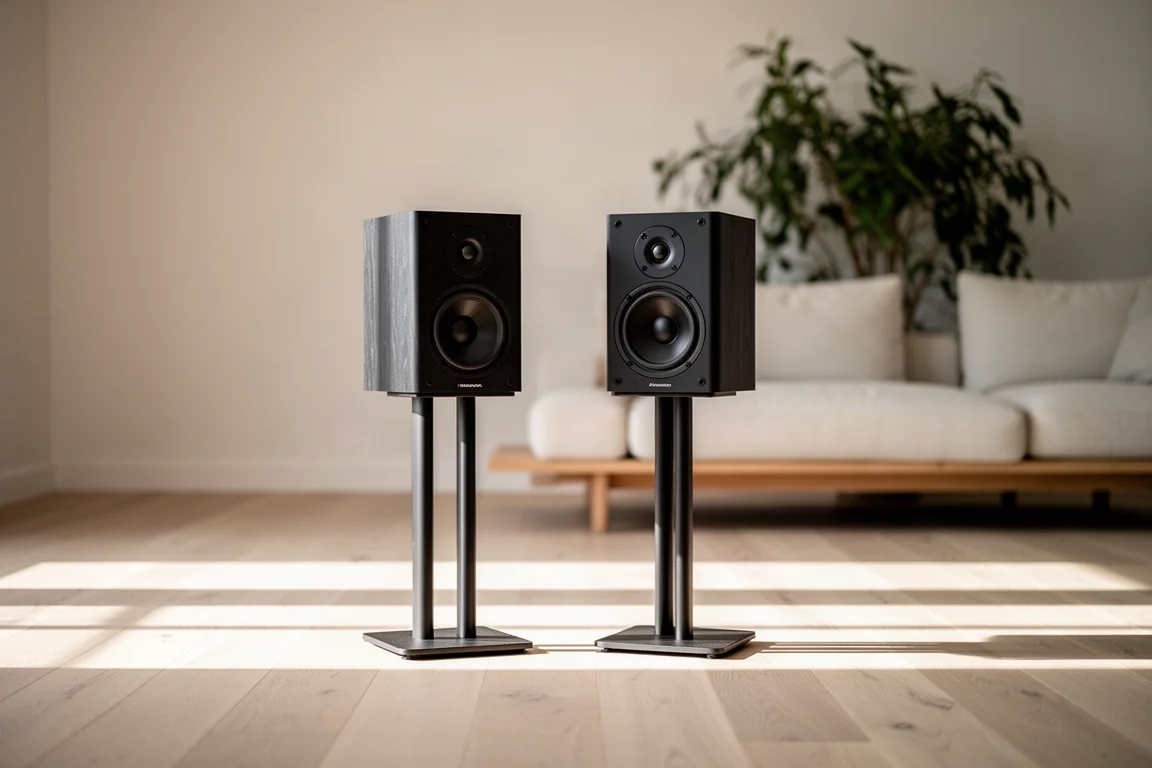
It stands on its own without a subwoofer, which keeps a first build simple and affordable.
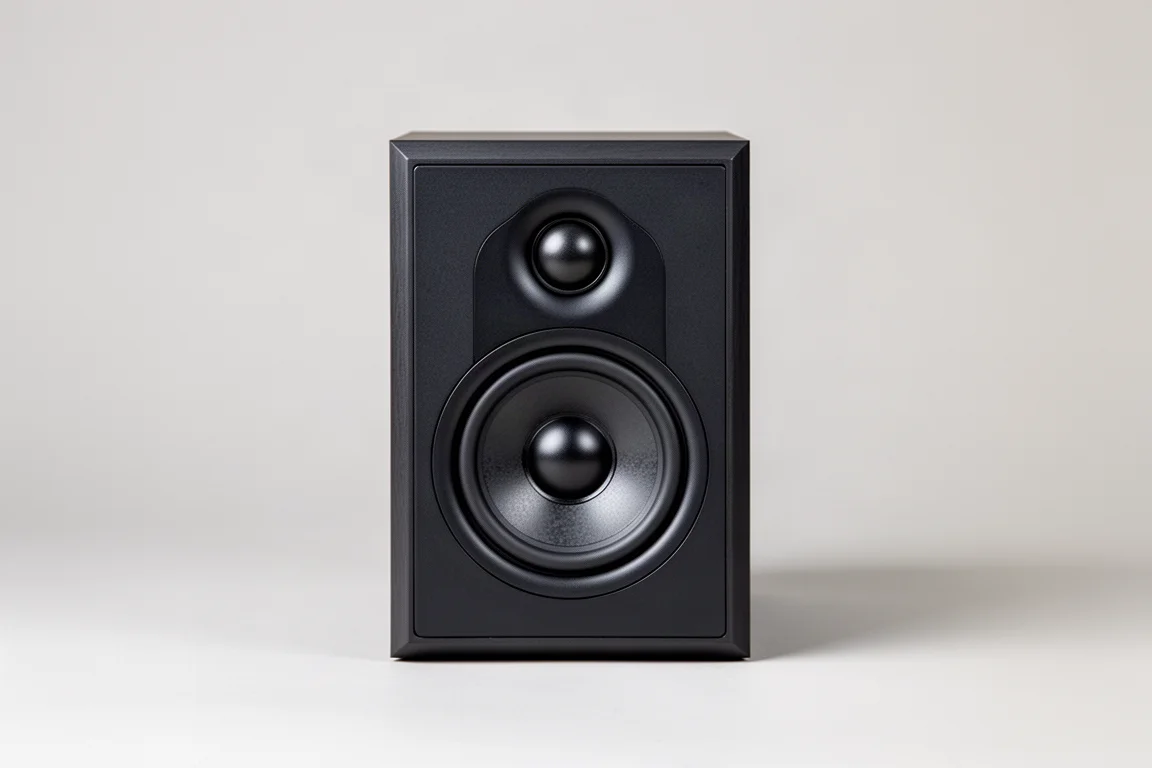
ELAC BS41
A 4-inch woofer that produces a surprising amount of bass for its size, provided it gets enough power. Street price is around $130, with full retail closer to $160. Tonally it is neutral, perhaps a touch warm, with a more rolled-off top end than the Sony. That makes it the better choice if you like to listen loudly, since it stays composed where the Sony can get forward.
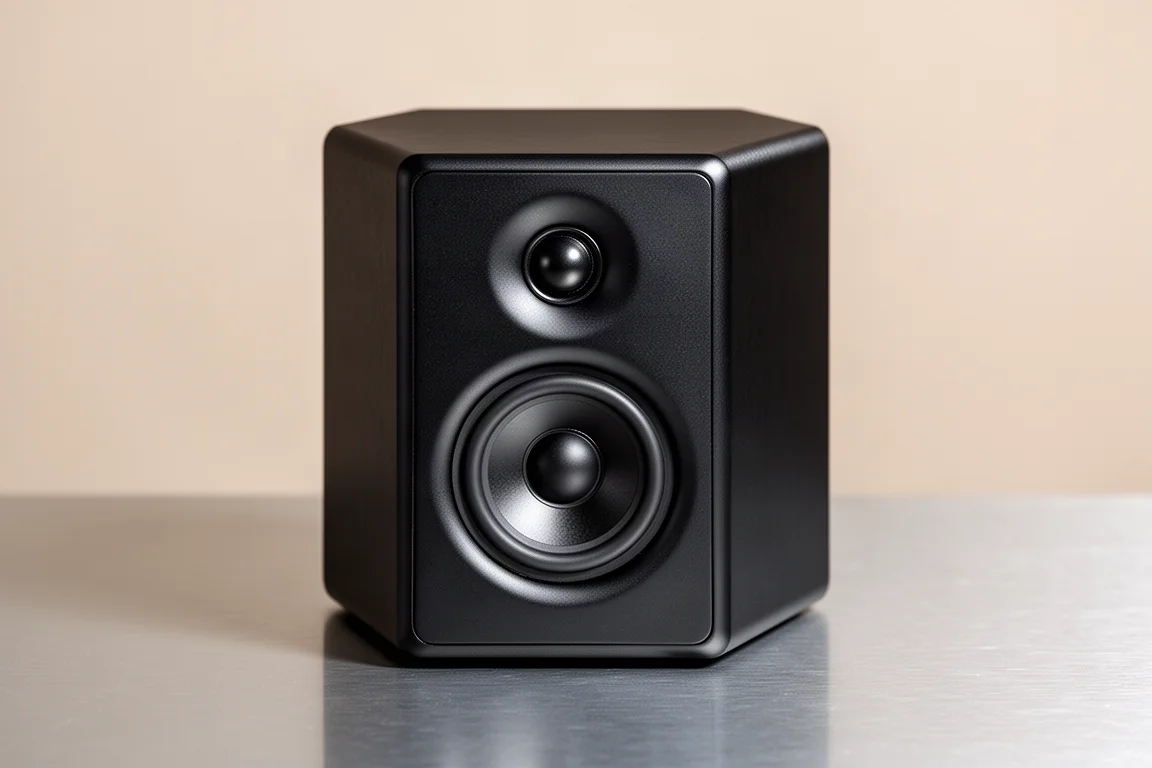
RSL CG3M
The CG3M is very small and very capable, but it needs a subwoofer to fill out the low end. Treat it as a home theater speaker for surround or height channels rather than a stand-alone stereo pair.
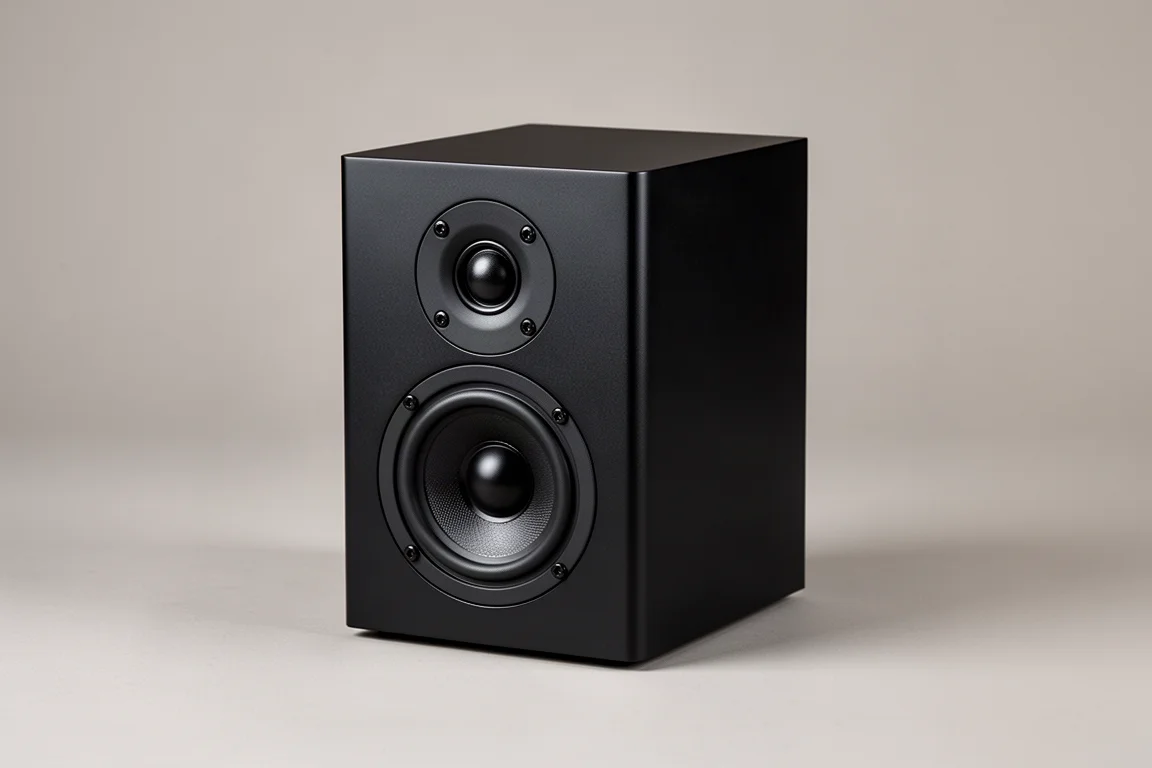
Neumi BS5
The BS5 is another affordable option at around $100 to $105 for listeners who want to compare alternatives.
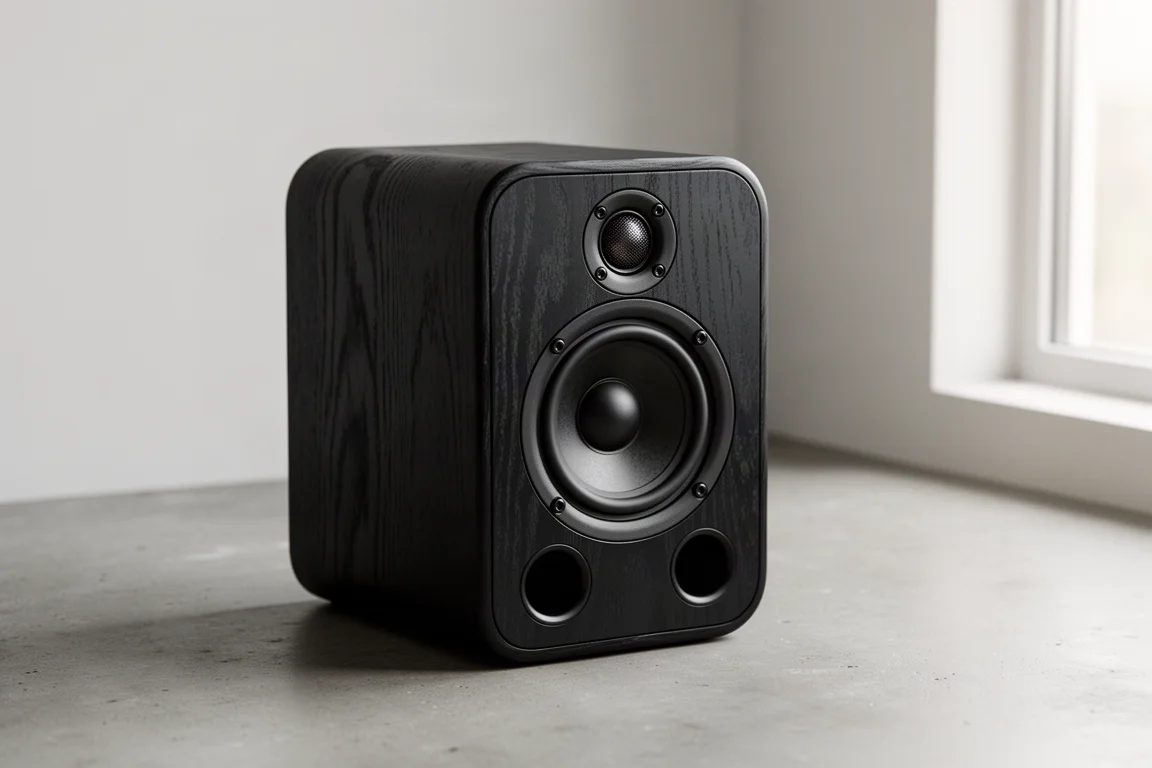
Neumi Silk 4
The Silk 4 sits at about $150 and is worth considering alongside the Sony and the ELAC.
The DAC Upgrade: SMSL SU1
Once the amplification is this clean, a digital to analog converter becomes a worthwhile step. The SMSL SU1 costs about $80, sometimes nearer $78. You feed it optically from the WiiM Mini or the WiiM Pro, and its output goes to the ZA3 or the A07 Max. It uses an AKM 4493 chipset and a capable analog output stage.
Volume is fixed, so you keep controlling level from the amplifier or from the WiiM app. In return you get improved clarity, better instrument separation, a larger soundstage, and more depth. It is the easiest and cheapest meaningful upgrade in the chain, and it does not need to be bought at the same time as everything else.
Example Builds and Buying Advice
A few combinations make sense at these prices. Pairing the Sony SSCS5 with the WiiM Mini and the Fosi Audio ZA3 comes to roughly $380, and stepping up to the WiiM Pro takes it to about $450. If the WiiM Pro is the plan, it is worth buying it from the start rather than upgrading later.
Going with the A07 Max instead keeps costs lower. It often sells near $70 to $80, so an A07 Max, a WiiM Mini, and speakers can land close to $300. The A07 Max and WiiM Mini combination is around $180, against about $200 for the ZA3 and WiiM Mini.
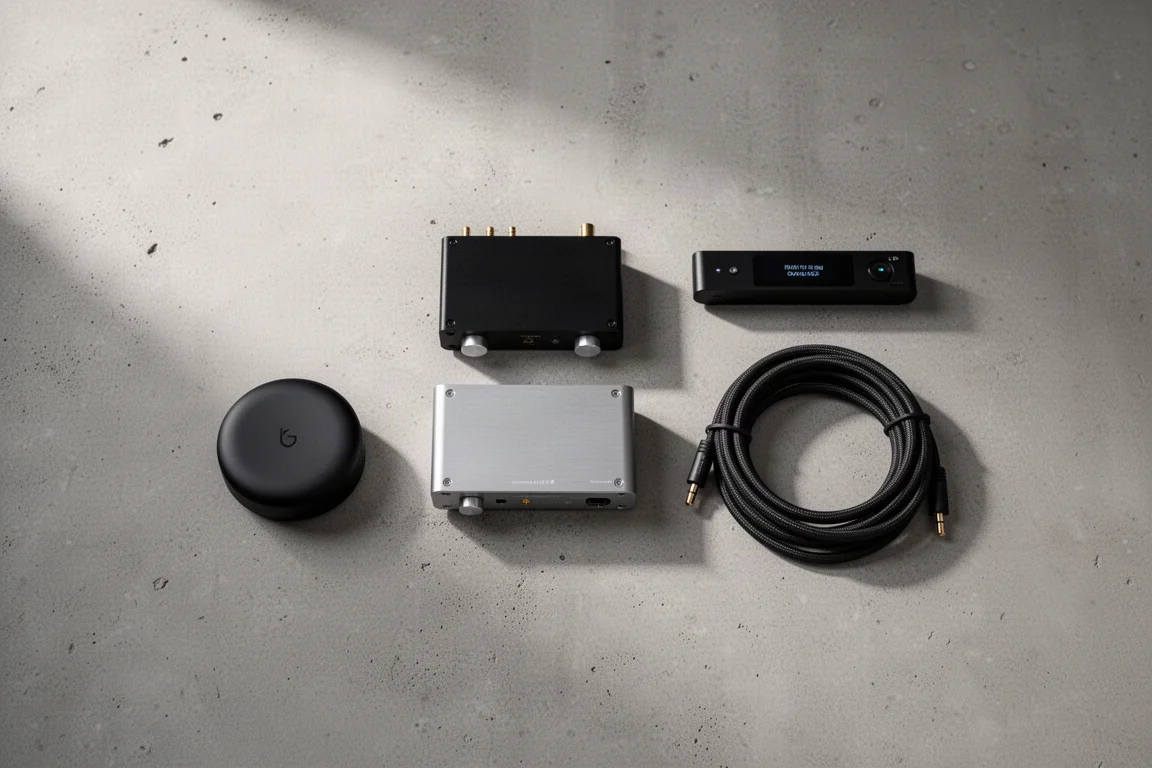
Adding the SU1 takes the Fosi based system just above $500, while the same upgrade on the A07 Max build stays well under $550.
From there the upgrade order is straightforward. Add the DAC first, because it improves the sound most for the least money. Then add a second amplifier of the same model so each speaker gets its own power supply in mono mode. Running two units improves channel separation, which shows up as a better soundstage, sharper imaging, and cleaner separation between instruments. After that, op-amp chips can be swapped on either amplifier for further refinement.
The point of this approach is that nothing is wasted. Each purchase builds on what you already own, which is a far more comfortable way to reach a good system than saving for a large one-off spend.
Conclusion
A budget system assembled from a WiiM streamer, a compact amplifier, and a well-chosen pair of bookshelf speakers will hold its own, and it can be improved piece by piece. Start with the source, the amplifier, and the speakers, add a DAC when you can, and consider a second amplifier later. Bought in that order, a few hundred dollars goes a long way.
Further reading
Related Reviews
Hi-Fi Audio
Accuphase C-57 vs Allnic H-7000V: Two High-End Phono Stages Compared
A fully balanced solid-state phono stage with a pitch-black noise floor meets a tube design built for well-loved records. Here is how to choose between them.
Hi-Fi Audio
Active vs Passive Hi-Fi: Five Components for a Modern System
Five components that define modern active and passive hi-fi systems, with the strengths, trade-offs and setup details worth weighing before you buy.
Hi-Fi Audio
Advance Paris A10 Apex Review: A Hybrid Integrated Amplifier That Covers a Lot of Ground
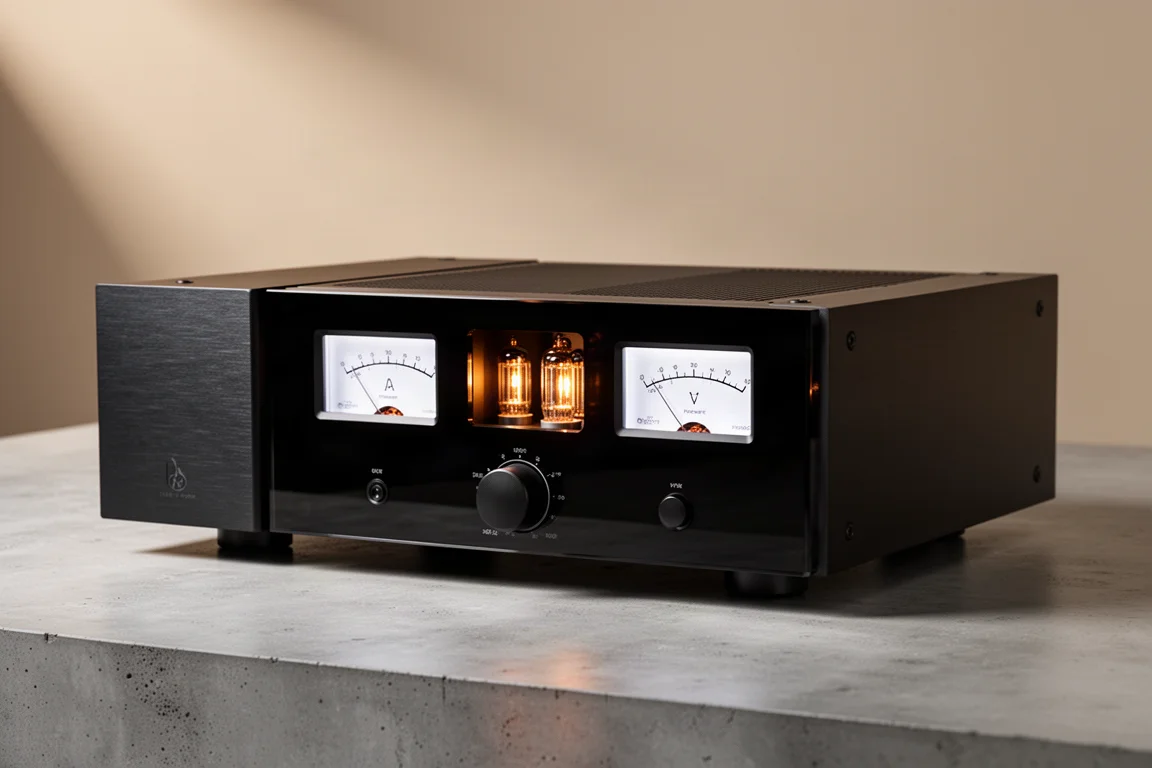
A French hybrid integrated amplifier with a class A tube preamp stage, analogue power meters, and an internal DAC and phono stage good enough to make extra boxes unnecessary.