Amplifiers
How Much Should You Spend on an Amplifier? A Practical Buying Guide
A grounded look at amplifier spending, from power and speaker efficiency to the price tiers that deliver the most value, with six models across the range.
Introduction
Ask how much you should spend on an amplifier and you will usually get one of two answers: as little as possible, or a figure high enough to make you question the hobby entirely. Neither is useful. Amplifiers are one of the easiest places in audio to waste money, which is exactly why it pays to slow down before you buy.
The question worth asking is not what the best amplifier is. It is what the best amplifier is for you, your speakers, your room, and your budget. That is four variables rather than one, and the answer changes depending on how you weight them.
This guide covers what actually matters: how an amplifier behaves inside a system, how much power you genuinely need, why personal priorities often decide the purchase, and which price tiers tend to deliver the most value. It then looks at six amplifiers that span the range, from entry-level integrated models to an aspirational, design-led piece.
What an Amplifier Actually Does
Start by clearing up a common misconception. An amplifier is not a dumb power box, and it is not a magical tone box either. It does have sonic characteristics. Some amplifiers sound warm. Some are very neutral, and occasionally a little mid-range focused. Others are dynamic but a touch soft in the middle.
What people often miss is that an amplifier does not exist in isolation. It reacts to your speakers, your room, your rack, and your own perception of how it looks sitting in the space. Even the credit card bill is part of the equation, because a purchase you resent is a purchase you will never enjoy.
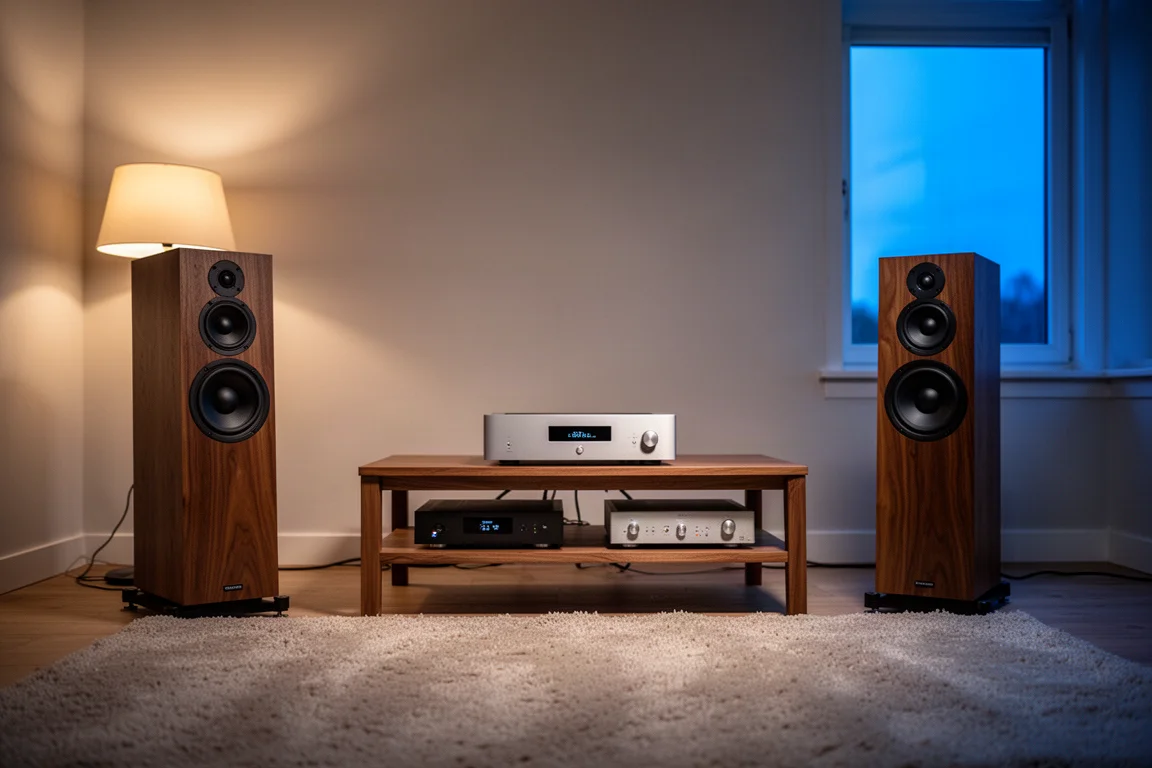
That is why two listeners can hear the same amplifier completely differently. One model can sound controlled in a treated room and thin in a live one, simply because the speakers and the acoustics changed. Matching matters more than ranking.
Power, Speaker Efficiency, and Headroom
Power is important, and it is important because of speaker efficiency. Efficiency describes the sound pressure level a speaker produces with one watt of power measured at one meter. A speaker rated at 85 dB with one watt at one meter will produce roughly 85 dB, which is already fairly loud.
The complication is how quickly the numbers climb. Every additional 3 dB of sound pressure level requires twice the power. Going from 85 to 88 dB needs 2 watts, 91 dB needs 4 watts, 94 dB needs 8 watts, 97 dB needs 16 watts, and 100 dB needs 32 watts.
That still does not sound like much until you remember those figures come from a test tone, and music is not a test tone. A bass-heavy track can pull far more power than the numbers suggest, and an amplifier with limited current capability and limited capacitance may manage only a few strong bass hits before it runs out of steam.
Judging current capability from a spec sheet is genuinely difficult, because it is rarely spelled out. One useful clue is the relationship between the power rating at 8 ohms and at 4 ohms. An amplifier rated at 100 watts into 8 ohms and 200 watts into 4 ohms probably has decent current capability.
There is another wrinkle: speaker impedance is not a fixed number. It varies with frequency across the range, which is why headroom matters. Having more power available than you expect to use is generally a safer position than running an amplifier close to its limit.
Why Personal Priorities Matter More Than Specs
This is the part that rarely gets discussed, and it is often the most important. Personal priorities include brand loyalty, how a component looks, how it sounds, and what it costs. It is the catch-all category that decides more purchases than any specification.
Looks, brand loyalty, and nostalgia frequently outweigh sonic differences. If you have wanted a particular brand of gear for years, settling for something else tends to leave you unsatisfied, and buying twice usually costs more than buying once.
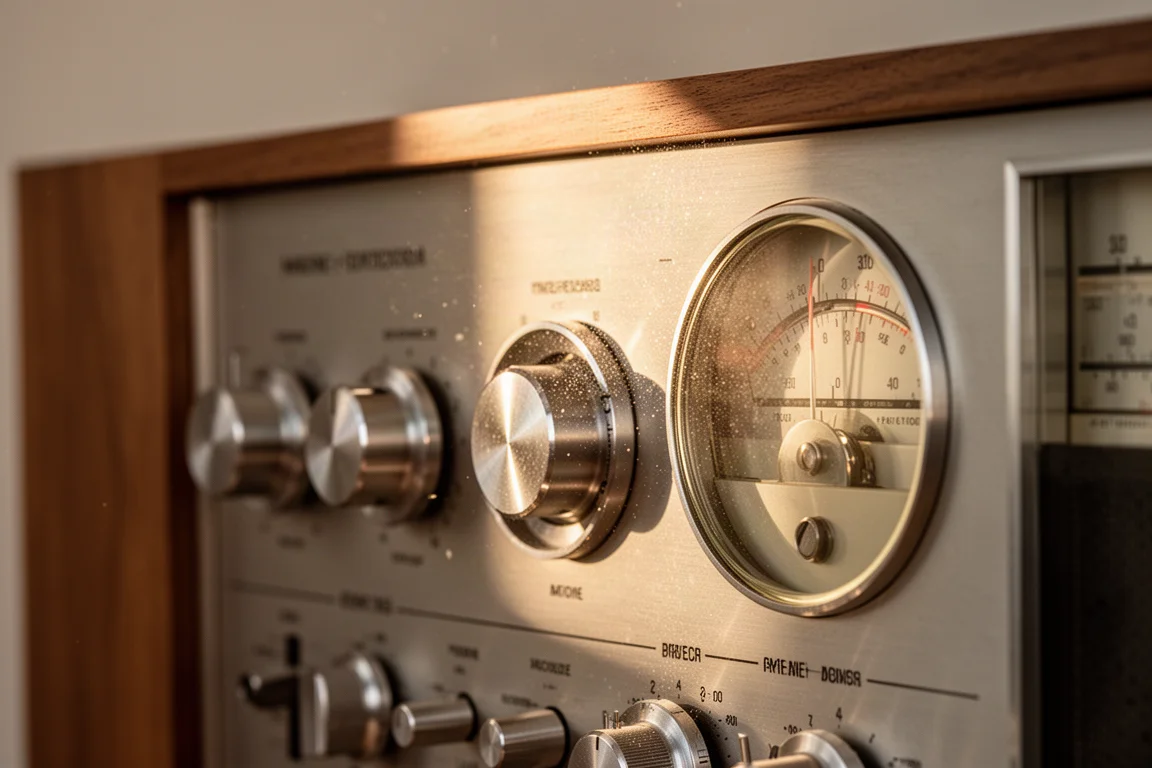
The same logic covers the midlife amplifier moment, where what you really want is a restored vintage receiver from your youth. It also covers the opposite instinct: if you want one simple box with streaming built in, an integrated amplifier with streaming makes far more sense than separates and a tangle of cables. Aspirational pieces work the same way. Owning one is often a reflection of where you are in life, and that is a legitimate reason to buy.
None of this is irrational. It simply means the amplifier decision requires a little self-knowledge before it requires a spec sheet.
Under $500: Vibe Link
If you are just getting into the hobby and your budget is $500 or less, there are still genuinely good options. Fosi Audio and WiiM both come up regularly in this bracket, with WiiM offering a lot of features for the money.
The Vibe Link stands out for a different reason: it is one of the better sounding amplifiers at its price. For a first system, that combination of modest cost and real sound quality is exactly what you want.
The $500 to $1,000 Sweet Spot: Emotiva TA1 and TA2
For integrated amplifiers, $500 to about $1,000 is the sweet spot. It is the range where build quality, power delivery, and features tend to line up without the price climbing into aspirational territory.
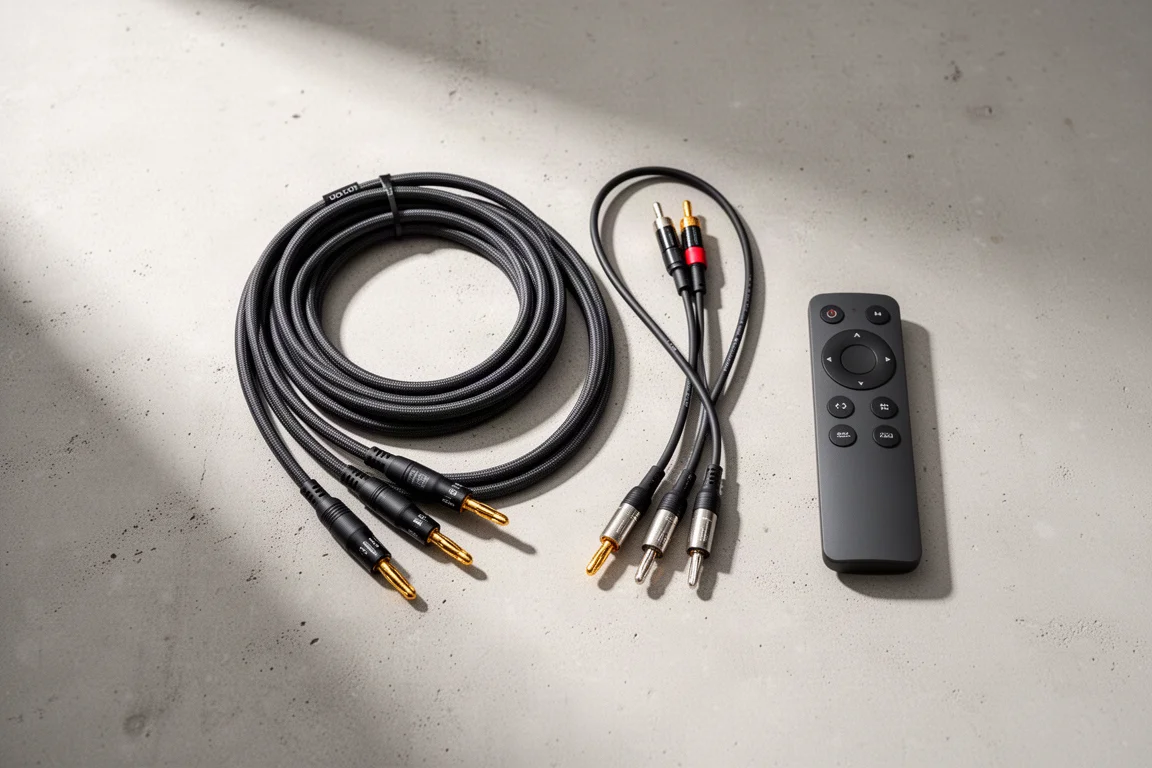
The Emotiva TA1 is one of the strongest choices in this bracket, particularly when the budget is a little tighter. Emotiva sells direct to customers rather than through a traditional distribution chain, which removes a layer of markup that retail-distributed products carry. That does not automatically make a direct-sale amplifier better than a retail one at the same price, but it does change what your money is buying.
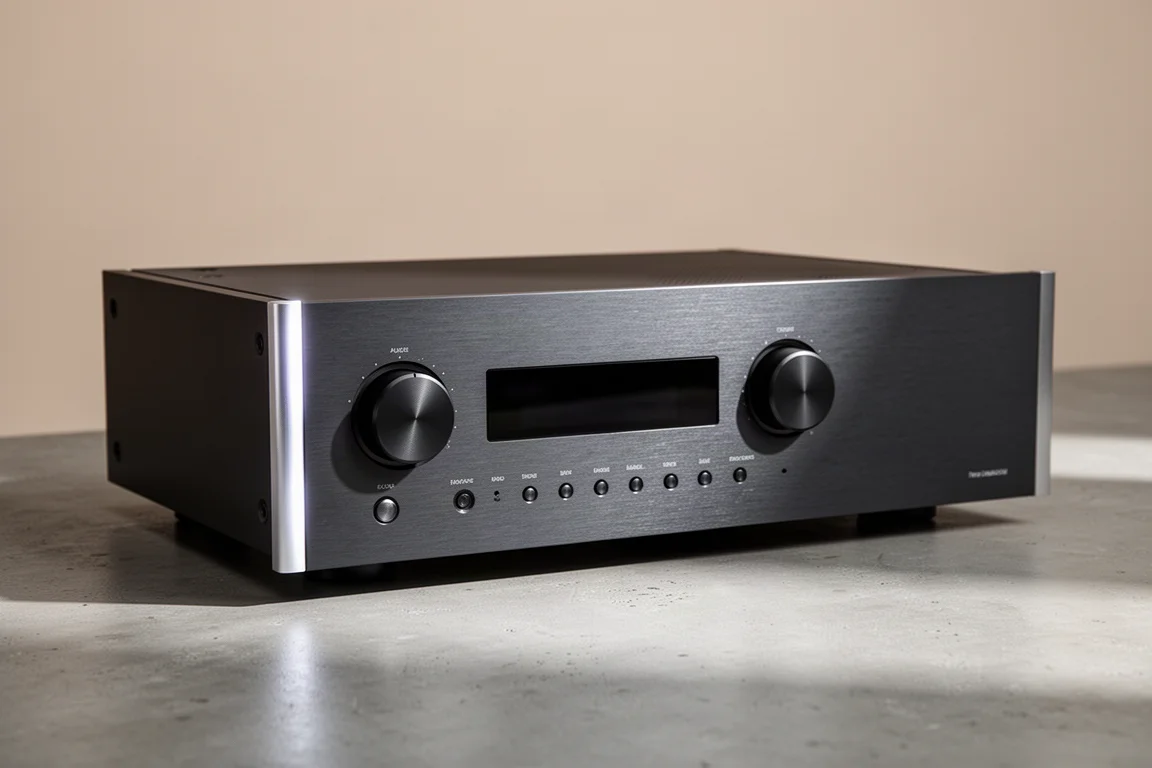
The Emotiva TA2 is the second option in the same family and lands in the same sweet spot. If you are shopping this tier, comparing the two Emotiva models against each other is a sensible starting point before you widen the search.
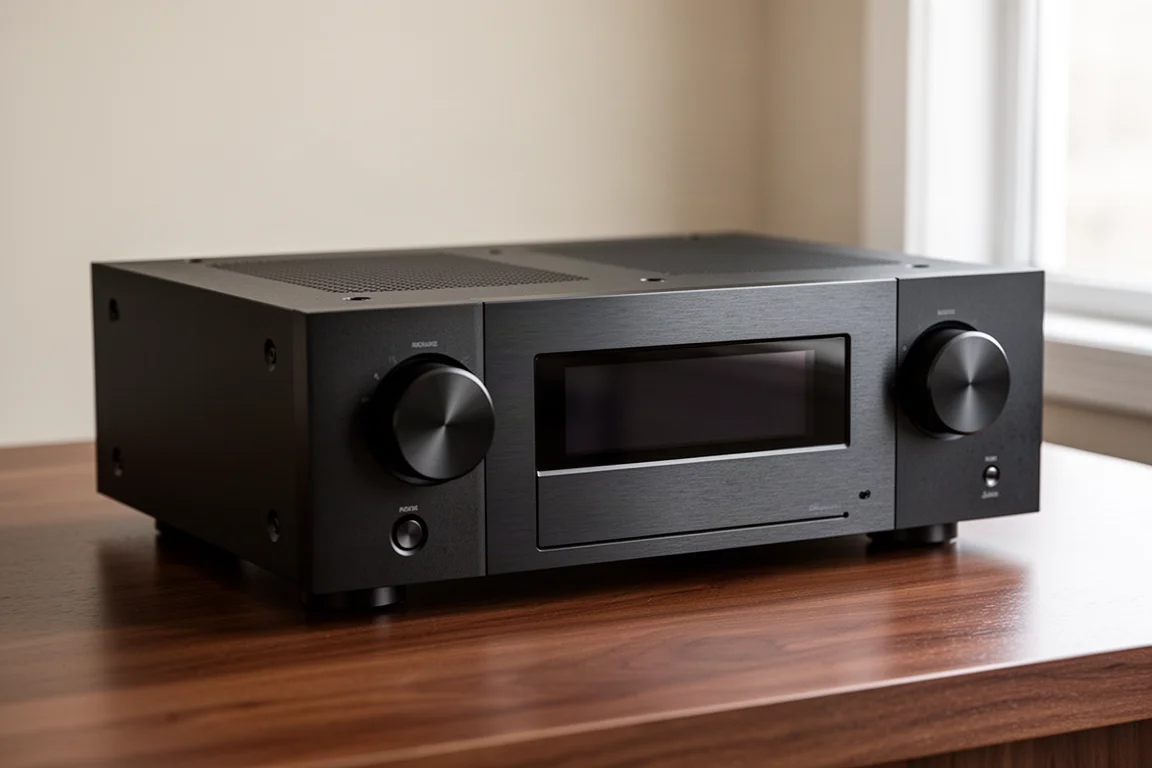
The $500 to $1,000 Sweet Spot: Cambridge Audio AXA25 and AXA35
Cambridge Audio covers the same territory with the AXA25 and the AXA35, both of which sit comfortably in this tier. They are a useful counterweight to the direct-sale approach, coming from a more traditional hi-fi background.
The AXA25 is the entry point of the pair and a sensible option if you want a well-established integrated amplifier without pushing past the middle of the bracket. It suits systems where the speakers are already doing the heavy lifting and the amplifier just needs to be clean and dependable.
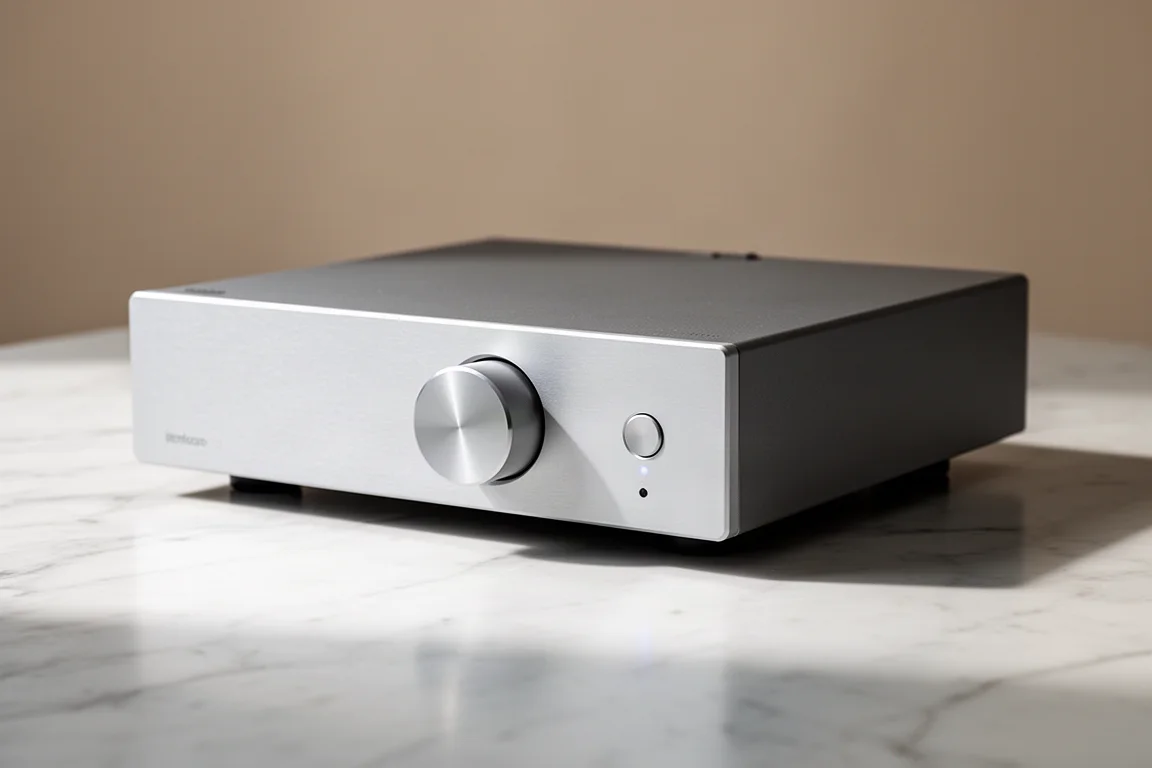
The AXA35 is the second of the two and gives you another point of comparison within the same family. If you are auditioning in this range, hearing both models side by side is far more informative than reading another specification table.
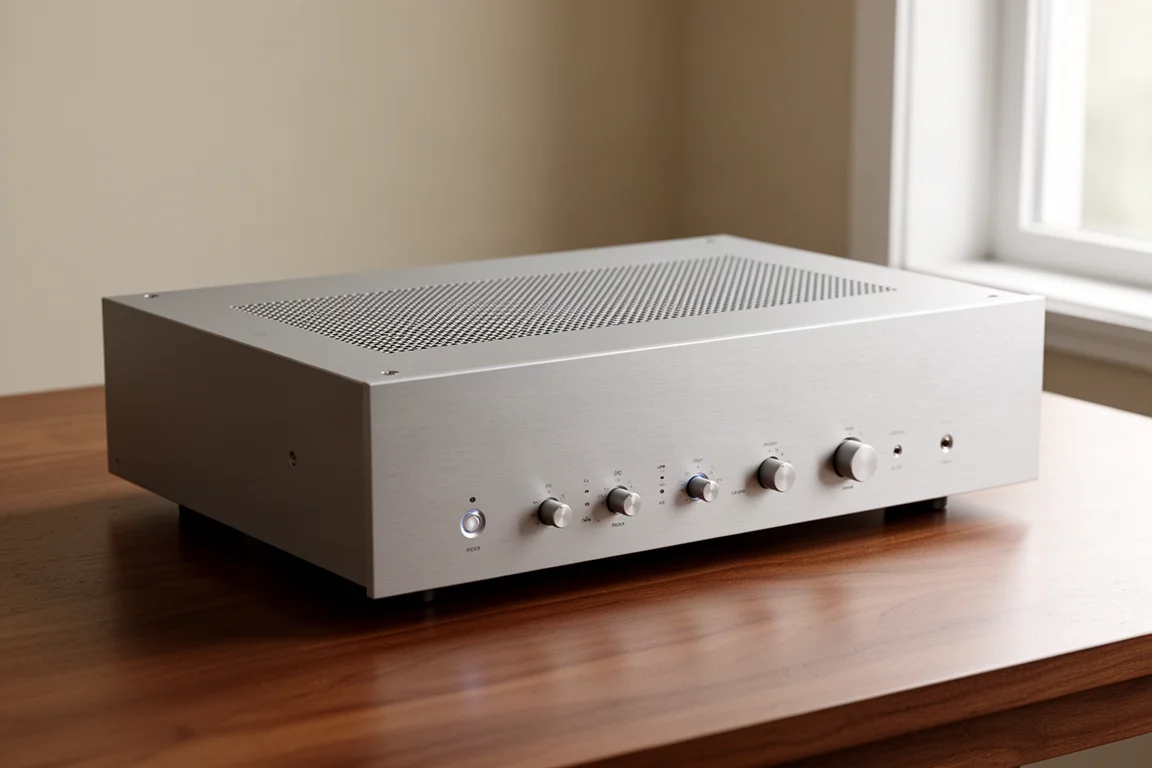
When Budget Is Not the Constraint: Advanced Paris A12 Apex
Once you move past the sweet spot, the rules change. There is no clean law of diminishing returns at the top end, because the things that make a high-end amplifier expensive are not only sonic. Brand, design, materials, and features all carry real cost, and features cost money whether or not you use them. If you do not need eight digital optical inputs, an amplifier built around them may not be the right product for you.
The Advanced Paris A12 Apex is a good example of the other side of that equation. It is the amplifier you want to use because you like the way it looks. Even when no music is playing, having it on display is part of the appeal.
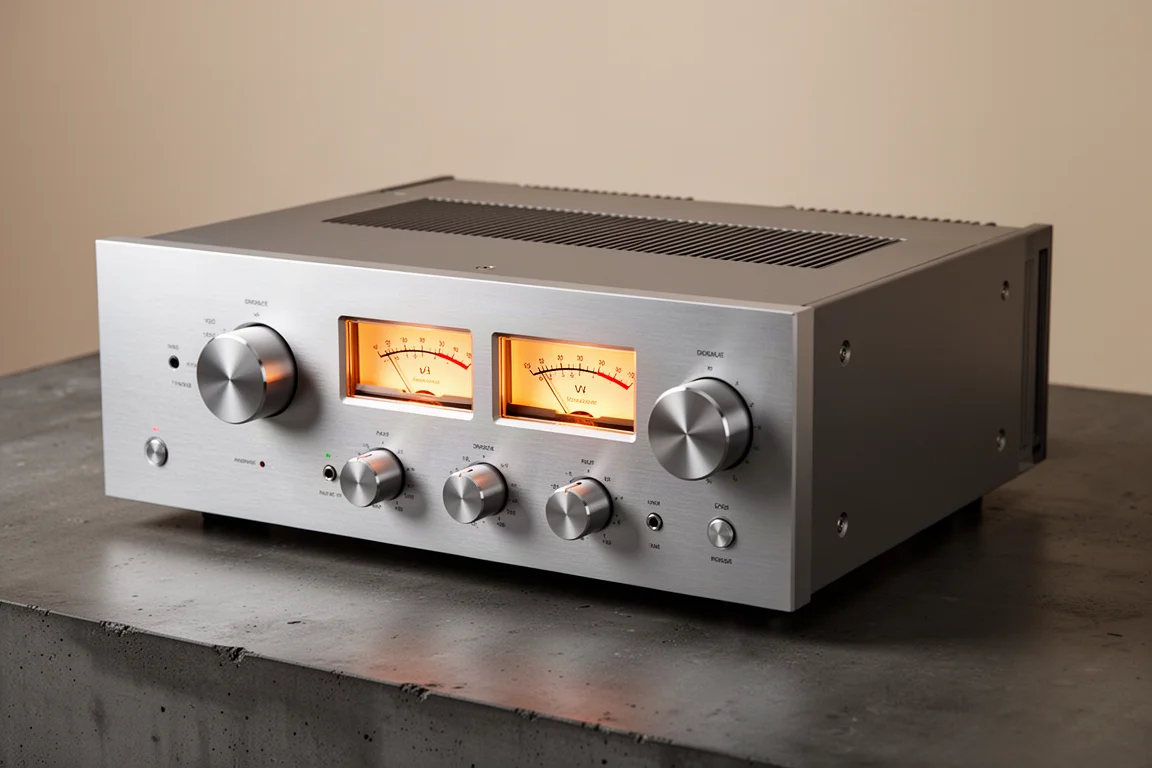
That is not a knock on it. It is a reminder that at this level you are buying a piece you will live with for years, and the visual and emotional fit matters as much as the measurements.
Buying Advice: Matching an Amplifier to Your System
Whatever your budget, start with your own numbers rather than someone else’s. Work out what you can realistically afford, what your plans for the system are, and what is reasonable given everything else in your life. Even $100 is a starting point, and if you already have a working system, saving instead of buying is a perfectly good decision. Setting aside $100 a month for a year gives you $1,200 to spend, which opens up genuinely nice amplifiers.

Cost per use is a more useful measure than sticker price. An expensive amplifier you listen to for several hours a day, year after year, works out cheaper than a modest one you barely switch on. It is the same logic that makes a well-made bag you carry for twenty years a better deal than a cheap one you replace annually.
Context matters too. A $5,000 amplifier paired with $500 speakers is usually a mismatch. Look at the rest of the chain before deciding how much the amplifier deserves.
There are also practical ways to spend less. Retailers offer open box, scratch and dent, and returned stock. Buying good used gear is a legitimate route, as long as you accept the risks and buy from somewhere with a track record. At higher budgets, lean on the retailer relationship: if you are spending more on an amplifier than you spent on your first car, ask for a home trial and expect decent service. Buying more than one amplifier with the intention of returning all but one is a common approach, and it works better when you set the expectation up front and take care of the packaging.
A few mistakes are worth avoiding. Spending too much too fast, before you understand what you actually want, is the classic one. So is outsourcing your ears entirely to forums and magazine articles, since everyone hears and ranks things differently. Making a series of lateral moves between similarly priced budget amplifiers rarely delivers a big improvement. And when you do upgrade, change one thing at a time, because swapping speakers, amplifier, and source together tells you nothing about which change made the difference.
Conclusion
How much should you spend on an amplifier? It depends on your speakers, your room, your budget, and, more than anything, your priorities. Power matters, and so does sound quality, but a purchase that lasts comes from understanding what you actually value rather than chasing whatever the internet recommends this month.
The practical version: under $500, the Vibe Link is a strong starting point. Between $500 and $1,000, the Emotiva TA1 and TA2 and the Cambridge Audio AXA25 and AXA35 are dependable choices. Above that, the Advanced Paris A12 Apex shows what the design-led end of the market offers. Whether it is a vintage receiver, a design statement, or a carefully chosen integrated amplifier, the right answer is the one that fits your life.
Further reading
Related Reviews
Amplifiers
AIYIMA A07 Max Review: A Budget Class D Amplifier That Can Run Bridged
A close look at the AIYIMA A07 Max, a TPA3255 desktop amplifier that adds bridging, swappable op-amps, and a very quiet noise floor at a budget price.
Amplifiers
AIYIMA A08 Review: A Compact Class D Amplifier With USB DAC and Bluetooth
A practical look at the AIYIMA A08, a $115 Class D integrated amplifier that adds a USB DAC, Bluetooth, and an internal power supply to a proven budget platform.
Amplifiers
Aiyima A300 vs Topping PA5: Two Class D Amplifiers Compared
A practical comparison of the Aiyima A300 and the Topping PA5, two Texas Instruments 3255 class D amplifiers with very different prices and feature sets.