Hi-Fi Audio
How Much Should You Spend on a Turntable? A Guide to Where the Money Goes
A component-by-component look at what actually shapes turntable sound, plus seven pieces of gear worth considering at different budgets.
Introduction
Turntables start at around $60 and climb past $6,000, and the gap between those two numbers is not filled with steadily better sound. Past a certain point you are paying for materials, machining and heritage rather than a meaningful change in what you actually hear.
That is not an argument for cheap gear. It is an argument for knowing which parts of a turntable shape the sound, so that your budget lands on the components that matter and the rest of the money stays in your pocket.
This guide breaks a turntable down into its parts, ranks those parts by sonic impact, and then looks at seven specific pieces of gear that cover the range from a sensible first deck to a genuinely ambitious front end.
Where the Sound Comes From: Cartridge and Phono Stage
Ranked by how much they influence what you hear, two components sit at the top of the list: the cartridge and the phono preamp.
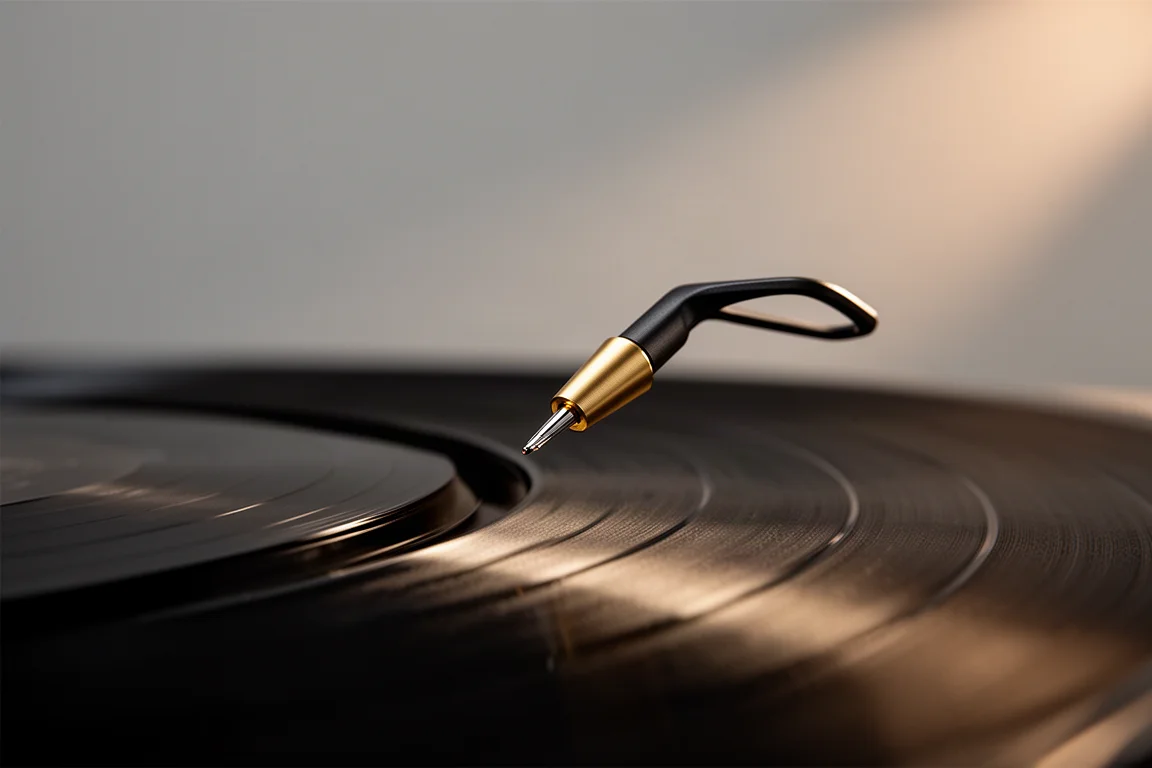
The cartridge comes first because it is the only part of the system that physically touches the record, apart from the platter itself. The stylus traces microscopic movement in the groove and the cartridge converts that movement into an electrical signal. If the signal is wrong at this stage, nothing downstream can repair it.
Cartridges fall into two families. In a moving magnet design, the stylus moves a tiny magnet inside fixed coils. Output voltage is typically higher, which means inexpensive phono preamps can drive it comfortably, and the stylus is usually user-replaceable and upgradeable. In a moving coil design, the coils themselves are attached to the stylus and sit inside a fixed magnetic field. Output voltage is lower and the stylus is typically not user replaceable. Neither design is inherently better sounding, and neither is inherently warmer. The character of the sound comes from the designer’s choices, not the topology.
Stylus profile matters just as much. A conical tip is rounded, durable and forgiving of alignment errors, but it contacts less of the groove wall, which costs detail and adds distortion. An elliptical tip is narrower, contacts more of the groove and delivers more detail along with more accurate high frequencies. Line contact, microline and Shibata profiles go further still, using a long narrow contact patch that mirrors the cutting stylus used to make the record. They extract more information and reduce distortion further, but they are noticeably more sensitive to alignment.
The phono preamp is the second big lever. A cartridge puts out a very small signal, so the phono stage has to add gain before anything else can work with it, and it has to apply the RIAA equalization curve that compensates for the way records are cut, with bass reduced and treble boosted. A good phono stage lowers the noise floor, reduces distortion, preserves dynamics and keeps tonal balance intact. A poor one adds hiss and hum and can make vocals sound sibilant.
Matching matters as well. Cartridges have loading requirements, and some phono stages expose small switches so you can dial them in. If a stage cannot be adjusted to suit the cartridge, the cartridge will never perform at its best. Some stages also include a subsonic filter to deal with rumble, the low-frequency noise that sends a woofer in and out and can stress speakers. Built-in phono stages in turntables, receivers and integrated amplifiers are usually a convenience feature rather than a fidelity one, though a unit with extensive controls that supports both moving magnet and moving coil is more likely to be acceptable.
The Supporting Parts: Platter, Tonearm, Motor and Plinth
Everything below the cartridge and the phono stage is additive rather than transformative, but it still adds up.
Platters are built heavy because mass improves speed consistency. Material matters too. Aluminium platters, which are common on affordable turntables, can ring, while acrylic does not. Records can sound enjoyable on a metal platter, but acrylic and glass are the safer choices for a system built around critical listening.
The tonearm has a simple job: hold tracking force steady, keep alignment consistent, minimise friction and avoid vibrating. Turntables are extremely sensitive to vibration, so rigidity is the goal. Aluminium is affordable and rigid but can resonate if it is not properly damped. Magnesium is better and more expensive because it is harder to machine. Carbon fibre is light and stiff, again at a price. Wood tonearms exist as well, though they call for a stable environment.
Speed stability shapes tonality, which is easy to demonstrate by playing a record at the wrong speed and hearing the pitch shift. Belt drive, where a motor turns the spindle through a rubber belt, is the most common arrangement, and belts stretch and wear over time, so keeping a spare or two is sensible. Direct drive offers instant speed control and is common in professional and DJ use. Executed poorly it can affect the sound, but direct drive decks from reputable brands generally perform well.
The plinth and the feet are the last line of defence against vibration. A heavy plinth, whether wood or MDF, helps, and feet that isolate the deck from the surface it sits on matter more than they look like they should.
Best Budget Turntable: Fluance RT82
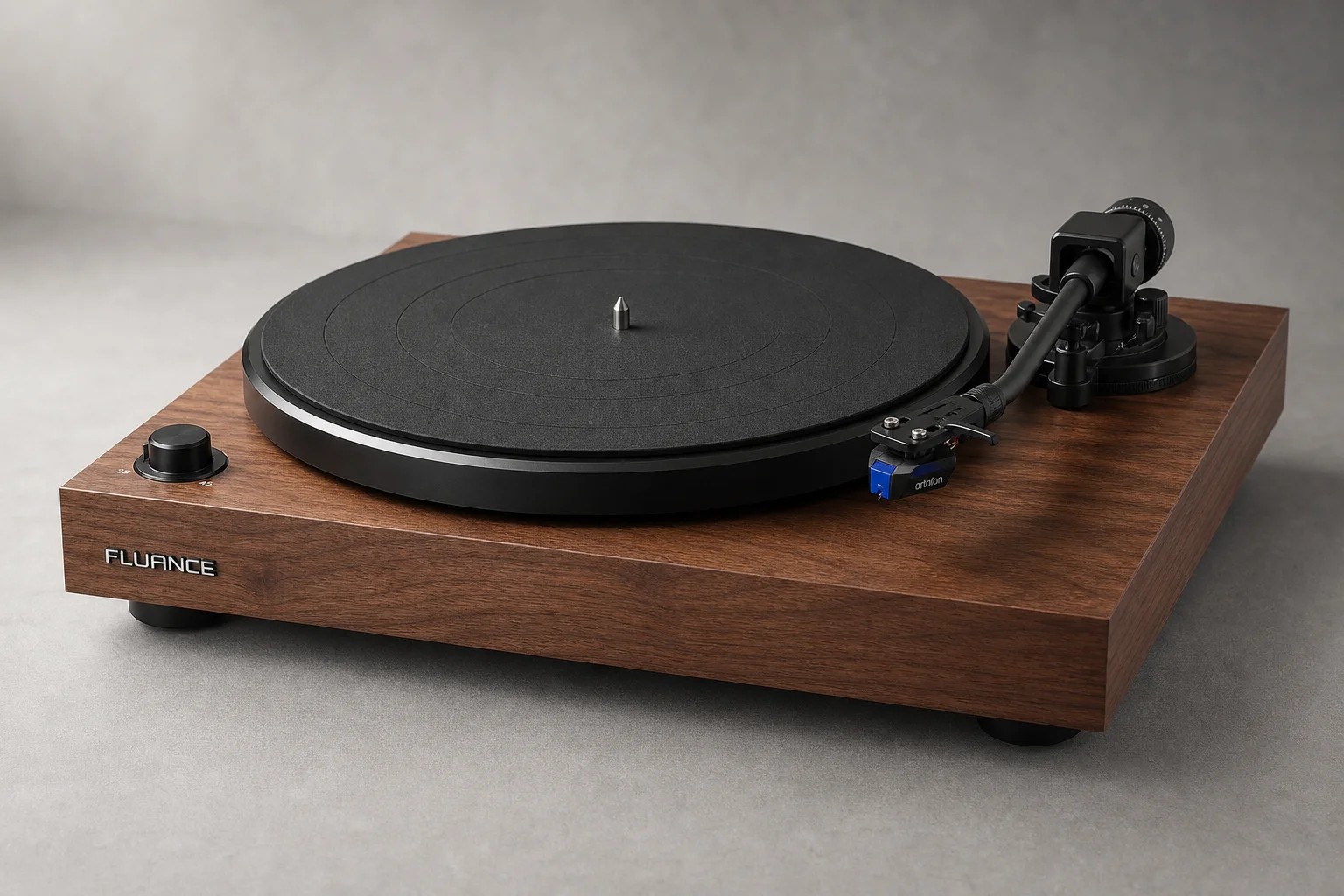
Fluance makes the most straightforward recommendation in the budget turntable market, and the RT82 is the sensible entry point. The RT82, RT83, RT84 and RT85 share the same motor and the same plinth, and the differences between them come down to the cartridge fitted and the platter material. That means the RT82 gives you the same foundation as the more expensive models in the range, which makes it an easy first deck to build a system around. If the budget will not stretch to the RT85, this is the model to buy.
It also uses a removable headshell, which is a bigger deal than it sounds. Swapping cartridges becomes a straightforward task rather than a delicate alignment exercise, so the turntable can grow with your interest instead of being replaced when you want to try something new. U-Turn, which builds its turntables in the United States, is a well-regarded alternative, though it does not use a removable headshell.
Best Fluance Step-Up: Fluance RT85
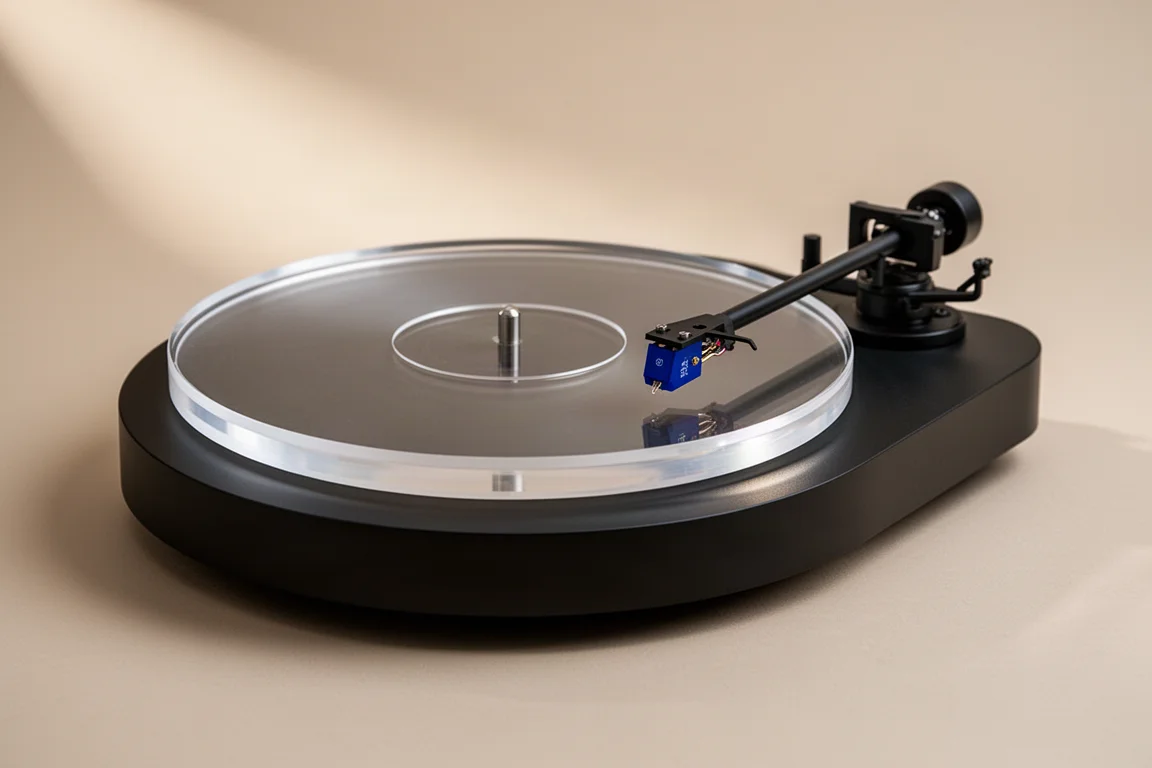
If the budget stretches, the RT85 is the model to aim for. It keeps the shared motor and plinth but adds an acrylic platter and an Ortofon 2M Blue cartridge, which together address two of the areas that matter most: speed consistency and the quality of the signal coming off the record. It is the simplest way to get the top of the Fluance range without assembling parts yourself, and it keeps the removable headshell that makes future cartridge changes easy.
Pro-Ject is the other obvious name at this level. Its decks do not always represent the best value, but the brand produces distinctive collaborations that appeal if you want something out of the ordinary.
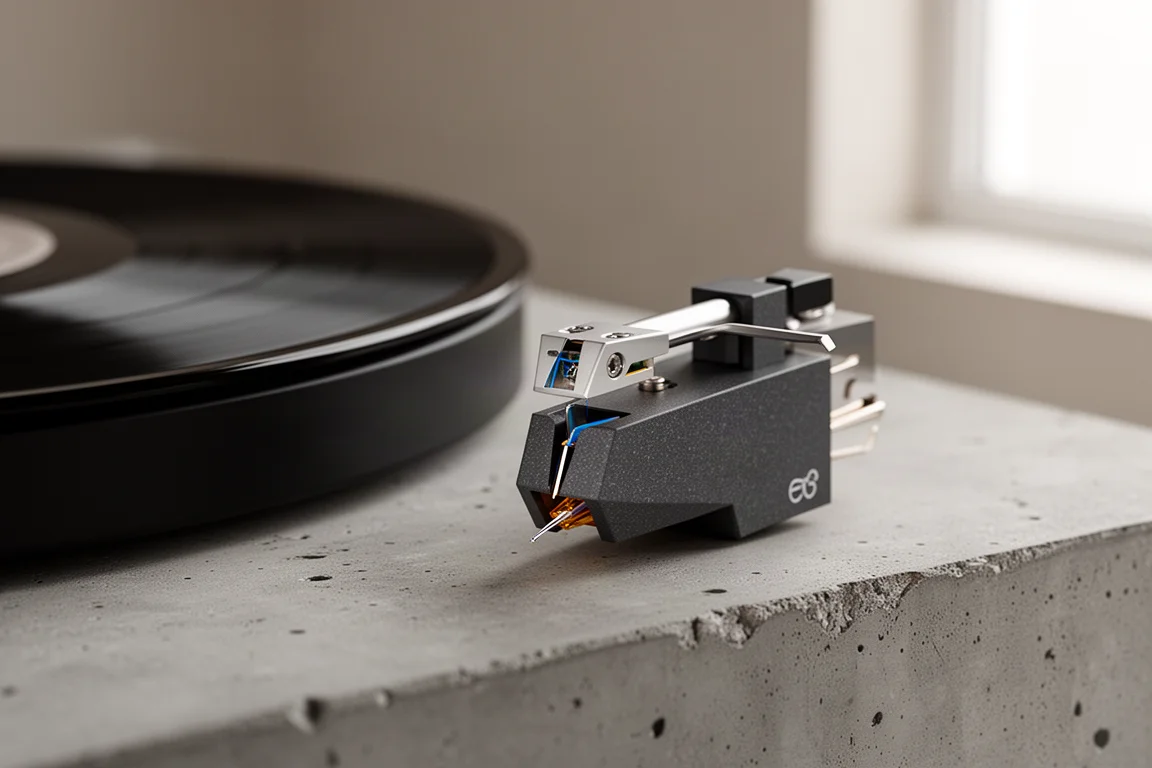
Best Cartridge: Ortofon 2M Blue
Among cartridges, the Ortofon 2M Blue is a standout recommendation and one of the most persuasive upgrades you can make to an entry-level deck. It delivers the kind of detail and high-frequency accuracy associated with a more sophisticated stylus profile, and it works well across a broad range of records rather than flattering only the best pressings.
The 2M Red sits in the same family and is often the cartridge that ships with budget turntables, but it is a noticeably less satisfying listen. Treat the Blue as the target rather than settling for the Red.
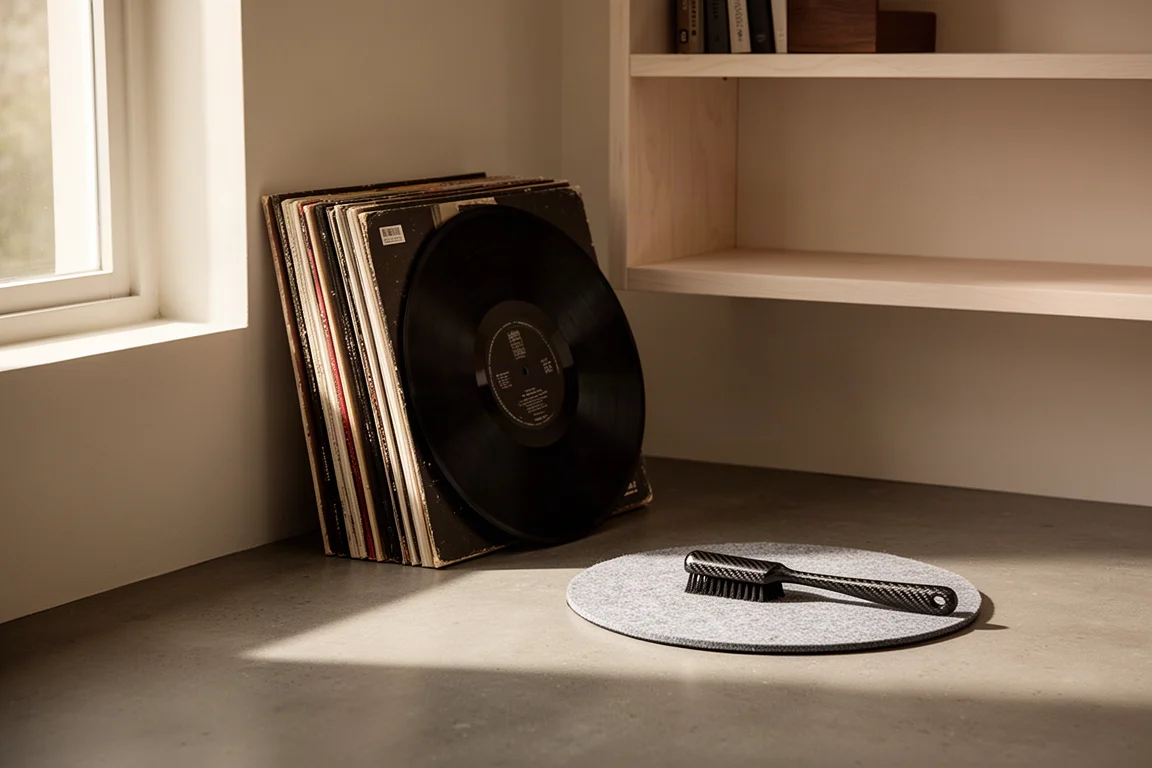
If you are unsure which cartridge suits your taste, comparing options is the only reliable way to decide. Cartridges are not simply better or worse in the abstract. They differ in character, and that character has to match your records and your ears.
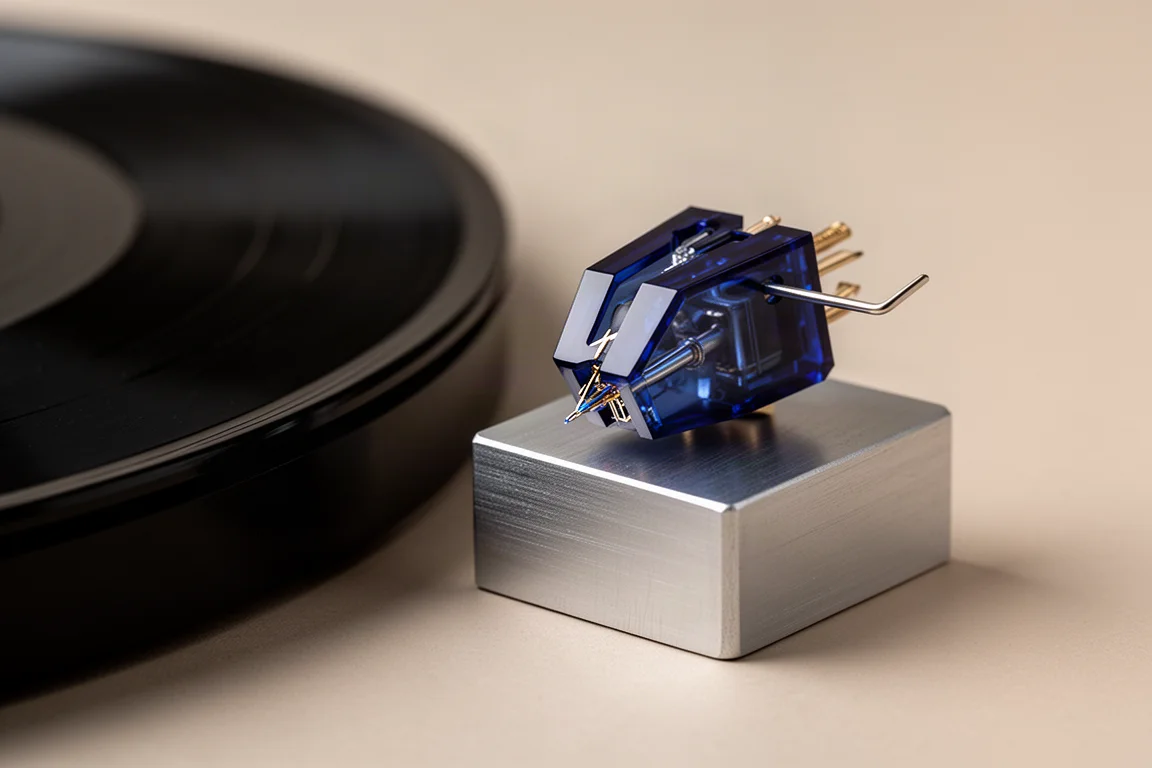
Alternative Cartridge: Nagaoka MP-110
The Nagaoka MP-110 is the other cartridge worth putting on a shortlist. It is a different flavour rather than a strictly better or worse option, and it is a good reminder that the cartridge market rewards a bit of research. Goldring also makes cartridges worth investigating, Audio-Technica builds some of the best affordable cartridges available, and Denon still produces a moving coil design that has been in production for around six decades at a relatively approachable price.
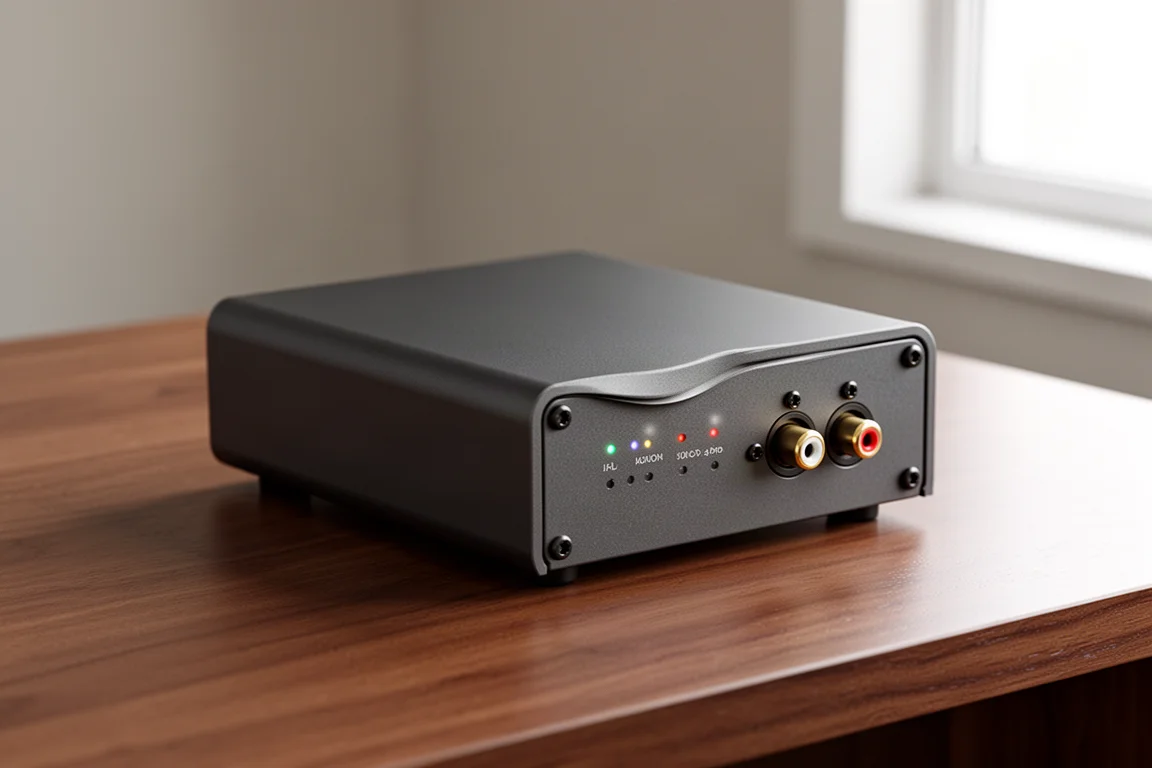
Best Budget Phono Stage: iFi ZEN Phono
The iFi ZEN Phono is the value pick among phono stages. It costs around $200, which is modest next to what a serious cartridge costs, and it supplies the gain and equalization a moving magnet cartridge needs without the hiss and hum that cheap stages are known for. For a first proper hi-fi system, it is a straightforward way to make sure the cartridge is not being held back by the electronics behind it.
Audio-Technica is a good example of how the two halves of a brand can differ: its budget cartridges are excellent, while its integrated phono stages are best avoided.
Best Step-Up Phono Stage: Pro-Ject Tube Box S2
The Pro-Ject Tube Box S2 is the step-up choice at around $500. It pairs with a more ambitious cartridge, and it is the natural upgrade once the turntable and cartridge are settled and the phono stage becomes the limiting factor. Money spent here is rarely wasted, because the phono stage shapes the signal before anything else in the chain touches it.
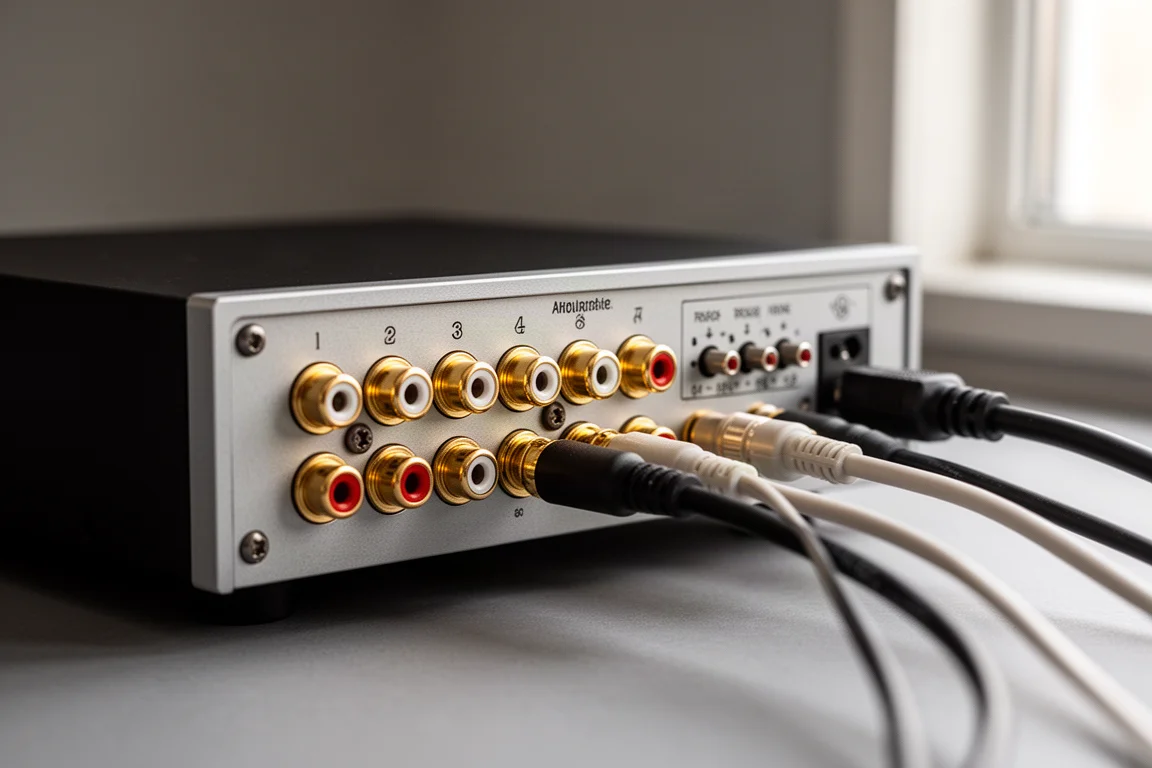
One caveat applies at every price point: if you move to a moving coil cartridge, the phono stage has to accept moving coil input. A stage that only supports moving magnet will leave a moving coil cartridge underperforming no matter how good the rest of the system is.
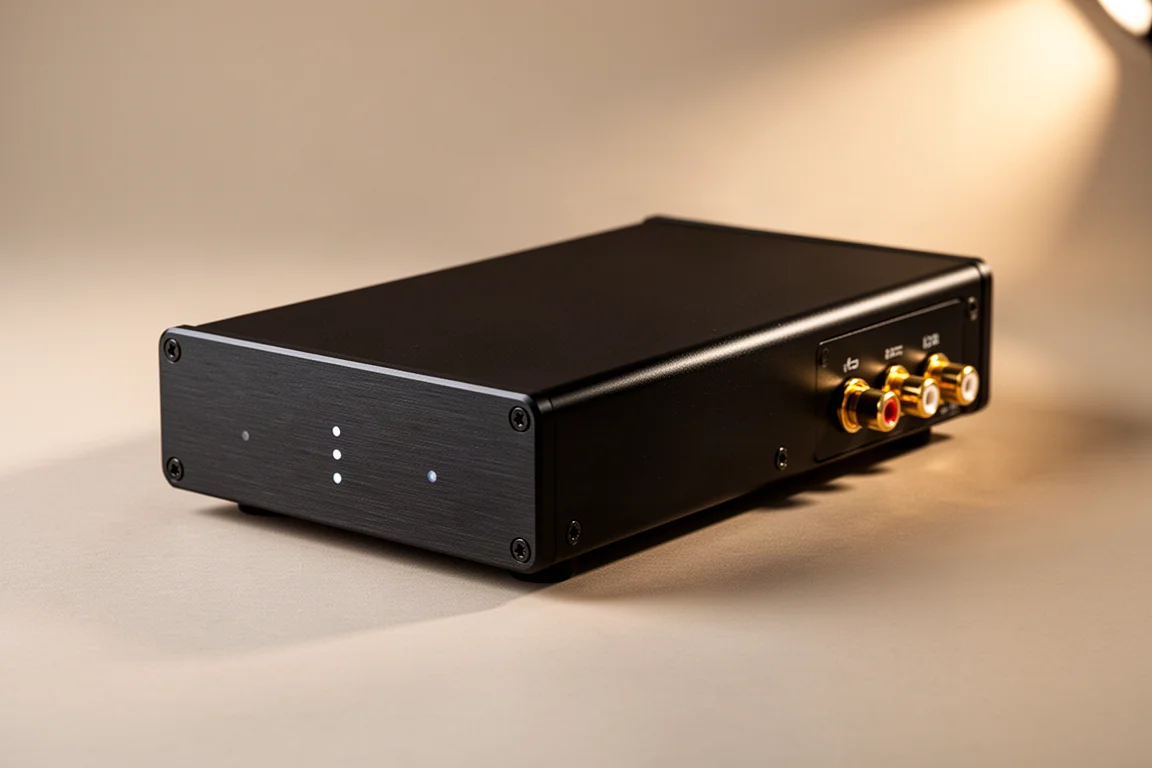
Legendary Direct Drive: Technics SL-1200
The Technics SL-1200 is the reference point for direct drive turntables and one of the most enduring decks ever built. Direct drive brings instant speed control, which is why the format dominates professional and DJ use, and a well-executed direct drive design from a reputable brand holds up perfectly well for home listening. If you want a deck that feels like a piece of equipment rather than a component, this is the one that earns the reputation.
TEAC is another brand with direct drive decks in its line-up, including models that come in under a thousand dollars.
Where to Spend and Where to Save
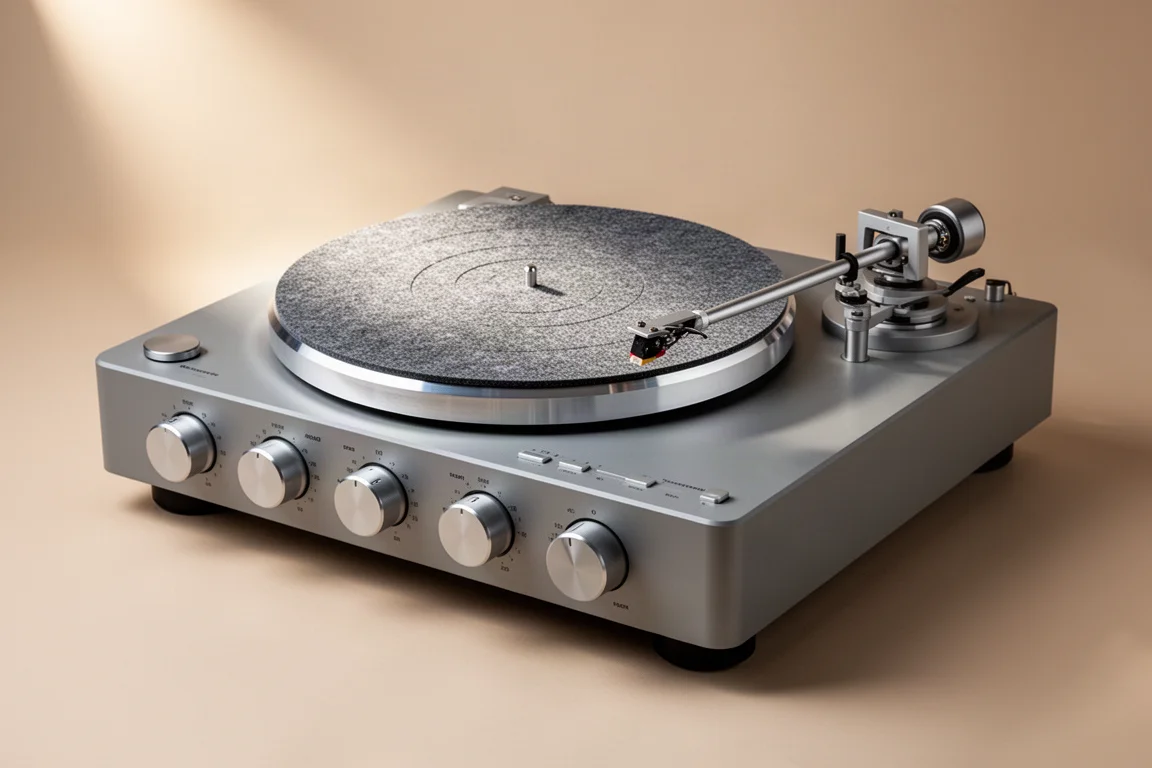
The practical rule is simple. Set a budget, then put as much of it as you can into the cartridge and the phono stage. Everything after that, meaning the platter, the tonearm, the motor and the plinth, is additive rather than fundamental.
That means a modest deck with a genuinely good cartridge and phono stage will usually outperform a more expensive deck with a mediocre front end. It also means the small things matter. Keep a spare belt or two if you run a belt drive turntable, and do not assume the built-in phono stage in a receiver or integrated amplifier is good enough just because it is already there.
At the far end of the market, the returns flatten out noticeably. Michell, a UK company run by the same family across several generations, builds remarkable turntables at prices that climb quickly, and at that level the tonearm and the cartridge are often bought separately rather than included. The more you spend, the less of the system arrives in the box.
Conclusion
The money question has a clear answer once you know the hierarchy. Cartridge first, phono stage second, and everything else as refinement on top. Buy a decent turntable from a reputable brand, give it a cartridge and a phono stage that let it perform, and the rest of the budget can go toward records.
Further reading
Related Reviews
Hi-Fi Audio
Accuphase C-57 vs Allnic H-7000V: Two High-End Phono Stages Compared
A fully balanced solid-state phono stage with a pitch-black noise floor meets a tube design built for well-loved records. Here is how to choose between them.
Hi-Fi Audio
Active vs Passive Hi-Fi: Five Components for a Modern System
Five components that define modern active and passive hi-fi systems, with the strengths, trade-offs and setup details worth weighing before you buy.
Hi-Fi Audio
Advance Paris A10 Apex Review: A Hybrid Integrated Amplifier That Covers a Lot of Ground
A French hybrid integrated amplifier with a class A tube preamp stage, analogue power meters, and an internal DAC and phono stage good enough to make extra boxes unnecessary.