Preamplifiers
Hovland HP-100 Review: An All-Tube Preamplifier Worth Seeking Out
A close look at the Hovland HP-100, a line-stage tube preamplifier with an optional moving coil phono input, covering its strengths, its matching requirements, and what to weigh before buying used.
Introduction
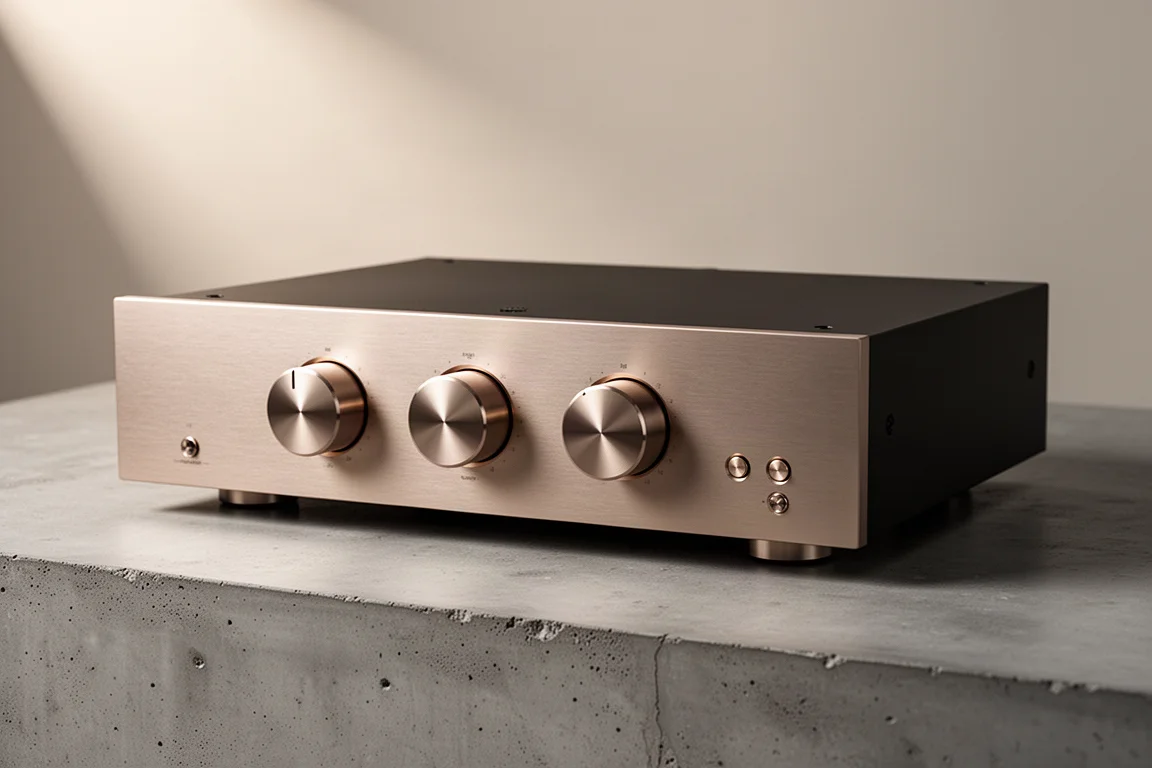
Hovland is a name that many listeners today have never encountered, which is a shame given what the company produced. Hovland built its reputation on capacitors before it moved into electronics, and the HP-100 was its line-stage tube preamplifier. The design was sold as a line stage, with an optional moving magnet phono input and a moving coil input. The version discussed here carries the moving coil input, which uses a step-up transformer.
Hovland ceased trading in 2009. That closure reflected a shifting market rather than any shortfall in the products themselves, and the HP-100 has stayed in the conversation among listeners who value all-tube designs for their way with a stereo image.
Who the Hovland HP-100 Is For
The HP-100 suits a listener who already runs a power amplifier with a reasonably high input impedance. As an all-tube design from its era, its output impedance sits at roughly 2,500 ohms, so it wants a partnering amplifier rated at 20,000 ohms or higher. That is not a difficult requirement, and suitable partners exist among both tube and solid-state amplifiers.
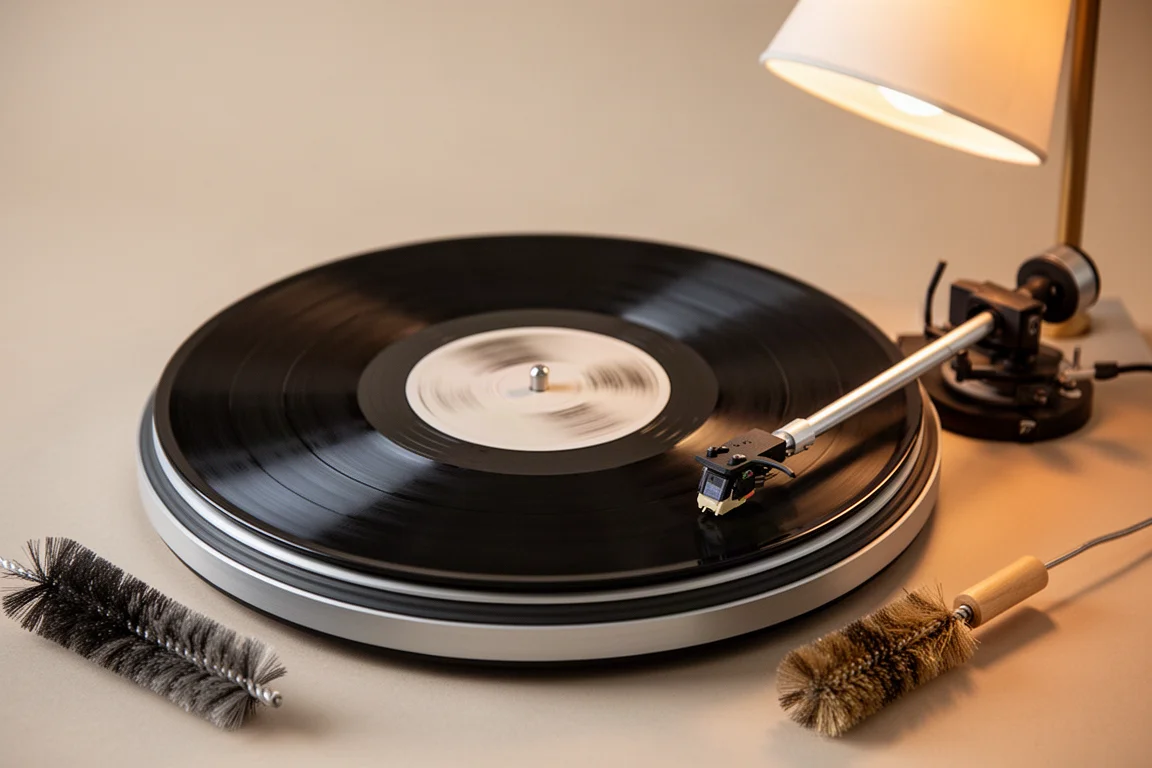
Vinyl listeners get the most from the phono-equipped version. The moving coil input uses a step-up transformer, which makes it a natural match for low output moving coil cartridges without an external step-up device.
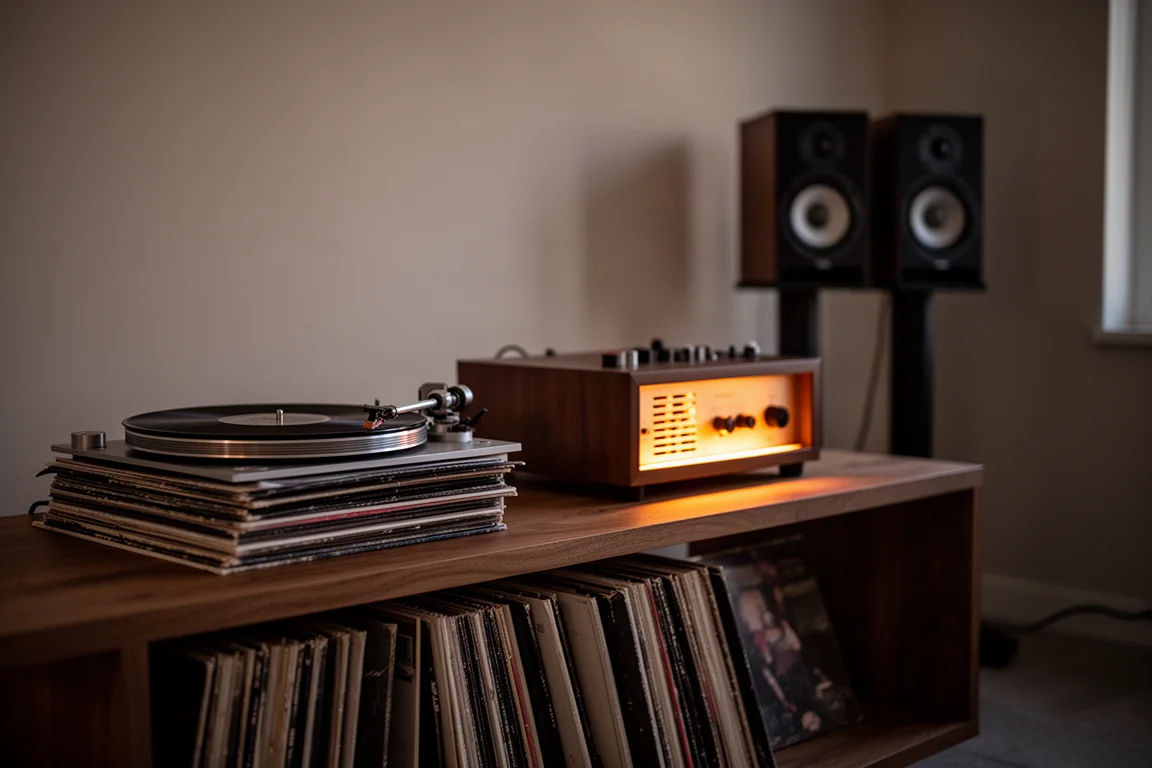
The rest of the appeal is tactile. This is a component built to feel substantial in use, and it rewards an owner who enjoys the physical ritual of playing records rather than tapping a screen.
What Sets the HP-100 Apart
Hovland’s background in capacitors shows in the parts selection inside the chassis. The company sold capacitors long before it sold preamplifiers and was widely regarded for them, and those parts appear throughout the HP-100.
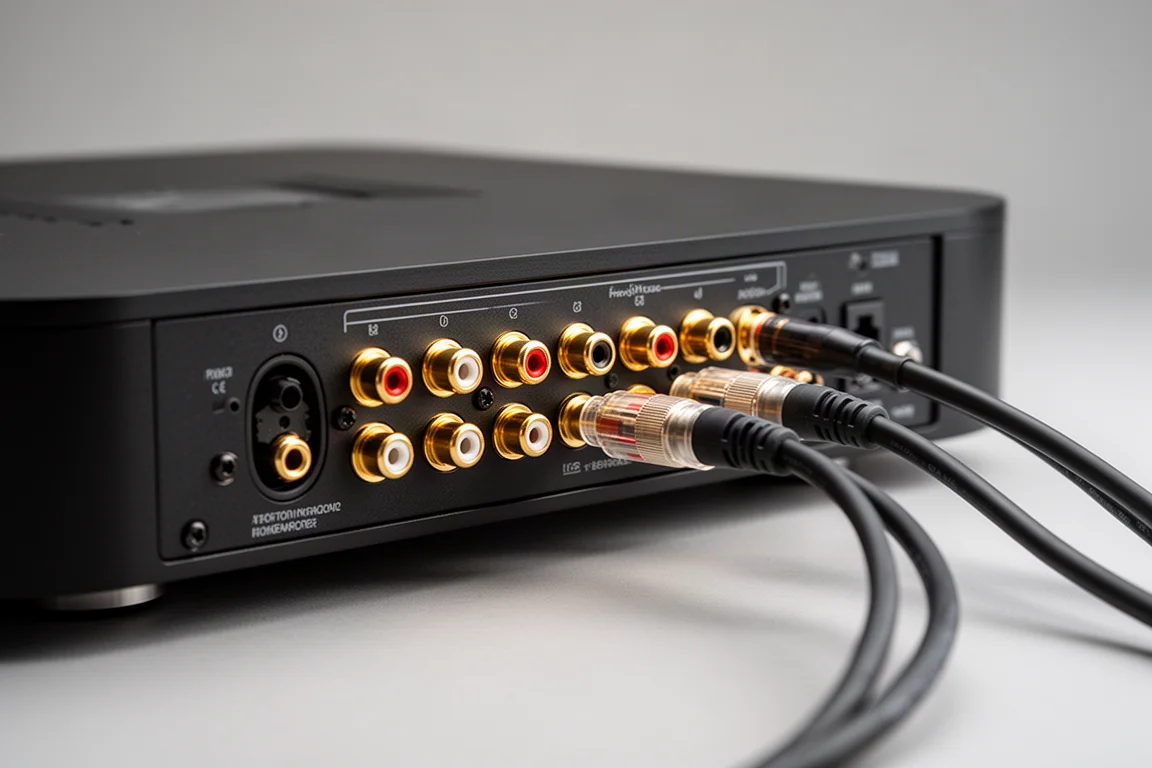
Connectivity is generous for a line stage. The rear panel carries seven line-level inputs, the phono input on equipped units, two main outputs, and a record output. That combination covers a turntable, several analogue and digital sources, and a recording path without an outboard switch box.
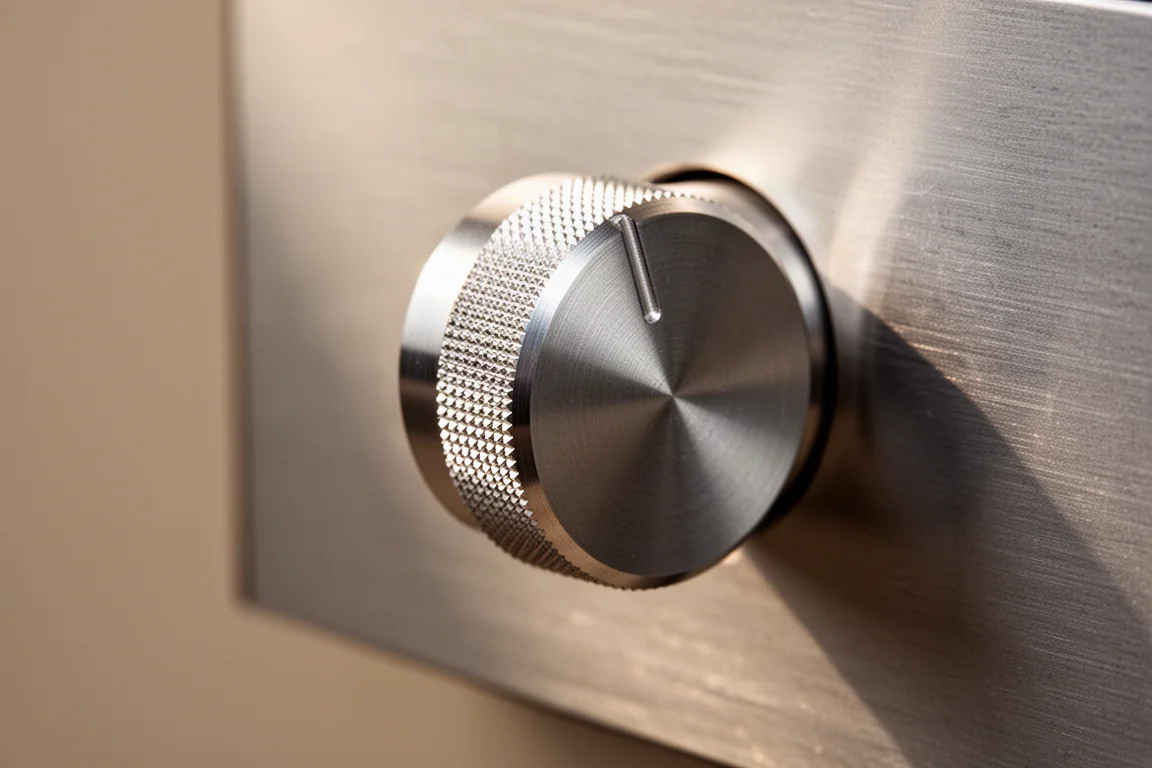
The volume control is a step attenuator with silver contacts, believed to run to 32 steps. Balance and input selection are handled by the two remaining knobs. A mute button and a power button complete the front panel.
Main Strengths
The HP-100’s defining quality is the way it builds a stereo image. It presents a large sound field, and within that field each instrument and voice carries real solidity rather than floating as a flat outline. The result is a sense of three-dimensional body to a mix, with performers occupying space instead of being painted onto a plane.
Detail retrieval at low levels is just as distinctive. On recordings made in a real acoustic space, the quiet information comes through clearly: the character of the room, its boundaries, the reflections, and the decay tails that many components smooth over.
The top end is extended, pure, and detailed. Bass is tight and controlled, though the very best solid-state preamplifiers still hold an edge on absolute grip. Dynamics are strong, and it is the overall presentation that carries the design rather than any single quality on its own.
Design and Build Notes
Inside the chassis sits a complement of 12-series tubes, including 12AX7 and 12AU7 types, alongside Hovland’s own capacitors. The all-tube topology is central to the sound described above, and it is also the reason the output impedance is as high as it is.
The front panel controls are the most immediately memorable part of ownership. The knobs are not silky in the manner of some Japanese designs. They feel mechanical and deliberate, closer to operating a piece of precision machinery than a consumer appliance, and that impression extends to the rest of the build.
Things to Consider Before Buying
Matching deserves attention before purchase. With an output impedance around 2,500 ohms, the HP-100 needs a power amplifier rated at 20,000 ohms or higher at its input. Paired with a low impedance amplifier, the result will not represent what the preamp can do.
There is no remote control. Volume, balance, input, and mute are all handled at the front panel, so the HP-100 asks its owner to get up and adjust it by hand.
It is also worth being honest about where the design sits in absolute terms. Modern solid-state preamplifiers resolve finer detail and deliver greater clarity, and they tend to have firmer bass. The HP-100’s strength is the human, live quality it brings to the way musicians sound together in a room, not the last word in resolution.
Finally, Hovland closed in 2009. There is no factory support behind the product, so condition, service history, and access to a competent technician matter more than they would with a current model.
Living With a Vintage Preamp
A well-built high-end component can stay in a system for decades, and the HP-100 is a good example of the principle. Buyers who make the initial investment in a piece of this quality can keep enjoying it for a very long time, and the pride of ownership that comes with a carefully made tube preamplifier is part of the value.
The practical side of vintage ownership is straightforward. Because the manufacturer no longer exists, an owner should plan on working with an independent technician for anything beyond routine tube replacement. That is a normal arrangement in high-end audio and rarely a problem when a unit has been looked after.
Buying Advice
The HP-100 was expensive when new and remains a premium purchase on the used market. Pricing depends on condition, on which phono input the unit carries, and on whether original packaging and documentation are present. The moving coil version with the step-up transformer is the more versatile of the two phono options for vinyl-focused systems.
Before committing, confirm the amplifier match, ask about service history, and check that all inputs and outputs function. Listen for noise at the phono input in particular, since that is the section most sensitive to wear and setup.
For the right system, the HP-100 delivers a presentation that is difficult to find elsewhere: dense, spacious, and alive in a way that makes familiar recordings feel newly present. Buyers who value that character over the last degree of resolution will find it a rewarding long-term component.
Conclusion
The Hovland HP-100 is a line-stage tube preamplifier with a moving coil phono option, a beautifully weighted control feel, and a sound that prioritises the solidity of performers in a space. Its requirements are modest but real: a power amplifier with at least 20,000 ohms of input impedance, and a willingness to live without a remote. For listeners who match it correctly and accept its vintage status, it remains a compelling piece of high-end audio.
Product link
View more details for Hovland HP-100
This product is mentioned in the review. Check the specifications, options, and compatibility before buying.
View more details for Hovland HP-100Further reading
Related Reviews
Preamplifiers
Akitika PR-102 Review: A Preamp That Sounds as Good as It Is to Build
The Akitika PR-102 is a discrete line preamp sold as a kit or fully assembled, with two amplifier outputs, swappable op amps, and a neutral, three-dimensional sound.
Preamplifiers
Ayre K-1 XE Review: A Restored Vintage Preamplifier With Unusual Depth
A close look at the Ayre K-1 XE, a fully balanced zero feedback preamplifier from 1996, covering its four-attenuator volume system, its sound character, and what to weigh before buying.
Preamplifiers
Holo Audio Serene KTE Review: A Balanced Line Stage With a Neutral Voice
A fully balanced line stage preamplifier with a detailed, neutral character, five inputs, buffered outputs, and no built-in DAC or phono stage.