DACs
Holo Audio Spring 3 Review: Refined R2R Ladder Sound With Serious Measured Performance
The Holo Audio Spring 3 is an R2R ladder DAC that measures like a delta sigma design. Here is how it sounds, what the three specification levels include, and who should consider it.
Introduction
R2R ladder conversion is not a new idea. Resistor ladders have been used for digital to analog conversion since digital audio began in the 1980s, and listeners with high-end systems have long prized them for a natural sonic presentation. What has changed is the price. Advances in resistor precision have brought ladder DACs down to far more accessible levels, and a group of newer brands has pushed that value further still.
The Holo Audio Spring 3 is one of the clearest examples of that shift. It is an R2R ladder DAC that measures as well as many delta sigma designs, and it borrows heavily from the more expensive Holo Audio May. It comes in three specification levels with an optional balanced preamp module, and it competes directly with established ladder designs as well as high-value delta sigma units.
Who the Holo Audio Spring 3 Is For
The Spring 3 is aimed at listeners whose amplification and speakers are already resolving enough to reveal small differences in tonality, timing and space. It is not an entry point into ladder conversion. Level 1 is priced at 2,359 Euros and omits the CNC machined remote control. Level 2, at 2,649 Euros, includes the remote and upgraded Holo Audio branded filter capacitors for the power supply. The KTE model, at 3,370 Euros, adds a flat wire wound O-ring transformer and replaces the internal copper wiring with Ohno continuous cast silver. Every version can be ordered with a fully discrete, fully balanced analog preamp module for 550 Euros.
It is also a strictly non-oversampling design. There is no hardware oversampling option anywhere in the device, so if you want oversampling you have to do it in software and feed the result to the DAC. The more expensive May offers it in hardware, and leaving it out is one of the choices that keeps the Spring 3 at its price. For listeners who prefer the converter to stay out of the way and let upstream software handle that stage, this is a feature rather than a limitation.
Build Quality, Connectivity, and Controls
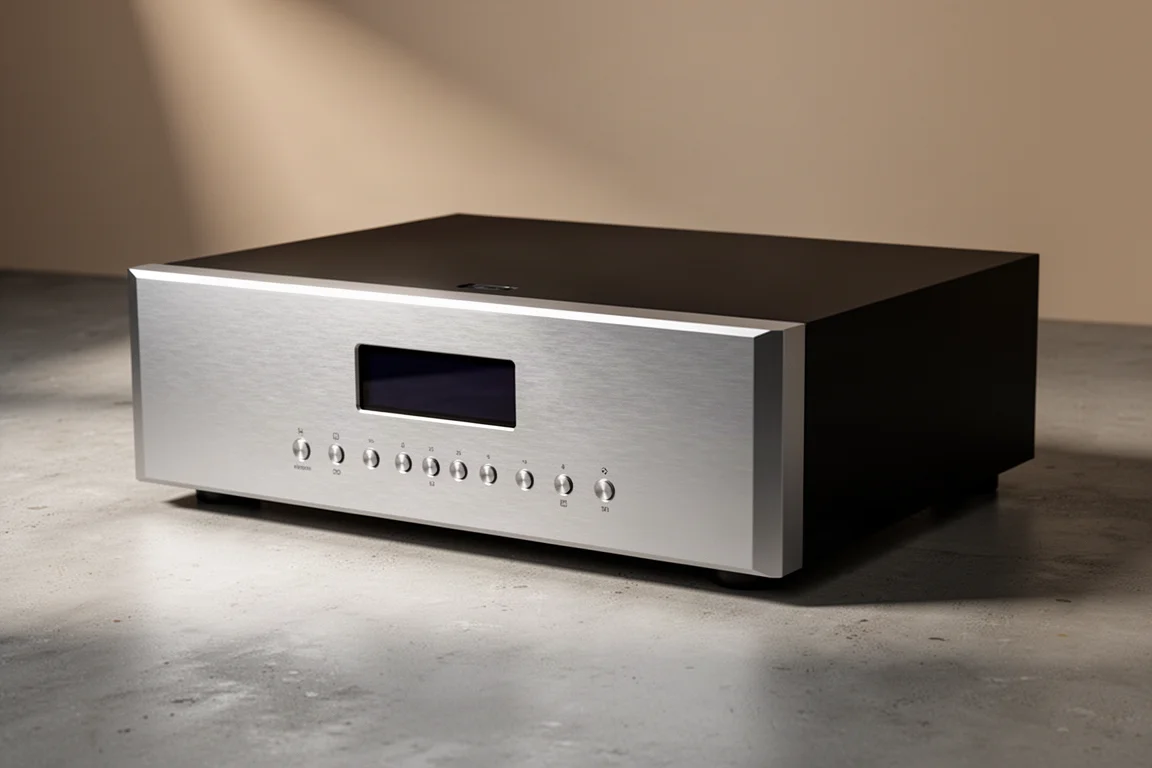
The Spring 3 is a full width component at 43 cm, or 17 inches, and it weighs 8.5 kg, or 18.7 lb. Most of that comes from a heavy gauge chassis and a substantial front plate, and the quality of the metalwork is obvious the moment the unit is lifted.
The front panel carries a standby button, a clear OLED display, a mute button, a menu button and toggle buttons for moving between sources and switching the display off. When the preamp module is fitted, volume is adjusted here as well, and the same functions are available from the CNC machined remote control, which is built to the same standard as the converter itself.
Connectivity covers single-ended RCA and balanced XLR analog outputs, plus AES/EBU, coaxial BNC, optical, USB and I2S digital inputs. The inclusion of I2S is welcome at this price.
Inside the Spring 3: R2R Ladder Conversion and PLL Clocking
The Spring 3 uses a phase lock loop, or PLL, to reduce jitter. Digital information arrives in packets, and errors in the timing of those packets are what we call jitter. If a converter has to work hard to correct those timing errors, the overall level of electrical noise inside the device rises, and that has an audible impact. A PLL is a negative feedback system built from three blocks: a phase detector that measures the difference in phase between the input and output signals, a low pass filter that removes high frequency content, and a voltage controlled crystal oscillator that sets the timing of information inside the device. Implemented correctly, a PLL should leave vanishingly low levels of incoming jitter. Two crystal oscillators are used here, one for multiples of 44.1 kHz and one for multiples of 48 kHz.
The conversion itself relies on Holo Audio’s patented linear compensation. In any ladder design the resistors must switch on and off extremely quickly to assign a value to the incoming signal, and at 16 bit the highest value available is 32,768. Because the switching is so fast, the value that actually gets assigned can differ, and that error is known as quantization noise. The Spring 3 adds a second ladder in each channel that detects the error and fills the gap, which is how it achieves a reported signal to noise ratio of 112 dB and a dynamic range of 128 dB with resistor accuracy of 0.005 percent. Those figures rival good delta sigma designs.
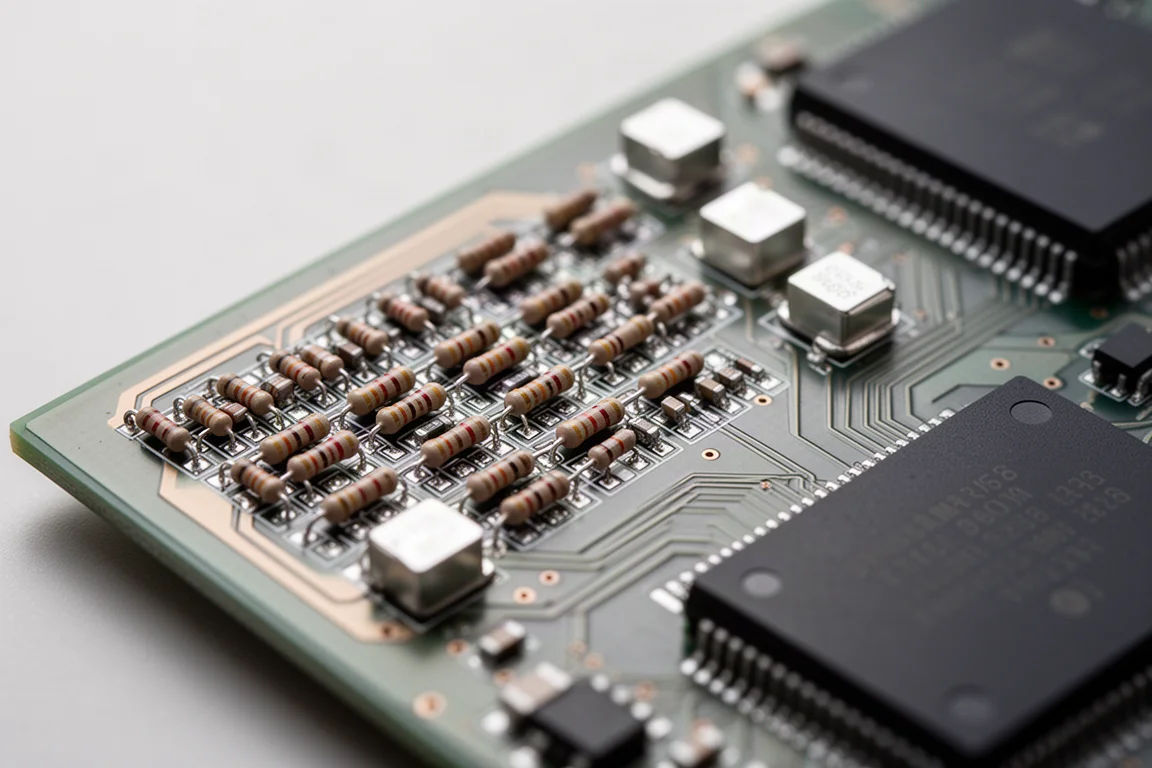
DSD is handled differently. A separate resistor ladder deals with the incoming DSD signal. It is not an R2R ladder, because that architecture would not be appropriate for DSD, but it is unusual to see the format handled outside the FPGA. In this design the Altera FPGA manages the operation of the converter and the phase lock loop, but not DSD. The USB input runs through an XMOS processor, and optical isolators break the board so that there is no electrical connection between the USB input side and the rest of the device. The other digital inputs are isolated as well.
Listening Impressions: Tonality, Dynamics, and Soundstage
Bass has excellent definition and texture, and it avoids the slightly bloated, ponderous quality that can make some components sound slow. The midrange handles male vocals with real authority and female vocals with sweetness and a light touch, and it copes with acoustic instruments that are difficult to reproduce. The leading edges of notes are well defined, transients are solid without sounding laser etched, and decays are beautiful. Nothing sounds veiled or softened.
High frequencies are where the Spring 3 separates itself from cheaper competition. It has a refinement and an airy quality on top that is characteristic of high-end conversion, and its dynamics sound effortless rather than forced.
The sense of scale is the most immediately obvious strength. The soundstage is wide and deep, and the converter conveys a great deal of information about the acoustics of the recording and the space in which it took place.
How the Spring 3 Compares With Other DACs
A delta sigma converter such as the SMSL VMV D1 SE, which retails for around 650 GBP in the UK, is a very natural sounding unit with excellent clarity, and on its own terms it is hard to fault. Next to the Spring 3, though, its high frequencies sound harder and grainier, its dynamics sound a little forced, and its soundstage is noticeably smaller and shallower. The gap is one of refinement rather than basic competence.
The closer comparison is the Denafrips Pontus 2, which shares an unusually similar overall character. At high frequencies the two are hard to tell apart. In the midrange the Spring 3 is a little cleaner and makes individual instruments easier to follow, while the Pontus 2 is slightly richer and warmer with a fuller bodied presentation. The Spring 3 has slightly greater soundstage width, while the Pontus 2 has slightly greater depth. At low frequencies the Spring 3 has a little better definition and control, while the Pontus 2 carries a little more weight and authority.
Neither design is better than the other. The choice comes down to what a system already does well. If you want more harmonic richness, the warmer presentation will suit. If you are happy with the tonal richness you already have and want more clarity and control, the Spring 3 is the one to choose.
System Matching: Amplifiers and Speakers
The Spring 3 needs a resolving system to show what it can do. A Hegel H190 is about the minimum quality of amplifier worth pairing with it, and a Yamaha AS1200 is a suitable alternative with the power, grip, clarity and refinement to make the pairing worthwhile. Most listening was done with an Exposure 21 preamplifier and Exposure 18 Super monoblocks, a combination that proved difficult to step away from. Better amplification simply rewards this converter further.
Speakers need to be at a comparable level. The ProAc Response 1 SC is no longer available, and it is not certain that the current DB1 sounds the same. The ATC SCM19 is an equivalent in terms of fidelity and possibly a little better in some respects, but it demands an amplifier with plenty of power.
The Optional Preamp Module and What It Adds
The preamp module is fully discrete, fully balanced and derived from the Serene preamplifier that sells for close to 3,000 Euros. It uses a stepped relay volume control rather than a potentiometer, which gives better linearity across the volume range. The analog output stage is fully discrete and runs in Class A.
Connected directly to the monoblocks, the module sounded slightly cleaner than a separate Exposure 21 preamplifier, which is a serious result given the quality of that preamplifier. With the module in place, the sense of scale, the dynamics and the harmonic richness were all greater. It is difficult to imagine buying a standalone preamplifier of this quality for 550 Euros.
Buying Advice: Which Version Makes Sense
Level 1 covers the essentials for anyone who does not need a remote control or the upgraded power supply capacitors. Level 2 adds both for a modest premium and is the version most buyers will want. The KTE model is for those who want the upgraded O-ring transformer and Ohno continuous cast silver internal wiring and are prepared to pay for them.
The preamp module is the other decision to make. If your system is all digital and you do not already own an excellent preamplifier, adding it is straightforward good sense, because it costs far less than an equivalent separate component. If you already have a strong preamplifier, the standard converter is the more sensible purchase, since the module and a good separate preamplifier overlap in function.
Budget for amplification and speakers before you budget for the converter itself. The Spring 3 will reveal what sits around it, and it rewards improvements upstream rather than compensating for weaknesses.
Conclusion
The Holo Audio Spring 3 delivers a combination of detail, refinement and natural, neutral tonality that is rare at its price, backed by measured performance that stands up against delta sigma designs and a dedicated resistor ladder for DSD. The construction is exceptional inside and out, the feature set is complete, and the optional preamp module adds genuine value rather than convenience alone. It is one of the finest digital to analog converters available at this price.
Product link
View more details for Holo Audio Spring 3
This product is mentioned in the review. Check the specifications, options, and compatibility before buying.
View more details for Holo Audio Spring 3Further reading
Related Reviews
DACs
Denafrips Pontus II vs Ares II: Which R2R DAC Fits Your System?
A practical comparison of two Denafrips R2R converters: what the Pontus II adds over the Ares II, and which one makes more sense for a typical system.
DACs
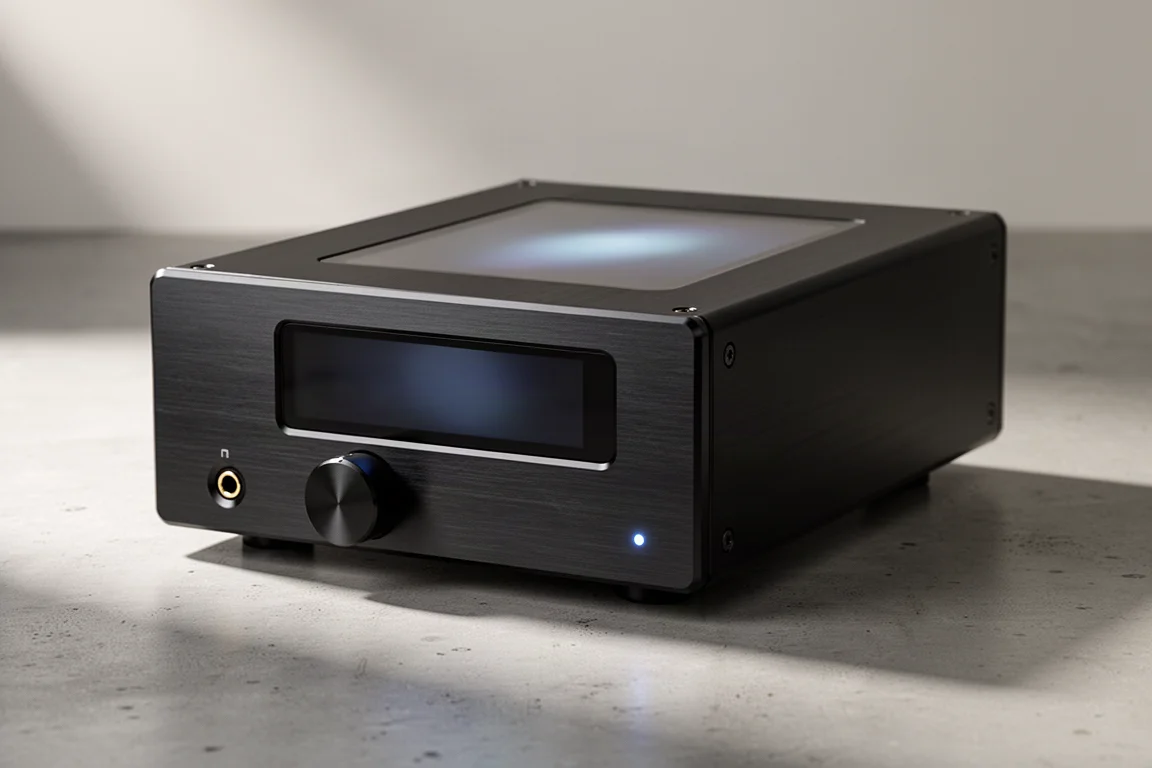
Eversolo DAC-Z10 Review: A Feature-Packed DAC and Preamp in One Box
A close look at the Eversolo DAC-Z10, a $1,980 converter and preamp with a configurable touch display, a very wide input selection, and refined sound.
DACs
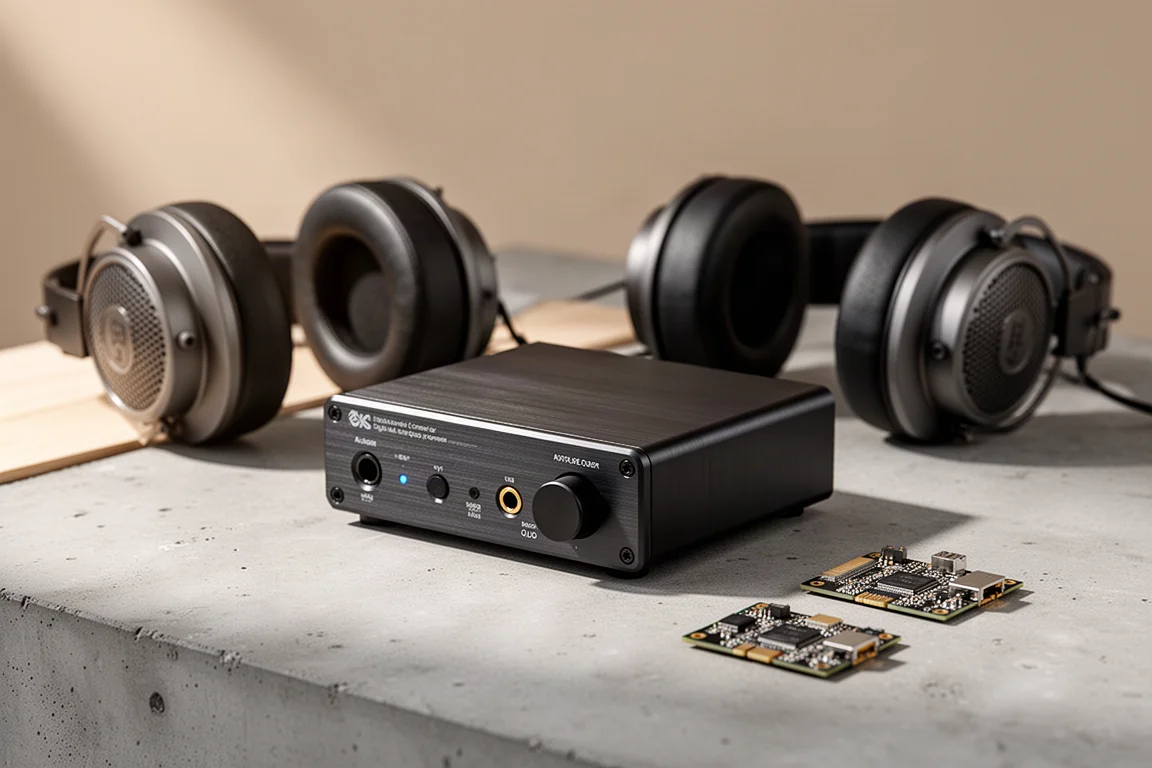
Geshelli Labs Torque DAC Review: A Modular Converter That Changes With Your System
A close look at the Geshelli Labs Torque, a US-made modular DAC that lets you swap converter boards and output modules instead of replacing the whole unit.