Hi-Fi Audio
Holo Audio May and Denafrips Terminator Plus: Two Flagship R2R DACs Compared
Two flagship R2R ladder DACs, plus the transparent preamplifier built for one of them, compared on build quality, sound character and long-term value.
Introduction
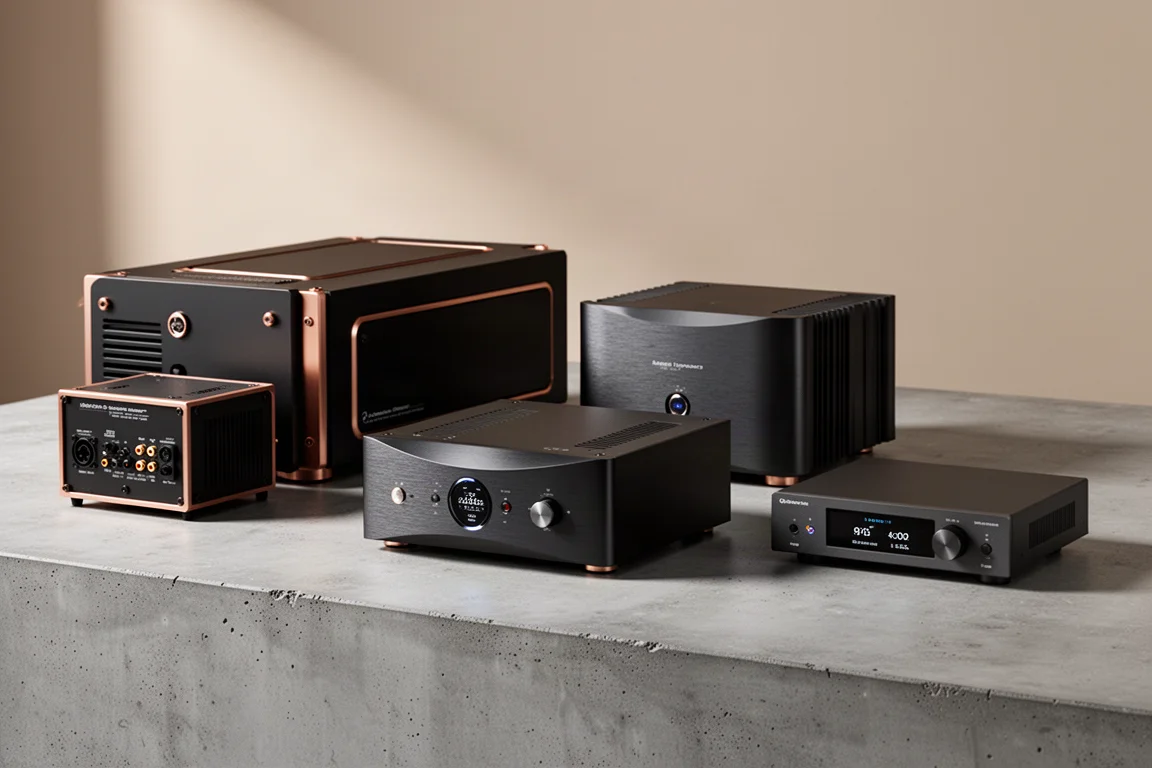
Two flagship ladder DACs and one preamplifier built specifically to accompany one of them. That is the short version of a comparison that ran for months across a wide range of speaker pairings, and it ends somewhere unusual: there is no clear winner.
The Holo Audio May and the Denafrips Terminator Plus are both flagship R2R designs, and both sell for under $7,000. The Holo Audio Serene is the matching solid-state preamplifier. Each of the three does something the others do not, so which one suits a given system depends far more on taste and on the rest of the chain than on any absolute ranking.
How These Flagship R2R Designs Differ
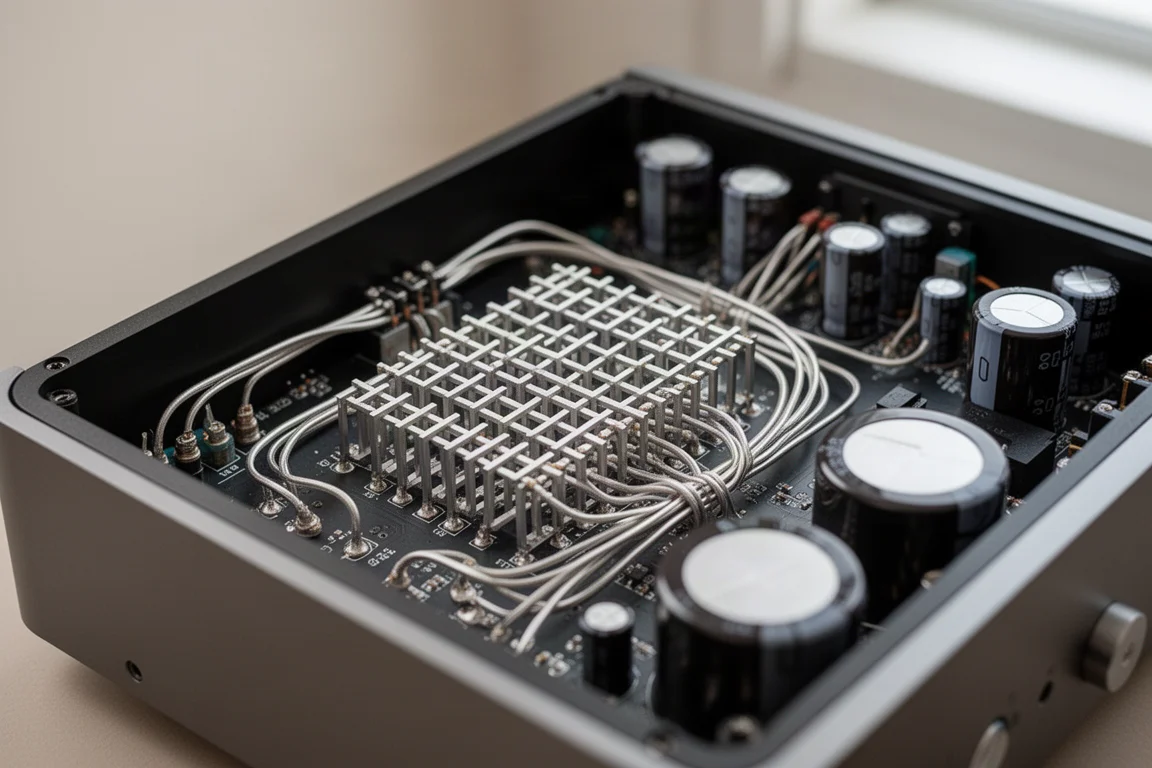
R2R ladder conversion is old technology, but modern implementation has made it far more precise, with many of the historical errors removed through better design. Both of these DACs use ladders rather than off-the-shelf delta-sigma chips.
The appeal is closest to tube gear: the sound is not defined purely by measurement, even though both of these measure extremely well. The character is the point, and it is why ladder designs have gathered so much interest at this level.
Where the two diverge is presentation. One leans smooth and enveloping, the other leans detailed and immediate. Both are excellent at what they do, which is exactly why choosing between them is genuinely difficult rather than a matter of one simply being better.
Holo Audio May DAC: Smooth and Silky Presentation
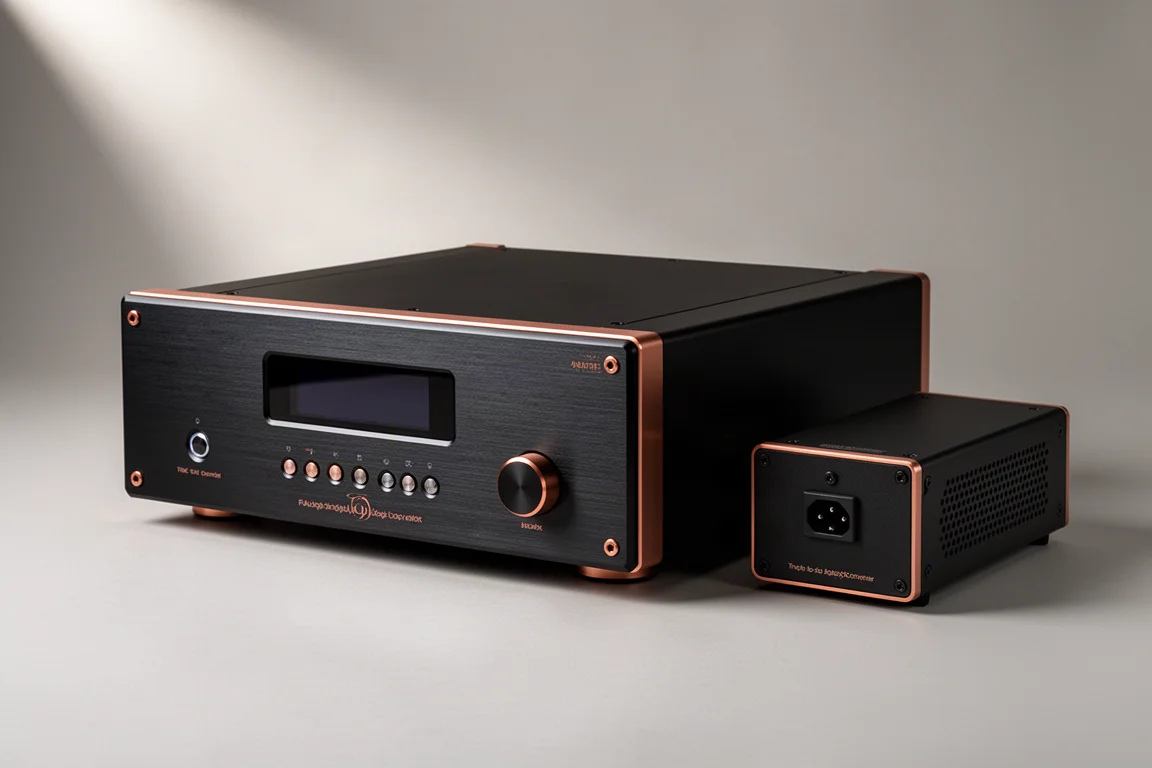
The May is the more distinctive-looking of the two. The black and copper finish is striking, and the unit carries Kitsune branding on the chassis. The power supply sits in its own separate chassis and connects through an umbilical cable supplied with the DAC. Inside, the component selection is serious, including high-grade capacitors and silver wiring, and the craftsmanship is phenomenal. If an edge has to be given on build, it goes to the May, partly for the two-box power supply approach and partly for the sense that slightly higher-grade parts appear here and there.
Sonically, the May is smooth. Extremely smooth. Compared with the Holo Audio Spring 2, it is more resolute, with a larger soundstage, better imaging, better separation and more nuance almost everywhere. The high-frequency smoothness is the standout quality: silky rather than sharp.
The practical result is that brightness simply stops being a problem. Listeners who find bright-sounding speakers hard to live with tend to find the May easy regardless of the pairing, and it removes the hard edges that make long sessions tiring.
The mid-range is where the May impresses most. Tone, voices, guitar and timbre all carry a sense of presence, the kind that makes a recording feel physically in the room. The soundstage is deeper than the Terminator Plus, placing events well behind the speakers, and the overall presentation is holographic and enveloping rather than pushed forward. Bass quantity is about the same as the Terminator Plus; the May simply frames it with a smoother overall character, which can make it seem more bass-oriented than it actually is.
Denafrips Terminator Plus: Detail and Imaging
The Terminator Plus takes the opposite approach to appearance. It looks plain next to the May, but it is still a very nicely finished unit, with an engraved front panel, a slightly curved faceplate and a genuinely chunky, substantial build. It is physically large, bigger than some amplifiers. Component quality inside is comparable to the May, and there is no meaningful gap in craftsmanship between the two.
The sound is where the wow factor lives. Moving to the Terminator Plus after the May produces an immediate reaction: more detail, more sparkle, and micro-details arriving from the mid-range and the treble. It sounds extended and open, and it can also sound bright depending on the pairing. Over long listening sessions that density of information can become fatiguing.
Imaging is the Terminator Plus’s clear win. Separation is precise and the placement of individual elements is dead on. Its soundstage is a little more forward than the May’s, while width is roughly the same between the two. Bass quantity is about equal, but the Terminator Plus sounds cleaner and less clustered, simply because of how the rest of the frequency range is presented.
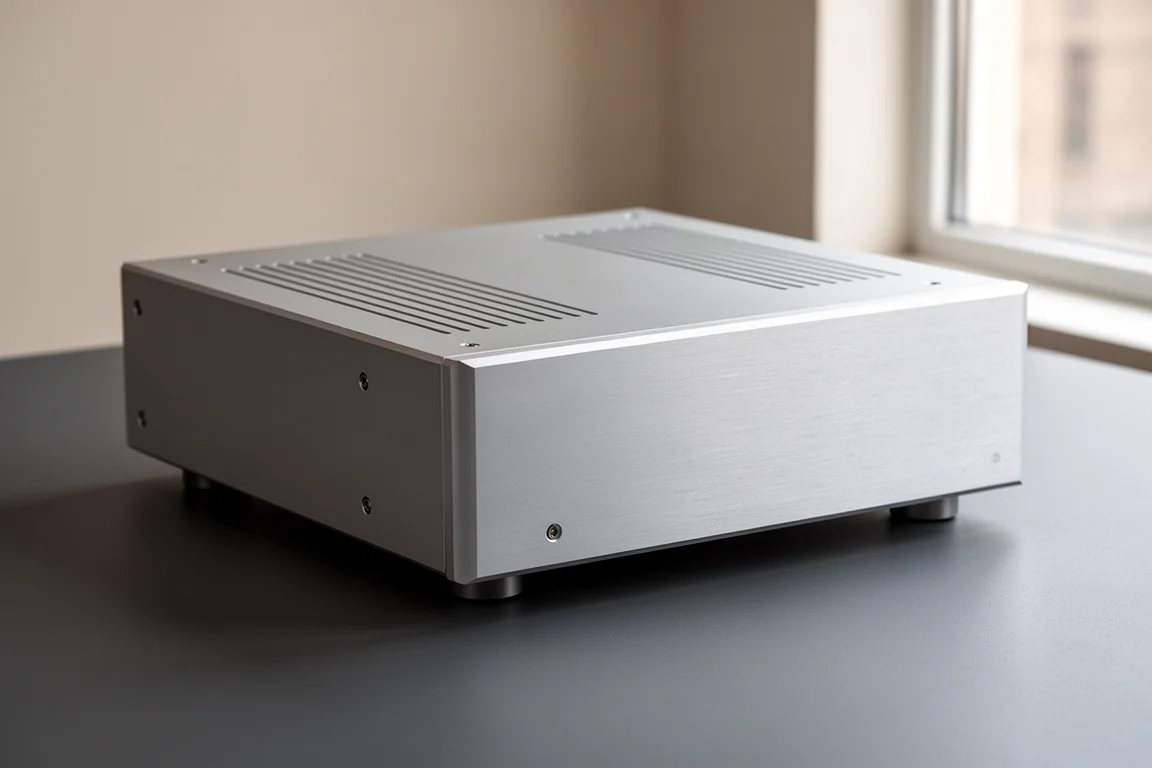
Holo Audio Serene Preamplifier: Transparent by Design
The Serene is Holo Audio’s own solid-state preamplifier, built from the ground up for the May DAC after the company concluded that existing preamplifiers in the market were not doing the job. The stated intent is transparency: it should add no sound of its own.
That holds up in practice. With the May, the Serene behaves almost like a passive unit, letting the smoothness and liquidity of the DAC through unaltered. It is also a very strong pairing with the Terminator Plus. Against other preamplifiers that do add their own coloration, the difference is easy to hear.
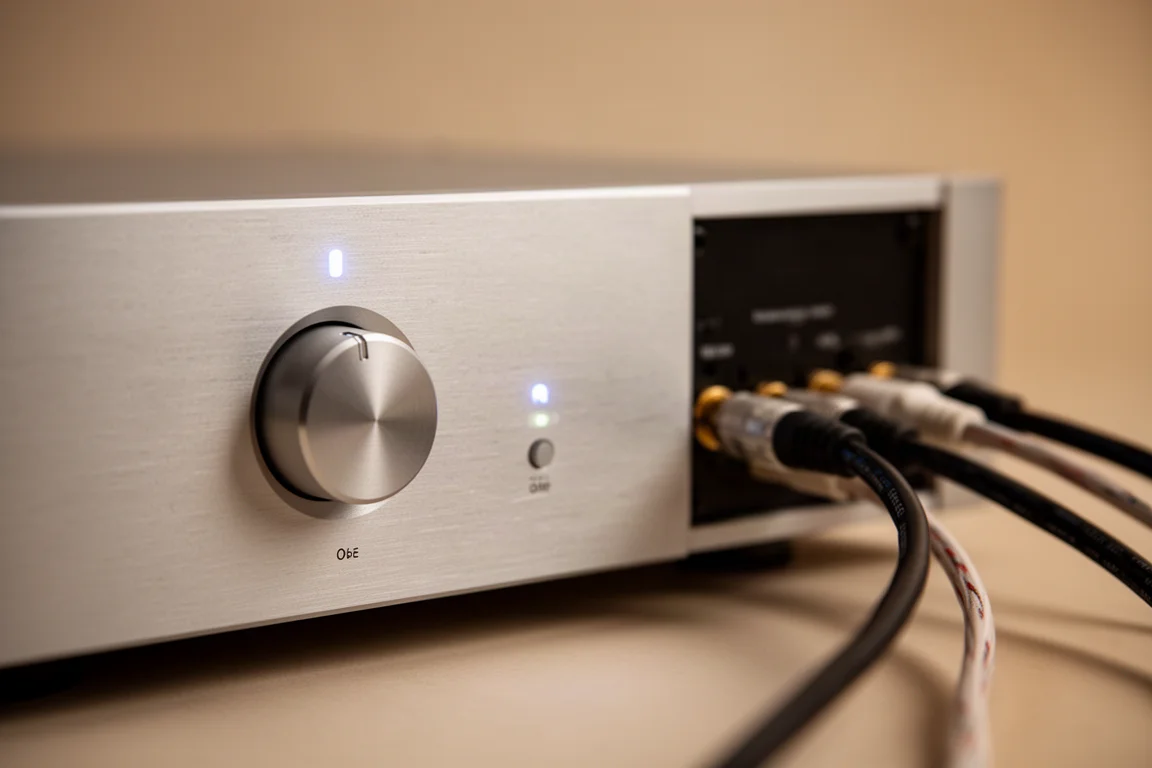
The trade-off is that the Serene is only as good as what feeds it. If the source and the DAC are strong, that quality passes straight through. Anyone who wants a preamplifier to contribute its own character and complement a DAC should look at a different design, because this one deliberately does not.
Oversampling and Non-Oversampling Modes
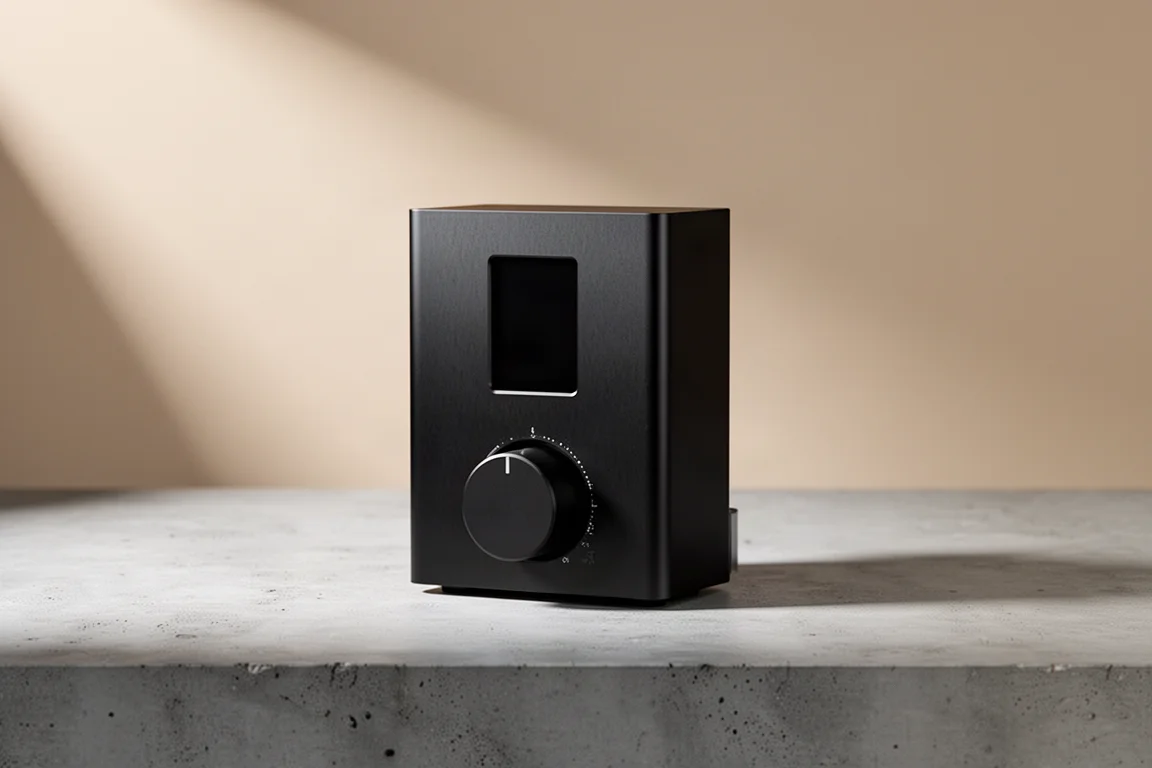
The May is one of very few DACs at its price that is truly non-oversampling. It offers oversampling for PCM and for DSD, plus a non-oversampling mode that plays the file exactly as delivered. The Terminator Plus also offers oversampling and non-oversampling modes, but its non-oversampling mode is not truly non-oversampling.
Settings matter more than they might seem to. The May sounds best in non-oversampling mode, where the mid-range is at its smoothest and most liquid, with the most convincing tone and scale. Switching to the internal oversampling mode widens and deepens the presentation, but the warmth and body thin out, like the same signal spread over a larger surface.
The Terminator Plus sounds best in oversampling mode. For listeners who prefer to handle oversampling themselves with desktop software and their own filters, the May’s true non-oversampling path is the reason to choose it. For everyone else, the built-in modes on both DACs offer plenty to work with.
Value and Diminishing Returns
Both DACs come in under $7,000, and both companies sell direct to the consumer, skipping distributor and dealer margins. That is a large part of why the price looks low relative to the performance on offer. These two can hold their own against DACs priced in the $10,000 to $30,000 range.
Lower-tier models get close. The Holo Audio Spring 3, the Denafrips Pontus and Venus, and the original Terminator deliver much of the same character for a fraction of the price. What the flagships add is roughly the last 15 to 20 percent of performance, and that last stretch only makes sense if the rest of the system, including speakers, amplification and room, is already at a high level. This is where diminishing returns really begin.
Conclusion
There is no overall winner here, and that is the honest answer for anyone deciding between them.
If the system leans bright, or if brightness is something you cannot tolerate, the Holo Audio May is the safer and more enjoyable choice, and its true non-oversampling mode gives it a clear reason to exist for listeners who handle oversampling themselves. If the system is already warm, perhaps built around tube amplification, and you want added resolution, micro-nuance and pinpoint imaging, the Denafrips Terminator Plus delivers a level of detail that is genuinely impressive.
The Holo Audio Serene makes sense as a companion piece rather than a starting point. Pair it with a strong source and a strong DAC and it stays out of the way completely. All three are top-tier options, and the right pick depends on what the rest of the chain is doing.
Further reading
Related Reviews
Hi-Fi Audio
Accuphase C-57 vs Allnic H-7000V: Two High-End Phono Stages Compared
A fully balanced solid-state phono stage with a pitch-black noise floor meets a tube design built for well-loved records. Here is how to choose between them.
Hi-Fi Audio
Active vs Passive Hi-Fi: Five Components for a Modern System
Five components that define modern active and passive hi-fi systems, with the strengths, trade-offs and setup details worth weighing before you buy.
Hi-Fi Audio
Advance Paris A10 Apex Review: A Hybrid Integrated Amplifier That Covers a Lot of Ground
A French hybrid integrated amplifier with a class A tube preamp stage, analogue power meters, and an internal DAC and phono stage good enough to make extra boxes unnecessary.