Hi-Fi Audio
Holo Audio Cyan 2 Review: A Non-Oversampling R-2R DAC That Gets the Essentials Right
A close look at the Holo Audio Cyan 2, an entry-level non-oversampling R-2R converter, and how it compares with three close rivals.
Introduction
The Holo Audio Cyan 2 is the most affordable entry in a three-model family of digital-to-analog converters, and it makes its priorities clear from the first glance. There is no display, no remote control, no volume control and no oversampling filter. What remains is a non-oversampling R-2R ladder design, a fully balanced internal architecture, and a chassis that feels considerably more expensive than the asking price.
The Cyan 2 is listed at 1,148 excluding VAT through the European distributor, with shipping and taxes to add depending on where you buy. European distribution is handled by Magna HiFi, and Kitsune is the appointed distributor for North America. That places the converter in a busy part of the market, where several well-regarded designs sit within a few hundred of each other.
This article covers what the Cyan 2 does well, where it asks for patience, and how it holds up against three obvious rivals: the Topping D90, the Denafrips Ares 12th-1 and the Gustard R26.
Who the Holo Audio Cyan 2 Is For
The Cyan 2 suits listeners who care more about timing and tone than about features. It is at its best in a system with a single digital source, where the absence of a manual input selector never becomes an issue, and where the money saved on switches, displays and remotes has gone into the parts that shape the sound.
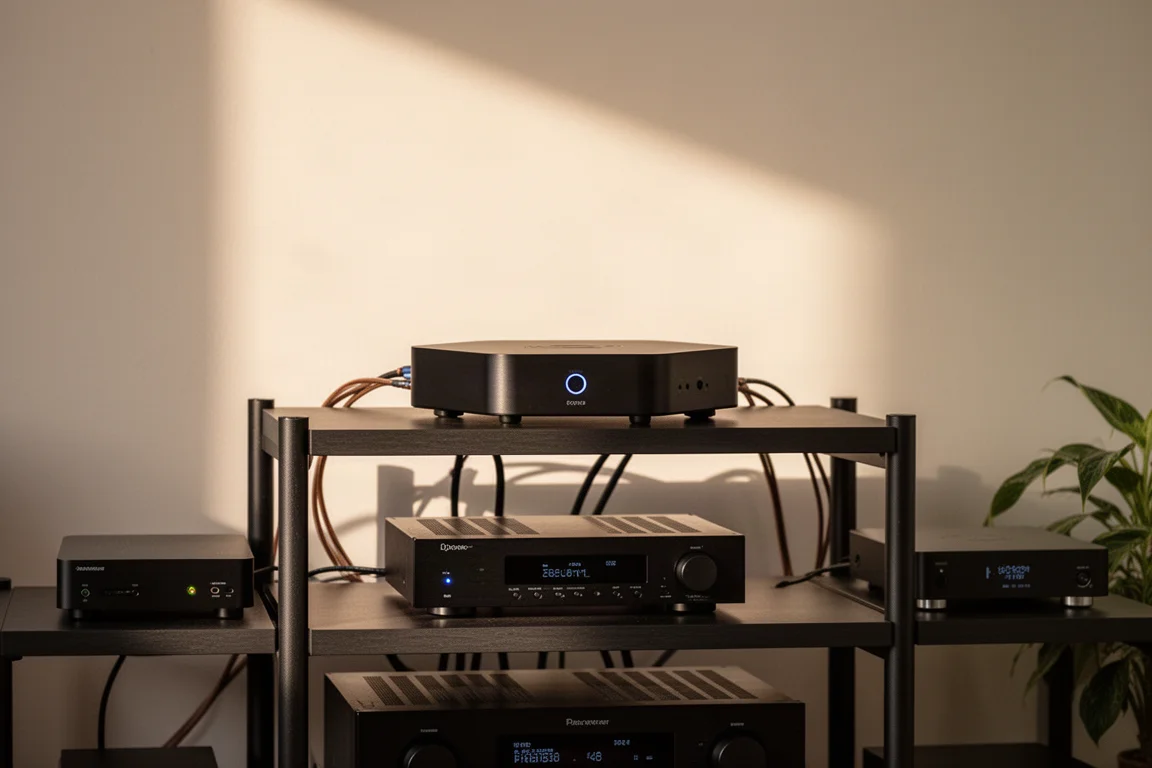
It also makes sense as an upgrade for anyone using the converter built into a streamer or an integrated amplifier. Pairing it with a modest network streamer over an optical connection is a genuinely capable way to build a digital front end without spending a fortune on transport hardware.
The listener who will get the most from it is the one who values natural timbre, a deep and well-layered soundstage, and a clean, controlled bottom end. Those looking for a feature-rich hub with switching, volume control and a screen should look elsewhere, and that is a deliberate design decision rather than an oversight.
Design, Build and Connectivity
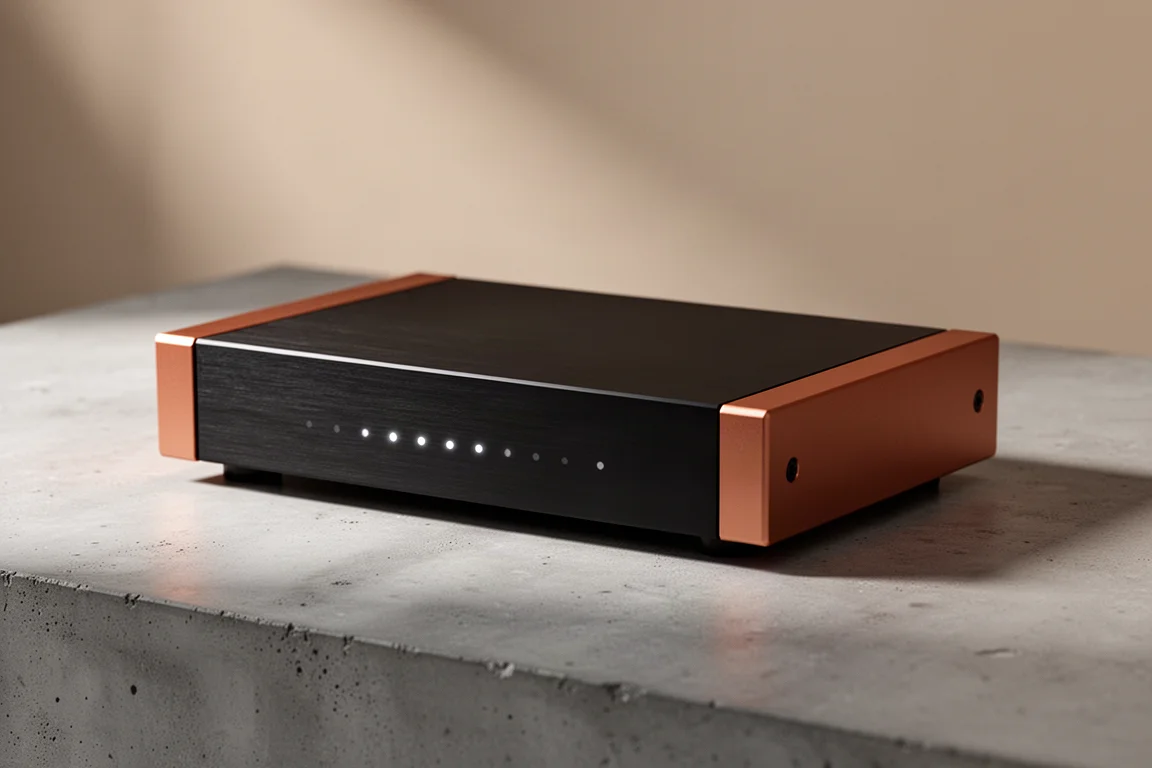
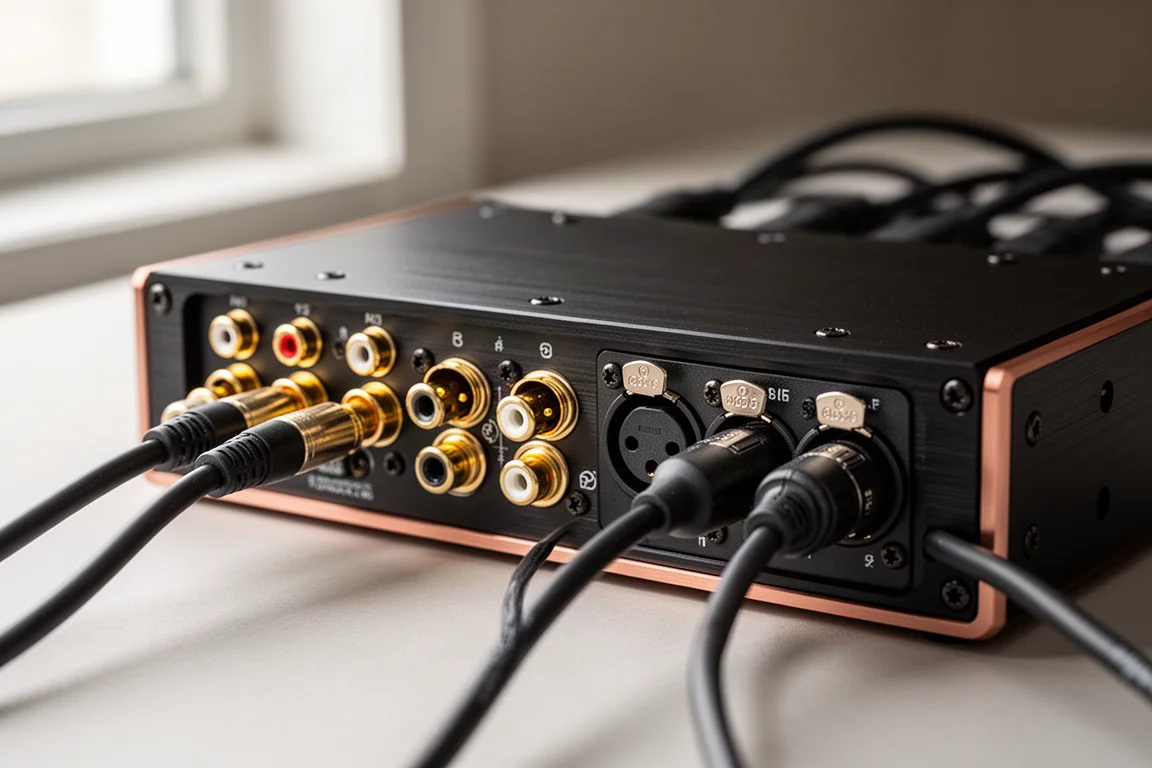
The chassis is made from solid plates of black anodized aluminium, with copper-plated side panels that add a little visual warmth. The footprint is 30 x 20 cm and the unit stands 4.8 cm high (11.8 x 7.9 x 1.9 in), weighing a healthy 3.5 kg (7.7 lb). It feels dense and well finished in the hand.
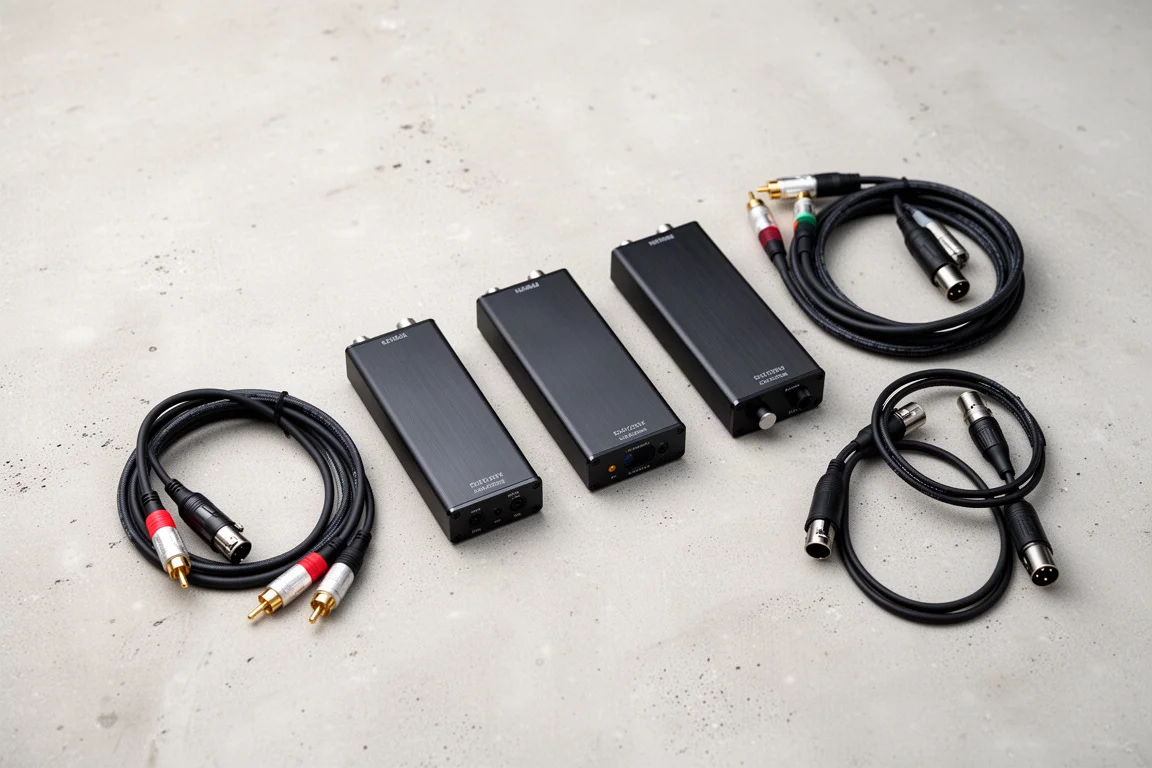
Around the back, the connections are anything but bare bones. Analog output is available on single-ended RCA and balanced XLR, and the internal architecture is fully balanced from end to end. Digital inputs cover USB, I2S, coaxial, optical toslink and AES/EBU, the last of which is the preferred connection in many professional audio applications.
A bank of LEDs indicates the active input and the incoming sample rate, whether PCM at 44.1 kHz or 48 kHz, DSD, or their multiples. The approach is functional and pro-audio in spirit, though the LEDs are bright and cannot be dimmed, which is worth knowing if the converter will sit in a dim listening room.
The Technology Inside the Cyan 2
Oversampling relates to a converter’s interpolation filter, which derives extra samples between the original ones to improve linearity and signal-to-noise ratio. In plain terms that means a more accurate frequency response and a lower noise floor. The trade-off is that oversampling filters create artifacts in the time domain, with pre-ringing before the impulse and post-ringing after it.
Pre-ringing is the part that tends to sound unnatural, because in the real world nothing is heard before it arrives. Filters exist that remove it, but they tend to introduce even more post-ringing, and in inconsistent amounts across the frequency range. Those time-smearing artifacts affect natural timbre, soundstage and imaging. The Cyan 2 sidesteps the argument by not oversampling at all.
Inside, a 50VA O-core transformer is used because it radiates even less noise than a toroidal type, supported by a generous complement of good quality Rubicon capacitors. The USB input is handled by an Altera Max 2 processor running proprietary code, accepting PCM up to 1,536 kHz and native DSD up to DSD1024 before the signal passes through galvanic isolators. The I2S input is also galvanically isolated and handles the same rates.
AES/EBU, optical toslink and coaxial inputs are handled by an AKM 4118 receiver chip and a second Altera Max 2 processor, with a maximum bandwidth of 24-bit and 192 kHz. PCM conversion is carried out by a 16-bit discrete, differentially balanced R-2R ladder network. DSD is not converted to PCM as it is in most ladder designs; a dedicated vector step resistor network handles it in native form. The analog output stage keeps the balanced architecture and uses surface-mount discrete components with Texas Instruments OPA1612A opamps in the I/V stage.
How It Sounds
The Cyan 2 is a detailed and natural sounding converter with strong spatial ability. It throws out a wide and deep soundstage with tangible localization of performers, and there is plenty of body in the bass and midrange. The bottom end is clean and the lower midrange does not blur, which gives bass lines a grip that is easy to appreciate on well-recorded material.
Tonally it is even-handed, and its upper harmonics are slightly darker than the warmest ladder designs in this group, though it is never lacking in detail up top. The presentation favours control and precision over richness.
Input choice matters, but less than the price bracket might suggest. In a highly resolving reference system, an I2S feed through a digital-to-digital converter produced a noticeably wider soundstage and marginally better detail, while optical and coaxial offered slightly less fidelity than I2S and USB. In systems built around amplifiers and speakers retailing up to around 3,000 each, the Cyan 2 was very consistent across every input.
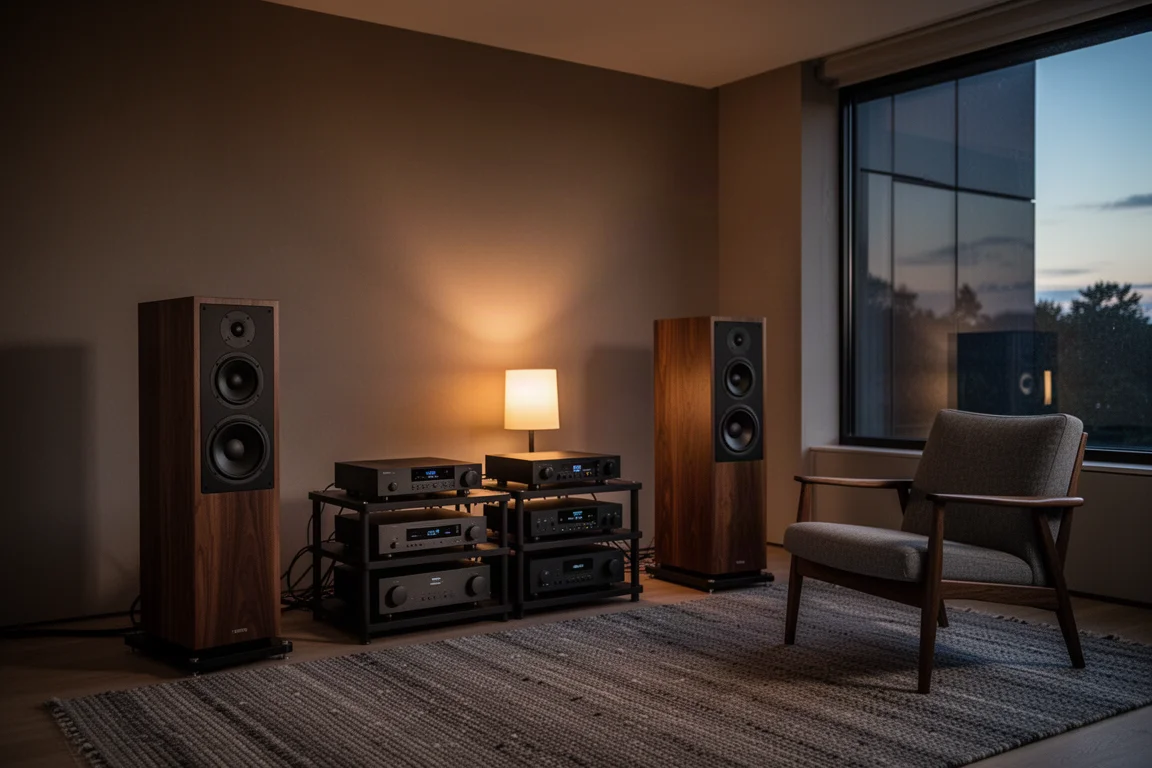
That consistency is worth emphasizing, because it means the Cyan 2 does not demand an expensive transport to perform well. A compact streamer of the kind that sells for a few hundred, connected over optical, makes a perfectly suitable partner and leaves more of the budget for the converter itself.
How It Compares: Topping D90
The Topping D90 is a delta-sigma design that costs around 1,000 and posts signal-to-noise specifications that even flagship ladder converters cannot approach, including a claimed 135 dB of dynamic range. It is a very resolving converter with a pleasing tone, firm but not aggressive leading edges, and a realistic decay at the end of notes.
Its compromises are tonal rather than technical. There is some leanness to the midrange that shows up most with vocals and acoustic instruments, and while performers are well separated, the soundstage is relatively narrow and flat, with a slightly diffuse quality to the imaging.
Against it, the Cyan 2 feels like a worthwhile step up. It offers a much wider and deeper stage with more tangible placement of performers, and considerably more weight through the bass and midrange. Listeners who value a spacious, fleshed-out presentation will notice the difference quickly.
How It Compares: Denafrips Ares 12th-1
The Denafrips Ares 12th-1 is another ladder converter at around 1,000, and it takes a different route to the same destination. The Cyan 2 is noticeably cleaner in the bass and lower midrange and has more precise stereo imaging, while the Ares 12th-1 is weightier in the lower frequencies and slightly wider in its soundstage.
The Ares 12th-1 also has a richer tone that adds texture to notes, along with a more revealing top end. The Cyan 2 is not short of upper harmonics, but it sounds a little darker in direct comparison. Preference between the two shifted from track to track during listening sessions: a small-ensemble jazz recording with trumpet and brushed cymbals favoured the richer tone and natural decay of the Ares 12th-1, while a swampy blues-rock track showed off the Cyan 2’s ability to hold a bass line together without letting it bleed into the midrange.
How It Compares: Gustard R26
The Gustard R26 is a ladder converter retailing at about 1,600, roughly 300 more than the Cyan 2 once shipping and taxes are accounted for. Separating the two was the hardest comparison of the group, because they share a similar tone, soundstage and imaging character, with an excellent sense of layering from front to back.
The differences are matters of emphasis. The Cyan 2 is a little weightier in the bass and fuller in the midrange, while the Gustard R26 is more detailed and precise, especially at the top, making it the more accomplished converter overall, but only by a whisker. Neither design has everything its own way.
For buyers weighing the two, the decision comes down to whether a fuller, more controlled low end matters more than the last measure of top-end precision and detail.
The Auto Input Switching Problem
There is one significant catch. The Cyan 2 has no manual input selector, relying instead on automatic switching, and in practice it holds on to the input that was last playing until the unit is fully powered down. Switching it into standby is not enough; the converter has to be turned off completely before it will pick up a different source.
For anyone who connects a single source, this is a non-issue. For everyone else it is a genuine inconvenience, and it is the reason the Cyan 2 falls short of an unqualified recommendation despite how good it sounds. The bright, non-dimmable LEDs are a smaller annoyance, but they belong in the same conversation about living with the converter day to day.
Buying Advice
If your system has one digital source, the Cyan 2 is easy to recommend. It is one of the finest sounding converters at its price, with an even-handed tonality and greater control than the warmer, softer alternatives in the same bracket. Its build quality, internal architecture and connection set leave very little to be desired in this segment.
If you regularly switch between sources, weigh that carefully before buying. The automatic input behaviour will shape your daily routine far more than any specification will, and the workaround of fully powering down the unit between changes is not something most people will enjoy.
For the rest of the system, a modest network streamer over optical is enough to get the best from the converter at this price, and it keeps the total outlay sensible. Those who want the highest available sample rates should use the USB or I2S inputs, since the optical, coaxial and AES/EBU inputs are limited to 24-bit and 192 kHz.
It is also worth thinking about how the Cyan 2 fits with the rest of the chain. Its balanced architecture and clean, controlled presentation suit amplifiers and speakers that already lean towards neutrality, and it rewards a listening space where a deep, well-layered soundstage can actually come through.
Conclusion
The Holo Audio Cyan 2 is a beautifully constructed converter that sets aside features with no bearing on sound quality while retaining the essential design architecture of its more expensive siblings. It has all the connections most listeners will want, and it sounds detailed, natural and spatially convincing.
The lack of manual input switching is a real flaw, and it is the one thing that keeps this from being a straightforward recommendation for every system. If that limitation does not affect you, the Cyan 2 may well be the converter you have been looking for.
Product link
View more details for Holo Audio Cyan 2
This product is mentioned in the review. Check the specifications, options, and compatibility before buying.
View more details for Holo Audio Cyan 2Further reading
Related Reviews
Hi-Fi Audio
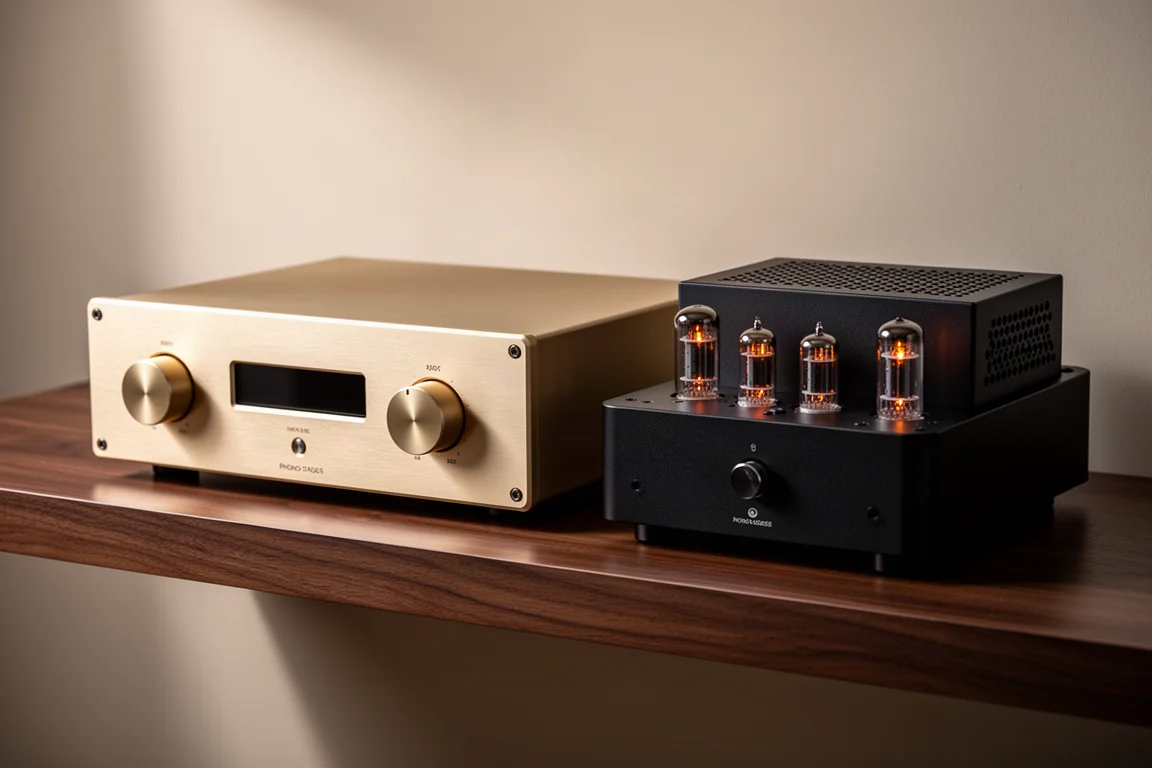
Accuphase C-57 vs Allnic H-7000V: Two High-End Phono Stages Compared
A fully balanced solid-state phono stage with a pitch-black noise floor meets a tube design built for well-loved records. Here is how to choose between them.
Hi-Fi Audio
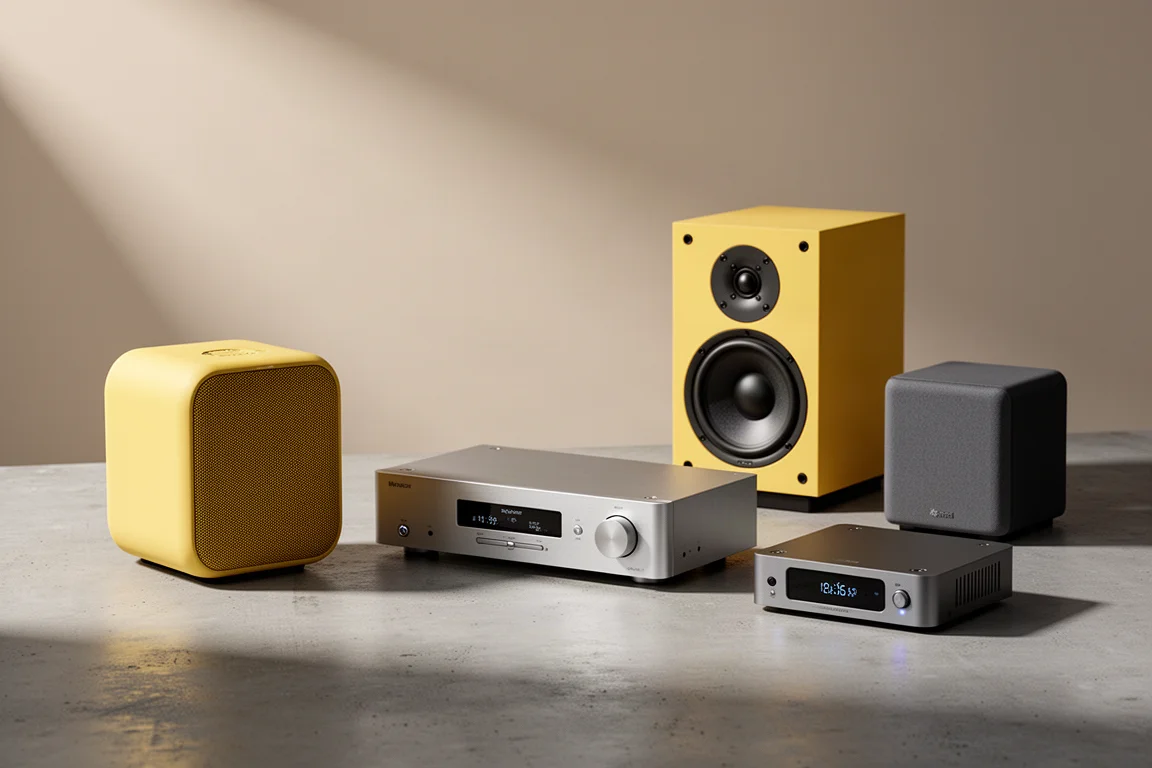
Active vs Passive Hi-Fi: Five Components for a Modern System
Five components that define modern active and passive hi-fi systems, with the strengths, trade-offs and setup details worth weighing before you buy.
Hi-Fi Audio
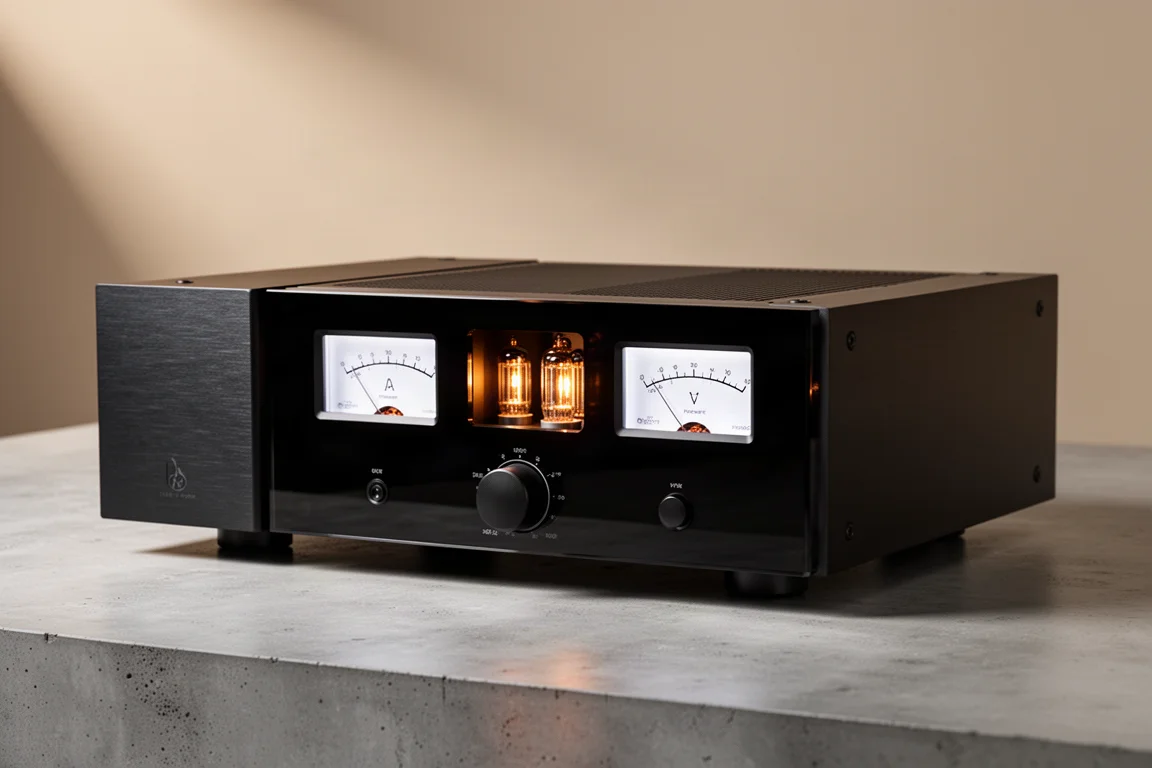
Advance Paris A10 Apex Review: A Hybrid Integrated Amplifier That Covers a Lot of Ground
A French hybrid integrated amplifier with a class A tube preamp stage, analogue power meters, and an internal DAC and phono stage good enough to make extra boxes unnecessary.