Satellite Communicators
HMD Offgrid Review: A Phone-Paired Satellite Communicator for Trail Backup
The HMD Offgrid pairs with your phone for satellite messaging, check-ins, location tracking, and SOS, with rescue coverage bundled into the subscription.
Introduction
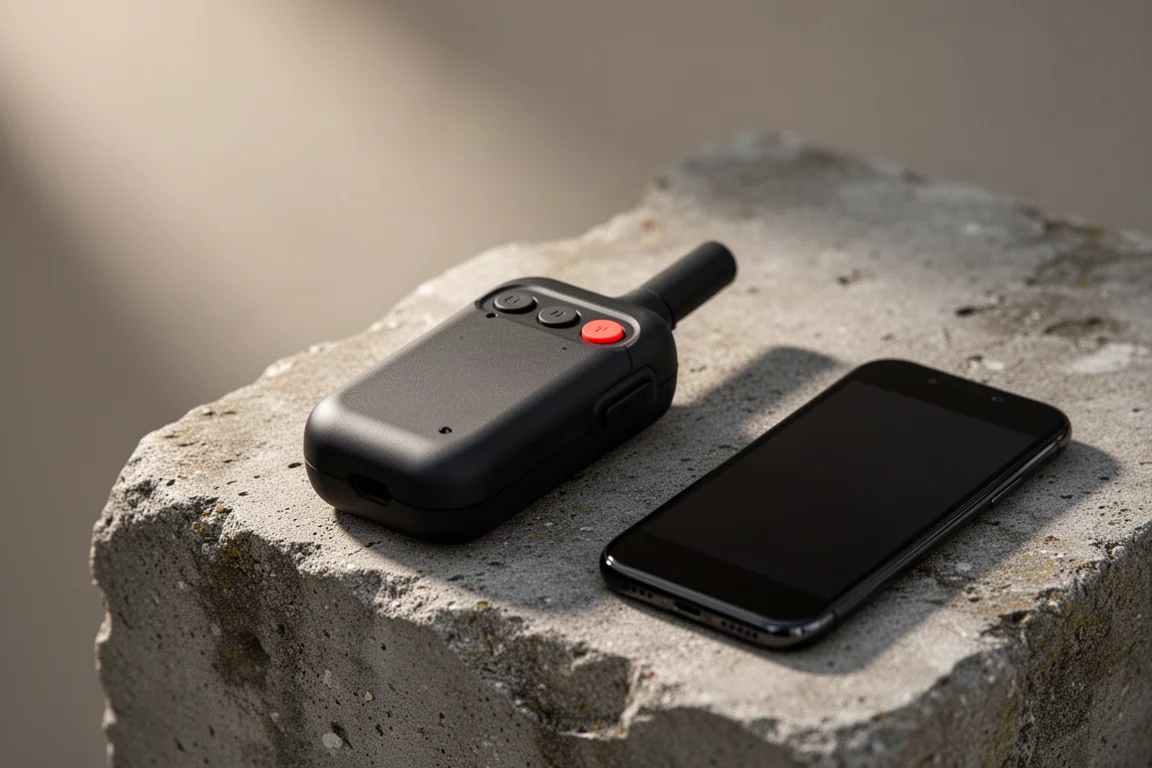
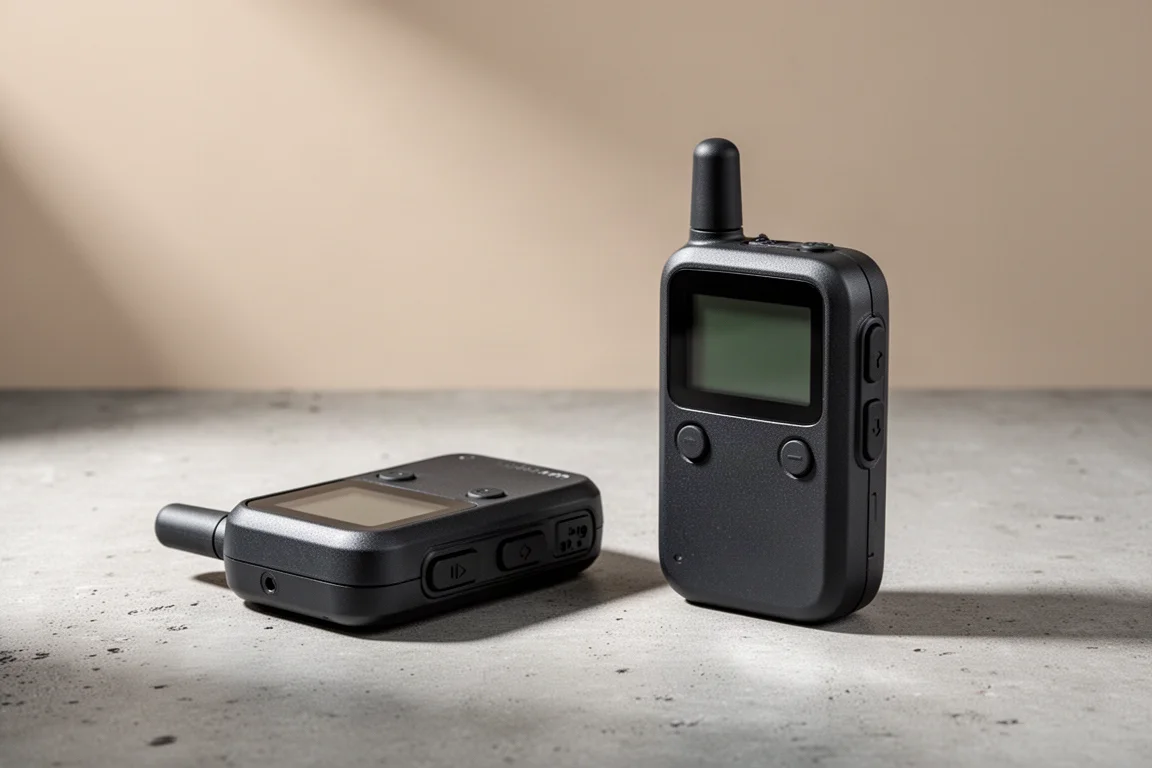
The HMD Offgrid is a compact satellite communicator built to pair with the phone you already carry. It covers the core functions of the category: two-way messaging, check-ins, location tracking, and an SOS function. It works with both Android and iOS over Bluetooth through the HMD Offgrid app.
Its background is worth knowing. The hardware and service trace back to the Motorola Defy Satellite Link. Motorola supplied the hardware while a separate company assembled and sold the service. When that company went under in 2023, its partners Skylo and Overwatch and Rescue kept the service running for existing users, a meaningful commitment given what these devices are used for. The people who had run the original operation later acquired the remaining assets, revived it, and partnered with HMD to produce new hardware for the same service, with different pricing plans.

That history matters less than how the device behaves in the field. After several months of trail use, the Offgrid reads as a communicator with genuinely fast messaging, straightforward plan pricing, and a few habits that take some getting used to.
Who This Communicator Is For
The Offgrid suits hikers, backpackers, and riders who want a safety line beyond cell coverage. Its clearest fit is someone who already carries a satellite-capable phone and wants a backup that keeps working while that phone is in airplane mode.
It also appeals to anyone who values simple pricing. Messaging plans are annual and predictable, and search and rescue coverage is bundled into the subscription rather than sold as a separate policy.
It is a less natural fit for anyone who wants a fully standalone unit with an on-device screen, menus, and basic navigation. The Offgrid leans on the paired phone for most of its interface.
Main Strengths
Messaging Speed and Everyday Simplicity
Setup is quick. You pair the unit over Bluetooth, launch the app, and create a user ID based on your cell phone number. The first boot walks through firmware updates and the usual housekeeping.
Sending a message follows a familiar pattern: open the messaging section, pick a recipient from your phone contacts, toggle your location on or off, type, and send. The app checks whether you are on cellular or Wi-Fi and routes the message that way at no cost. If neither is available, it switches to satellite.
That satellite fallback works even when your phone is in airplane mode, which is a real advantage over satellite-enabled phones that cannot send while airplane mode is on. Recipients who do not have the app receive a prompt to download it so they can reply. The app is free and does not require owning a device, though everyone in a group conversation needs it to reply.
The Offgrid runs on geostationary satellites through Skylo. Rather than a large constellation of satellites orbiting quickly, these sit in a fixed position above the Earth and move with it. Coverage is regional, and the support page lists current coverage along with any planned expansion.
The standout quality is latency. Messages go out quickly and replies come back quickly, generally faster than a Garmin inReach, though that varies with conditions.
Check-Ins, Location Tracking, and Battery Life
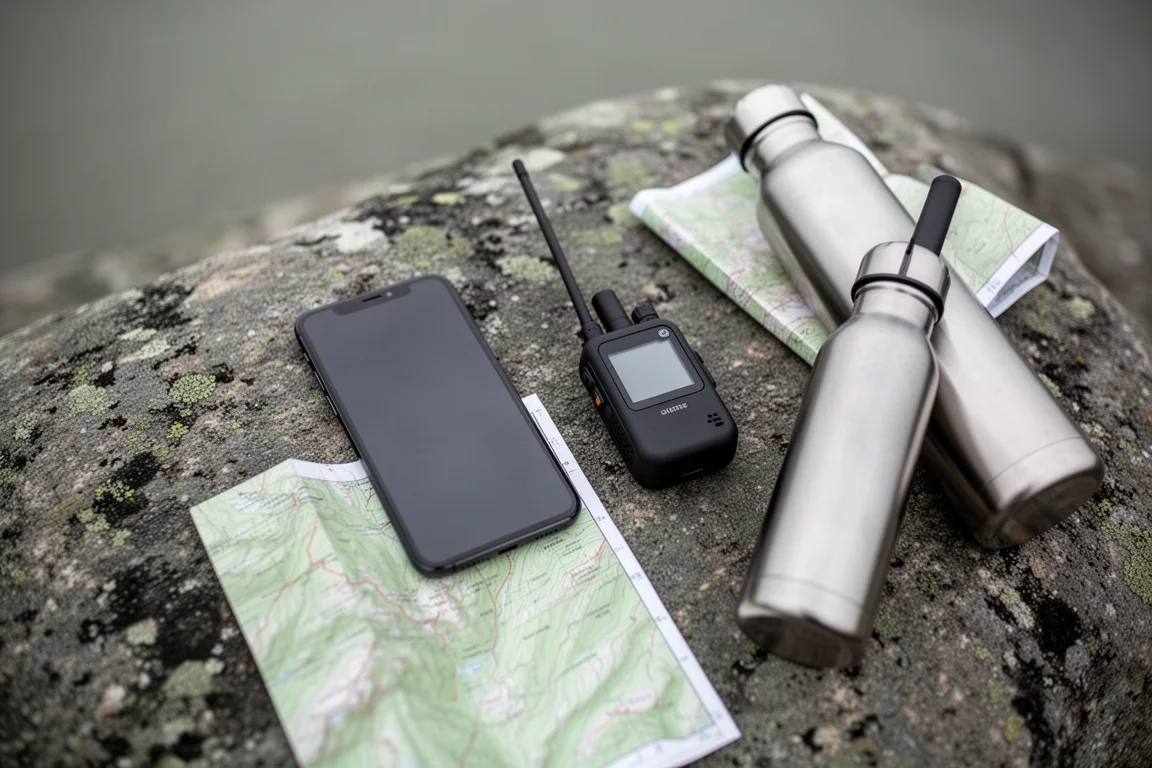
Check-ins send your location and can be triggered from the side button or from the app. The unit carries GPS, GLONASS, Galileo, and BeiDou receivers. One difference from a Garmin inReach is that check-ins count against your message allotment.
Location tracking lets you choose an interval and set a timer so tracking shuts itself off after a set period. If there is no connection, the device buffers points internally and sends them once it reconnects, which is how a full route can appear after a long offline stretch. You choose who can see the track in the app, and you can download the finished log as a GPX file afterwards.
Battery life is modest but workable. With location sharing running and some messaging, drain sits at roughly 2% per hour, which works out to about 50 hours, or roughly two days. Lighter use stretches that toward four days. For a small, lightweight unit that covers a long day hike or a weekend backpacking trip, that is a reasonable trade.
Things to Consider Before Buying
Satellite Coverage and Antenna Directionality
Coverage is the first thing to check. The network relies on geostationary satellites, so availability depends on where you travel. The support page coverage map is the place to confirm your region, and it also shows where coverage may expand.
The second consideration is orientation. The Offgrid is more sensitive to which way it faces than devices with an omnidirectional antenna that can be clipped to a pack and left pointing at the sky. A satellite status screen shows your connection, and an advanced tab indicates where the satellite sits relative to you.
Real-world behavior does not always follow a neat pattern. Reception can drop when the unit faces away from the satellite, yet at other times it held a connection for over an hour from a car center console beneath a metal roof.
It helps to set expectations around reliability generally. No satellite communicator is flawless. Even a Garmin inReach has failed under clear skies, in tree canopy, and in canyons. Garmin remains the reliability benchmark in this category, with the Offgrid sitting a step behind it.

SOS Handling and the Exposed Button
SOS can be triggered from the physical button or from the app. The app is the better route because it opens two-way communication with responders. The button itself sits exposed on the outside of the unit, and some owners build a small cover for it to avoid accidental activation.
Calls are handled by Overwatch and Rescue, a team drawn from military, law enforcement, paramedic, and EMT backgrounds. They collect details through a short questionnaire, package the information, and hand it to the emergency services that will carry out the rescue. They stay involved until the situation is resolved and can coordinate with your emergency contacts along the way.
The other trade-off is phone dependency. The physical buttons cover SOS and check-ins, but messaging and the richer controls live in the app, so the device is at its best with a charged phone alongside it.
Plans and Rescue Coverage
The Freedom Plan carries a $20 activation fee and costs $80 per year, with 350 messages a year, a little over 29 messages a month.
The unlimited plan carries a $10 activation fee and costs $140 per year, with no message limit.
Both plans include search and rescue coverage, which works like rescue insurance bundled into the messaging subscription. If a rescue triggered by the device results in a bill, the coverage is there to handle it. On most comparable devices, that protection is an add-on rather than part of the plan.
Live tracking is available as an add-on at $5 per month and can be switched on or off at any time.
Overwatch and Rescue also sells plans directly, and its coverage can be paired with a Garmin inReach as well.
Buying Advice
The Offgrid makes the most sense as a second layer of safety for someone who already carries a satellite-capable phone and wants a device that keeps working in airplane mode. Annual plan pricing is easy to understand, and bundling rescue coverage into the subscription removes a cost that usually appears separately.

If maximum reliability with minimum fuss is the priority, a device with an omnidirectional antenna that clips to a pack and points itself at the sky remains the safer bet. If fast messaging at a predictable annual cost is the priority, the Offgrid is a credible option.
It is also worth weighing maturity. Early use brought app glitches and messages that did not go through, but support responded quickly, firmware and app updates followed, and the experience has been stable for several weeks. The company has also shown a voice note being sent through the app and device, which suggests voice notes and possibly images could arrive in the future.
Conclusion
The HMD Offgrid is a focused satellite communicator rather than a do-everything outdoor gadget. It pairs with the phone you already own, sends messages with very low latency, tracks and shares your route, and includes rescue coverage in the subscription price.
Its compromises are clear: regional geostationary coverage, an antenna that rewards careful orientation, check-ins that draw from your message allowance, and a reliance on the phone app. Buyers who accept those terms and want a useful backup for a satellite-capable phone will find a lot to like here.
Product link
View more details for HMD Offgrid
This product is mentioned in the review. Check the specifications, options, and compatibility before buying.
View more details for HMD OffgridFurther reading
Related Reviews
Satellite Communicators
Garmin inReach Messenger vs inReach Mini 2: Which Satellite Communicator Belongs in Your Pack
A practical comparison of two compact Garmin satellite communicators, covering navigation, screen size, battery life, reverse charging and price.
Satellite Communicators
Garmin inReach Messenger vs Zoleo: Which Satellite Communicator Is Right for You?
A practical comparison of two satellite communicators, covering price, battery life, messaging, apps, satellite coverage, and standalone SOS use.
Satellite Communicators
Garmin inReach Mini 2 vs inReach Mini: Is the Newer Satellite Communicator Worth It?
A practical comparison of the Garmin inReach Mini 2 and the original inReach Mini, covering battery life, USB-C charging, navigation, app support, and upgrade advice.