Satellite Communicators
HMD Offgrid Review: A Lightweight Satellite Communicator Built Around Your Phone
A phone-paired satellite communicator with fast messaging, check-ins, location sharing and bundled search and rescue coverage, plus the trade-offs to weigh before buying.
Introduction
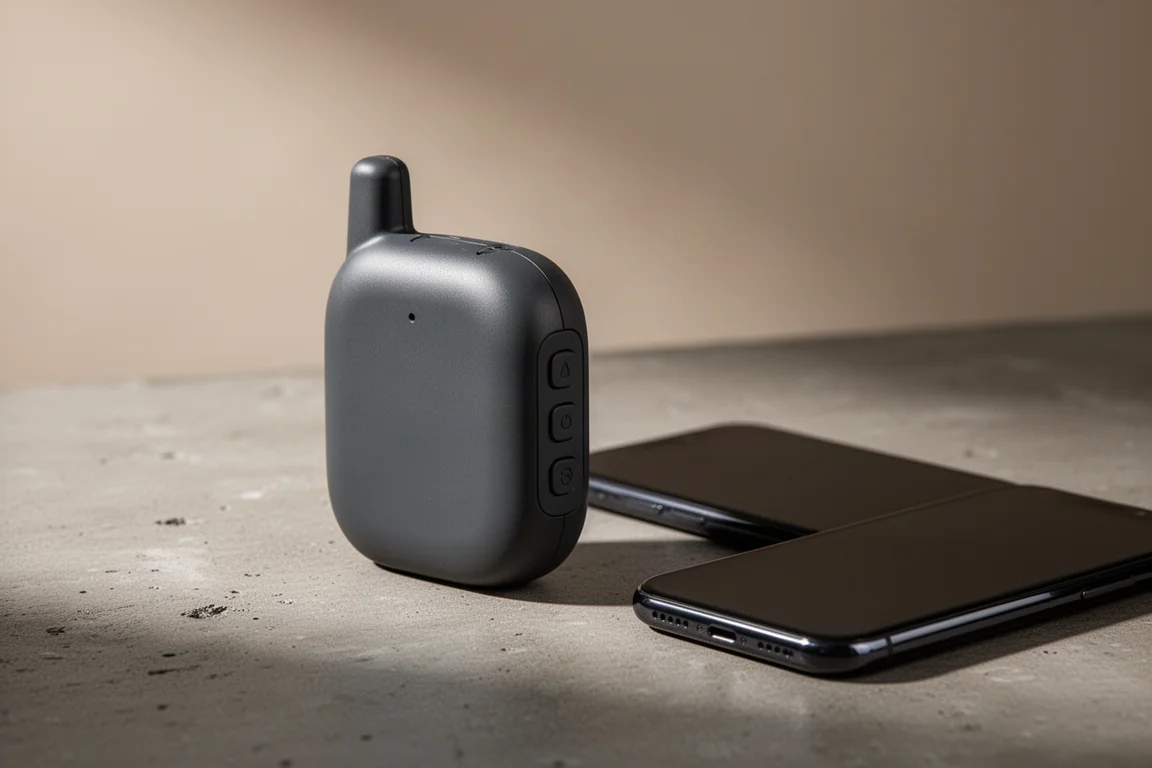
The HMD Offgrid is a compact satellite communicator that leans on your phone rather than replacing it. It covers the essentials you would expect from this category: two-way messaging, check-ins, location sharing and a dedicated SOS function. What sets it apart is how the service behind it is put together.
It runs on geostationary satellite coverage through Skylo, and its messaging subscription bundles search and rescue coverage rather than selling it as a separate insurance add-on. That combination, plus very fast message delivery, makes it an interesting option for anyone who spends time beyond cell reception.
This article covers how the device sets up, how it behaves in the field, where it is more temperamental than the alternatives, and who will get the most value from it.
Who the HMD Offgrid Is For
The clearest fit is someone who already carries a satellite-capable phone and wants a more dependable backup. Because the Offgrid works while your phone is in airplane mode, it can send and receive messages in situations where a satellite-enabled handset would not.
It is also a reasonable choice for hikers and backpackers who want messaging, check-ins and location sharing without adding a bulky standalone unit to their kit. The trade-off is that the phone app is central to the experience. If you want a device that stands entirely on its own with a screen and on-device navigation, this is not that product.

That said, the hardware is small and light enough to disappear into a pack pocket, and the battery holds up over a long day or a weekend trip. For a lot of people, that is the right balance between capability and weight.
How Messaging Works
Setup is straightforward. The Offgrid pairs with your phone over Bluetooth and works with both Android and iOS through the HMD Offgrid app. You create a user ID inside the app using your cell phone number, and the first boot walks you through firmware updates before you start using it.
Sending a message follows a familiar pattern: open the messaging section, choose a recipient from your phone contacts, decide whether to attach your location, type the message and send. The app checks whether Wi-Fi or cellular is available and uses it when it can, which costs nothing. When neither is available, it switches to satellite automatically.
Two details stand out. First, the device keeps working in airplane mode, which is a genuine advantage over satellite messaging built into phones. Second, the person on the other end needs the free HMD Offgrid app to reply, and everyone in a group conversation needs it as well. They can install the app without owning any hardware, but it is an extra step worth sorting out before a trip rather than during one.
Check-Ins, Location Sharing, and Track Export
Check-ins send your current position with a single press of the button on the side of the unit, or from inside the app. The device carries GPS, GLONASS, Galileo and BeiDou, so position fixes are drawn from multiple constellations. One thing to plan around: check-ins count against your message allowance, which is not the case on every competing device.
Location tracking works the way you would expect, with a selectable interval between points. The unusual part is a timer that automatically stops tracking after a set period. If you lose connection, the device buffers your location points and sends them once coverage returns, so a route can fill in retroactively. You choose who receives the shared location, and you can download the finished track as a GPX file afterwards.

For anyone who likes reviewing where they have been, that GPX export is a genuinely useful addition, and it turns the device into a lightweight trip log as well as a safety tool.
Coverage, Speed, and Antenna Behavior
The Offgrid uses geostationary satellites rather than a large constellation of fast-moving low-orbit satellites. These sit above one part of the planet and travel with it, which means coverage is fixed rather than constantly passing overhead. A coverage map on the support page shows where service is available today.
The payoff is latency. Messages leave quickly and replies come back quickly, generally faster than on a Garmin inReach, though results vary as they do with any satellite communicator.
The trade-off is directionality. The Offgrid is more sensitive to how it is pointed than some rivals. A status screen shows connection state, and an advanced tab indicates where the satellite sits relative to you. In practice, reception can drop when you turn away from the satellite, yet the same unit once held a connection for over an hour sitting in a car centre console beneath a metal roof. Devices like the Garmin inReach use an omnidirectional antenna designed to be clipped to a pack and left facing upward, which makes them more forgiving about orientation.
SOS and Bundled Rescue Coverage
SOS can be triggered from the button on the unit or from the app, and the app is the better choice because it allows two-way communication with the response team.
Requests are handled by Overwatch and Rescue, a team drawn from military, law enforcement, paramedic and EMT backgrounds. They collect information through a short questionnaire, package it for the emergency services that will carry out the rescue, and stay involved until the situation is resolved, including coordinating with your emergency contacts.
The part that stands out most is how this is paid for. The messaging subscription includes search and rescue coverage, so a rescue triggered by the device does not leave you with a bill. On many competing devices, that protection is a separate add-on.
Battery, Size, and Hardware Notes
The unit is small and light, and the battery is sized accordingly. With location sharing running and messages going out, drain sits at roughly 2 percent per hour, which works out to around 50 hours. With lighter use, closer to four days is realistic. Either way, it covers a long day hike or a weekend backpacking trip without a recharge.

The hardware keeps things simple: a power button, a check-in button and an SOS button, with the app handling everything else. The SOS button sits exposed, and some owners improvise a small cover for it to reduce the chance of accidental triggers. That is a fair reminder that the device depends on the phone for anything beyond the basics.
Things to Consider Before Buying
Reliability deserves an honest look. No satellite communicator works every time. Garmin inReach units have failed under clear skies, in tree canopies and in canyons, and the Offgrid is not immune to the same conditions. The inReach line is generally regarded as the benchmark for dependable message delivery, and devices like the Offgrid sit behind it on that measure.
Early on, the app had rough edges. Messages occasionally failed to send and there were small glitches. Support responded quickly, issues were addressed, and app and firmware updates followed. The experience has since settled into stable, predictable behaviour over several weeks of use.
There is also a roadmap question. Voice notes have been demonstrated through the app and the device, and image sharing may follow. Those capabilities are not available today, so it is best to buy on what the device does now rather than on what it might do later.
A Note on the Service Behind the Device
If the hardware looks familiar, that is not a coincidence. A few years ago Motorola supplied the hardware for a satellite link device while a company called Bullitt assembled and sold the service. Bullitt went into liquidation in 2023. Its partners, Skylo for messaging and Overwatch and Rescue for SOS, kept existing users connected even though they were under no obligation to do so.
The people who had run Bullitt later acquired the remains of the business and revived it, partnering with HMD to build new hardware for the same service. That makes the Offgrid a continuation of an existing platform rather than a brand new one, with revised pricing plans. More competition in this category is generally good for buyers, and a service that stayed online through its operator’s collapse says something reasonable about the people running it.
Plans, Pricing, and Buying Advice
The Offgrid is sold with two service plans. The Freedom Plan carries a 20 dollar activation fee and costs 80 dollars per year, covering around 350 messages a year, or roughly 29 messages a month. The Unlimited Plan carries a 10 dollar activation fee and costs 140 dollars per year with no message cap. Both include search and rescue coverage. Live tracking is an optional add-on at 5 dollars per month, and it can be switched on or off at any time.
Against comparable devices, that pricing holds up well, particularly once you account for the bundled rescue coverage that others charge extra for.

The sweet spot is a hiker or rider who already has a satellite-capable phone and wants a dependable backup that works in airplane mode, or who wants simple messaging and location sharing in a package that weighs very little. If you need a screen, on-device navigation or a device that works completely independently of a phone, look elsewhere, and expect to pay more for it.
Conclusion
The HMD Offgrid does the core job well. Messages move quickly, check-ins and location sharing are simple to use, SOS is handled by an experienced team, and the bundled rescue coverage removes a cost that most competitors push into add-ons. The caveats are real: it depends on your phone, it is fussier about orientation than an omnidirectional design, and its SOS button is easy to bump. For the right buyer, those are acceptable trade-offs for a small, light communicator with fast messaging and sensible running costs.
Product link
View more details for HMD Offgrid
This product is mentioned in the review. Check the specifications, options, and compatibility before buying.
View more details for HMD OffgridFurther reading
Related Reviews
Satellite Communicators
Garmin inReach Messenger vs inReach Mini 2: Which Satellite Communicator Belongs in Your Pack
A practical comparison of two compact Garmin satellite communicators, covering navigation, screen size, battery life, reverse charging and price.
Satellite Communicators
Garmin inReach Messenger vs Zoleo: Which Satellite Communicator Is Right for You?
A practical comparison of two satellite communicators, covering price, battery life, messaging, apps, satellite coverage, and standalone SOS use.
Satellite Communicators
Garmin inReach Mini 2 vs inReach Mini: Is the Newer Satellite Communicator Worth It?
A practical comparison of the Garmin inReach Mini 2 and the original inReach Mini, covering battery life, USB-C charging, navigation, app support, and upgrade advice.