Camping Tents
Hilleberg Solo Review: A One-Person Expedition Tent Built for Harsh Weather
A close look at the Hilleberg Solo, a one-person four-season expedition tent built for wind, rain and snow, and where its weight and price make sense.
Introduction
The Hilleberg Solo is a one-person, four-season tent built for exposed mountain conditions rather than casual summer camping. Hilleberg has been making tents for around 50 years and produces them in its own factory in Estonia, where a member of staff trains for about a year before being considered fully qualified to build one. That background explains both the Solo’s reputation and its price.
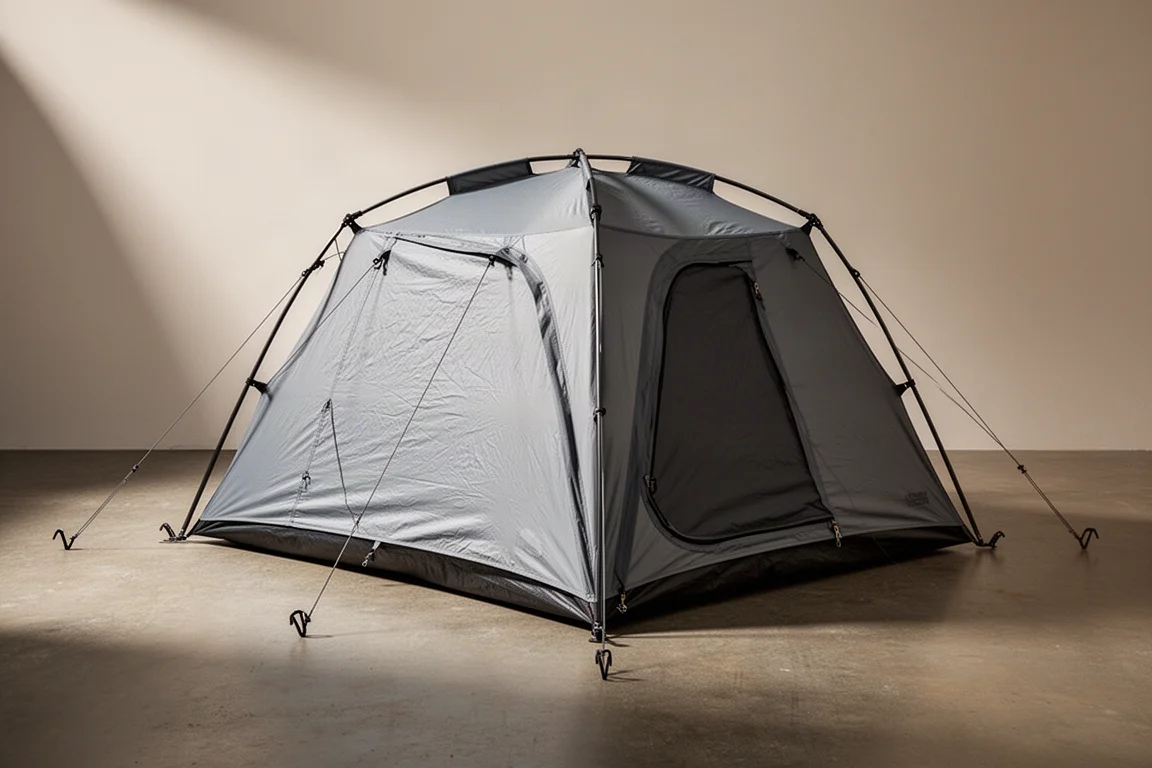
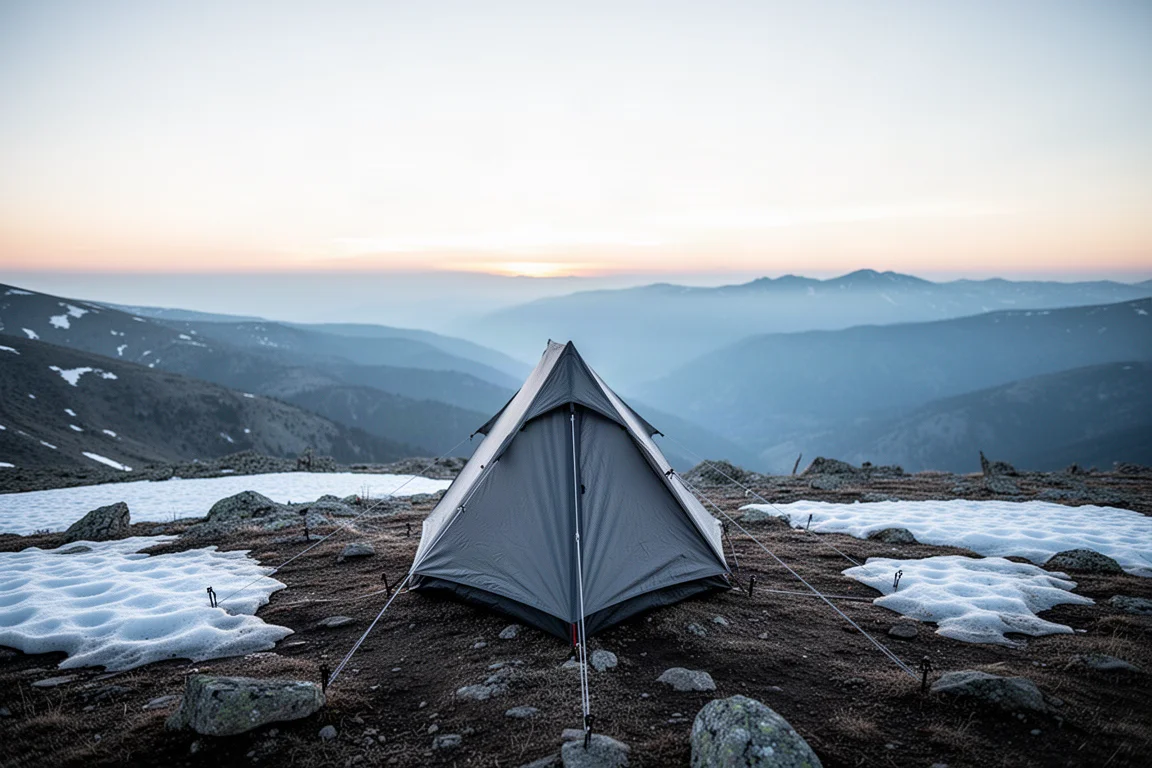
The Solo is a freestanding three-pole dome in expedition grey. It weighs about 2.4 kg, which is a lot for a one-person shelter, and it sits at the top of the tent market on price. In return it offers a level of weather resistance that few lightweight tents attempt: Kerlon 1200 fly fabric, 9 mm DAC poles, 12 V-shaped DAC pegs, and a fly that is silicone coated three times on both sides.
Who This Tent Is For
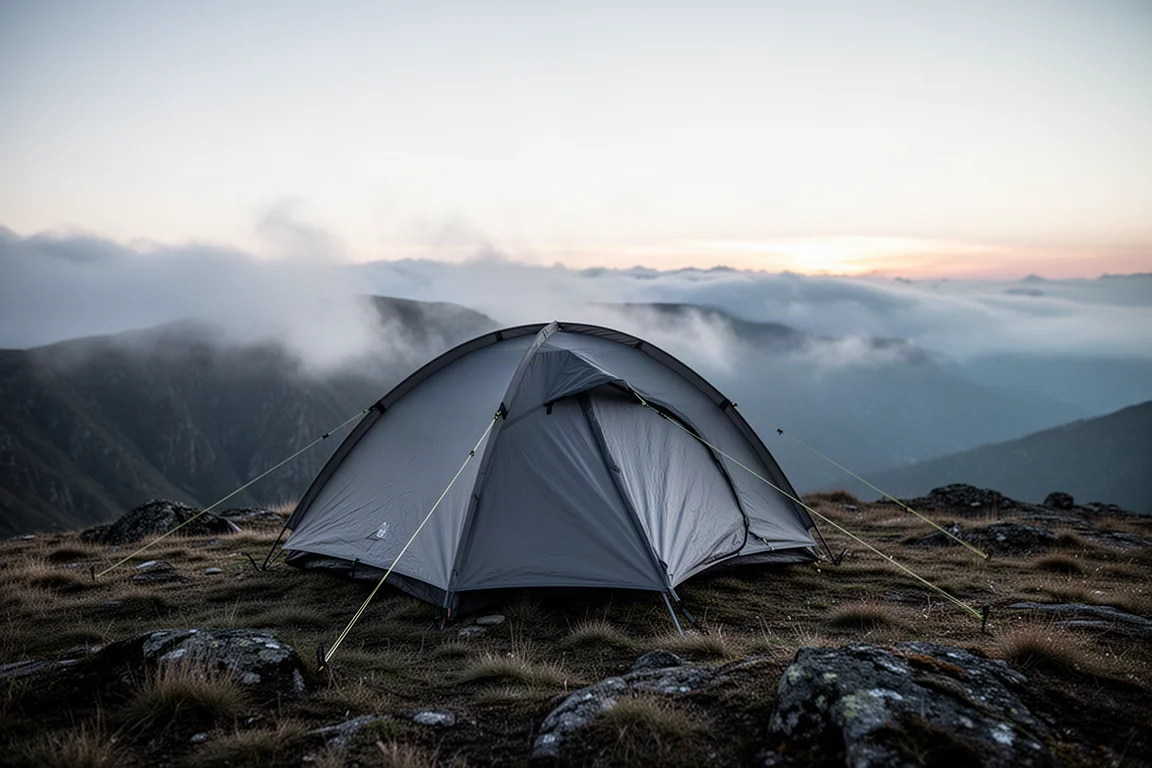
This tent is aimed at backpackers and mountaineers who camp in wind, rain and snow, often above the treeline, where a shelter has to stay standing and stay taut. The design has shown repeatedly that it can withstand the harshest conditions in the harshest environments, and the priority throughout is strength rather than low weight.
It is not aimed at recreational campers who wild camp in woodland or at lower levels on calm, sunny weekends. For that kind of use a lighter and far cheaper tent will do the job comfortably, and the Solo’s weight and cost would be hard to justify.
The Solo also suits buyers who think in decades rather than seasons. The reputation behind it has been built over roughly 50 years, and well-made expedition tents of this type tend to hold their value well.
Design and Build Quality
The fly uses Kerlon 1200 fabric, which is tested to withstand 12 kg of tearing force, making it seriously tear resistant. The floor is a 70D fabric, while the inner and the fly are both 30D nylon. The fly is silicone coated three times on both sides, which gives it substantial water resistance.
The frame is made up of 9 mm DAC poles that are light in weight but strong, and the rods arrive pre-bent. Twelve V-shaped DAC pegs are supplied, light in weight with a shape that bites well into soft ground. Guy lines are 3 mm in diameter rather than the more common 2 mm, and the points where they meet the tent are reinforced with a thick, rubbery plastic that resists tearing out even in strong wind.
Main Strengths
The Solo is a freestanding dome built around three poles, and that is where its strength comes from. The narrow end is designed to be pitched into the wind, which makes the tent more aerodynamic when conditions turn.
Pitching is quick for a tent of this type because the groundsheet, inner, outer and part of the roof can all go up together. A large number of clips run from the fly to the poles, which keeps the fabric taut and stops the tent flapping about in high winds. Clipping so many points is a step some campers find tedious, but the payoff is a noticeably quieter and more stable shelter.
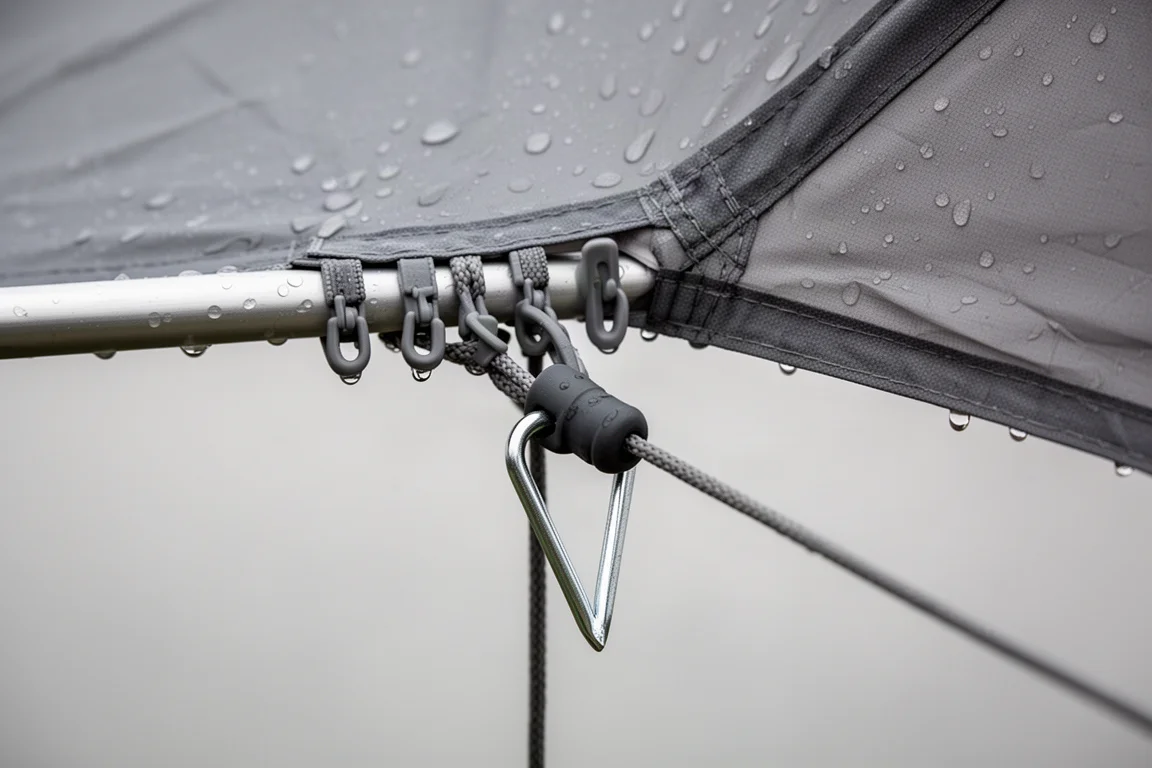
Once up, the tent can be pegged with six pegs through the fly plus six more for long guy lines, two per corner. The roof is fully adjustable so the pitch can be tensioned properly, and the guy lines wrap around the poles from the fly down to the bottom attachment points. The whole package fits into an oversized bag that takes the tent, pegs and poles together.
Living Space and Ventilation
For a one-person tent, the Solo is roomy. It stands 95 cm high, measures 220 cm long and is 105 cm wide at its widest point, with a further 55 cm of vestibule width. There is useful headroom above a seated occupant, and the length is generous, though anyone above roughly six foot may find it tight.
The vestibule is large enough to cook in and to store a backpack, keeping gear out of the weather. The fly reaches all the way to the floor, as you would expect from a four-season design, and the inner doors open on both sides. A zip in the door allows it to be converted from a solid panel to a mesh panel, and a vent above the door can be opened for airflow. Inside there are corner pockets and attachment points for a line to dry damp belongings.
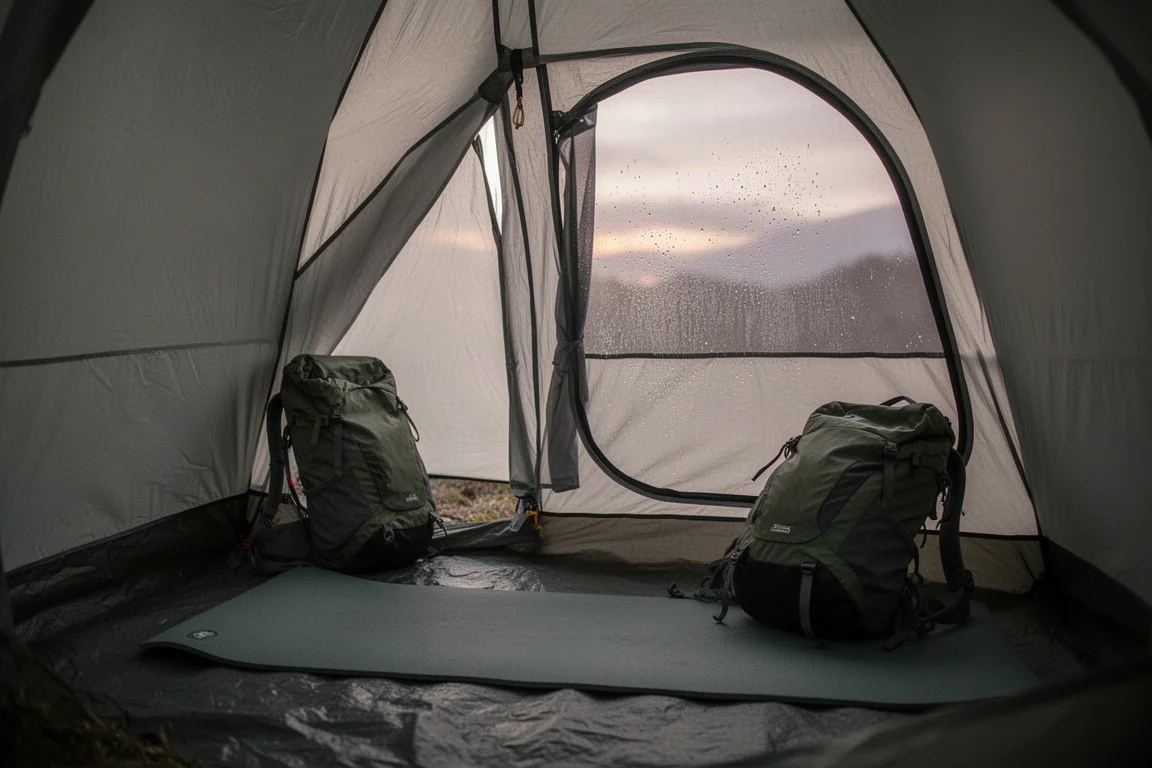
The trade-off with a fly that reaches the ground, and with any one-person four-season tent, is condensation. It is better treated as part of the design than fought against.
Things to Consider Before Buying
Weight is the first thing to weigh up. At about 2.4 kg, the Solo is heavy for a solo shelter, and that matters on long approaches. The payoff is a tent that has repeatedly withstood the harshest conditions and environments, so the decision is really about how much weather protection is worth carrying.
Condensation is the second consideration, and it is inherent to the category rather than a fault. Budget for the official Hilleberg Solo footprint as well: it is sold separately, and it is a worthwhile addition because it protects the floor, keeps belongings and cooking gear dry, and can stay attached to the main tent so the whole shelter goes up together in wind and rain.
Price and availability are also worth planning around. The Solo is a serious financial commitment for a tent, and demand has at times outstripped supply.
Buying Advice
Buy the Hilleberg Solo if you camp in mountains and moorland where wind, rain and snow are normal, and if you want a shelter that pitches taut, stays quiet and can be relied on year after year. The combination of three-pole dome geometry, Kerlon 1200 fabric, 9 mm DAC poles and reinforced guy line attachments is designed specifically for that job.
Skip it if your camping happens in woods, at lower levels or mainly in good weather. A lighter and much cheaper one-person tent will serve you better, and the Solo’s weight would be a penalty rather than an asset.
If the Solo does match your use, add the footprint at the point of purchase and treat the tent as a long-term investment. Expedition tents of this quality hold their value, and this one is built to be used and repaired rather than replaced.
Conclusion
The Hilleberg Solo is a specialist shelter. It is heavy and expensive for a one-person tent, and it makes no attempt to hide either fact. What it offers instead is engineering aimed at a single goal: staying secure when the weather is at its worst. For mountain campers who need exactly that, it is a straightforward choice. For everyone else, it is more tent than the job requires.
Product link
View more details for Hilleberg Solo
This product is mentioned in the review. Check the specifications, options, and compatibility before buying.
View more details for Hilleberg SoloFurther reading
Related Reviews
Camping Tents
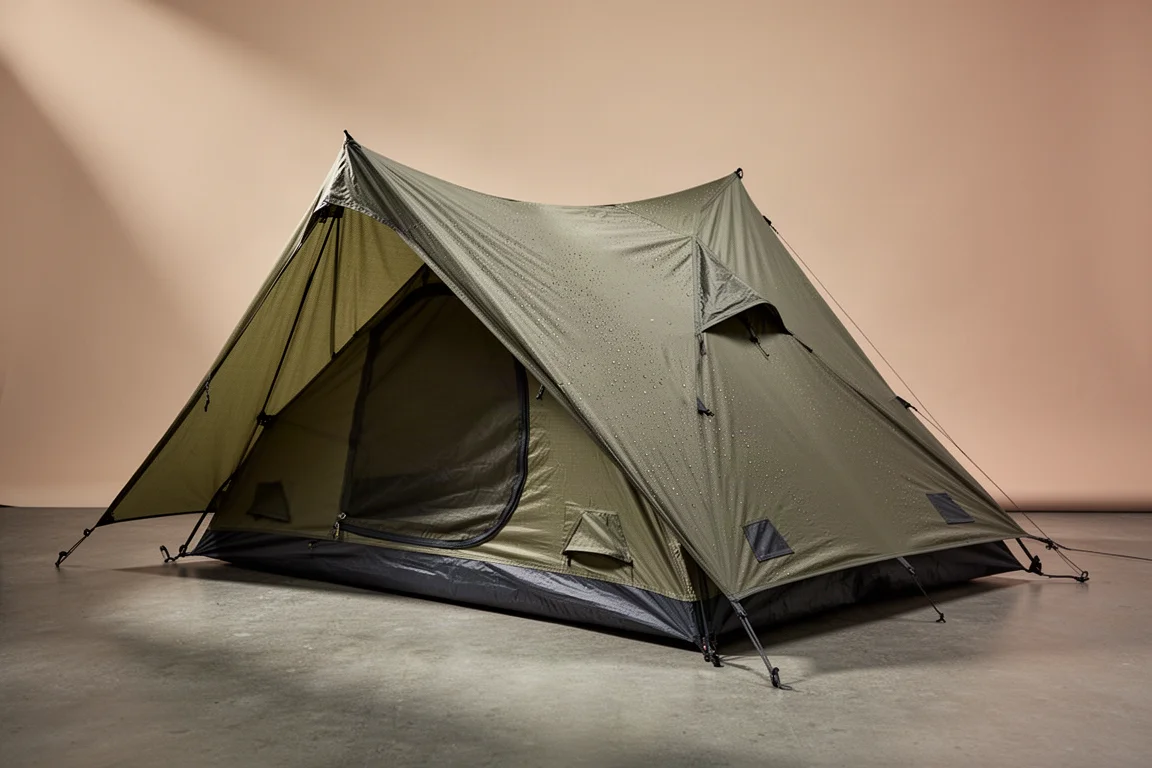
3F UL Gear Taiji Two-Person Tent Review: Field Waterproofing Results and Buying Advice
The Taiji pairs an attached fly with a removable inner, but sustained rain exposed untaped vent seams that need sealing before this shelter can be trusted.
Camping Tents
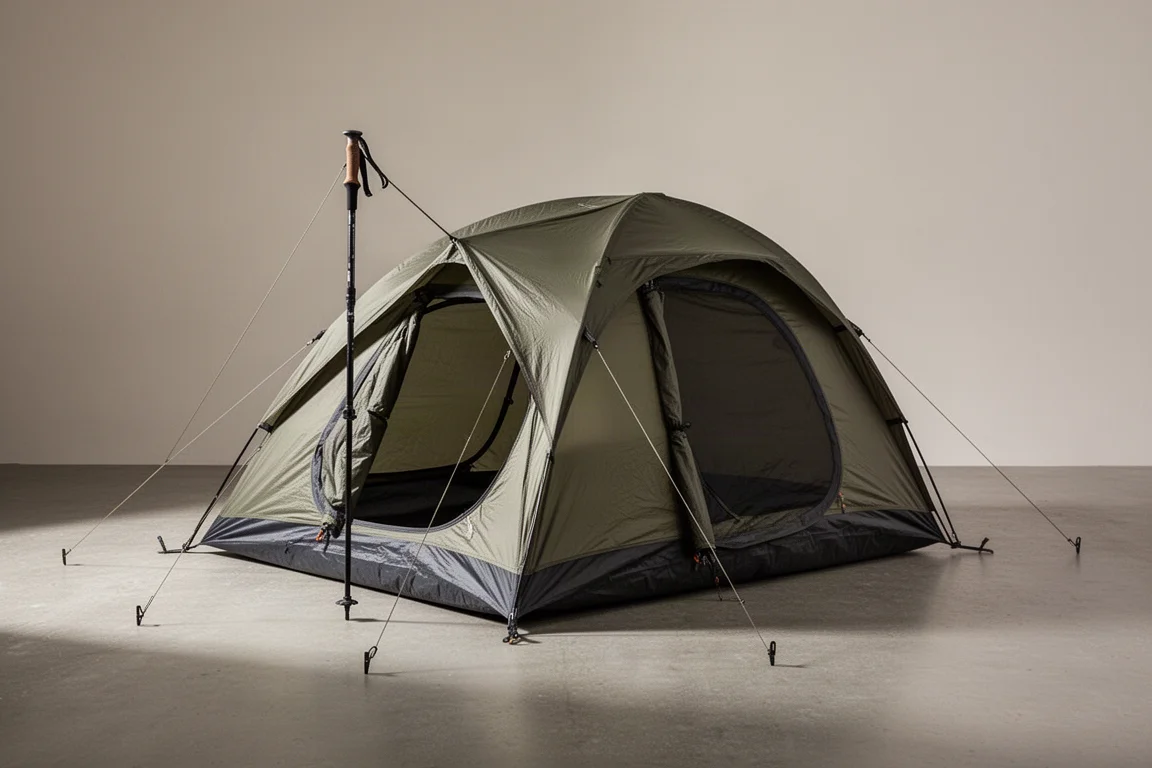
3FUL Gear Lanshan 2 Pro 4-Season Review: A Sub-$200 Single-Wall Trekking Pole Tent
An early look at the 3FUL Gear Lanshan 2 Pro 4-Season, covering its straightforward pitch, generous interior space, and the condensation and seam-sealing questions that come with any single-wall shelter.
Camping Tents
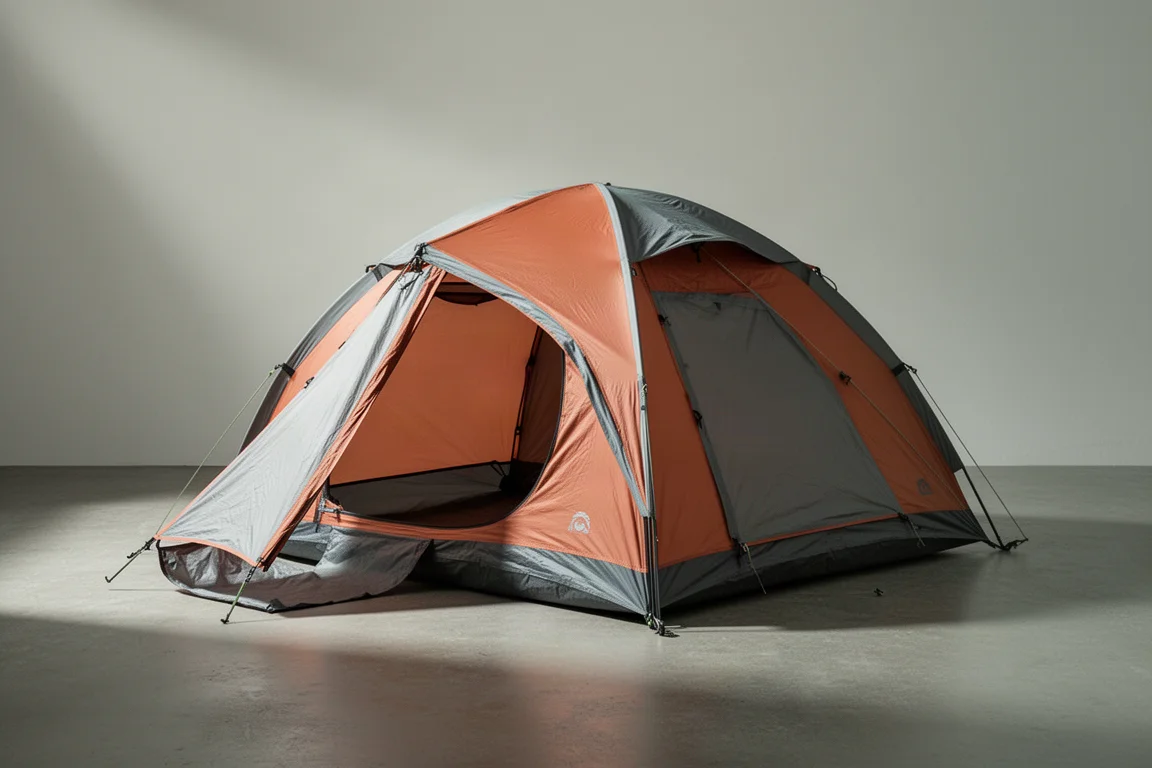
Alps Mountaineering Lynx 1-Person Tent Review: Big Value in a Small Budget Tent
A close look at the Alps Mountaineering Lynx 1-Person Tent, covering real interior dimensions, materials, setup time, ventilation limits, and who should buy it.