Camping Tents
Hill Zero Mattis Review: A Roomy 2-Person Trekking Pole Tent
The Hill Zero Mattis is a single-wall 2-person trekking pole tent in 20D ripstop nylon with carbon fiber end struts, two doors, and two vestibules at $219 on Amazon. Here is how it performs, what it weighs, and how it compares with the Tarptent Dipole 1 DW.
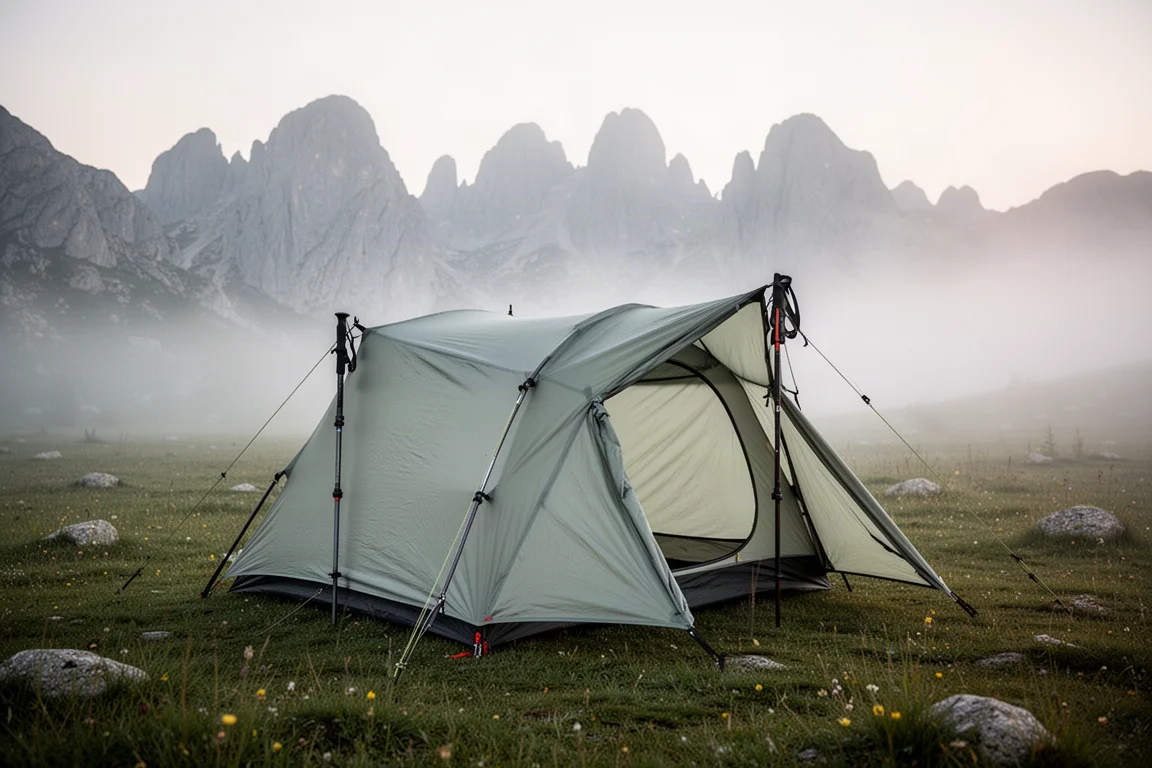
Introduction
The Hill Zero Mattis is a 2-person, single-wall trekking pole tent built from 20D sil/PU coated ripstop nylon. That fabric choice keeps the price well below shelters made from more exotic materials, and the design works hard to make nylon behave well in wet weather. It sells for $219 on Amazon and $260 when bought directly from Hill Zero, a gap the brand attributes to production volumes and where the shelter ships from.
Field use across a couple of backpacking trips points to a shelter that prioritizes interior space over minimum weight. This guide covers what the Mattis does well, where the compromises sit, and how it lines up against the Tarptent Dipole 1 DW, a single-person double-wall alternative with a similar strut-based architecture.
Why the Hill Zero Mattis Stands Out
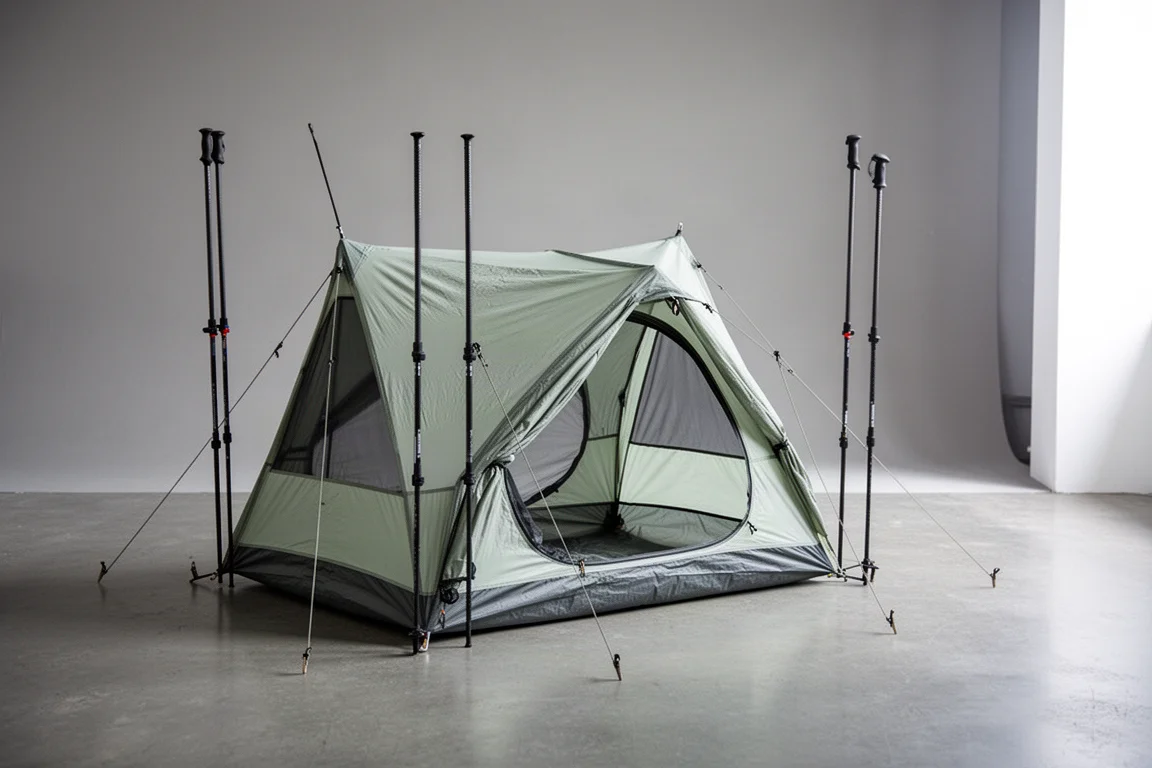
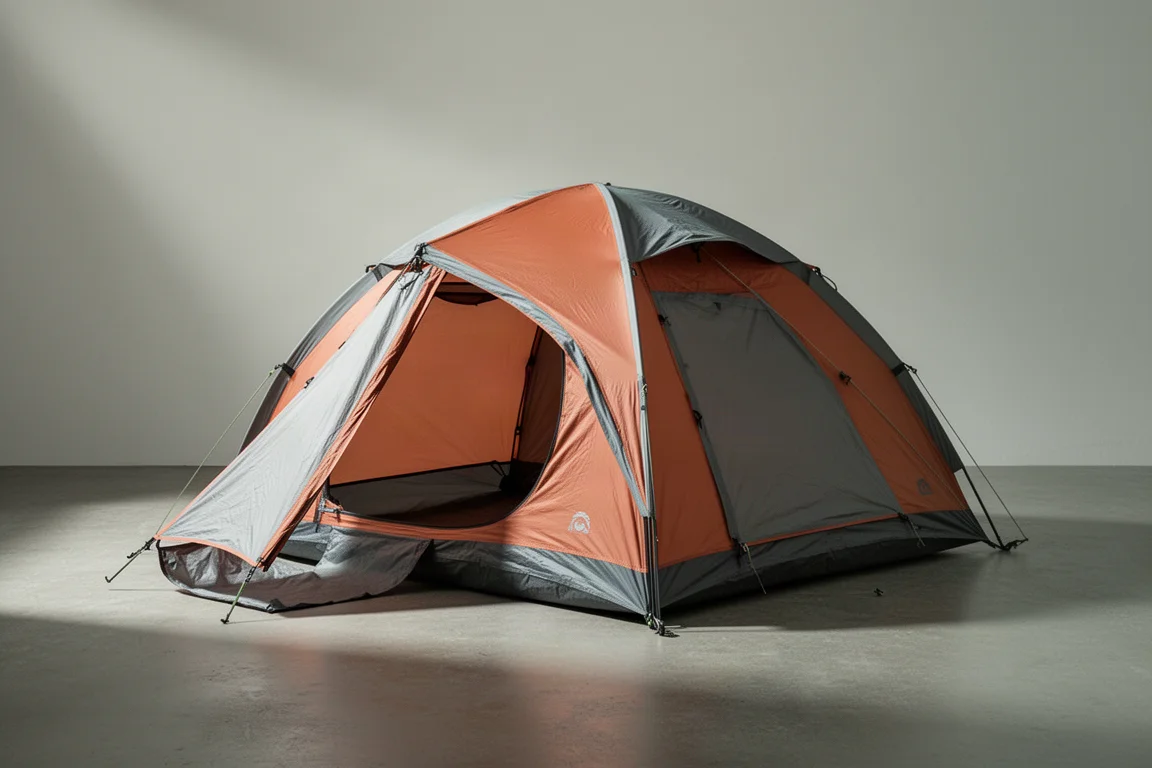
The most striking quality of the Mattis is how much room it creates for a shelter in this class. The floor measures 82.6 in long and 47 in wide, and carbon fiber struts at the head and foot ends lift those panels so the interior feels three-dimensional rather than tent-shaped and cramped.
Hill Zero itself is based in China and operates as a cottage-style company rather than a mass production facility. The brand designs and produces its own products in house, runs its own studio for testing, and refines designs based on user feedback. Nothing here is a white-label shelter with a different label applied to it.
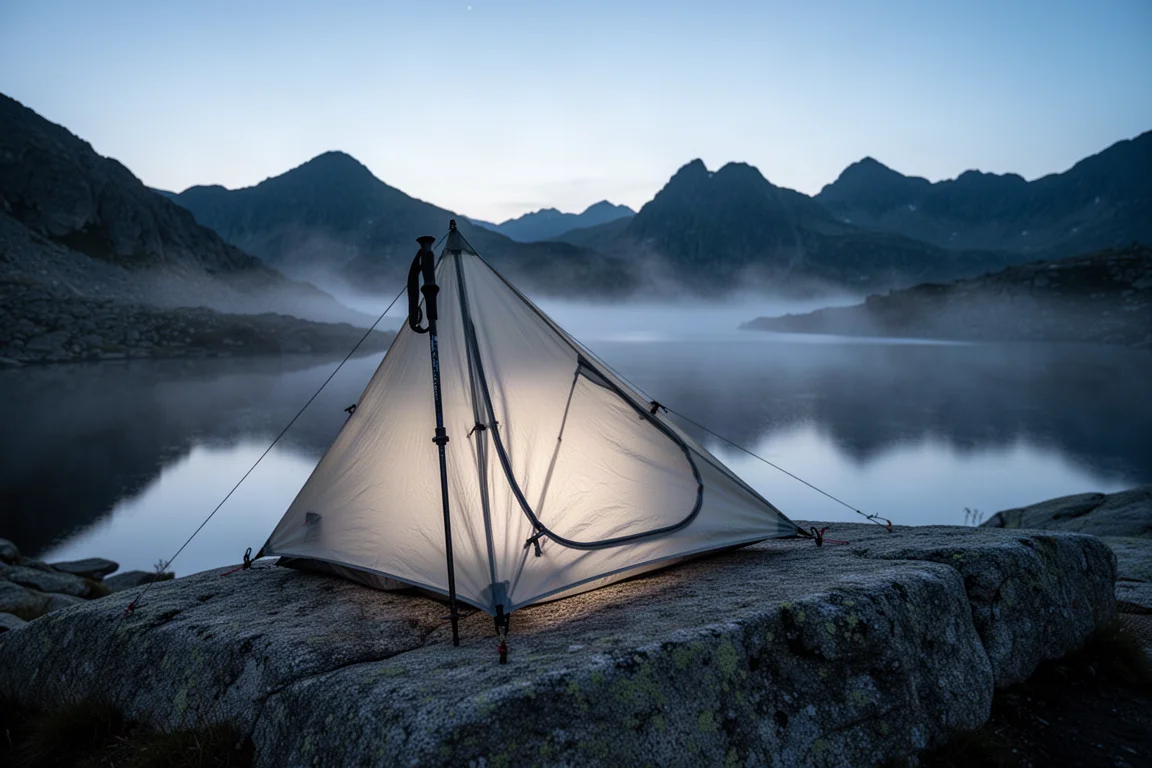
Two doors and two vestibules round out the design, which matters more than it sounds: on a still, dry night both doors can be rolled back and the mesh opened up for as much airflow as the shelter allows.
Interior Space and Livability
The peak height is listed at 49 in and measures closer to 46 in with trekking poles set at 125 cm, which is the height that produced the best pitch. The panel has a catenary cut, so the peak dips slightly, but the shelter still feels open rather than low.
Inside, a 26 in wide pad and a 79.5 in long pad fit with room to spare. Vertical side walls and the strut-raised ends keep a sleeping bag clear of the canopy, and there is enough headroom above the face that condensation is not constantly brushing against skin. Two campers fit on 20 in wide pads, though elbow room between them is limited, so the Mattis reads best as a spacious solo shelter that can host a second person when needed.
Storage is handled by four internal pockets, with the side pockets positioned above the floor rather than sitting on it. Zippered panels at the head and foot ends let the vents be closed off when rain is splashing up from the ground. Everything is seam taped, including the areas around the toggles, and the zippers are YKK.
Weather Performance and Design Details
The struts are 13 in carbon fiber pieces at each end, and they angle outward rather than standing vertical. That overhang sheds water away from the shelter and adds usable volume at the same time. Because the panels can be tensioned, the nylon can be pulled tight once it has absorbed water and stretched, which keeps the fabric from flapping in wind and rain the way a single untensioned panel would.

Ventilation is unusually flexible for a single-wall tent. There is a mesh vent panel at each end, and additional zipper pulls at the peak let the vestibule doors be rolled down for more airflow on both sides. The doors have a center zipper with panels that meet on either side, so both the mesh and the outer door can be opened wide for easy entry and exit.
Measured from the vent zipper at one end to the vent zipper at the other, the shelter runs 99 in long at roughly the 12 in height where feet and sleeping bag sit. That is noticeably longer than the 82.6 in floor measurement suggests, and it is a big part of why the interior feels generous.
Weight, Price, and What Ships With It
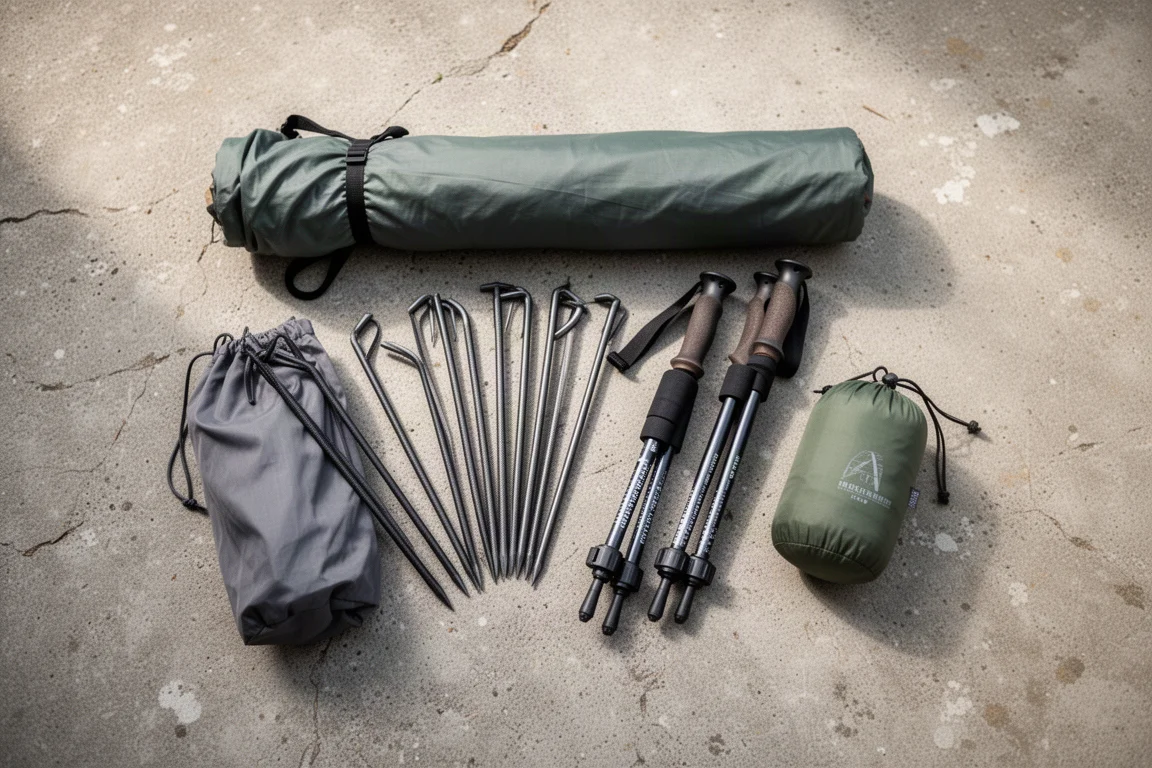
The complete package weighs just over 44 oz on a scale, and that figure includes the tent body, 14 carbon fiber stakes, and the two carbon fiber end struts. It is not the lightest shelter available, which is the direct trade-off of 20D nylon construction and a roomier cut.
Pricing sits at $219 on Amazon and $260 direct. Setup is the main practical friction point. A tight pitch requires eight stakes: four corners, two vestibule ends, and the head and foot struts. Two extra stakes can be added to pull out and roll back the doors. There is also nothing at floor level to hold the trekking pole base in place, so the floor can lift slightly while the door zipper is being pulled, which makes one-handed operation awkward.
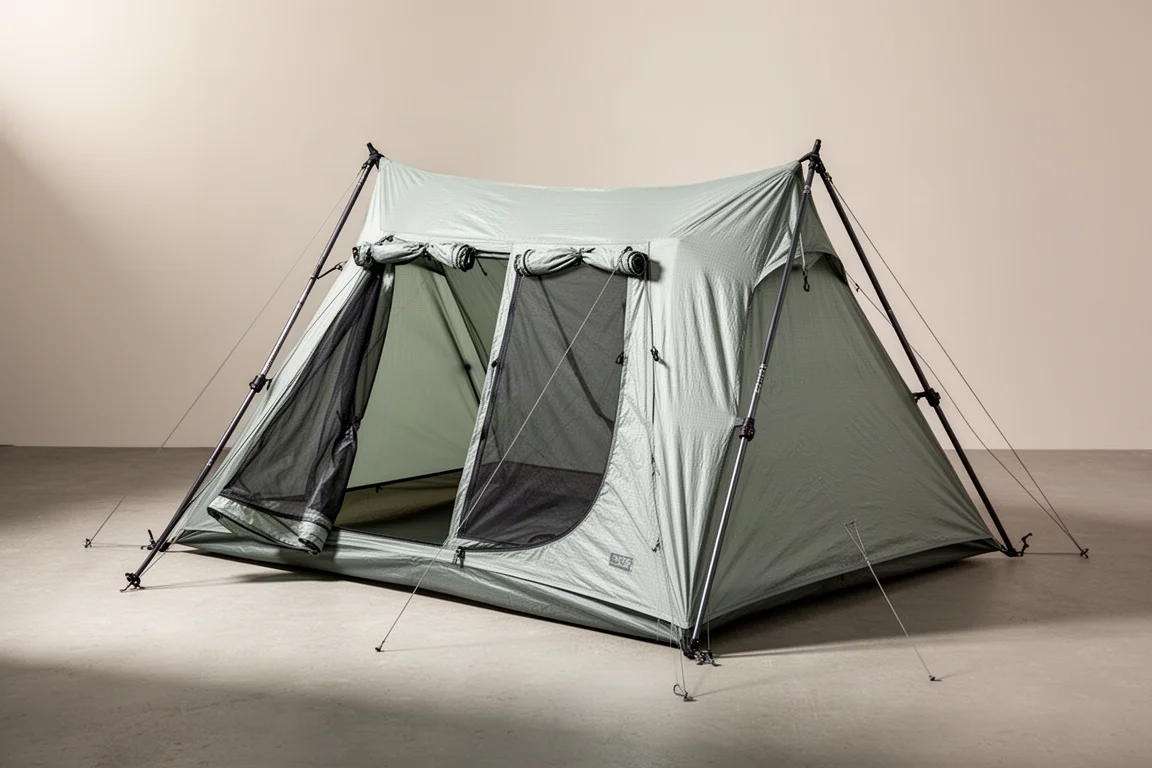
Tarptent Dipole 1 DW: The Double-Wall Alternative
The Dipole 1 DW is a single-person, double-wall tent, and it shares the strut-based end design that defines the Mattis. The key difference in that structure is geometry: the Dipole struts stand vertical and measure 18 in, while the Mattis struts overhang at an angle and measure 13 in. Both approaches add interior volume at the ends, just in different proportions.
The floor shape is the bigger divergence. The Dipole uses a trapezoidal, hourglass-like floor that tensions against the poles, so it can be pitched tightly with as few as four stakes. It does not need stakes at the head and foot ends to hold tension, which the Mattis does. For anyone who wants a double-wall shelter from Tarptent, the Dipole line is the route; the single-wall option in that family is the Lithium, which uses Dyneema Composite Fabric and costs significantly more. A two-person Dipole 2 DW is also on the way.
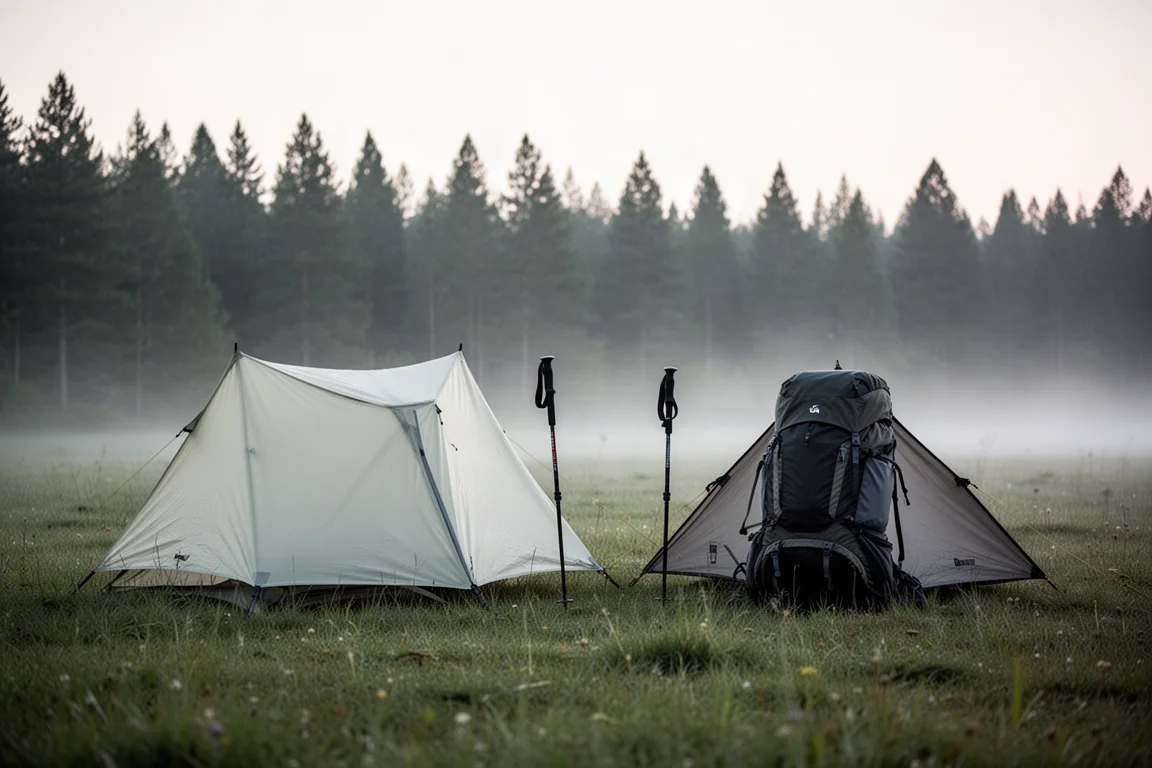
The Dipole 1 DW carries one clear limitation: it sleeps one person. Where the Mattis can host a second camper on 20 in pads, the Dipole keeps its focus on solo use and the simpler pitch that comes with a four-stake setup.
Pitching, Stakes, and Setup Differences
Setup demands separate these two shelters more than anything else in the design. The Mattis wants eight stakes for a pitch that feels solid, plus optional extras to open the doors wide. The Dipole 1 DW can achieve a taut pitch with four, with no staking required at either end.
That difference matters most on terrain where stakes are hard to place, such as rock slabs or hard-packed ground, and in cold or wet conditions where a faster pitch is welcome. The Mattis answers back with more interior volume, a wider floor, and a second door and vestibule that the single-person Dipole does not offer.
Buying Advice
The Mattis makes the most sense for a solo backpacker who wants maximum living space without stepping up to a heavier shelter, and for occasional two-person trips where both sleepers use 20 in wide pads. The $219 Amazon price and the cottage-style design process behind it add to the appeal, as long as the eight-stake pitch and the just-over-44 oz packed weight are acceptable.
The Dipole 1 DW suits a solo camper who prefers a double wall between themselves and condensation, and who values a fast four-stake pitch and a shelter that holds tension without end stakes. Choosing between them comes down to capacity and interior volume versus wall construction and simpler pitching.
Whichever way the decision goes, both shelters reward a little patience at pitch time. Tension the panels, stake the ends where the design calls for it, and re-check the lines once the fabric has settled into place.
Conclusion
The Hill Zero Mattis is a genuinely livable 2-person single-wall shelter with a floor wide enough for a 26 in pad, strut-raised ends that make the interior feel bigger than its dimensions suggest, and a ventilation layout that gives a single-wall tent a fighting chance against condensation. Its compromises are honest ones: it needs eight stakes, it weighs just over 44 oz with everything included, and the floor takes some care during one-handed zipper operation. For solo backpackers who want space first, and for the occasional two-person trip, it earns a place on the shortlist. The Tarptent Dipole 1 DW remains the pick for solo travelers who want double-wall protection and a simpler pitch.
Further reading
Related Reviews
Camping Tents
3F UL Gear Taiji Two-Person Tent Review: Field Waterproofing Results and Buying Advice
The Taiji pairs an attached fly with a removable inner, but sustained rain exposed untaped vent seams that need sealing before this shelter can be trusted.
Camping Tents
3FUL Gear Lanshan 2 Pro 4-Season Review: A Sub-$200 Single-Wall Trekking Pole Tent
An early look at the 3FUL Gear Lanshan 2 Pro 4-Season, covering its straightforward pitch, generous interior space, and the condensation and seam-sealing questions that come with any single-wall shelter.
Camping Tents
Alps Mountaineering Lynx 1-Person Tent Review: Big Value in a Small Budget Tent
A close look at the Alps Mountaineering Lynx 1-Person Tent, covering real interior dimensions, materials, setup time, ventilation limits, and who should buy it.