Hi-Fi Speakers
High Moon HiFi High Desert Review: Handmade Sinker Cypress Loudspeakers
A handcrafted two-way standmount built from riverbed cypress, with deep organic bass, a refined Seas tweeter, and a classic, easy-going voice.
Introduction
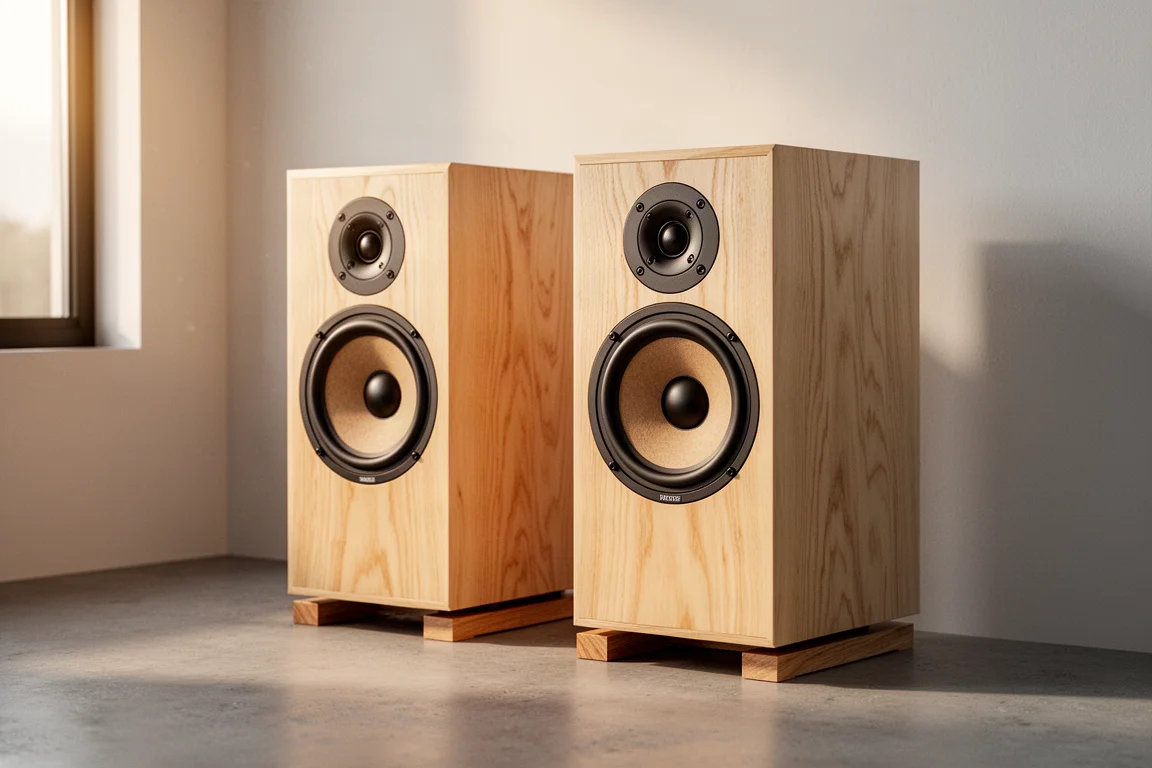
High Moon HiFi is a Texas-based loudspeaker company run by husband and wife team Michael and Melissa Blair, and the High Desert is its two-way, rear-ported standmount monitor. It pairs a 1-inch soft dome tweeter with a 7-inch paper mid-bass driver, both manufactured by Seas, and it is specified with a frequency response of 37 Hz to 20 kHz and 86 dB sensitivity into 8 ohms.
On paper that reads like any number of small two-way speakers. What separates the High Desert is what it is made from and how it is built: solid sinker cypress recovered from riverbeds, assembled by hand in small batches, with no more than 100 pairs produced in a year.
Who This Speaker Is For
The High Desert rewards listeners who want to sink into a music collection rather than audit it. Its tuning leans classic: a warm low end, a neutral midrange with a touch of roundness, and a treble that adds energy without turning hard. Small ensembles, singer-songwriter records and acoustic music sit squarely in its wheelhouse, and long listening sessions are effortless. It can rock when asked, but that is not where it shines brightest.
If your hobby is measurement charts and dissection, this is probably not the speaker for you. If you would rather stop fussing over audiophile talking points and simply enjoy the music, it very much is.
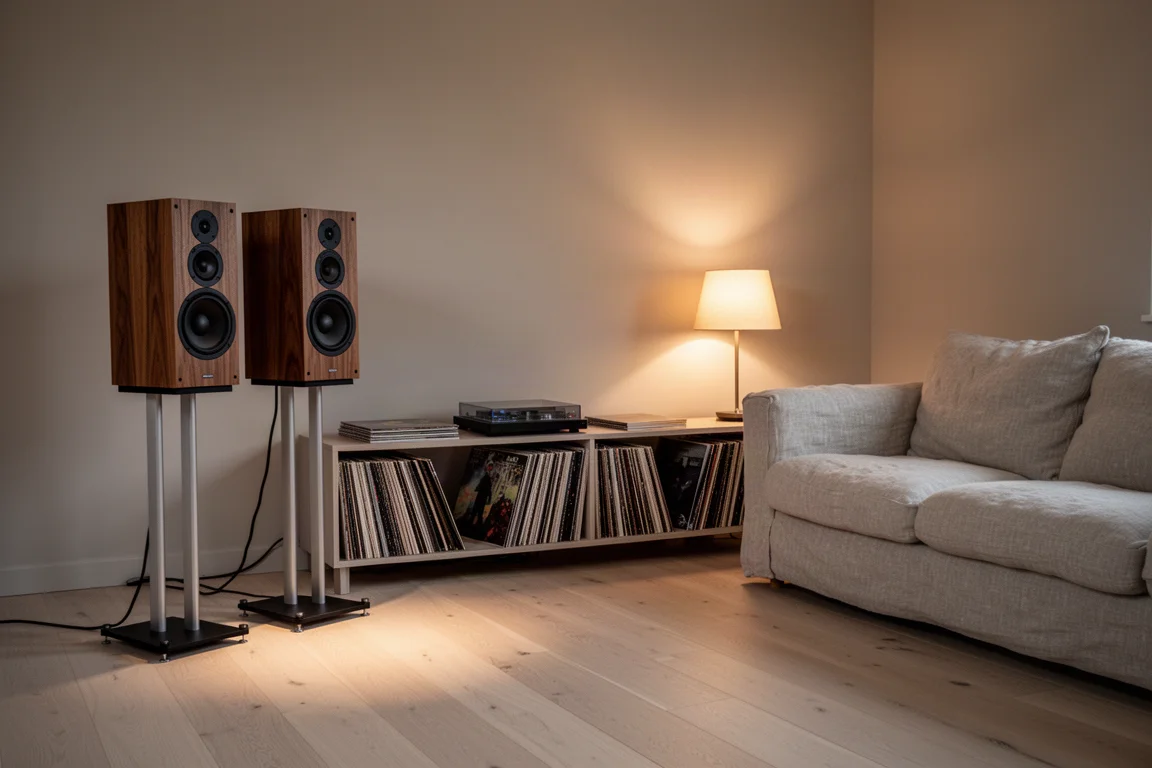
There is also a practical side to who this suits. High Moon builds in tiny volumes, so lead times run in months rather than days, and buyers should be comfortable with a semi-bespoke purchase. For anyone who values a handmade object that will sit in a room for decades, that trade is part of the appeal.
Sound Quality and Character
Bass is deep, textural and organic. Even from streaming sources there is an old-school analog quality to the low end: not the most agile, but natural, with a mild warmth that makes listening comfortable. A four-piece drum kit arrives with both weight and detail, grounded firmly in the room. The High Desert does not require a subwoofer for satisfying full-range playback, and it has no trouble producing big low notes.
The midrange is the most neutral part of the presentation, with a hint of warmth that takes the edge off digital recordings. Vocals sound fleshed out rather than lean, and detail is present without being showy.
The tweeter is the standout. It has energy without pushing the speaker forward or bright, and it stays composed at high volume. Cymbals crash and ring naturally, and compressed or sibilant recordings keep their inherent brightness without tipping into aggression. That Seas tweeter is what gives an otherwise vintage-flavoured speaker a modern sense of refinement.
The soundstage is wide and deep, and the speaker disappears easily. It is not the last word in focus: instruments blur slightly at the edges, which makes for a broad, seductive presentation rather than a laser-etched one. Off-axis dispersion is good enough that the image does not collapse to one side. Dynamically it is quick enough to snap when required, and its real party trick is scale. This is a moderately sized two-way that can sound positively tower-like and fill an open-plan living space without shouting.
Placement and Amplifier Pairing
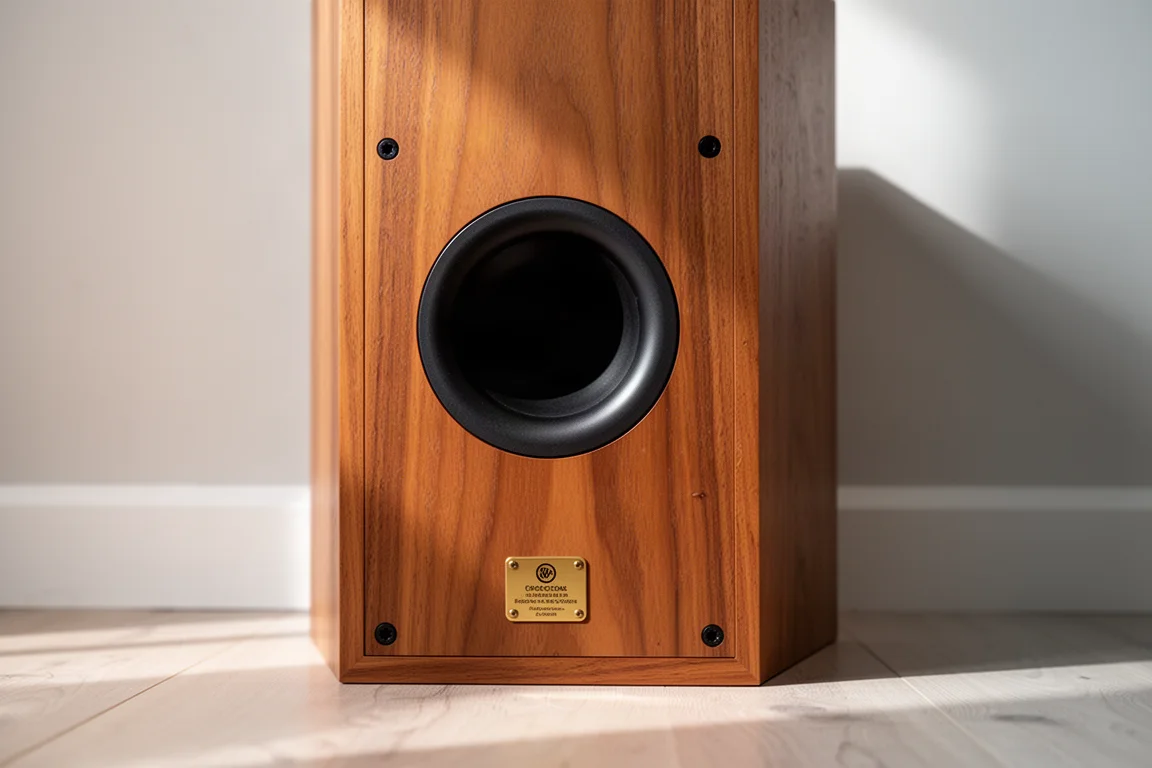
Because the High Desert is a rear-ported design, distance from the wall matters more than usual. Placed within about 12 inches of a wall, the bass can become overwhelming and occasionally boomy. Around 18 inches it evens out, and in a typical room that is where the speaker sounds most balanced from top to bottom. Beyond roughly 24 inches, the low end can start to sound thin.
Amplifier matching deserves attention too. The High Desert is not hard to drive, but it is revealing enough that any old amp is a poor fit. A Bluesound Powernode worked well, and the most satisfying match was an Audiolab 6000A Play. Higher-power integrateds such as the Yamaha A-S801 and the NAD M33 were less successful, with both tending to rob the speaker of focus and dynamic contrast. The same amplifiers behaved similarly with the Dynaudio Evoke 20, so this says as much about system synergy as it does about the High Desert itself.
Craftsmanship, Materials, and Sustainability
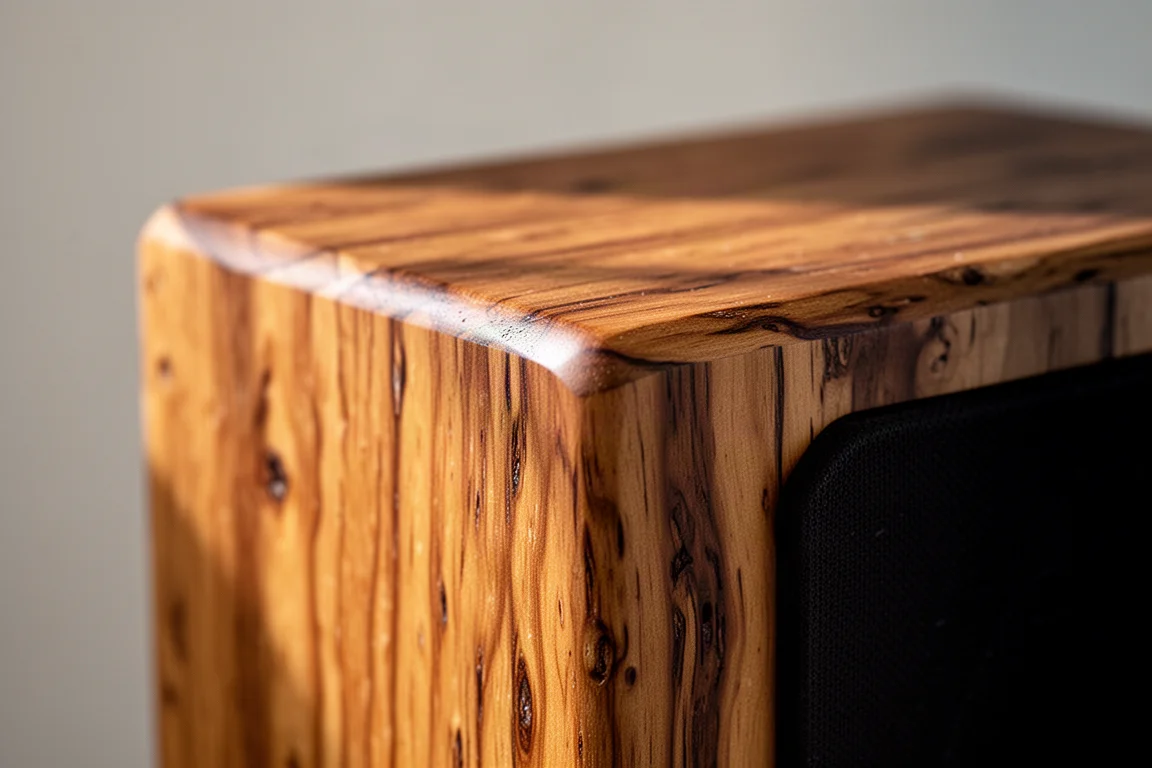
The cabinet is made in part from solid sinker cypress, timber recovered from riverbeds, which means no two pairs are identical. Within a single pair the grain is often beautifully matched, and the construction detail is the kind that woodworkers notice immediately. A hand-set brass badge on the rear panel is a nice touch.
Sustainability runs deeper than the wood. The cabinet damping uses recycled denim, the woofer is a paper pulp design, and the finish is hand-rubbed with natural oils before sanding. Two finishes are offered: natural cypress and a black stain. Units whose grain does not meet the maker’s standard are stained black rather than discarded, which keeps material out of the waste stream and gives buyers a darker option at the same time.
Because the speakers are handmade from reclaimed material, output is deliberately small, capped at no more than 100 pairs a year so the small team building them can maintain a reasonable work-life balance.
How the High Desert Compares to Other Speakers
The closest sonic relative is the Dynaudio Evoke 20, which is more neutral overall while the High Desert carries slightly more top-end energy; in performance terms the two are nearly indistinguishable. The KLH Model 5 is the other obvious point of reference, sharing a similar vintage flavour in both looks and sound and an equally effortless listen, though it uses a three-way design and costs less.
Two more affordable alternatives are worth knowing about. The Wharfedale Denton 85th Anniversary is a two-way with vintage charm and a laid-back, warm-ish demeanour, and the Polk Audio Reserve R-200 takes a more neutral-leaning approach. Both come in under $1,000, but neither is as rich or as solid as the High Desert.
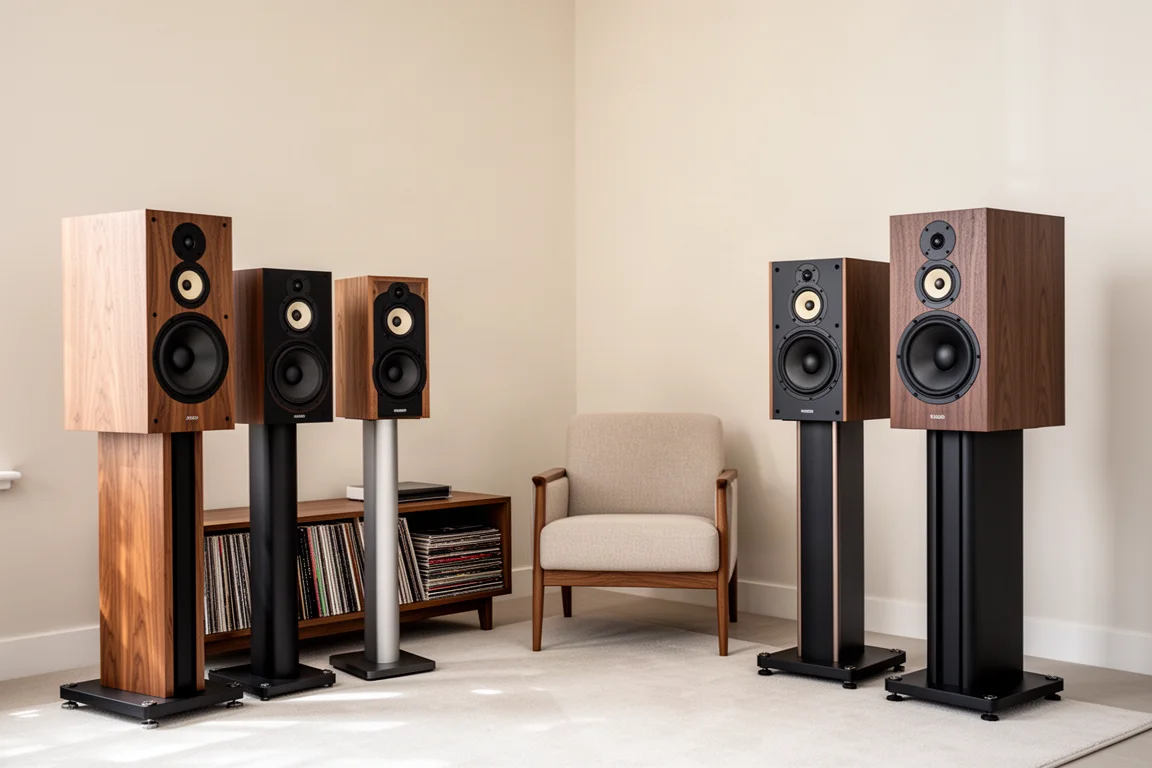
Where the High Desert pulls ahead is construction and materials. The roughly $1,500 step up from the Evoke 20 buys a solid hardwood cabinet, a hand-finished surface and a small-batch build, and for the right buyer that premium is the whole point rather than a rounding error. Visually it reads like a larger, more handmade take on a classic heritage-style monitor, and that is a compliment.
Things to Consider Before Buying
Price is the first consideration. At around $3,500, the High Desert sits well above the mainstream standmount market, and that figure reflects the economics of small-scale production rather than a luxury markup. Cabinets here are not ordered by the container, and a few people building a hundred pairs a year cannot match the pricing of a mass-market brand.
Placement sensitivity is the second. A rear-ported two-way that changes character so noticeably between 12 and 24 inches from a wall needs a room that allows some flexibility.
Third, there is a mild rise in the treble response. It gives the speaker a sense of enhanced detail, but it is not adjustable, so system matching matters.
Finally, buying into a niche line raises fair questions about support. High Moon’s stated approach is straightforward: if a speaker has a problem, it is replaced. Lead times are measured in months, which is worth planning around.
Buying Advice
Buy the High Desert if you want a handcrafted loudspeaker with a classic voice, deep and natural bass, a refined tweeter and a finish that will likely improve with age. Solid hardwood cabinets tend to gain character over decades in a way that veneered panels do not, and that longevity is part of what the price buys.
Skip it if you prefer a strictly neutral, measurement-first presentation, if you need a speaker that can be pushed close to a wall, or if you want something available off the shelf today. If your budget is closer to $1,000, the Wharfedale Denton 85th Anniversary or the Polk Audio Reserve R-200 will get you into similar musical territory, just without the same level of construction.
For the right listener this is a speaker to keep for years rather than a stepping stone. It is best approached as a long-term purchase, ideally after hearing it with the amplifier you plan to use.
Conclusion
The High Desert is not just another two-way bookshelf speaker. Between the riverbed cypress, the recycled denim damping, the hand-rubbed oil finish and a sound that favours warmth, scale and long listening sessions, it occupies a space few speakers do. It asks for careful placement, a sympathetic amplifier and a budget that reflects small-batch manufacturing. In return it offers a piece of audio furniture that is as much an object to own as a tool for playing music, and for the right customer that makes it a forever speaker.
Product link
View more details for High Moon HiFi High Desert
This product is mentioned in the review. Check the specifications, options, and compatibility before buying.
View more details for High Moon HiFi High DesertFurther reading
Related Reviews
Hi-Fi Speakers
1723 THX Tower vs 1528 Bookshelf: Which Speaker Fits Your Room?
Two speakers at roughly the same price, built very differently. How the 1723 THX tower and the 1528 bookshelf compare on construction, bass, power needs, and sound.
Hi-Fi Speakers
Acoustic Energy AE 300 Review: Deep Bass From a Compact Standmount
A two-way standmount with real wood veneer, surprising low-end weight, and a warm, easygoing character. Here is what to know before buying.
Hi-Fi Speakers
Acoustic Energy AE1 40th Anniversary Review: A Modern Take on a British Classic
A compact standmount that revives a 1980s favorite with all-new parts, a warm mid-centric balance, and a price of £1,499 per pair.