Network Streamers
HiFi Rose RS201E Review: Compact Streaming and Amplification in One Box
A single-chassis network media player and two-channel integrated amplifier with an 8.8 inch touch display, flexible digital inputs and 50 watts per channel into 4 ohms.
Introduction
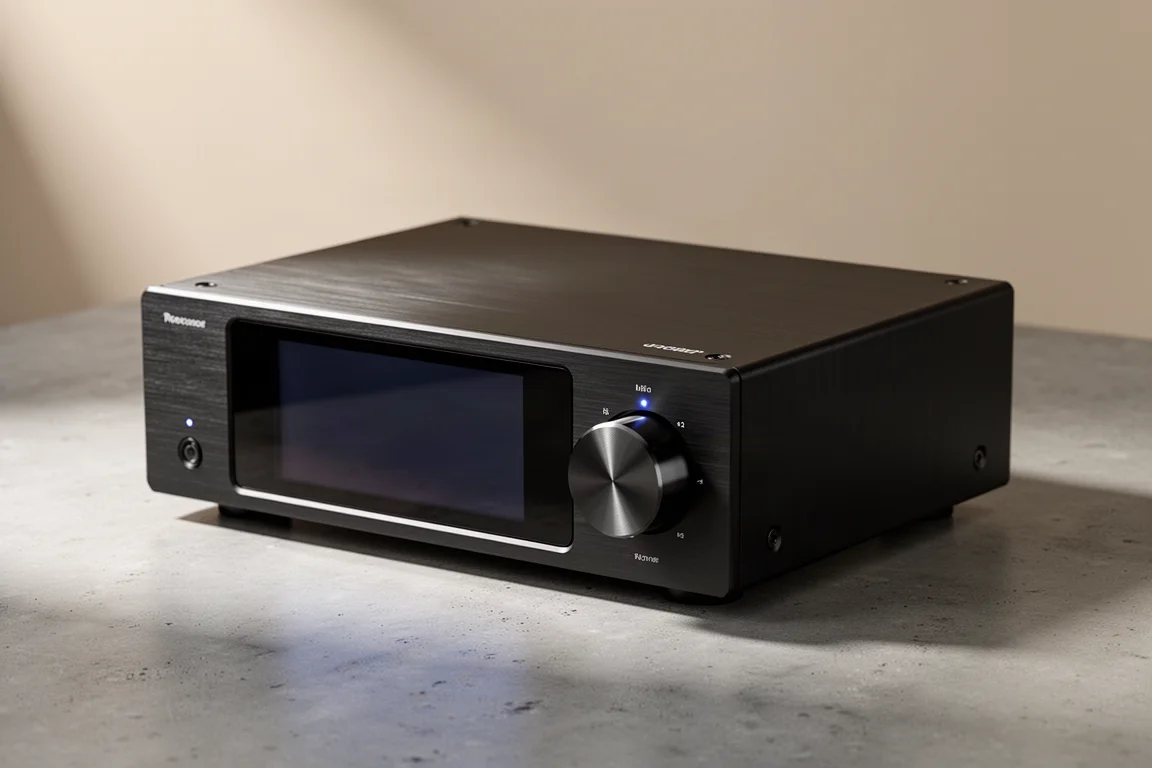
HiFi Rose has built its reputation on streaming components that place a large touchscreen at the centre of the listening experience, and the RS201E is the most accessible route into that family. It is the entry point model in the line, combining a network media player and a two-channel integrated amplifier in one chassis that measures roughly 11 inches wide, 8 inches deep and 3 inches tall.
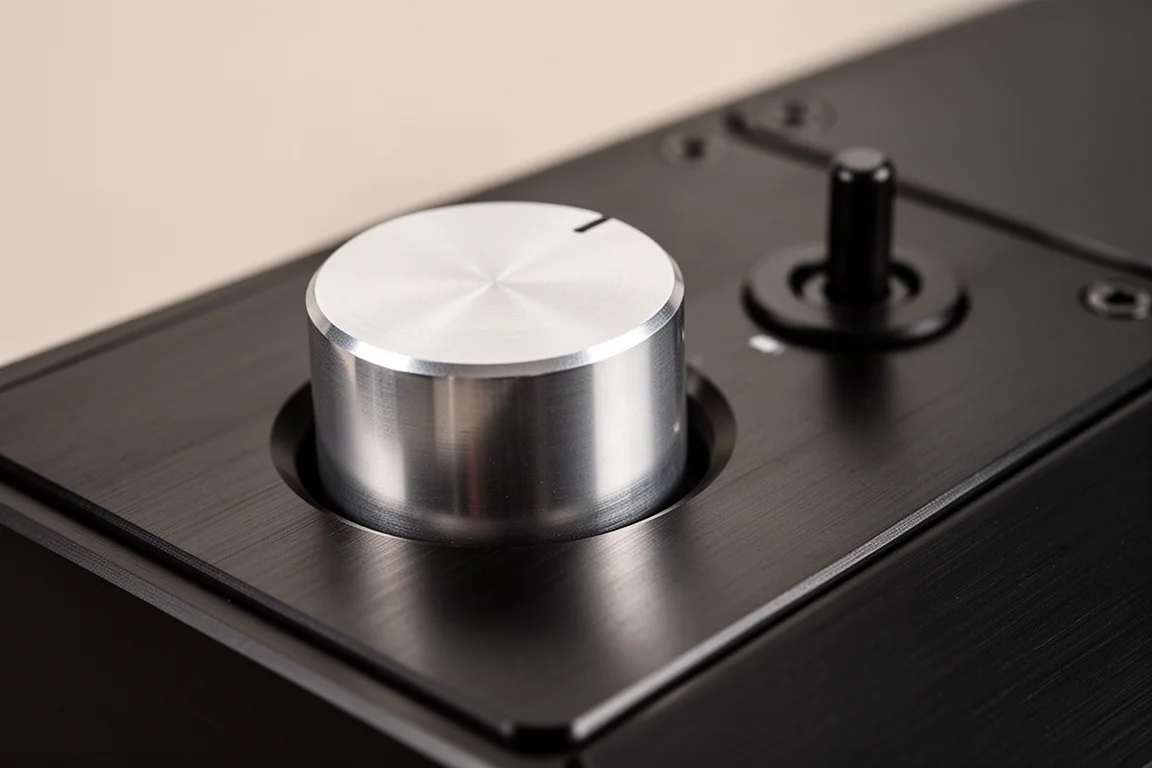
The front panel pairs an anodised aluminium top plate with a machined volume knob that doubles as a joystick style control, a power button and an 8.8 inch touch display. That screen shows high definition album artwork and can play video at 60 frames per second, which makes the unit feel closer to a modern tablet than a traditional hi-fi component.
The company behind the brand adds useful context. Its parent company, SciTec, was founded in 1954 building set-top boxes for television sets in Korea, and later specialised in touch interface software for consumer facing internet kiosks. Those kiosks live in high traffic public spaces, so the software has to be clear, reliable and easy to update. One of the executives was also an audiophile, and in 2017 that blend of interface expertise and audio ambition became the HiFi Rose line. That background explains a lot about how this unit behaves day to day.
Who This Product Is For
The RS201E is designed as an integrated amplifier, streamer, DAC, preamp and Roon endpoint in one box, and it makes the most sense in rooms where a television and a pair of speakers share the same space. A media room, a bonus room or a living room are the natural homes for it.
It suits listeners who want a single component rather than a stack. If your music library lives on an external hard drive or an SD card alongside 4K video files, the unit is built to play both from its own front panel. It also suits households where more than one person wants to stream from their own account, and anyone who wants a headphone output on the front panel for late night listening.
Main Strengths
Inside the RS201E is a multi-core ARM 64-bit processor with 4 GB of RAM running a custom HiFi Rose version of the Android operating system. That is a generous hardware budget for an audio component, and it shows in how quickly the interface responds. The system is fully updatable, and new features continue to arrive over time.
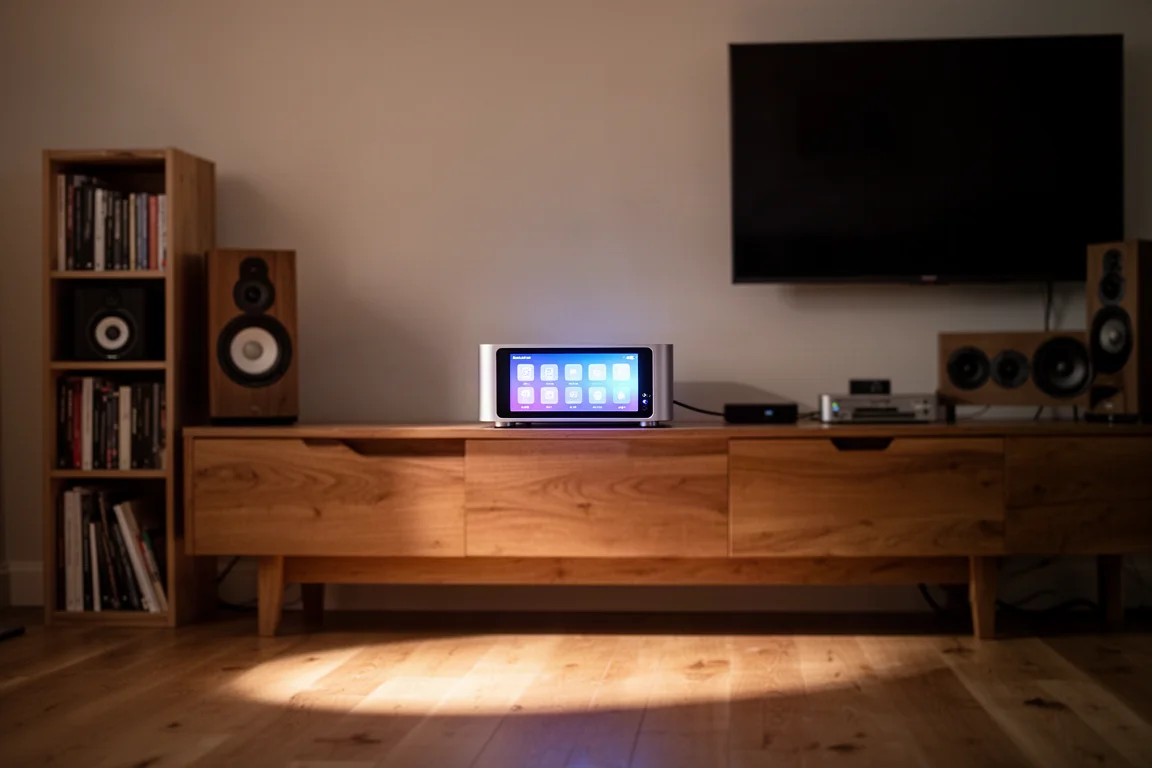
The home screen presents a horizontal row of familiar icons covering music, video, radio, podcasts, clock and settings, along with a store where apps can be updated to their latest versions. Settings let you adjust display brightness, change the clock format and control how VU meters appear while music plays. You can also rearrange the order of the apps and remove the ones you never use, in the same way you would manage a tablet.
A curated video app built into the system lets you swipe through a list of clips streamed at the highest available resolution and audio quality with advertising removed, and you can search for other videos as well. Because these streamers are genuinely high end two-channel audio devices that happen to include 4K video capability, that feature has more appeal than it might first appear.
One detail stands out in daily use: how the companion app handles multiple listeners. Each person signs into their own music streaming account on their own phone, joins the same Wi-Fi network as the streamer, follows the on-screen prompts, and then selects the unit in the app. Nobody has to sign in and out of a shared account, which makes it simple for guests to play their own music on the system.
Streaming, Storage and Format Support
At the centre of the digital section is an ES9018 K2M 32-bit DAC that supports the popular high resolution formats up to 384 kHz. If you already own a DAC you prefer, a USB 2 audio output lets you bypass the built-in one and send the signal elsewhere.
Local libraries are well catered for. A USB 3 Type A input and an SD card reader let you play high resolution music and 4K video files stored on external media, and an under-chassis bay accepts an internal SSD. For external sources there is an optical Toslink input and a pair of unbalanced stereo RCA line inputs, which covers a CD player, DVD player or Blu-ray player. On the output side, an optical output can feed a soundbar, and one HDMI 2 port can send audio and 4K video to a television or projector. A pair of unbalanced stereo RCA sockets labelled preamp output lets you run the RS201E purely as a streamer into a separate amplifier, and a 3.5 mm headphone jack on the front panel handles private listening. Connectivity also includes Roon readiness, Bluetooth, AirPlay 2 and Spotify Connect.
Sound Quality
The amplifier section is Class D and delivers a maximum of 50 watts per channel into 4 ohms, or 100 watts of total power. Two pairs of speaker terminals on the back accept 4 ohm passive speakers.
In practice that output is more useful than the numbers alone suggest. Paired with a pair of passive bookshelf speakers that generally want somewhere between 50 and 75 watts per channel, the RS201E filled a medium sized living room without strain. The sound profile is transparent: clear, resolute and easy to listen through, whether the source is a high resolution file or a video soundtrack. Bass is tight and punchy, the mid range is clean, and the stereo image carries an impressive depth of detail.
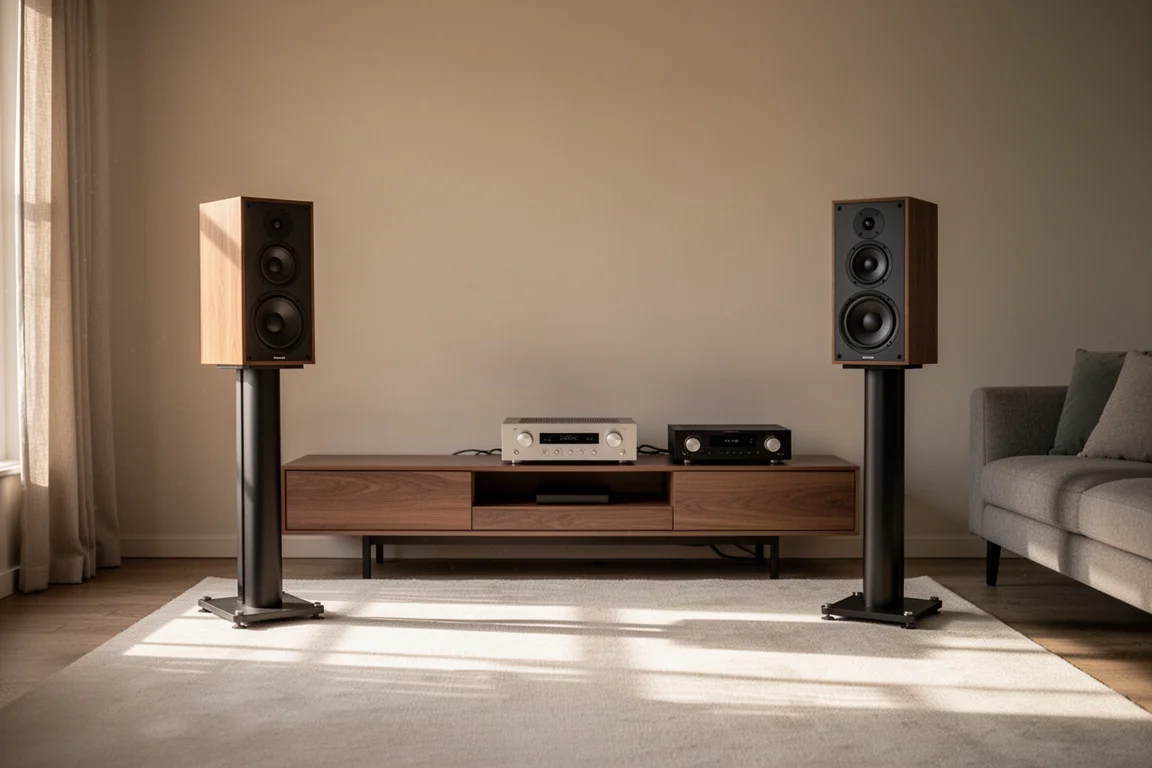
Detail retrieval is a genuine strength. On a sparse, vocal forward track played from a high resolution file, the lead vocal sat almost outside the right speaker, and backing voices that are easy to miss were clearly separated in the mix.
Listeners who want more audiophile level resolution should look at the step up models, the RS250 or the RS150B. Within the entry point position, the RS201E delivers a great deal of value and leaves plenty of room to expand.
Things to Consider Before Buying
- Power supply: The RS201E uses an external switching power supply rather than the linear supply built into the more expensive models in the lineup. That is a normal trade-off at this position in a range, but it is worth knowing before you compare.
- Amplifier class: Class D amplification is part of what keeps the chassis compact and the cost reasonable. If you are chasing the last word in musical performance, the upper models are the ones to weigh up.
- Speaker matching: 50 watts per channel into 4 ohms is enough to drive most passive speakers with reasonable impedance and sensitivity. Demanding or inefficient speakers will benefit from more power, either from a larger integrated amplifier or by using the preamp output with a separate amplifier.
- CD playback: There is no drive on board. Ripping a CD collection means adding the matching HiFi Rose CD drive.
- Video is a bonus: The 4K video output and the large display are genuinely useful, but the core of the product is two-channel audio.
Buying Advice
The case for the RS201E is strongest when one box has to do several jobs in a single room. A media room, a bonus room or a living room where a television and a pair of speakers share the space is exactly the scenario it was designed for. It covers television sound, two-channel music listening, streaming and file playback from an external drive or SD card without a stack of separate components.
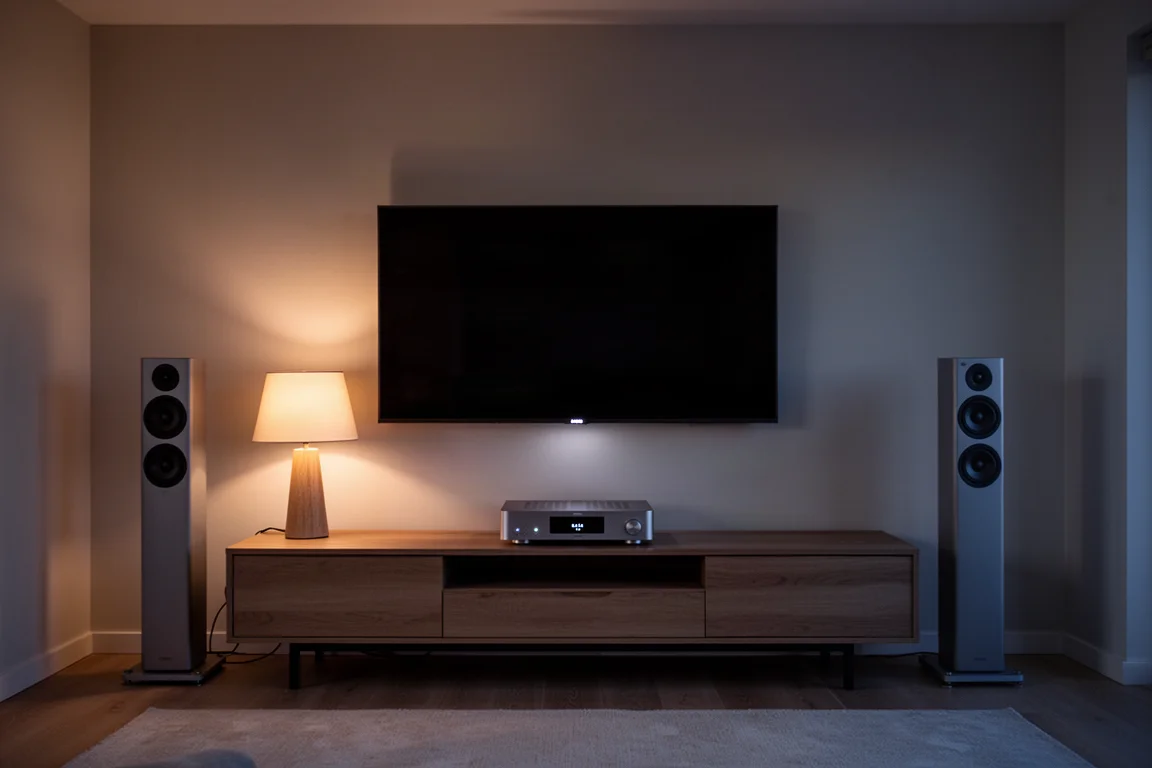
If your library lives on an external hard drive and includes both high resolution music and 4K video, this is a convenient way to experience all of it from one front panel. If you want to keep using a favourite external DAC, the USB audio output makes that straightforward. And if you plan to digitise a CD collection, the matching HiFi Rose CD drive turns the RS201E into a ripping station as well.
For anyone who prioritises the very best sound quality, the RS250 or RS150B are the more appropriate choices. The HiFi Rose RA180 integrated amplifier is the reference option for listeners who would rather keep streaming and amplification in separate components.
Conclusion
The RS201E earns its place as the entry point to the HiFi Rose range by keeping the essentials intact: a large, responsive touch display, a genuinely useful app ecosystem, broad input and output flexibility, and an amplifier section that drives real speakers in a real room. It is not the last word in resolution, and the external power supply and Class D stage are honest reminders of where it sits in the lineup.
For a compact multimedia system that handles high resolution music, 4K video and everyday television listening in one chassis, it is an easy component to build a room around.
Product link
View more details for HiFi Rose RS201E
This product is mentioned in the review. Check the specifications, options, and compatibility before buying.
View more details for HiFi Rose RS201EFurther reading
Related Reviews
Network Streamers
Cambridge Audio MXN10 vs WiiM Ultra: Two Network Streamers Compared
A side-by-side look at the Cambridge Audio MXN10 and the WiiM Ultra, covering sound character, streaming features, connectivity, and which kind of system each streamer suits.
Network Streamers
EverSolo DMP-A8 Review: A Higher-End Streaming Deck and Preamplifier
A closer look at the EverSolo DMP-A8, a streaming deck and preamplifier with AKM DAC chips, a linear power supply for the audio circuit, HDMI ARC, an analog input, and a parametric EQ.
Network Streamers
FiiO R7 vs Bluesound Node X: Two Network Streamers, Two Very Different Approaches
A practical comparison of the FiiO R7 and the Bluesound Node X, covering app support, connectivity, headphone output and the small sound quality differences that decide between them.