Music Streamers
HiFi Rose RS151 Review: A Warmer, More Capable Network Streamer
The HiFi Rose RS151 replaces the RS150B with a larger touchscreen, a new ESS DAC, a quieter analog stage, and a remapped back panel. Here is what changed and who should buy it.
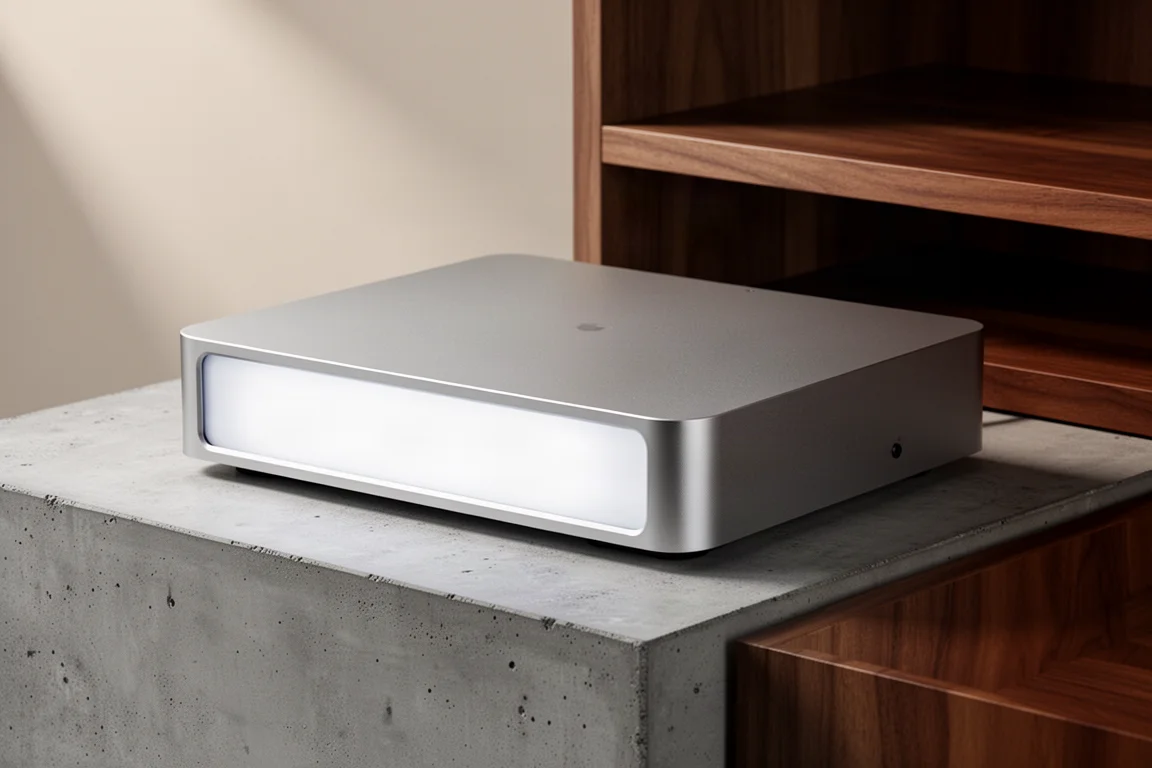
Introduction
HiFi Rose is a relatively new name in the performance audio world, and the RS151 is its latest network streamer. It replaces the RS150B, a model that earned a strong reputation for sound quality, and it keeps the same all-in-one idea: a music streamer and a digital-to-analog converter inside a single chassis. At launch, the price stayed the same as the model it succeeds.
The concept is straightforward. The RS151 pulls music from streaming services or from locally stored files, keeps that music in the digital domain, and then converts it to analog through its internal DAC. From there you connect it to an existing system through an analog input, or pair it directly with a power amplifier and speakers, or with a pair of powered speakers.
HiFi Rose says the RS151 was shaped in part by feedback from RS150B owners, and the changes reach across the display, the DAC, the power supply, the processing, and the back panel. The result is a unit that looks familiar but behaves noticeably differently.
Who the HiFi Rose RS151 Is For
This is a component for listeners who want one box to handle streaming, local libraries, and digital-to-analog conversion without adding separate units. If you already own an integrated amplifier, a preamplifier, or a pair of powered speakers, the RS151 slots in as the source. If you prefer a minimalist rack, its variable output lets it act as a digital preamp feeding a power amplifier directly.
It also makes sense for people with large local collections. The RS151 can manage libraries of up to one million songs, and it accepts both internal and external storage for high-resolution audio and video files.
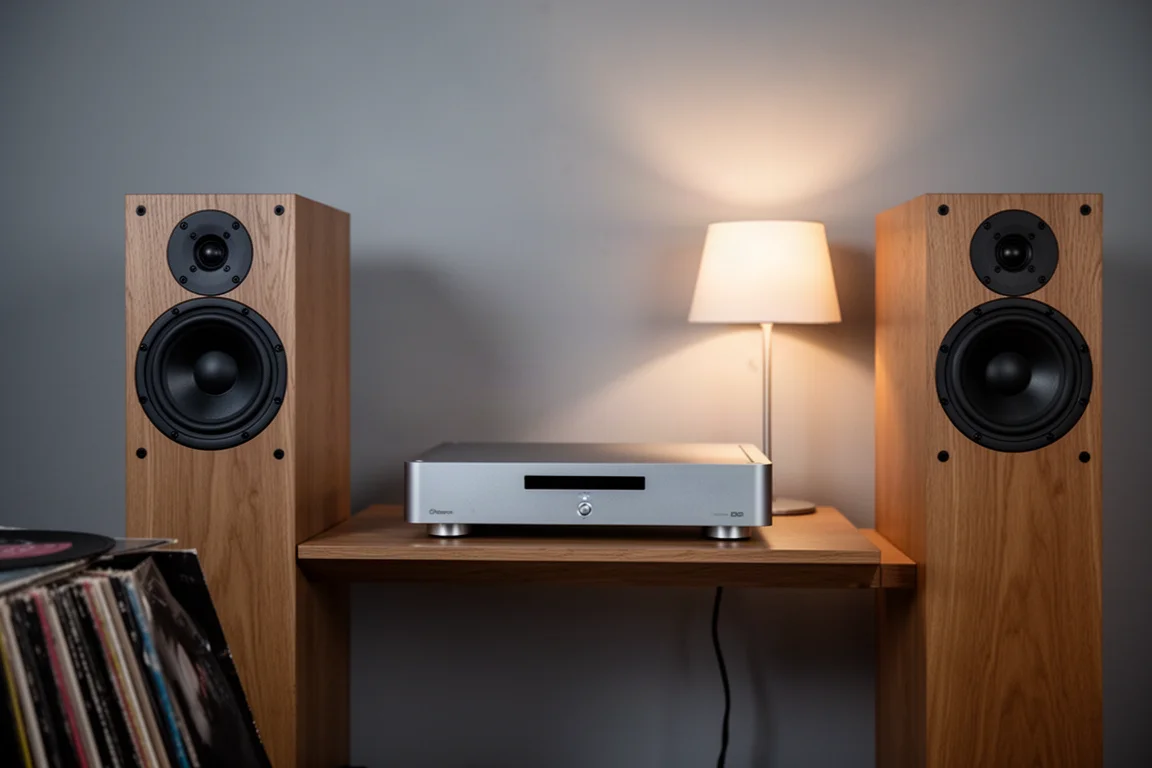
The screen-first design also suits households where the streamer sits in a shared living space rather than a dedicated listening room, since track information stays legible from across the room and the panel can be used as a display that visually matches the rest of the system.
Main Strengths
The RS151 is not a light refresh. Most of the meaningful changes sit in places that affect daily use and long-term sound quality rather than in the exterior silhouette.
A Larger, Higher-Resolution Touchscreen
The front touchscreen grows from 14.9 inches to 15.9 inches and gains resolution, so it is easier to read at a distance and easier to interact with up close. Large, well-organized displays are still uncommon on network streamers, and this remains one of the clearest reasons to choose a HiFi Rose product over a conventional black box.
The chassis is milled from a solid block of aluminium, as before, which helps reduce internal vibration and gives the unit a finish that matches its price. The RS151 is available in black or silver and measures 17 inches wide, so it aligns cleanly with other full-size components in a rack. Physical mute, power, and volume up and down buttons now sit on the top surface, which is a practical addition for anyone who does not want to wake a screen just to nudge the volume.
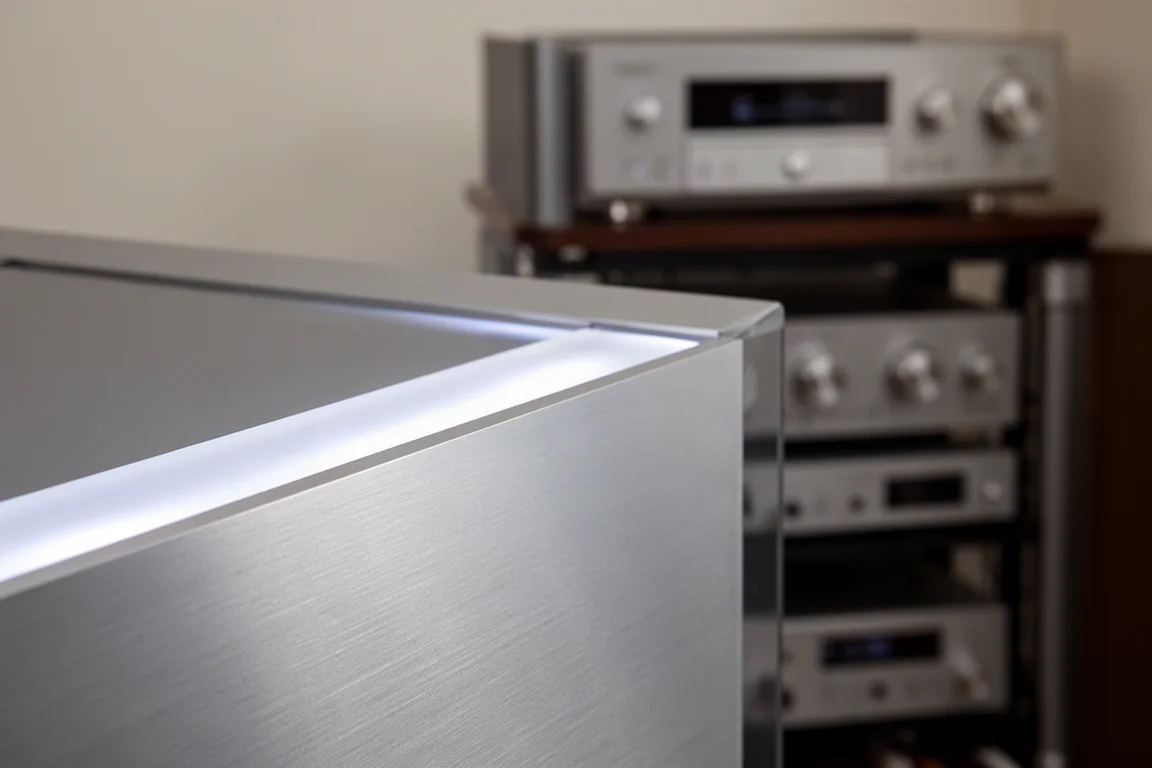
That combination of a bright, readable panel and hardware controls is what makes the RS151 feel like a control center rather than an accessory. The interface runs on an Android-based operating system, and the home screen can be rearranged or trimmed back, much like a smartphone.
A New DAC and a Quieter Analog Stage
The most significant upgrade is the converter. The RS151 uses the ESS ES9039PRO, an eight-channel DAC that HiFi Rose describes as the best sounding chip in its lineup. ESS has built HyperStream processing into this part to reduce jitter and distortion, which helps small musical details come through more clearly.
Supporting a converter well matters as much as choosing it. The RS151 uses a toroidal linear power supply to keep noise low, and the audio path is isolated from the power supply. Resistors are now audio-specific parts, capacitors come from Wima, decoupling capacitors have moved to low ESR and high ripple types, and the ground scheme changed from a standard plane to a single point design. The measured signal-to-noise ratio rises from 121 dB to 131.5 dB.
The new Rose NRA filter, which stands for noise reduction analog, enables flat frequency response down to almost 10 Hz. A new eight-core processor handles playback more smoothly, and PCM sources can be upconverted to DSD512 for listeners who prefer the character of DSD.
In listening, the shift is easy to hear. The RS151 comes across as warmer and more organic than the RS150B, with a more analog quality that removes a layer of digital sheen. On familiar reference recordings, lead guitar lines carry more tonal depth and a silkier sustain, percussion has more texture and extends further beyond the speakers, and plucked acoustic guitar takes on a resonance that feels closer to a live room. The improvements are refinements rather than a different voicing, but they are consistent across material.
Connectivity, Control, and Streaming Flexibility
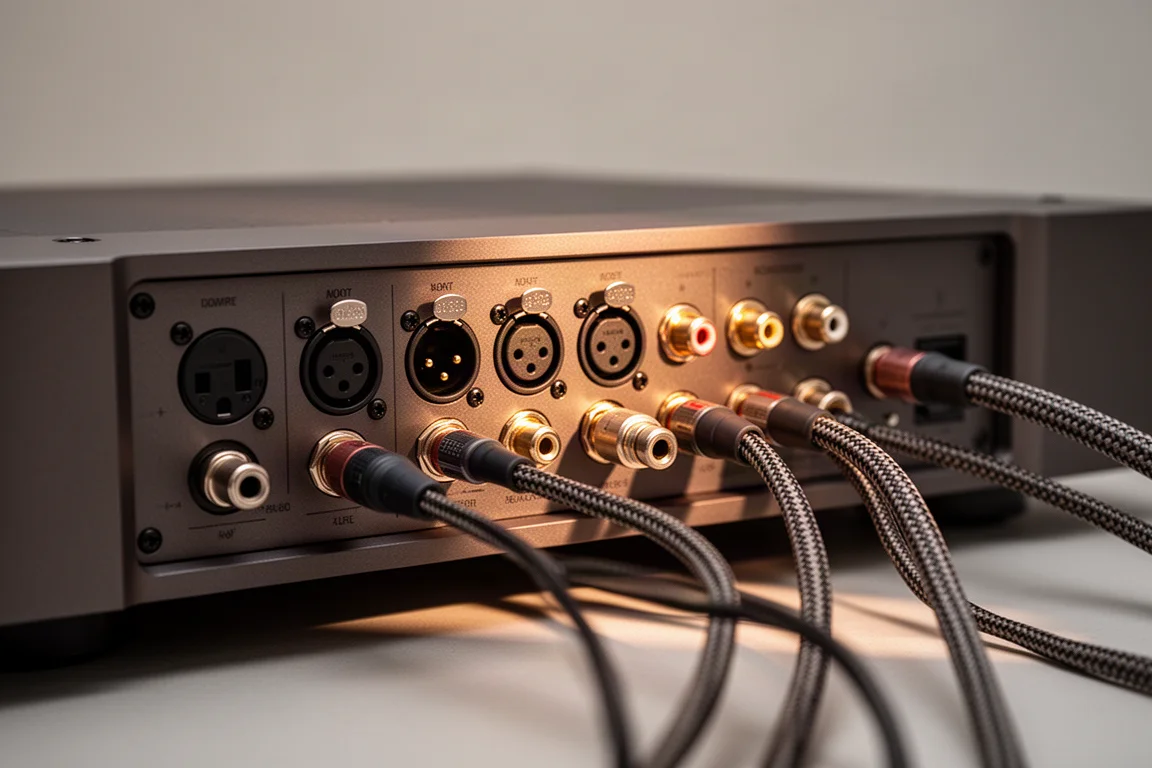
The back panel has been completely remapped to fit a longer feature list. Analog output is available on RCA or balanced XLR, and the connectors themselves are notably more solid than before. Output can be set to variable or fixed, so the RS151 works either as a preamp or as a fixed-level source.
Digital inputs cover USB, optical, coaxial, AES/EBU, and HDMI eARC, which replaces the ARC input on the previous model. That change matters: the HDMI input now accepts up to 24-bit/192 kHz high-resolution audio, and eARC allows music to move through your audio system without the compression that ARC applies. The television remote can power the HiFi Rose on and off and adjust volume when the output is set to variable, which makes TV listening through a proper system far more seamless.
Coaxial and AES/EBU inputs officially support PCM up to 24-bit/384 kHz and DSD128, and the remaining inputs handle the formats you would expect from a modern streamer. There is also an analog input for a legacy source, with the note that its signal is converted to digital. Digital outputs include USB, coaxial, optical, AES/EBU, and I2S over HDMI, which is useful if you already own a very good outboard DAC but want the HiFi Rose user experience as a streamer.
A trigger input and output has been added, so the RS151 can power a modern amplifier on and off in sync with itself when used as an all-digital preamp. Bluetooth has also been upgraded to version 5.4 with an antenna module built into the rear panel, replacing the external dongle arrangement of the RS150B.
On the software side, the RS151 runs Roon Ready and offers access to major streaming services including Spotify, Tidal, Qobuz, and Apple Music, alongside HiFi Rose apps such as Rose Radio, Rose Podcast, Rose FM, and Rose Tube. A curated library of online videos is included, and video output lets you display what is playing on a television. Because the platform is Android-based, HiFi Rose has been able to add features after release at no charge, and AirPlay arrived on its products this way.
Storage and Library Management
For listeners with large ripped or downloaded collections, the RS151 can now manage up to one million songs, a substantial increase over the RS150B. The CD ripping app remains, and an external CD drive can be connected either to play discs directly or to convert them into files stored on the unit.
An internal SSD of up to 4 TB can still be installed underneath the unit. The micro SD slot on the back has been removed, but up to 10 TB of external storage can be attached through the two rear USB ports, whether that is a NAS or a USB drive. If your high-resolution music and 4K video files live on an external drive, you can plug it in and browse everything from the front touchscreen or from a connected television.
Things to Consider Before Buying
The RS151 is a premium component, and its price sits in the same territory as the model it replaces rather than below it. Buyers should also weigh a few changes that come with the redesign.
The HDMI input has moved from ARC to eARC, which is a benefit for modern televisions but worth confirming against your own display’s capabilities. The micro SD slot is gone, so local storage now runs through an internal SSD or external drives over USB. The analog input is converted to digital internally, which is worth knowing if you planned to keep a legacy analog source entirely in the analog domain. Finally, the chassis is full width at 17 inches, and the design leans heavily on that large front panel, so it rewards a rack or shelf where the screen is actually visible.
Buying Advice
If you are shopping for a network streamer in the $5,000 range, the RS151 is one of the strongest options available. It combines a genuinely high-quality DAC, a quiet analog stage, unusually deep connectivity, and an interface that is pleasant to use every day, which is not something every streamer at this level can claim.
Owners of the RS150B have a clearer decision than usual. Upgrades like this often only make sense when a specific new feature is essential, but the combination of the new DAC, the lower noise floor, and the improved analog stage produces a meaningful step in overall sound and experience, which makes the move easier to justify.
If your budget stretches higher, HiFi Rose also offers the RS130 streamer, and the NAD M66 is another option worth evaluating. Each has its own strengths and trade-offs, so matching the choice to your system and room matters more than chasing a spec sheet.
Conclusion
The HiFi Rose RS151 takes a well-regarded formula and improves it in the places that count: a bigger and sharper touchscreen, a new ESS converter, a quieter and more carefully built analog stage, and a back panel that now covers almost every connection a modern system needs. It keeps the Android-based platform and the flexible storage options that made the RS150B appealing, and it adds warmth and natural detail that make long listening sessions easy to enjoy.
For anyone building a high-resolution streaming system around a single well-made box, the RS151 is a confident recommendation.
Product link
View more details for HiFi Rose RS151
This product is mentioned in the review. Check the specifications, options, and compatibility before buying.
View more details for HiFi Rose RS151Further reading
Related Reviews
Music Streamers
Arylic S10 Plus vs WiiM Mini: Two Affordable Music Streamers Compared
A practical comparison of the Arylic S10 Plus and the WiiM Mini, covering connections, apps, tone controls, and how each internal DAC actually sounds.
Music Streamers
Auralic Aries G1.1 Review: A Streaming Transport That Lifts a Resolving System
A close look at the Auralic Aries G1.1 streaming transport, covering its twin-transformer power supply, Tesla G2 processing, Lightning DS app and the systems where it genuinely pays off.
Music Streamers
Bluesound Nano Review: A Compact Streamer That Keeps Things Simple
The Bluesound Nano is a stripped-down network streamer at $299, with a solid chassis, quick setup, and a clean, punchy sound. Here is what to know before buying.