Hi-Fi Audio
HiFi Rose RD160 Review: A Standalone Reference DAC With a Hidden Display
A practical look at the HiFi Rose RD160, a standalone digital-to-analog converter with a concealed OLED front panel, an extensive digital input set, and a dual-chip AKM conversion stage.
Introduction
HiFi Rose has built a following on components that are unusually easy to operate and unusually good at making music. The lineup runs from the RA180 reference integrated amplifier to the RS130 network streamer, and the human interface design across those products has been central to their appeal. The RS130 in particular is one of the most respected network streamers available, but it is a streamer only. To complete a digital stack, it still needs a high-quality converter.
The RD160 is HiFi Rose’s answer to that gap: a standalone digital-to-analog converter designed to sit alongside the flagship streamer while also standing on its own in a system built around other brands. In proper HiFi Rose fashion, it arrives with a few unusual features rather than a plain black box.
Who the HiFi Rose RD160 Is For
Three kinds of listeners will get the most from this converter. The first is the HiFi Rose owner who already runs an RS130 or one of the company’s streamer amplifiers and wants the matching converter to complete the stack. The second is the listener with several digital sources, such as an older CD player used as a transport, a streamer and a computer, who wants a single high-quality conversion point with enough inputs to cover all of them. The third is the listener who has held back from digital because they prefer a warm, analog-style presentation.
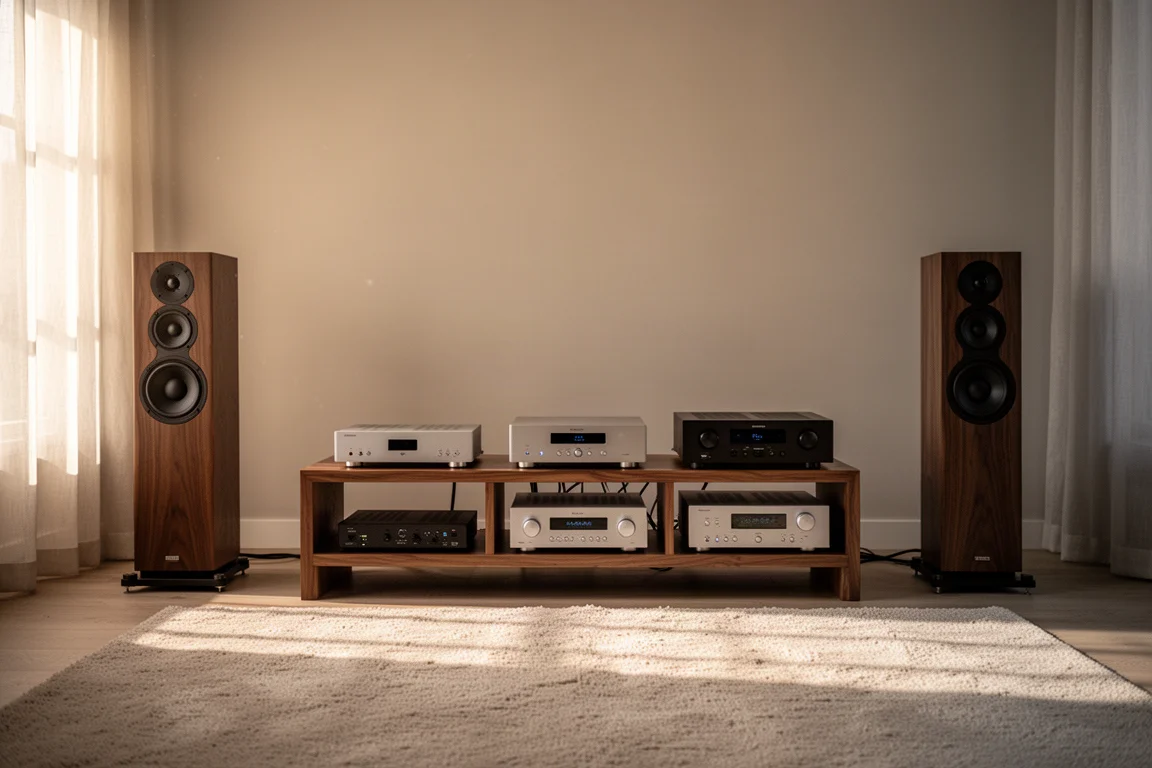
Paired with the RS130 over the fiber optic USB connection, the RD160 forms a reference-level digital front end in its combined price class. Used on its own, it still works with essentially any digital component, which is what makes it more than a companion piece.
Build Quality and the Hidden OLED Front Panel
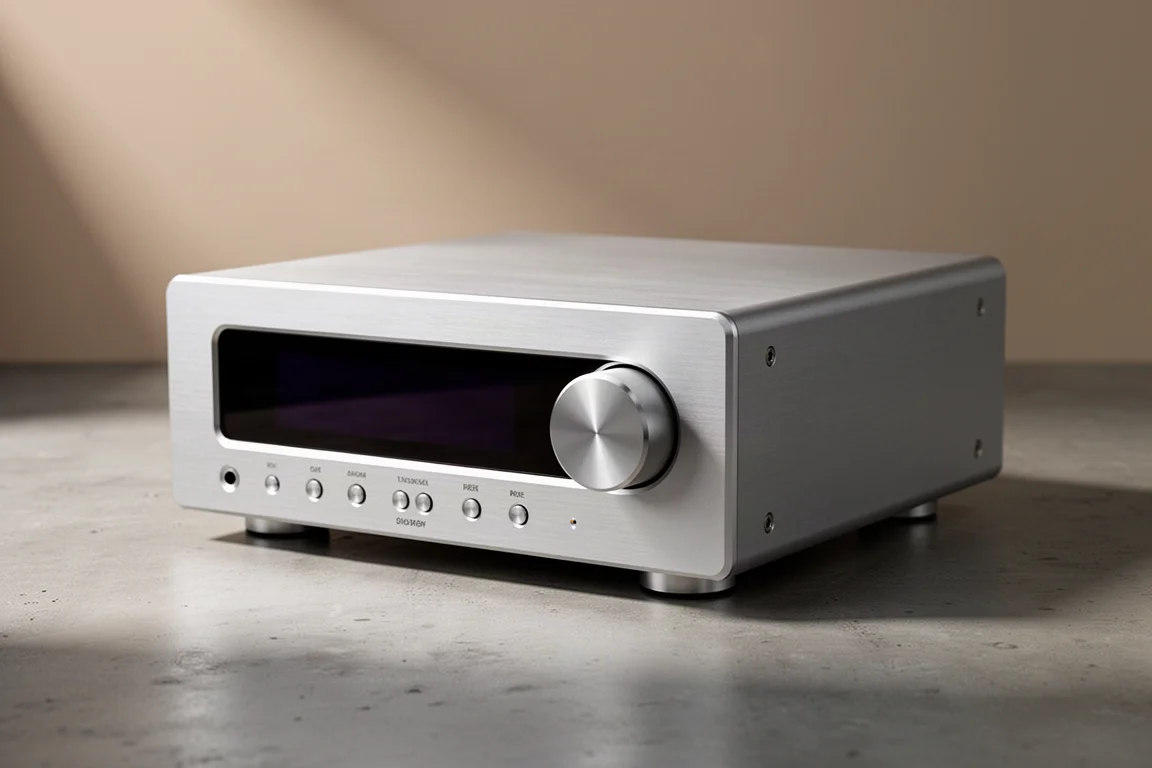
The casework is machined from a single piece of aluminum with as few joints as possible, a construction choice aimed at minimizing vibration. Buyers can choose silver or black, and the HiFi Rose symbol is embossed into the top panel. The side panels are formed into a heat sink area, which is a sensible detail given how much is happening inside; cooler running electronics tend to last longer.
The front panel is the element most people notice first. Switched off, it reads as a clean face with a knob and a handful of buttons. Powered on, a hidden OLED screen appears and presents a genuinely unusual amount of information: a flowchart showing how the converter is functioning, a volume curve, and sound waves. All of it is real time and responds immediately to knob or button input. HiFi Rose describes the interface as an attempt to give a digital device the feel of an analog one, and the direct, latency-free response supports that intent.
The button layout covers input, filter, clock input, sampling rate and mute. The volume control is fully functional, which means the RD160 can be connected directly to a power amplifier. If it is feeding a preamplifier or integrated amplifier instead, the volume control can be defeated.
Connectivity and Digital Inputs
The rear panel is unusually generous. It includes USB Type B 2.0, fiber optic USB, I2S, optical digital, coaxial RCA, coaxial BNC and AES/EBU. In practice that means almost any digital component can be connected, whether it is an older CD player used as a transport or a streamer with an I2S output.
Capability varies by input. USB and I2S handle up to 32-bit/768kHz and native DSD512, while coaxial and AES/EBU reach 32-bit/384kHz and DSD128. Optical Toslink tops out at 24-bit/192kHz. Those figures exceed what most music available today requires, but they add a useful layer of future-proofing.
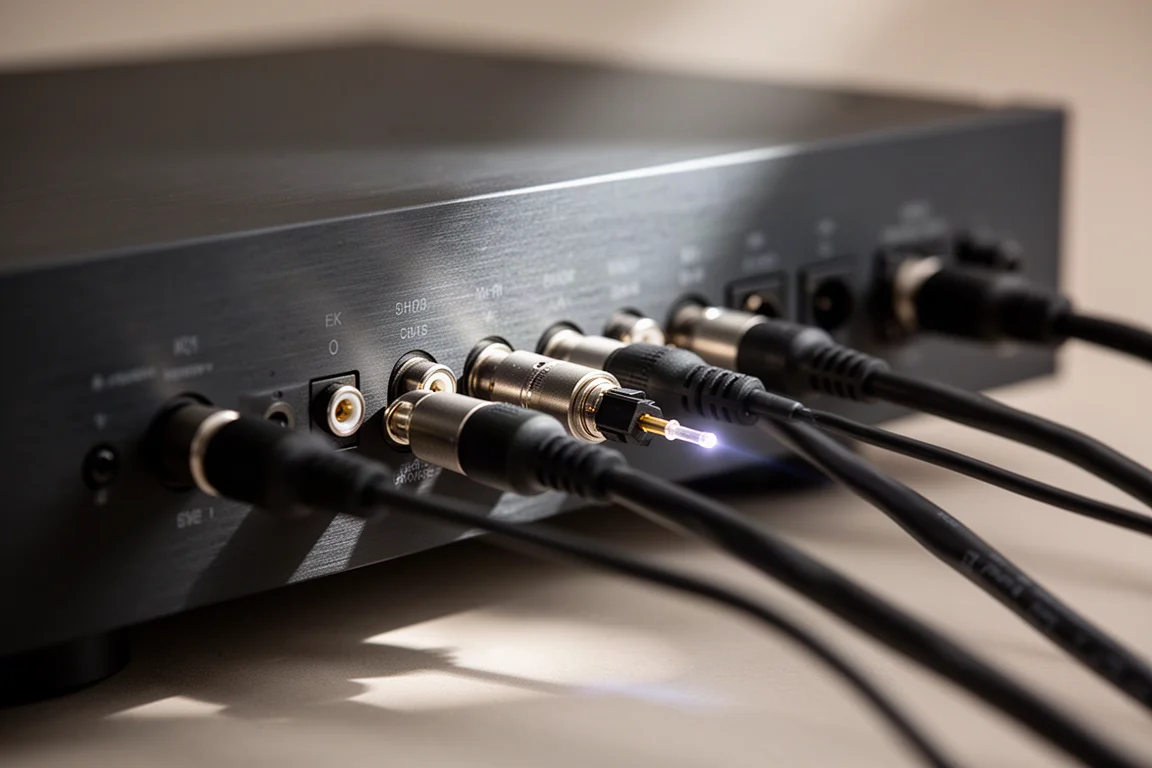
The fiber optic USB input is a standout, since it is rare on converters at this level. It takes the electrical USB signal and converts it into an optical light signal. Once the electrical signal becomes light, noise and distortion from the source device are lost in the conversion, so what reaches the converter is clean. The RS130 streamer carries the same connection, which is why the two pair so naturally.
Digital Architecture, Clocking, and Power
At the center of the RD160 is a two-chip AKM conversion stage built around the AK4499 and AK4191, described as the newest and best-measuring chips AKM has produced to date. It is a delta sigma design that requires two chips to work: the AK4191 handles digital filtering and the initial delta sigma conversion stages, while the AK4499 performs the actual digital-to-analog conversion. Separating those jobs is what allows the class-leading measured performance, keeping the signal-to-noise ratio extremely high while preserving the analog character of the output. A full set of these chips is used per channel, which keeps channel separation at its maximum. Cortex A9 processors manage the inputs and route the signal from the inputs through the AKM chips and on to the output stage.
Power delivery is deliberately separated. A linear power supply feeds the digital input stage, and each of the two analog output stages has its own linear supply. The goal is low noise and the best possible channel separation, and oversized, isolated supplies contribute to dynamic range, transparency and an effortless quality in the music.
Timing gets similar attention. A high-precision OCXO, an oven controlled crystal oscillator, is the most accurate and stable clocking mechanism available, and it lets the RD160 keep its internal timing precise. There is also a master clock input, shared with the RS130, which allows every digital component in a system to run from a single clock source. With timing locked across the chain, jitter from the coaxial, optical and AES/EBU connections can be eliminated.
Analog Output Stage and Sound Quality
The output section uses JFET input dual op amps, developed with help from Muses, a company that specializes in op-amp based devices. These components give the analog output excellent responsiveness, dynamic range and low distortion, going beyond what a standard op-amp output section can deliver. A special filter in the output stage is designed to keep the frequency response flat even at very low frequencies, so the converter stays even across the range.
Internal wiring has been addressed as well, with oxygen-free copper in the power and audio output sections and high purity single crystal Ohno continuous casting cable in the unbalanced analog output section for strong conductivity.
For listeners who want their music untouched at its original bit rate and sampling frequency, an NOS function bypasses oversampling entirely. Those who want to explore what oversampling and digital filtering can do get four options: NOS, PCM, DSD and all. PCM supports up to 32-bit/768kHz and DSD up to DSD512, and six different types of impulse response filters are available. The front panel shows these changes in real time, so the processing path is always visible.
Sonically, the RD160 comes across as warm, with strong bass extension and attack. The soundstage extends well beyond the speakers and has real depth, with each instrument and musician placed precisely. It comes alive most clearly with high-resolution material, whether streamed or downloaded.
Things to Consider Before Buying
The upsampling feature was not fully functional on the pre-production hardware used for an early evaluation, and it is expected to be complete by the time of release. Buyers who specifically want that function should confirm its status on shipping units.
Two features depend on the rest of the system. The master clock input only pays off if the other digital components can accept an external clock, and the fiber optic USB input is most valuable when paired with a source that offers the same connection, such as the RS130. This is also not an inexpensive component, and it is aimed at listeners building a reference-level digital front end rather than a first system.
Buying Advice
If you already own an RS130 or another HiFi Rose streamer or integrated amplifier, the RD160 is the obvious reference companion, and the combination is hard to beat in its combined price class. If you run several digital sources, the input list covers essentially everything currently available, which makes it a sensible single conversion point for a whole system.
For everyone else, the decision comes down to system matching. The build quality, the wide connection set and the analog-style presentation are the reasons to choose it, and the price and the clocking requirements are the reasons to think it through first. Pre-orders are open ahead of release, so early buyers can secure a unit before stock arrives.
Conclusion
The HiFi Rose RD160 is a beautifully made converter with a feature set and connection list that outpace most of its price competition. The hidden OLED interface gives it a personality no other converter really has, the dual-chip AKM architecture and isolated power supplies address the engineering fundamentals, and the result is a musically engaging converter that lets the music flow without noise or jitter getting in the way. If you are building a digital system and want a warm, analog-leaning presentation, the RD160 deserves a serious look.
Product link
View more details for HiFi Rose RD160
This product is mentioned in the review. Check the specifications, options, and compatibility before buying.
View more details for HiFi Rose RD160Further reading
Related Reviews
Hi-Fi Audio
Accuphase C-57 vs Allnic H-7000V: Two High-End Phono Stages Compared
A fully balanced solid-state phono stage with a pitch-black noise floor meets a tube design built for well-loved records. Here is how to choose between them.
Hi-Fi Audio
Active vs Passive Hi-Fi: Five Components for a Modern System
Five components that define modern active and passive hi-fi systems, with the strengths, trade-offs and setup details worth weighing before you buy.
Hi-Fi Audio
Advance Paris A10 Apex Review: A Hybrid Integrated Amplifier That Covers a Lot of Ground
A French hybrid integrated amplifier with a class A tube preamp stage, analogue power meters, and an internal DAC and phono stage good enough to make extra boxes unnecessary.