Integrated Amplifiers
HiFi Rose RA280 Review: A Simpler Reference Integrated Amplifier
The HiFi Rose RA280 trims the flagship feature set down to the essentials: a 250 watt Class D output stage, a moving magnet phono input, and defeatable tone controls.
Introduction
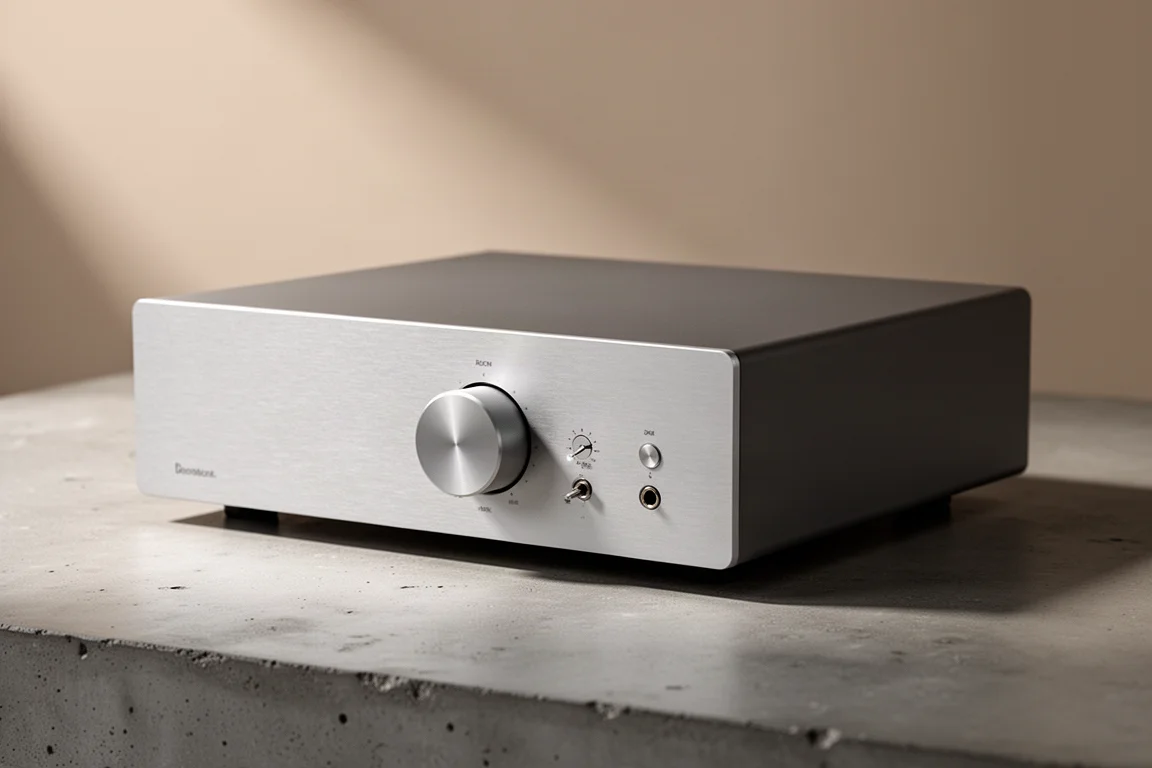
The HiFi Rose RA280 is the more focused sibling of the flagship RA180 integrated amplifier. Where the RA180 carries moving coil phono support, variable cartridge loading, and a built-in active crossover with biamp capability, the RA280 strips things back to the essentials most systems actually use. What remains is a substantial integrated amplifier with a 250 watt output stage, a moving magnet phono input, and a front panel that keeps every control within easy reach.
Who This Is For
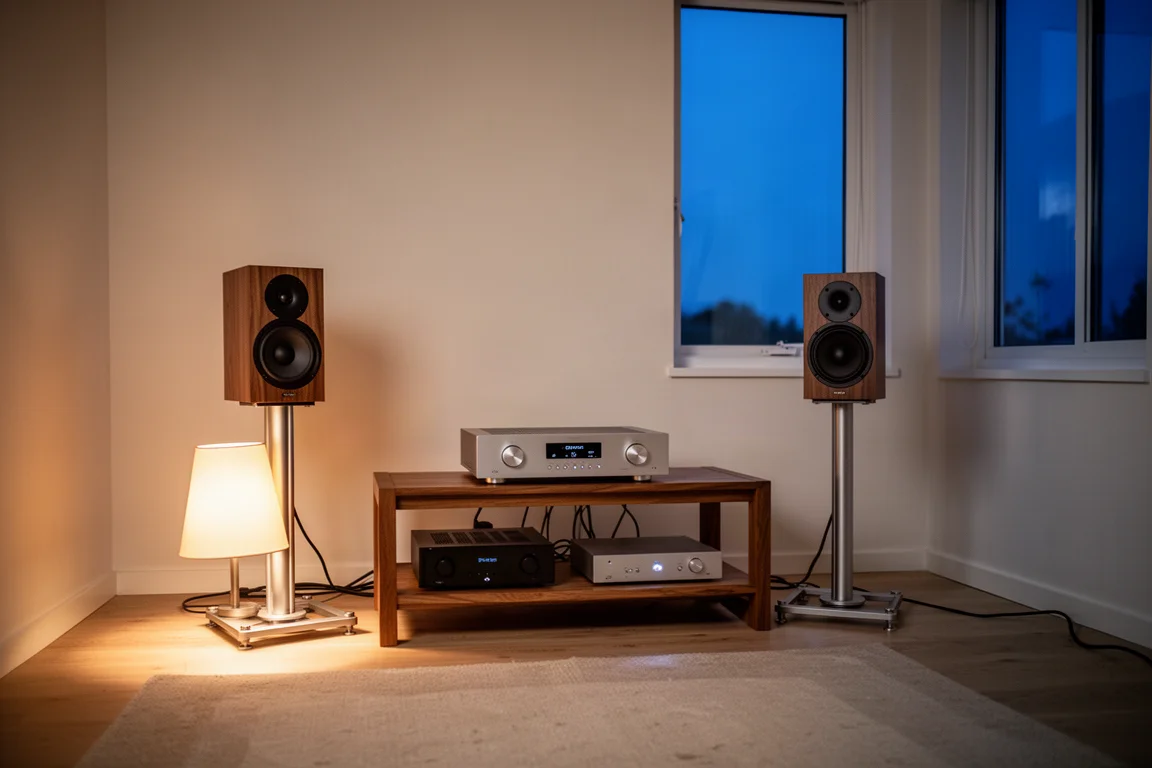
The RA280 makes the most sense for listeners who have already settled on their sources. If your music comes from a streamer, a DAC, or a CD player, the three RCA auxiliary inputs and one set of balanced inputs cover the practical ground. If you play vinyl, the built-in moving magnet stage means you can connect a turntable directly without adding a separate phono preamp.
It is also a natural fit for owners of efficient speakers with good quality crossover components. Those listeners rarely need the active crossover and biamp capability of the RA180, and paying for features that sit unused is hard to justify.
Anyone planning a later move to a moving coil cartridge, or wanting to biamp a demanding pair of speakers, will get more long term value from the RA180 instead.
Main Strengths
The RA280 earns its place through a handful of engineering decisions rather than a long feature list.
A Class D Amplifier That Sounds Analog
HiFi Rose describes the amplifier section as a Class A Class D design, developed in house to push traditional Class D performance higher. The key change is the use of gallium nitride transistors in place of silicon. Faster switching allows a dead time roughly one tenth that of silicon devices, which reduces the noise and distortion that gave early Class D designs their hard, edgy character.
The section is built from two modules that behave like monoblock amplifiers sharing a single chassis, and the output is rated at 250 watts into both 4 and 8 ohms. That is enough headroom for almost any speaker. A two stage filtering network keeps the response within 1 dB up to 65 kHz and down 3 dB at 85 kHz, which suppresses the carrier noise inherent to switching amplifiers.
The result is a presentation that leans solid state rather than tube: fast transient attack, excellent imaging and sound staging, and a black, noiseless background, without the glare that older switching designs were known for.
Tone Controls With Real Range and a True Bypass
Bass and treble controls are often treated as an afterthought. Here the circuit is an op amp based active design with up to 15 dB of adjustment and a 12 dB per octave slope, compared with the gentler 6 dB slope found on many amplifiers. The steeper filters let you shape the low and high frequencies without muddying the midrange or adding brightness to the upper registers.
A bypass switch removes the tone circuit from the signal path entirely, so purists who are happy with their speakers and their room can take it out of the loop.
A Phono Stage That Handles Vinyl Directly
The RA280 includes a moving magnet phono input with a dedicated phono ground, and it holds up well with a serious turntable. Paired with a MoFi Studio deck, the stage delivered tight bass, detailed midrange tone and body, and smooth, lifelike treble from the very first track.

A dedicated outboard phono stage at a higher price can still go further, but the built-in stage covers most of what vinyl listeners are looking for without another box, another cable, and another power supply.
Efficient Power Delivery and Cool Running
The power supply uses silicon carbide FETs rather than standard silicon devices. Their high voltage and heat tolerance lets the supply deliver maximum power while running efficient and cool. A 2.5 kW power factor correction circuit with a high capacity condenser keeps performance stable and reliable across loads.
Around the back, the layout stays straightforward: three RCA auxiliary inputs for CD players, DACs, or legacy sources such as reel to reel decks, one set of balanced inputs, trigger in and trigger out jacks, a phono ground and a chassis ground, one set of high quality speaker terminals per channel, a mono full range RCA subwoofer output, and an IEC power connector. A resettable breaker protects the system.
Things to Consider Before Buying
The remote is the one place where the RA280 feels under equipped. It covers volume, mute, and power, but there is no input selector, so source changes happen at the front panel. The switch itself is satisfying to use, and the omission is minor, but it is worth knowing before you buy.
The phono stage is moving magnet only, with no moving coil support and no variable cartridge loading. There is also no active crossover or biamp capability here. Listeners who want those options should look at the RA180 instead.
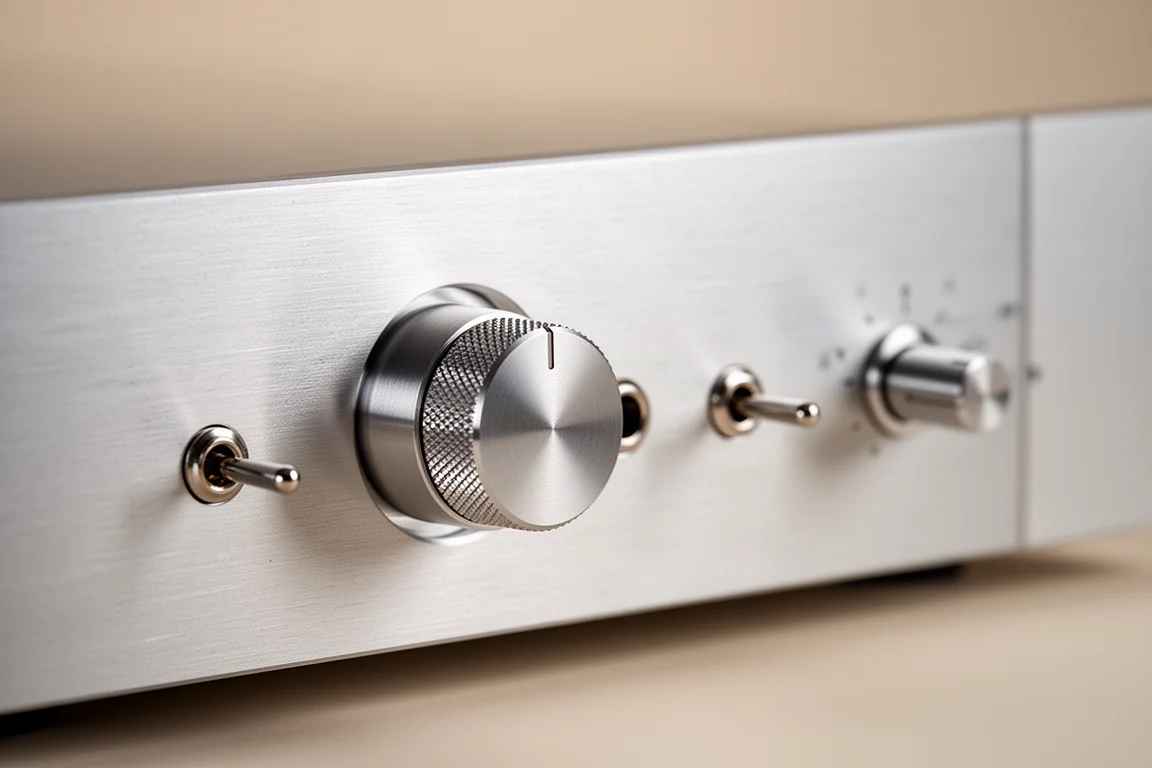
Cosmetically, the front panel keeps an industrial theme with well spaced, solid controls, VU meters with a dimmer switch, and the bass and treble section with its bypass switch. The amplifier is available in black or a natural metal finish.
Buying Advice
Choose the RA280 when your system is already digital focused, or when your vinyl setup uses a moving magnet cartridge. It gives you a 250 watt amplifier, a genuinely usable phono stage, and tone controls you can defeat, at a lower price point than the more feature laden RA180.
If you need moving coil support, cartridge loading options, or the active crossover with biamp ability, the extra cost of the RA180 is easier to justify. For everyone else, the RA280 covers the essentials and leaves out the rest.
Conclusion
The HiFi Rose RA280 is a well built integrated amplifier that keeps the basics and executes them properly. The gallium nitride Class D output stage runs cool and efficient while sounding smooth and detailed, the phono stage is good enough to live with, and the defeatable tone controls add flexibility without getting in the way. The remote could use an input selector, and the feature set is deliberately narrow, but for a system that does not need more, the RA280 is an easy recommendation.
Product link
View more details for HiFi Rose RA280
This product is mentioned in the review. Check the specifications, options, and compatibility before buying.
View more details for HiFi Rose RA280Further reading
Related Reviews
Integrated Amplifiers
Advance Paris A10 Classic Review: Vintage Looks and a Lively, Punchy Sound
The Advance Paris A10 Classic pairs glowing blue VU meters and a tube stage with one of the widest input sets on any integrated amplifier. Here is what it does well and what to weigh before spending $2,500.
Integrated Amplifiers
Advance Paris A12 Apex Review: A Modern Integrated Amplifier With Vintage Character
A dual mono integrated amplifier with 180 watts per channel, a tube front end, VU meters, and a connectivity list that covers turntables, televisions, computers, and headphones.
Integrated Amplifiers
Advance Paris Nova Range Review: AI130, AI190 and Modular Upgrades
A practical look at the Advance Paris Nova range, including the AI130 and AI190 integrated amplifiers and the modular streaming, Bluetooth and remote accessories that expand them.