Home Theater
A Hidden Dolby Atmos Home Theater: In-Wall Speakers, Screen, and Projector Picks
A complete 5.1.2 hidden home theater build, from budget in-wall speakers and an in-ceiling Atmos pair to an in-wall subwoofer, a rising screen, and a projector that disappears.
Introduction
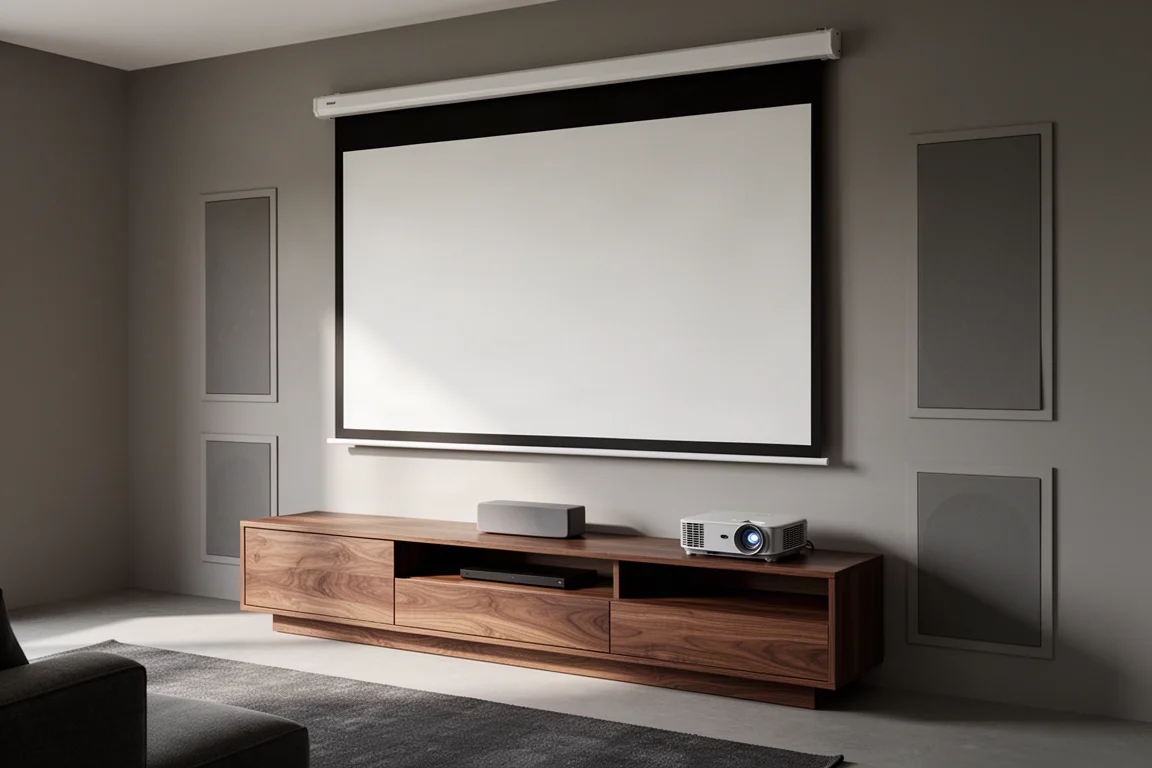
A hidden home theater is a different kind of project from a standard speaker and receiver setup. The room should look like an ordinary living space most of the time and turn into a cinema when the lights go down. That means in-wall and in-ceiling speakers, a screen that rises or retracts out of sight, and a projector that can be tucked away inside a console.
Cutting into drywall is not an option for everyone, and renters in particular should weigh that before committing. For anyone who can make the cut, the payoff is a room with no speaker cabinets, no stands, and no blank white rectangle on the wall when the system is switched off.
The build below is a complete 5.1.2 Dolby Atmos system: five in-wall speakers for the main channels, two in-ceiling speakers overhead, an in-wall subwoofer, plus the receiver, screen, and projector needed to make the whole thing disappear.
How This Hidden Home Theater Comes Together
The foundation is five in-wall speakers covering the left, center, right, and surround channels, two in-ceiling speakers handling overhead Atmos effects, and an in-wall subwoofer for low-frequency output. That adds up to a 5.1.2 layout, which is enough overhead channels for most rooms. If your room and budget allow more, the format scales.
Two practical points shape every choice here. First, in-wall speakers give up some bass output because they have no cabinet to reinforce the low end, which makes a subwoofer genuinely important rather than optional. Second, an acoustically transparent projection screen lets the front three speakers sit behind the screen, so sound stays aligned with the picture in the way a commercial cinema does it.
It also helps to plan the supporting parts before the first cut. Budget for in-wall rated speaker cable, in-wall rated HDMI cable for any run that travels inside a wall, and a media console or credenza deep enough to conceal a floor rising screen and house the electronics.
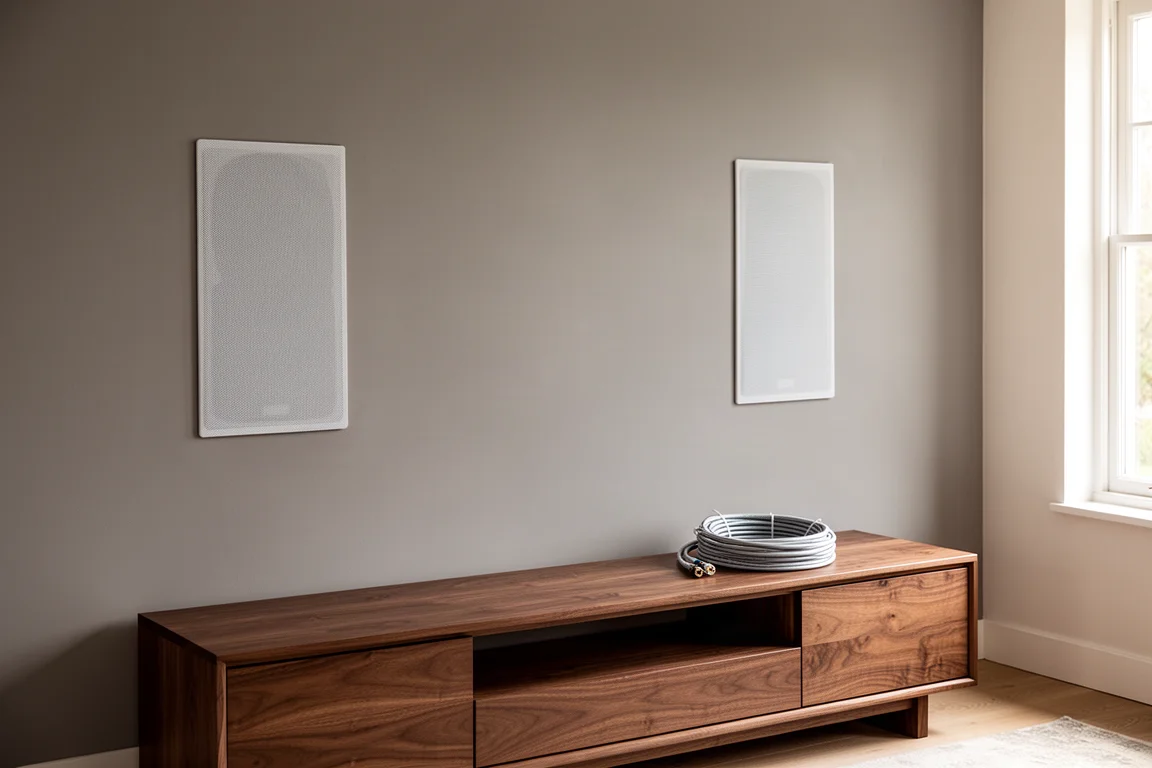
There is a quieter advantage worth mentioning as well. Because in-wall speakers sit flush and their grilles can be painted to match the wall, a finished room reads as a normal living space rather than a listening room, which matters if children, pets, or a design-conscious partner share the space.
Klipsch 600M Mark II: The Freestanding Reference Point
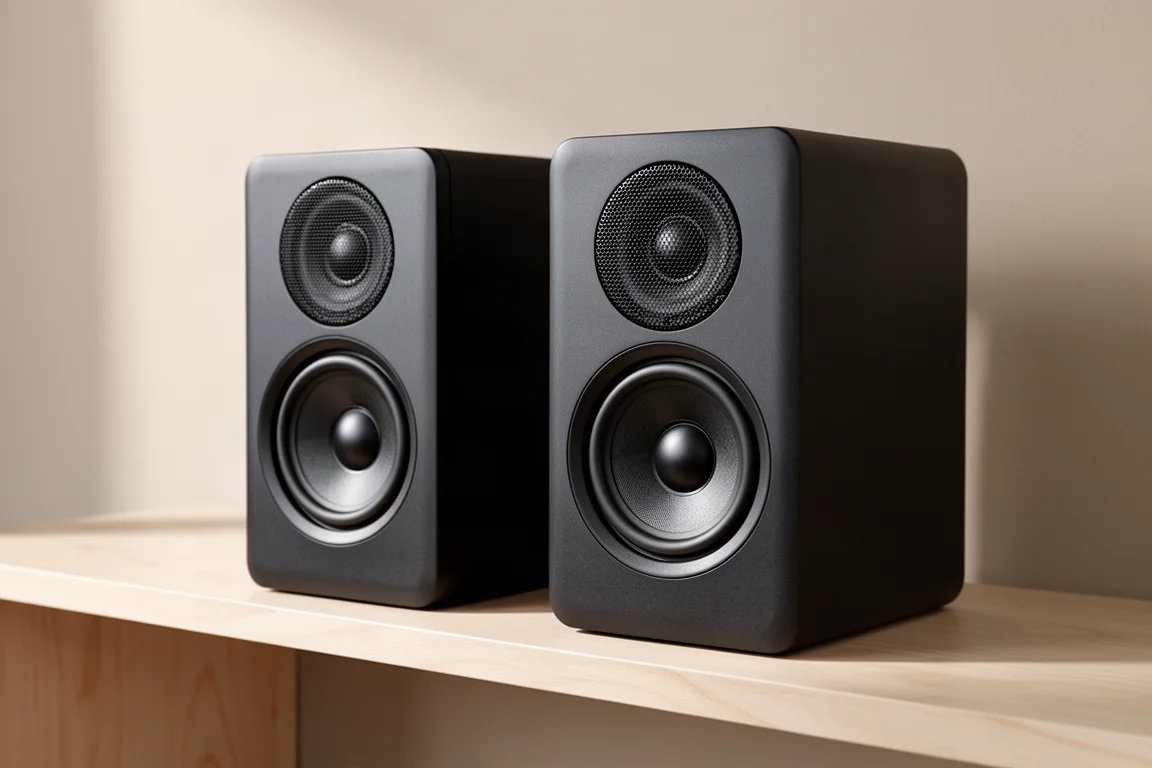
It helps to have a baseline before going fully in-wall. The Klipsch 600M Mark II is a bookshelf speaker with a punchy, dynamic, and exciting character that suits a wide range of content, and it recreates a good measure of the cinema thrill for a relatively low price. A pair runs around $560.
Its bass output is surprising for the size, so in a small room, or one where rattling the neighbors is a concern, you can get by without a subwoofer. What you cannot avoid is the cabinet. Two boxes and their stands occupy floor and visual space, which is exactly the problem this build sets out to solve.
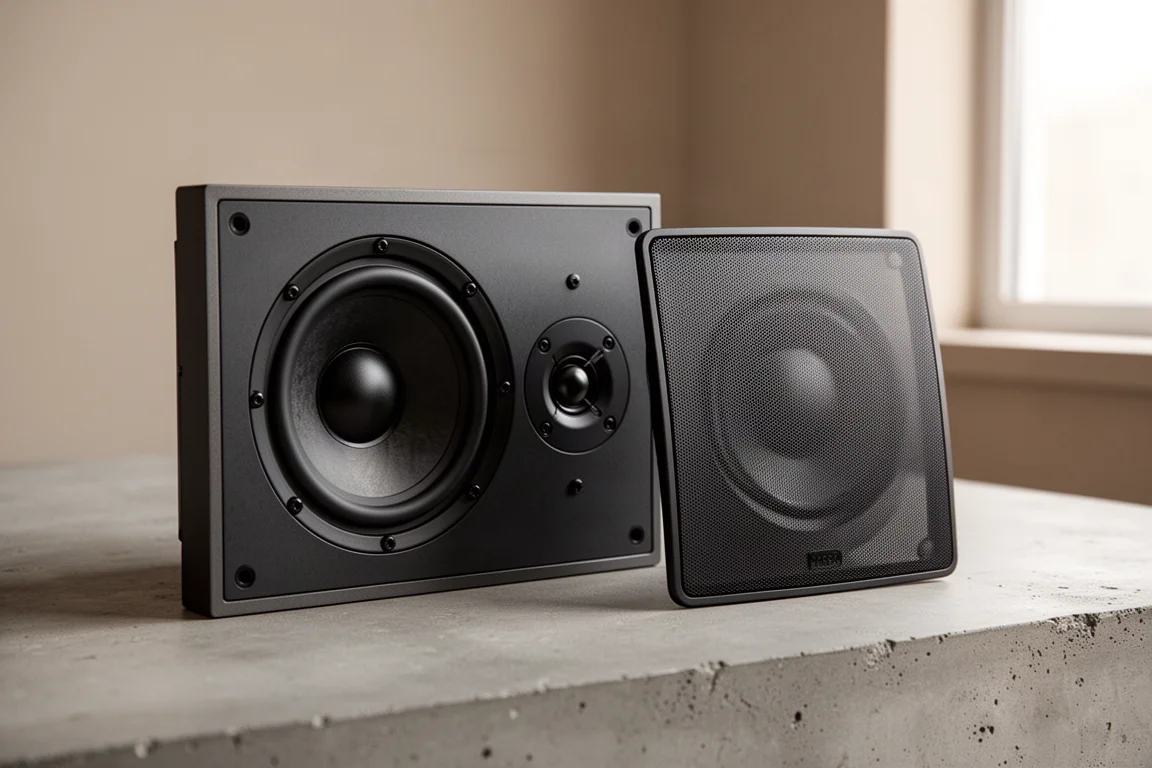
Klipsch R5650W: The Budget In-Wall Workhorse
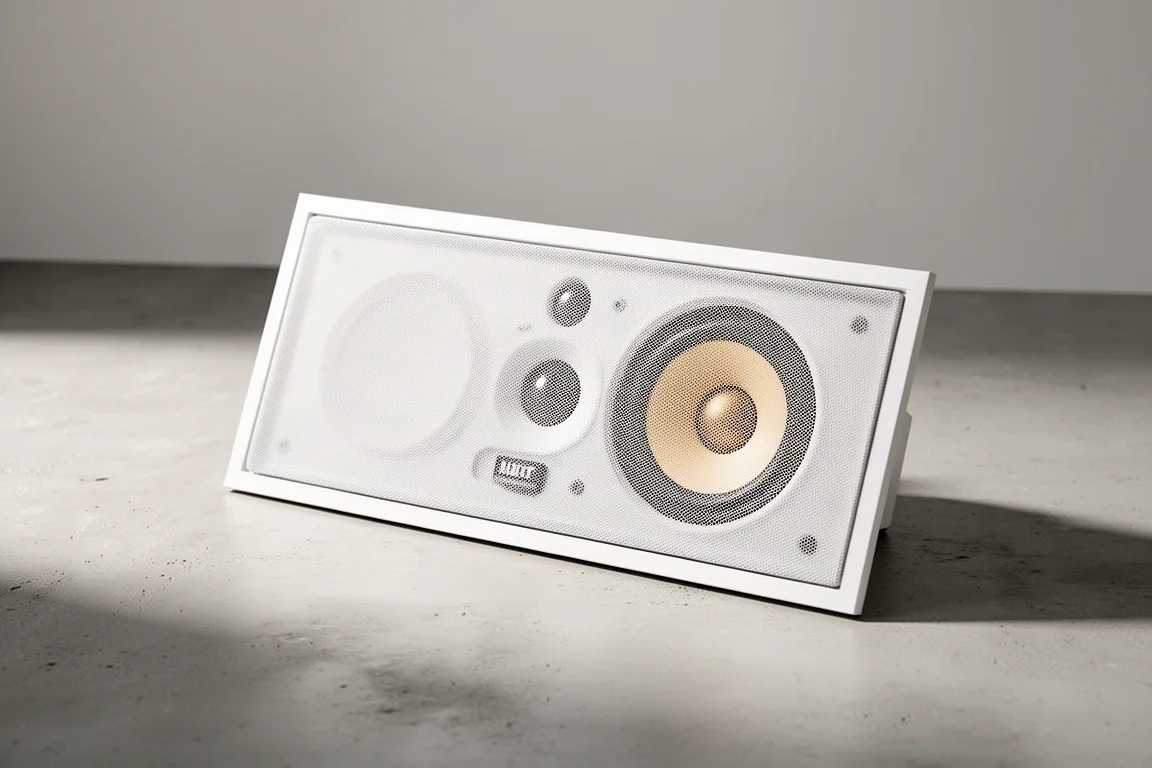
Remove the cabinet from the equation and the cost drops sharply. The Klipsch R5650W sells for $129 each, or $258 for a pair, which is less than half the price of its bookshelf sibling.
The driver complement is close to the 600M Mark II: a 6.5-inch woofer and a 1-inch tweeter of the same size and material as the bookshelf model uses. What you give up is a little bass output, since there is no cabinet to reinforce it, and that is where the subwoofer later in this build earns its place.
The math becomes interesting at scale. Five R5650W speakers come to $645, so for a little more than the price of a pair of 600M Mark II speakers you have the entire five-channel bed of a home theater.
Bowers & Wilkins CWM 663: A Step Up in Refinement
If you want more finesse and refinement while keeping an exciting character, the Bowers & Wilkins CWM 663 is the next step at $950 per pair. It is positioned as comparable to the brand’s 606 S3 bookshelf speaker at a lower cost, and this in-wall range has a long record of use in serious home theaters, including rooms where films are screened before release.
Five CWM 663 speakers come to $2,850. That is a substantial jump over the Klipsch in-wall option, but still a long way below what an equivalent freestanding setup would cost.
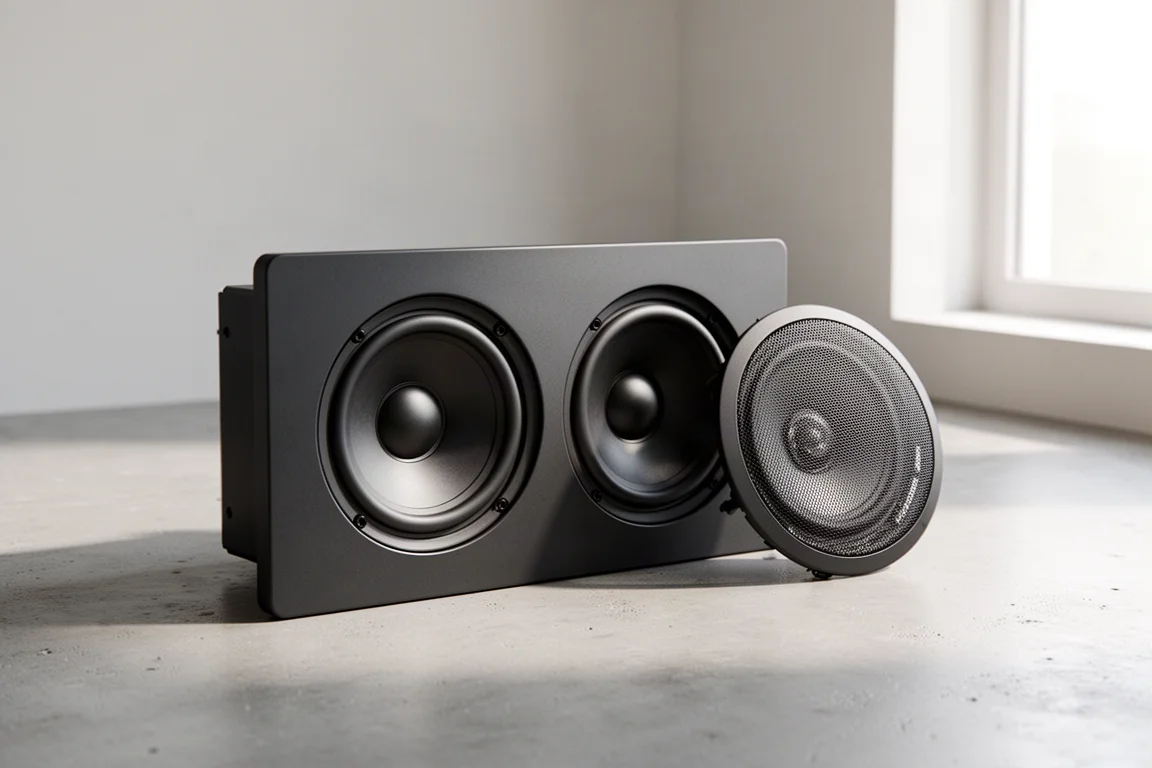
Bowers & Wilkins CWM 7.3S2: Tower Performance Inside the Wall
For higher fidelity without giving up floor space, the Bowers & Wilkins CWM 7.3S2 is essentially a 700 Series tower built into the wall. At $2,500 each, it is the most expensive speaker discussed here, and it is aimed at listeners who want the wall to stop being part of the conversation about sound quality.
In a dedicated room, where the front wall is already being opened up for the screen and the center channel, this is the kind of speaker that makes the in-wall compromise feel like no compromise at all.
The trade-off is straightforward. Cost adds up quickly across a full channel set, and the receiver needs enough headroom to make the most of what the speaker can do.
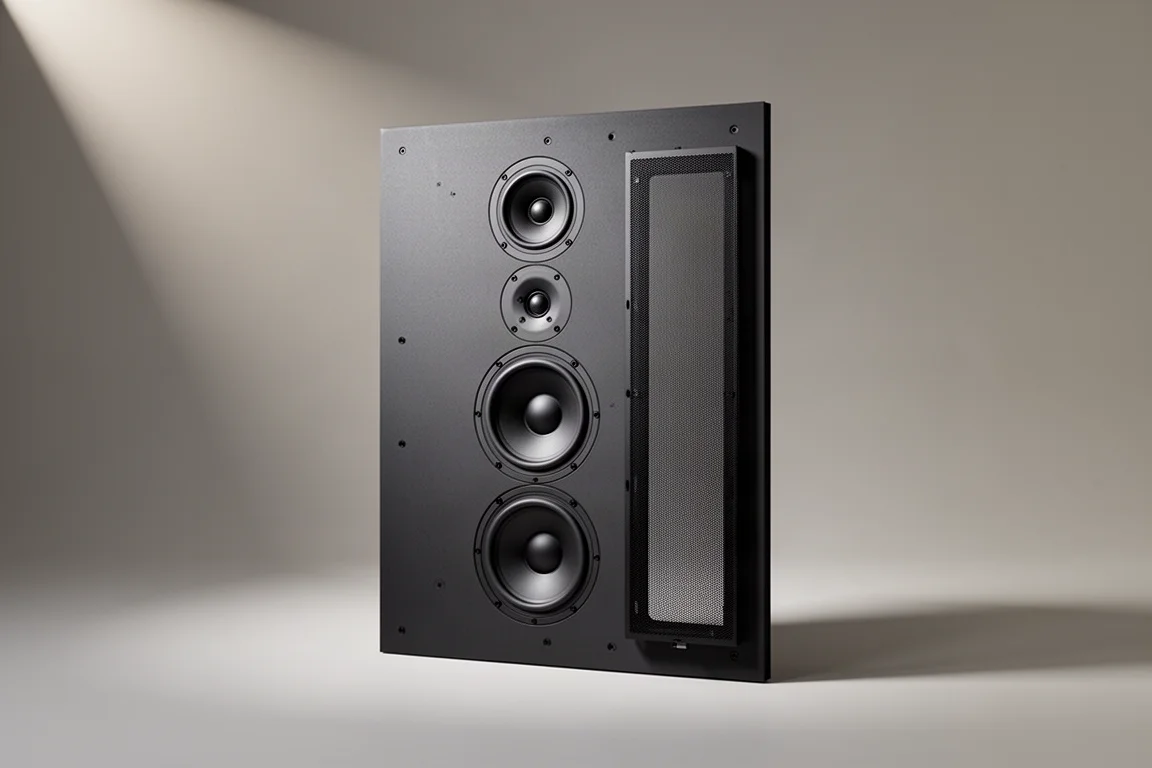
Focal 300 IW6 LCR: Tower-Like In-Wall Sound
Focal’s 300 IW6 LCR at $1,299 each is another in-wall speaker built to deliver tower-like output. It is a serious candidate for the front three channels in a room where the screen wall is being rebuilt anyway, and it keeps the front stage completely out of the floor plan.
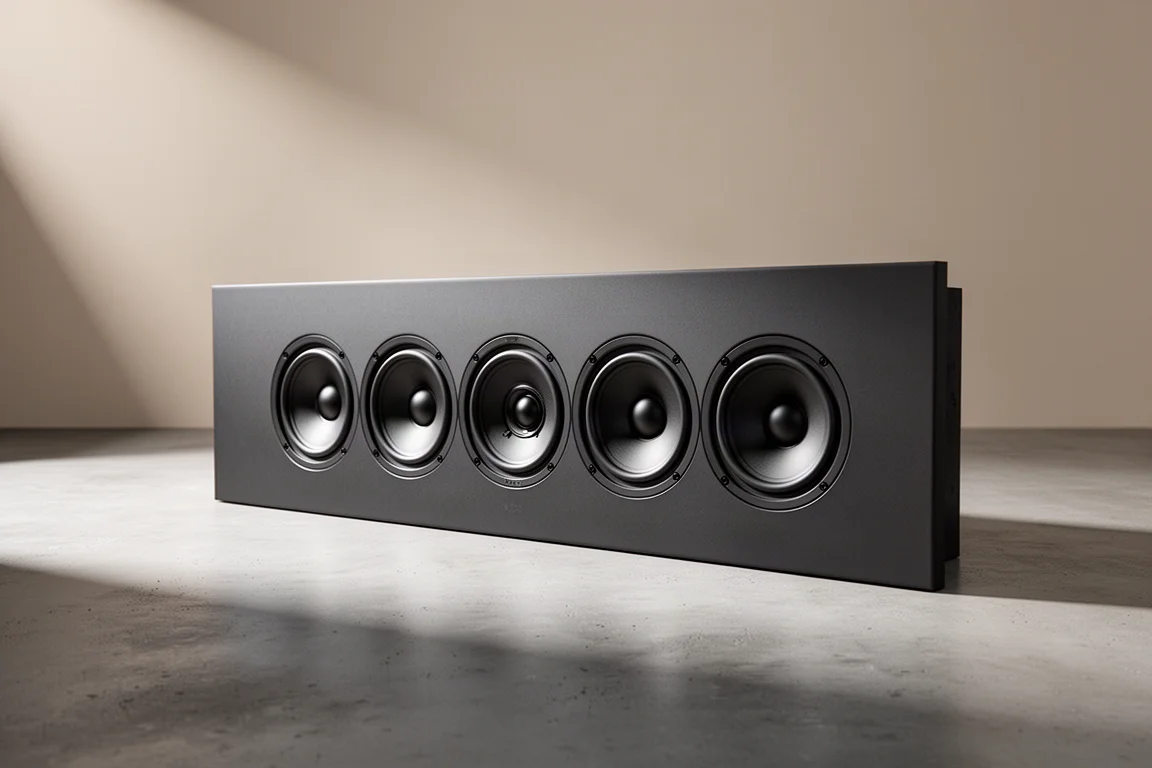
Monitor Audio W2MCP: Another Tower-Like Option
Monitor Audio’s W2MCP at $1,250 each rounds out the higher-end in-wall choices. Like the Focal and the Bowers & Wilkins 7.3S2, it is a tower-like design intended to sit flush in the wall while chasing the scale of a floorstanding speaker.
Klipsch CDT-3800: Overhead Atmos Channels
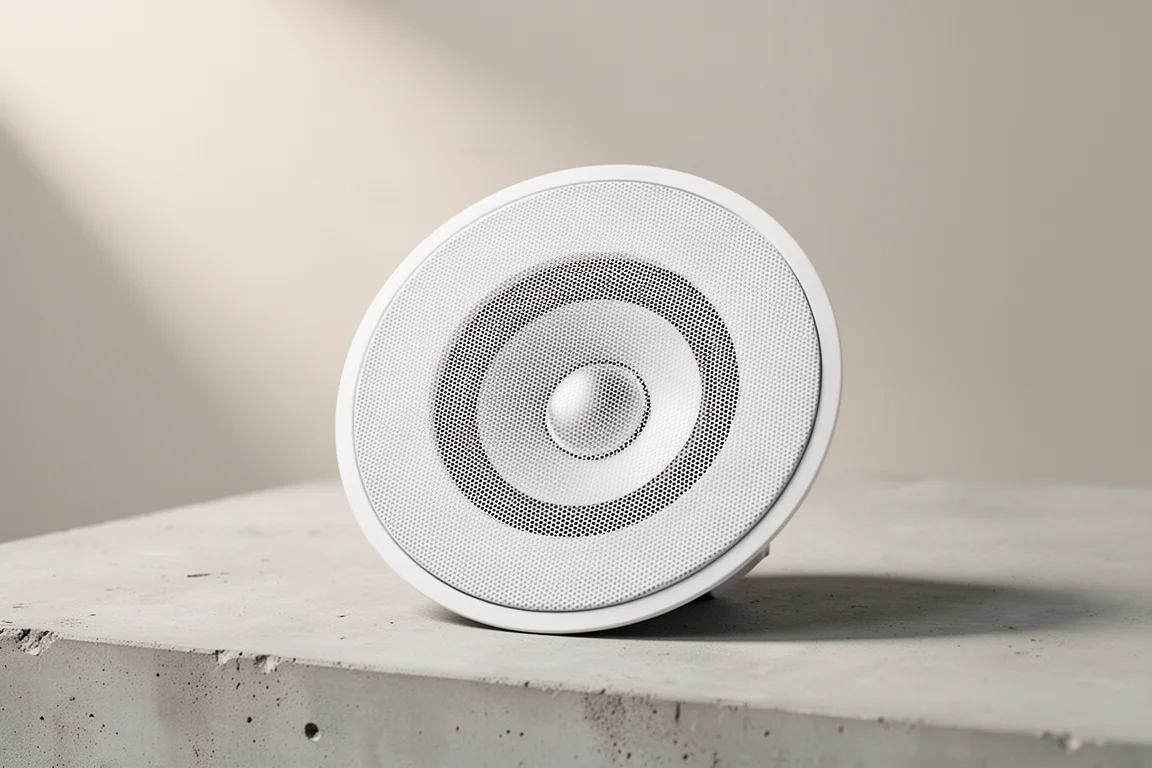
A 5.1 layout is not the goal here. Atmos-encoded music and film need overhead channels, so this build specifies two in-ceiling speakers for a 5.1.2 configuration. Two overhead channels are enough in most rooms, though the format supports more if you want them.
The Klipsch CDT-3800 is the pick at $139 each, or $278 for the pair. These in-ceiling speakers have been paired with loudspeakers ranging from affordable to cost-no-object, and they have never felt like the weak link. If your room lacks parallel walls for in-wall surround speakers, the same in-ceiling model can handle surround duty as well.
SVS 3000 In-Wall Subwoofer: The Foundation
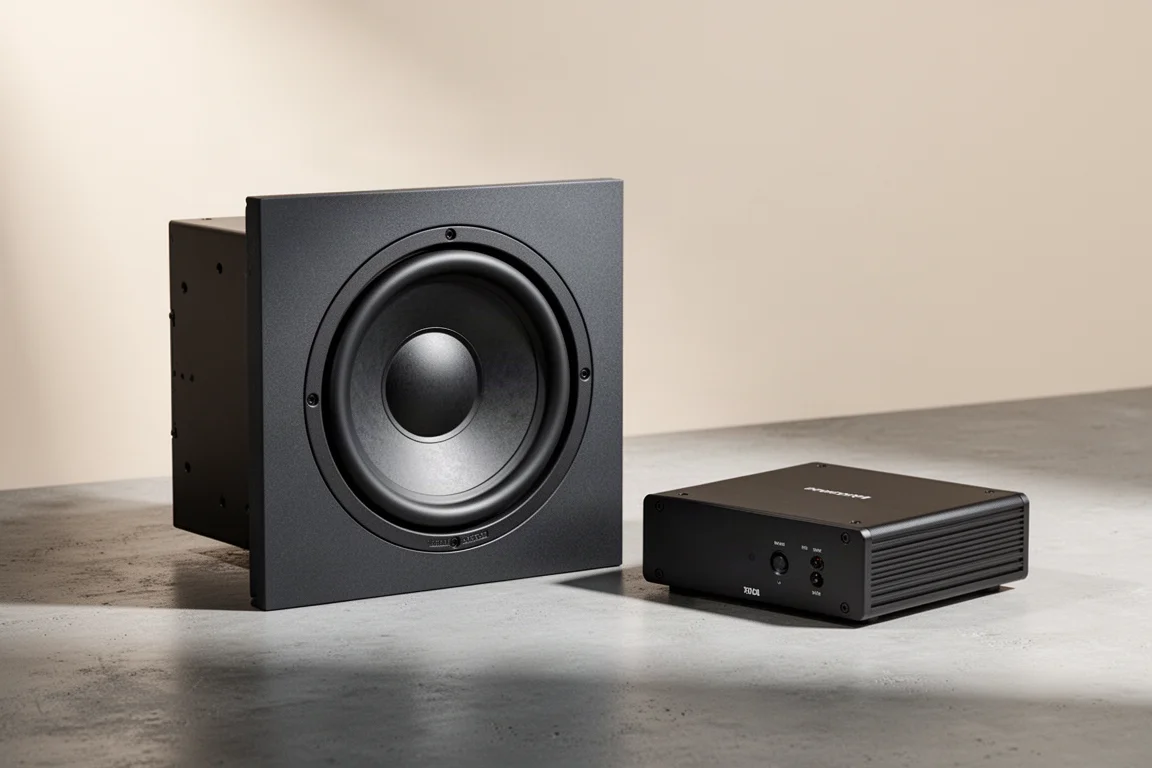
None of the speakers above are true full-range designs, so a subwoofer is essential for a genuine cinema experience. The SVS 3000 In-Wall Subwoofer, at just under $2,000, is the pick here.
An in-wall subwoofer involves more engineering than a conventional speaker, including the question of how it is powered. The SVS includes the separate amplifier needed to drive it properly. That detail matters, because many cheaper in-wall subwoofers are sold without the amplifier, and the cost of adding one back in erases much of the apparent saving.
Onkyo RZ30: The Receiver That Ties It Together
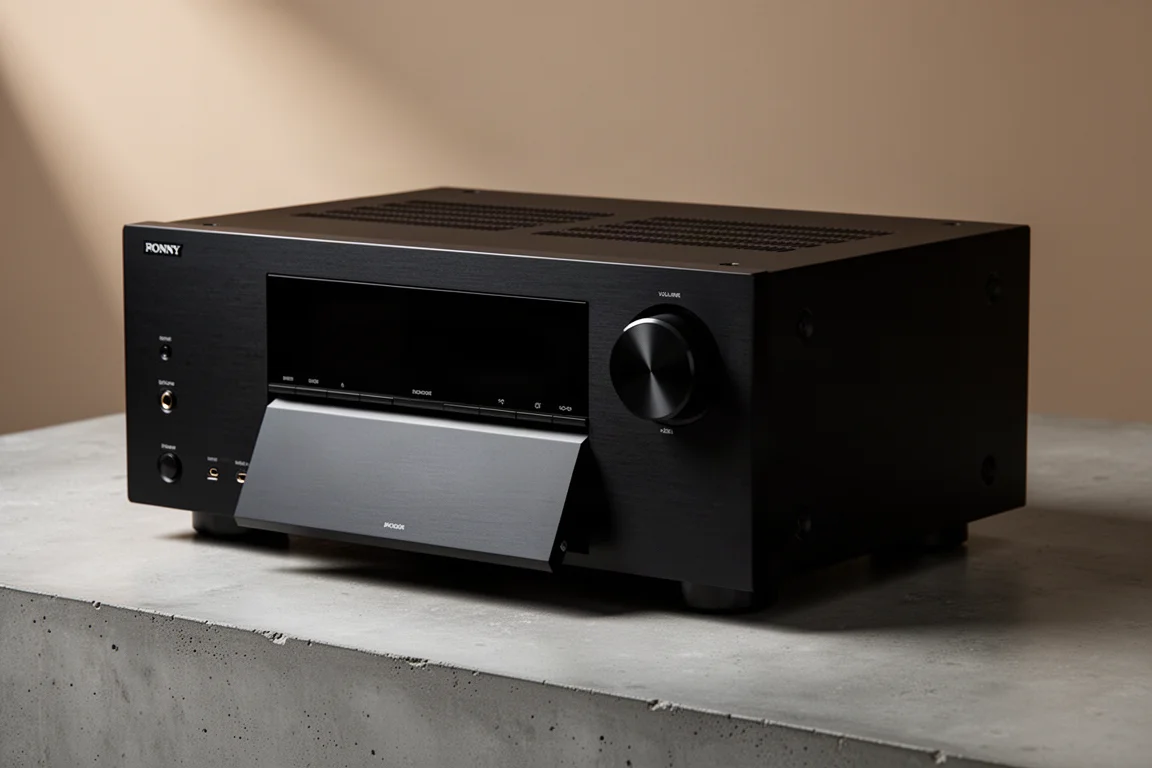
Power comes from the Onkyo RZ30, the value-focused AV receiver of choice for this build. It has no trouble controlling a Dolby Atmos speaker system, and it drives the Klipsch in-wall and in-ceiling speakers alongside the SVS subwoofer without complaint.
If you spec the higher-end in-wall speakers, the receiver is the sensible place to add headroom so there is no doubt about power delivery. Wiring and configuration follow the same steps as any 5.1.2 system: connect the in-wall speakers and the subwoofer amplifier, then run the setup calibration.
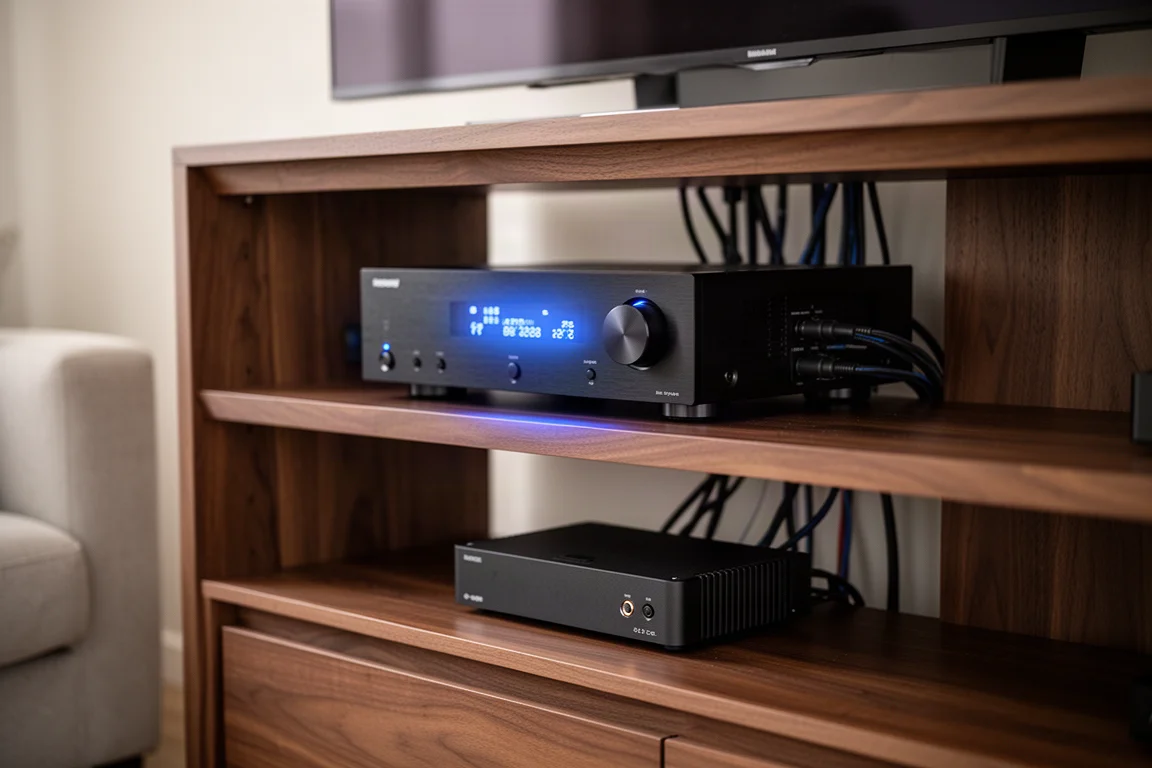
For most rooms, though, the RZ30 keeps the budget pointed at the speakers and the screen, which is where the money is heard and seen most clearly.
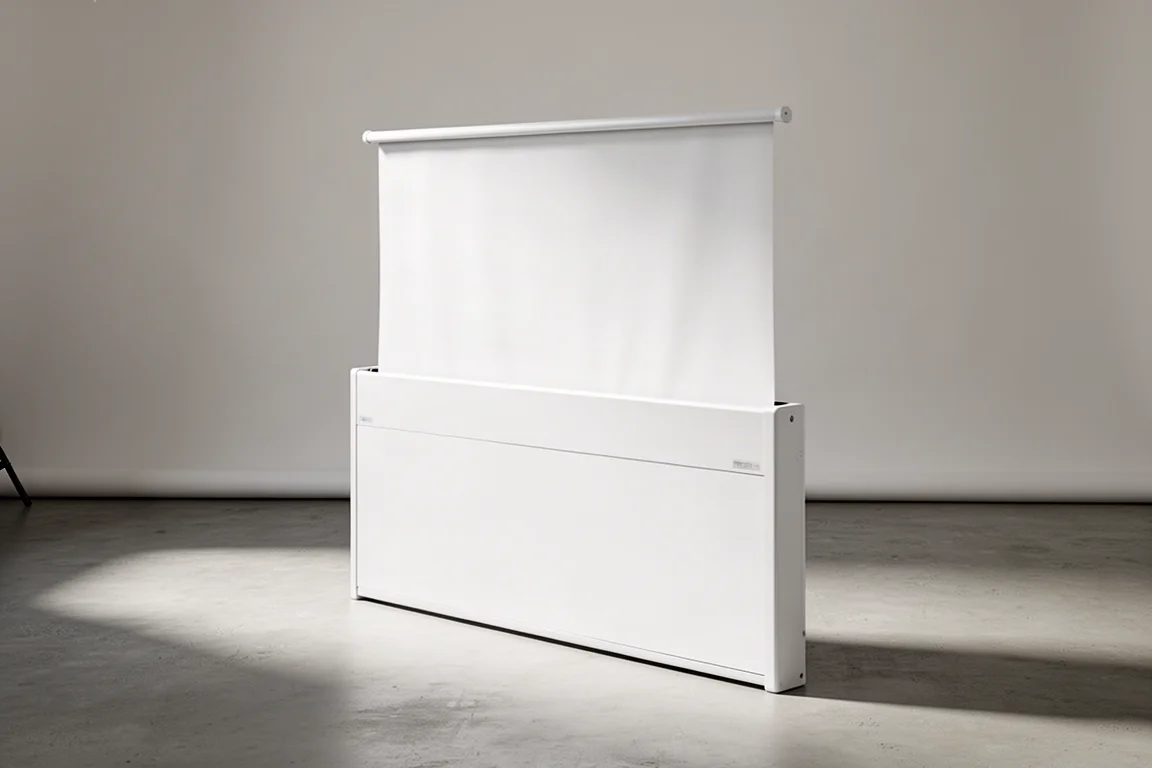
Vivid Storm 100-Inch Perforated Floor Rising Screen: A Screen That Disappears
A fixed frame projection screen is a blank white or grey rectangle when it is not in use, which defeats the whole idea of a hidden room. A retractable screen solves that, and in this build the screen rises from the floor instead of dropping from the ceiling.
The Vivid Storm 100-inch perforated floor rising screen is the choice. Its perforations make it acoustically transparent, so the front three speakers can sit directly behind it with sound and picture in perfect alignment. It will not out-resolve reference-grade screens, but it is more than acceptable for the overwhelming majority of viewers and enthusiasts.
Because it rises from the floor, it can be concealed behind a media console or credenza, which is also where the AV receiver and subwoofer amplifier live. An ultra short throw projector is one way to pair with a floor rising screen, though those models can be fiddly to set up and expensive, which is why this build uses a conventional LCD or DLP projector instead.
Samsung Freestyle Gen 2: The Compact Projector Option
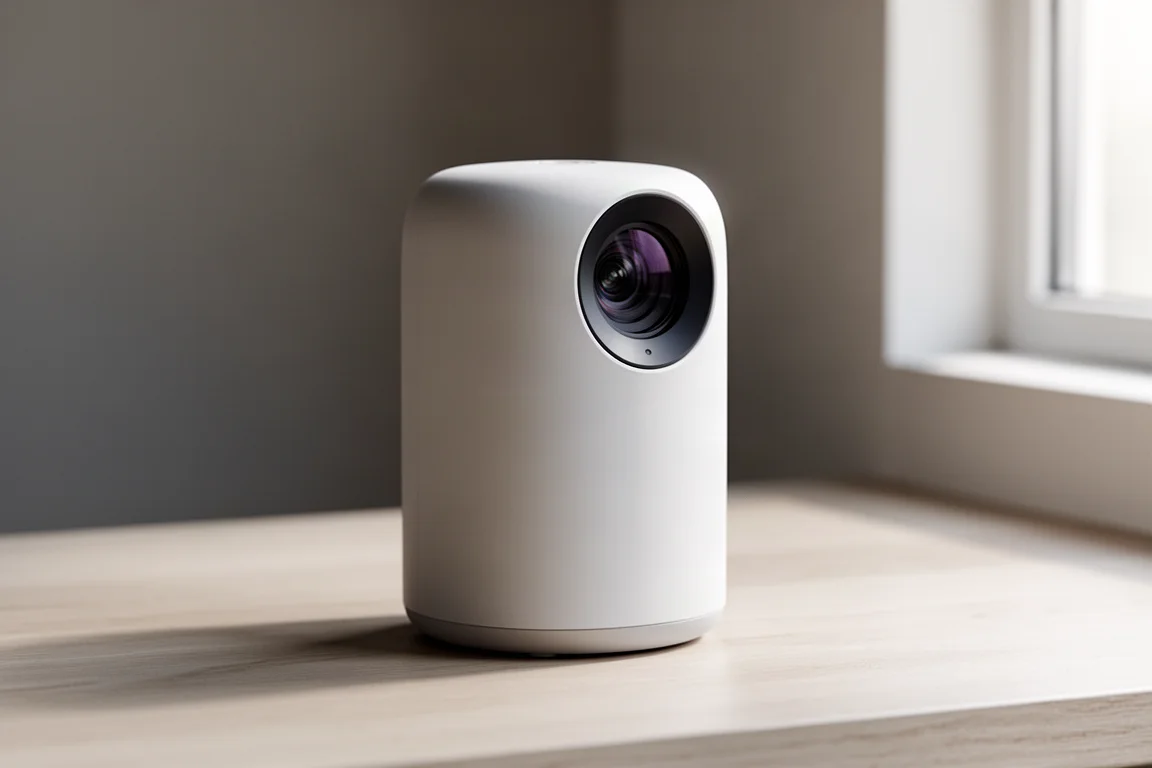
On the budget side, the Samsung Freestyle Gen 2 costs $600 and is roughly the size of a can of soda. It includes built-in apps for services like Netflix, so a single HDMI connection to the receiver is all it takes to start watching, and its size means it can be tucked inside the console when the room is not in use.
Epson Home Cinema 2350: The Better Picture Upgrade
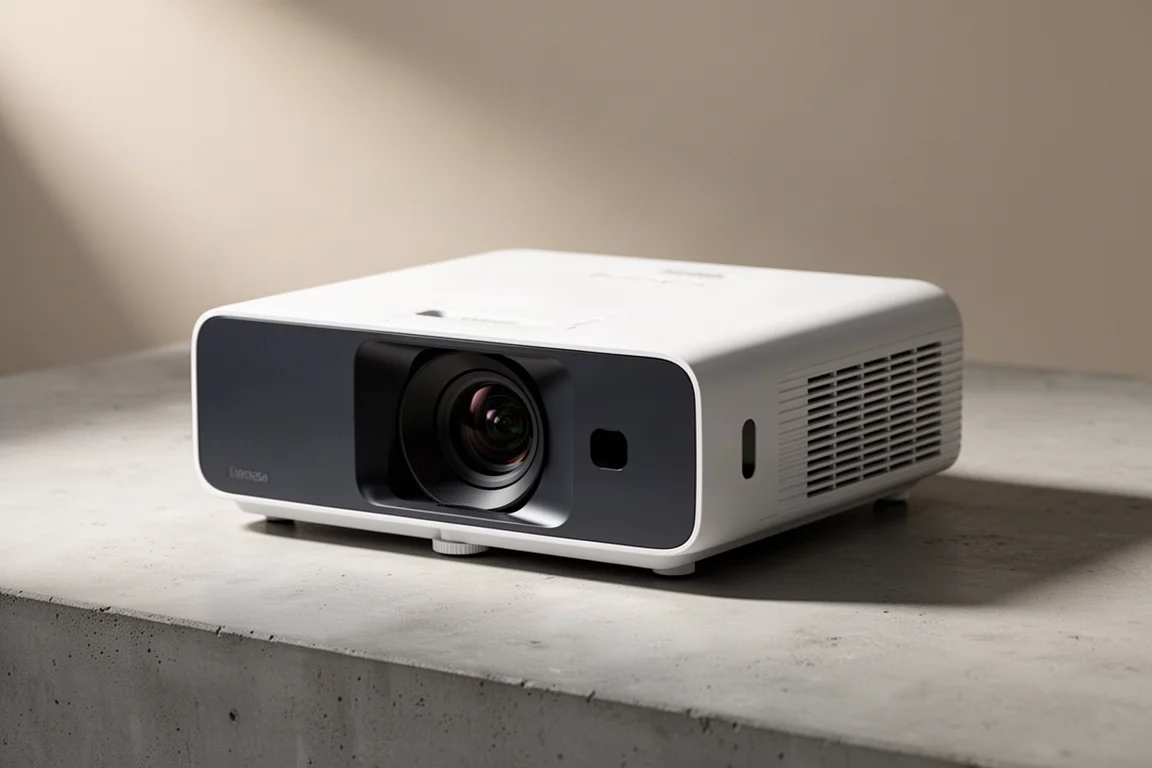
A better picture is available for a modest step up. The Epson Home Cinema 2350 comes from a line that has earned a strong reputation for bright, high-quality, and easy-to-use LCD front projectors at accessible prices, and it includes built-in apps, so it is just as plug-and-play as the compact option.
Above this tier sit laser projectors and other high-end designs, some of which cost more than the rest of this entire system. A projector remains the most affordable route to a genuinely cinematic image at this scale, but that scale has never been cheap.
What the Full Build Costs
The Klipsch in-wall and in-ceiling speakers plus the SVS subwoofer come to $2,923 for a complete 5.1.2 Dolby Atmos package, which is roughly $1,000 less than the freestanding equivalent. Add the receiver, the rising screen, and the projector, and the whole system lands at around $6,000 using the Klipsch, Onkyo, and Epson combination.
Remember to budget for the accessories as well: in-wall rated speaker cable, in-wall rated HDMI cable for runs inside the wall, and a console deep enough to hide the screen and the electronics.
Buying Advice: Which Combination Fits Your Room
Start with the room, not the spec sheet. If you can cut into drywall and you want the most channels for the least money, the Klipsch R5650W across five channels plus a pair of Klipsch CDT-3800 overhead speakers is the value path, and the SVS subwoofer completes it.
If refinement matters more than channel count, the Bowers & Wilkins CWM 663 is the middle step, while the Bowers & Wilkins CWM 7.3S2, Focal 300 IW6 LCR, and Monitor Audio W2MCP are for listeners who want tower-like output and are prepared to pay for it.
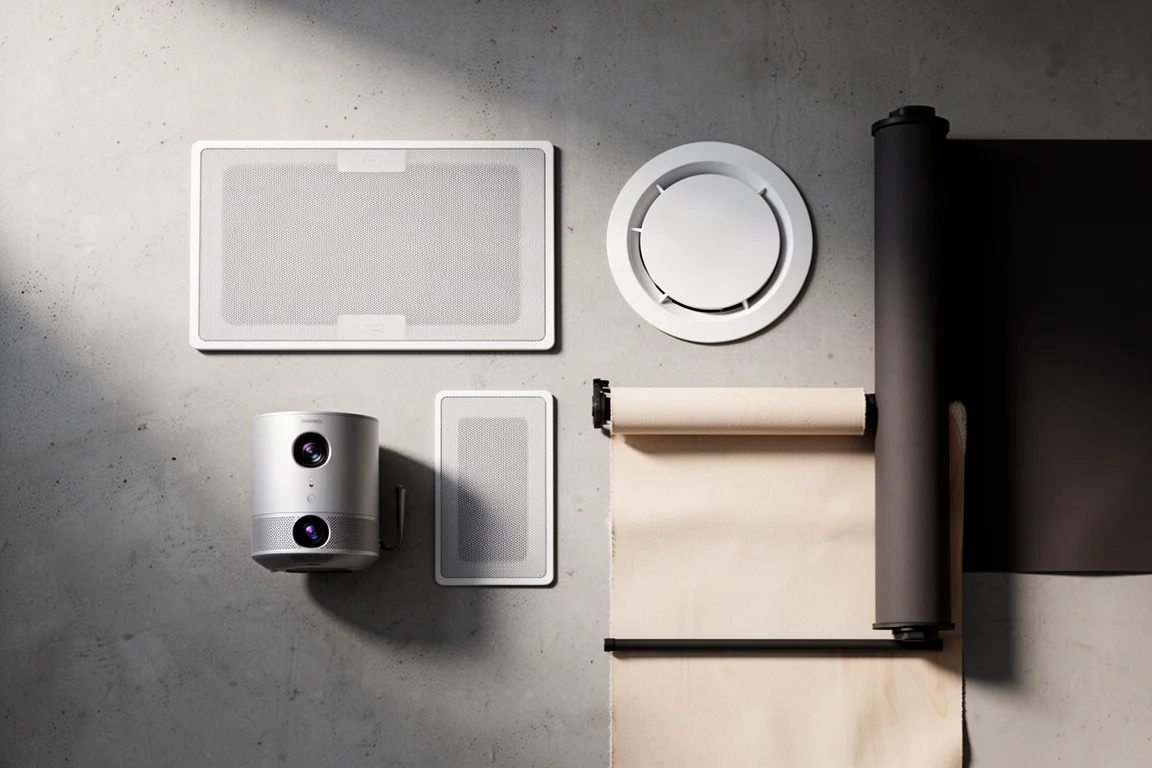
The projector decision is simpler than it looks. If the projector needs to vanish into a console and the budget is tight, the Samsung Freestyle Gen 2 covers casual viewing. If picture quality is the priority, the Epson Home Cinema 2350 is the recommended step up, and the Vivid Storm screen makes either one disappear when the evening ends.
One honest caveat applies to the whole build: every speaker here gives up some low-frequency output to its cabinet-free design, so skipping the subwoofer will leave the system sounding thinner than the price tag suggests.
Conclusion
A hidden home theater asks more of the room than a conventional setup, but it gives back a space that looks untouched when the screen is down and the lights are up. In-wall and in-ceiling speakers remove the visual clutter, an acoustically transparent rising screen removes the blank rectangle, and a compact or console-mounted projector removes the last piece of equipment from view.
Build it in stages if the full figure feels steep. Start with the five in-wall channels and the receiver, add the overhead pair, then bring in the subwoofer, screen, and projector as the budget allows. The only person who has to like the look and sound of the finished room is you.
Further reading
Related Reviews
Home Theater
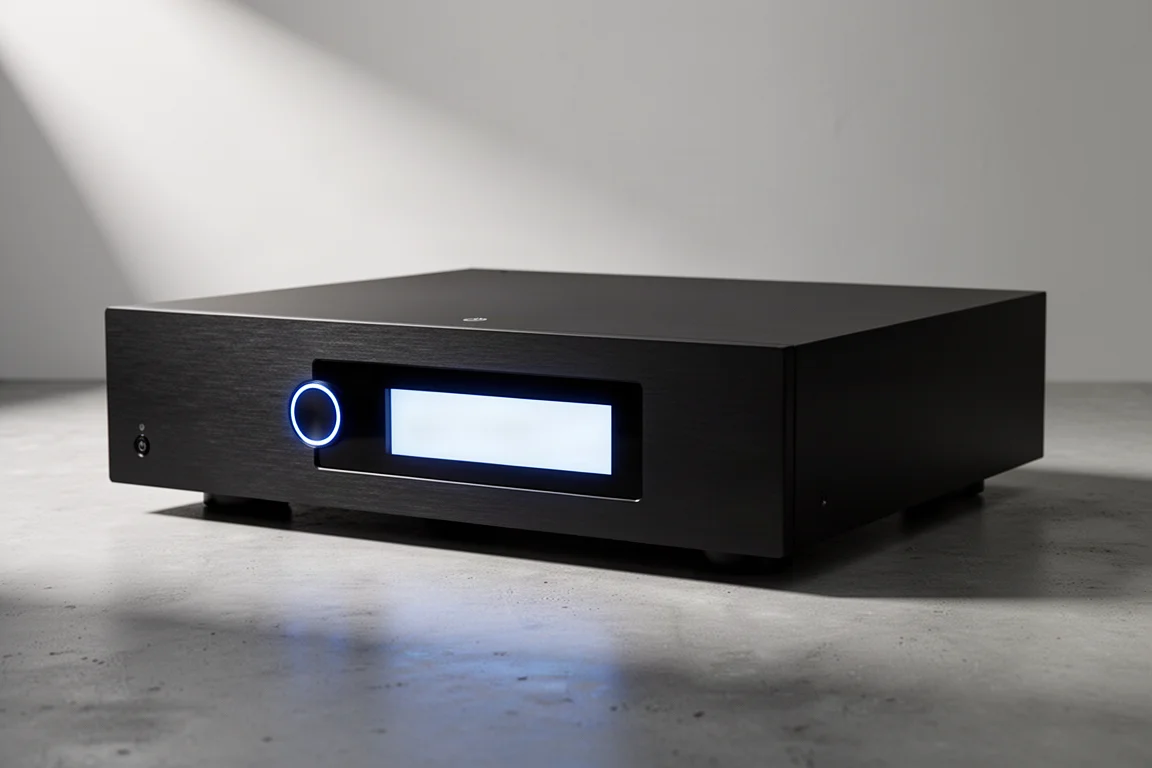
Anthem AVM 90 Review: A 15.4-Channel Flagship Preamp Processor
A close look at Anthem's flagship preamp processor, covering its dual ESS DAC architecture, 15.4-channel layout, ARC Genesis calibration and four independent subwoofer outputs.
Home Theater
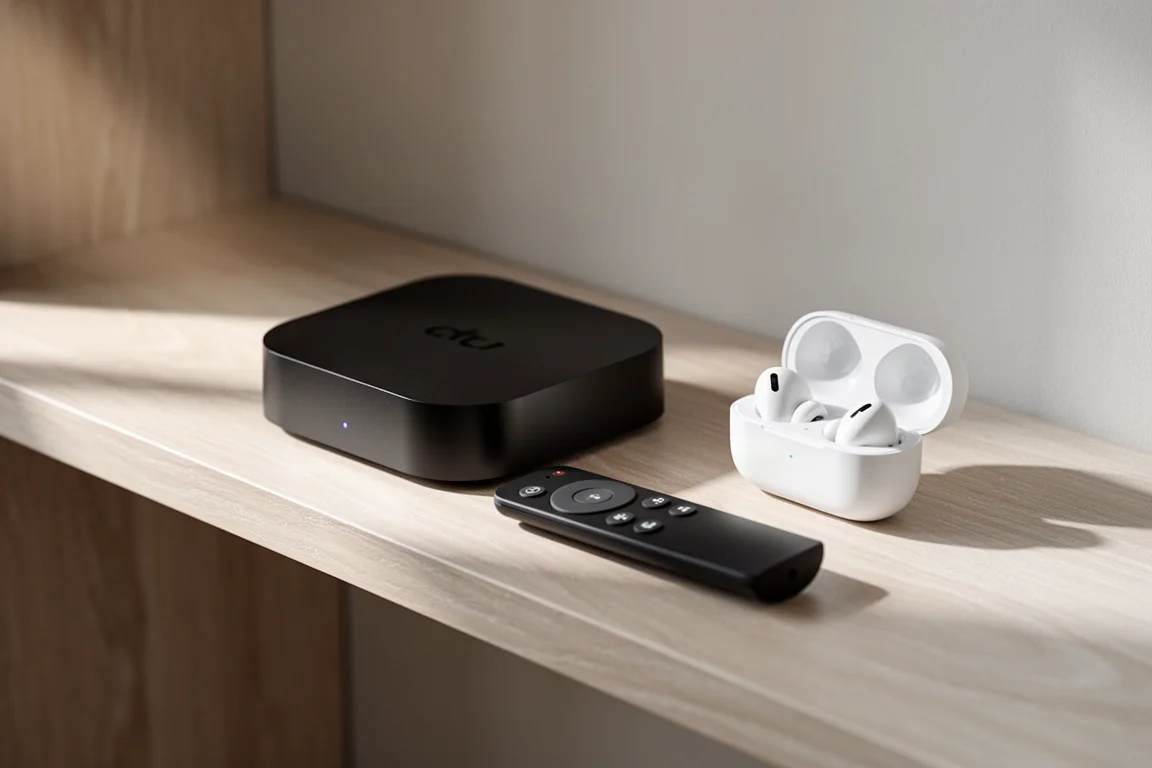
Apple TV 4K With AirPods: A Best-Value Home Theater Setup
An Apple TV 4K paired with AirPods over Bluetooth makes a compact home theater setup for movies, spatial music and late-night viewing, and it can be assembled for as little as $300.
Home Theater
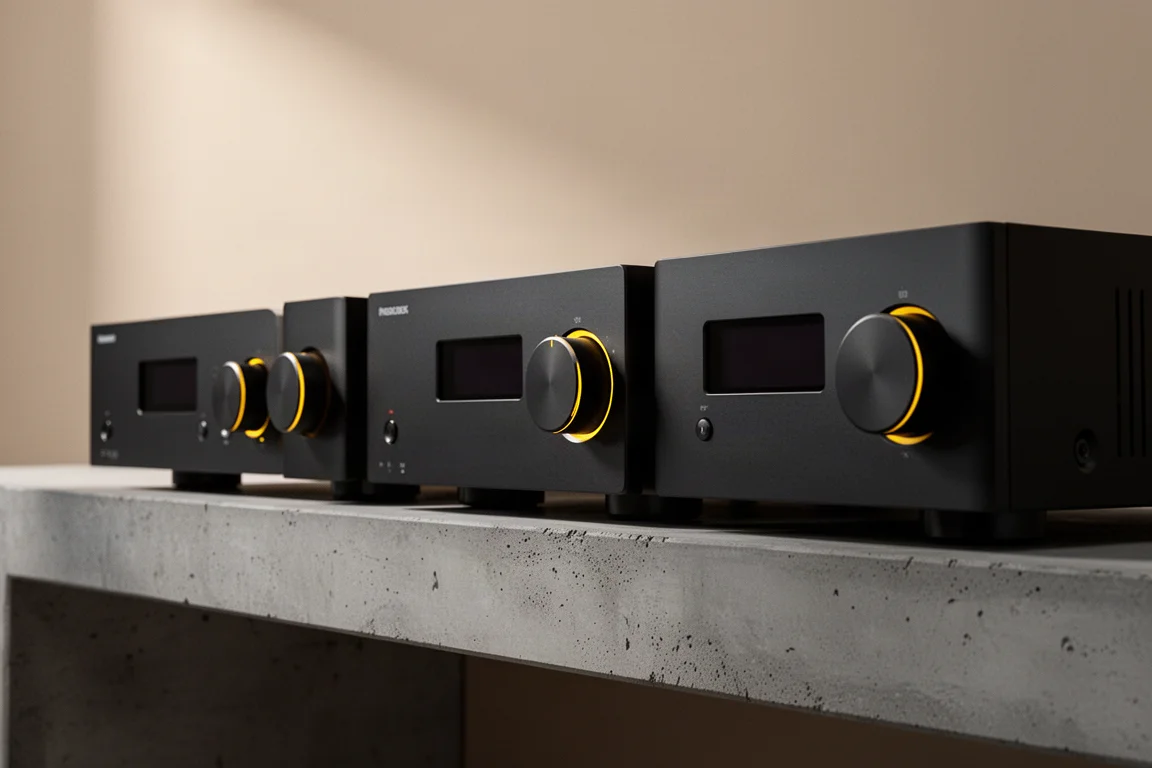
Arcam AVR15, AVR25, AVR35, and AVP45 Compared: Which AV Amplifier Fits Your System?
Four new Arcam home theater components share nine-channel amplification and Dirac Live, but differ in power, processing ceiling, and channel flexibility.