Hi-Fi Audio
Hi-Fi Rose RS 520 Review: A Streaming Integrated Amplifier With a Flagship DAC
A practical look at the Hi-Fi Rose RS 520, an all-in-one streaming integrated amplifier with a 12.6-inch touchscreen, an ESS ES9038 Pro DAC, and GaN-based amplification.
Introduction
Hi-Fi Rose is a young name in high-performance audio, but it comes from a company with unusually deep engineering roots. The brand is based in Seoul, Korea, and sits inside a larger technology business that has been building interactive touchscreen kiosks for public spaces since around 1954. Manufacturing happens in-house, and roughly 70 percent of the team are engineers. The brand itself launched in 2017, driven by an executive who is both a classical music listener and a committed audiophile.
The RS 520 is the company’s all-in-one integrated amplifier with a built-in streamer. It reads as a blend of two existing designs: the streaming platform from the RS 150 streamer preamp, and the amplification approach developed for the RA180 integrated amplifier. The result is a single chassis that covers streaming, digital-to-analog conversion, preamplification, and power amplification.
That combination is the heart of the pitch. Instead of assembling a rack of separates, you get one component that handles nearly every source you own, with a front panel that looks nothing like a traditional hi-fi amplifier.
Who This Product Is For
The RS 520 is aimed at listeners who want serious sound quality without a stack of boxes. It replaces a streamer, a DAC, a preamplifier, and a power amplifier in one unit, and with optional add-ons it can also take over CD playback and ripping. For anyone moving up from a basic integrated amplifier or a soundbar-based setup, it is a natural next step.
It also works well as the center of a living-room system. The toslink connection means almost any television can be attached to improve its sound, and on newer TVs the HDMI ARC path lets the television’s own remote control the volume of the RS 520. Music and video therefore share one system rather than competing for space.
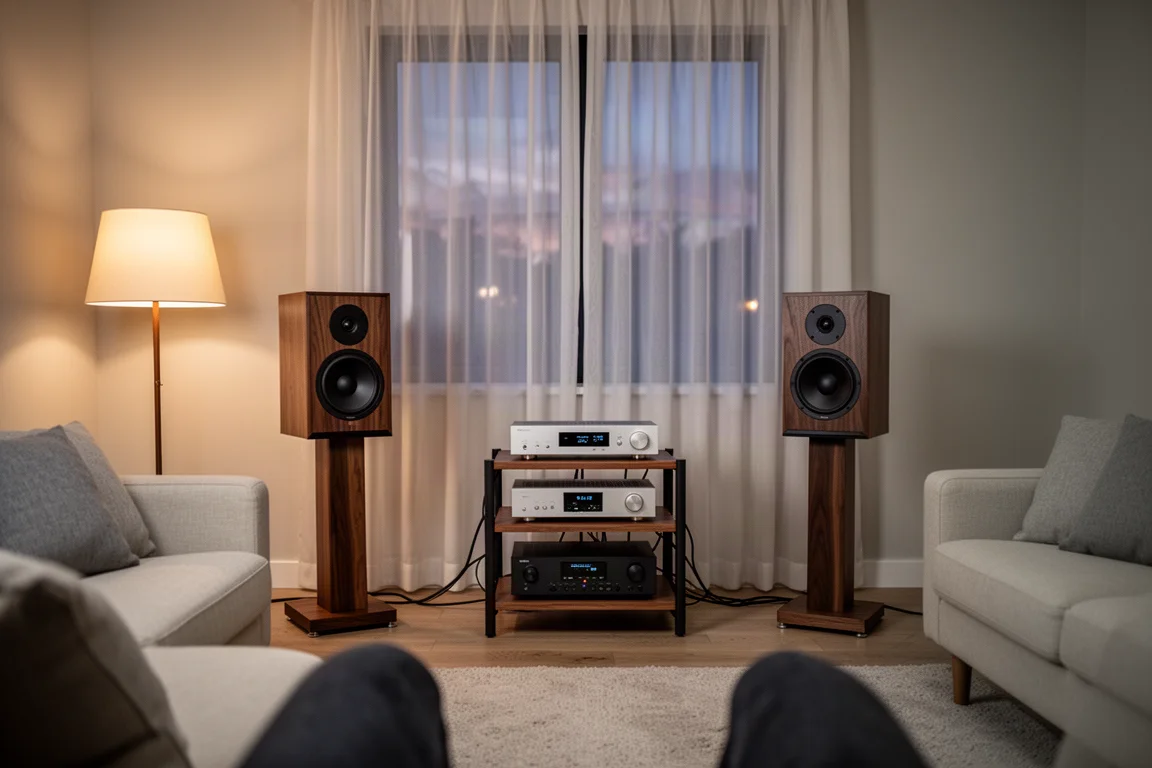
The compact footprint is part of the appeal. Listeners with limited shelf space who still want high-performance two-channel sound are exactly the audience this unit was built for, and the streaming section is broad enough that most people will not need a separate network player.
Main Strengths
Three areas stand out: the breadth of streaming sources, the front panel interface, and the amplifier section borrowed from the RA180.
Streaming and Connectivity
Source support is wider than most streamers offer. Spotify Connect, Apple Music, Qobuz, and Tidal are all present, with full MQA decoding. Rose Tube is a commercial-free portal for YouTube videos, and streaming video content can be sent out to a television, including 4K Ultra HD material. Rose Radio covers internet radio with Shazam built in for identifying tracks. High-resolution files can be pulled in from a local device or from a network location, and the unit is a Roon Ready endpoint. For physical media, an optional RA 780 CD drive adds CD playback, and an optional internal SSD allows discs to be ripped directly to the unit.
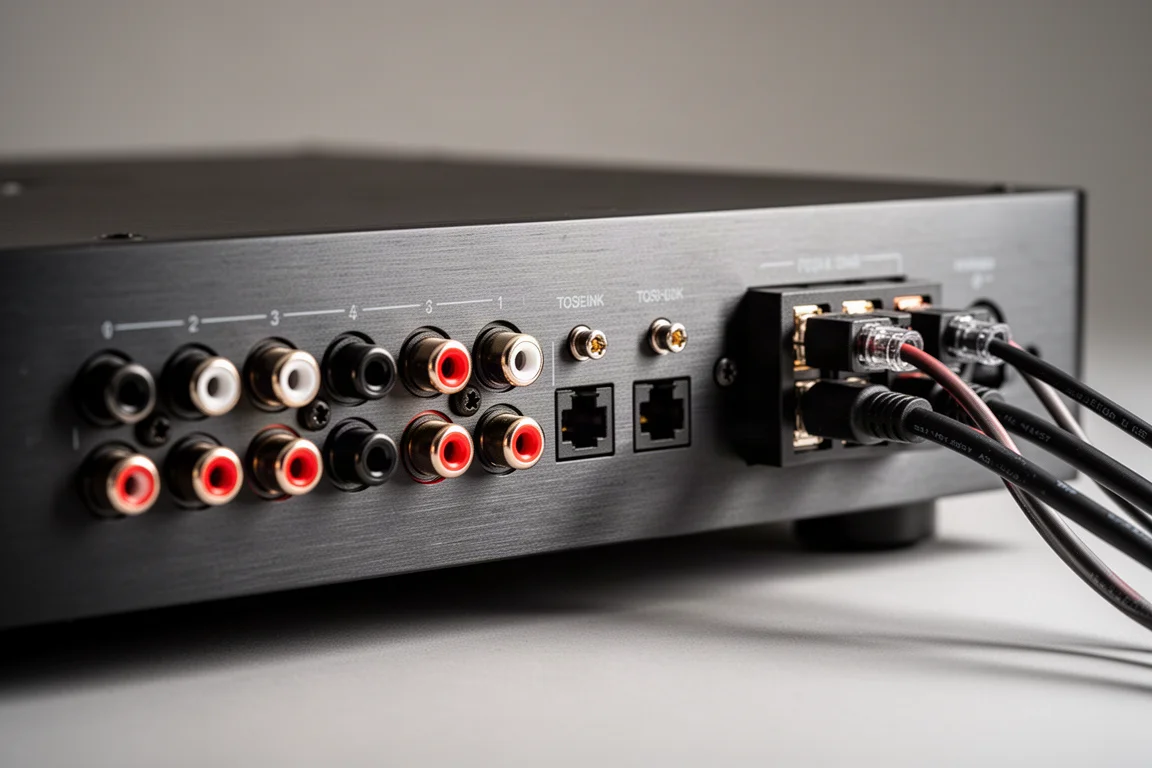
The rear panel keeps pace with that feature list. The RCA connections are the higher-end chassis-mount type usually found on very serious high-end components, and they are actually nicer than the coax and analog inputs on the more expensive RS 150. Around them you get digital coax and toslink inputs and outputs, preamplifier outputs, one analog input, a USB input for computer audio, an HDMI ARC input, an HDMI output, and several USB ports for a Bluetooth dongle, the CD drive, or a USB drive of music files. The speaker terminals are solid and in line with what this class of component should offer.
Taken together, the connectivity means the RS 520 can act as the hub of a system rather than just one more box in it.
The Display and Interface
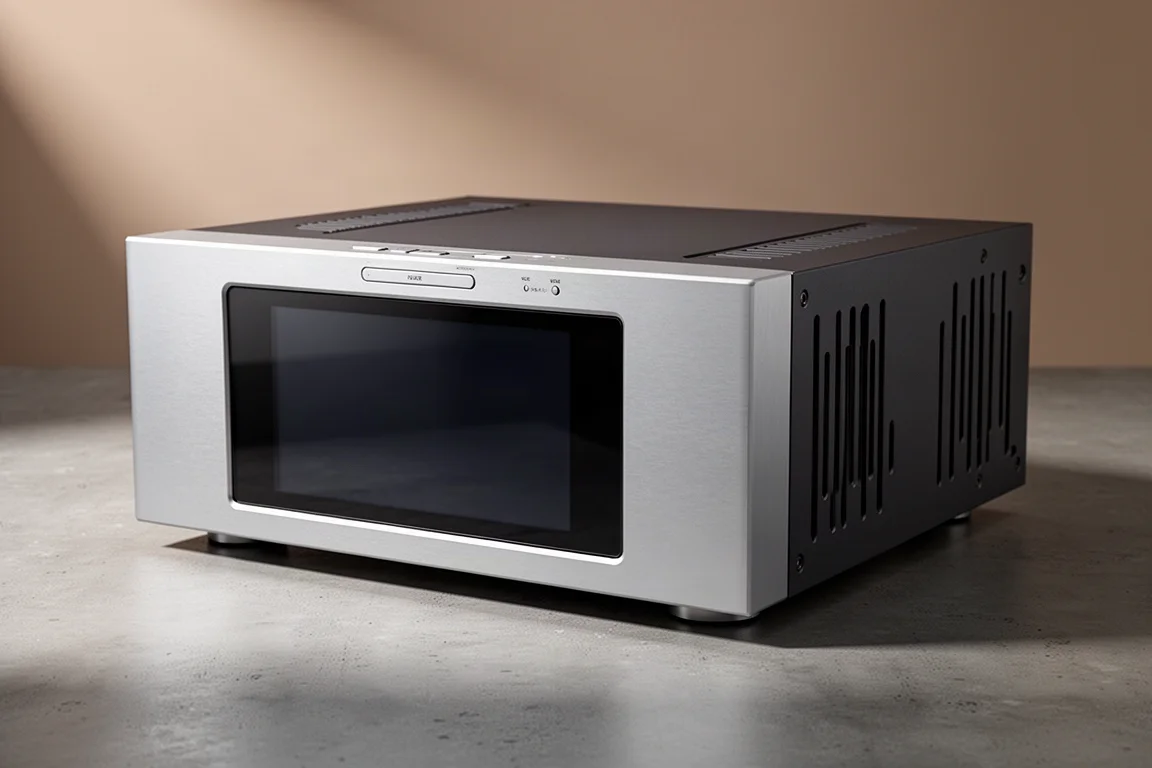
Most streamers use a minimal front panel and push almost all control into an app. The RS 520 takes the opposite route with a 12.6-inch LCD touchscreen. Scrolling through sources is quick, the graphics are very clear, and entering search terms or setup information is easy thanks to the large on-screen keyboard.
The display also has a meters-only mode that can be styled in different looks and colors. It is purely decorative, but it is genuinely enjoyable to use. For anyone who would rather hide the unit away, the iOS and Android app is straightforward and covers the essentials. It includes a related tracks feature that lists roughly 20 similar songs alongside the one playing, which is a useful way to find new music, plus full song credits. One practical tip: if you control volume from the app while a song is playing, you only get limited adjustments until you tap the small remote icon in the upper right corner, which unlocks the full set of controls, including the meters.
Amplifier Design and Sound Quality
The amplification side comes from technology developed for the RA180. It uses a newer type of field-effect transistor built with gallium nitride, or GaN, which gives the class D section much faster switching times and makes it behave more like an analog class A/B amplifier. That efficiency is what allows a 250 watt per channel amplifier to fit inside this chassis.
Read the power specification carefully. The 250 watt per channel figure is not quoted with both channels driven across the full frequency spectrum at a low distortion number. Under the distortion specification, the claim is 150 watts per channel at 1 kHz. Realistically, expect behavior closer to a good 100 watt per channel class A/B amplifier, which is still respectable for a unit with this much built in.
The digital section is where the RS 520 punches well above its position. It uses the ESS flagship ES9038 Pro DAC, the same converter found in the company’s top of the line RS 150. That chip has a very low noise floor of minus 122 dB, supports PCM up to 768 kHz at 32-bit and DSD512, and delivers extremely low jitter. The RS 150 still holds an advantage thanks to its fully balanced design and stronger streaming performance, but the converter itself is identical.
Listening impressions back that up. On a duet recording with acoustic guitars, bass, drums, and fiddle, every instrument and both voices stayed clearly separated, with the fiddle appearing to float just inside the left speaker and small changes in vocal expression coming through easily. Coming from an all-tube analog setup, there was no digital edge at all. On a fuller, bass-heavy duet, the soundstage extended well beyond the speakers once the overdubbed vocals arrived. Fine harmonic detail also came through: on a well-known 1969 recording, the RS 520 resolved a French horn line that is overdubbed an octave lower, something that is often impossible to pick out unless the DAC and the rest of the chain are excellent. Deep bass lines were handled well, though a true class A/B amplifier may still have the edge on the tactile feel of bass attacks. Piano detail was a highlight, with the feel of hands on the keys and even the foot pedals coming through, and the horn section later in the same track showed off the unit’s dynamics.
The overall character is warm and musical rather than clinical, which is unusual for a class D design.
Things to Consider Before Buying
A few details are worth knowing before you commit.
The Rose EQ system is more flexible than typical tone controls. It can be reached from any music source by pressing the meter icon and then the EQ button, and the EQ bands can be moved to target specific problem frequencies, which is ideal for taming the bass peaks that room dimensions create. The limitation is spacing: bands sit about 20 to 30 Hz apart, so you cannot place one at 71 Hz and another at 72 Hz. In practice, bass peaks are usually further apart than that, so the system still works well. You will need a room analysis tool such as Room EQ Wizard to find those peaks in the first place. Built-in genre curves are also available, but they mostly change the sound rather than improve it, and the unit does not include the automatic room correction found on home theater receivers.
The CD drive and the internal SSD are optional extras rather than included features, so budget for them if disc playback or ripping matters to you. If your television is connected over HDMI ARC, remember to switch the TV audio output to PCM, since a two-channel system cannot use a surround output mode. Finally, if a fully balanced architecture and the strongest possible streaming performance are priorities, those live in the more expensive RS 150 rather than here.
Buying Advice
The RS 520 makes the most sense for listeners who value integration and sound quality over the flexibility of separates. It is a strong step up for anyone who wants genuinely high-performance sound in an attractive, compact package, and it can outdo many separate components that cost considerably more while taking up far less shelf space.
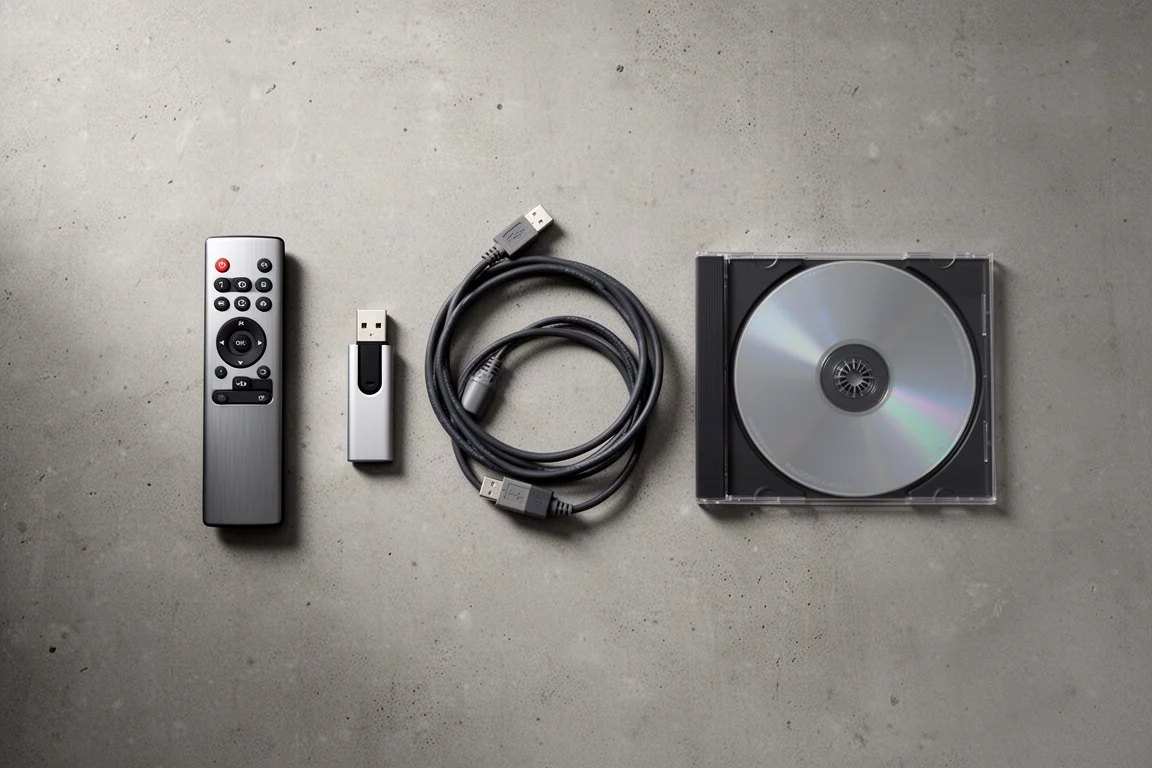
If you already own a good pair of speakers and a modest amplifier, the upgrade path is straightforward: this unit replaces the amplifier and the streamer at once and adds DAC performance that would be expensive to match with a standalone converter. If your listening is mostly from physical discs, factor in the optional CD drive and SSD. If you rarely stream and only need power and a handful of inputs, a simpler integrated amplifier will do the job for less.
What makes the case strongest is how much the RS 520 covers in one box. The value question is not whether it is the cheapest way to get 100 watts per channel, but whether you would rather own four well-chosen components or one that does all four jobs well.
Conclusion
The RS 520 is a confident piece of design. It carries the same flagship DAC as the company’s top streamer, adds a warm-sounding amplifier derived from the RA180, and wraps it all in a chassis with first-class connectors and a front panel interface that is unlike anything else in the category. The display and the form factor are enjoyable bonuses; the real argument is the sound.
For what it delivers, the pricing looks conservative, and the value case rests on how much it replaces: streamer, DAC, preamplifier, and power amplifier in a single chassis. For listeners moving into serious home audio, or upgrading from a modest integrated amplifier, the Hi-Fi Rose RS 520 is a convincing option to shortlist.
Product link
View more details for Hi-Fi Rose RS 520
This product is mentioned in the review. Check the specifications, options, and compatibility before buying.
View more details for Hi-Fi Rose RS 520Further reading
Related Reviews
Hi-Fi Audio
Accuphase C-57 vs Allnic H-7000V: Two High-End Phono Stages Compared
A fully balanced solid-state phono stage with a pitch-black noise floor meets a tube design built for well-loved records. Here is how to choose between them.
Hi-Fi Audio
Active vs Passive Hi-Fi: Five Components for a Modern System
Five components that define modern active and passive hi-fi systems, with the strengths, trade-offs and setup details worth weighing before you buy.
Hi-Fi Audio
Advance Paris A10 Apex Review: A Hybrid Integrated Amplifier That Covers a Lot of Ground
A French hybrid integrated amplifier with a class A tube preamp stage, analogue power meters, and an internal DAC and phono stage good enough to make extra boxes unnecessary.