Insulated Jackets
Helicon Tex Wolfhound Jacket Review: Lightweight Warmth for Moderately Cold Days
A practical look at the Helicon Tex Wolfhound jacket, covering its warmth, comfort, pocket layout, sizing quirks, delicate shell fabric, and how to buy it at a fair price.
Introduction
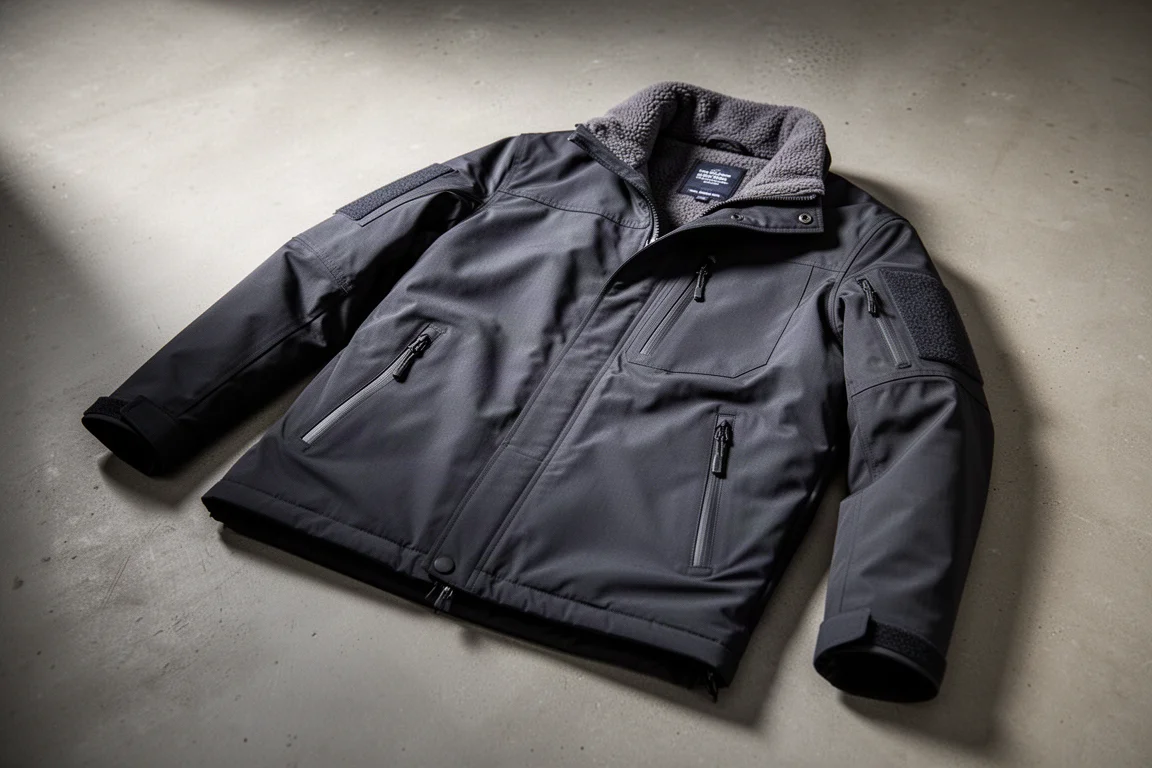
The Helicon Tex Wolfhound is an insulated jacket built for moderately cold conditions, and it carries a distinctly tactical look that sets it apart from more conventional hiking layers. It is offered in two versions, one with a hood and one without, and the two carry different prices.
This review focuses on the hoodless version in size medium, worn through the colder months on open trails, on longer walks, and around town. It covers where the jacket performs well, where it asks for a little care, and how to avoid paying well over the odds for it.
Who This Jacket Is For
The Wolfhound fills the layering slot most people reach for from late autumn through early spring. It is light enough to pack, warm enough to wear on its own in cool conditions, and structured enough to work as a mid layer when temperatures drop further.
It suits walkers, hikers, and everyday town use. Sizing runs from double X small through double X large, and the range includes black, gray, green, camo versions, and more.

The jacket is at its best on open ground: gravel trails, paved paths, park routes, and city streets. That is partly about the conditions it was designed for and partly about the outer fabric, which prefers clean going over dense undergrowth. If your typical route means pushing through thick brush, this is not the layer to reach for first.
Main Strengths
Comfort and Articulation
Comfort is the strongest argument for this jacket. Elastic panels under the arms let the sleeves move with you, so reaching up for a branch, a strap, or a shelf does not drag the whole hem upward the way a rigidly cut jacket will.
The cuffs are slightly elastic and stretch a little, though they are not adjustable. At the neck, a fleece-lined chin guard sits behind the center zip, and the same fleece runs along the top and around the back of the collar, which can be worn up or rolled down depending on the weather.
Warmth for Its Weight
The insulation is Climashield Apex, a widely used polyester fill that also appears in military and mountaineering clothing. It is a large part of why the jacket feels warmer than its weight suggests.
In practice, with a long sleeve merino wool shirt underneath, the jacket has been comfortable down to roughly 30 degrees Fahrenheit. Below that, adding a fleece layer kept things comfortable into the upper teens. Temperature comfort is highly personal, and anyone who runs cold may want more insulation at those same temperatures, so treat this as a starting point rather than a fixed rating.
Pockets and Everyday Details
Storage is generous and well placed for walking and hiking. There are two zippered lower hand pockets with zipper pulls and a fleece lining on one side, plus a zippered chest pocket that is also fleece-lined on one side. Inside, there is a further pocket without a zipper pull and without fleece lining.
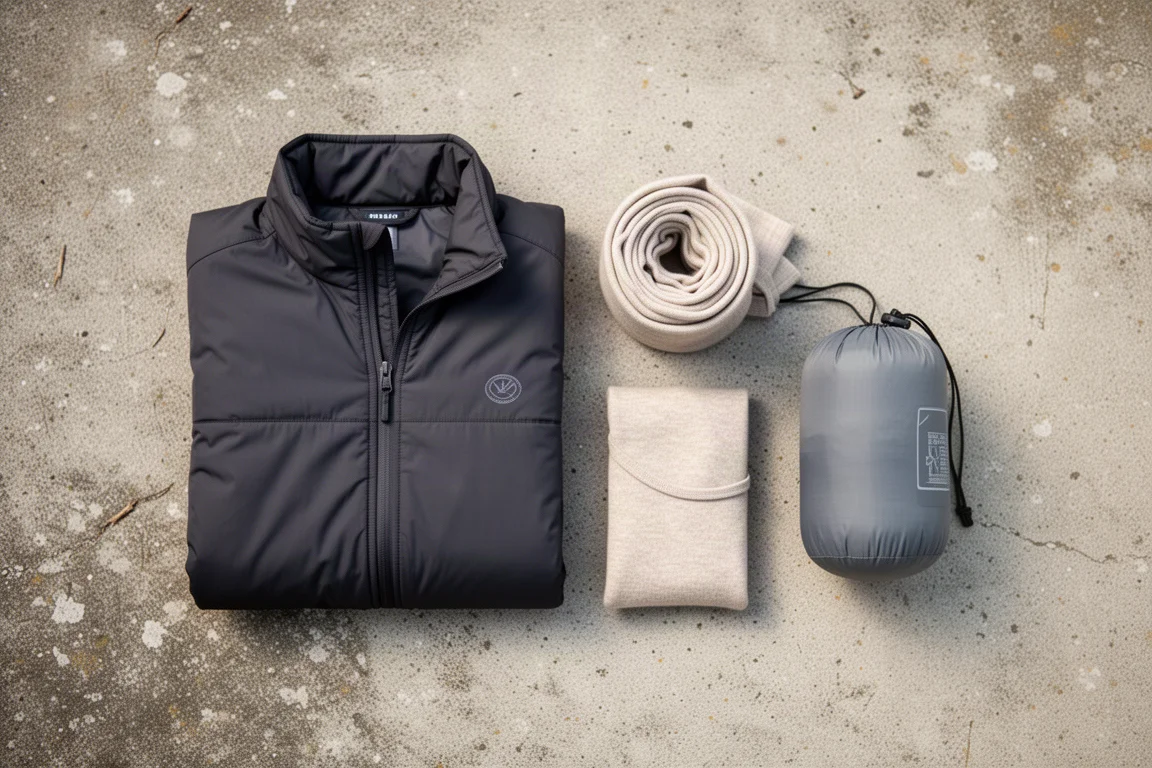
A hook-and-loop patch panel on the shoulder adds a bit of personalisation, and drawcords at the hem let you cinch the bottom to keep wind drafts out. The jacket also ships with a storage bag, so it can be compressed and packed down when it is not being worn.
Wind Resistance, Breathability, and Packability
The shell and lining use what Helicon Tex calls WindPack nylon, a tightly woven fabric with a durable water repellent finish. It shrugs off light rain and blocks wind noticeably well, helped by two layers of that nylon plus the insulation between them. Wind blocking is stronger here than on the brand’s Wind Runner jacket.
It stays breathable at the same time. Heat is held in, but some of it still escapes, so it does not feel like wearing a sealed shell or an overly thick jacket. Combined with the storage bag, that makes it easy to carry as a just-in-case layer.
Build Quality and Fit and Finish
Construction is a real strength. The stitching is clean, there are no loose threads, and the fit and finish are notably tidy. The zippers come from YKK. For a jacket in this price bracket, that level of finishing is more than many buyers expect.
The medium size weighs 15.2 ounces on the scale, which is under a pound and genuinely light for an insulated jacket.
Things to Consider Before Buying
Sizing Can Be Unpredictable
Sizing is the single biggest thing to plan for. A hooded version was ordered first in medium and arrived so large that it wore like an extra large, so it went back. With no small hooded version available, a small without a hood was expected instead, but a medium without a hood arrived and fits perfectly.
That inconsistency appears to be a pattern across the brand’s clothing, where sizing varies noticeably from one product to the next and mixes European and American conventions in a way that is genuinely confusing. Buyers should be ready to send the jacket back and may need one, two, or even three exchanges before landing on the right size.
A Noisy Nylon Shell
The nylon is loud. Any movement produces a distinct rustling sound that is easy to miss while wearing the jacket and much more obvious afterwards. It is a minor point rather than a dealbreaker, but anyone who values quiet fabric, whether for wildlife watching or simply for a calmer feel, should know about it up front.
A Delicate Outer Fabric
The WindPack nylon is fragile. This is not a jacket to plow through the forest in. Briars will catch it and tear a hole, and the same goes for sticks or scraping against rocks. Treat it as a jacket for big open trails, town, and everyday use, and keep it away from heavy brush and bushcraft-style work.
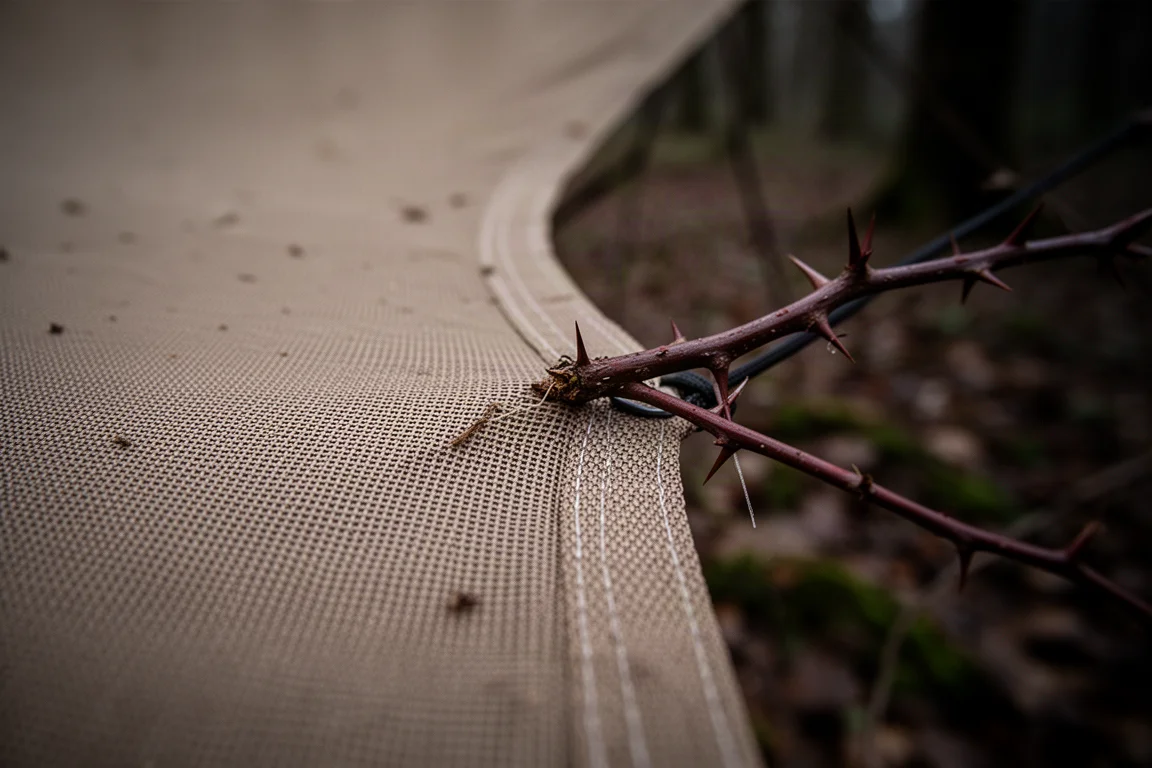
It is worth weighing that trade-off honestly. The light weight, the packability, and the wind resistance all come from a thin, tightly woven fabric, and thin fabric simply will not survive the same abuse as a heavier canvas outer. Buyers who want one jacket to handle both the trail and rough woodland work will likely need something more abrasion resistant.
Buying Advice
The retail price is 129 dollars, and listings on Amazon sit at roughly 130 dollars and up. The hooded version retails for about 170 dollars. Those are fair numbers for what the jacket delivers, provided you buy from Helicon Tex directly or from a reputable seller.
Be careful elsewhere. Some third party sites list the hoodless version for over 200 dollars and the hooded version for over 250 dollars, which is far more than the jacket is worth. There is no reason to pay a premium like that for a sub-one-pound synthetic jacket.
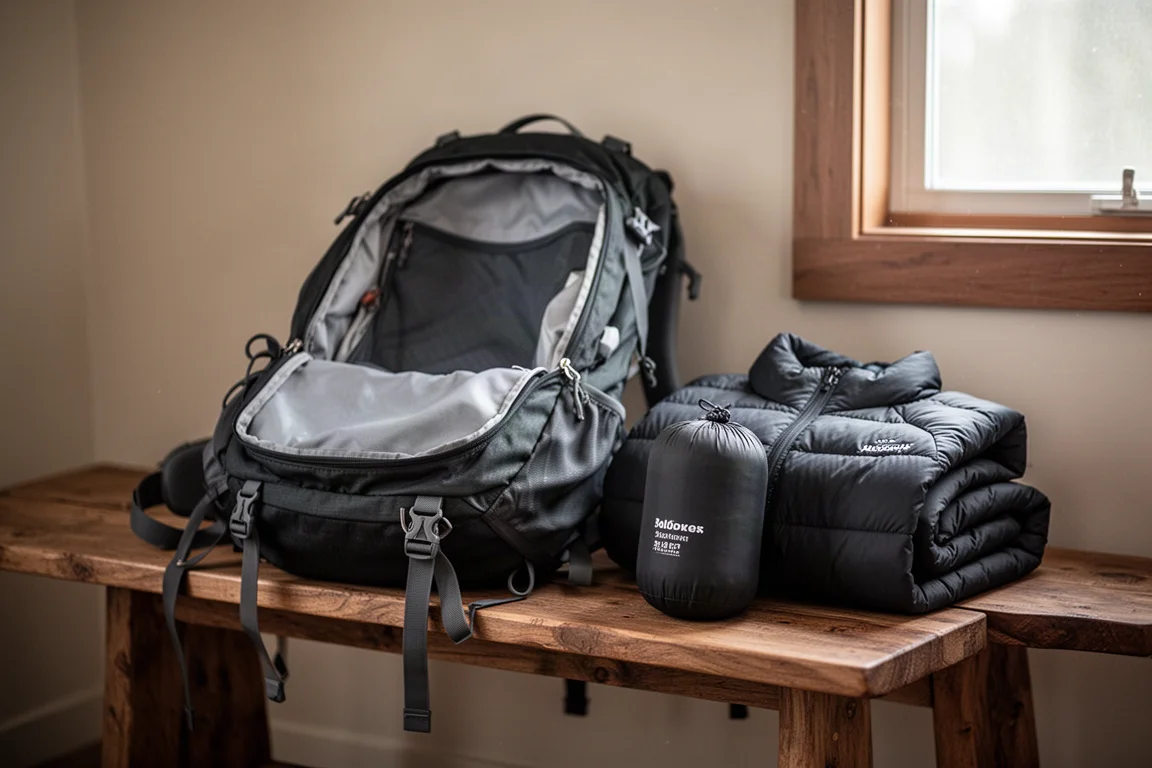
Two practical steps before ordering. First, decide whether you want the hood, since the two versions are priced differently and the fit can vary between them. Second, check the seller’s return policy carefully, because a sizing exchange is a realistic possibility. Budget a little time for that process rather than assuming the first size will be right.
Conclusion
The Wolfhound is a light, warm, and adaptable insulated jacket with a comfortable cut, sensible pocket placement, solid wind resistance, and clean construction at a reasonable price. Its weak points are equally clear: inconsistent sizing, a rustling nylon shell, and an outer fabric that needs to be treated gently.
For walkers, hikers, and everyday wear on open ground, those trade-offs are easy to live with, especially given the weight and the price. Buy it from the right seller, plan for a possible size exchange, and keep it off the briars, and it makes a genuinely useful cold-weather layer.
Product link
View more details for Helicon Tex Wolfhound Jacket
This product is mentioned in the review. Check the specifications, options, and compatibility before buying.
View more details for Helicon Tex Wolfhound JacketFurther reading
Related Reviews
Insulated Jackets
Aerogel vs Down Insulation: Two Aerogel Jackets Compared
Aerogel is the lightest solid on record, but two aerogel jackets measured against a comparable down jacket tell a more complicated story about warmth.
Insulated Jackets
Arc'teryx Atom LT vs Decathlon Trek 50: Does the Premium Synthetic Jacket Earn Its Price?
A side-by-side look at two synthetic insulated jackets at very different prices, covering fit, weight, insulation, features, and warranty.
Insulated Jackets
Big Agnes Shovelhead Jacket Review: Does Treated Down Stay Warm When Wet?
A close look at the Big Agnes Shovelhead jacket and its bluesign approved, PFAS-free DownTek insulation, including what happened when it was soaked twice in near-freezing conditions.