Hi-Fi Amplifiers
Hegel H95 Review: A 60-Watt Integrated Amplifier Built Around Sound Quality
Hegel's most affordable integrated amplifier pairs 60 watts of Class AB power with a sweet, easygoing character and a wide range of connectivity. Here is how it behaves with demanding and easy speakers alike.
Introduction
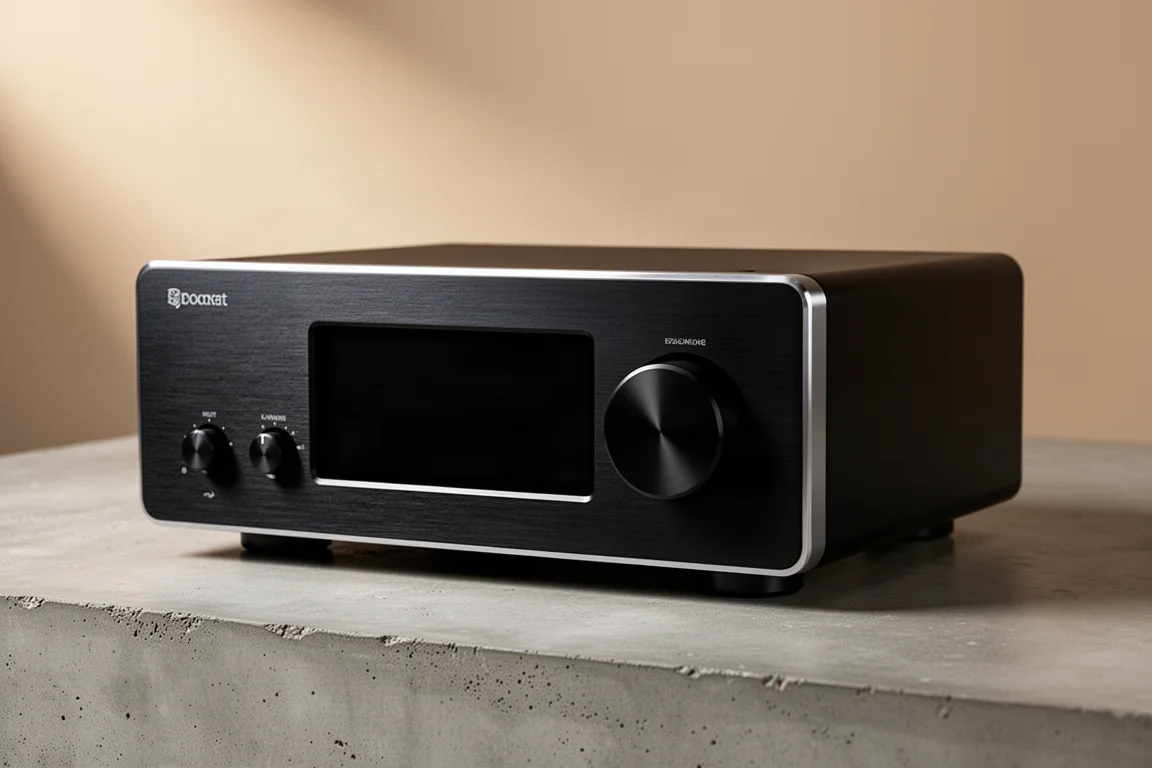
The Hegel H95 is the least expensive integrated amplifier in Hegel’s range, and it arrives with a specification sheet that invites a few questions. It is a 60 watt per channel Class AB design, it is designed in Norway and manufactured in China, and it sells for $2,200 in the United States. The faceplate is offered in black only.
What makes the H95 interesting is not the headline number. It is the claim that the amplifier remains stable into 2 ohm loads, which is a far harder ask than 4 ohms and suggests the current delivery is not tightly restricted. That matters for anyone who owns speakers with a reputation for being difficult to drive.
Who the Hegel H95 Is For
This amplifier suits listeners who put tone and musicality ahead of analytical detail. Its character is gentle and sweet rather than bright or forward, and that makes it an easy companion for long listening sessions across many genres. It also suits buyers who want one box that covers analogue and digital sources without adding a stack of separate components, since the H95 includes a phono-free analogue stage, a full set of digital inputs, a headphone output, and variable outputs that can feed a subwoofer or powered speakers.
It is less obviously aimed at listeners who want the last word in transparency and transient snap. Those qualities exist in more expensive designs, and the H95 trades some of that bite for a softer, more relaxed presentation.
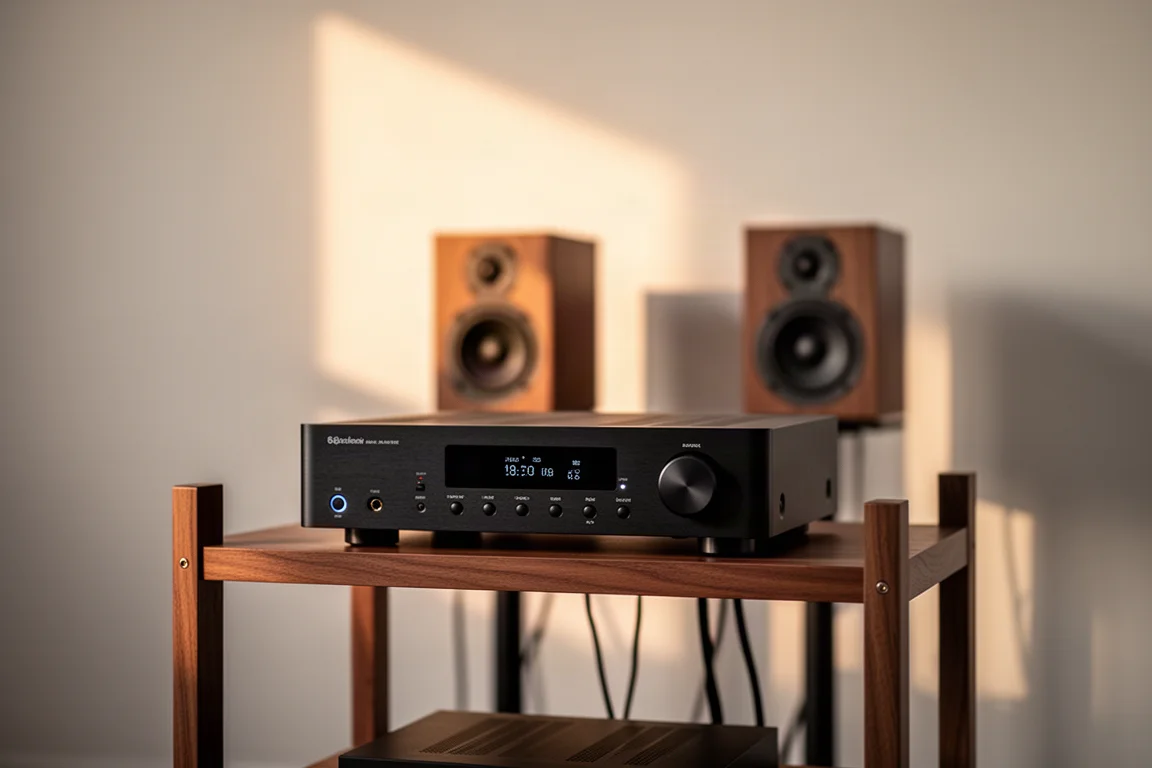
Budget-wise, $2,200 places it in serious integrated amplifier territory, so it makes most sense for someone building a system around a good pair of speakers rather than for a first desktop setup.
Design, Connectivity, and Control
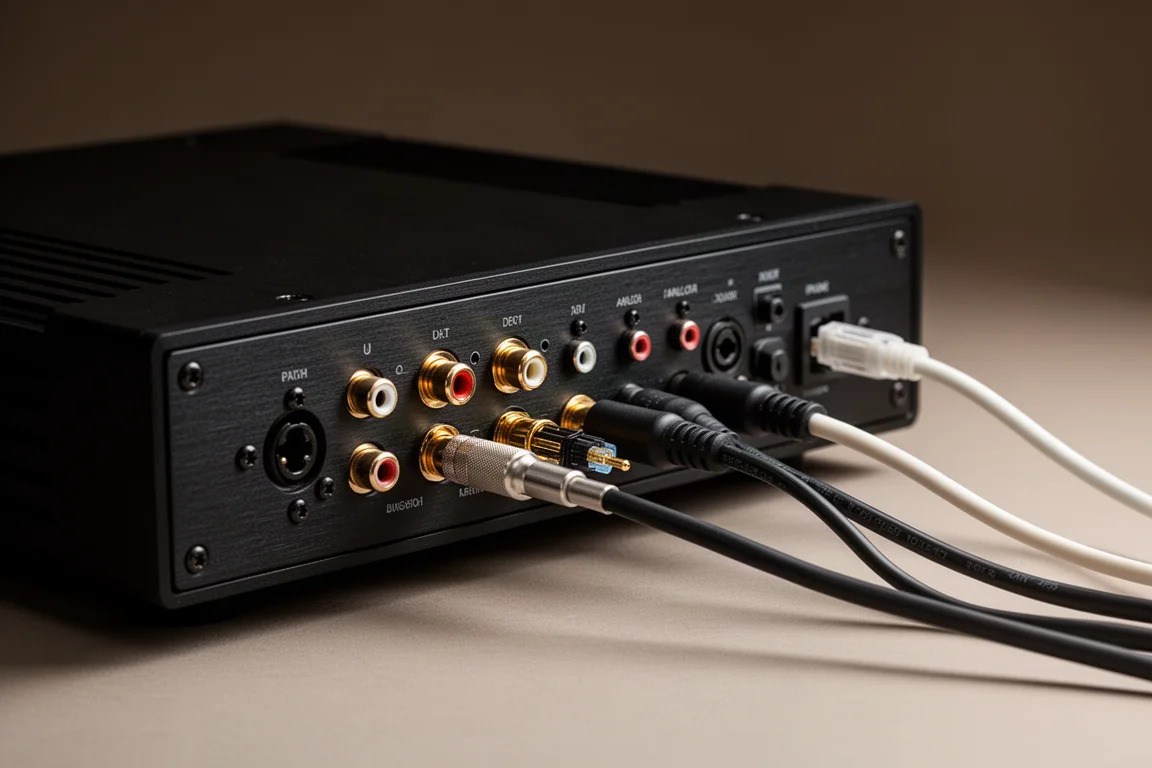
The back panel covers the essentials and then some. There are two sets of analogue RCA inputs, plus a set of variable outputs that function as preamplifier outputs and can also drive subwoofers or active speakers. Digital connectivity runs to three optical inputs, one coaxial input, one USB input, and one Ethernet input. On the front panel there is a 6.3 mm headphone jack.
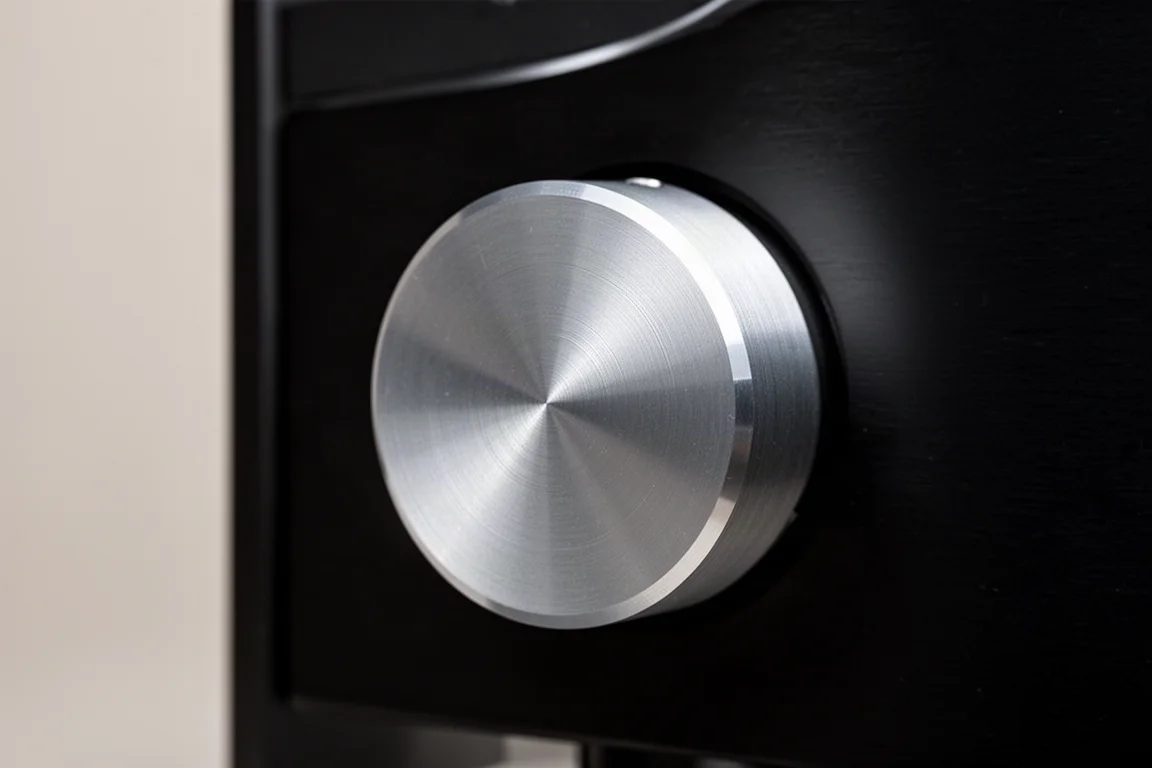
Control feel is a genuine strength. The input selector and volume knobs move smoothly and feel tactile, which is the kind of detail that matters every day in use. The display is unusually large and easy to read, which makes source and volume information legible from across a room.
Inside the chassis there are two toroidal transformers. The smaller one serves standby mode, while the larger one supplies the amplifier section that actually makes music. A plastic remote is included, and an all-metal remote is available separately for about $150 more. Warranty coverage runs to three years in the United States and two years in Europe.
Main Strengths
The H95 does beauty. That is the clearest way to describe its sound: a sweet, flowing presentation that draws you into the music rather than inviting you to pick it apart.
Dynamic recordings hold up well. A solo piano album with wide dynamic swings, played at peaks in the high 80 dB range, came across as wonderfully involving, with the instrument’s weight and attack intact. Live recordings benefit too. A 1977 concert recording revealed the groove and rhythmic drive of the band, which is not always a strength of harder-to-drive panel speakers. On vinyl, an intimate 1968 live performance felt remarkably present, close to the sensation of sitting in the room.
The amplifier also proved more capable with demanding loads than its 60 watt rating might suggest. Driving a planar magnetic speaker known for being power hungry, it stayed composed and dynamic instead of turning hard and brittle. Adding a small subwoofer to that setup blended smoothly, and the pairing felt unusually cohesive.
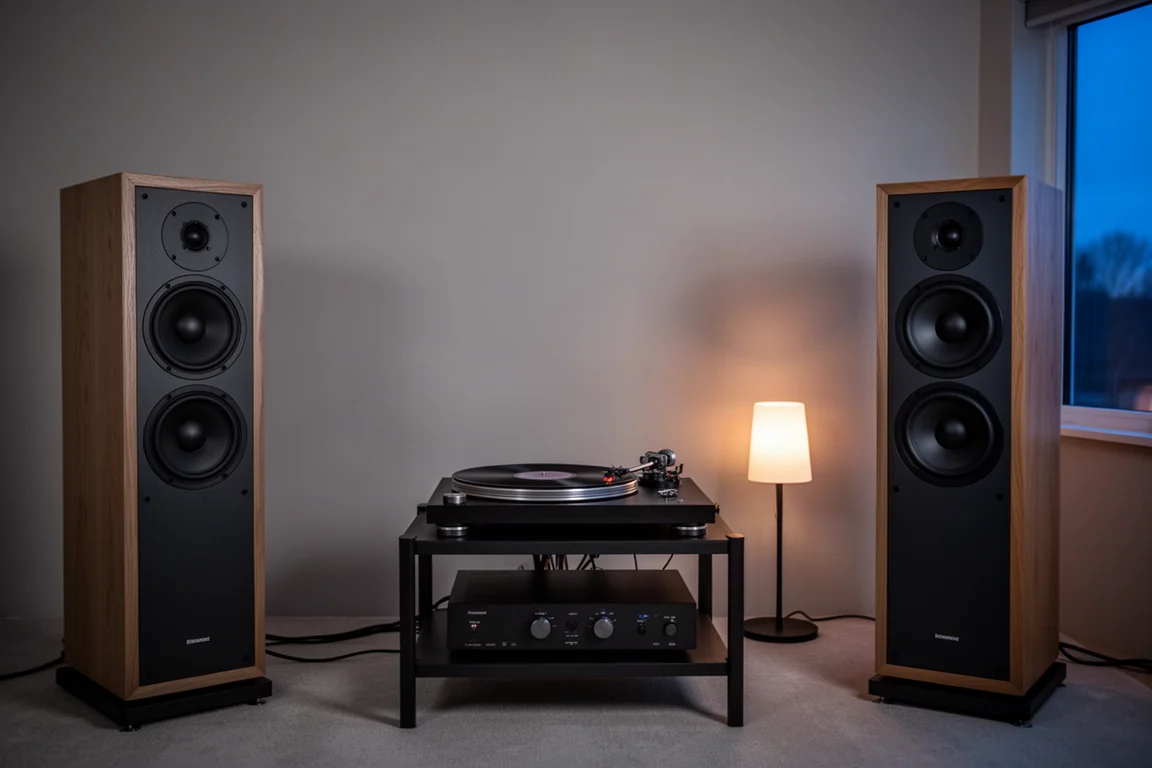
With a small stand-mount speaker using a coaxial driver, the balance shifted warmer and fuller, with more midrange body than the panel speaker, though slightly less transparency and vividness. Imaging was strong, and soundstage depth was respectable without being state of the art. With a high-sensitivity floorstanding speaker built around a 10 inch full-range driver and a separate super tweeter, the H95 sounded genuinely alive, and it stayed comfortable when pushed loud on an all-instrumental live jazz recording captured in two tracks without dynamic range compression or equalisation.
How It Performs With Different Speakers
Three very different speakers tell the story of this amplifier’s flexibility.
The planar magnetic model is the hardest load of the group, and the H95 handled it with more dynamics than expected. It is worth being precise about where the limits sit: that speaker has its own ceiling on how loud it can play and how much physical impact it can deliver, and no amplifier changes that. The H95 was not the bottleneck.
The small stand-mount speaker is low in sensitivity, and after extended listening the amplifier chassis was noticeably warm to the touch. Not hot, but warm, and that is the expected behaviour when driving low impedance loads. The amplifier has a large internal heat sink, and it managed the workload without complaint.
The high-sensitivity floorstander was the easiest drive and the most dynamically alive of the three. Because it is efficient, the H95 could be pushed harder, and it rewarded that with a sound that felt closer to live music.
Things to Consider Before Buying
Hegel does not publish a 4 ohm power specification for the H95, even though the amplifier is rated as stable into 2 ohms. That 2 ohm claim is the more meaningful one, since it implies current output is not artificially limited, but buyers who want a printed 4 ohm figure will not find one.
Heat is worth noting. Under low impedance loads the chassis runs warm, so the amplifier needs reasonable ventilation rather than a closed cabinet.
The internal digital to analogue converter is the bigger consideration for digital-first listeners. Compared with a separate external DAC, the built-in converter sounded thinner and smaller, while the external unit was more open and spacious. This is not unusual: most integrated amplifiers at this price and above can be improved with an external DAC, and if most listening happens through streaming or files, that is a sensible upgrade path to plan for.
Small practical points round out the picture. The supplied remote is plastic, and the all-metal alternative costs about $150 extra. The faceplate comes in black only. Warranty terms differ by region, at three years in the United States and two years in Europe.
How the H95 Compares to Other Amplifiers
Set against a more expensive Norwegian integrated amplifier, the H95 gave up some ground on transparency, transient response, and overall liveliness. The pricier amplifier sounded more vivid and immediate, while the H95 came across as more laid back and softer.
That comparison is useful mainly as context, because the more expensive amplifier costs considerably more, though not twice as much. The H95’s gentler character is not a defect so much as a design choice, and for many listeners a slightly softer, sweeter presentation is exactly what makes an amplifier pleasant to live with over years rather than weeks.
Buying Advice
The H95 makes the most sense for a listener who wants a single, well-built integrated amplifier with a warm and musical voice, flexible connectivity, and enough current delivery to handle speakers that other 60 watt designs struggle with.
If your listening is mostly digital, budget for an external DAC alongside the amplifier. The improvement in openness and space is worth the extra outlay, and it turns a very good system into a notably better one.
If your priority is maximum transparency and transient snap, a more expensive amplifier will deliver more of it. If your priority is a beautiful, easygoing sound that keeps you listening, the H95 is a compelling answer, and pairing it with speakers that suit its character matters more than chasing the last increment of detail.
Conclusion
The Hegel H95 is a sweet sounding integrated amplifier that does the beauty thing exceptionally well. It drives difficult speakers with more composure than its power rating implies, it handles easy high-sensitivity speakers with real liveliness, and it stays comfortable and readable in daily use. The caveats are real but manageable: no published 4 ohm figure, a warm-running chassis under hard loads, a plastic remote unless you pay more, and an internal DAC that a dedicated external unit will better. For listeners who value musicality over analysis, those trade-offs are easy to accept.
Product link
View more details for Hegel H95
This product is mentioned in the review. Check the specifications, options, and compatibility before buying.
View more details for Hegel H95Further reading
Related Reviews
Hi-Fi Amplifiers
Accuphase E-280 Review: Entry-Level Accuphase With Flagship Attention to Detail
A close look at the Accuphase E-280 integrated amplifier, covering its champagne build, AAVA volume control, sound quality, and the speakers and sources that suit it best.
Hi-Fi Amplifiers
Advance Paris A10 Classic vs Yamaha A-S301: Two Integrated Amplifiers Compared
A practical comparison of a $350 integrated amplifier and a $2,500 reference model, covering the differences that matter and the ones that do not.
Hi-Fi Amplifiers
Affordable Chinese Amplifiers Worth Buying: Five Budget Hi-Fi Amps Compared
A practical look at five affordable amplifiers, what each one does well, and the trade-offs to weigh before you buy.