Hi-Fi Audio
Hegel D50 DAC Review: The Raven Brings Reference Digital Conversion
A focused look at Hegel's D50 DAC, a stripped-down converter built for accuracy, with dual transformers, three master clocks, and DAC Loop integration for Hegel integrated amplifiers.
Introduction
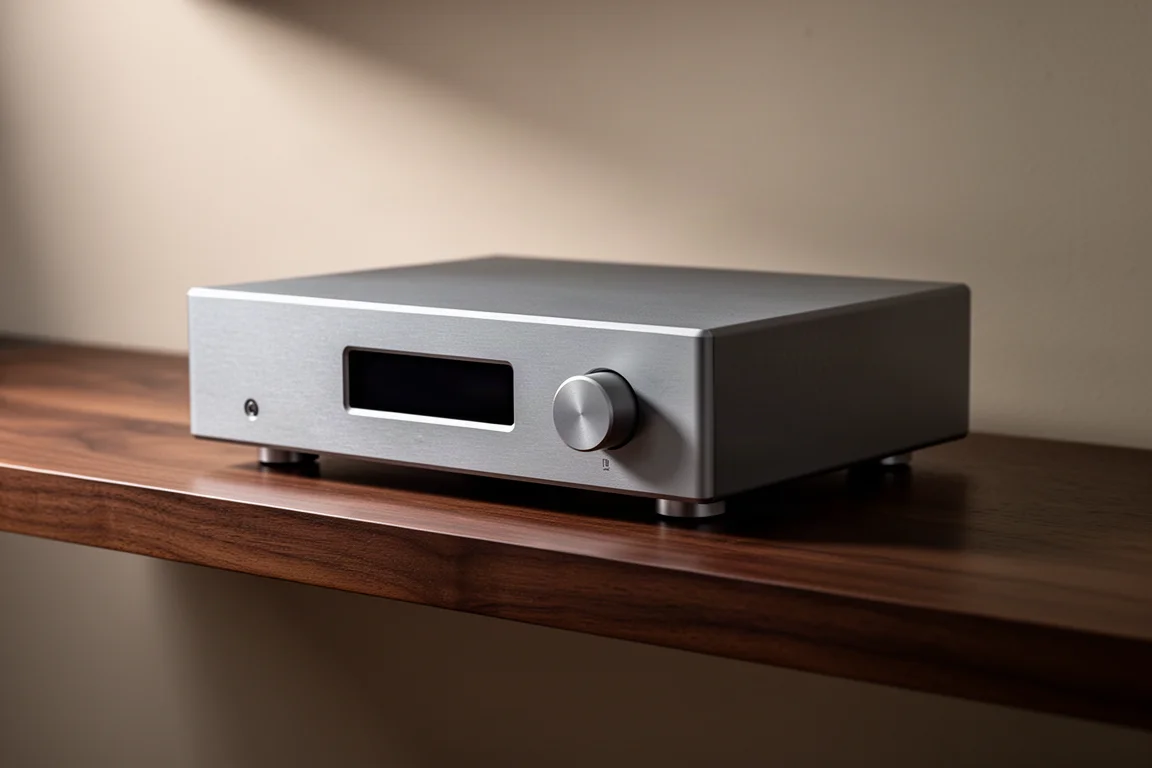
Hegel’s newest converter arrives with an unusual nickname. The D50, known as The Raven, is a stripped-down, high-performance digital-to-analog converter aimed at serious listeners. It is not a streamer and not a preamp. There are no unnecessary extras, just precision-engineered digital conversion, and its price places it firmly in the high-end category.
For anyone who already understands what a DAC does and why it matters, the interesting question is whether the D50 earns a place in a reference system. The short answer is that it is built for accuracy and transparency first, and it rewards the kind of system that can reveal those qualities.
Who This Product Is For
The D50 makes the most sense for listeners who already own a high-end setup. It is designed to sit alongside Hegel’s reference components, including the P30A preamp, the H3A power amp, and the Viking CD player, so it fits naturally into a separates-based Hegel system.
It also has a clear role for owners of Hegel integrated amplifiers. Through the DAC Loop feature, models such as the H300, H390, H590, H400, and H600 can bypass their internal converter and hand digital conversion to the D50. The amplifier’s power and musical character stay exactly as they are while the digital stage is upgraded.
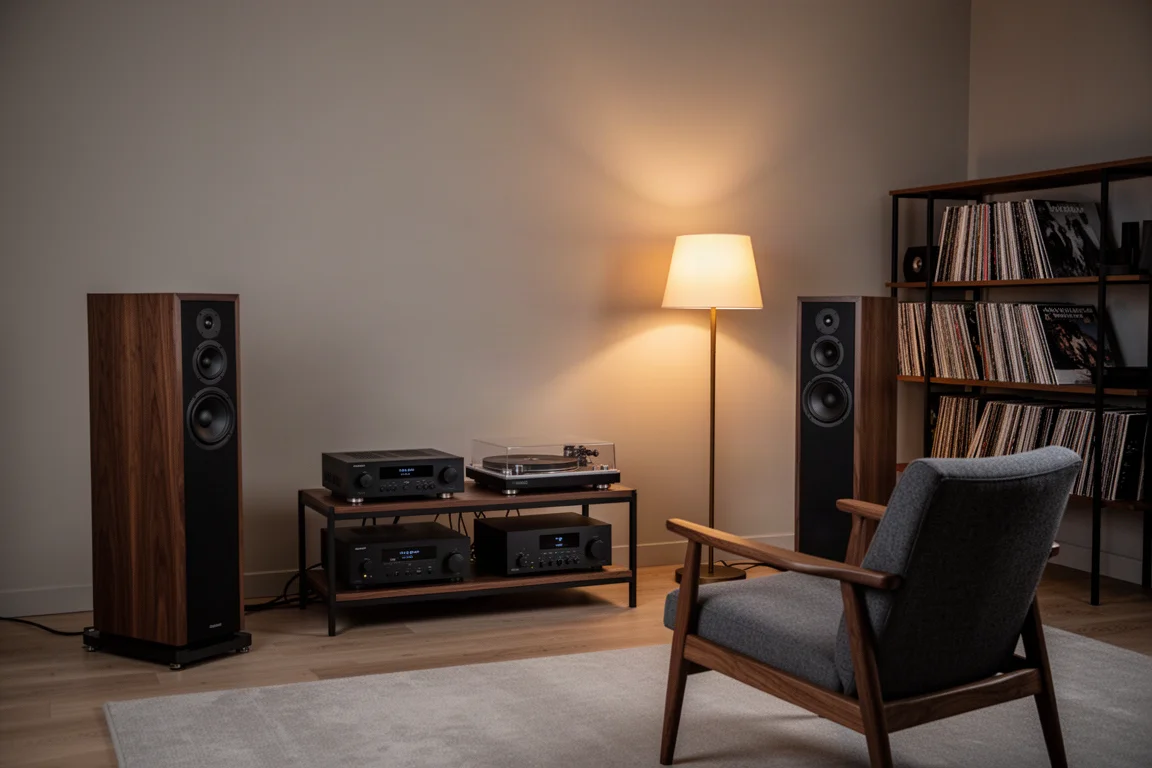
Because the differences the D50 makes are subtle rather than dramatic, it needs a resolving system to show what it can do. In a modest setup those gains are easy to miss. In a high-quality one they are far more apparent.
Main Strengths
The D50 is a focused piece of equipment, and most of its strengths come from how carefully each stage of the signal path has been treated.
Minimalist Design and Complete Connectivity
The chassis is understated black aluminium with no unnecessary embellishments. A single screen on the front shows the selected input and sample rate, and basic adjustments are handled by hidden buttons beneath the front panel, so the clean look stays intact. A remote control is included for convenience.
Around the back, the input selection covers just about any digital source. There is USB-B, two optical inputs, coaxial RCA, coaxial BNC, and AES/EBU. Outputs are balanced XLR and single-ended RCA, which makes it straightforward to connect to a wide range of amplifiers and preamplifiers.
Dual Transformers and Noise Control
Power delivery is where the D50 makes some of its most deliberate choices. Electrical noise can undermine a converter’s performance, so the unit uses two low-noise transformers, each with a specific job. One handles digital processing and standby functions, while the other serves the sensitive analog and digital components. Thick steel shielding separates the two sections, and an advanced filtering system removes noise arriving from the mains.
One interesting side effect is that when the D50 is plugged into a grounded outlet, that filtering can also benefit other equipment sharing the same circuit. For listeners refining an entire system, that is a welcome bonus.
Triple Master Clocks and Input Engineering
Jitter, the tiny timing errors that occur when a converter’s internal switches do not flip at exactly the right moment, can make digital audio sound less natural. The D50 addresses this with three separate master clocks. One is dedicated to USB signals at 48 kHz, one to 44.1 kHz signals, and a third covers S/PDIF and AES/EBU inputs.
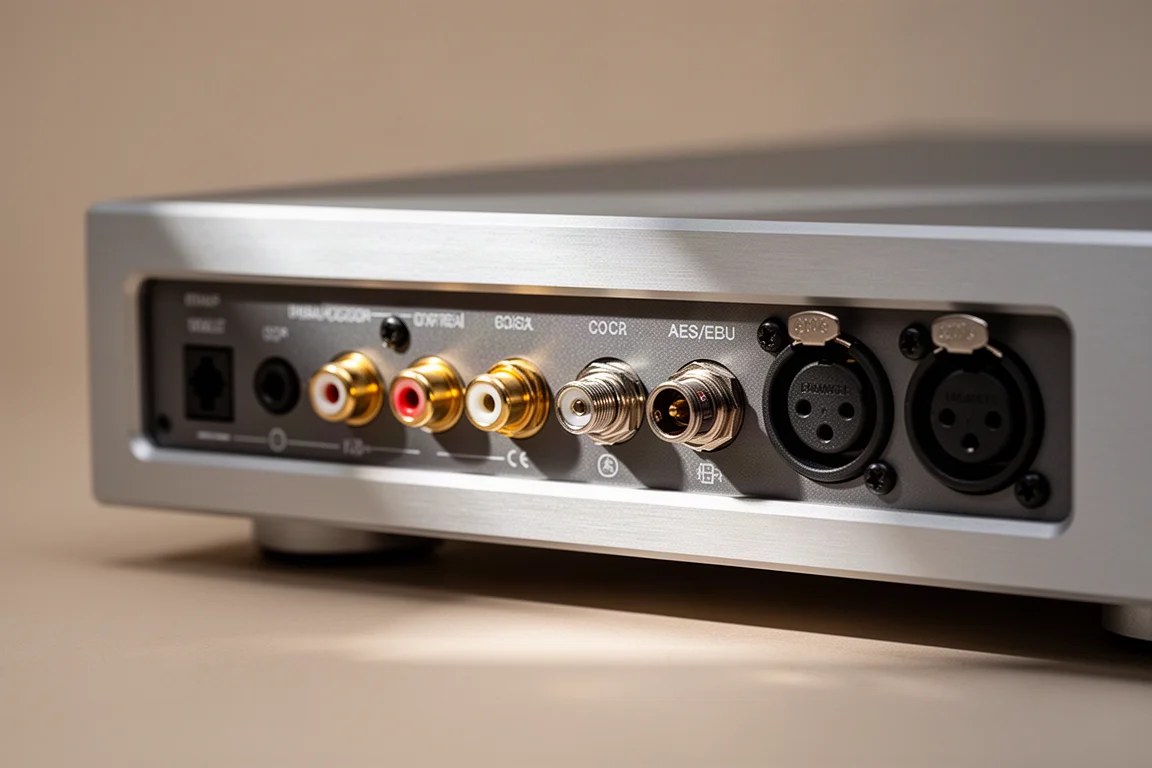
Hegel also went further on the inputs themselves. The AES/EBU connection uses a transformer-balanced RS422 receiver rather than a standard design, which helps it handle both strong and weak signals accurately. For S/PDIF inputs, a custom input card unpacks the I2S data and reclocks it with high precision. Clean, stable power to each chip keeps those timing errors in check.
Five-Board Architecture
Rather than placing everything on a single circuit board, the D50 spreads its circuitry across five separate boards, each dedicated to a different part of the signal chain. The converter chip itself, an ESS 9039 Q2M, sits on its own board, physically isolated from the rest of the electronics.
That separation reduces electrical noise and crosstalk between sections. The audible result is a more open and dynamic presentation, with greater separation between instruments and a stronger sense of the space captured in a recording.
DAC Loop for Hegel Integrated Amplifiers
The DAC Loop is one of the D50’s most practical features. Originally developed to let Hegel amplifiers accept an external converter without losing core functionality, it allows an integrated amplifier to bypass its own digital stage. Connecting the D50 to an amplifier such as the H400 or H600 with a BNC cable and enabling DAC Loop lets the D50 take over conversion.
For owners of older Hegel integrated amplifiers this is especially appealing. An H390, for example, has an older internal converter, so adding the D50 delivers a more noticeable step up than it would with a newer model. The streamer, preamp, and amplifier sections all stay as they are.
Listening Impressions
Paired with a Hegel H400 and running through DAC Loop, the D50 pulled fine micro-detail out of recordings without tipping into an overly analytical character. The soundstage felt more three-dimensional, with instruments placed precisely in the mix.
Vocals carried a natural presence, bass notes stayed defined and controlled, and the highs had a refined sparkle that never turned harsh, even on brighter recordings. Switching back and forth between the D50 and the converter built into the H400 showed a consistent improvement in favour of the D50. It is a meaningful upgrade rather than a night-and-day transformation.
Things to Consider Before Buying
The D50 is not inexpensive, and that shapes who should consider it. The improvements it brings are real, but they depend heavily on the rest of the system. A high-end setup is needed to reveal what the converter is doing, and in a more modest one the investment is harder to justify.
It is also worth being clear about what the D50 does not do. It is a converter only, with no streaming or preamplifier functions, so it is meant to complete a system rather than replace several components at once.
For listeners who want to play CDs, the guidance is to stay within the family. The Viking CD player is the natural partner, and matching a different transport to the D50 may bring only a slight gain for considerably more money.
Buying Advice
The D50 makes the strongest case for two groups. The first is owners of Hegel integrated amplifiers, particularly the H400 and H600, who are happy with their amplifier and simply want better digital conversion. The second is listeners building a separates-based Hegel system around the P30A preamp and the H3A power amp.
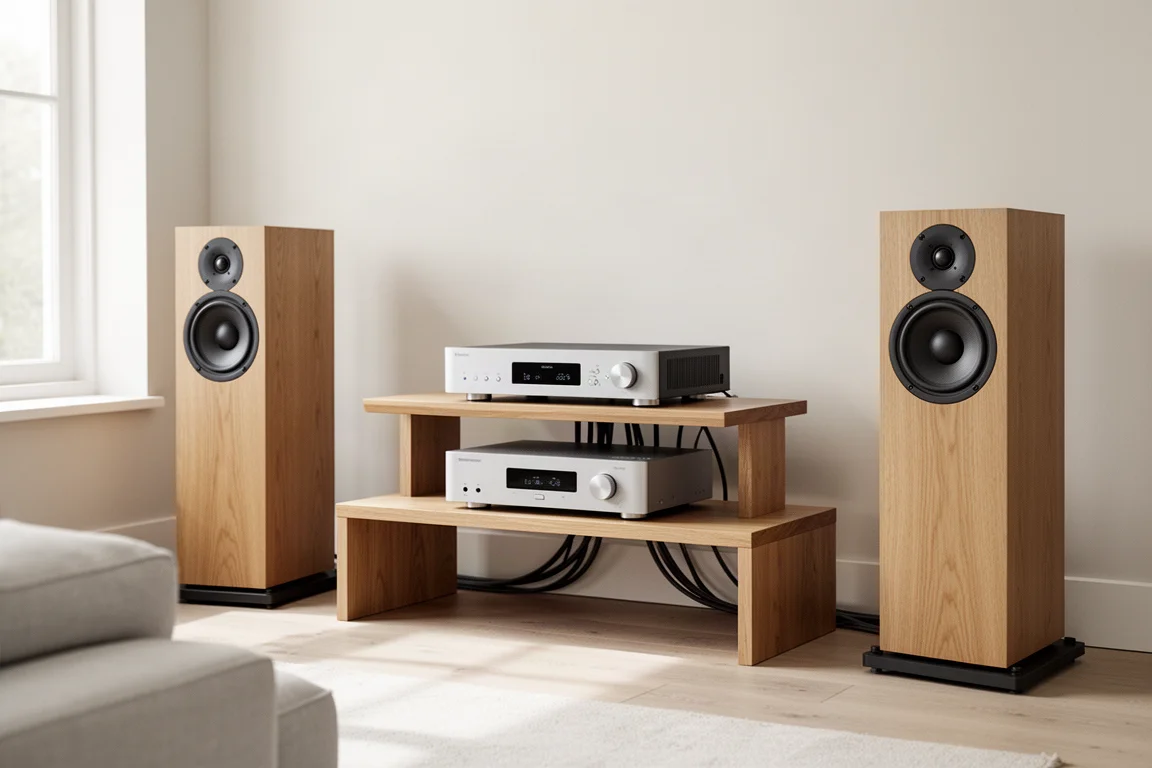
That second group has a particular reason to look closely. With the HD30 converter discontinued, there was no way to add a Hegel converter to a separates system unless a Viking CD player was part of it. The D50 fills that gap and makes a fully separate, high-end Hegel reference system possible again.
Conclusion
Hegel has done a careful job with the D50. It fills a real gap in the brand’s high-end line-up and pairs naturally with the rest of the reference range, while DAC Loop gives existing integrated amplifier owners a clean path to better digital performance. It is not a cheap addition, but for a system that can show the difference it is a well-judged one. A more affordable version of the same technology, matched to Hegel’s more accessible preamps and power amps, would be a welcome next step.
Product link
View more details for Hegel D50 DAC
This product is mentioned in the review. Check the specifications, options, and compatibility before buying.
View more details for Hegel D50 DACFurther reading
Related Reviews
Hi-Fi Audio
Accuphase C-57 vs Allnic H-7000V: Two High-End Phono Stages Compared
A fully balanced solid-state phono stage with a pitch-black noise floor meets a tube design built for well-loved records. Here is how to choose between them.
Hi-Fi Audio
Active vs Passive Hi-Fi: Five Components for a Modern System
Five components that define modern active and passive hi-fi systems, with the strengths, trade-offs and setup details worth weighing before you buy.
Hi-Fi Audio
Advance Paris A10 Apex Review: A Hybrid Integrated Amplifier That Covers a Lot of Ground
A French hybrid integrated amplifier with a class A tube preamp stage, analogue power meters, and an internal DAC and phono stage good enough to make extra boxes unnecessary.