Integrated Amplifiers
Heaven 11 Billy Mark III Spartan Review: A Minimalist Integrated Amp With a Tube Heart
A hybrid integrated amplifier built in Montreal, with solid walnut controls, Hypex Class D power, and a warm, dimensional sound that behaves like a tube design.
Introduction
The Heaven 11 Billy Mark III arrives in two distinct forms, and the difference between them matters more than the shared front panel suggests. The Classic version is fully loaded, with a built-in DAC, Bluetooth and a phono stage. The Spartan reviewed here is the minimalist sibling: no DAC, no phono stage, no Bluetooth. From the front the two amplifiers are essentially indistinguishable. Turn them around and the connectivity suite tells a completely different story.
Heaven 11 is a Canadian company that designs and builds all of its products in Montreal. The Spartan sells for $2,750 in silver or black finishes, while the fully loaded Classic is $2,995.
Who This Amplifier Is For
The Spartan is aimed at listeners who would rather choose their own digital and phono components than accept whatever is bundled inside a chassis. That approach has real appeal for anyone with an existing outboard DAC or phono preamp, or for those who simply prefer to select each part of the signal chain themselves.
It is also a sensible option for anyone who owns several different sources and wants an integrated amplifier with genuine flexibility. Convenience is not the selling point here; control is.

That said, the Spartan is not for everyone. If you want one box that handles everything, the Classic version exists precisely for that buyer, and the $245 gap between them buys a lot of built-in functionality.
Design and Build: Walnut Knobs and a Clean Front Panel
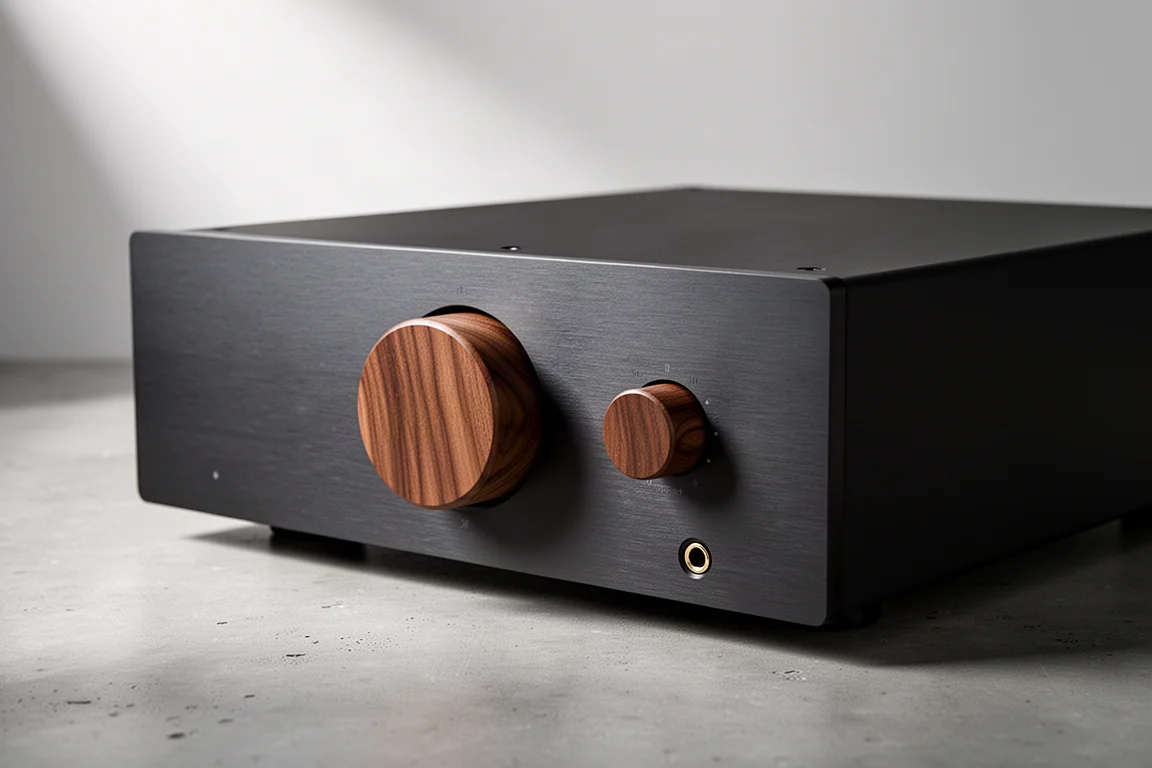
The industrial design is clean and uncluttered, and the front panel is genuinely easy to live with. The volume control and the matching input selector are made from solid American walnut, not vinyl wrap or imitation wood, and the selector doubles as a mute. A remote control is included and works perfectly well, though the tactile quality of the controls makes the remote easy to ignore.
A 3.5 mm headphone jack sits on the front panel. Inside, the review sample ran Hypex Class D modules, and buyers can choose between ICE and Hypex power modules. The Hypex configuration delivers 150 watts per channel into 8 ohms and 250 watts per channel into 4 ohms. Warranty coverage runs to five years.
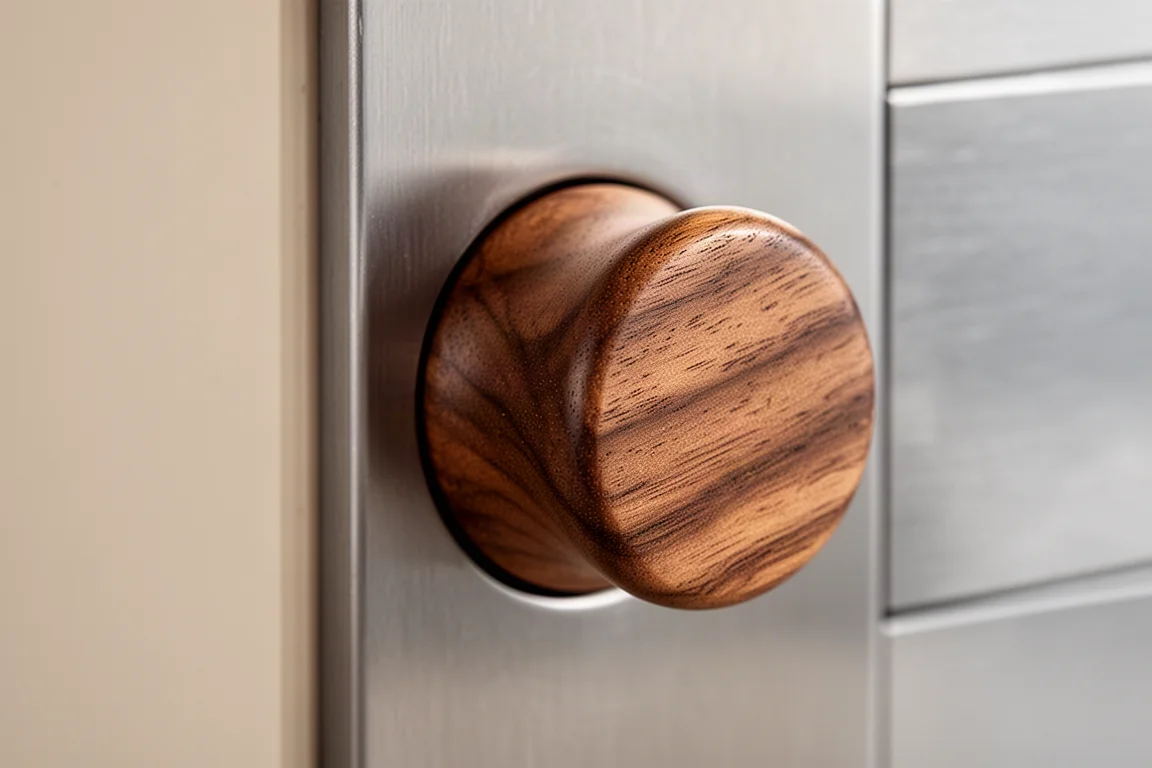
The minimalist layout means there is very little to learn. Source selection, volume and muting are the whole interface, and nothing on the front panel demands a manual.
Sound Quality: A Hybrid That Behaves Like a Tube Amp
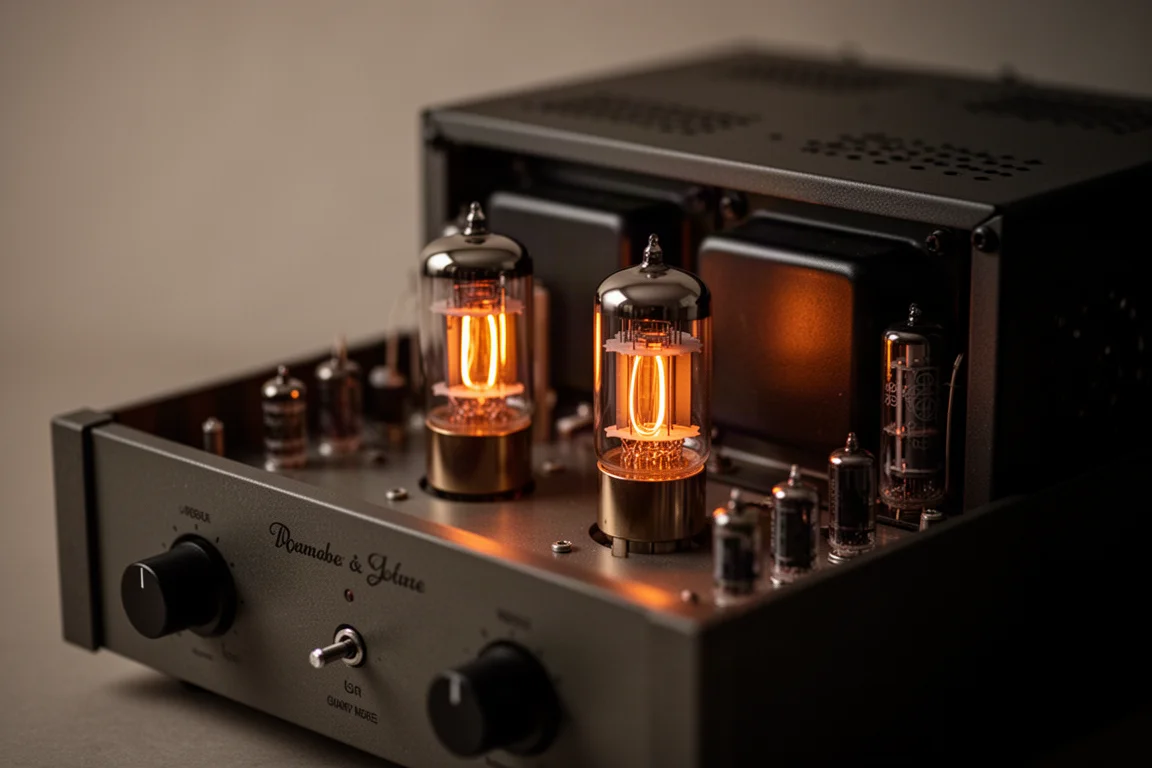
The Billy is a hybrid design built around two vacuum tubes, supplied as ECC99s made by JJ. What makes this amplifier interesting is how convincingly it avoids the sound many hybrid designs fall into. Plenty of hybrids end up sounding like solid state or Class D amplifiers. This one does not. Across three very different speaker pairings it consistently sounded like a sweet tube amplifier.
The tube character here is about dimension rather than softness. The soundstage has weight and spaciousness, with front to back depth. It is not mushy or overly mellow, and it is not fatiguing. Long listening sessions are easy, whether the music is played loudly or quietly, and the presentation stays evenhanded at both extremes.
That flexibility showed up clearly in practice. Dense, dynamic material with wide soft to loud swings stayed composed when pushed hard and still communicated everything at late-night levels. Recordings built from layers and texture came across as something close to tactile. Speaker matching spanned a modern two-way standmount, a floorstanding design and a large electrostatic model that is harder to drive, and the amplifier held its character with all three.
Tube Rolling and System Matching
Because the tubes are current-production and user-replaceable, the amplifier invites experimentation. The stock ECC99s gave a richer, fuller presentation with more body. Swapping in 12AU7 tubes produced a noticeably clearer, more see-through sound with greater transparency. Neither option is a correction of the other; they are two legitimate voicings, and which one suits you will depend on your speakers and your taste.
Power delivery is worth keeping in mind when matching speakers. With 150 watts into 8 ohms and 250 watts into 4 ohms from the Hypex modules, the amplifier has enough headroom for demanding loads, and the harder-to-drive electrostatic speaker in the test group did not expose any obvious shortfall.
Things to Consider Before Buying
The Spartan’s minimalism is deliberate, and it comes with real consequences. There is no DAC, no phono stage and no Bluetooth, so a turntable needs an outboard phono preamp and digital sources need their own converter. If you already own both, this is not a drawback. If you do not, the Classic version at $2,995 covers that ground in a single box.
The remote control does the job but is not the highlight of the design. Buyers who care most about the physical controls will likely use the front panel anyway.
Buying Advice
At $2,750, the Spartan is priced close to the fully loaded Classic, so the decision is really about which kind of system you are building. Choose the Spartan if you want to select your own DAC and phono stage and value a clean, uncluttered amplifier with a warm, dimensional sound. Choose the Classic if convenience and an all-in-one signal chain matter more.
For customers in the United States and Canada, Heaven 11 sells with a 30-day money back return guarantee, and the amplifier carries a five-year warranty. Heaven 11 products are sold worldwide.
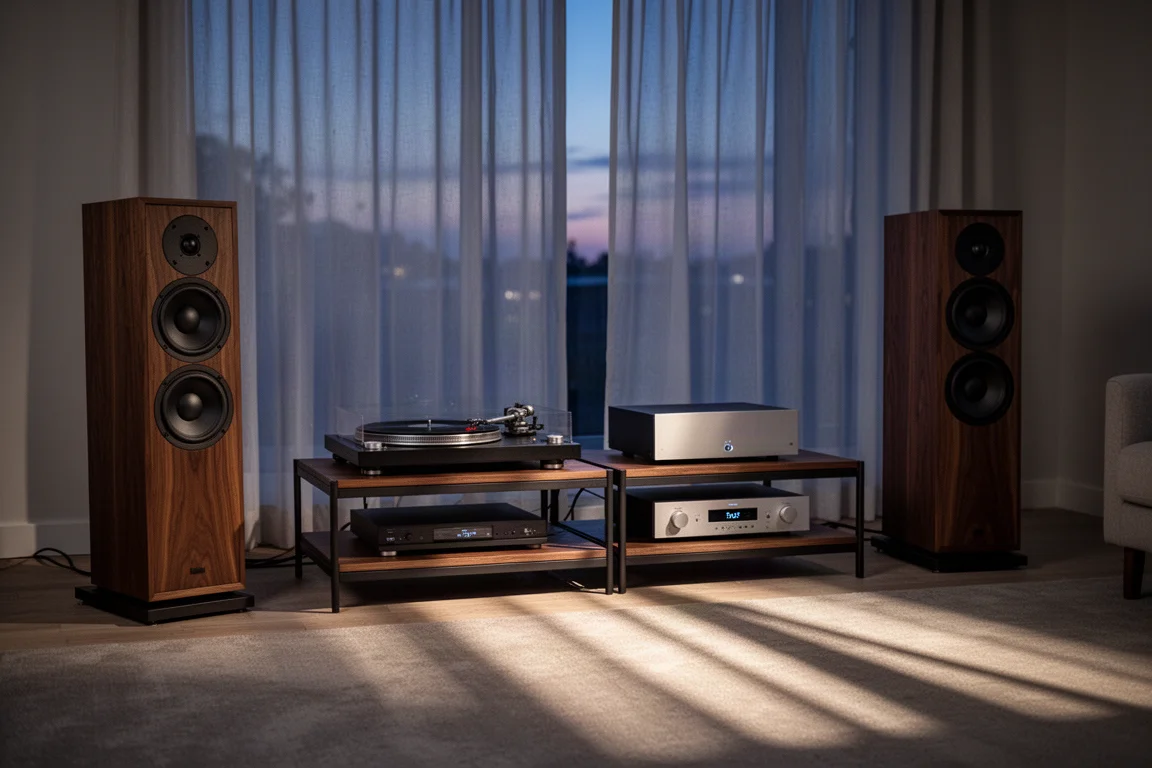
The practical way to decide is to look at what you already own. An outboard DAC and a phono preamp in the rack make the Spartan the more logical choice, and its minimalist front panel becomes an advantage rather than a compromise.
Conclusion
The Heaven 11 Billy Mark III Spartan is a lovely sounding amplifier, and that word is chosen carefully. It offers flexibility for listeners who want to build their own source chain, a genuinely beautiful and easy-to-use industrial design, and a hybrid tube character that delivers dimension and depth without fatigue. Buyers who want everything built in should look at the Classic version instead. For everyone else, the Spartan is a convincing argument for keeping things simple.
Product link
View more details for Heaven 11 Billy Mark III Spartan
This product is mentioned in the review. Check the specifications, options, and compatibility before buying.
View more details for Heaven 11 Billy Mark III SpartanFurther reading
Related Reviews
Integrated Amplifiers
Advance Paris A10 Classic Review: Vintage Looks and a Lively, Punchy Sound
The Advance Paris A10 Classic pairs glowing blue VU meters and a tube stage with one of the widest input sets on any integrated amplifier. Here is what it does well and what to weigh before spending $2,500.
Integrated Amplifiers
Advance Paris A12 Apex Review: A Modern Integrated Amplifier With Vintage Character
A dual mono integrated amplifier with 180 watts per channel, a tube front end, VU meters, and a connectivity list that covers turntables, televisions, computers, and headphones.
Integrated Amplifiers
Advance Paris Nova Range Review: AI130, AI190 and Modular Upgrades
A practical look at the Advance Paris Nova range, including the AI130 and AI190 integrated amplifiers and the modular streaming, Bluetooth and remote accessories that expand them.