Hammock Tents
Haven Spectre Review: A Backpackable Hammock Tent With a Flat Sleeping Platform
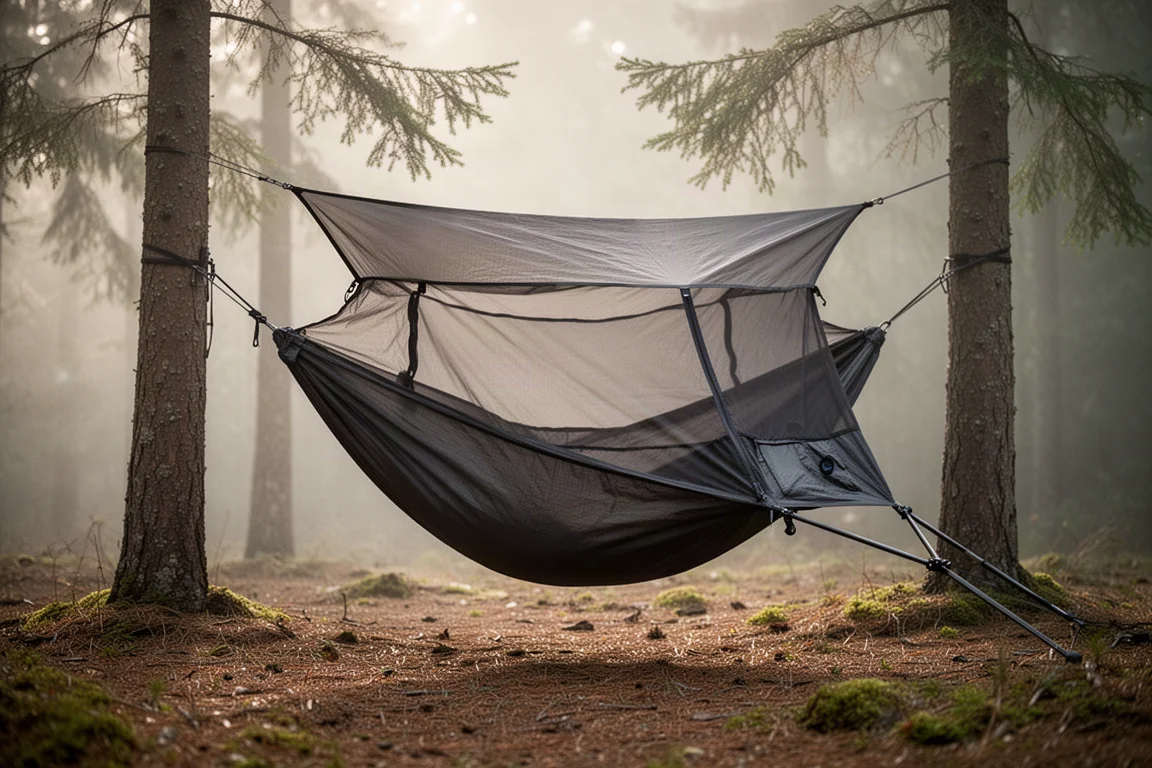
The Haven Spectre brings hammock tent comfort closer to backpacking weight, with a flat 30 in by 80 in sleeping platform, a monolite body, and an integrated rainfly.
Introduction
Hammock tents have always promised a comfortable night above the ground, but the trade-off has usually been weight. The Haven Spectre is built to close that gap. It is a hammock tent designed to be carried on backpacking trips, and the project behind it drew more than $500,000 in backing during its crowdfunding campaign.
The Spectre pairs a wide sleeping platform with an integrated rainfly and a monolite fabric body. In a configuration with the silpoly fly, the Spectre body, and the insulated XL True Level pad, the complete setup comes in at just under 5 lbs. That is a meaningful reduction compared with the standard Haven XL, which sits at around 7.5 lbs.
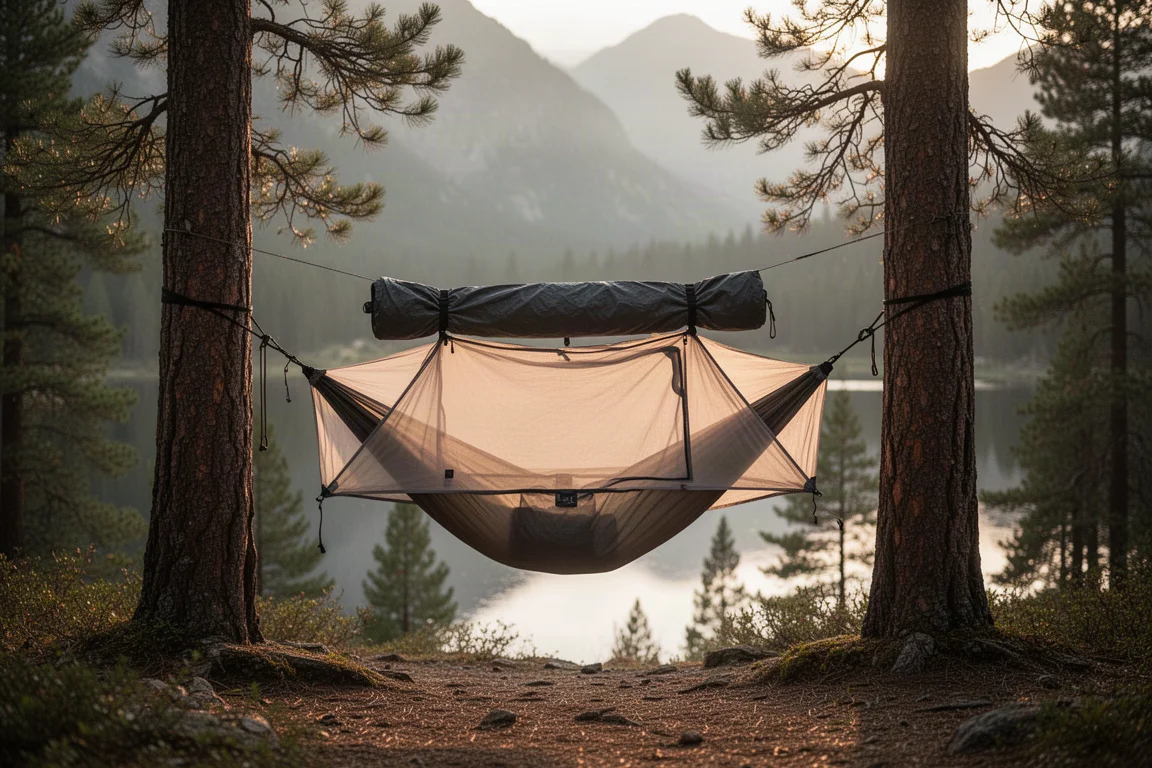
That weight figure matters because it moves a lay-flat hammock tent into the range where a backpacker can reasonably justify carrying one. The Spectre was used for two nights at roughly 9,000 ft in early season conditions, with overnight temperatures dropping to about 34 degrees, which is a fair test of how the platform, the pad, and the rainfly work together.
Who This Product Is For
The Spectre suits hammock campers who want a genuinely flat sleeping position rather than the curve of a gathered-end hammock. The pad sits inside the body to give the platform its structure, and the design keeps the sleeper level across a 30 in by 80 in platform. That platform is also a living space: you can sit up, move around, and change clothes without the closed-in feeling that many hammocks create.
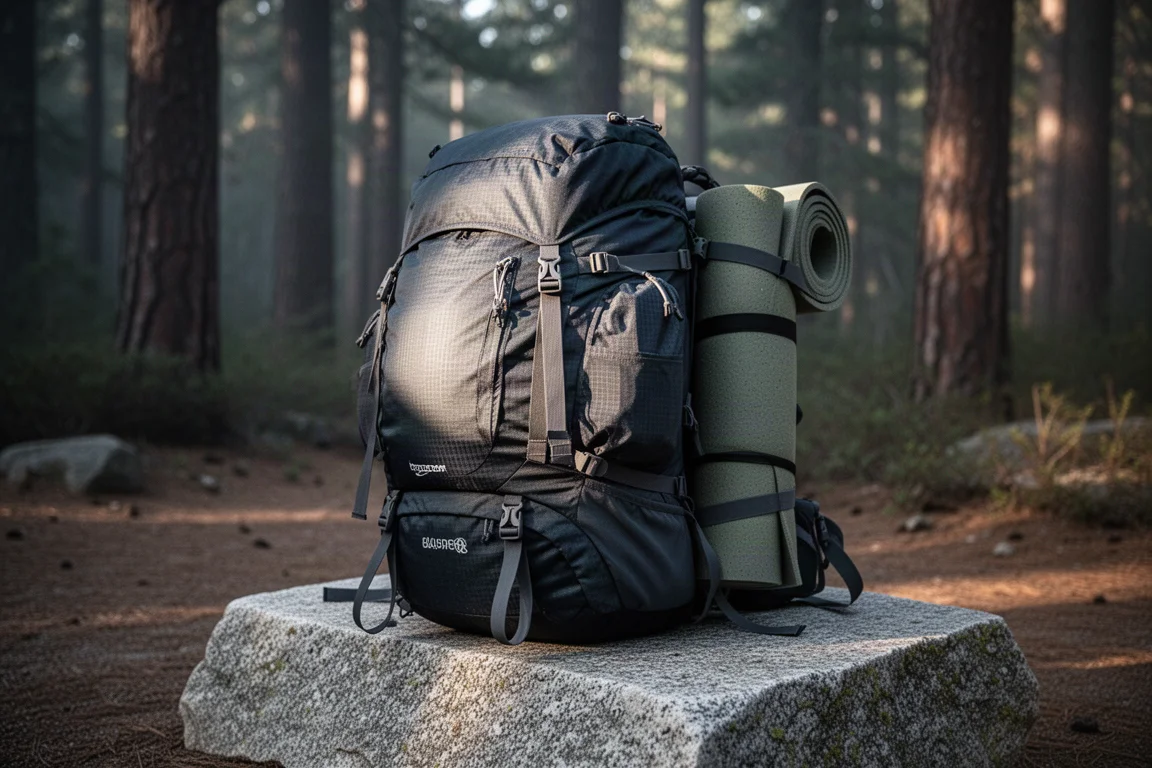
It also suits backpackers who are willing to carry a little more weight in exchange for comfort and room. At just under 5 lbs for the full setup with the insulated XL pad, it is not a gram-counting choice, and it does not pretend to be. The appeal is a roomy interior, unobstructed views through the mesh, and a place to spend a rainy afternoon.
Anyone who camps above the treeline, or who prefers a shelter they can pitch on open ground, should look elsewhere. This is a hammock, and it needs two suitable trees.
Main Strengths
The flat lay is the headline. The True Level pad has an arc built into it, which helps a large pad resist folding into a valley down the middle, and that in turn keeps the sleeping surface usable across its full width. There is still some bow and bend around the hips and back, but it is far removed from the sag of a traditional hammock, and it is the main reason this feels like a bed rather than a sling.
The body is made from monolite, a mesh-type fabric that is breathable without being fully open, and strong enough to carry a weight rating of about 285 lbs. For an ultralight-focused product, that is a generous figure. Carbon fiber poles support the structure, and a light system can be run across the ridge line.
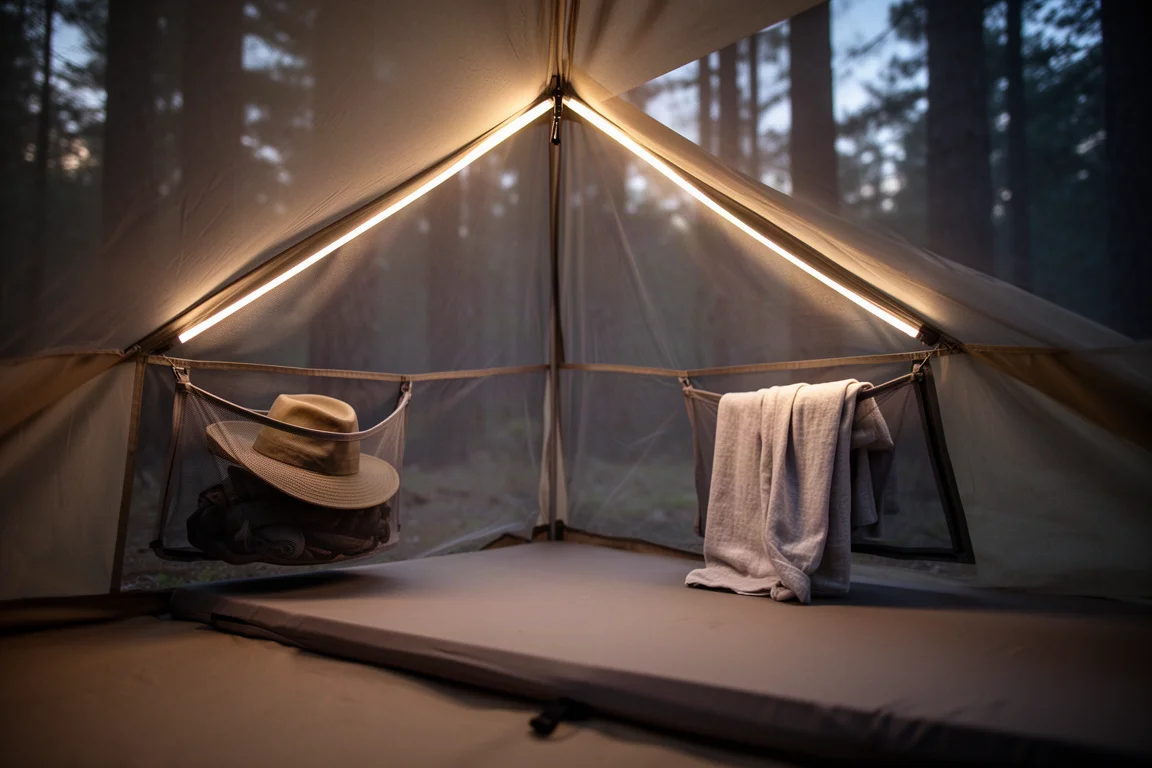
Storage is unusually well handled. Pockets at the head and foot ends take bulkier items such as clothing, a hat, or sunglasses, while the side pockets keep smaller gear up off the pad so it does not slide underneath and create a pressure point. A lounge strap lifts the head end of the hammock so you can sit up and read or nap without lying flat, and a gear sling underneath holds shoes or wet kit off the ground. The gear sling is included.
Setup, Porch Mode, and Storm Mode
Suspension runs through tree straps and whoopie slings, which makes hanging straightforward once you have picked your trees. One detail worth knowing is that the rainfly connects directly to the points where the tree straps meet the hammock rather than being sewn in. That can place the fly lower than frequent hammock users expect, but there is plenty of adjustment available, and a different rainfly can be used if you prefer.
In fair weather, trekking poles hold the ends of the tarp out in porch mode, which creates a large open shelter. That was the configuration used for the second night, and it is likely to be the default choice in forested areas.
For wind and rain, the setup closes down into a genuinely stormworthy shape. Full-length zippers run down the ends of the fly, and a buckle keeps those zipper ends from spreading in strong wind. Toggle and loop fastenings between the fly and the body stop the fly from pulling up and letting weather in. At each end, the whoopie sling can be run through a loop to hold an opening that vents the interior, which helps manage condensation.
The opposite extreme is fully open. The zippered panel on the body can be tucked up under the ridge line strap, leaving the hammock body exposed with the fly ready to deploy if the weather turns. Single-wall tents cannot offer that range of adjustment.
Comfort, Storage, and Lighting
On the first night, with temperatures around 34 degrees, the interior stayed warm overall. There was a slight chill through the back where the sleeper met the pad, but nothing close to uncomfortable. The one thing that needed attention was the lay: the head end felt as though it sat downhill, which was solved by adjusting the hang height. That kind of dialing in is familiar to anyone who has pitched a trekking pole tent.
The second night delivered one of the best nights of sleep in the backcountry, which is the clearest endorsement a shelter of this type can get. The mesh body keeps the view completely open while still giving enough enclosure to change clothes or find privacy when needed, and the ridge lighting fills the space with a soft glow rather than a harsh beam.
The trade-off to understand is breathability. Monolite is fully see-through, but it moves less air than the no-see-um mesh used on many tents and on the standard Haven XL. During a midday rest in camp, the dark polyester fly in direct sun became hot, and opening the shelter up to create airflow made a real difference. In cooler conditions, that same reduced airflow works in your favor.
Things To Consider Before Buying
Weight is the first consideration. Just under 5 lbs is impressive for a lay-flat hammock tent, but it is still more than a lightweight tent or tarp setup, and the pad you choose changes the number. The insulated XL True Level pad used here is the heavier option, so a different pad will shift the total.
Setup has a learning curve. The suspension, the fly attachment, and the hang height all interact, and the first pitch took real work because the layout was unfamiliar. Getting a level lay takes a little patience, just as it does with any trekking pole shelter.
Heat and airflow deserve a mention too. The dark fly absorbs sun during the day, and the body fabric breathes less than expected, so campers who run warm will want to open the shelter up during daylight hours.
Finally, this is a hammock. It needs two trees of reasonable size, and porch mode needs trekking poles. If your trips regularly take you above the treeline or into terrain without suitable trees, a tent remains the better answer.
Buying Advice
Buy the Spectre if a flat, roomy sleep matters more to you than shaving the last few hundred grams off your pack. It is a strong match for forested backcountry trips, shoulder season nights, and anyone who has tried a gathered-end hammock and found it uncomfortable. The platform size, the pocket layout, and the lounge strap all add up to a shelter you can spend time in rather than just sleep in.
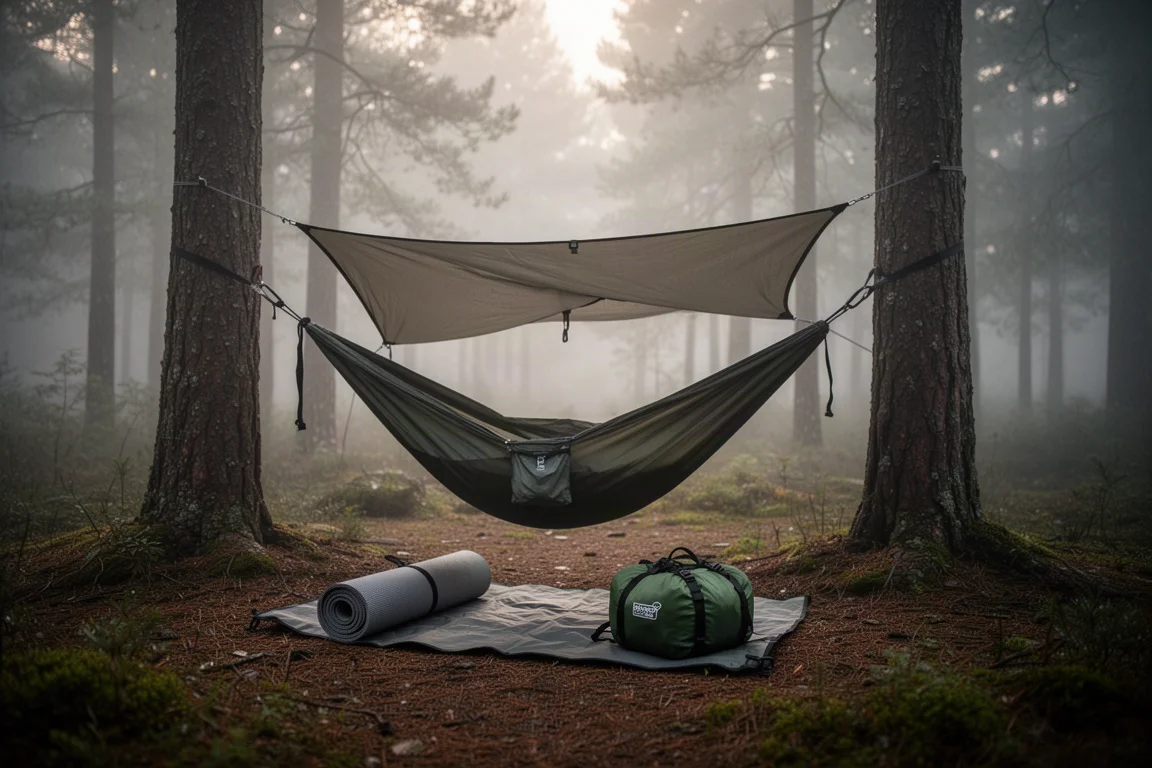
Think about your pad and your fly at the same time as the hammock, because they determine both the total weight and how the whole system behaves. If you mostly camp in dry, mild conditions, the lighter fly option and a lighter pad will keep the carry weight down. If you camp in cold or wet weather, the insulated pad and the fully closable storm configuration are worth the extra grams. Either way, plan on one shakedown trip to dial in the hang height before you rely on it.
Conclusion
The Haven Spectre is the first Haven hammock tent that genuinely fits a backpacking kit. It cuts the weight of the standard Haven XL substantially while keeping the flat lay, the open mesh views, and the interior space that make this style of shelter appealing in the first place.
It is not the lightest option on the market, and it asks for a bit of patience during setup. What it delivers in return is comfort, a wide sleeping platform, and a rainfly that shifts from open porch to sealed storm mode without fuss. For hammock campers who want to carry their shelter into the backcountry and sleep well once they get there, that is a compelling combination.
Product link
View more details for Haven Spectre
This product is mentioned in the review. Check the specifications, options, and compatibility before buying.
View more details for Haven SpectreFurther reading
Related Reviews
Hammock Tents
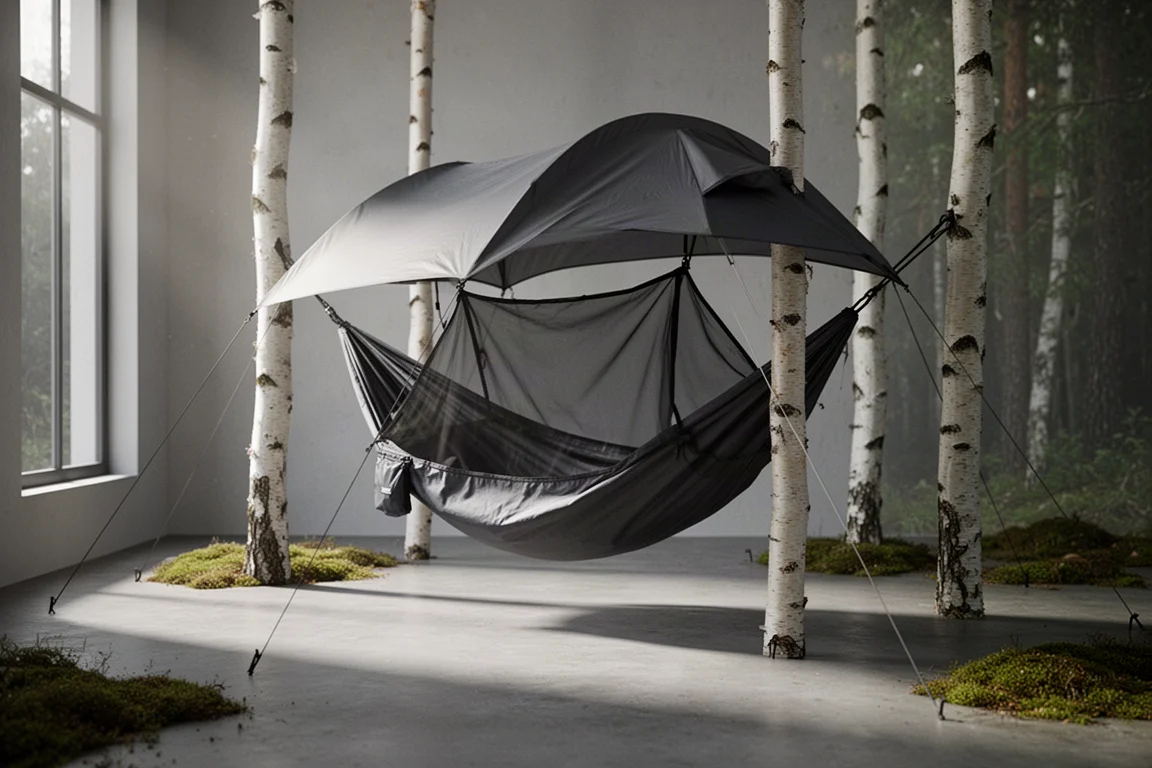
Haven Spectre Hammock Tent Review: Flat Sleeping at a Backpacking Weight
A closer look at the Haven Spectre hammock tent, a lighter take on the Haven XL with flat sleeping, a tapered pad, and two lightweight rainfly options.
Backpacking Gear
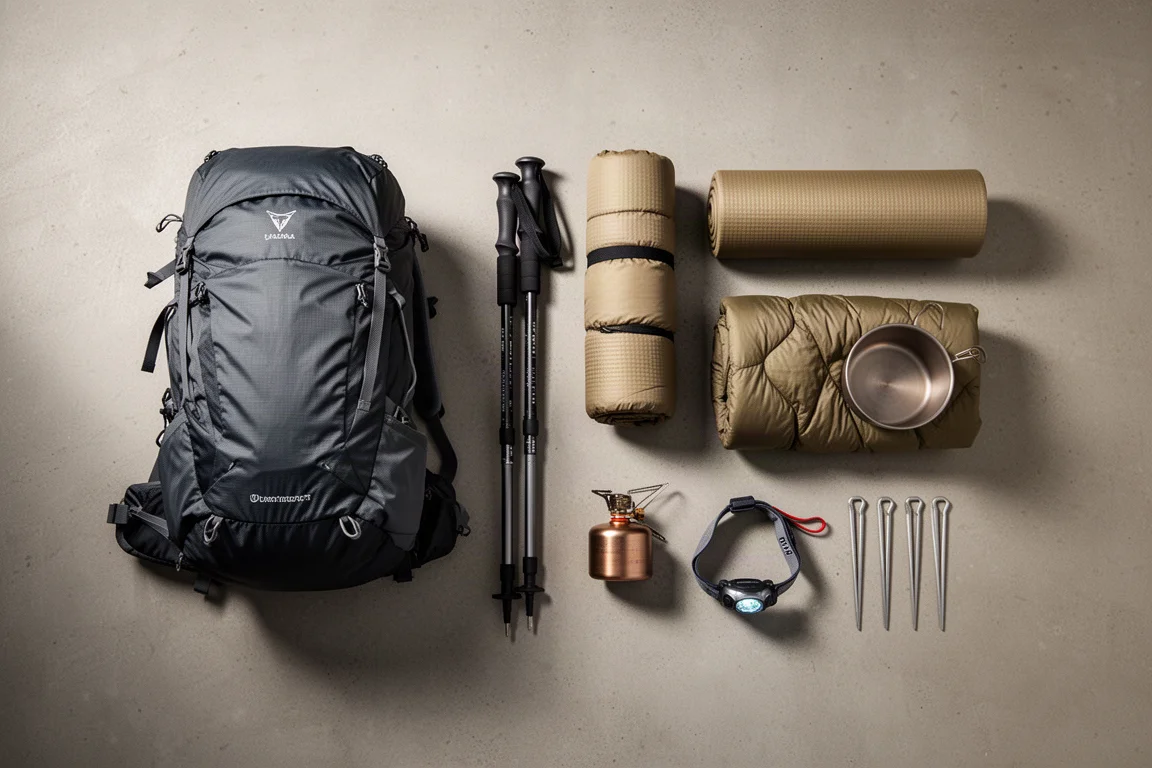
Building a 10 lb Base Weight: An Ultralight Backpacking Gear List
A practical walkthrough of the ultralight pieces behind a 10 lb base weight, from a 765 g pack and a roomy one-person tent to a full camp chair and a dependable water filter.
Backpacking Gear
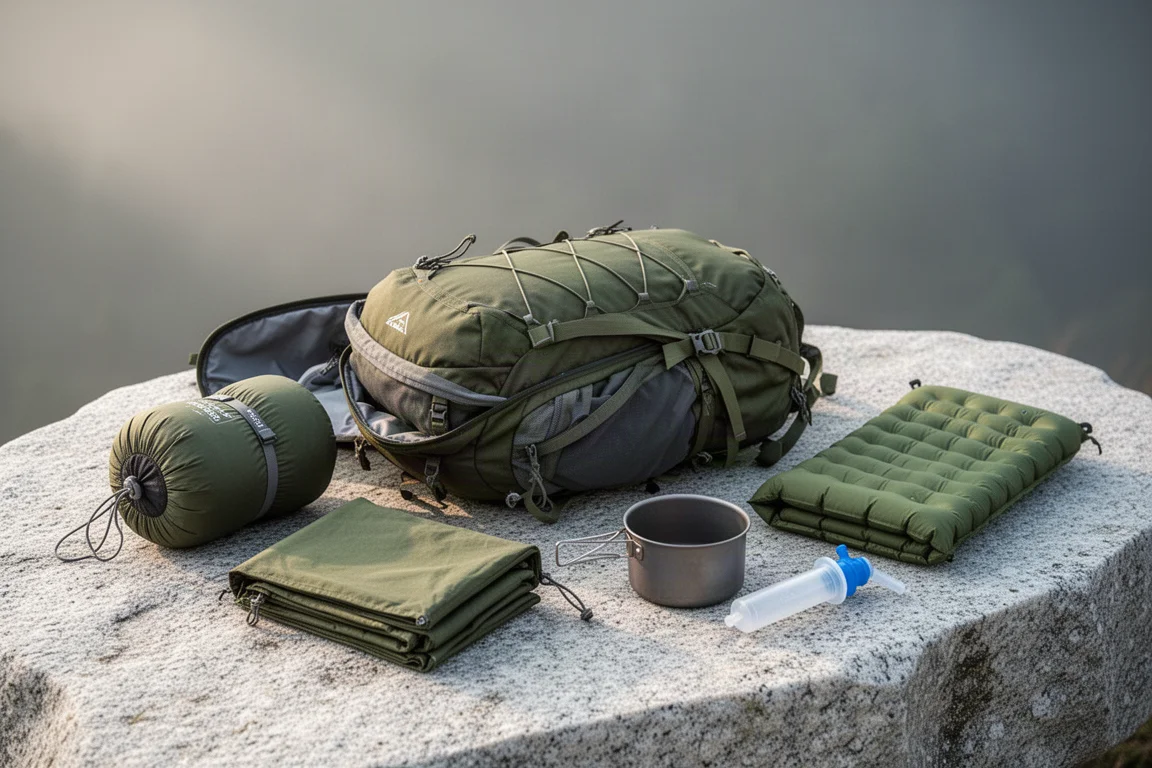
A 15-Pound Lightweight Backpacking Gear List for Solo Trips
A beginner-friendly 15-pound backpacking setup built from easy-to-find gear, with notes on what each piece does, how it packs, and where to spend your attention.