Mountain Bikes
Hardtail vs Full Suspension: Stanton Switch9er Ti Against GT Zaskar FS Sport
A titanium hardtail with a premium build faces a value full suspension bike. Here is where each one wins, and which rider each setup suits.
Introduction
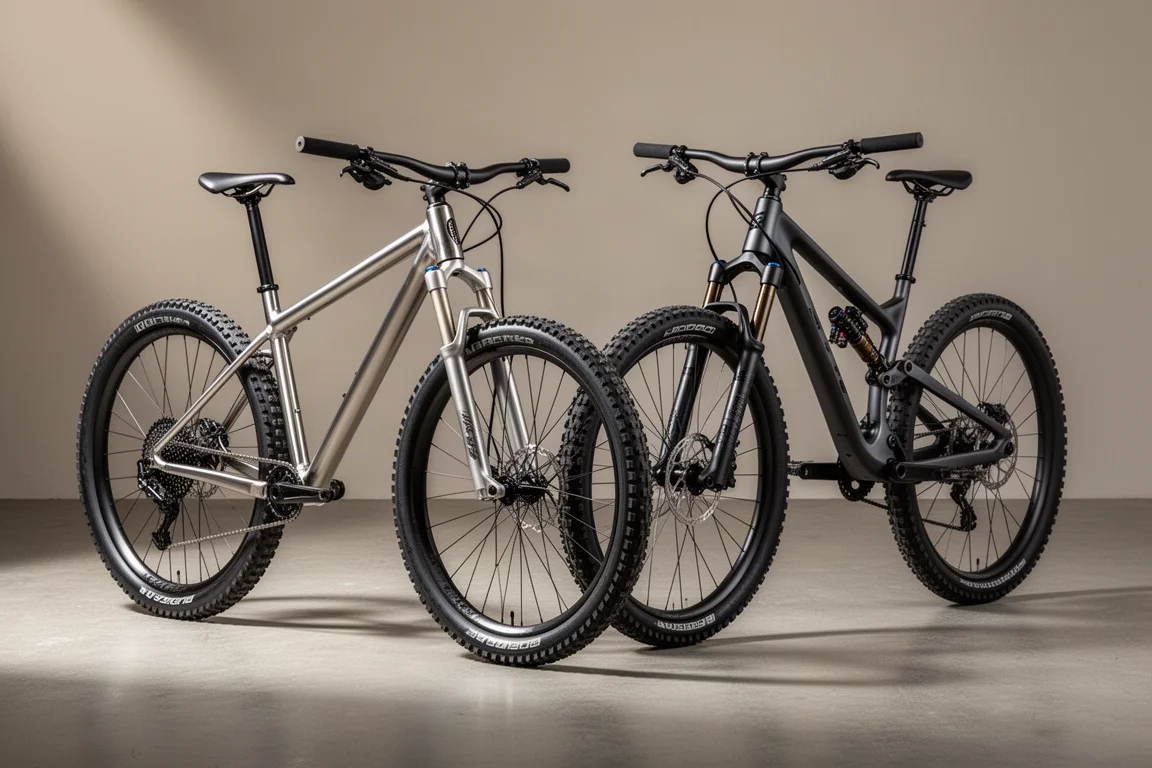
Two mountain bikes, two very different answers to the same question: where should your money go? One is a titanium hardtail built with premium components and a frame that costs roughly as much as the other bike in full. The other is a value-focused full suspension machine that leaves the factory with working rear suspension and thoroughly modern numbers.
The comparison matters because the two approaches pull in opposite directions. Rear suspension adds weight and complexity, but it keeps the back wheel planted and generating traction. A hardtail is lighter and more efficient under pedalling, but the rider’s legs effectively become part of the suspension. The open question is whether a budget full suspension bike can run rings around an expensive hardtail, or whether a carefully specced hardtail still holds the advantage.
This guide looks at both bikes as complete packages: geometry, weight, component choices, and how each one behaves when the trail gets rough.
What Separates These Two Bikes
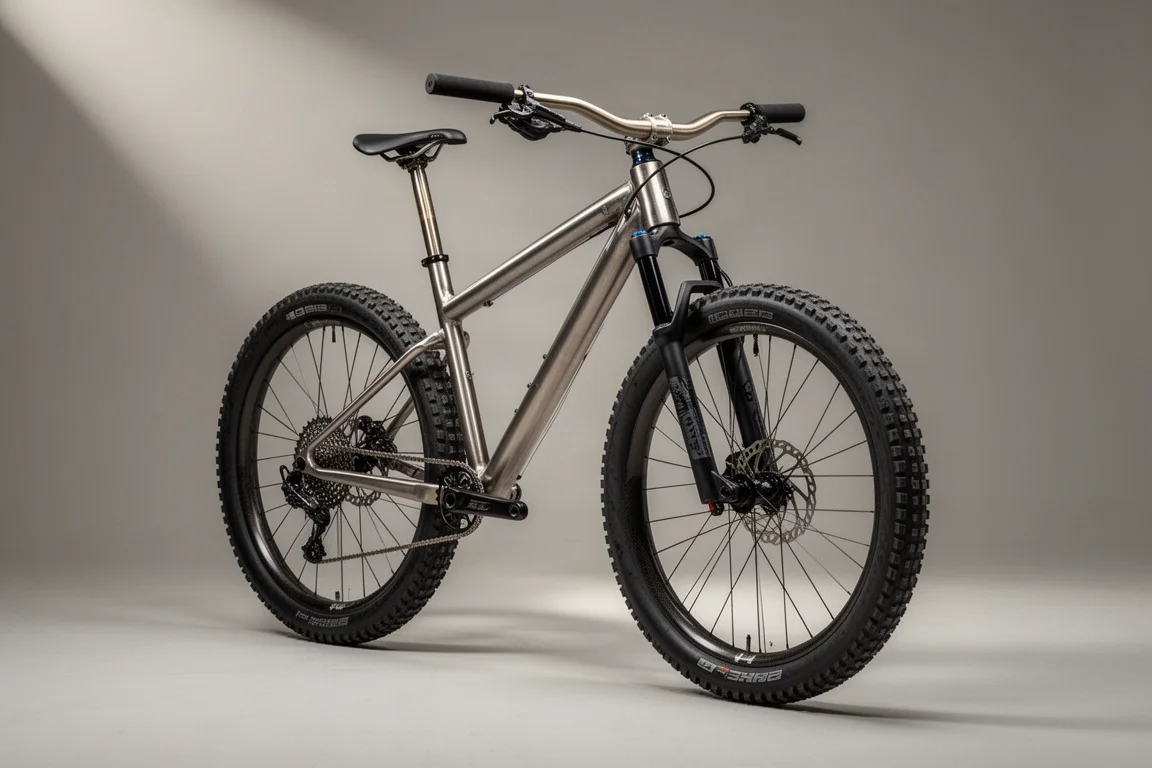
The Stanton Switch9er Ti represents the boutique hardtail end of the market. The titanium frame alone is priced at around £2,000, and the complete build lands at roughly £8,000. That budget buys carbon wheels, a titanium handlebar, powerful brakes, big grippy tires, and a premium long-travel fork that costs about as much as the entire opposing bike.
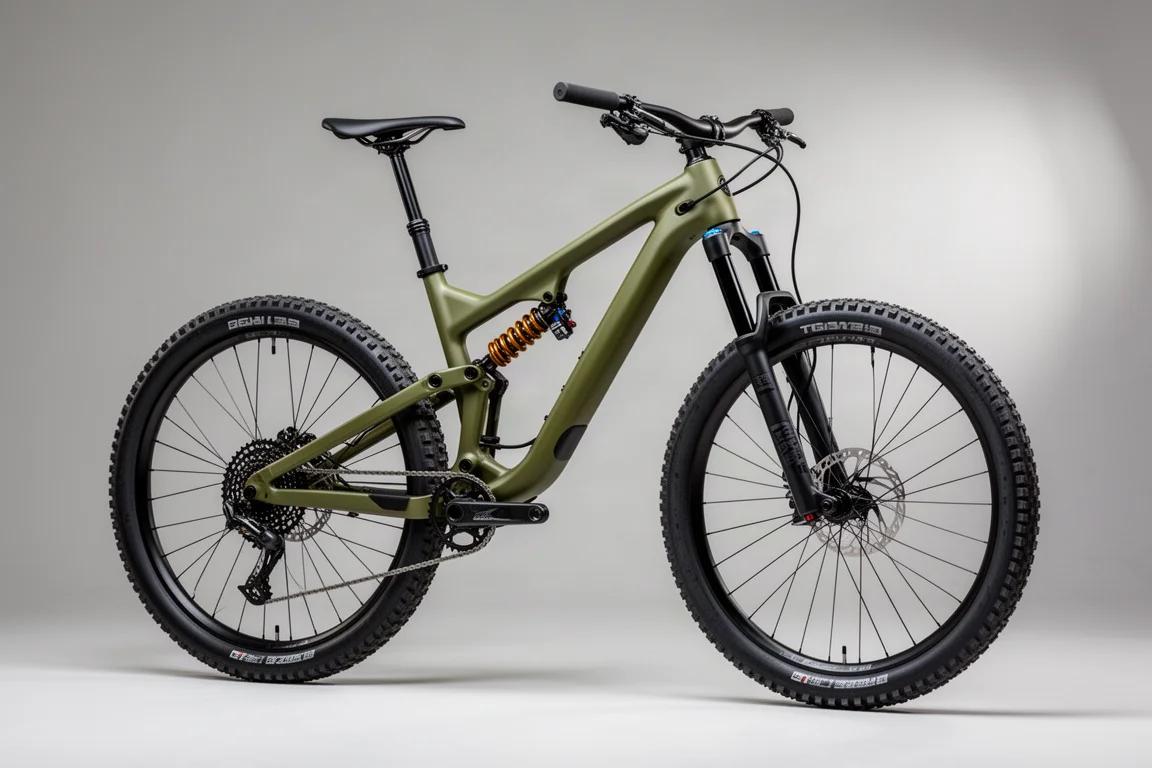
The GT Zaskar FS Sport sits at the opposite end. At £1,300 it offers a 130mm travel Suntour fork, a 120mm travel frame with a four-bar link, and a Suntour air shock. There are 10 gears, most parts are aluminium as you would expect at this price, and the spec still includes hydraulic disc brakes and Boost wheels. Tires are 2.25 inches wide, which is narrow for the category.
Weight separates them sharply. The Stanton comes in at 12.9kg, while the GT measures 17.1kg, which is not far off a lightweight e-bike.
The contrast is deliberate: one bike spends its budget on premium materials and components around a rigid rear triangle, the other spends its budget on rear suspension and geometry.
Stanton Switch9er Ti: A Titanium Hardtail Built Without Compromise
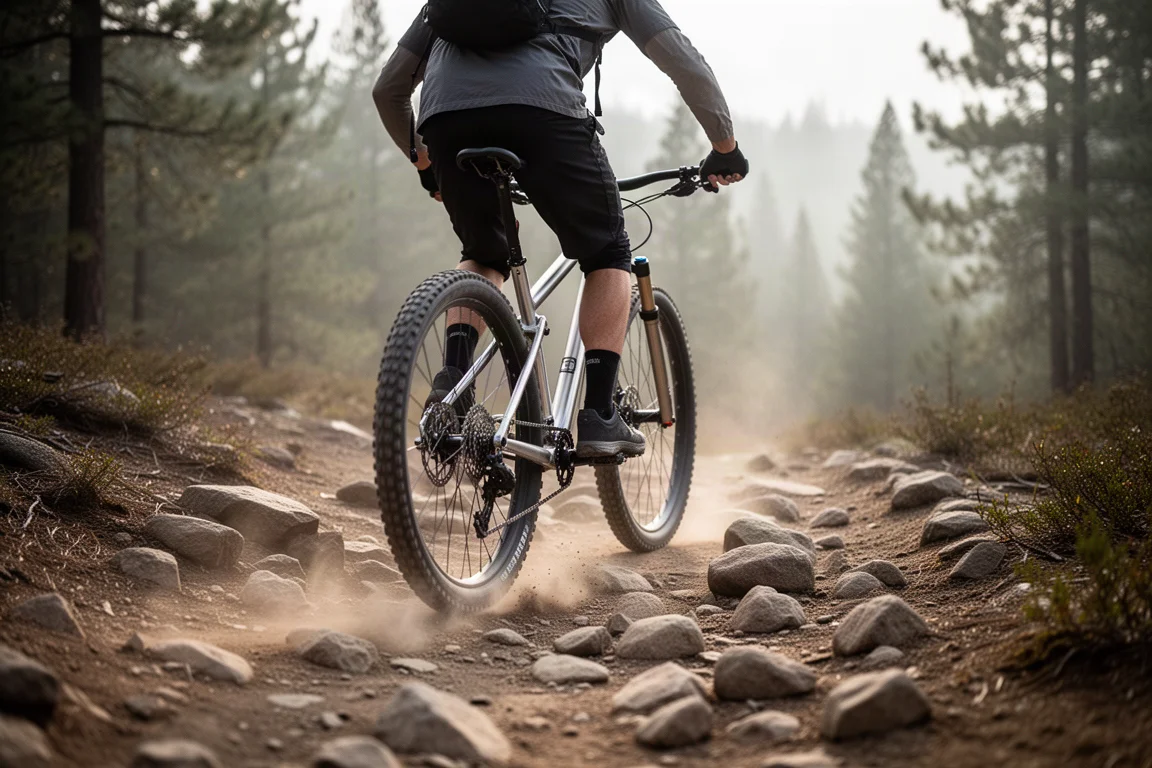
The Stanton’s numbers are thoroughly current. A 65.5 degree head angle and a 483mm reach give a long, stable front end, while 428mm chainstays keep the back of the bike snappy and quick to change direction. At 12.9kg, it is light enough that urgent pedal strokes translate into forward motion almost immediately.
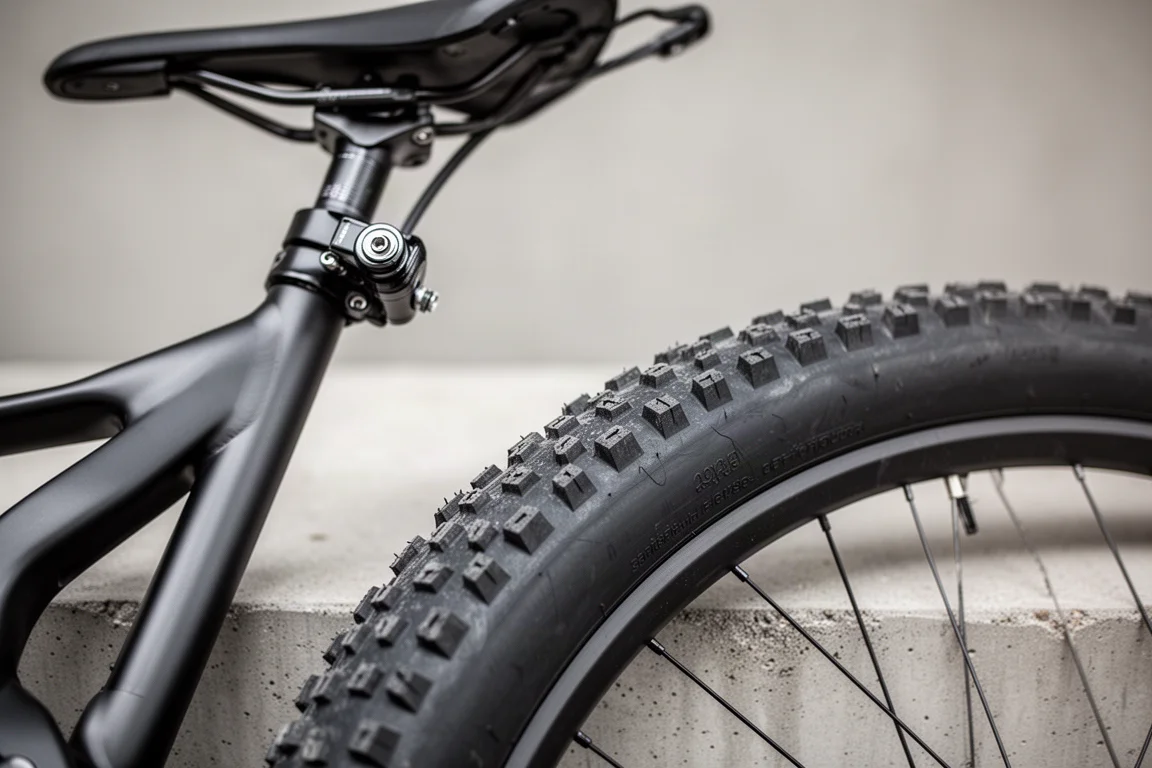
Component quality is where the build justifies its price. The fork is supple in the early part of its stroke and stays supportive deeper in the travel, which makes it unusually good at finding traction on loose surfaces. Brakes are powerful and easy to modulate, and the front tire is a 2.5 inch Maxxis Minion with an EXO+ casing, which can be run at low pressure for grip without feeling vague. Carbon wheels and a titanium handlebar round out a build that feels expensive in the hand.
The trade-off is unavoidable. On rougher descents the back wheel skips around and struggles to dig into the ground, so braking performance is compromised compared with a bike that has rear suspension. The rider absorbs hits through the legs and knees. Chain retention also proved inconsistent on the roughest sections.
GT Zaskar FS Sport: Full Suspension at a Value Price
The GT Zaskar FS Sport costs £1,300 and delivers a genuinely sorted package. Geometry is the standout: a 65 degree head angle, 473mm reach and 450mm chainstays on full 29 inch wheels. Those numbers are stable and predictable rather than nervous, and the long chainstays pay off on climbs where the bike tracks straight and holds its line.
The rear suspension does exactly what it should. Every bump sends the shock into motion, which keeps the rear wheel grounded and generating traction, and that in turn improves braking and smooths the ride. It is not sophisticated hardware, and there is no lockout on the rear shock, so the travel moves under hard pedalling inputs. The bike also carries real weight at 17.1kg, and it makes itself known on steep climbs.
Two specification gaps are worth flagging. There is no dropper post and no quick-release seatpost clamp, which limits how quickly the saddle can be dropped for descents. The brakes need a firm, deliberate squeeze to deliver meaningful stopping power, and the 2.25 inch tires roll fast but give away traction, particularly the narrow, harder-compound front tire on steep terrain.
Climbing: Weight Against Traction
On climbs the hardtail’s advantage is obvious. At 12.9kg the Stanton accelerates willingly, its back end does not sag or wallow in its travel, and pedal inputs feel direct. Chunky tires run at low pressures add comfort without costing efficiency, so long fire-road climbs feel shorter than they are.
The GT takes a different route to the same summit. Its rear shock moves under pedalling, and without a lockout that movement saps some energy, so it is not the most efficient climbing bike. What it does well is traction: the rear wheel works hard to stay grounded on loose, broken surfaces, which matters more than outright efficiency once the gradient turns technical. Long chainstays keep it stable and calm, though the 17.1kg weight is a constant presence.
The honest summary is that the hardtail climbs faster when the surface is smooth and the full suspension climbs better when the surface is not.
Descending: Where Rear Suspension Earns Its Keep
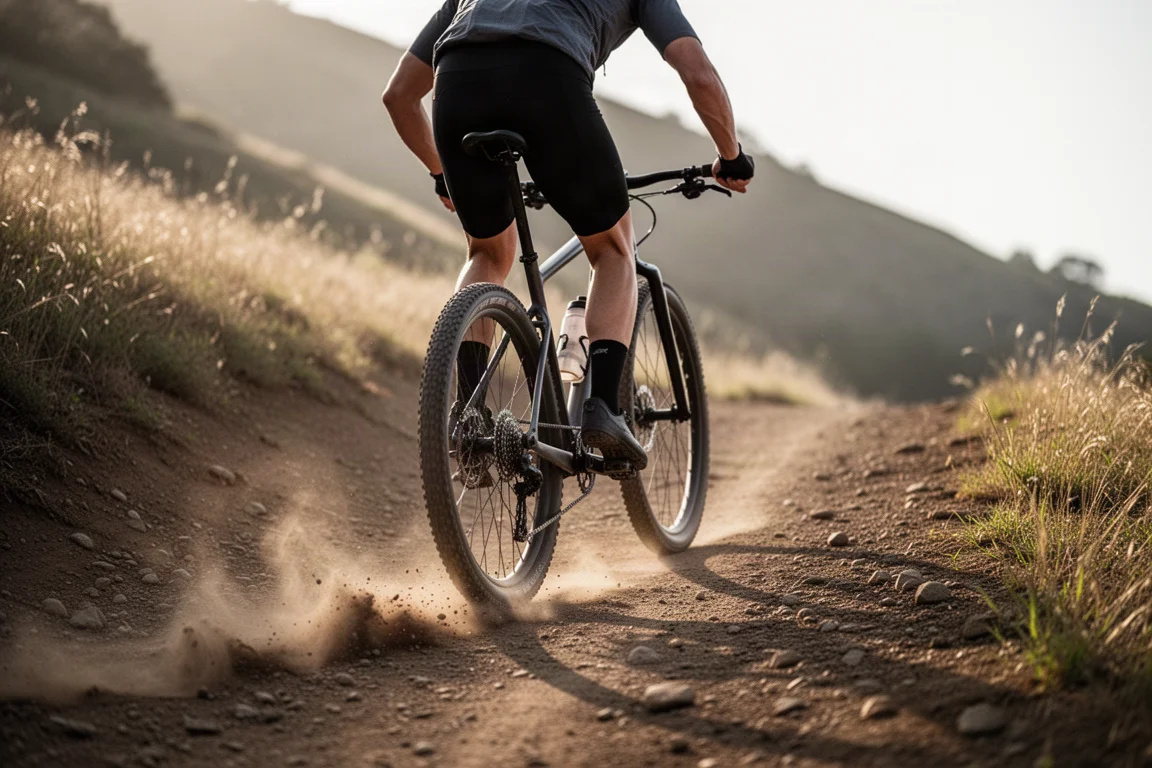
Descending is where the two philosophies diverge most clearly. On the GT, the rear suspension keeps the back wheel in contact with the ground, which means better braking, a smoother ride and more mental bandwidth for reading the trail ahead. The geometry adds confidence, and the bike is closer to point-and-shoot: line choice matters less because the suspension absorbs the mistakes.
The Stanton asks more of its rider. Because there is no rear suspension compressing at the same rate, the geometry changes more dramatically through the travel on a hardtail, and the back end skips across rough ground instead of tracking it. The compensation is component quality. A supple, well-damped fork, powerful brakes and a big, grippy front tire take much of the sting out of the trail, and the rider’s legs handle the rest. It is a more physical way to descend, and arguably a more engaging one, but it is unambiguously more work.
Two Upgrades That Transform the GT Zaskar FS Sport
The GT Zaskar FS Sport is a strong package at its price, and two inexpensive changes close much of the gap to more expensive bikes.
The first is a quick-release seatpost clamp, which makes dropping the saddle for descents a fast, tool-free job rather than a compromise. The second is a larger-volume, softer-compound front tire, which addresses the weakest part of the stock specification by adding grip and confidence where the narrow, harder-compound original runs out of both.
Add those two items and the total stays under £1,400, which makes for a very capable mountain bike for the money. Neither upgrade changes the bike’s weight or its basic suspension character, but together they make it easier to ride quickly and more reassuring when the trail turns steep.
Buying Advice: Which Bike Suits Which Rider
If a hardtail is the direction you want to go, three priorities matter. Look for a long front end and a slack head angle, which deliver stability when the trail rattles you around. Fit a big tire with as strong a sidewall as possible for confidence on rocky, rooty lines. Then spend what budget you have on the fork: something supple in the early stroke for comfort, with enough progression to stay controlled and propped up on bigger hits and steep terrain.
If a full suspension bike is the goal, the GT Zaskar FS Sport shows how far a modest budget can stretch. You get sorted geometry and proper componentry, including working rear suspension and hydraulic disc brakes, in exchange for weight and less sophisticated damping. For a rider who values traction, stability and a smoother ride over outright climbing speed, that is a sensible trade.
The deciding factor is terrain and temperament. Choose the hardtail for efficiency, low weight and a more involved ride. Choose the full suspension for grip, comfort and a calmer, more forgiving descent.
Conclusion
Both bikes make their case convincingly. The Stanton Switch9er Ti is a beautifully built, impressively light titanium hardtail with premium components that flatter it on climbs and reward a rider who is willing to work on descents. The GT Zaskar FS Sport is a properly sorted full suspension bike for £1,300, with modern geometry, real rear traction and a specification that responds well to two small, affordable upgrades.
Rear suspension is not a luxury on rough ground, and a value full suspension bike can genuinely outperform an expensive hardtail once the trail gets chunky. But a hardtail built around a great fork, big tires and current geometry remains a fast, efficient and deeply enjoyable machine. Match the bike to the riding you actually do, and either choice will serve you well.
Further reading
Related Reviews
Mountain Bikes
Atherton AM.130 Review: 3D-Printed Titanium Lugs and a 130mm Trail Bike That Descends Like a Bigger Machine
The Atherton AM.130 pairs 3D-printed titanium lugs with carbon tubes and a DW6 suspension platform. Here is how it rides, what the build delivers, and who it suits.
Mountain Bikes
Beginner Mountain Bike Buying Guide: What to Look For in a Trailworthy Hardtail
A practical framework for evaluating beginner mountain bikes, whether new or used, by examining key components that indicate real trail capability.
Mountain Bikes
Best Aluminum Mountain Bikes 2026: Five Alloy Bikes Worth Your Attention
Five aluminum mountain bikes that show how far alloy has come, from a 120mm trail bike and a versatile machined frame to a 180mm freeride machine.