Hi-Fi Speakers
Harbeth M30.3 XD2 Review: An English Monitor Built Around the Midrange
A handmade English two-way monitor with an exceptional midrange, a non-fatiguing treble, and useful bass down to roughly 40 Hz at $6,290 a pair.
Introduction
Most speakers work hard to earn your attention. The Harbeth M30.3 XD2 does the opposite. It steps back, keeps the bass and treble in proportion, and lets the recording carry the performance. After months of listening to music and film through it, that restraint turned out to be the most compelling thing about the design.
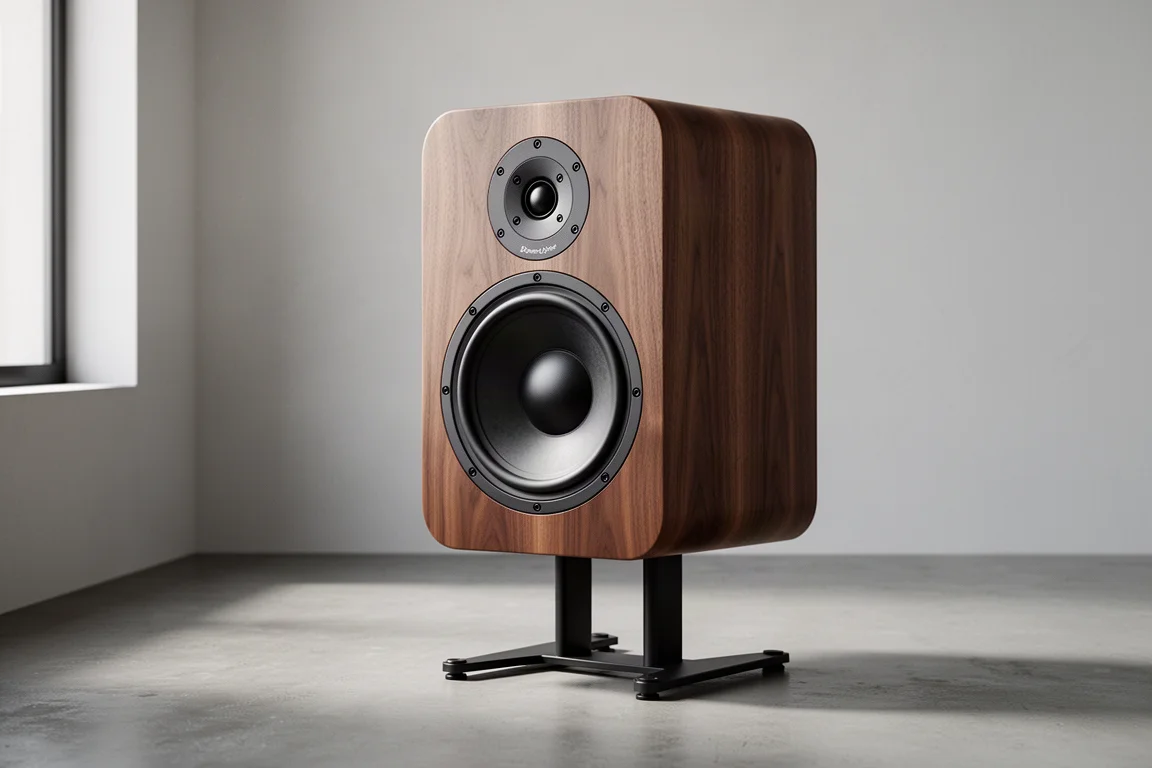
The M30.3 XD2 is a large stand-mounted two-way monitor, handmade in England and finished in walnut. It costs $6,290 a pair. It does not read as a modern reinterpretation of an older design. It reads as a Harbeth, with proportions and small details that feel elevated beside the growing field of speakers styled for a retro mood.
Its strongest case is piano and voice. Vocal-led albums, jazz, and acoustic material arrived with an immediate sense of presence, while the speaker itself stayed out of the way. Anyone shopping at the upper end of the stand-mounted category should understand both what that realism delivers and what it costs in the lowest octave.
Design and Build: Traditional English Craftsmanship
Harbeth builds the M30.3 XD2 in England, by trained technicians, on a relatively small scale. That approach shapes both the finish and the price. The cabinet is a traditional box and does not pretend otherwise, but the walnut veneer, the proportions, and the small construction details give it a settled, deliberate look that stands apart from speakers designed around a nostalgic theme.
Because it is a stand-mounted monitor, the speaker needs sturdy stands and a little room to breathe. Buyers should plan for both.
Nothing about the build feels fragile or decorative. It is furniture-adjacent in the best sense: a piece that looks appropriate in a living room and quietly recedes once the music starts.
Who the Harbeth M30.3 XD2 Is For
This monitor suits listeners who care most about the middle of the frequency range: vocals, piano, upright bass, acoustic guitar, and anything where texture and intelligibility matter more than sheer scale.
It also suits people who want a speaker that never sounds bright or tiring across long sessions, and who are comfortable letting a subwoofer handle the deepest notes.
It is a less obvious fit for listeners who expect a stand-mounted speaker to deliver subsonic weight on its own, or who measure value mainly by driver count and output. The M30.3 XD2 is a two-way design, and it is priced as a handmade English product rather than a mass-market one.
Sound: Midrange, Treble, and Bass
The midrange is the reason to own this speaker. Voices carried dimension, texture, and clarity, which made them unusually easy to follow. Focus and intelligibility were exceptional, and the sense of presence was matched in our experience only by considerably more expensive reference speakers.
The treble follows the same philosophy. Useful output extended beyond 15 kHz in our room, yet the speaker never sounded bright or fatiguing. Even raw, hard-edged recordings stayed easier to enjoy than they usually are, because detail was preserved without magnifying every flaw.
Bass is the honest trade-off. Useful output reached roughly 40 Hz before rolling off, which was plenty for piano, upright bass, and most of a drum kit, but not for the lowest notes on bass-heavy electronic tracks. Those lost some weight. Even so, the 8-inch Radial driver responded with speed, texture, and detail, and the low end never sounded thin. It favors control and definition over force.
The soundstage was convincing front to back and wide from side to side. Images did not project far in front of the cabinets. Instead, the space opened up behind them, at times seeming to reach beyond the front wall. Placement was pinpoint without sounding etched, and instruments occupied clearly defined positions while still belonging to the same performance.
Living With It: Placement, Amplification, and Subwoofer Pairing
The M30.3 XD2 responded well to a fairly conventional setup. We placed it roughly where a reference floorstander normally sits: about 18 inches from the front wall, 5 feet from the side walls, 9 feet apart, with the listening position 10 to 11 feet away.
Amplification proved refreshingly undemanding. The speaker kept its neutral, balanced character with a Naim Uniti 102, a Moon 371, and a Musical Fidelity M6xi. The modestly priced Naim pairing was especially encouraging, because this is not a speaker that requires a second fortune in electronics.
For listeners who want deeper bass, a subwoofer integrates cleanly. Pairing the M30.3 XD2 with a KEF KC62 restored the missing weight without disturbing the speed, texture, or balance that make the monitor appealing in the first place.
How It Compares
The most direct alternative is the KEF R3 Meta at $2,500 a pair. It is an excellent three-way speaker and proof that strong accuracy does not have to cost $6,000. Having lived with both, the Harbeth remains the preference: the KEF does not offer the same sweetness, presence, or sense of realism. The measurements may look similar, but the experience is not.
Wharfedale’s Linton and Super Denton take a different route, with a bass-rich profile that sounds darker, warmer, and more laid-back. Both offer handsome styling and remarkable value from a company nearly twice as old as Harbeth. A large part of that value comes from scale: Wharfedale designs in the UK and manufactures in China at a much larger facility, where consolidation and lower production costs make those prices possible. Harbeth’s smaller English production line inevitably costs more, and whether that matters is a personal call.
The Dynaudio Legend is another easy-to-listen-to option at $7,000 a pair. It shares the Harbeth’s relaxed character but sounds smaller in scale, more laid-back, and dynamically softer. Availability is a factor for buyers in North America, since Dynaudio has announced it is leaving that market.
The comparison that lingered longest is with the Bowers & Wilkins 805 D4, a British monitor that launched at $8,000 a pair and later rose to $10,000, with the newer D5 listed at $15,000 before another $2,000 for stands. The 805 D4 remains a favorite for design and presentation, but the M30.3 XD2 sounds more natural, more convincing, and ultimately more real. The D5 has not been evaluated here, so no sound comparison with it is offered.
Things to Consider Before Buying
- Bass rolls off around 40 Hz in a typical room, so deep extension depends on adding a subwoofer.
- At $6,290 a pair, the M30.3 XD2 asks a premium that reflects small-scale English manufacturing.
- It is a stand-mounted design, which means budgeting for stands and planning placement.
- It is a two-way monitor rather than a high-output tower, and its appeal lies in refinement rather than sheer scale.
- The presentation is neutral by design, so listeners who want boosted bass or a forward treble will need to look elsewhere.
Buying Advice
For listeners whose library leans on voice, piano, and acoustic instruments, the M30.3 XD2 delivers a level of realism that is difficult to find at any price. The sensible way to plan a purchase is to budget for the speaker, a solid pair of stands, and enough space behind and beside it to let the midrange and soundstage do their work.
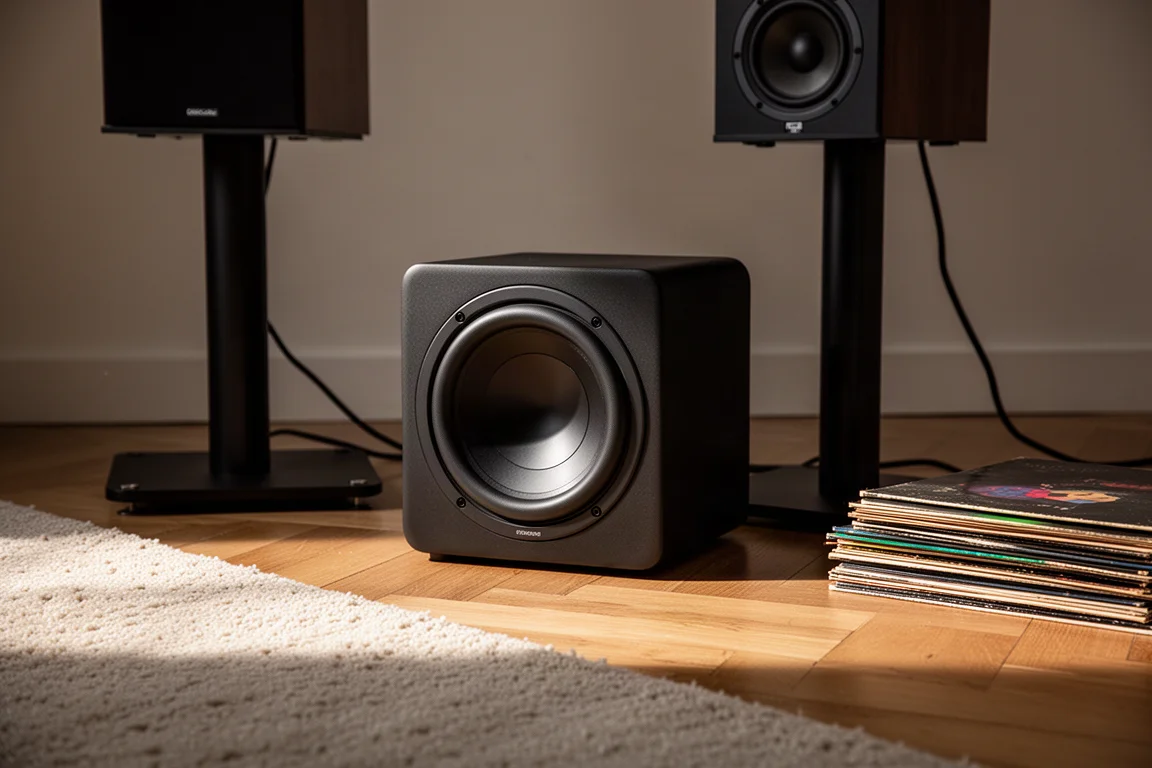
Amplification does not need to be exotic. A well-built integrated amplifier is enough to preserve the monitor’s neutral balance, and a compact subwoofer can be added later if the lowest octave matters for electronic or orchestral material. Bought that way, the system stays simple while covering the one area where the speaker asks for help.
Conclusion
The Harbeth M30.3 XD2 is not the speaker for someone chasing maximum bass or a dramatic, forward sound. It is the speaker for someone who wants recordings to sound believable. Its midrange clarity, non-fatiguing treble, and coherent soundstage make it one of the purest examples of what a great hi-fi speaker can still be, and the roughly 40 Hz bass limit is a manageable trade-off rather than a flaw. Listeners who value realism over spectacle will find a great deal to like here, especially once a subwoofer takes care of the final octave.
Product link
View more details for Harbeth M30.3 XD2
This product is mentioned in the review. Check the specifications, options, and compatibility before buying.
View more details for Harbeth M30.3 XD2Further reading
Related Reviews
Hi-Fi Speakers
1723 THX Tower vs 1528 Bookshelf: Which Speaker Fits Your Room?
Two speakers at roughly the same price, built very differently. How the 1723 THX tower and the 1528 bookshelf compare on construction, bass, power needs, and sound.
Hi-Fi Speakers
Acoustic Energy AE 300 Review: Deep Bass From a Compact Standmount
A two-way standmount with real wood veneer, surprising low-end weight, and a warm, easygoing character. Here is what to know before buying.
Hi-Fi Speakers
Acoustic Energy AE1 40th Anniversary Review: A Modern Take on a British Classic
A compact standmount that revives a 1980s favorite with all-new parts, a warm mid-centric balance, and a price of £1,499 per pair.