Handcycle Touring Gear
Handcycle Touring Gear Review: Madeleine Monaco Carbon and the Parts That Held Up
A real-world look at a handcycle touring setup: a carbon racing frame, Continental GatorSkin tires, Schwalbe One folding spares, and a Burley Coho XC trailer.
Introduction
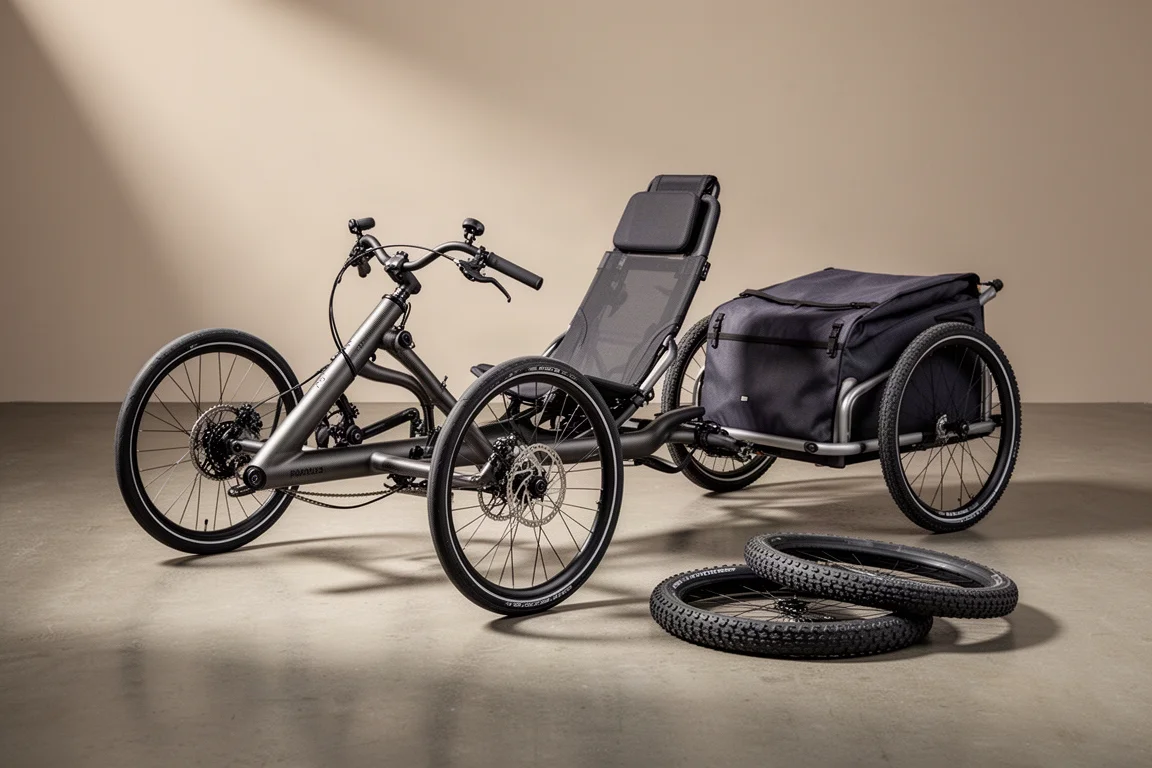
A handcycle is a very different machine from a bicycle, and a long crossing of the United States is about as hard a test as any setup will face. This rundown covers the four pieces that carried one rider through the opening weeks of that journey: a Madeleine Monaco carbon handcycle, Continental GatorSkin tires, Schwalbe One folding spares, and a Burley Coho XC trailer.
Some of it worked exactly as intended. Some of it was never meant for touring at all. Understanding the difference is worth more than any single specification before you spend money on a similar build.
The Bike and the Setup
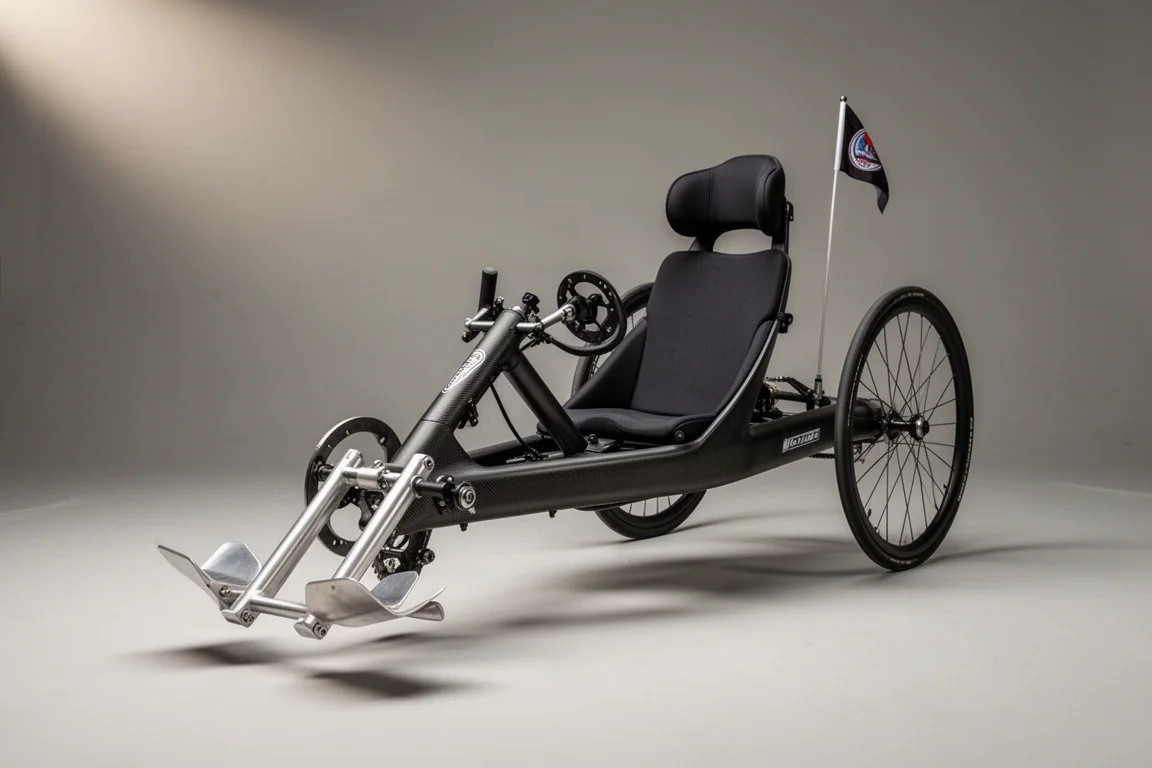
The starting point is a Madeleine Monaco carbon handcycle, a racing platform with a carbon fiber frame and aluminum parts in the fork, the foot plates, and the drafting bar at the rear. It was built to go fast, not to carry luggage or tow anything, which makes it an unusual choice for long distance touring.
Handcycles tend to be bespoke. Each one is made for a specific rider, they take a long time to produce, and they are difficult to replace when something goes wrong. For a trip like this, an aluminum frame would normally have been the preference, both for durability and for carrying more gear, along with the same wheel size as a companion bicycle so that wheels, tires and spares could be shared.
Wheel size is one of the biggest compromises here. This handcycle runs 650c wheels, which keeps the machine low to the ground and quick, but reduces road clearance. Modern racing handcycles often use 20 inch rear wheels instead, trading some speed for a shorter wheelbase and a tighter turning circle. On this bike, turning is the clear weak point, and the steering depends on a pivot with an elastic centering mechanism that can fail, which it later did. Adding a trailer behind makes every turn harder still.
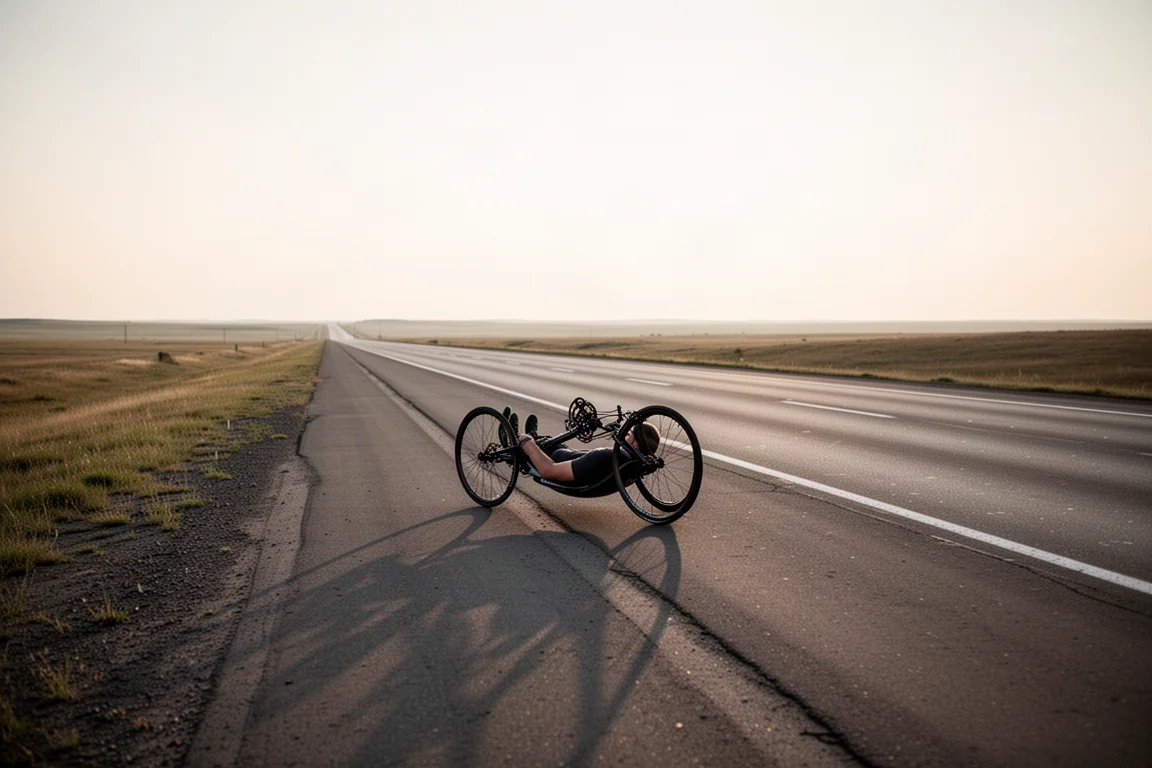
Riders sit extremely low, close enough to the surface that the underside of the frame can scrape on uneven ground. Reinforcement work was carried out on the frame before the trip began, and even so, a few weeks of riding produced visible damage without ever crossing a speed bump. That says more about the platform than about the route.
Madeleine Monaco Carbon Handcycle
The drivetrain is essentially a standard bicycle setup mounted in reverse, with a chain around one and a half times the normal length. It originally ran an electronic Di2 groupset and was converted to a mechanical SRAM setup for the trip, which turned out to be an awkward match. The frame uses an integrated derailleur hanger rather than a replaceable one, so the gears never aligned cleanly. The practical result was constant trimming: shifting two gears down and back up one to find something usable.
Gear range is a second problem. The 46 tooth front ring is too tall for touring, towing or climbing. A smaller ring would make far more sense for loaded, low speed work.
A few details are genuinely well thought out. The head and neck support is comfortable enough for long days, which matters when the rider is reclined for hours at a time. Protection tape was applied where the chain runs close to the frame, and a reinforced brake cable was fitted before the trip, although it rubs against the rider as the steering moves. There is a seat belt, a small mirror for rear visibility, a removable safety flag, and a single bottle holder for a hydration pack.
Continental GatorSkin Tires
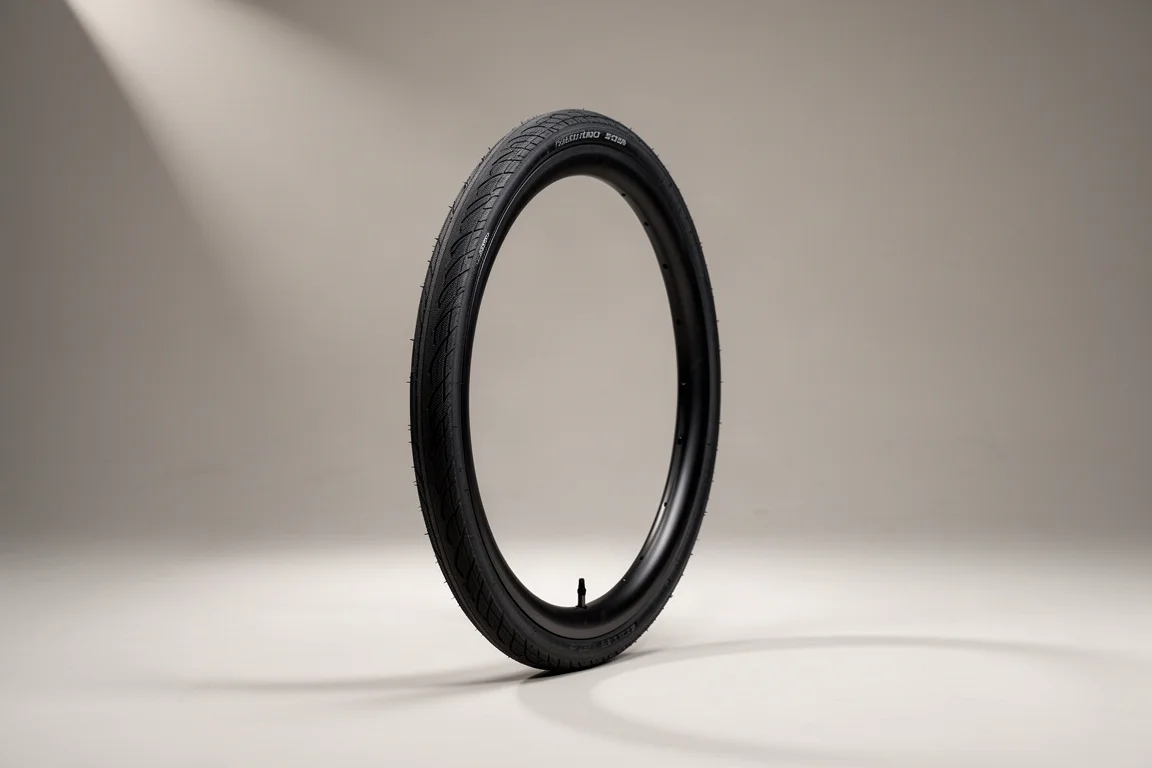
Tire choice is limited in this wheel size, so durability becomes the deciding factor. The Continental GatorSkin was chosen as the most durable option available for the trip, and it largely lived up to that reputation. The only punctures were pinch flats at the front, and the tires were easy to mount and remove from the rims, which is not a small thing when you are repairing at the roadside.
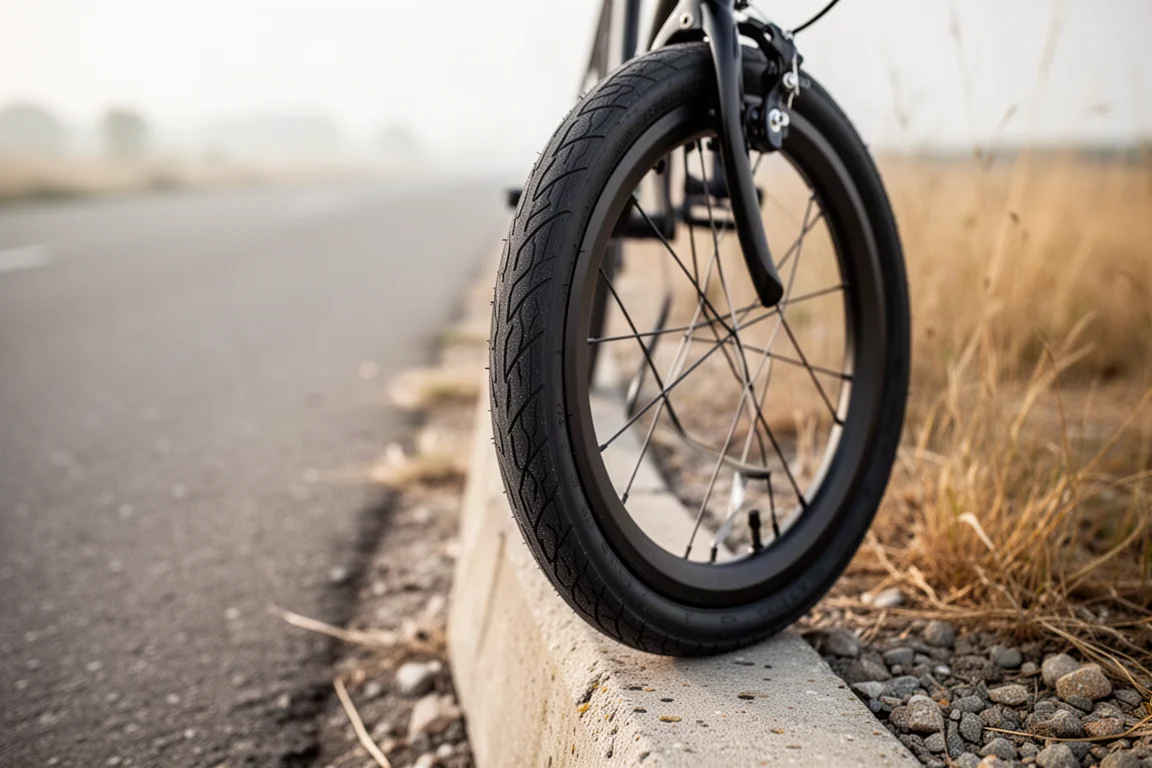
That combination of durability and easy fitting is close to ideal for a long tour. Pinch flats usually point to pressure and terrain rather than the tire itself, and they are the kind of failure that a little more volume or a slightly different line can solve.
Schwalbe One Folding Spare Tires
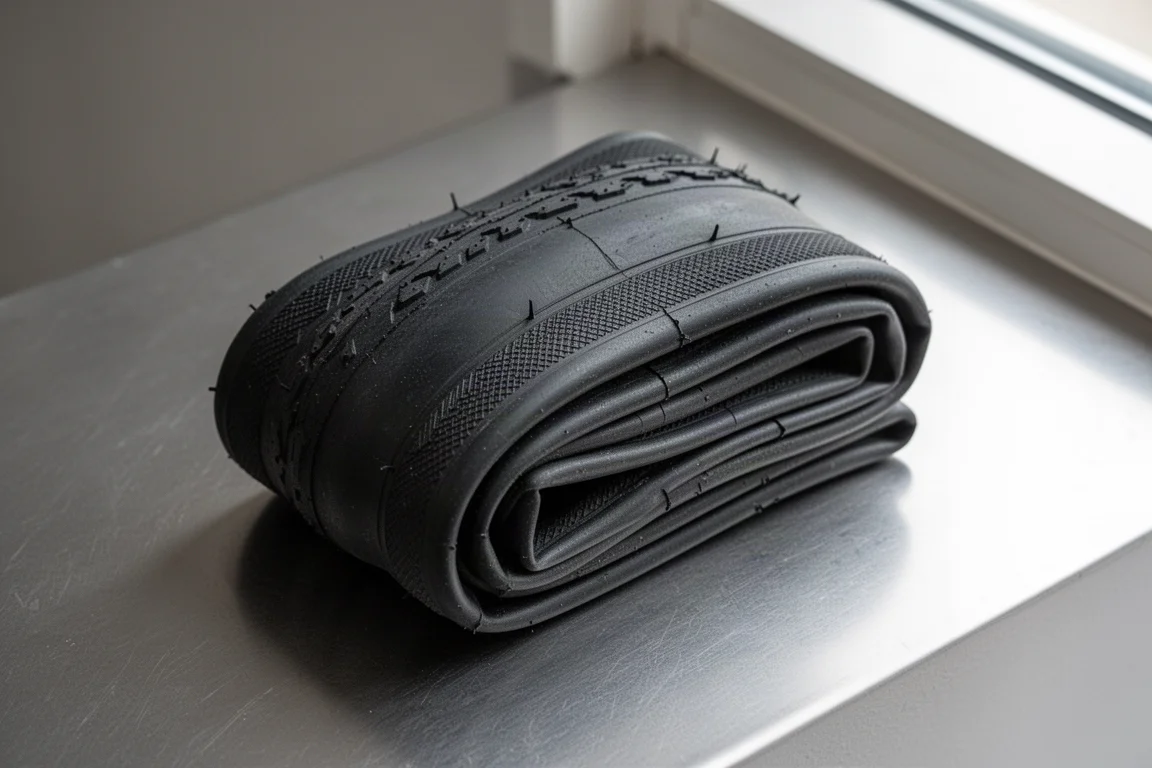
Carrying spares on a handcycle is a packing problem as much as a weight problem. The Schwalbe One tires came along as folding spares because they pack down small, making them easier to strap behind the seat out of the way. For a rider with limited carrying capacity, a folding spare that stows compactly is a practical answer rather than a luxury.
Burley Coho XC Trailer
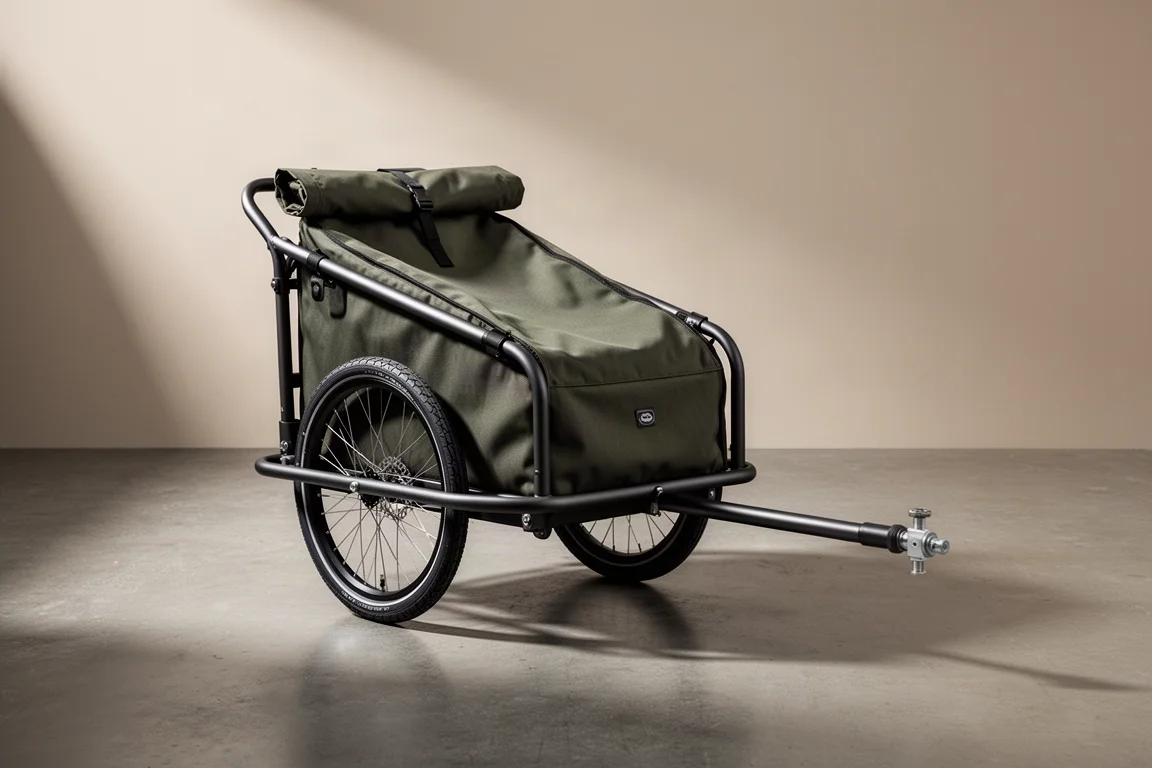
The Burley Coho XC is a cargo trailer built to attach through its own through axle system. On this setup it was mounted to the reinforced drafting bar at the back of the handcycle, with a towel for padding and duct tape holding the through axle in place. That is an improvised arrangement and not something anyone should copy. It was only possible because the mounting area had been reinforced beforehand.
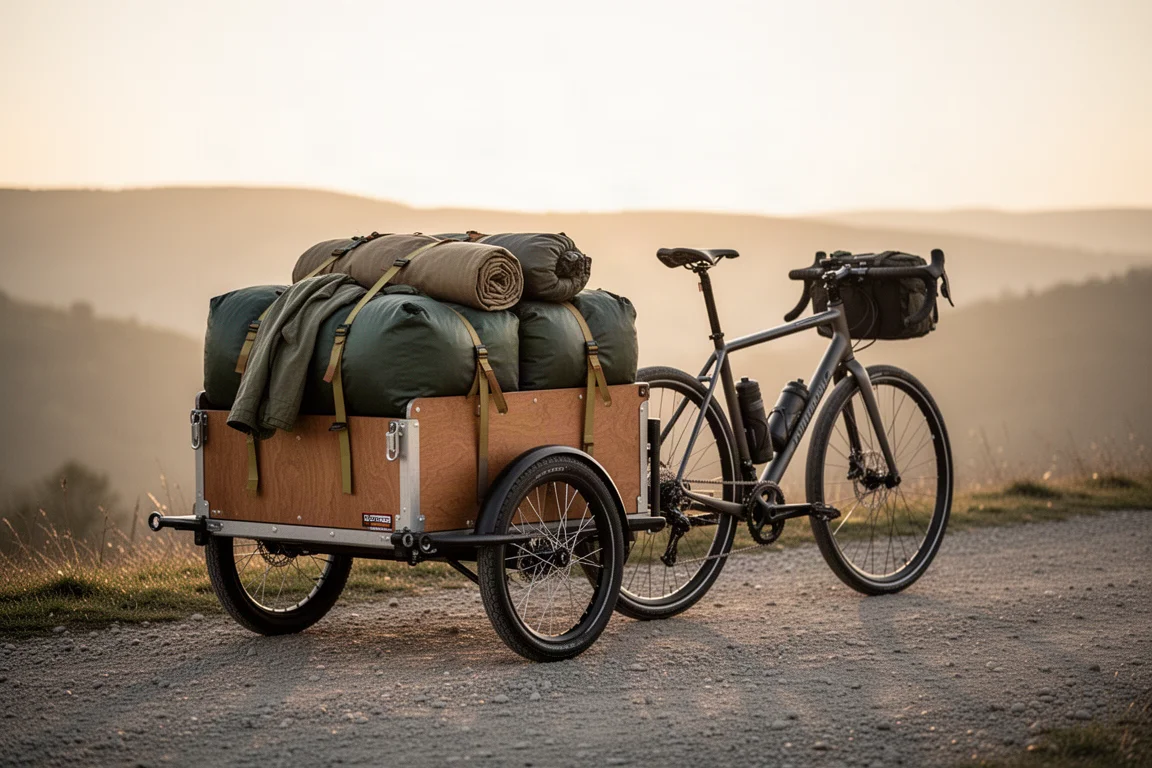
The improvised mount held for seven days of riding without coming loose, which is more than the design deserved. If you plan to tow with a handcycle, the better route is to discuss the mounting with the frame maker or a specialist fabricator rather than adapting a bicycle axle to a part that was never intended to carry a load.
Fit and Setup Notes for Handcycle Touring
A few lessons stand out for anyone planning something similar. Choose a frame that was designed for touring if touring is the plan, because a racing handcycle will be quick on smooth surfaces and frustrating almost everywhere else. Sort out wheel and tire compatibility with whoever you ride alongside, since shared spares remove a large amount of risk from a long trip. Plan the towing interface before departure rather than during the journey. Keep the gear range low enough to climb and tow, because a tall front ring makes loaded days miserable. Finally, budget time as well as money: bespoke handcycles and their parts are not quick to source or replace.
Buying Advice
If your priority is speed on smooth surfaces and you already own a racing handcycle, the Madeleine Monaco carbon platform does what it was built to do, and the head and neck support is one of its strongest features. Just do not expect it to behave like a touring machine. Riders who need to carry gear and climb loaded should look for a frame geometry and wheel size chosen for that job.
The Continental GatorSkin is the sensible pick for riders who want durability plus easy fitting and removal at the roadside. The Schwalbe One folding tire makes sense as a spare that packs small, especially when storage space is tight.
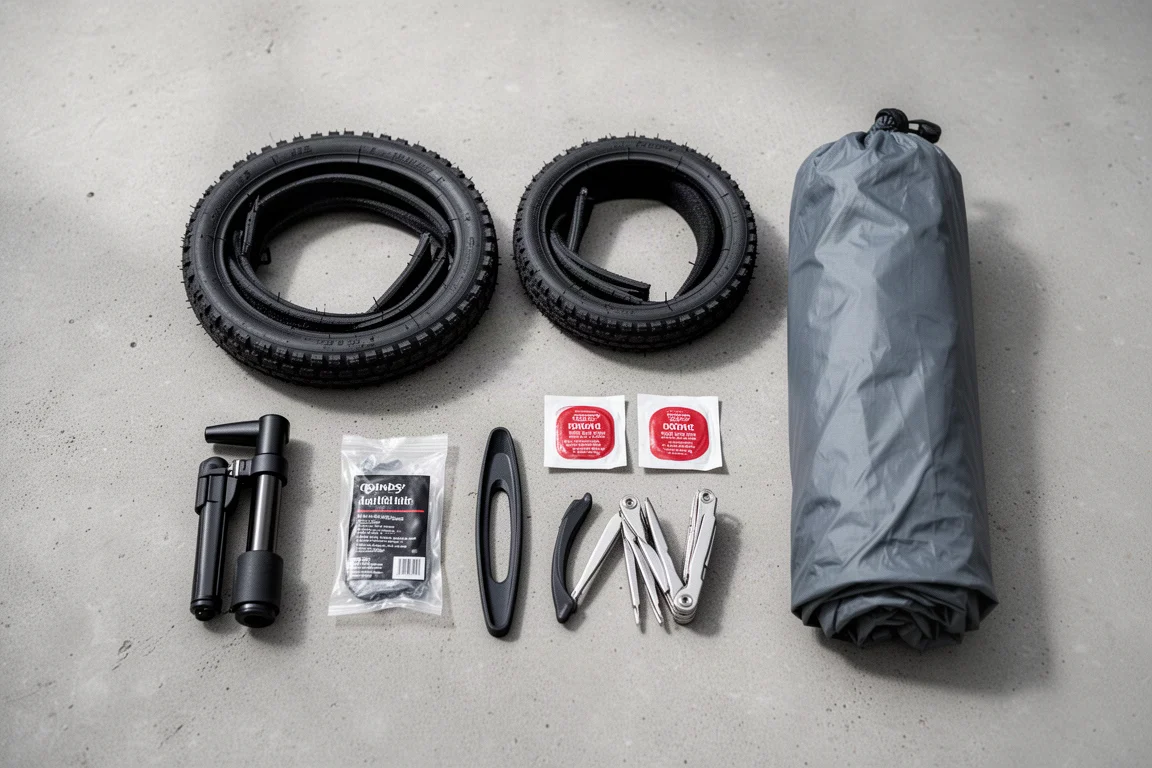
The Burley Coho XC is a capable cargo trailer and performs best when mounted the way the manufacturer intended. On a handcycle that requires a proper mounting solution and a frame that can take the load. Treat the trailer, the frame and the mounting hardware as one system rather than three separate purchases, and the setup will reward you.
Conclusion
The honest summary is that one part of this setup was never suited to the job. The handcycle was a racing machine asked to work as a touring machine, and it paid for that with limited ground clearance, difficult turning, a compromised drivetrain and near constant small repairs. The tires, the folding spares and the trailer all did what was asked of them, and the trailer only became risky once it was mounted in a way it was not designed for. Match the equipment to the trip before you leave, and the trip gets considerably easier.
Further reading
Related Reviews
Cycling Components
Four Affordable Bike Upgrades That Improve Ride Feel
Four low-cost cycling products that make a real difference to ride feel, plus the free setup changes worth trying first.
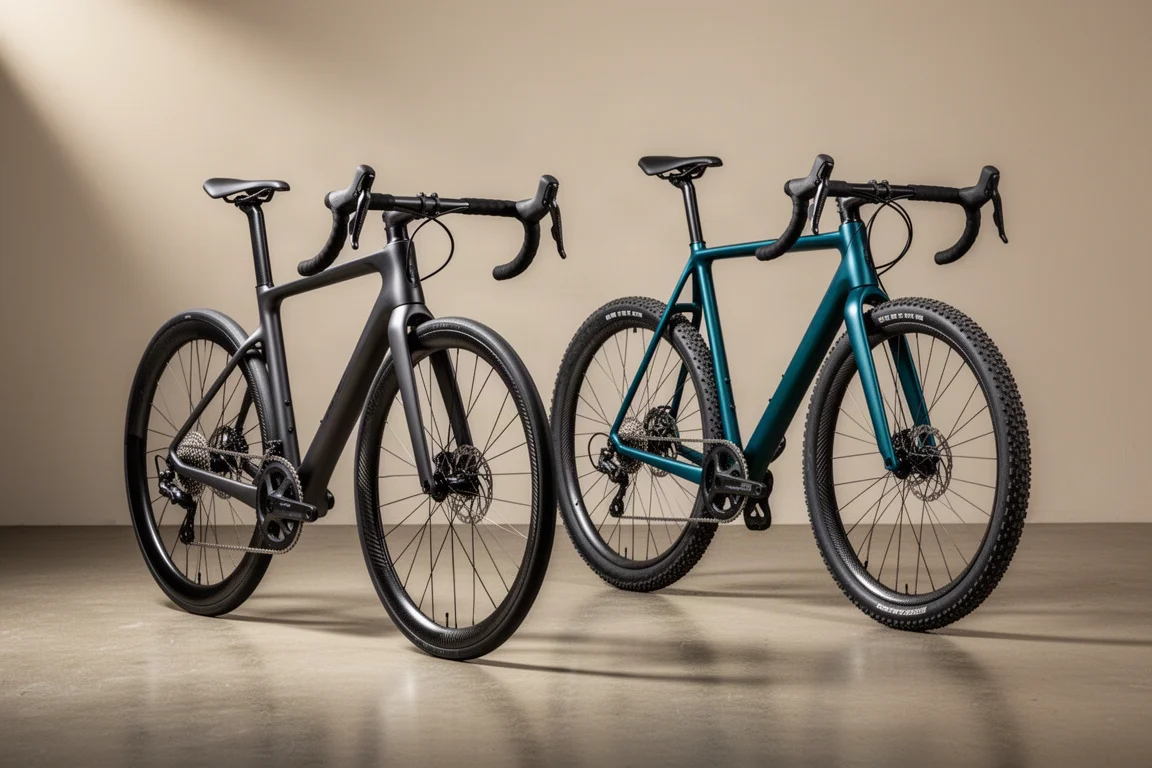
Cycling Gear
Can You Use a Gravel Bike as a Road Bike? Tires, Gearing, and What Really Changes
A practical look at converting a gravel bike for road use with wide slick tires, plus the gearing, geometry, and wheelset details that decide whether one bike can genuinely do both jobs.
Gravel Bike Tires
Continental Race King 2.2 Review: Mountain Bike Tires on a Gravel Bike
A 55mm knobby tire on a gravel frame delivers real traction and confidence on loose terrain, but frame clearance, toe overlap, and surface choice decide whether it makes sense.