Hi-Fi Audio
Gustard X26 Mark III Review: A Transparent DAC-First Streamer
A close look at the Gustard X26 Mark III, a DAC-first streaming deck with dual ES9039 Pro converters, a discrete Class A output stage, and app-free streaming through Roon, UPnP, and AirPlay.
Introduction
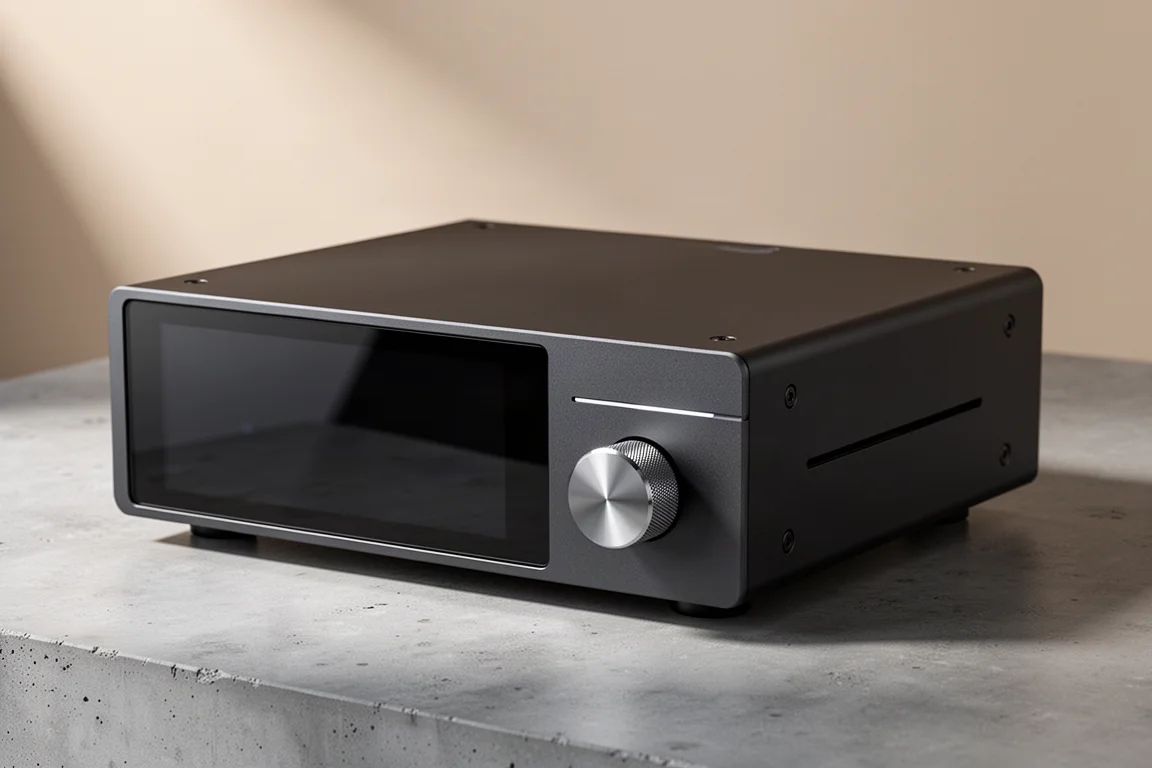
The Gustard X26 Mark III is best understood as a DAC that happens to stream, rather than a streamer that happens to convert. The conversion stage is the centrepiece, and the network side is deliberately simple: instead of a first-party control app, the unit leans on established third-party protocols, so you can drive it with tools you already use.
That philosophy explains both what the X26 Mark III does exceptionally well and where it asks a little patience from its owner. It sells for around $1,600, which places it squarely against converters that cost considerably more.
Who This Product Is For
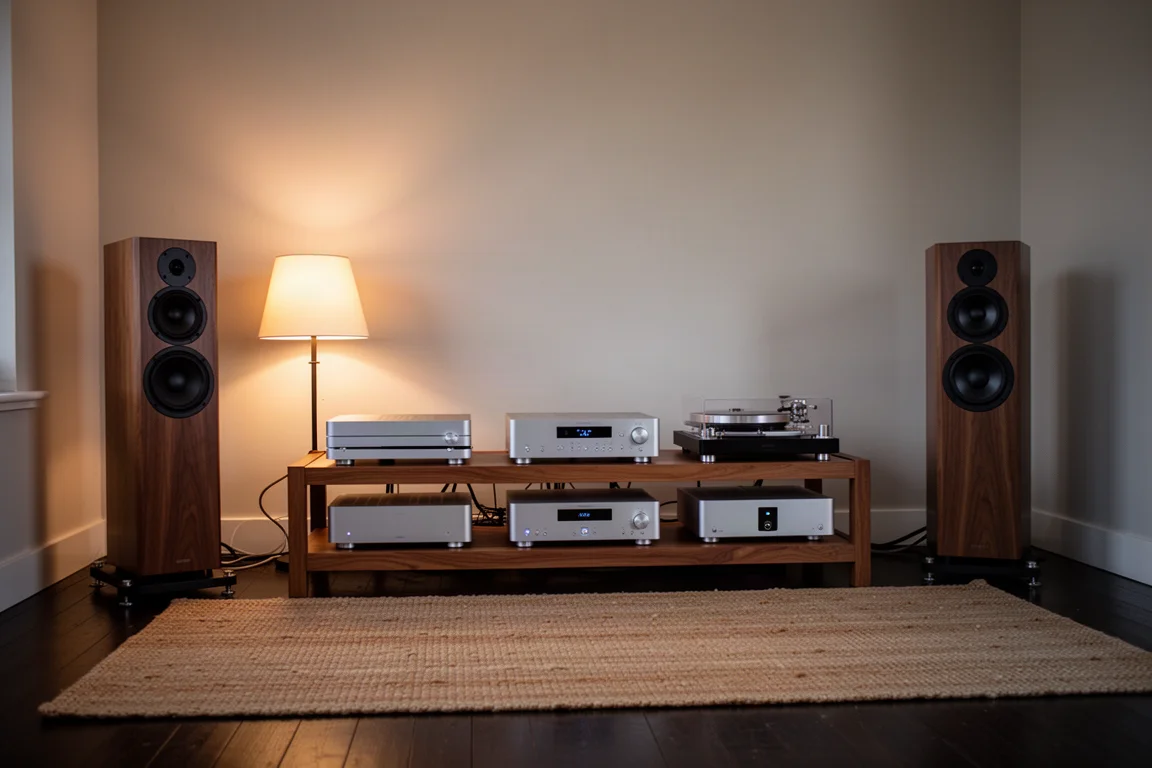
The X26 Mark III suits listeners building a system around a transparent, detail-first source. If you already own an integrated amplifier with a good preamp section, or a separate preamp, the Gustard slots in cleanly and lets that stage handle the volume.
It is also a natural fit for anyone tired of app sprawl. Listeners already using Roon, UPnP, or AirPlay can stream to it without learning another interface.
It is less obviously aimed at people who want one box that handles every streaming service through its own polished app, or who prefer a warmer, more overtly coloured presentation from their converter.
Main Strengths
Several design decisions separate this unit from the crowded field of converters under $2,000, and most of them are about prioritisation rather than novelty.
Dual ES9039 Pro DAC Architecture
At the core sit two ESS Sabre ES9039 Pro chips, one per channel. Each is an eight-channel design, and paralleling channels is a well-established way to push distortion down. It is an approach that has appeared in far more expensive converters.
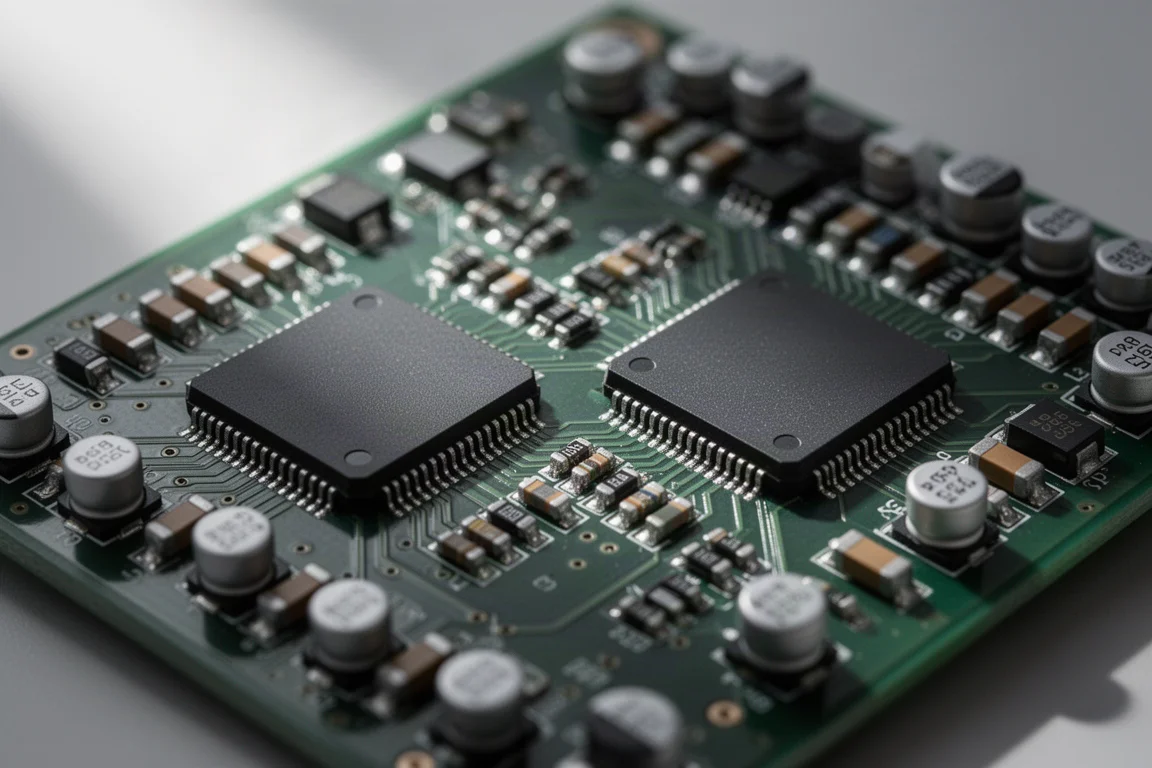
Using two of these chips rather than one is the kind of decision that suggests the conversion stage was treated as the priority rather than a line item. The chip choice alone does not guarantee a result, but it sets a high ceiling.
App-Free Streaming Through Third-Party Protocols
There is no Gustard app. Instead, the X26 Mark III accepts Roon, UPnP, and AirPlay, among other common protocols. For anyone who has accumulated a folder of manufacturer apps, that is a genuinely welcome change.
The trade-off is service support. Something that is not directly integrated, such as Amazon Music, has to be routed through UPnP or Roon, and that will not suit everyone. AirPlay, on the other hand, is quick to connect and stable enough to forget about, which makes it a comfortable everyday path into the DAC.
Digital Inputs and Flexible Configuration
A short press of the gear button cycles through the digital inputs, so a TV, a CD transport, and a dedicated streamer can all stay connected and be selected from the front panel. Every input is MQA compatible, and the digital inputs handle up to DSD over PCM 64.
For higher rates, USB and I2S are the connections to use, reaching up to DSD512. They are also the better choice if you prefer to upsample at the source rather than inside the DAC. Four separate I2S configurations are available, which matters when pairing with a transport or streamer that uses a different pinout.
Long-pressing the gear button on the OLED touchscreen, or pressing Menu on the remote, opens the rest of the settings. These include a non-oversampling mode, which bypasses the filters entirely and sends the signal straight to the DAC chip, three PCM filters, and four DSD bandwidth filters that progressively widen the bandwidth.
Sound Quality and Presentation
The character here is neutral with a hint of warmth and smoothness. Detail retrieval is very high, and the presentation stays natural rather than brittle or sharp. The background is exceptionally dark and quiet, which lets small textures come through without any sense of glare.
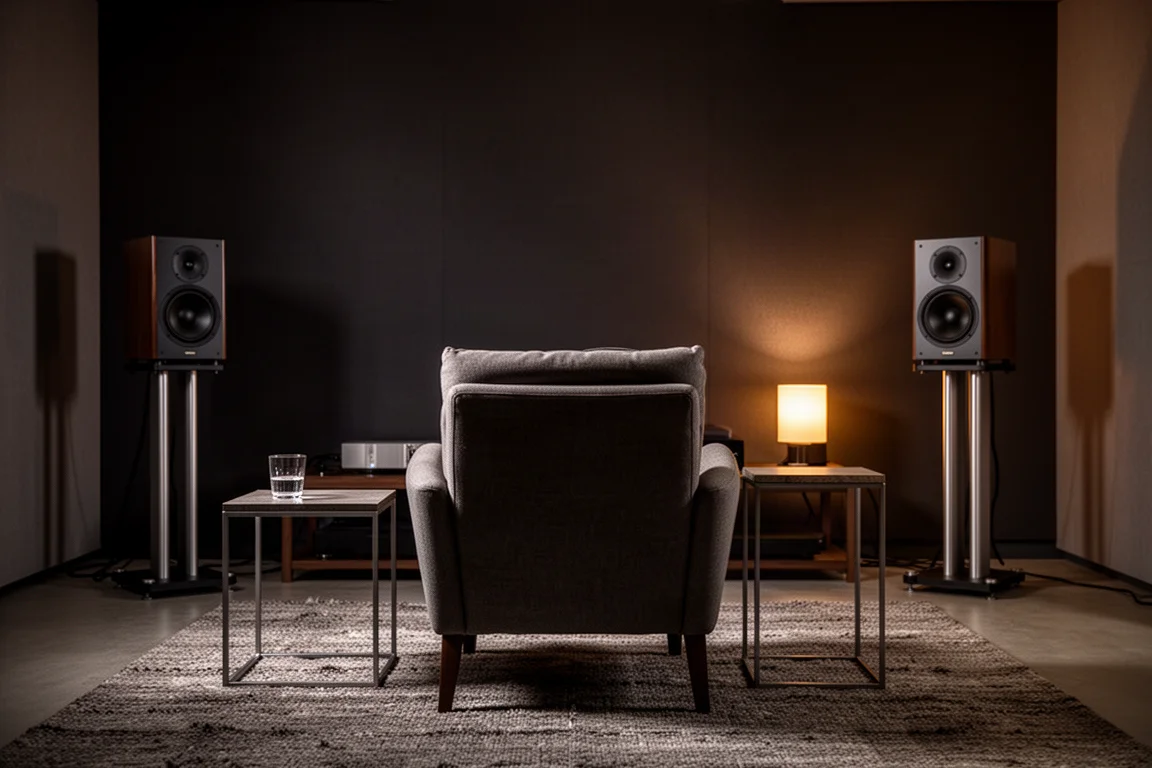
The soundstage is wide and deep for a converter in this price band, and the composure holds up when the volume climbs. Where a reference converter around $2,000 kept a slight edge in layering and soundstaging, the Gustard came across as a touch warmer and more forgiving at high levels. Against a richer, more overtly full-bodied DAC costing roughly $1,000 more, it answered with more defined imaging and a more neutral overall balance. As an upgrade from the conversion built into popular streaming transports, or from a budget octo converter, it is a clear step up in naturalness and in features, though not a transformation of the kind that makes a modest budget converter sound broken.
Power Supply, Clock, and Output Stage
Two separate linear power supplies with two toroidal transformers feed the unit, one dedicated to the digital section and one to the analog section. A high-performance internal clock handles timing, with the option to feed an external 10 MHz clock if you have one. The output section uses Gustard’s own discrete Class A circuitry rather than integrated circuits, which is uncommon at this price.
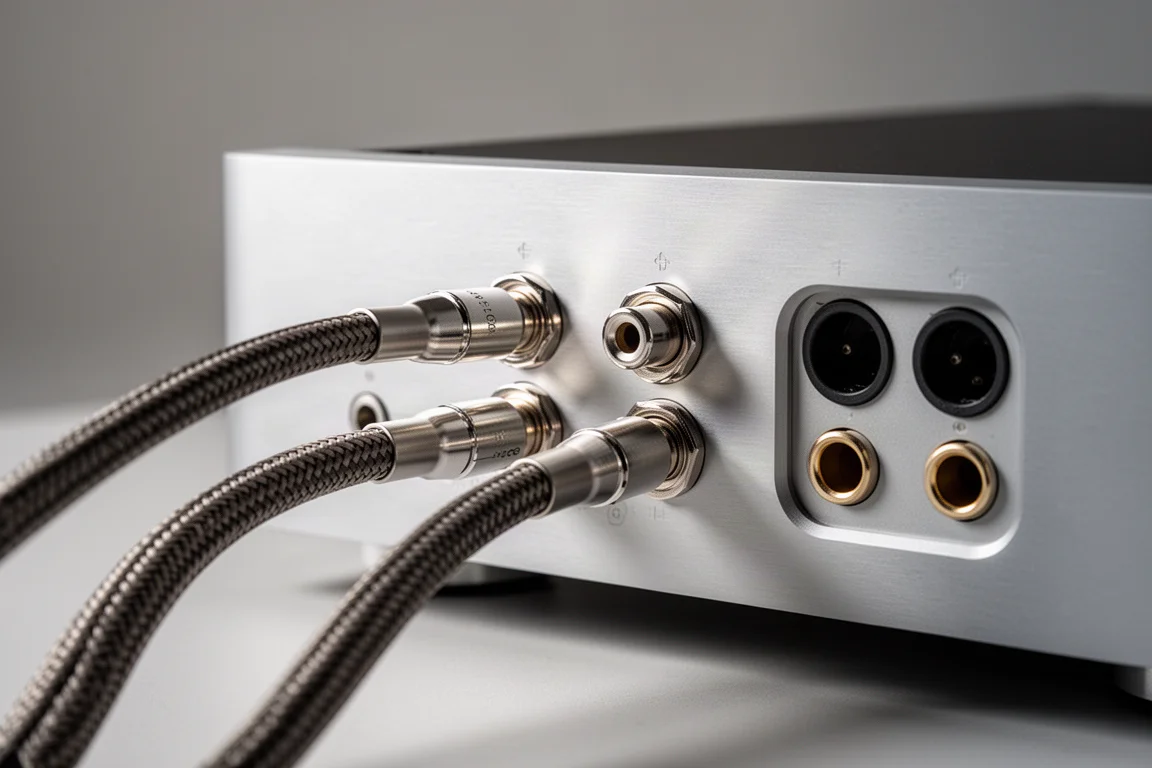
Connections to an amplifier are covered by both RCA and XLR outputs. The built-in digital preamp is better than many implementations, with attenuation down to 0 dB, and the fixed-output mode is refreshingly simple: raise the volume to 0 dB, press once more to lock it, then lower the volume to return to variable output. Even so, a separate preamp or the preamp section of an integrated amplifier remains the better choice when one is available.
Things to Consider Before Buying
- There is no dedicated app, so services without direct integration need to be routed through UPnP or Roon.
- The highest sample rates and source-side upsampling require USB or I2S. Other inputs stop at DSD over PCM 64.
- The built-in digital preamp is well executed, but a dedicated preamp is still preferable if you have one.
- The differences between the PCM filters are subtle, and enabling non-oversampling bypasses the filters altogether.
- Competition under $2,000 is fierce. A good budget converter can get surprisingly close on detail for far less money, even if it cannot match the naturalness or the feature set here.
Buying Advice
The X26 Mark III makes the most sense for a system that already has a competent preamp stage, whether inside an integrated amplifier or as a separate component. Pair it with XLR interconnects if your amplifier offers balanced inputs, and use USB or I2S for high-resolution files or source-side upsampling.
If you value transparency, low noise, and fine detail without a hard or clinical edge, this is one of the more convincing options in its price range. If instead you want a first-party app that covers every streaming service, or a converter that adds obvious warmth and body, look at what else the category offers before committing. Buyers who already stream through Roon, UPnP, or AirPlay will find very little friction here, and the flexibility of the input and filter options means the unit can be tuned to taste over time rather than locked in on day one.
Conclusion
The Gustard X26 Mark III succeeds by being clear about what it is: a highly capable converter with simple, protocol-based streaming attached. Its dual ES9039 Pro architecture, separate linear supplies, discrete Class A output stage, and intuitive fixed-output behaviour add up to a package that feels considered rather than assembled. At around $1,600, it makes a strong case for listeners who want neutrality, detail, and quietness in equal measure, and who are happy to bring their own streaming software to the party.
Product link
View more details for Gustard X26 Mark III
This product is mentioned in the review. Check the specifications, options, and compatibility before buying.
View more details for Gustard X26 Mark IIIFurther reading
Related Reviews
Hi-Fi Audio
Accuphase C-57 vs Allnic H-7000V: Two High-End Phono Stages Compared
A fully balanced solid-state phono stage with a pitch-black noise floor meets a tube design built for well-loved records. Here is how to choose between them.
Hi-Fi Audio
Active vs Passive Hi-Fi: Five Components for a Modern System
Five components that define modern active and passive hi-fi systems, with the strengths, trade-offs and setup details worth weighing before you buy.
Hi-Fi Audio
Advance Paris A10 Apex Review: A Hybrid Integrated Amplifier That Covers a Lot of Ground
A French hybrid integrated amplifier with a class A tube preamp stage, analogue power meters, and an internal DAC and phono stage good enough to make extra boxes unnecessary.