Hi-Fi DACs
Gustard R30 R2R DAC Review: A Resolving R2R Ladder Design
A close look at the Gustard R30 R2R DAC: balanced ladder architecture, oven-controlled clocking, seven digital inputs, and the practical trade-offs worth weighing before buying.
Introduction
Amplifier and speaker performance has changed remarkably little in recent years, but digital conversion has moved quickly. Chinese manufacturers now set the standard from the entry level right up to roughly £5,000, and Gustard’s new flagship sits near the top of that range. The R30 R2R DAC retails at £2,999 in the UK and is sold directly through the brand’s own retail channel as well as through other retailers.
What makes it interesting is not the price but the engineering behind it: a fully balanced R2R ladder design, an oven-controlled crystal oscillator, a discrete class A output stage with no op amps in the signal path, seven digital inputs, a step relay analog volume control, and a built-in streaming module. This review covers what that combination delivers in practice, and where the sensible compromises sit.
Who the Gustard R30 Is For
The R30 is aimed at listeners who have already settled on a digital-first system and want the conversion stage to be the strongest link in the chain. It makes most sense where the amplifier and speakers are capable of resolving fine detail, and where the digital transport feeding it is of a comparable standard.
It also suits anyone who wants a single box to handle conversion, volume control, and basic network streaming without adding a separate preamplifier. The step relay volume control is precise and consistent across its range, and the fixed output bypasses the internal volume stage entirely for listeners who prefer to run an external preamplifier.
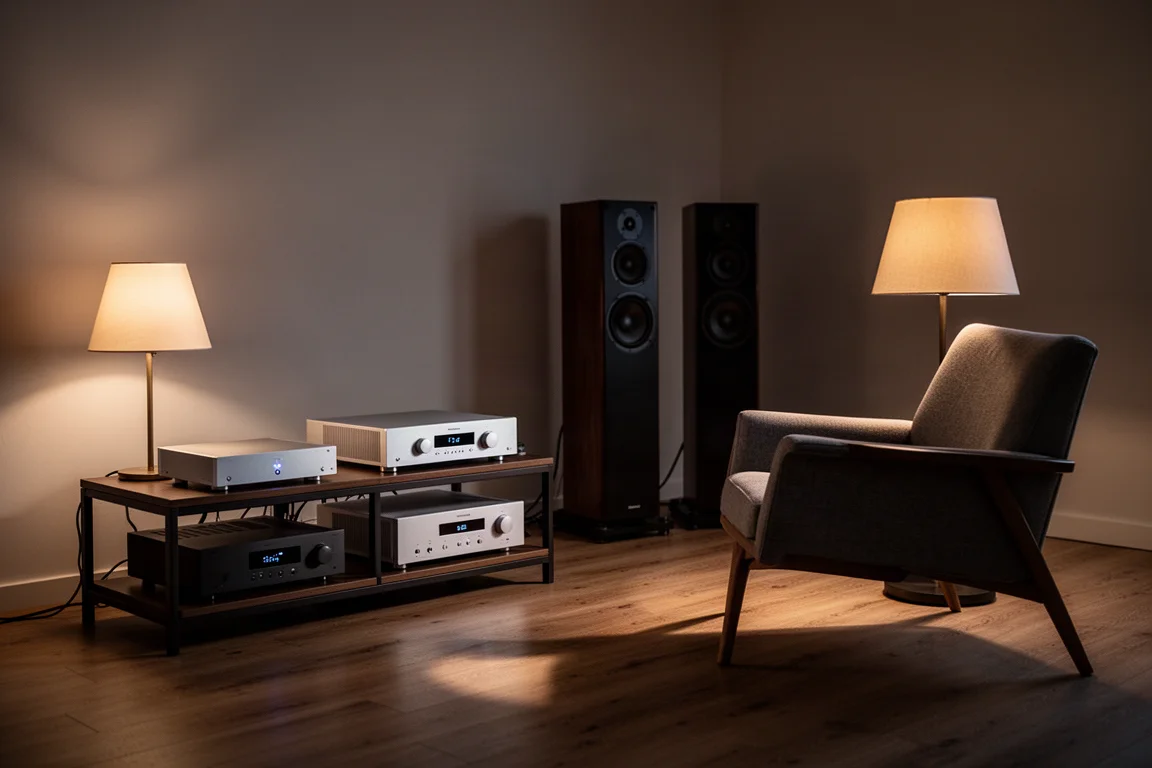
The R30 also rewards patience with sources. Its performance scales with the quality of the digital transport in front of it, so it is best matched with a capable streamer or transport rather than a casual laptop connection. Buyers who treat the DAC as one part of a carefully assembled chain will get more from it than those looking for a plug-in upgrade to a modest system.
Design, Display and Build Quality
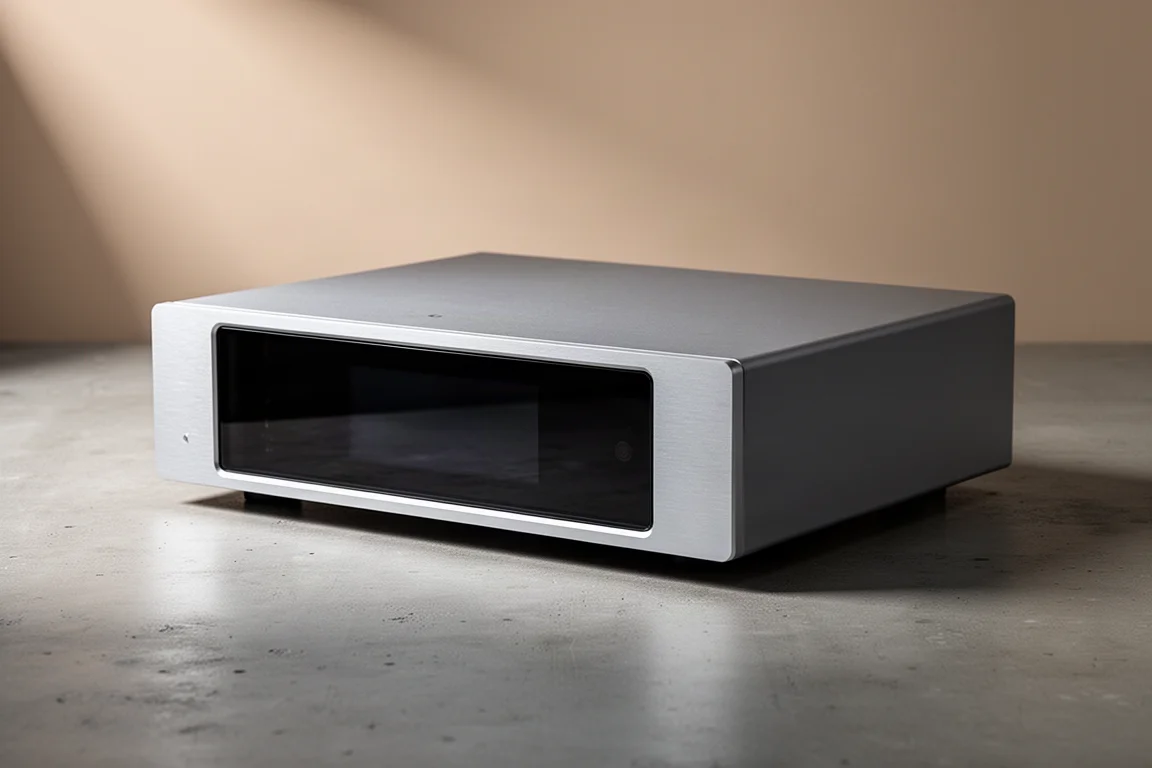
The casework is sturdy aluminium, available in silver or black, and the aesthetic is minimalist and sleek. A tempered glass panel runs the full width of the front, hiding a clear OLED display that comes to life with a press of the Gustard logo. A long press of the settings icon opens the menu, while short presses cycle through inputs.
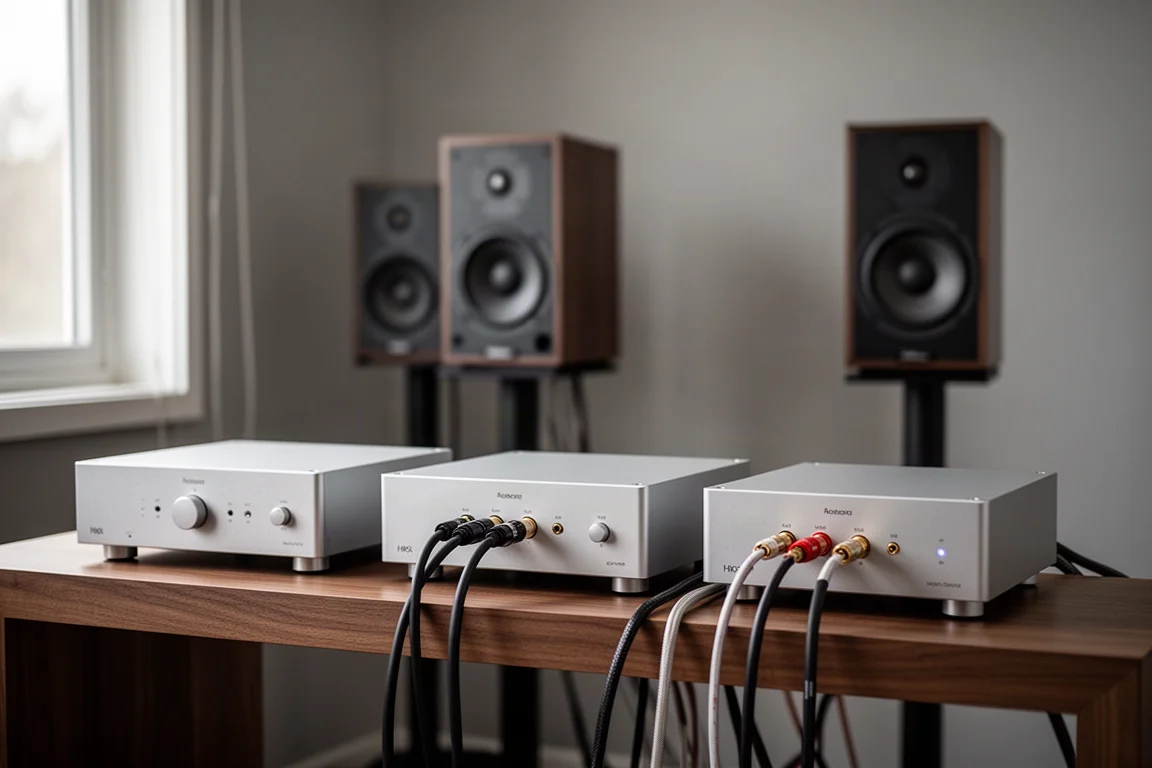
A remote control is included. It works, but it is plastic and feels inexpensive next to the main unit, which is a small mismatch on a product at this level. Around the back, the connections cover everything expected of a high-end DAC: a 10 MHz BNC input for an external clock, two I2S inputs (one labelled G and preconfigured for other Gustard devices), coaxial, optical, AES/EBU, USB, and a LAN socket for the built-in streaming module. Analog outputs are provided on single-ended RCA and balanced XLR.
Inside the R30: R2R Architecture and Power
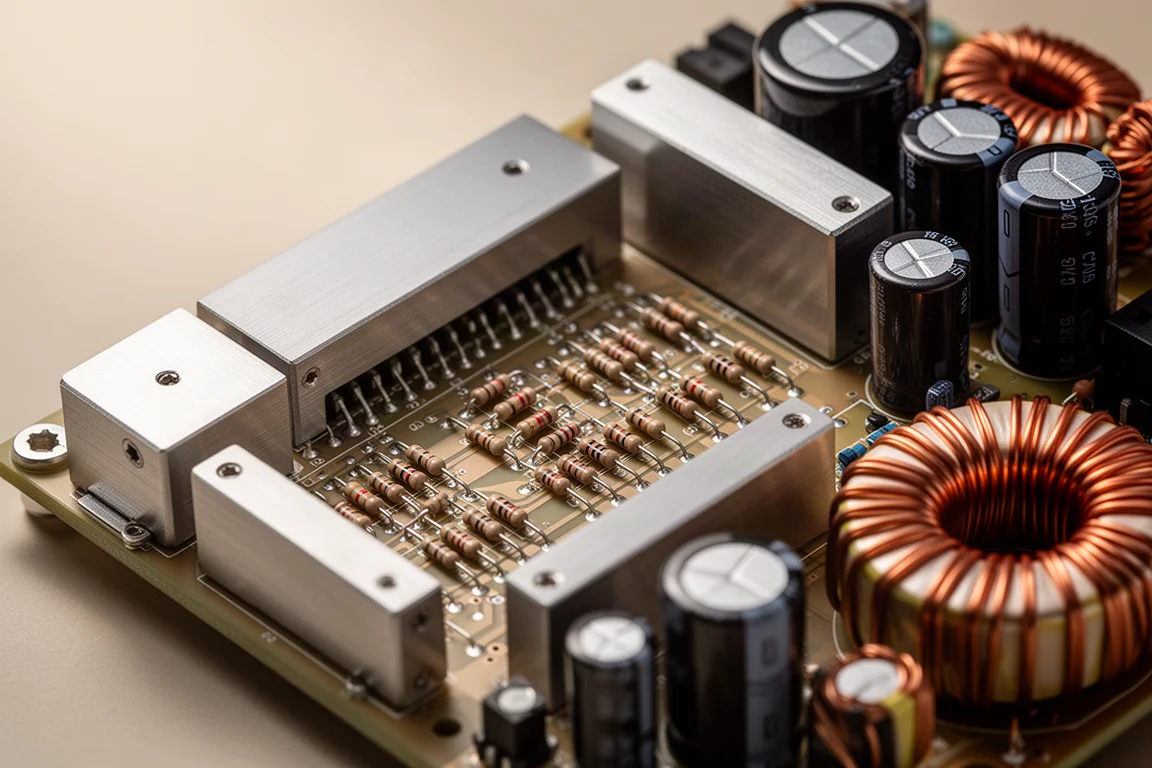
Internally the R30 is a fully balanced R2R ladder design, and the layout is impressively tidy. An AC inlet filter feeds two toroidal transformers encased in pots, each rated at around 50VA, with one dedicated to the analog section and the other to the digital section. Additional shielding keeps noise away from the sensitive circuitry.
The power supply uses six devices mounted to small heat sinks for rectification and regulation, followed by six 1,000 microfarad Nichicon capacitors and four smaller Nichicon Muse capacitors for final filtering. Four shielded resistor ladder networks handle conversion: a 27-bit architecture in a balanced configuration for PCM, plus a separate ladder that decodes DSD in true one-bit form rather than converting it to PCM. The architecture is doubled up so outputs can be summed, which lowers the noise floor. Dynamic range is quoted at 123 dB, a strong figure for an R2R ladder design.
Clocking is handled by an oven-controlled crystal oscillator feeding Gustard’s proprietary clocking circuit, a level of precision rarely found at this price. The output stage is discrete class A with no op amps in the signal path, and volume is adjusted by relays rather than a potentiometer, which gives more consistent channel matching and better linearity across the range.
Taken as a whole, the specification would not look out of place in a considerably more expensive deck, and that is the strongest argument for the R30 before a single note is played. Buyers who care about power supply separation, shielding, and clocking quality will find plenty to examine here.
Sound Quality Across Digital Inputs
In listening, the R30 comes across as natural and ultra resolving, with excellent timing and spatial qualities. Bass delivery has definition and mid-range transient attack while adding welcome weight. The mid-range renders notes with just enough body to sound authentic, and the high frequencies show strong sibilance control, clean cymbal decay, and the timing information that supports a precise soundstage and stable imaging.
Input performance varied during listening. AES/EBU and I2S were indistinguishable from one another and both sounded excellent, while USB sounded harder and muddier, though that reflected the character of the transport in use rather than the DAC itself. Coaxial offered similar fidelity to USB with a softer presentation. Because results depend as much on the transport as on the DAC, it is worth trying every available input and choosing what suits the system.
Menu Features and Filter Options
Three PCM filters are available, and the differences between them are subtle enough that preference will come down to taste and system synergy. Linear Sharp has the most pre-ringing, which can contribute a marginally artificial quality, but it also has the least phase distortion and an optimised impulse response, giving a slightly crisper transient attack and a touch more focus to stereo imaging. Minimum Slow has no pre-ringing and the most post-ringing; it sounds a little less precise but more natural, in the way a touch of reverb can enrich acoustic instruments and breathy vocals. Super Slow produces hardly any pre- or post-ringing artefacts, but is likely the least phase coherent of the three, with a small amount of high-frequency rolloff in the audible band that can suit a smoother, softer presentation.
Beyond the filters, the menu covers DSD direct decoding so DSD files are handled natively rather than converted to PCM, a NOS mode that switches the filters off, external reference clock selection, I2S pin layout configuration, signal phase inversion, trigger settings for waking the unit from standby when a signal is detected, per-channel volume, and display options.
How the R30 Compares
Against the decks it will inevitably be measured against, the R30 holds its own. The sense of scale and spatiality is very similar to both the Denafrips Pontus 15th and the Gustard X30, and the R30 has the best instrument separation and localisation of performers of the three. Its bass rivals the X30 for definition and mid-range transient attack while adding a welcome increase in weight; it is lighter in mass than the Pontus 15th but noticeably cleaner and more agile. In the mid-range the R30 is a touch more resolving than both, rendering notes with just enough body to sound authentic, while the high frequencies are excellent across all three, with the R30 showing a little extra detail.
At more accessible price points the balancing act is different. The Denafrips Enyo 15th Anniversary, for instance, trades a little bass control and mid-range transient attack for a richer tone and a substantially wider and deeper sound stage, and decks such as the Topping D93 offer excellent detail retrieval with a very neutral, uncoloured presentation. The R30 takes the opposite approach: it removes the extra warmth associated with richer-sounding ladder designs without ever sounding lean, which brings the listener closer to a genuine performance.
Things to Consider Before Buying
A few practical points are worth knowing before committing. The built-in streaming module runs a Linux-based operating system and supports UPnP, DLNA apps, Roon, AirPlay, and Spotify Connect, but not Tidal Connect or Qobuz Connect. In sound quality it is comparable to affordable standalone streamers, and it imparts a warm tone while ultimately lacking a little fidelity. It is a convenient way to get started rather than the last word in network playback.
The volume control is a more convincing feature. It is precise and consistent across its range, and digital users are unlikely to find better sound quality from an external analog preamplifier below £1,000. Even so, the R30 sounds significantly cleaner through its fixed output, bypassing the internal volume control altogether. If the budget stretches to a genuinely good analog preamplifier, that is the path that reveals what this DAC can do.
Finally, the digital transport matters. A music source below the standard of a good dedicated streamer will not let the R30 show its best, and that is an additional cost worth factoring into the overall budget.
Buying Advice
At £2,999 the R30 sits in a competitive part of the market, but it is a complete digital front end in one chassis: conversion, a usable volume control, and basic network streaming. It is capable enough to sit comfortably with amplifiers and speakers retailing up to around £10,000, so it is unlikely to be the limiting factor in a well-chosen system.
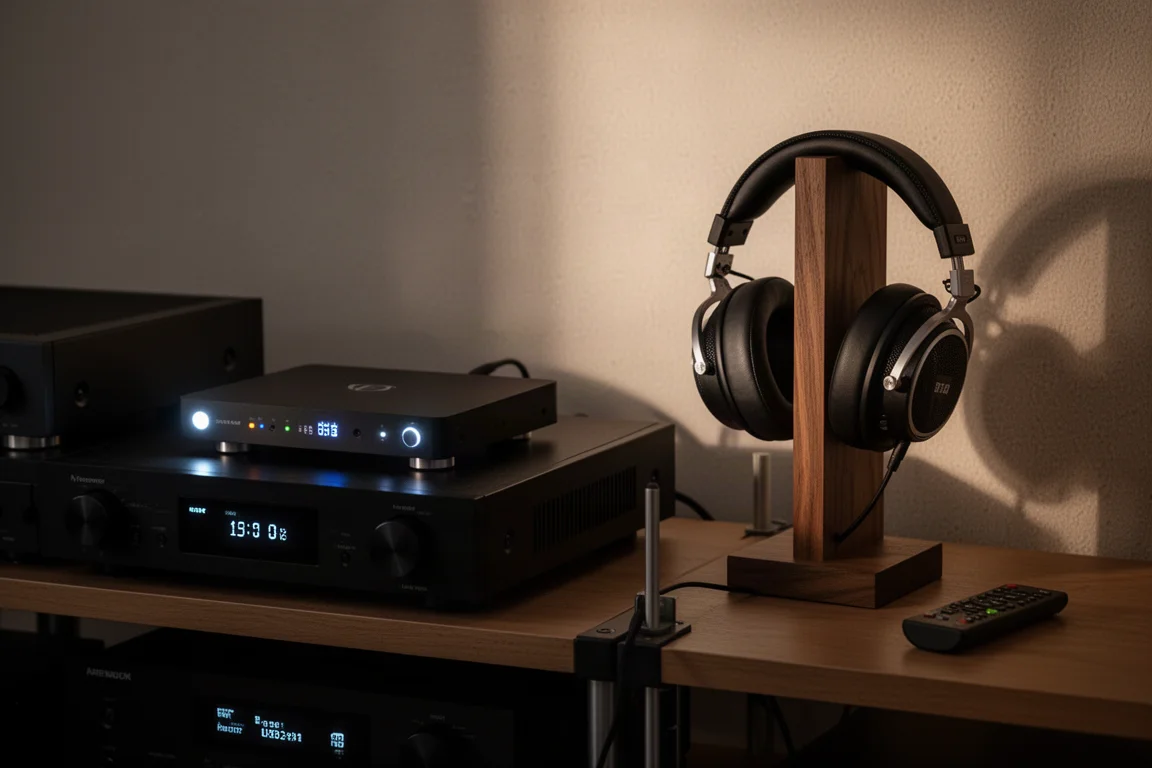
The decision comes down to priorities. If the goal is the cleanest possible conversion with the shortest signal path and the widest range of digital inputs, the R30 is a strong answer, particularly for listeners who already own a preamplifier and can run it at fixed output. If a simpler and less expensive deck already sounds right in the system, there is no obligation to move up. For anyone building around a serious digital source, though, the R30 offers a level of engineering that is unusual at its price.
Conclusion
The Gustard R30 is an R2R ladder DAC with extensive digital connectivity, a basic streaming module, and a precise analog volume control. Internally it pairs separate transformers for the digital and analog sections with 27-bit resistor ladders in a balanced configuration, oven-controlled crystal oscillators, and a discrete class A output stage free of op amps in the signal path. The result is a DAC that sounds natural and ultra resolving, with excellent timing and spatial qualities, and it sets a high bar for what this price bracket can deliver.
Product link
View more details for Gustard R30 R2R DAC
This product is mentioned in the review. Check the specifications, options, and compatibility before buying.
View more details for Gustard R30 R2R DACFurther reading
Related Reviews
Hi-Fi DACs
Denafrips Ares 12th-1 vs Geshelli Labs J2: Two Paths to a Better DAC
A two-DAC comparison of the Denafrips Ares 12th-1 and the Geshelli Labs J2, covering build, inputs, sound character, and which listener each converter suits.
Hi-Fi DACs
Denafrips Ares 12th Anniversary Review: A Purist R-2R DAC With an I2S Upgrade
A compact, fully balanced R-2R converter with a new I2S input, free anniversary firmware and a clear upgrade path at around £1,000.
Hi-Fi DACs
Denafrips Pontus 15th Generation DAC Review: Trickle-Down R-2R Sound
A two-box R-2R converter that carries the circuit of a far more expensive Denafrips model, with airy staging and a clear system-matching rule.