Hi-Fi Audio
Gustard R26 Mark II Review: A Refined R-2R Ladder DAC
Gustard's updated R-2R ladder DAC keeps its price and gains a touchscreen, an all-analog volume control and 26-bit ladder networks.
Introduction
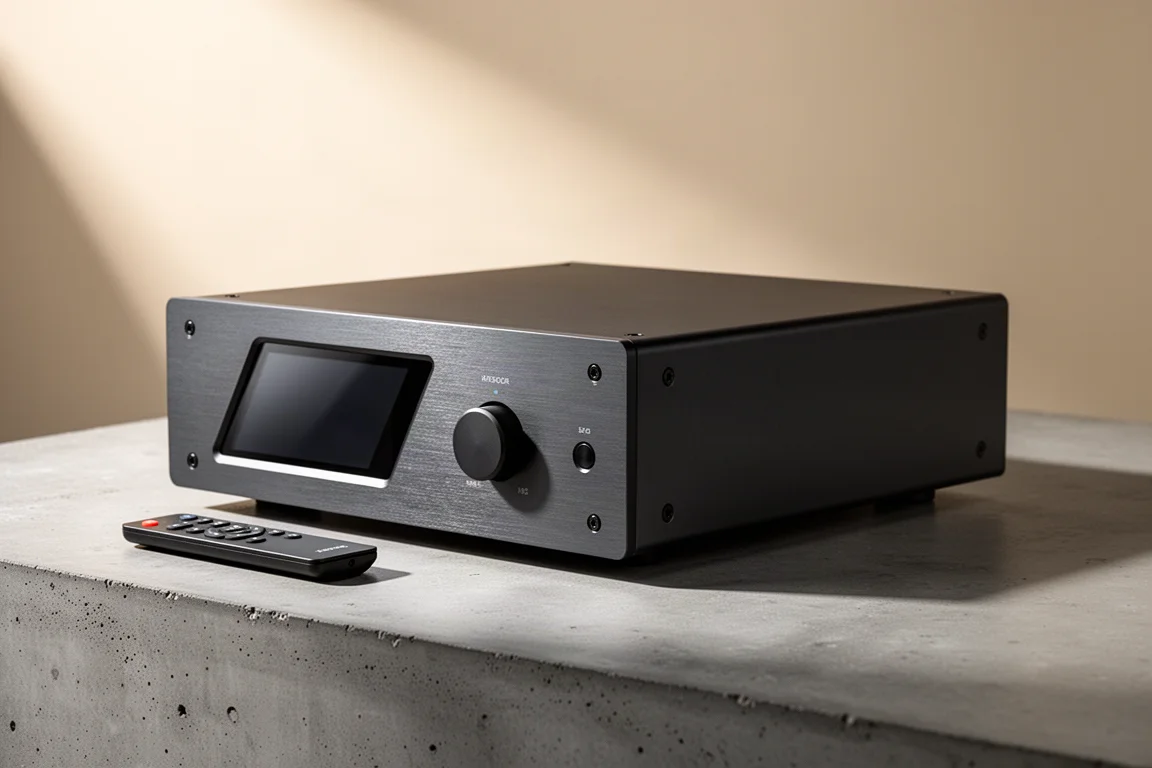
Gustard launched the R26 in 2022, and the discrete R-2R ladder design became the model that put the company on the map, earning it a loyal customer base and the respect of industry professionals. The Mark II keeps the same three-quarter rack width chassis, measuring 330 mm (13 in) across, and it keeps the same £1,649 price despite a long list of upgrades.
That combination of an unchanged price and meaningful engineering revisions is what makes this update worth attention. The changes touch the user interface, the volume control, the conversion architecture, the network bridge and the clocking, while the core character that R26 owners already know is preserved.
Who the Gustard R26 Mark II Is For
R-2R ladder converters tend to sound organic and spacious, while delta-sigma designs typically offer a crisper presentation. Gustard has built a reputation for making ladder DACs that appeal to delta-sigma fans, and the R26 Mark II sits squarely in that space. It keeps the leading-edge attack and neutrality that chip-based converters are known for, then adds a measure of three-dimensionality to the soundstage.
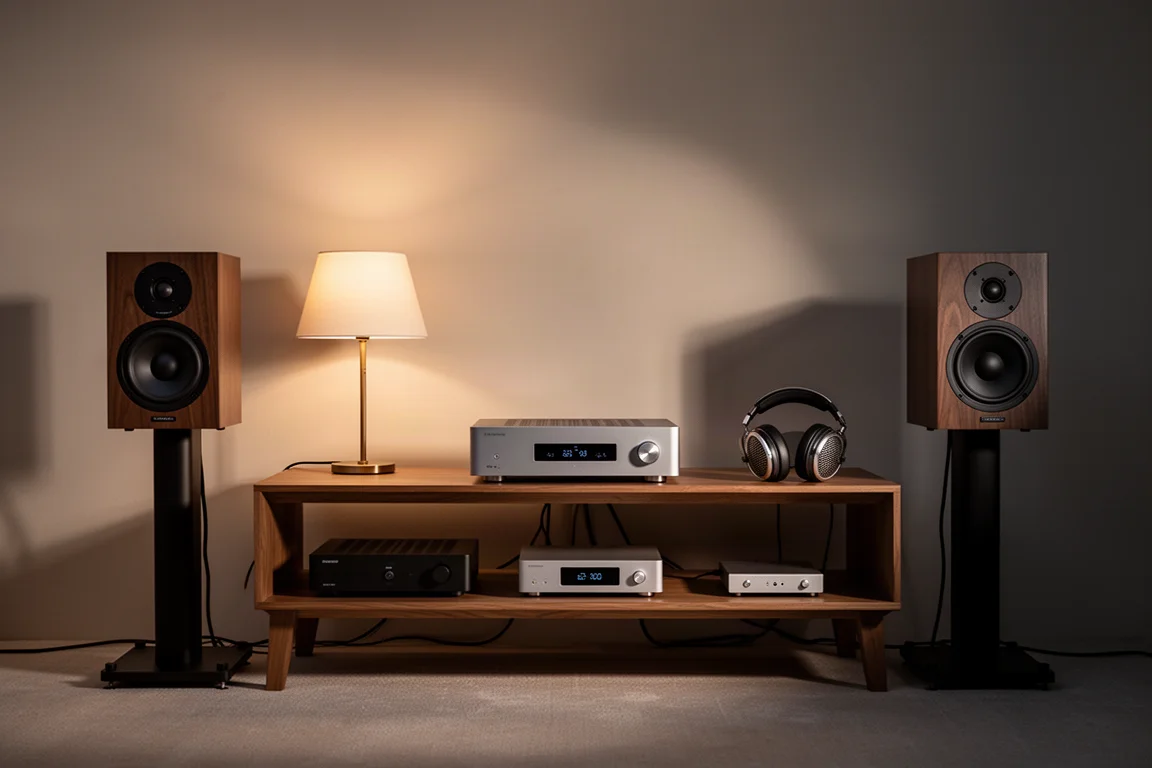
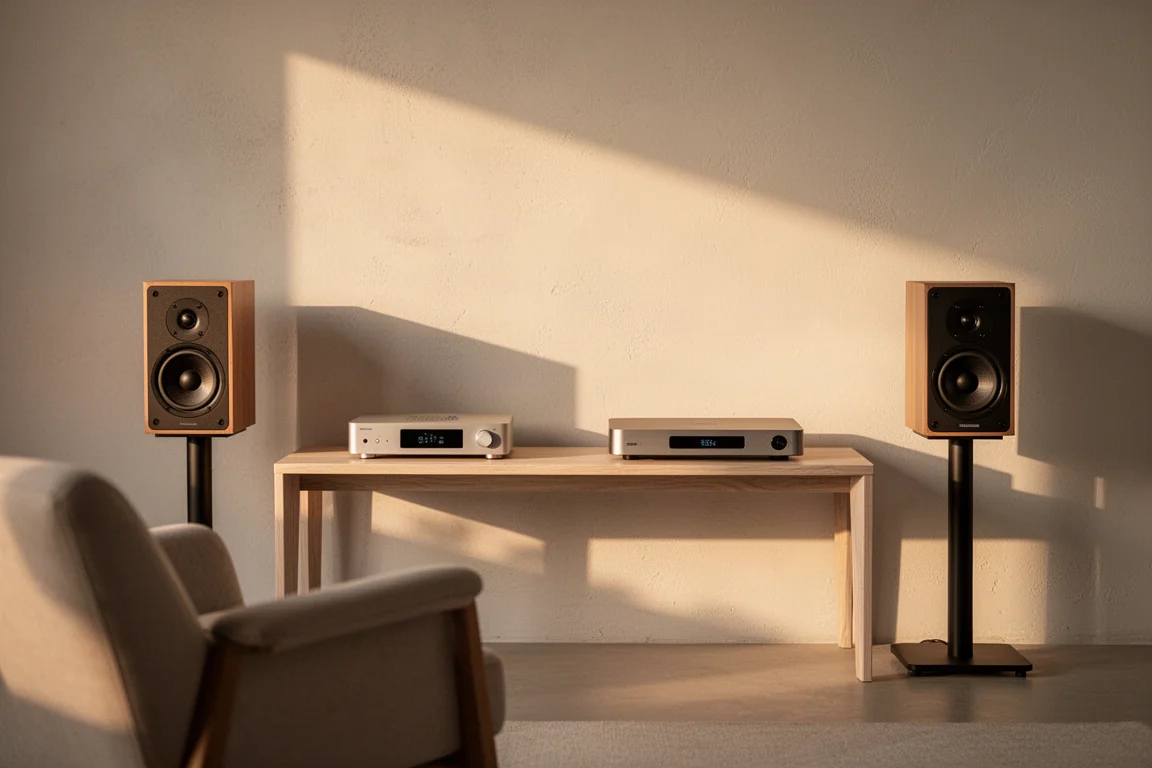
The Mark II is also a strong fit for systems built around active speakers, or around a power amplifier with no built-in preamp. The all-analog resistor matrix volume control is implemented well enough that a dedicated analog preamp costing as much as the DAC would not necessarily do better, which makes the R26 Mark II a practical hub for a purely digital front end.
Streaming is part of the appeal as well. The internal streamer supports UPnP and DLNA third-party apps, Apple AirPlay, HQPlayer and Roon, and Spotify Connect is included. Listeners who depend on Tidal Connect or Qobuz Connect should note that neither is supported, which will matter more to some buyers than to others.
What Changed in the Mark II
The most visible change is the front panel. The rotary dial and cluttered display of the previous generation are gone, replaced by a touch-sensitive screen. It is not the premium tempered glass that covers almost the entire front panel of the flagship X30 and R30 models, but it is a clear improvement in daily use. Short presses of the menu icon cycle through the inputs, and a long press opens the settings menu. A basic plastic remote control is included and covers the essentials.
The volume control has been reworked as well. The hybrid digital-analog arrangement of the original gives way to an all-analog resistor matrix, implemented as a chip rather than the discrete relays used in the X30 and R30. It is a structural improvement over the first-generation design.
Inside, the fully balanced resistor ladder networks have moved from 24-bit to 26-bit, adding two bits of dynamic headroom. The technology trickles down from the flagship models, although the R26 Mark II runs a dual mono configuration rather than the quad mono arrangement of the R30, which achieves lower distortion. The two independent 50 W transformers feeding the digital and analog circuits carry over unchanged, while the filter capacitors now have lower equivalent series resistance, a change intended to improve clarity and refinement.
The network bridge has been reworked too. The off-the-shelf Raspberry Pi based module of the original is replaced by a customized Arm Linux operating system that Gustard says improves configurability and lowers electrical noise. The femto crystal clock generators carry over, joined by the FPGA-based proprietary K2 clock synthesizer taken directly from the R30, which separates clock information from data and re-clocks the signal to reduce jitter. It does not reach the level of the R30, which uses oven controlled crystal oscillators.
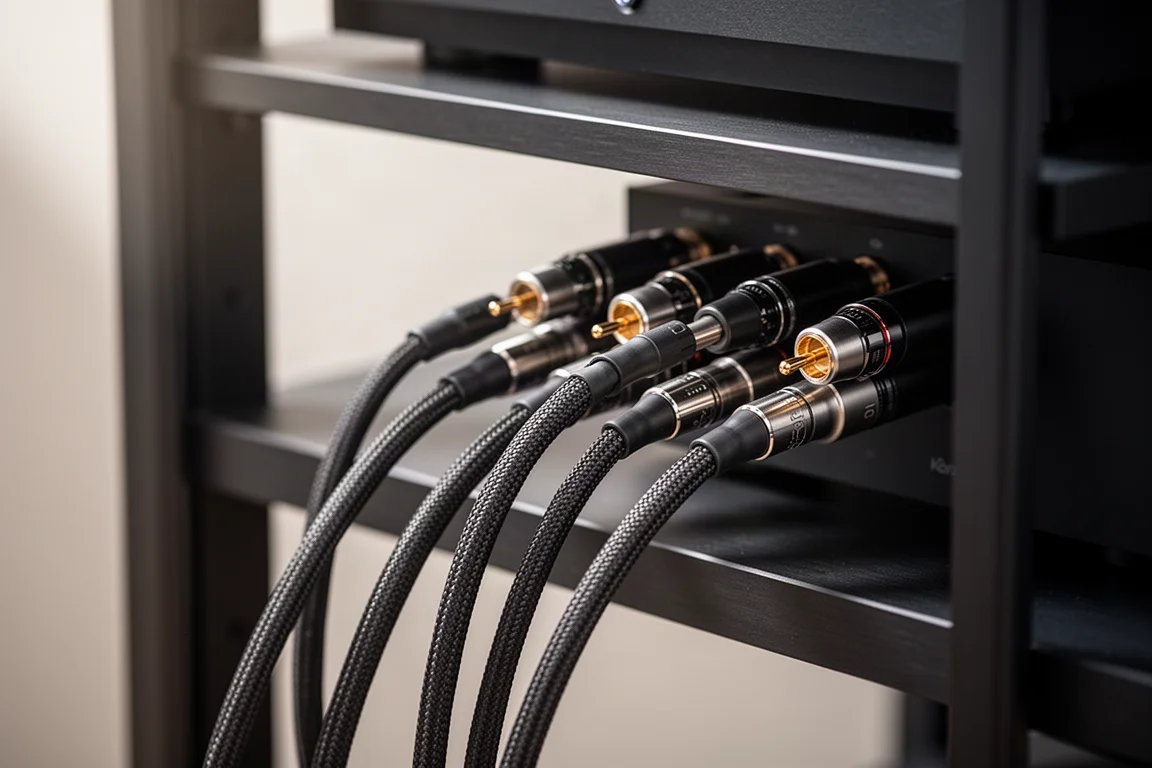
Connectivity is comprehensive. The rear panel offers single-ended RCA and balanced XLR analog outputs, an Ethernet LAN port for the internal streamer, and digital inputs covering USB, I2S, coaxial, AES/EBU, optical Toslink and Bluetooth. There is also a 10 MHz input for connecting a higher-quality external clock as a later upgrade.
Main Strengths: Sound and Engineering
The R26 Mark II shares a clear family sound with the rest of the Gustard range: tight bass, neutral mids and open, refined highs, with precise layering across the soundstage. Compared with the original, the lower noise floor and revised filtering bring more nuance and a greater sense of solidity to the placement of performers.
The settings menu is unusually thorough at this price. There are three PCM filters with fast, medium and slow roll-off options, DSD files can be decoded directly rather than converted to PCM, and a NOS mode bypasses the digital filters altogether. Further options cover internal or external clock selection, I2S pin layout, phase, display and standby behaviour.
The analog volume control deserves particular attention. Its quality means the DAC can be connected straight to active speakers or to a power amplifier, with all digital sources handled inside the R26 Mark II. In a system with a resolving amplifier, that removes a component and a set of interconnects without giving up transparency.
How It Compares With Other DACs
Against chip-based delta-sigma designs such as the Topping D90, the R26 Mark II keeps the tight bass and open, refined highs while adding body to the midrange where vocals and lead instruments sit, and improving the separation between performers. The Topping’s clinically lean midrange and relatively flat soundstage are the main points of contrast.
Denafrips takes a different route. Its DACs have no active output stage; the analog outputs connect directly to the resistor ladder networks through minimal passive filtering. That raises distortion levels and softens the leading edge of notes, with more bleed from the bass into the midrange, but it is also the source of the brand’s characteristic sound. The Denafrips Enyo 15th at £690 is not as resolving as the R26 Mark II, yet it sounds bigger, with a considerably wider and deeper soundstage.
The Denafrips Pontus 15th at £2,090 makes for a closer contest. It is not as tight in the bass, but it offers more texture, greater acoustic mass and a wider, deeper stage with more space between performers. The R26 Mark II counters with greater agility and definition on percussive instruments and less pollution into the lower mids. The overall amount of information extracted from recordings is very similar; the difference lies in where each converter places its emphasis.
Within Gustard’s own range, the X30 uses four ESS Sabre 9039 Pro chips running in parallel, an FPGA that bypasses the stock filtering and an oven controlled crystal oscillator for clock stability. It is a baby step improvement over the R26 Mark II rather than a transformation, which underlines the value of the junior model. The flagship R30 operates at another level entirely, with everything more focused and expanded in every direction, but it costs almost twice as much.
At this level of system, the limits of the R26 Mark II become easier to hear in terms of scale and fidelity, particularly next to more expensive converters such as the Gustard R30 and the Denafrips Terminator 15th. That is a statement about headroom rather than a criticism. Neither the R26 Mark II nor its rivals do anything badly, and the choice between them comes down to the direction a listener wants to take a system.
Things to Consider Before Buying
The most significant omission is streaming support. Spotify Connect is present, but Tidal Connect and Qobuz Connect are not, and listeners committed to those services will need another way to feed the DAC. The internal streamer itself is serviceable rather than special, with a rudimentary user interface that feels closer to an entry-level streamer than to the rest of the R26 Mark II’s engineering. It is most useful for AirPlay, Spotify Connect and as a convenient Roon endpoint.
The remote control is an inexpensive plastic unit. It works, but it does not match the feel of the chassis.
System matching matters more than usual here. With a sub-£1,000 amplifier and speaker combination, such as the Audiolab 6000A Mark II paired with Monitor Audio Silver 100 7G speakers, spending over £1,600 on a DAC is not the best allocation of a budget, however good the converter is. That said, the R26 Mark II still delivered clear improvements in resolution over that amplifier’s internal converter, and it makes far more sense with resolving amplification or as a deliberate step toward planned upgrades.
Buying Advice
The R26 Mark II costs £1,649, unchanged from the model it replaces, and that is the strongest argument in its favour: a long list of ergonomic and engineering improvements at the same price. Four years after the original R26 launched, Gustard has avoided change for its own sake and focused on the areas that affect daily use and sound quality.
Matching it to the rest of a system is straightforward. The Exposure 2510 at £2,100 has no internal DAC, and the R26 Mark II is a suitable partner. Hegel’s amplifier-only H200, at £2,750 and £750 less than the version with a built-in DAC, is another natural fit. With resolving speakers such as the Dali Menuet SE, moving up from a £399 entry-level DAC to the R26 Mark II is a worthwhile investment: the noise floor drops, more nuanced detail comes through, and the localisation of performers becomes more solid.
Listeners who want a rich, organic tone and a cavernous soundstage should look at Denafrips instead, where the Enyo 15th at £690 and the Pontus 15th at £2,090 cover two very different budgets. Those who prefer the crisp leading-edge attack and neutral tone of delta-sigma conversion, with a dose of ladder DAC dimensionality added on top, will find the R26 Mark II hard to beat at this price.
Buyers should also weigh the streaming question against their habits. If AirPlay, Spotify Connect and Roon cover a household’s needs, the built-in streamer adds convenience at no extra cost. If Tidal or Qobuz Connect is essential, it is better to plan for an external source and treat the network features as a bonus rather than a reason to buy.
Conclusion
The Gustard R26 Mark II is a considered update to a converter that was already highly regarded. The touchscreen, the all-analog volume control, the 26-bit ladder networks, the revised network bridge and the K2 clock synthesizer all move it forward, and the price has not moved at all. Its sound keeps the tight bass, neutral mids and open highs that define the Gustard house sound, with precise layering that gives instruments room to sit apart.
It is not the last word in scale and fidelity next to Gustard’s own R30 or the Denafrips Terminator 15th, and the absence of Tidal and Qobuz Connect will rule it out for some listeners. For everyone else, particularly those running active speakers, a power amplifier or a resolving digital front end, it is an easy recommendation at the price.
Product link
View more details for Gustard R26 Mark II
This product is mentioned in the review. Check the specifications, options, and compatibility before buying.
View more details for Gustard R26 Mark IIFurther reading
Related Reviews
Hi-Fi Audio
Accuphase C-57 vs Allnic H-7000V: Two High-End Phono Stages Compared
A fully balanced solid-state phono stage with a pitch-black noise floor meets a tube design built for well-loved records. Here is how to choose between them.
Hi-Fi Audio
Active vs Passive Hi-Fi: Five Components for a Modern System
Five components that define modern active and passive hi-fi systems, with the strengths, trade-offs and setup details worth weighing before you buy.
Hi-Fi Audio
Advance Paris A10 Apex Review: A Hybrid Integrated Amplifier That Covers a Lot of Ground
A French hybrid integrated amplifier with a class A tube preamp stage, analogue power meters, and an internal DAC and phono stage good enough to make extra boxes unnecessary.