Hi-Fi DACs
Gustard R26 DAC Review: Discrete R2R Ladder Sound Without the Premium Price
A close look at the Gustard R26 DAC, a discrete R2R ladder converter with striking clarity, strong bass definition, and a few trade-offs worth weighing before you buy.
Introduction
The Gustard R26 DAC has a reputation that is rare for a converter at its price. It is a fully discrete R2R ladder design, and it retails for around £1,350 in the UK or roughly $1,650 in the US through the brand’s main global distributor. Buying direct can add shipping and taxes on top of that figure.
Those numbers matter because the R26 is routinely compared with ladder DACs that cost far more, including the Denafrips Venus 2 at close to twice the price and the Denafrips Terminator at close to three times the price. It also undercuts the Holo Audio Spring 3 Level 2 by a comfortable margin. This article looks at the R26 as a DAC rather than as a streamer, because that is where its architecture and its value case are strongest.
Who the Gustard R26 Is For
The R26 is aimed at listeners who want a high level of resolution without the dry, analytical character that puts so many people off chip-based designs. It keeps the tonal naturalness and the sense of acoustic space that draw people to R2R ladder converters, and it does so with clarity that is genuinely striking for the money.
It is at its best with rock, pop, and electronic music, where its speed and definition pay off. Listeners who came to digital reluctantly, and who spend most of their time with jazz, vocal-led recordings, and acoustic material, may still find a Denafrips converter more to their taste. The R26 has some of that body and texture, but not all of it.
For anyone building a system around a single high-value source component, that balance is the key decision. The R26 leans towards precision and refinement rather than richness.
Build Quality and Connectivity
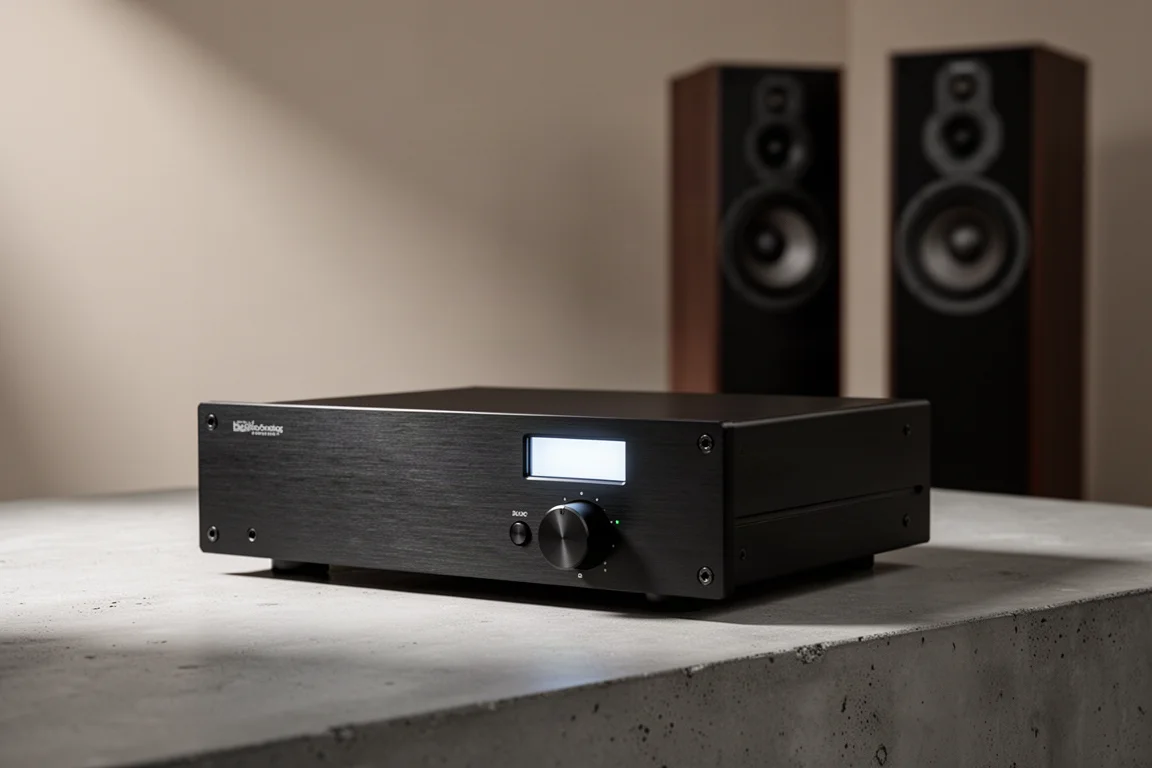
The chassis is black anodised aluminium, and a silver finish is also available. At 330 mm wide it is a three-quarter rack width unit, and it has a reassuring weight, specified at 7 kg including packaging. Judged against the battleship builds of some more expensive rivals it is substantial rather than extraordinary, but it is hard to better at this price.
A recessed button wakes the unit from standby and reveals a clear OLED display. A rotary dial with a centre button adjusts volume in decibel steps and toggles between inputs; pressing and holding the centre button opens the menu system. Two small criticisms stand out. The dial has little rotational resistance, so it shifts position when the centre button is pressed, and the supplied remote is basic.
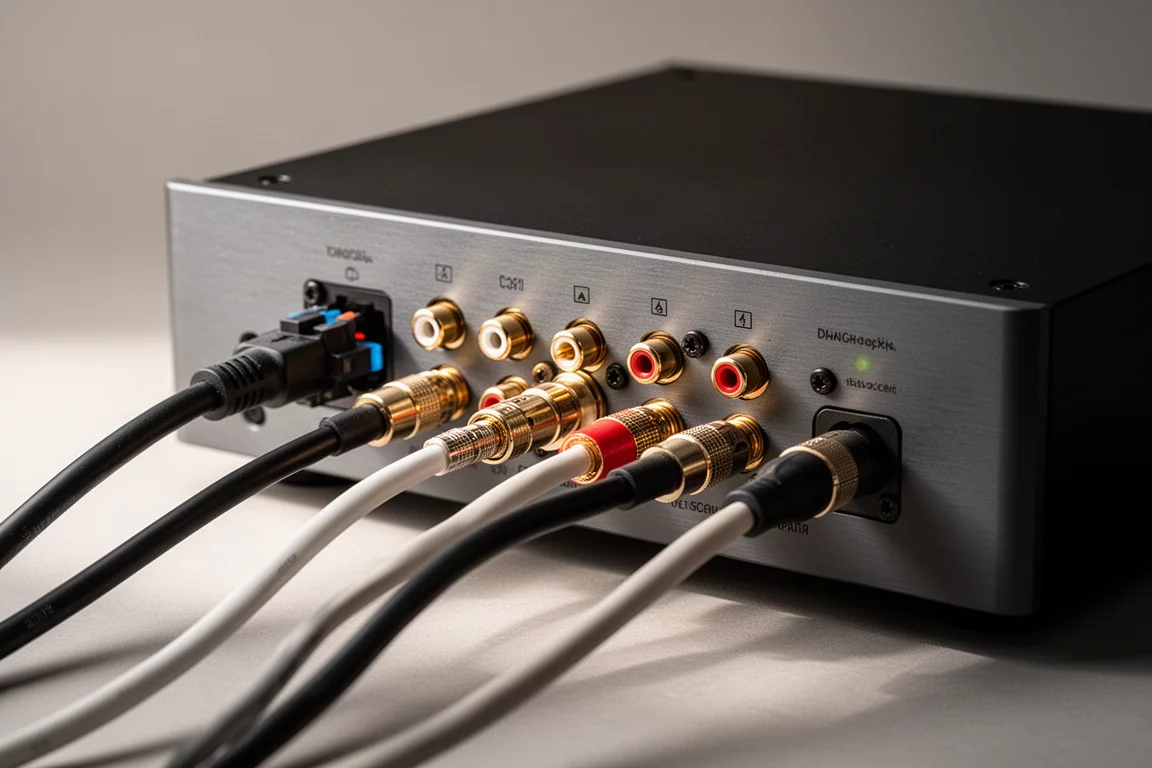
Connectivity is generous. Digital inputs cover optical, AES/EBU, coaxial, Bluetooth, USB, I2S, and Ethernet for the built-in streamer, with a USB-C port for firmware updates. Analog outputs are provided on single-ended RCA and balanced XLR. On the streaming side, the specification indicates support for third-party UPnP apps and Roon endpoint use.
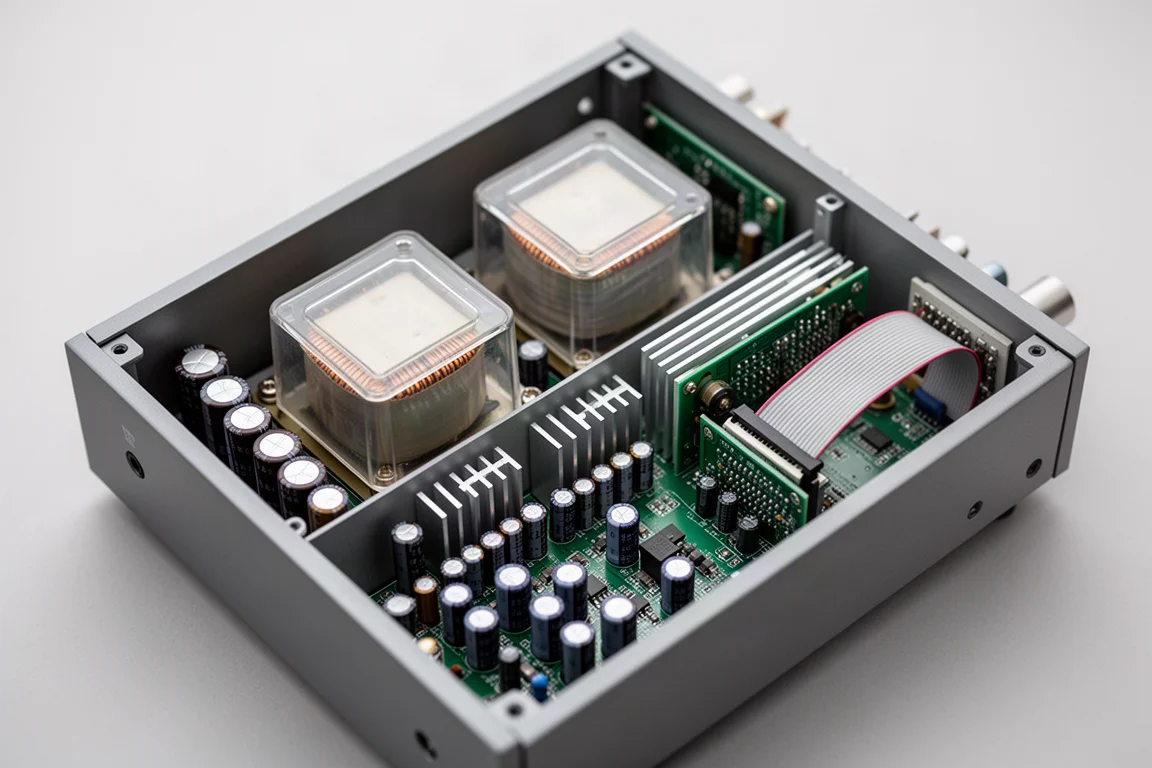
Internally the layout is excellent. There are three compartments. The first houses two 50VA transformers, one for the digital section and one for the analog section, encapsulated in metal with a shielding plate running the full width between compartments. The power supply filtering uses Nichicon Gold Tune capacitors. Clock circuitry centres on a Gustard K2 ultra-low-noise clock synthesiser paired with a femto crystal oscillator. A vertical board carries the second-order phase-locked loop, the XMOS USB interface, the Bluetooth receiver, and the streamer and renderer circuitry. The final compartment holds the fully discrete R2R ladder DAC, a DSP section, and a fully discrete output stage.
Main Strengths: Resolution, Detail, and Refinement
Clarity is the headline. Bass definition is better than what the Denafrips Venus 2 delivers, and transient attack is crisp. The leading edges of notes in the midrange are sharply drawn, and the top end has a glorious expression that stays refined rather than bright. It is a big step up from the Denafrips Aries 2 in resolving ability.
Compared with the SMSL VMV D1se, the R26 has a similar tonal balance but gives you more detail, more refinement, and greater scale. That combination is what makes the R26 feel like more than a well-executed mid-price converter.
Tonality, Warmth, and Soundstage Trade-Offs
The R26 does not have everything its own way. The Denafrips Venus 2 offers noticeably more bass weight, more warmth, and more body through the midrange, along with a wider and deeper soundstage. It is easier to be agile when you are carrying less weight, and that is the crux of the trade-off here.
Even so, the R26 cannot be dismissed as one of those ultra-clean DACs with a flat stage and a thin midrange. There is spatiality and acoustic dimensionality here, the kind associated with the best ladder designs, though not to the extent of the Denafrips converters, including the Aries 2.
The Holo Audio Spring 3 Level 2 shares many sonic similarities with the R26. It costs considerably more, and once shipping and taxes are accounted for, the R26’s delivered price in the UK lands somewhere around £1,600 to £1,700, which narrows the gap further. On sound alone, the R26 would not be out of place at the top of that comparison.
Setup Options: Filters, Oversampling, and Volume Control
The menu system is functional but the font is very small, which is a genuine annoyance. Beyond that, the options are worth exploring. There are three PCM filters. The mid filter is the recommended setting for the most balanced sound, and it is the one that suits most material. The fast filter sounds crisper and slightly wider with some electronic music. The slow filter is soft and noticeably short on resolution.
Non-oversampling mode is available, but it gives up resolution and introduces a little grain, so leaving it off is the better choice. The same applies to bypassing DSD filtering.
Attenuation deserves attention. The digital volume control works by bit reduction, so sound quality drops as the level is lowered. The analog volume control instead reduces gain by 30 dB, a design decision intended for high-sensitivity speakers and active speakers that carry a lot of gain. In practice it is too quiet, even at maximum, and its quality through a preamplifier is not especially appealing. The most rewarding approach is to run the R26 as a DAC with a fixed output and handle volume elsewhere. The menu also allows switching between the internal reference clock and an external one, inverting phase, and adjusting brightness.
Things to Consider Before Buying
The R26 rewards decent amplification. A sensible minimum is an integrated amplifier in the class of the Hegel H190, where the R26 is a major upgrade over the amplifier’s internal DAC. Pairing it with entry-level electronics will not reveal what it can do.
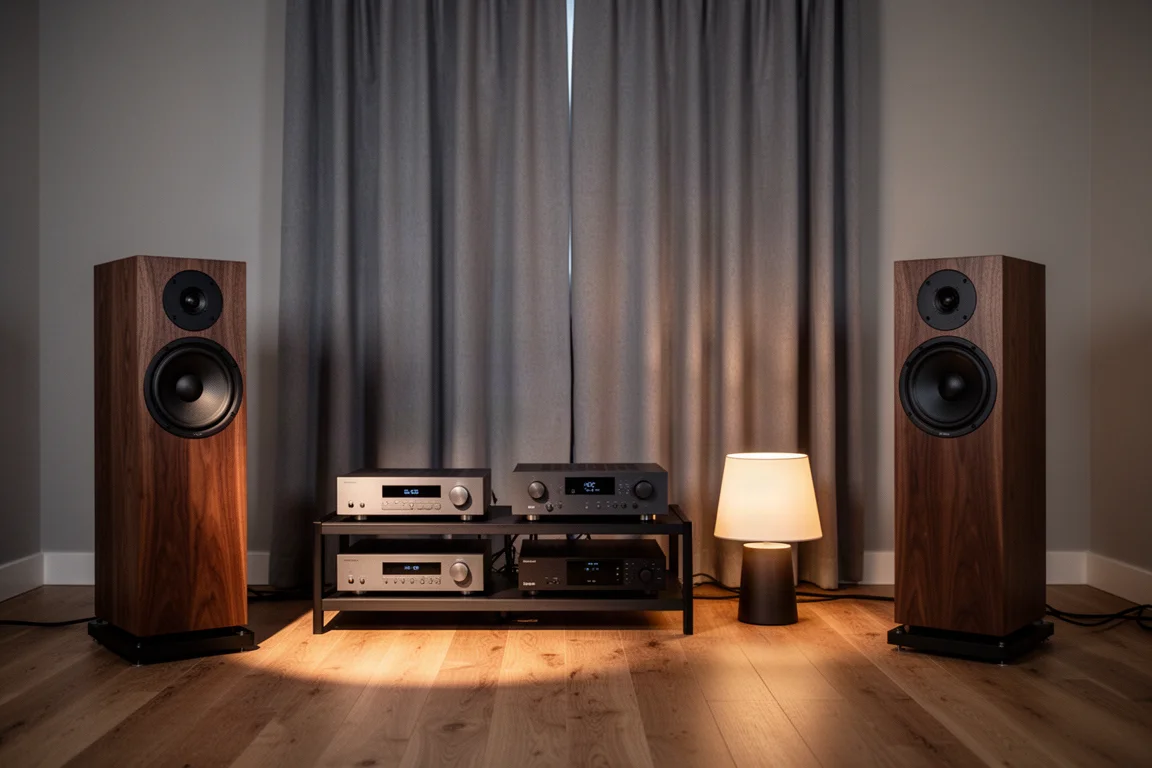
System matching matters. Warmer speakers with real bass performance, such as the ATC SCM40, play to its strengths. It also works well with a variety of neutral systems, so it is not a difficult component to place.
The small menu font, the light dial action, and the basic remote are minor irritations rather than deal-breakers, but they are worth knowing about. Buyers who want the streaming features should investigate those separately, since this assessment is based on the R26 as a converter. And listeners who prioritise maximum warmth and body above all else should audition a Denafrips converter before deciding.
Buying Advice and System Matching
At around £1,350 in the UK or $1,650 in the US, with direct purchases adding shipping and taxes, the R26 sits in a price band where compromises are usually obvious. Here they are not. The unit has been run alongside far more expensive electronics, including a highly transparent pre and power amplifier pairing at £7,790, a Musical Fidelity M8 preamplifier and M8s-500s power amplifier combination retailing at £7,498, Graham Audio LS6f floorstanders, and the £4,200 ATC SCM40 speakers, and it never felt like the weak link.
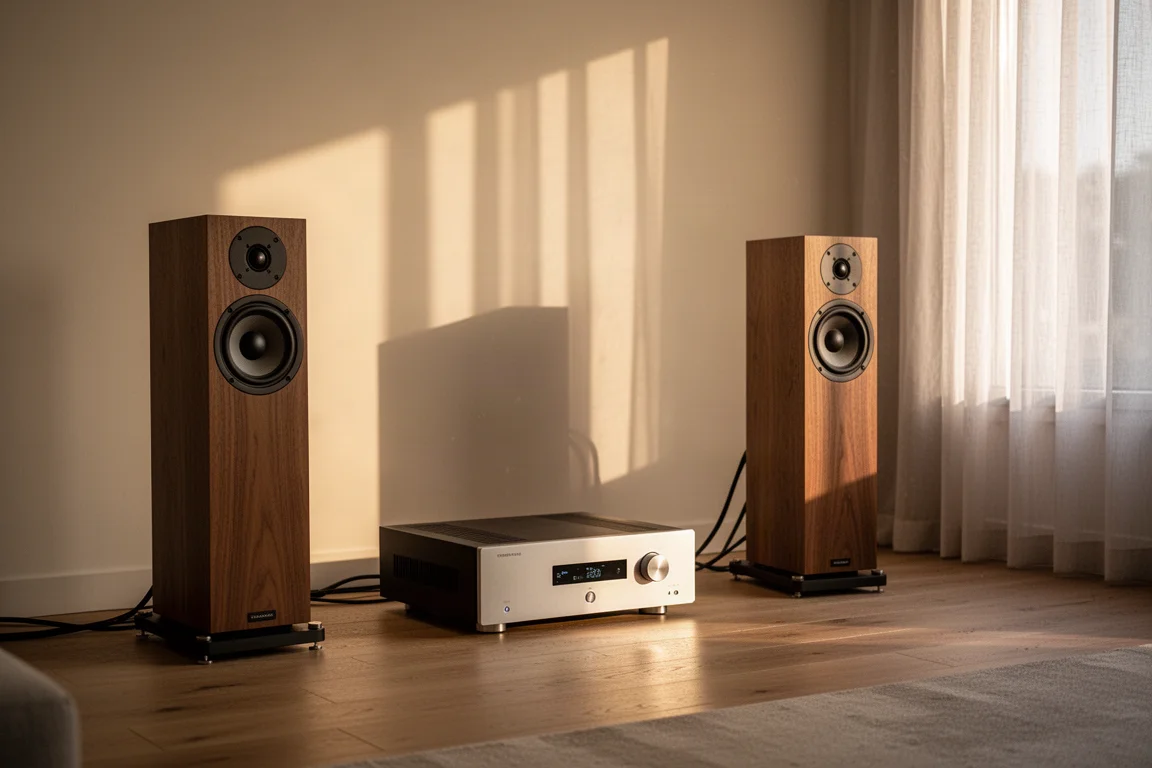
If the sound characteristics described here appeal, the R26 is easy to recommend. If you want the last word in midrange warmth and stage depth, save for a Denafrips. Both are defensible choices; they simply aim at different listeners.
Conclusion
The Gustard R26 DAC earns its reputation. It delivers sensational clarity, excellent bass definition, a refined top end, and enough spatial quality to avoid the thin, flat character that afflicts so many clean-sounding converters. Its fully discrete R2R ladder architecture and fully discrete output stage give it a technical story that matches its price, and its input set is unusually complete for the money.
The trade-offs are real. The Denafrips Venus 2 offers more weight, warmth, and stage depth. The analog attenuation is not especially useful, the menu font is tiny, and the dial and remote feel ordinary. None of that changes the central conclusion: for listeners who want ultra-high detail without a dry or analytical presentation, and who listen mostly to rock, pop, and electronic music, the R26 is an outstanding choice at its price.
Product link
View more details for Gustard R26 DAC
This product is mentioned in the review. Check the specifications, options, and compatibility before buying.
View more details for Gustard R26 DACFurther reading
Related Reviews
Hi-Fi DACs
Denafrips Ares 12th-1 vs Geshelli Labs J2: Two Paths to a Better DAC
A two-DAC comparison of the Denafrips Ares 12th-1 and the Geshelli Labs J2, covering build, inputs, sound character, and which listener each converter suits.
Hi-Fi DACs
Denafrips Ares 12th Anniversary Review: A Purist R-2R DAC With an I2S Upgrade
A compact, fully balanced R-2R converter with a new I2S input, free anniversary firmware and a clear upgrade path at around £1,000.
Hi-Fi DACs
Denafrips Pontus 15th Generation DAC Review: Trickle-Down R-2R Sound
A two-box R-2R converter that carries the circuit of a far more expensive Denafrips model, with airy staging and a clear system-matching rule.