Outdoor Gear
Green Elephant Telescoping Poles Review: Adjustable Tarp Poles That Last
A long-term look at Green Elephant Telescoping Poles, covering the 8 ft reach, the 50 lb rating, years of field durability, and the water and rubber-cap quirks worth knowing.
Introduction
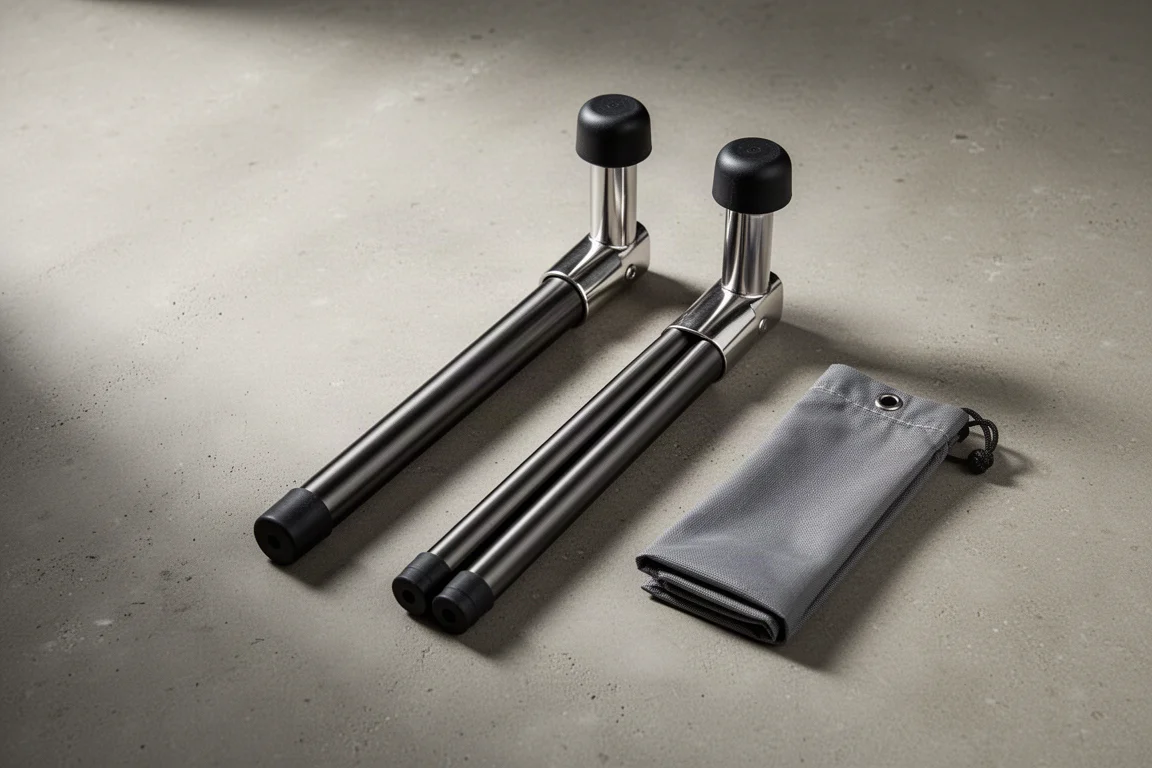
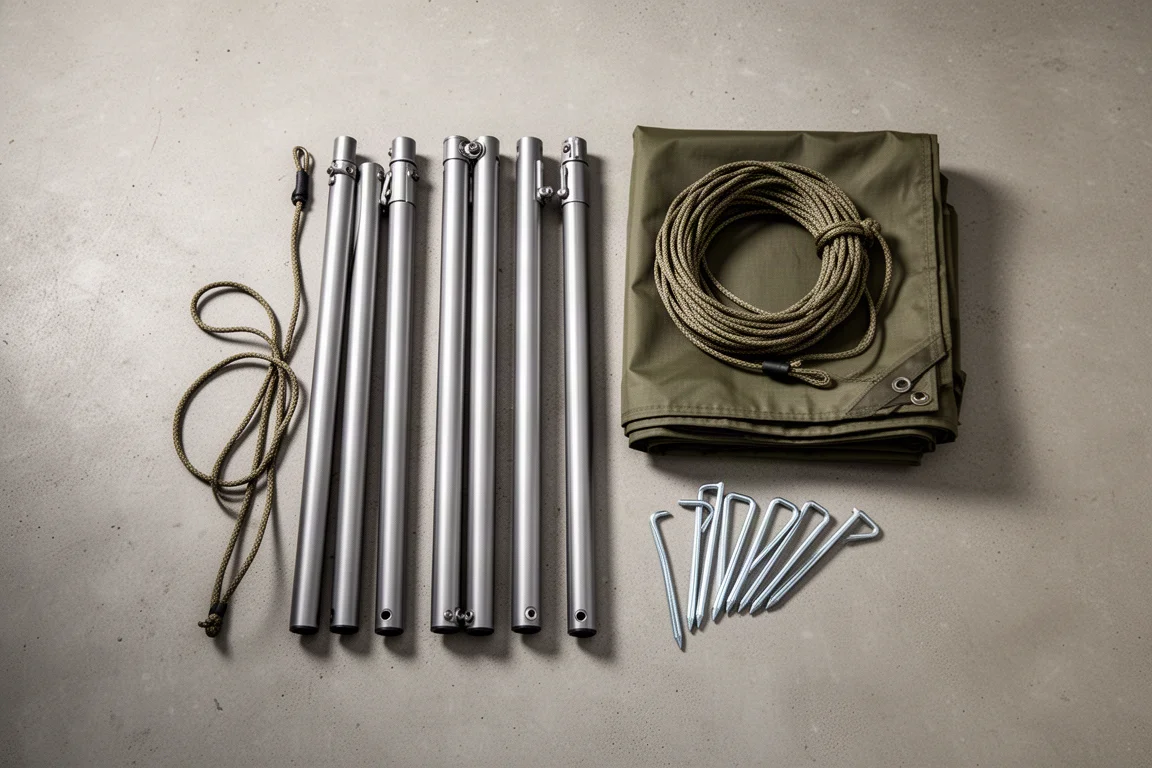
Green Elephant Telescoping Poles are adjustable support poles built for pitching tarps, awnings, and improvised shelters outdoors. They extend from 2 ft 9.5 in up to 8 ft 2.8 in, weigh about 1 pound each, and are rated to support up to 50 lb of weight. That combination of a small packed size and a tall working height is what makes them useful in a vehicle-based kit, where a tarp often has to be set up around whatever terrain, trees, or roof rack happens to be available.
These poles have been in continuous use since 2021 across summer heat, winter cold, snow, rain, and strong wind. The notes below cover what has held up, what has not, and who should consider buying them.
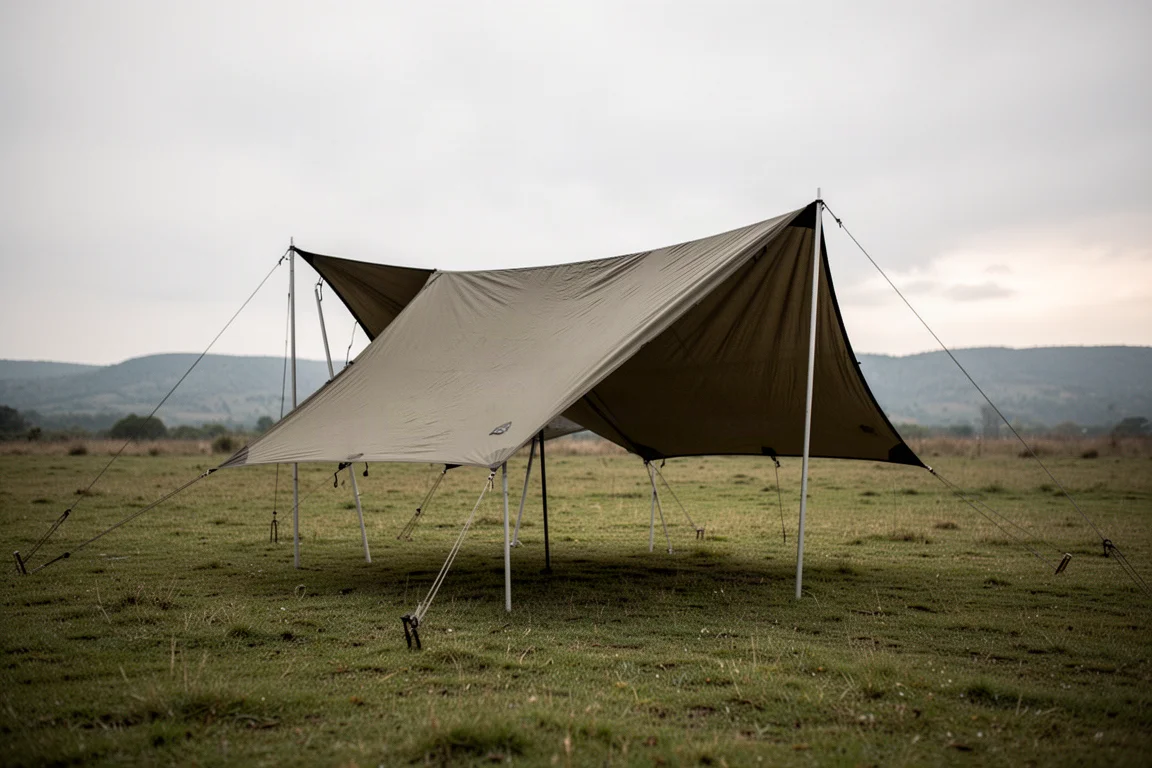
Because the height range is so wide, a single pole can act as a low ridgeline support or a tall corner post without swapping hardware. The twist-and-lock mechanism is the part the user touches most often, and it is the part that decides whether a shelter goes up quickly or turns into a wrestling match in bad weather.
Who This Product Is For
These poles suit campers, overlanders, and tarp users who need a compact, adjustable support that can be stored in a vehicle and deployed in seconds. They fit naturally into setups where poles live in the truck or SUV, ready to be paired with a tarp, a handful of stakes, and a guy line. The point is speed: lay out the tarp, grab the poles, and get cover up before the weather decides the schedule.
They also make sense for anyone using higher-end tarps with guyline loops rather than grommets, although the stainless steel tip is sized to fit the grommets found on inexpensive tarps as well. Buyers who get the most from them are those who pitch shelters regularly and would rather adjust a pole than retie knots.
Main Strengths
Durability is the headline. Four poles were purchased in 2021 and four more were added later, and the originals still perform as they did when new. They have held up guide tarps, safari tarps, and a large 13 ft x 20 ft Defender tarp, which is a substantial load for a pole of this size. Wind, rain, snow, and ice have not caused any failures.
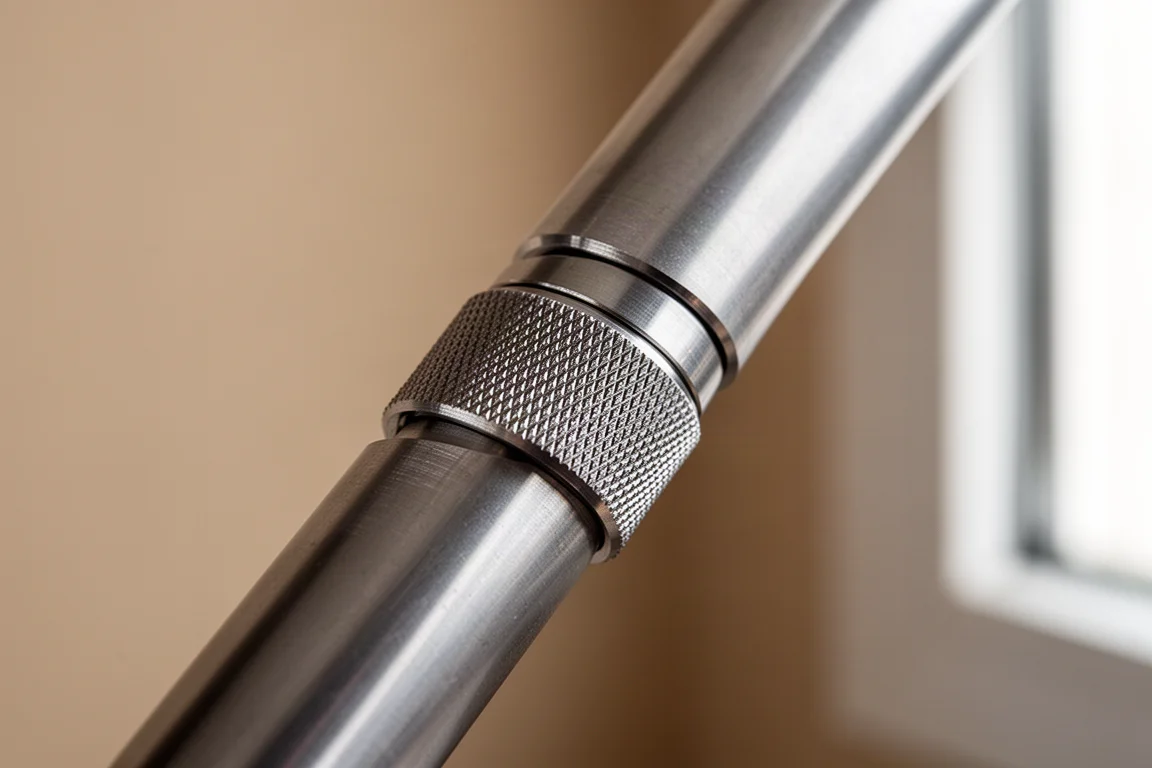
The twist-and-lock system is simple. Twist to open, extend the pole, twist to tighten, and it holds where it is set. Adjustments can be made on the fly, which matters when weather moves in and a tarp needs to be pulled taut in a hurry. Cordage stretches and tarp fabric stretches too, especially when wet, and adding height with a spare pole is a fast way to take the sag out of a shelter.
The build mixes plastic, rubber, aluminum, and stainless steel. The stainless steel post at the top sits beneath a rubber cap and is sized for common tarp grommets. A guyline loop can be slipped over the tip and wrapped once with cordage so the tarp stays put, and the wrap keeps the connection tight even when the wind picks up.
Telescoping action is smooth in both directions, which keeps setup and breakdown quick. At roughly 1 pound per pole, a full set adds very little weight to a vehicle kit, and the same set covers a wide range of shelter shapes without extra hardware.
Things to Consider Before Buying
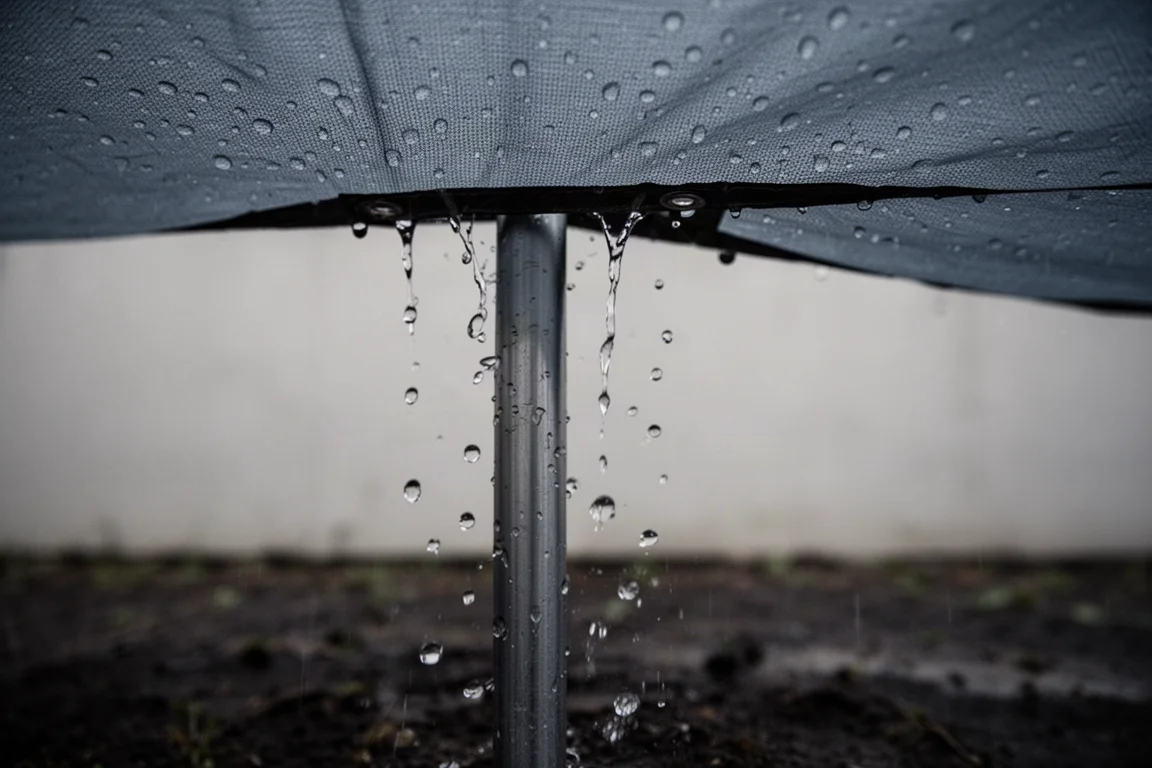
Water is the main quirk. Used under a tarp in heavy rain, water runs down the shaft and fills the inner chamber. Collapsing a water-filled pole pushes that water out under pressure, and it sprays out like a squirt gun. The inside also stays wet for a long time. A pole used on a wet trip and left out to dry can still be damp inside weeks later.
That moisture has not caused rust, corrosion, or any loss of smoothness, so it is a quirk rather than a failure. Even so, it is worth knowing before buying, particularly for anyone who packs gear into a closed vehicle or a small storage space.
The rubber caps on top eventually dry out and can break away from the pole. They matter because they let the pole press directly against tarp fabric without the stainless steel tip punching a hole through it, so they are worth keeping track of. The rubber feet at the bottom can also come off, most often when a pole is driven into soft mud, and refitting one takes patience because several internal chambers have to line up again.
Two smaller points are worth flagging. The included storage bag is very small and the poles only fit one way, two down and two up, which slows packing rather than helping it. And when a pole is supporting something genuinely heavy, the lock has to be tightened firmly, otherwise the pole can self-adjust under load, and undoing a heavily tightened pole takes some effort.
Buying Advice
The poles are sold as a two-pole set for $50 or a four-pole set for $90, with a small discount applied to the four-pole set. Most tarp configurations need at least four poles to work properly, so the four-pole set is usually the more practical place to start, and a second set covers backup and larger shelters.
The price sits at the higher end for telescoping tarp poles, but the case for the cost rests on longevity. Poles that have been in continuous use since 2021 and still work change the value math considerably compared to cheaper options that may not survive a single season. A five-year warranty backs the product, though the durability record means it has not needed to be used.
Similar-looking poles from other sellers are available at both lower and higher prices, and their quality has not been verified here. What can be said is that this specific product has withstood years of hard use in demanding conditions.
Conclusion
Green Elephant Telescoping Poles are durable, versatile, and genuinely easy to use, and they have earned a permanent place in an overlanding kit. The water retention inside the shafts and the rubber parts that wear out are real quirks, but neither has affected performance over years of regular use. For campers and overlanders who want one set of poles that covers almost any shelter configuration, these are easy to recommend.
Product link
View more details for Green Elephant Telescoping Poles
This product is mentioned in the review. Check the specifications, options, and compatibility before buying.
View more details for Green Elephant Telescoping PolesFurther reading
Related Reviews
Outdoor Gear
Backpacking Gear Evolution: 100 Years of Technology Compared
We tested backpacking gear from 1925, 1975, and 2025 across a three-day hike in Yosemite. Here's how technology has transformed comfort, weight, and the outdoor experience.
Outdoor Gear
Best Affordable Hiking Watches: Five Rugged Options for Outdoor Adventures
Five durable hiking watches that balance ruggedness, functionality, and value for outdoor enthusiasts who need reliable GPS tracking and weather resistance.
Outdoor Gear
Best Backpack Coolers 2026: Five Practical Options for Outdoor Adventures
Five backpack coolers with distinct cooling capabilities, storage features, and design trade-offs to help you choose the right one for your outdoor needs.