Portable Power
Grecell T300 Review: A Compact Power Station That Holds Its Charge
A 288.6Wh portable power station with a 600W maximum output, LED emergency lighting, and impressively low standby drain, tested with laptops, drills, and battery chargers.
Introduction
The Grecell T300 sits in a sweet spot between small battery banks and the much larger, much more expensive power stations on the market. It is a portable unit essentially built around a giant battery, complete with overload protection, internal cooling fans, and thick rubber bumpers around the edges to survive life in a mobile environment. With a rated capacity of 288.6 watt hours, a maximum output of around 600W, and a rated output of roughly 330W, it delivers serious power for its size, even if it will not run as long as units several times its price.
Design and Build
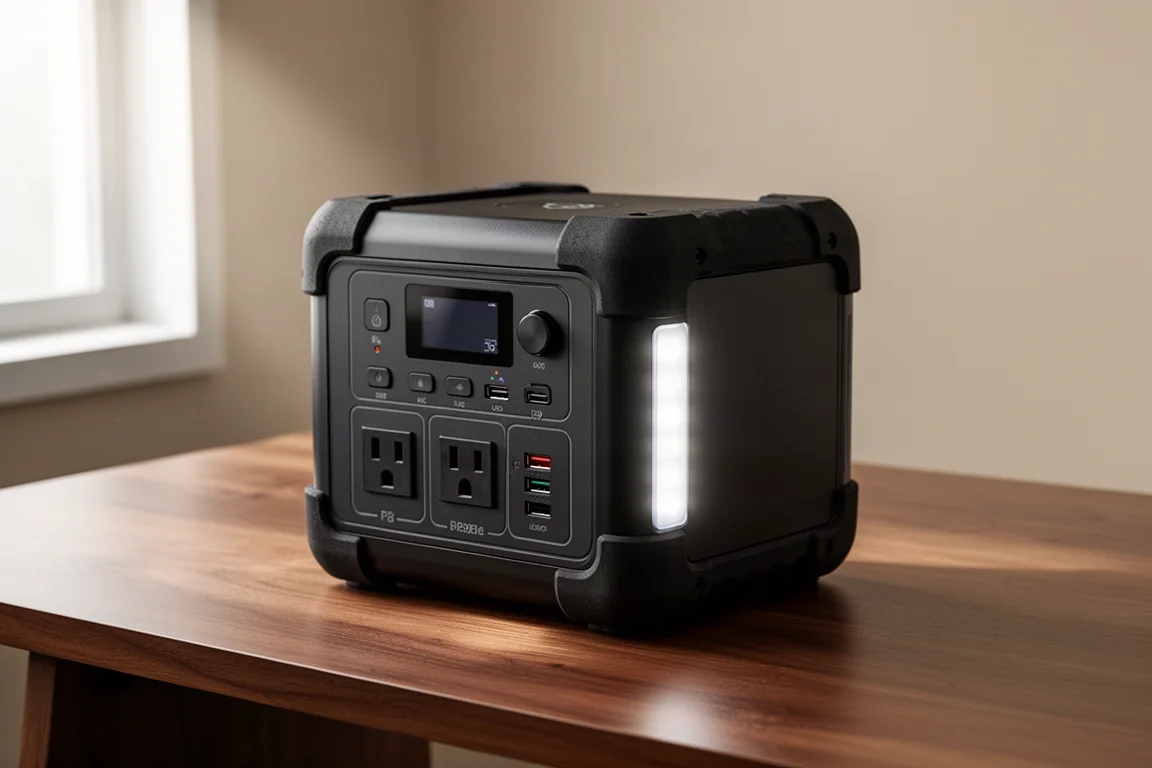
Physically, the T300 is compact and well protected. The rubber bumpers around the edges make it genuinely suitable for tossing into a vehicle or moving between locations, and the housing feels purpose-built rather than fragile.
One thoughtful addition is an LED light built into the side. It cycles through regular lighting and an SOS mode. It will not replace a dedicated flashlight, but for emergency situations, preparedness kits, or backup scenarios, having a light always available on the power station itself is genuinely useful.
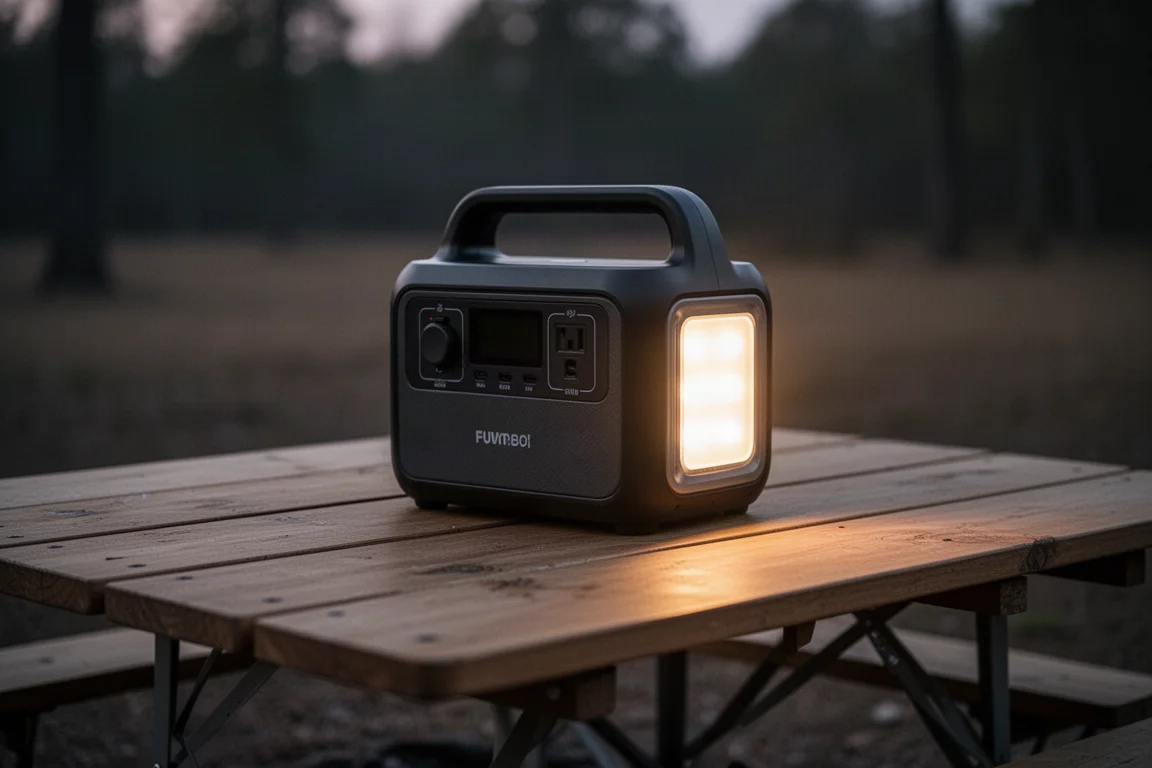
The front panel is sensibly organized: a power button, a DC light indicator, two 12V outputs plus a standard cigarette lighter-style 12V output, four USB ports, and three independently switchable AC outlets.
Ports and Outputs
The port selection is generous for this size. Three of the four USB ports are USB-A with Quick Charge 3.0 capability, and there is a 60W USB-C port. A MacBook Pro connected to the USB-C port charged without trouble, and the same port was seen pushing around 45W.
On the AC side, there are three outlets, each of which can be switched on independently. That is a nice touch for controlling draw and conserving capacity. Charging the unit itself works three ways: from AC wall power, from a 12V vehicle power port, and from solar panels via the standard solar panel connector.
Standby Efficiency
Standout detail: after being fully charged and then left unused for over a month, including a trip to Alaska, the display still read 100 percent. Zero visible loss in stored capacity over more than a month is an important trait for anyone keeping a unit charged specifically as a backup power source, whether for charging phones, running appliances, or powering cooling fans in situations where it could matter a great deal.
Real-World Charging Tests
In use, the T300 handled a range of loads comfortably. A MacBook Pro charged and held its charge through the standard AC outlet, and it also charged directly over USB-C at a measured 14W output while showing a healthy charge level.
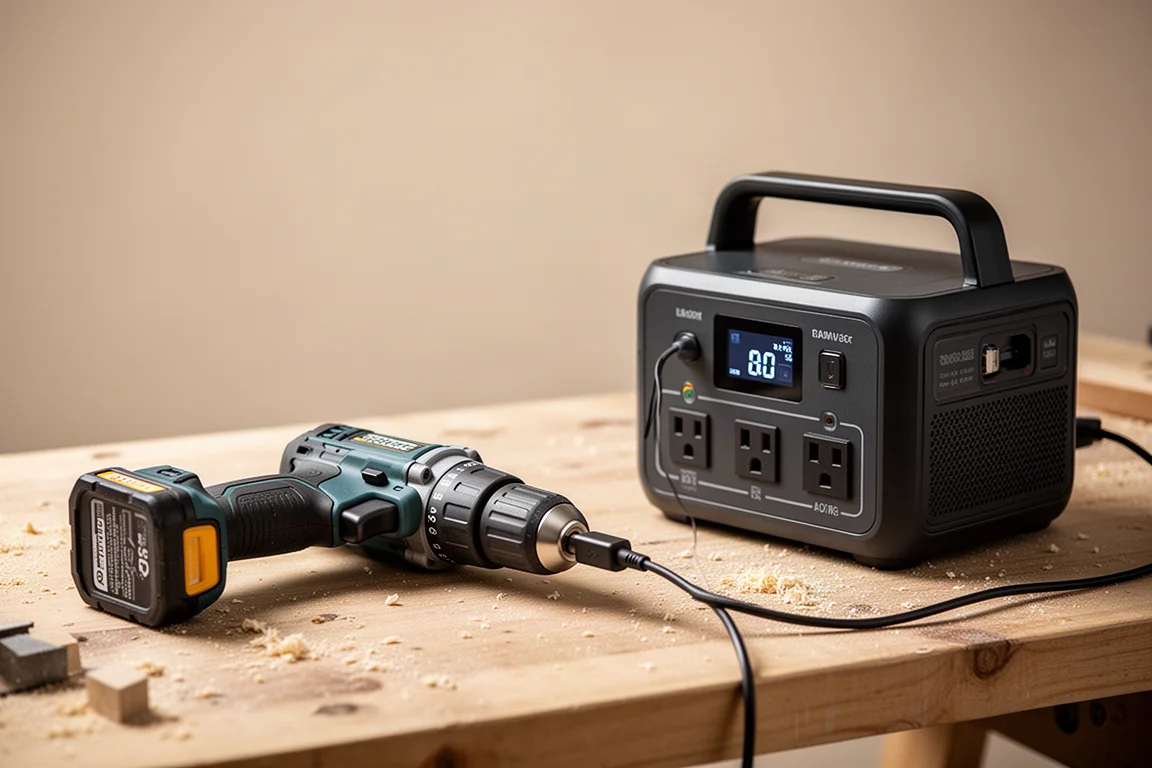
A classic corded DeWalt electric drill ran just fine once the AC button was switched on, an easy-to-miss step that caught the reviewer out briefly. For battery charging, a 12V tool battery drew around 138W through the unit, enough to trigger the internal cooling fan, while a smaller 1.5Ah battery drew only about 50 to 60W with no fan kicking on at all.
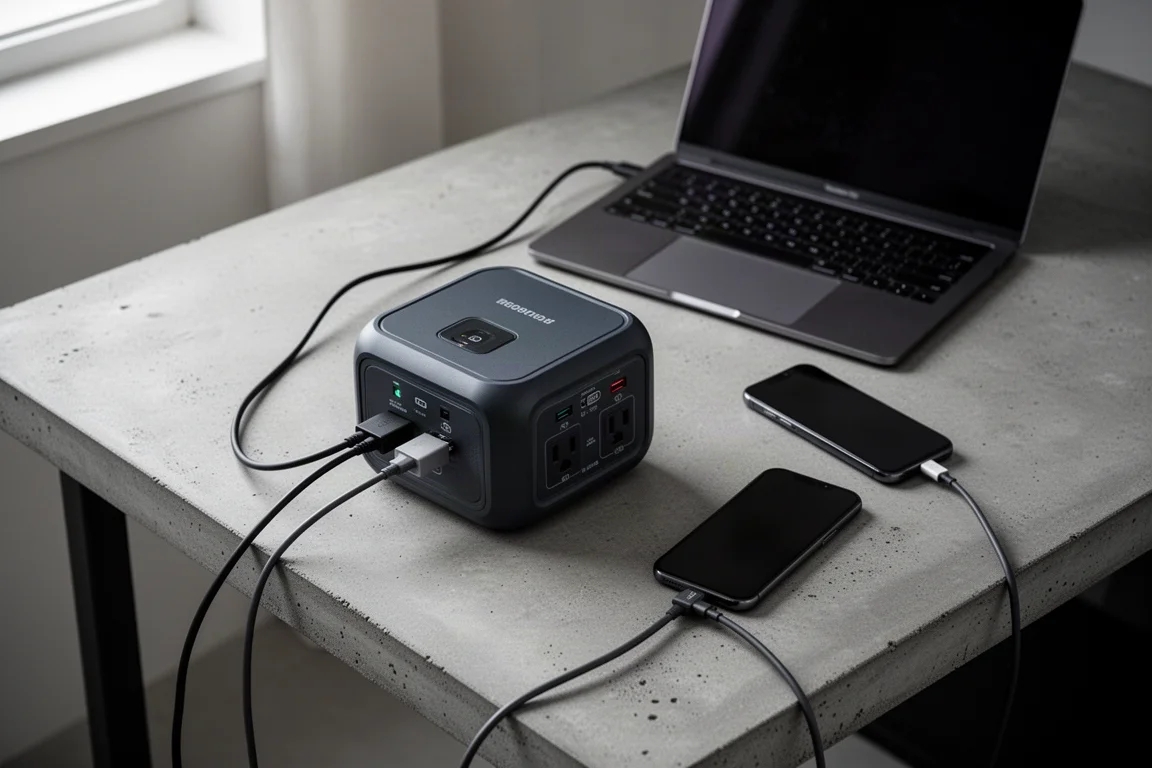
The display updated accurately throughout, showing real-time wattage drawn, and the unit returned to a 99 percent reading after the test session, which speaks well of how the capacity holds under real use.
Who This Product Is For
The T300 makes the most sense as an intermediate step between ordinary small battery packs and the large, pricey power stations. It suits people who want backup power for charging multiple phones, running small appliances or fans, keeping tools charged at a worksite, or simply having a reserve ready when power between “time posts” is uncertain.
If your expectations are realistic, it will not run a whole house, and it will not last as long under load as units three or four times the price, but for portable, occasional, and emergency use it covers a lot of ground.
Storage and Portability
One practical tip worth adopting: if a unit does not come with a storage case, find one that fits. In this case, an inexpensive basic soft cooler, roughly twelve dollars, happened to be the perfect size. The T300 slides in snugly, and the padded walls double as protection. The cooler’s front pocket held the solar panel connector, while side pockets took the AC charging cable and the 12V cable, which doubles as either charging input or 12V output.
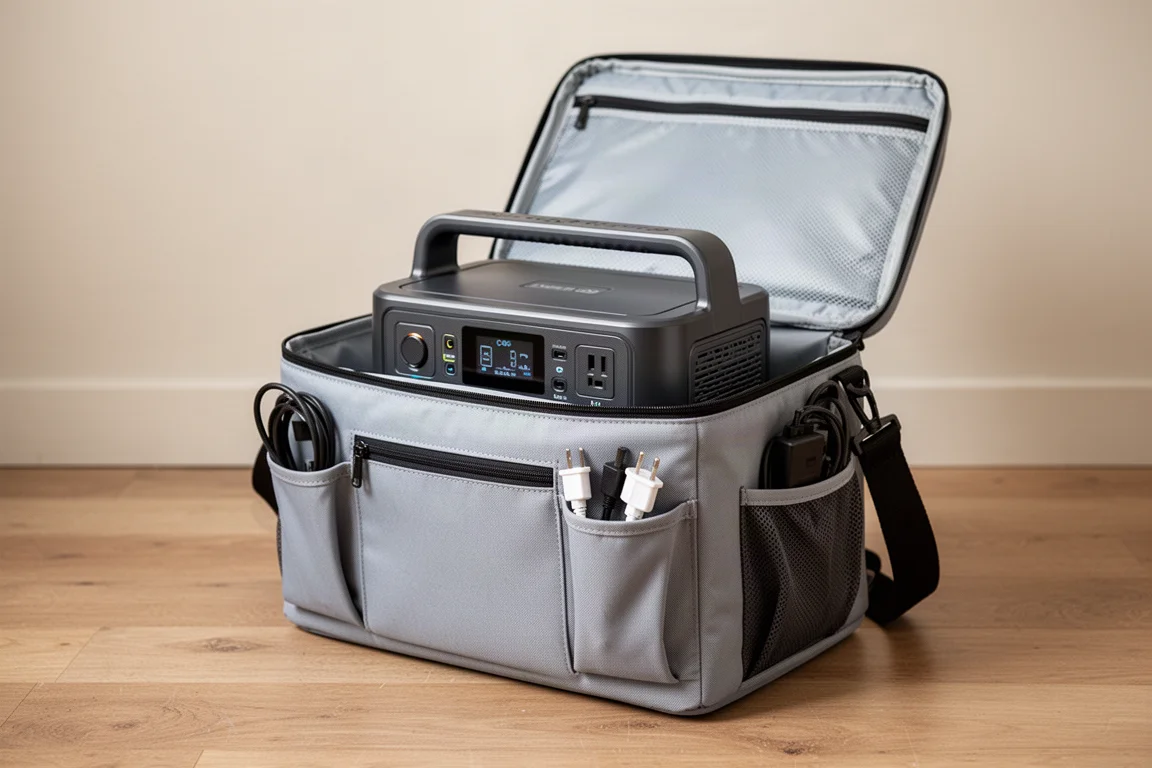
That kind of tidy, padded transport setup makes the unit genuinely easy to keep in a car or grab-and-go kit without worrying about knocks to the ports or the housing.
Buying Advice
The Grecell T300 is a solid choice if you want meaningful capacity and output in an affordable, compact package. Look for the three-way charging flexibility, the independently switchable AC outlets, and that excellent standby retention as the reasons to pick it over a plain power bank. If you need to run heavier or longer loads, a larger unit is the better fit, but for laptops, tool batteries, USB devices, and emergency lighting, this one earns its place.
Conclusion
The Grecell T300 proves a smaller, more affordable power station can still deliver on the things that matter: real output for laptops and power tools, useful emergency lighting, flexible charging options, and a battery that holds its charge over weeks rather than days. For anyone stepping up from a small battery pack without jumping to a premium-priced unit, it is an easy recommendation.
Product link
View more details for Grecell T300
This product is mentioned in the review. Check the specifications, options, and compatibility before buying.
View more details for Grecell T300Further reading
Related Reviews
Portable Power
Best Portable Power for Camping and Remote Work: Six Power Banks and Solar Panels Compared
A practical comparison of six portable power options, from a 500W solar generator for car camping to a one pound solar power bank built for backpacking.
Portable Power
Best Portable Power Stations 2026: Nine Models Compared for Real-World Use
We compared nine portable power stations across output, capacity, charging speed, noise, and UPS performance to find the best value and the best overall pick.
Portable Power
Best Portable Power Stations and Power Banks for Blackouts and Travel
Five portable power solutions compared: two EcoFlow power stations, a flight-friendly Zendure power bank, a see-through Shargeek, and the feature-packed Omni 20c+.