Gravel Cycling Components
Gravel Race Setup: Mountain Bike Tires and a Narrow Long-Reach Bar
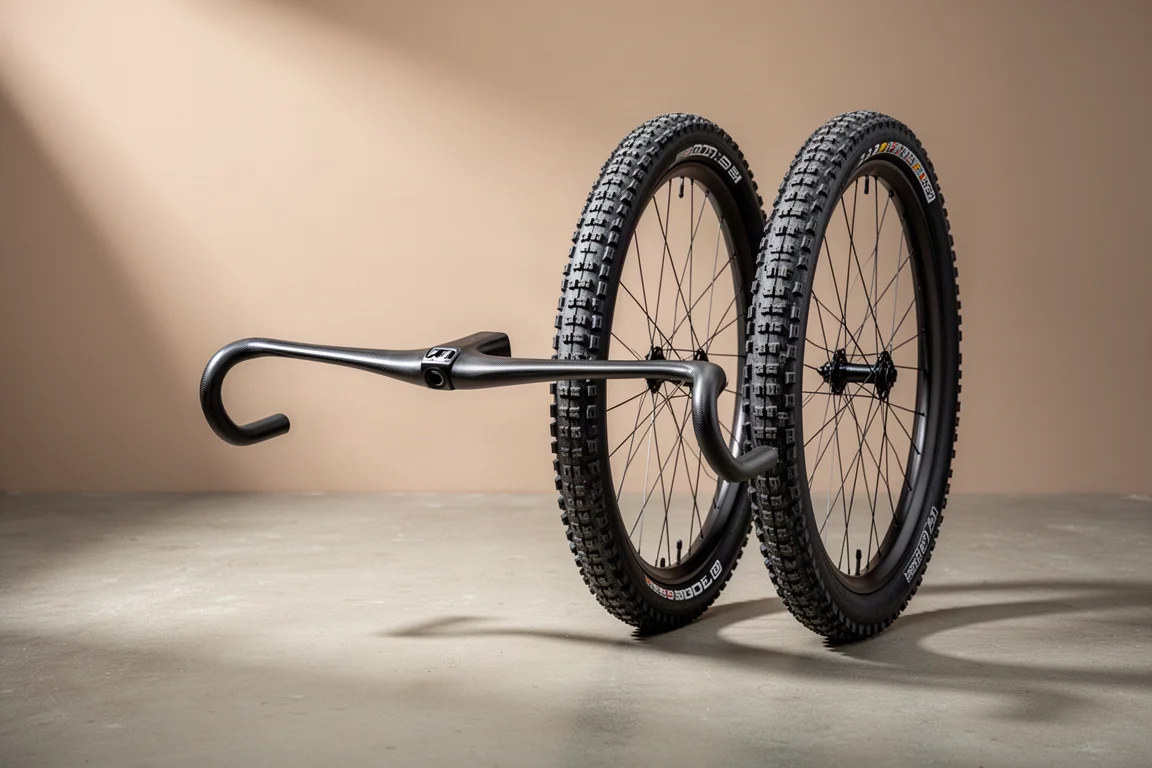
Two mountain bike tire options and a narrow long-reach handlebar, examined as a complete gravel race setup alongside pressures, wheel width, and drivetrain context.
Introduction
Gravel racing has drifted toward wider rubber, and the reasoning is easy to follow. On rough courses, a 2.1in or 2.2in mountain bike tire can be faster and more comfortable than a narrow gravel tire, even though it looks heavier and slower standing still.
Pair that with a narrow, long-reach handlebar and the front end of the bike starts to look unusual. The logic holds together once each part is examined on its own terms.
This guide covers three components from a race-ready gravel build: two mountain bike tire options and a narrow handlebar designed around a long, forward aero position.
Evaluation Criteria
Three factors decide whether components like these are worth running.
Rolling resistance determines how much energy goes into forward motion on hardpack and road sectors. Puncture resistance determines whether the ride finishes at all. Geometry and fit determine whether a part actually delivers the position it promises once it is bolted on.
Terrain sets the balance between them. A gravel race that runs 70 to 80 percent road with a few gravel sectors is a very different problem from a long, rough gravel event, and the same tire will not be the right answer for both.
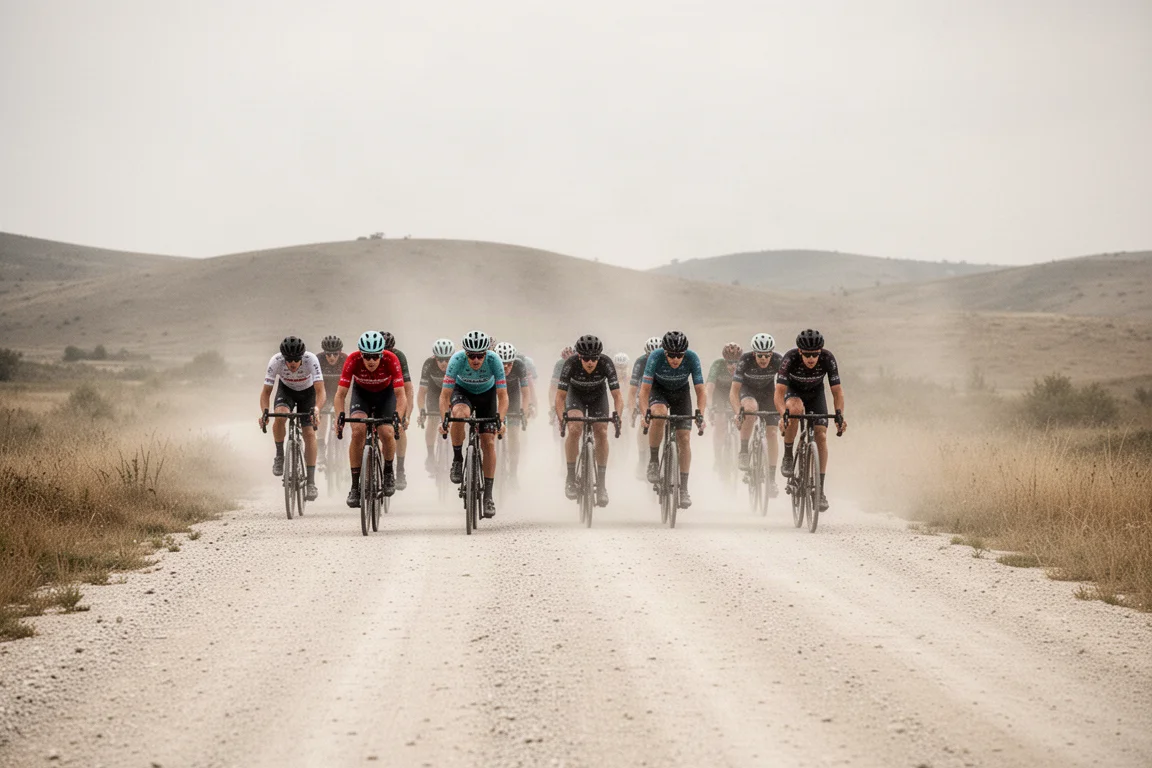
Handling matters too, and it does not always show up on a spec sheet. Wider tires slow steering response slightly, but they can add cornering grip once a rider adapts to the change.
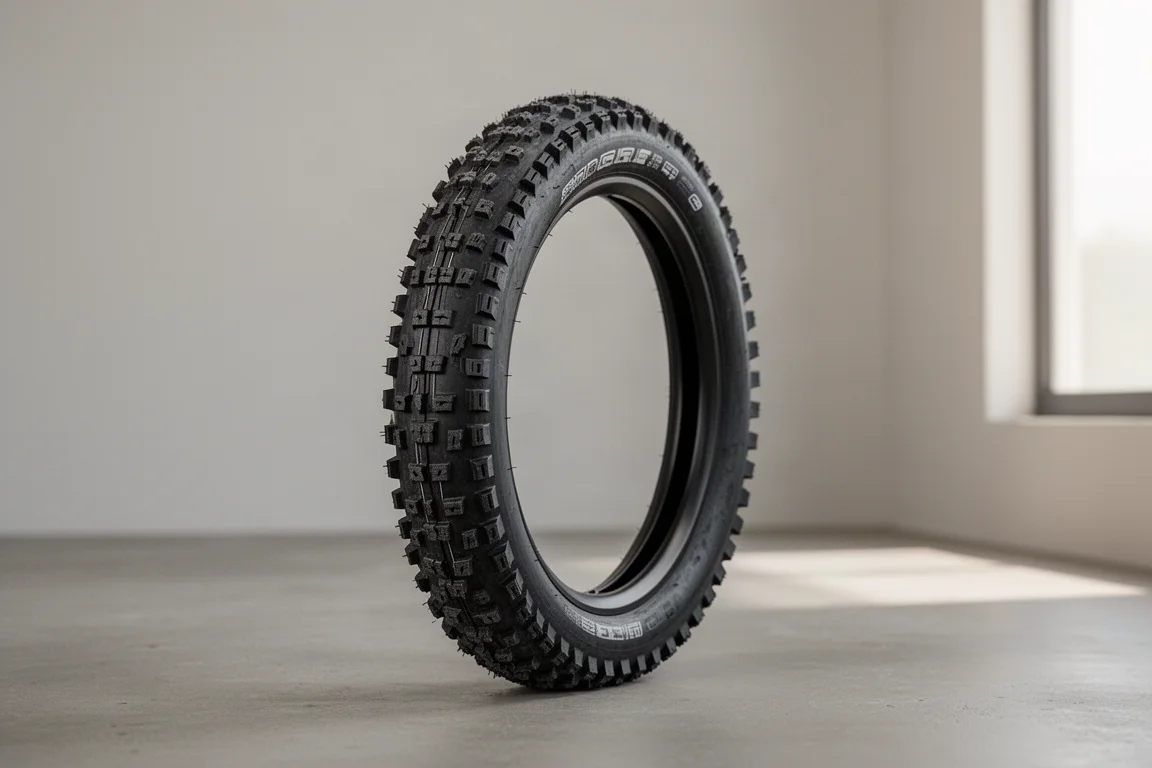
Schwalbe Thunder Burt 2.1
The Thunder Burt 2.1 is the lower rolling resistance option of the two tires in this build. It is a thin tire, which is exactly why it rolls quickly, and also why it is not the first choice when a course is likely to produce punctures.
That trade-off is the entire story. On smoother gravel, the reduced rolling resistance is a genuine advantage. On sharper, rockier terrain, the thinner casing becomes a liability rather than a saving.
Pressure matters as much as casing. This build ran 19 PSI in the front and 20 PSI in the rear with this tire on a relatively smooth course.
Riders who want the fastest option on hardpack and are willing to accept the durability risk will get the most out of it.
Continental Race King 2.2
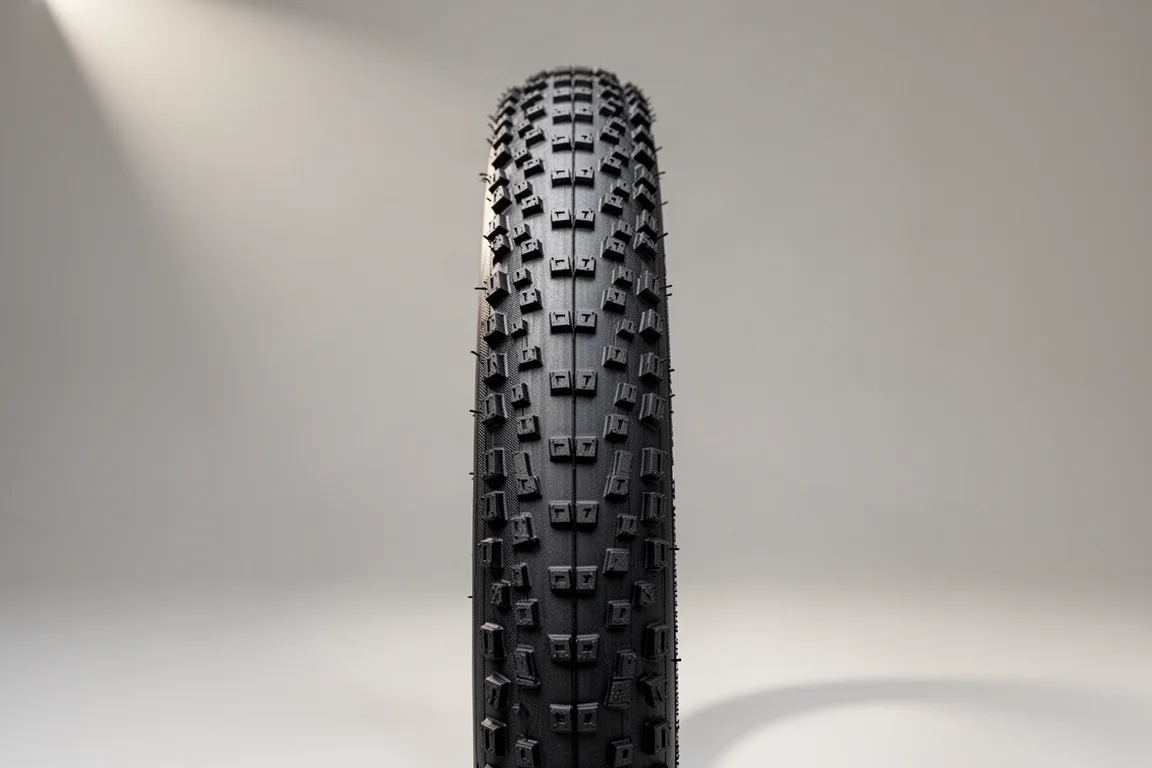
The Race King 2.2 is the more puncture resistant of the two. It gives up a little rolling resistance compared with the Thunder Burt, but it is the tire that makes sense when flat risk is the bigger threat on race day.
It also fills the frame. At 2.2in it is the largest size this bike will accept, which makes the Race King the widest option available without changing frames.
For long, rough events where a puncture can end the day, that extra protection is the deciding factor.
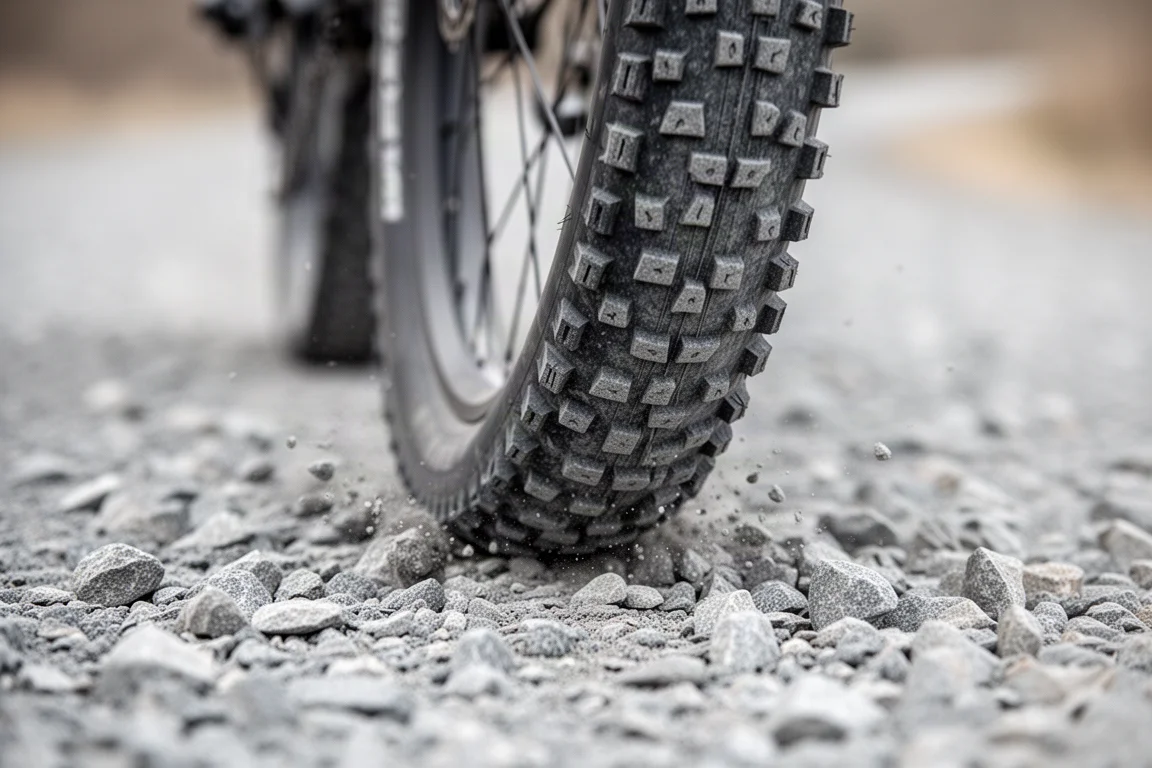
Mountain bike tires at this width do slow steering slightly, but they also add cornering traction. Riders with a mountain bike background often prefer how a gravel bike handles once the wider rubber is fitted, once they have adjusted to the steering.
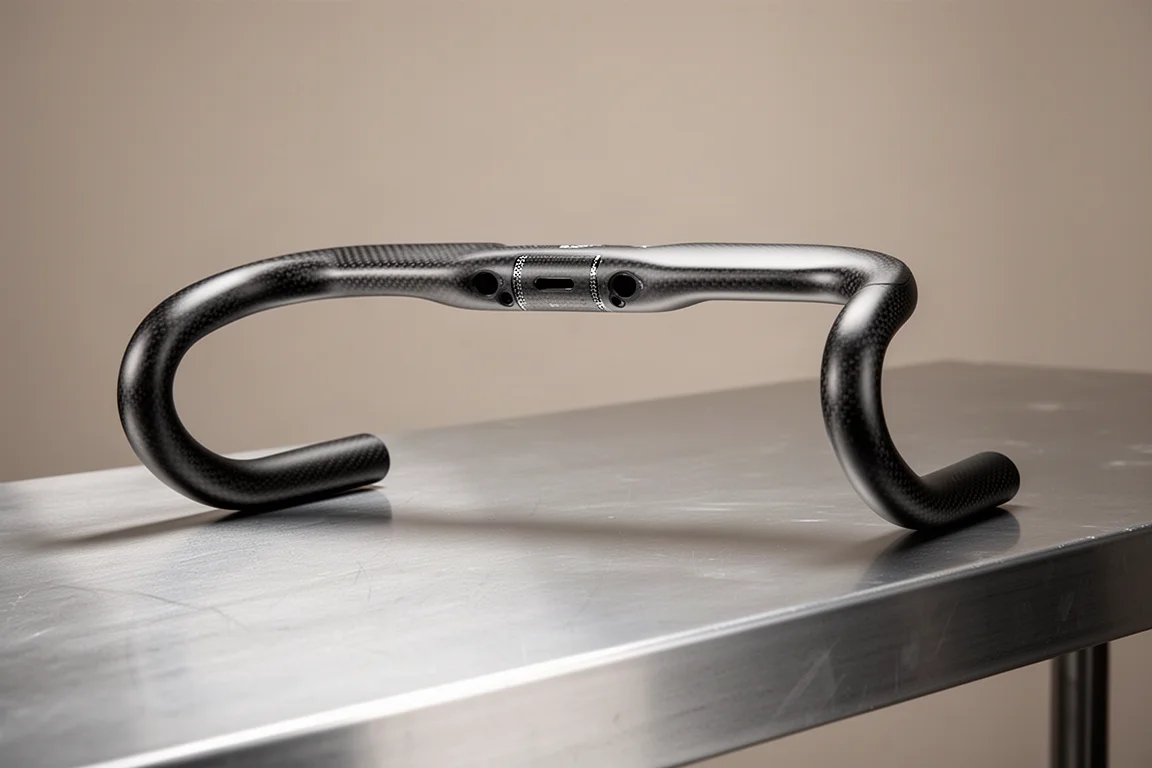
Ascent Aru Long Reach Handlebar
The Aru Long Reach bar from Ascent measures 30 to 31cm at the hoods, depending on where the measurement is taken, while the drops flare out to 40cm at their widest point.
The long reach is the point of the design. It places the contact point roughly in the middle of the forearm when a rider rests forward on the hoods, which makes that position far more comfortable to hold and much closer to a time trial position in feel. The bar is designed to sit within UCI rules, and the position is permitted in the Lifetime Grand Prix series, where equipment rules are more open.
Paired with a 150mm stem, the effective reach works out close to a normal bar setup, despite the flare and the long reach. The narrow hoods are the compromise: they reduce frontal area, which is where the aero benefit comes from, but they ask for more attention in technical terrain, where many riders move down to the drops instead.
Pressures, Inserts, and Wheel Width
The wheels in this build run an unusually wide external rim width of roughly 42 to 43mm, wide enough that the rim almost matches the profile of a 2.1in tire. Internal width stays at 28mm, deliberately under 30mm.
That restraint is intentional. Going wider internally, into the 30 to 32mm range, has been associated with tires folding or burping under load, so keeping the internal width below 30mm is the safer engineering choice for a setup this wide.
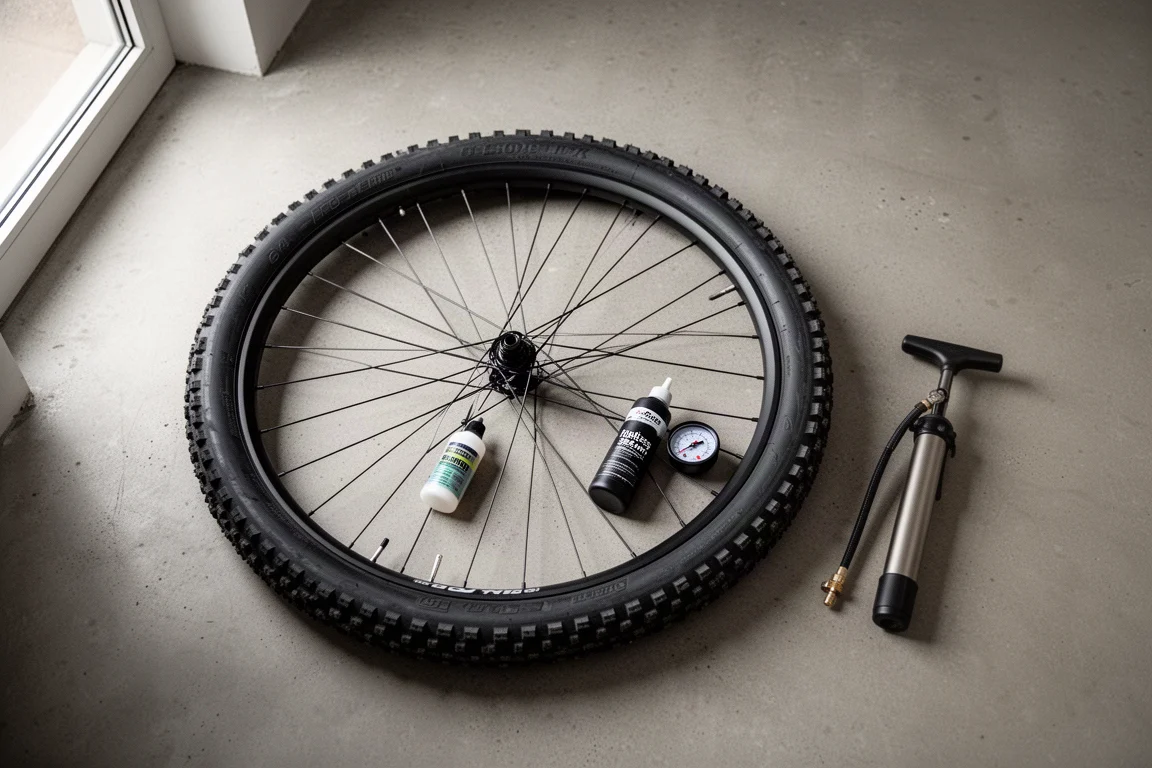
Tire inserts are a terrain-dependent decision. Riders who run narrower gravel tires often use inserts, but with mountain bike tires at these pressures, bottoming out the tire is rare enough that inserts are frequently left out.
The Rest of the Build
The drivetrain in this build is a one-by setup with a 48-tooth chainring and a KMC chain, chosen because KMC chains are slightly more efficient than the alternatives. The switch from a two-by system came down to chain drops, and the one-by arrangement has been the more hassle-free option since.
The range is worth noting. Even in a one-by configuration, the spread is wider than the previous two-by setup, with a taller top gear and an easier easiest gear. The trade-off is cross-chaining, which costs a few watts, and that is also why the frame stays on the non-transmission version while still using a UDH derailleur mount.
A suspension seatpost adds a little comfort, based on the observation that on rough terrain, stiffer is not always faster. A suspension fork is a separate question and is entirely course dependent. It was left off here because the course was relatively smooth and there is a lot of climbing, and a suspension fork adds weight.
The limited edition version of this bike brought a few practical changes: internal cable routing, a UDH derailleur mount, and a clear coat over the carbon rear end instead of an all-white paint finish, which trims a small amount of weight.
Buying Advice
Start with the course, not the component. If the route is mostly road with a few gravel sectors, a 40mm gravel tire remains a reasonable choice, and the decision between that and a mountain bike tire can be genuinely close. If the route is a long, rough gravel event, the wider tire is the more sensible starting point.
Then decide between speed and security. The lower rolling resistance tire is the faster option on smooth hardpack, and the more puncture resistant tire is the safer one when sharp terrain and long distances raise the cost of a flat.

On the front end, a narrow long-reach bar makes most sense for riders who spend long stretches in an aerodynamic hoods position and are comfortable with quicker, more sensitive steering. Riders who spend most of their time on technical descents may find the trade less appealing.
Set pressures for the terrain rather than copying a number. The 19 PSI front and 20 PSI rear used here suited a smooth course with wide rims, and rougher ground or narrower rims will call for different figures.
Conclusion
The wide-tire, narrow-bar approach is not a universal answer, and it is not meant to be. It is a coherent setup for long, rough gravel races where cornering grip, comfort, and aero position matter more than outright rolling speed on smooth ground. Match the tire to the terrain and the bar to your position, and each part earns its place.
Further reading
Related Reviews
Gravel Cycling Components
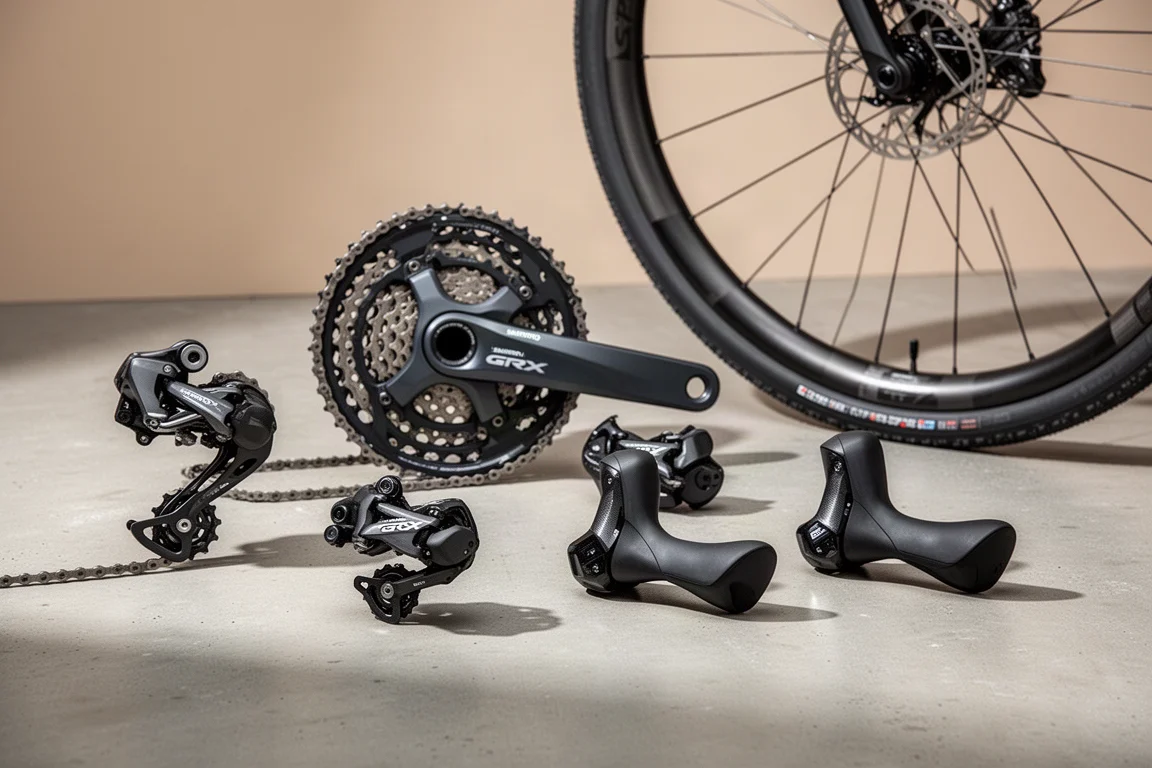
Shimano GRX 12-Speed Groupsets and RX880 Wheelset: A Practical Guide for Gravel Riders
Shimano's 12-speed GRX groupsets and updated RX880 carbon wheelset bring more gearing options and refined details for gravel riding.

Backpacking Gear
Building a 10 lb Base Weight: An Ultralight Backpacking Gear List
A practical walkthrough of the ultralight pieces behind a 10 lb base weight, from a 765 g pack and a roomy one-person tent to a full camp chair and a dependable water filter.

Road Bikes
10 New Road Bikes Worth Watching: Aero, Titanium, Steel and Endurance Standouts
A practical roundup of 10 new road bikes, from aero flagships chasing single-watt gains to titanium, steel and endurance platforms built for real roads.