Cycling Components
Gravel Bike Climbing Upgrades: How Tires and Wheels Saved 7 Minutes
A practical look at the tires, wheels and tubes that took a gravel bike from 1:07:31 to 1:00:31 on a 21-switchback Alpine climb, and what each change is worth.
Introduction
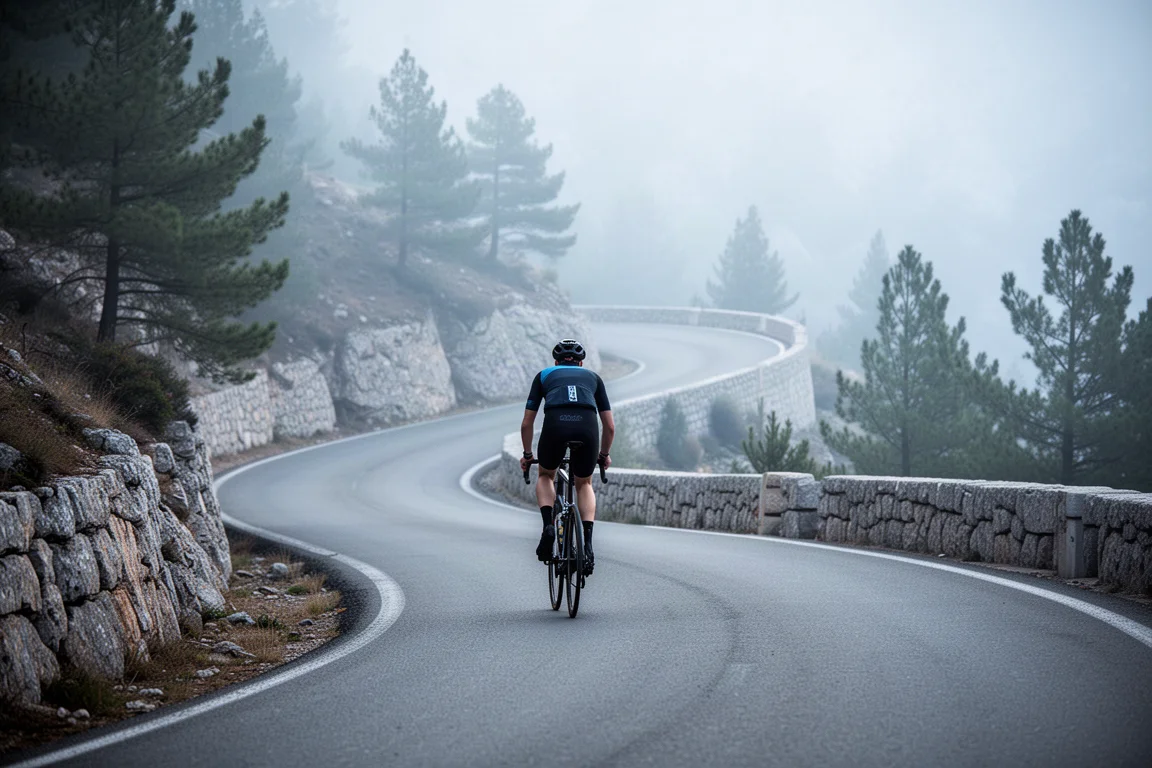
A 21-switchback Alpine climb, a rider with a target, and two days to find seven minutes. That was the brief behind one of the more convincing upgrade stories in cycling: a rider who completed a famous mountain ascent in 1 hour 7 minutes 31 seconds, then came back two days later and stopped the clock at 1 hour 0 minutes 31 seconds. Seven minutes, found almost entirely at the contact points between the bike and the road.
The bike in question was a Pearson On And On, a gravel adventure frame that had already been used for bikepacking trips across Europe, daily commuting and plenty of road riding. It was not the obvious choice for a hill climb effort. That turned out to be the point.
Nothing about the frame changed. The tires, the wheels and the inner tubes did. What follows is a breakdown of each component, why it mattered, and what a rider with similar ambitions should weigh up before spending.
How We Assessed the Upgrades
Three factors drove the decisions: rolling resistance, rotating weight, and how much speed each change could realistically buy on a climb ridden somewhere between 10.7 km/h on the first attempt and a 12 km/h target on the second.
Rolling resistance was treated as the headline number. On a steady climb there are no accelerations, so a tire that consumes less energy per revolution converts directly into time. Rotating weight mattered next, because it counts twice on a gradient: once when it is carried uphill, and again when it has to be spun. Stiffness and power transfer rounded out the list, which is where spoke design and hub bearings come in.
Pacing was part of the plan as well. The first attempt went out too hard on the steeper opening ramps, where the gradient is at its fiercest and speed is at its lowest. Riders gain more time on steep sections by riding slightly harder, but not as hard as that first effort suggested. A more even distribution of effort was worth chasing alongside the hardware.
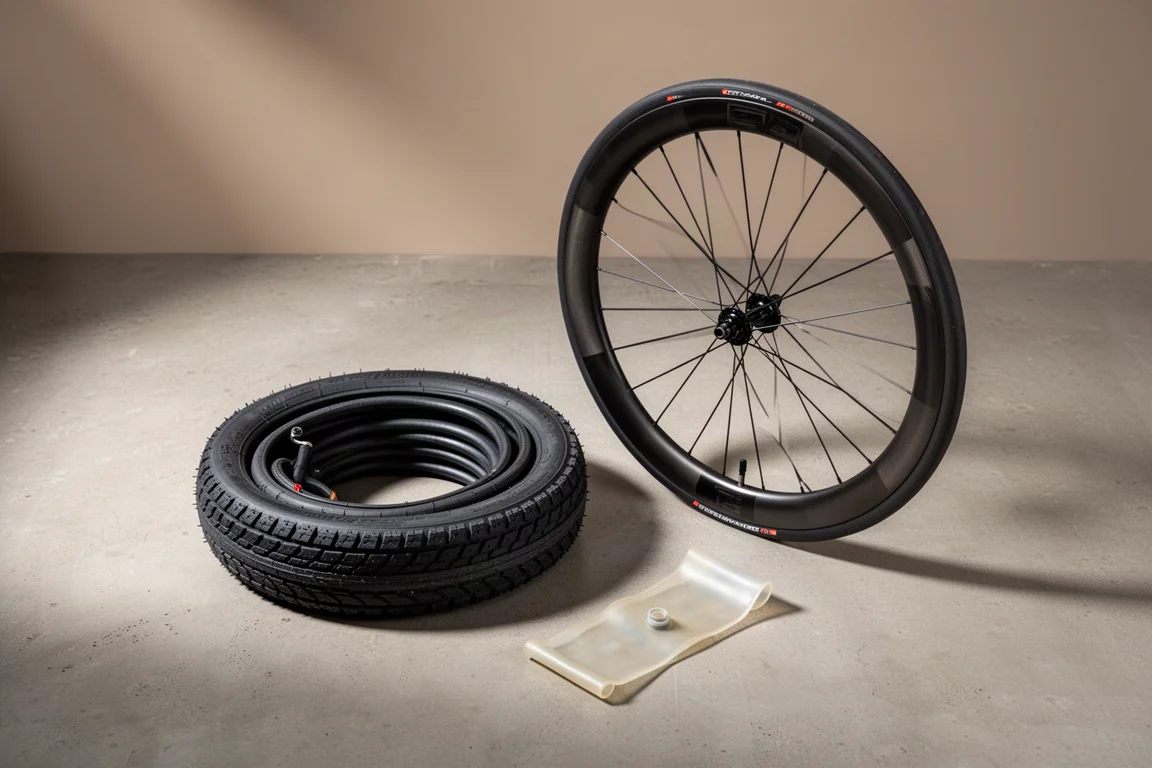
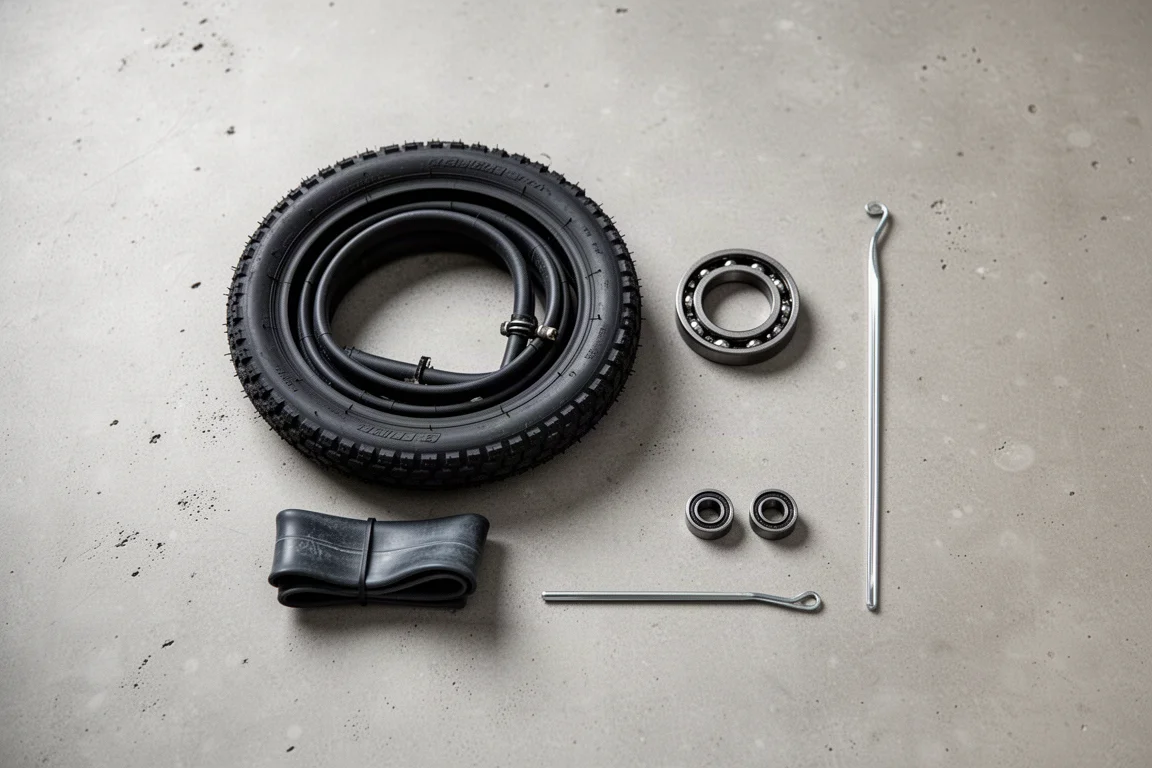
One further swap was made at the same time. Standard butyl inner tubes were replaced with lighter TPU tubes, which are around 250 g lighter for a pair and roll slightly quicker, worth perhaps one to two watts. A small number, but a few seconds on a long climb.
Continental GP5000 STR: Faster Rolling Tires
The original tires were budget wire-beaded touring tires, roughly 32 mm wide. A tire in that class produces around 28 watts of rolling resistance per tire at 28.8 km/h, which is the price paid for durability and puncture protection.
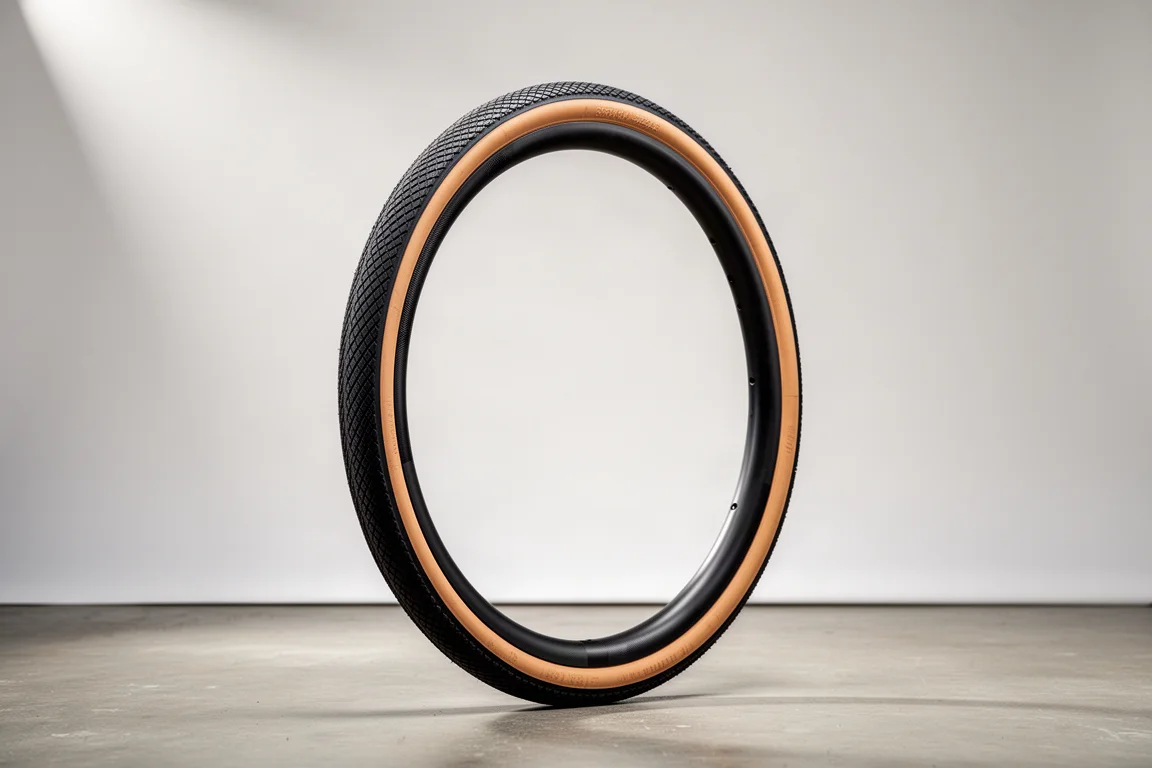
The Continental GP5000 STR is a different proposition. It uses a folding bead rather than a wire bead, and it is the most popular folding tire in the World Tour peloton. Its rolling resistance is closer to 10 watts per tire at 28.8 km/h. The gap between those two figures is where the single biggest gain on this bike came from: an estimated 18 watts, or roughly three and a half minutes over an hour-long climb.
For a rider weighing up a tire change, the takeaway is that the fastest upgrade on a climbing bike is often the least glamorous one. Tires are consumables, they wear out anyway, and the performance difference between a touring casing and a race casing is measured in minutes rather than seconds.
Vision Metron 45 RS: Lighter Carbon Wheels
The second substantial gain came from the wheels. The Metron 45 RS is a 45 mm deep carbon wheelset weighing in at under 1,300 g, a full 250 g lighter than the set it replaced. It is the choice of no fewer than four men’s World Tour teams, and it ranks among the most popular wheelsets in the professional peloton.
The construction explains part of the appeal. Carbon fiber spokes add stiffness and improve power transfer, ceramic bearings keep the hubs spinning freely, and the aerodynamic profile has been shown to remain stable in crosswinds. The wheelset also uses the brand’s latest ratchet system in a lightweight rear hub.
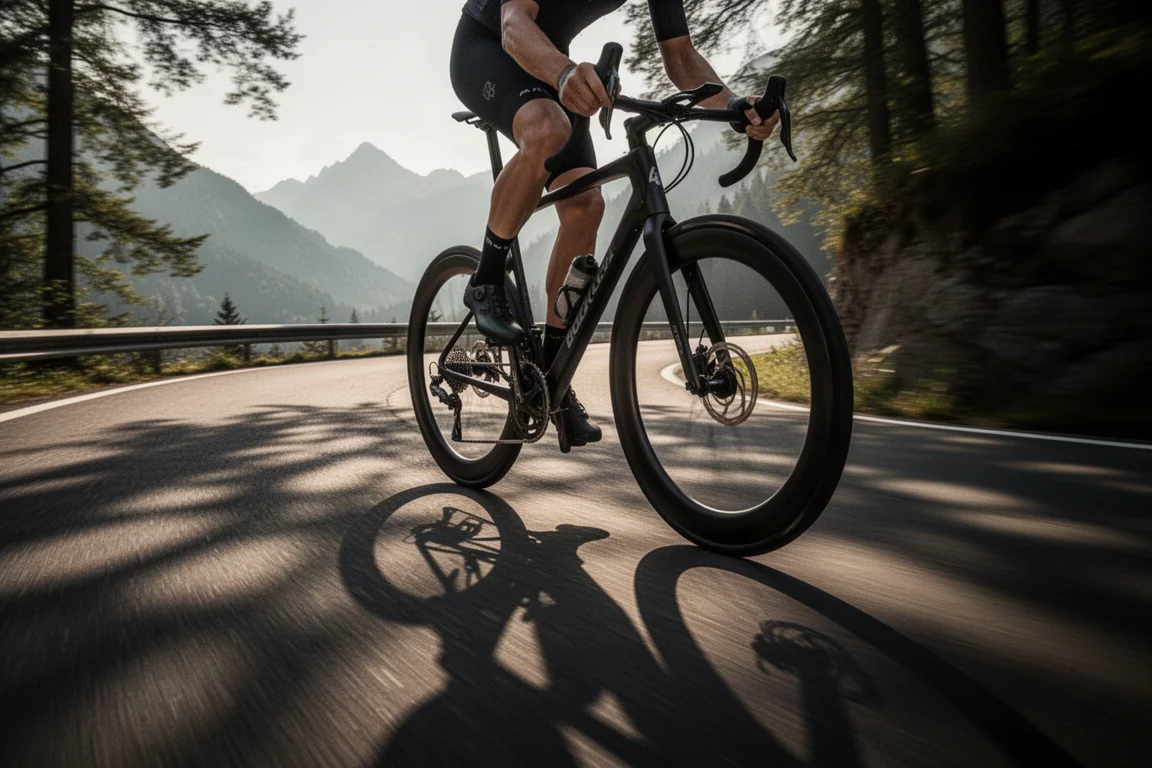
On a climb ridden at 10.7 to 12 km/h, aerodynamics are not the dominant factor. Weight and stiffness are. Where the deep section pays off is on the descent, and that matters on a climb with 21 switchbacks, because the clock keeps running all the way down.
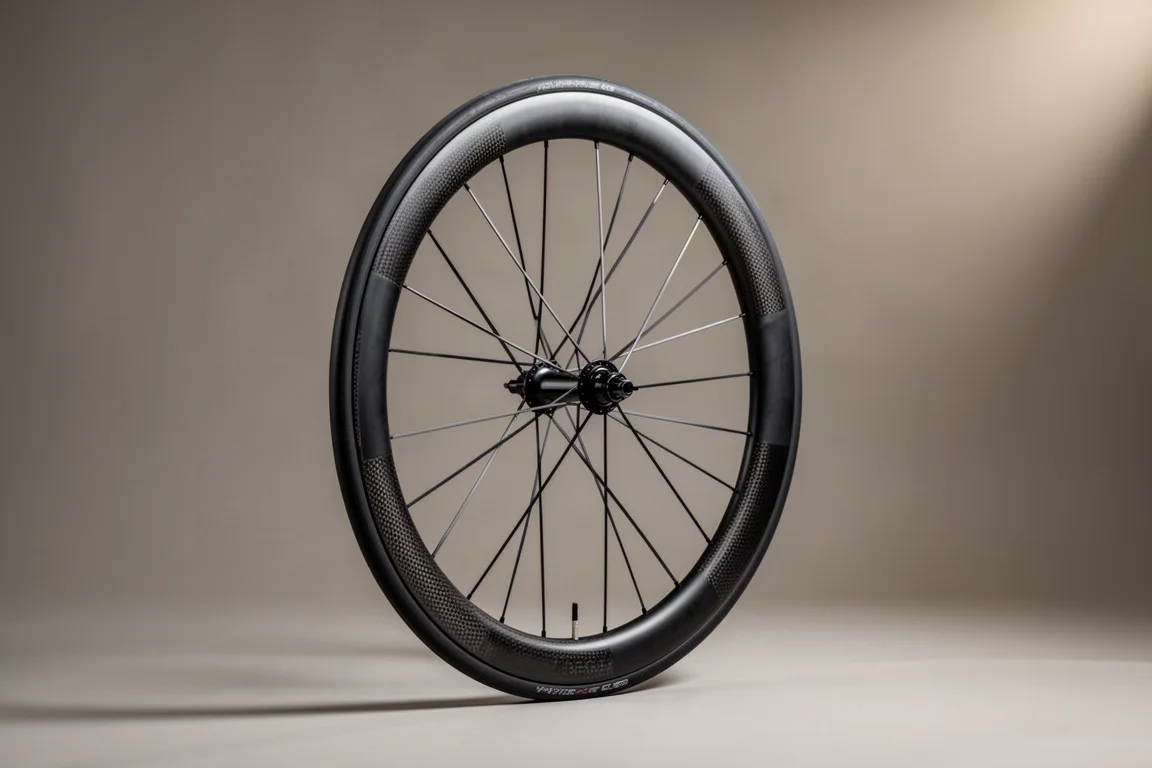
Vision SC: The Wheelset Being Replaced
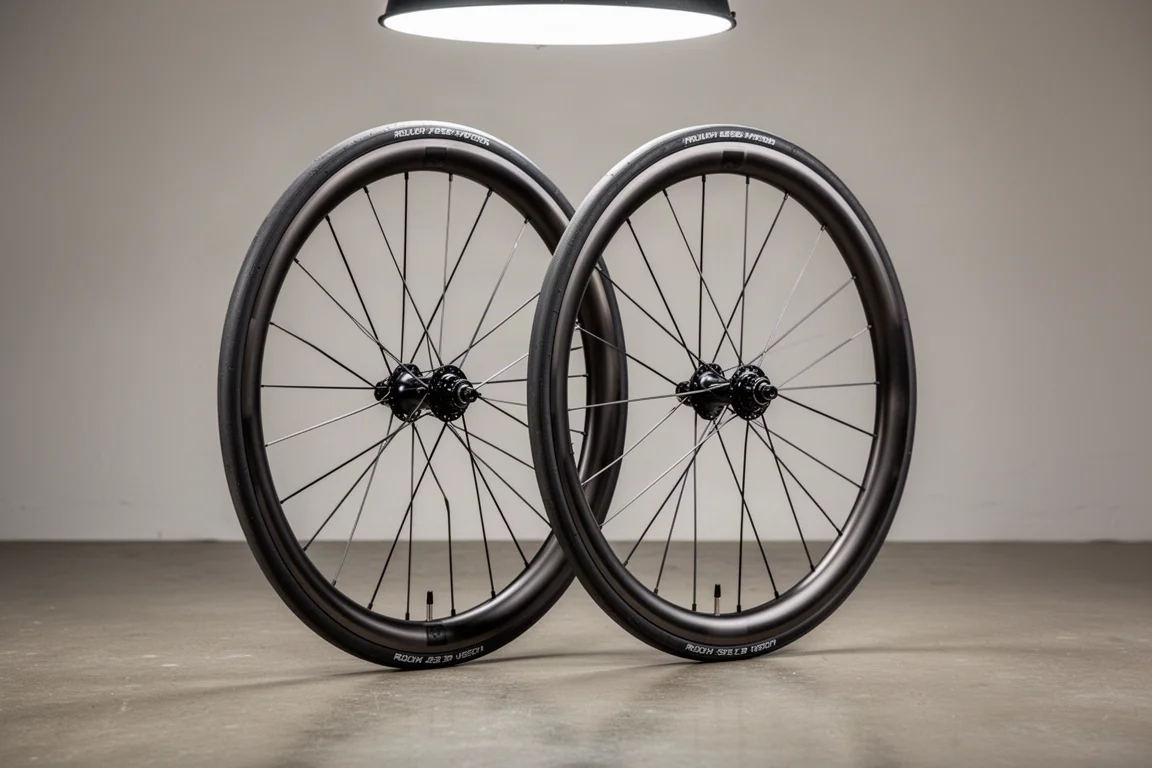
The wheels removed from the bike were a set of 45 mm deep Vision SC wheels, and they are worth a fair look for anyone shopping below the top tier. The SC line sits in the middle of Vision’s range, above the alloy Team i23 wheels and below the Metron SL and the carbon-spoke Metron RS models.
Forty-five millimetres of depth is a sensible all-round choice: enough aerodynamic benefit to notice on rolling roads and descents, without the handling penalties that come with very deep rims. They were described as no slouch, and the fact that a 250 g weight difference was the headline change says more about how light the Metron 45 RS is than about any weakness in the SC.
For riders whose priority is a dependable, aerodynamic wheelset at a lower point in the range, the SC remains a reasonable place to start. Stepping up to the Metron RS buys weight savings, carbon spokes and ceramic bearings rather than a change in fundamental character.
Pearson On And On: A Gravel Frame That Climbs
The frame at the centre of this story deserves its own note. The Pearson On And On is a gravel adventure bike that had been used for a two-week bikepacking tour with pannier racks, for commuting, and for road riding. It accepts tires up to 45 mm.
That versatility is exactly why the upgrade path worked. With touring tires and heavy tubes, it climbed a 21-switchback Alpine ascent in 1 hour 7 minutes 31 seconds. Two days later, with race tires, lighter wheels and TPU tubes, the same frame went up in 1 hour 0 minutes 31 seconds.
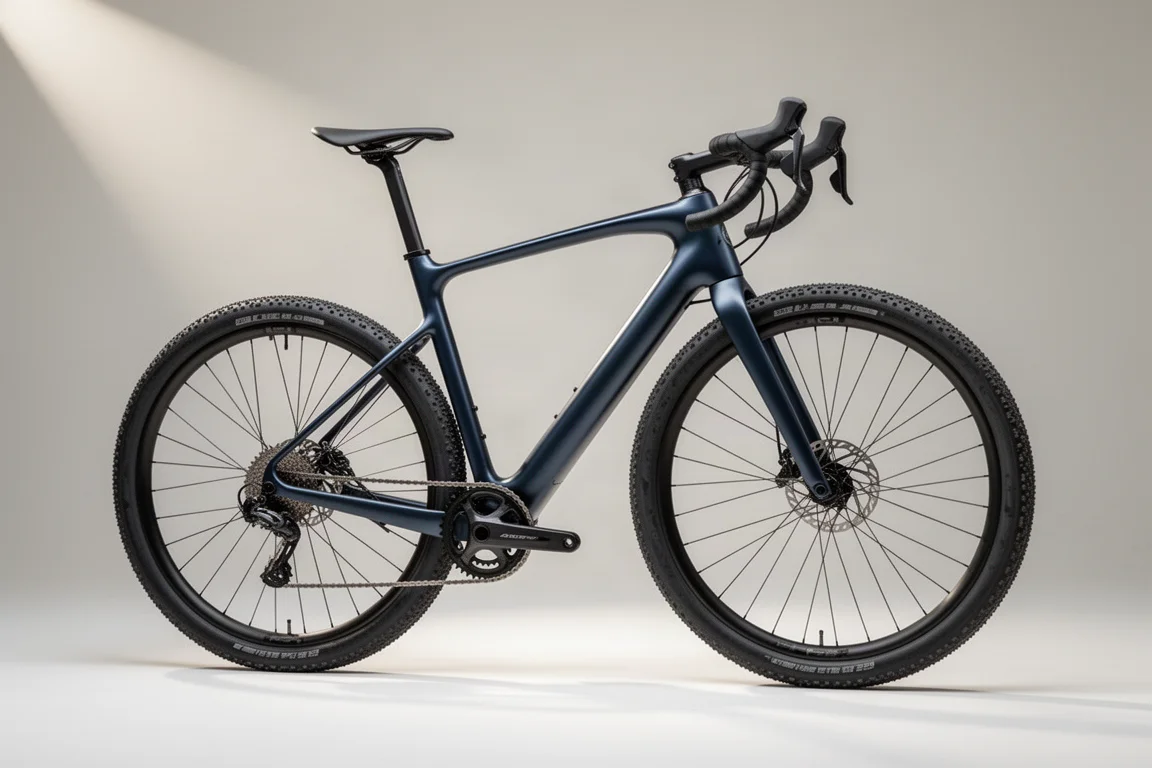
For riders who own one bike and want it to do everything, that is an encouraging data point: a frame built around comfort and load carrying does not have to be slow once it is stripped back and fitted with fast components.
Buying Advice: Where the Real Gains Come From
The clearest lesson is that wheels and tires deliver more speed per unit of spending than a new frame. Upgrading them is also less wasteful, since the existing bike stays in service, and it is an easy change to make: buy them, bolt them on.
The split of those seven minutes is instructive. Tires accounted for the largest share through rolling resistance alone. Wheels added rotating weight savings plus stiffness and free-spinning bearings. TPU tubes contributed a smaller amount. Together they were worth a substantial portion of the total, with the remainder coming from better pacing.
If the terrain changes, so does the priority. On a flatter, time trial style course, a deeper and more aerodynamic wheel would deliver a double benefit through reduced drag and lower weight. On a pure climb, weight and rolling resistance lead. Vision’s range spans the alloy Team i23, the SC line, the Metron SL and the carbon-spoke Metron RS, so the right choice depends on which of those two profiles matches the riding ahead.
A rider considering the same experiment should start with tires, then wheels, then the small items. That order reflects both the size of the gain and the cost of entry.
Conclusion
Seven minutes over a 21-switchback climb, found in two days, on a gravel frame that had previously carried bikepacking luggage. The final time of 1 hour 0 minutes 31 seconds left the rider 31 seconds short of the hour, with the remaining margin assigned to pacing and conditioning rather than equipment.
For anyone who has assumed that speed on a climb requires a new bike, the sequence here is worth copying. Tires first, wheels second, tubes third, and the frame you already own in the middle of it all.
Further reading
Related Reviews
Cycling Components
A 20,000-Mile Budget Race Bike Build: Five Parts Worth Knowing
A rim brake race bike assembled from low-cost components and ridden for 20,000 miles. Here is what delivered real speed, what caused problems, and what to weigh before copying the formula.
Cycling Components
7 Bike Fit Products Fitters Avoid: What to Check Before You Buy
Seven bike components that regularly cause knee, foot and saddle problems, with the specific concerns behind each one and what to look for instead.
Cycling Components
Four Affordable Bike Upgrades That Improve Ride Feel
Four low-cost cycling products that make a real difference to ride feel, plus the free setup changes worth trying first.