Camping Tents
Grand Canyon Apex 1 Review: What a $53 Budget Tent Delivers
A practical look at the Grand Canyon Apex 1, a roughly $53 one-person dome tent with generous space and airflow, plus the build-quality trade-offs to weigh first.
Introduction
Every so often a tent appears at a price that makes you look twice. The Grand Canyon Apex 1 is one of them. It arrives through a third-party marketplace listing that describes it as a professional waterproof and windproof tent for mountaineering, camping and hiking, and it costs roughly $53. The same model is listed at €100 on the brand’s own website, and the listing photos appear to have the branding obscured. The storage bag itself names the tent plainly: Grand Canyon Apex 1.
What follows is a practical look at what arrives, how it goes together, what stands out, and where the compromises sit. For the money, the design is more interesting than the price suggests.
Who the Grand Canyon Apex 1 Is For
This is a one-person tent with room to spare. It measures 75 inches long and 31 inches tall, roughly 4 feet at its widest point and 22 inches at its narrowest, which is enough for one person plus a pack, or one person plus a dog. You can sit up inside it comfortably.
Packed down it measures 24 inches by 7 inches and weighs 5.1 pounds. That makes it realistic for car camping, short overnight trips, festival weekends and casual backpacking, where a few extra pounds are not the deciding factor. Anyone counting grams for long-distance or high-exposure trips will want to look elsewhere.
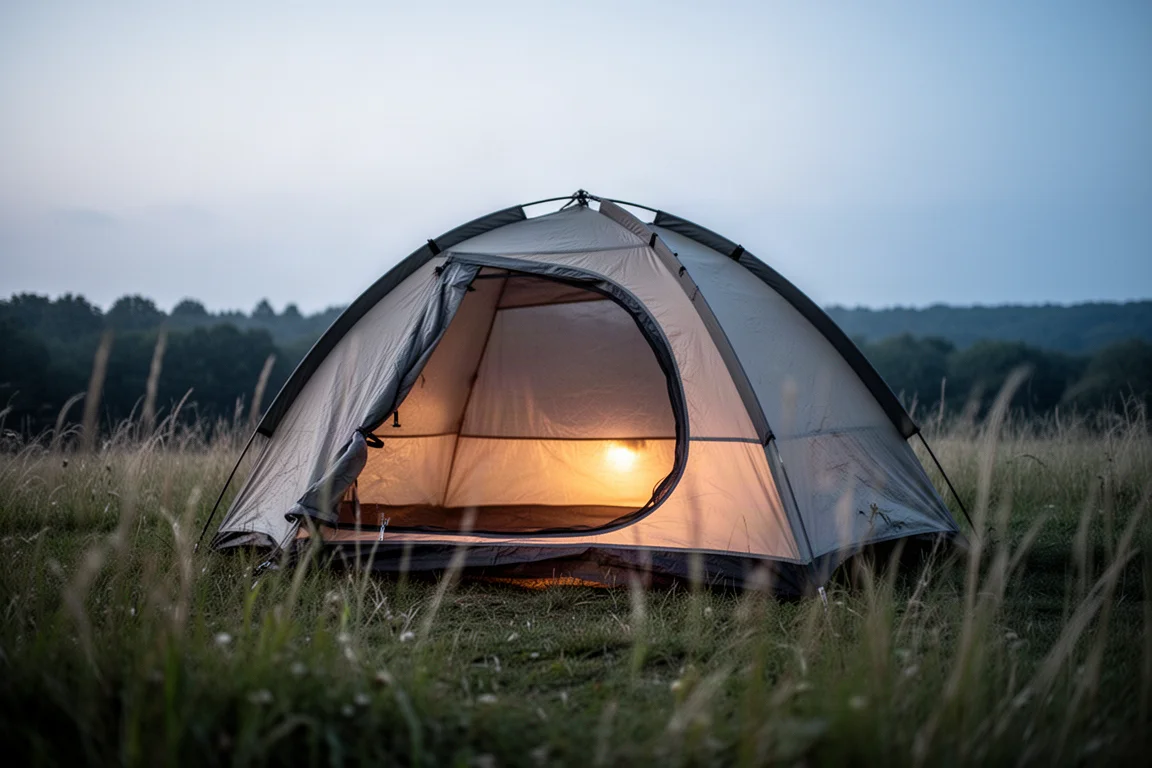
Interior height and length matter more than the headline price for most buyers. A tent that is comfortable to sit in and long enough to stretch out in tends to get used more often than one that is merely cheap.
What Comes in the Box
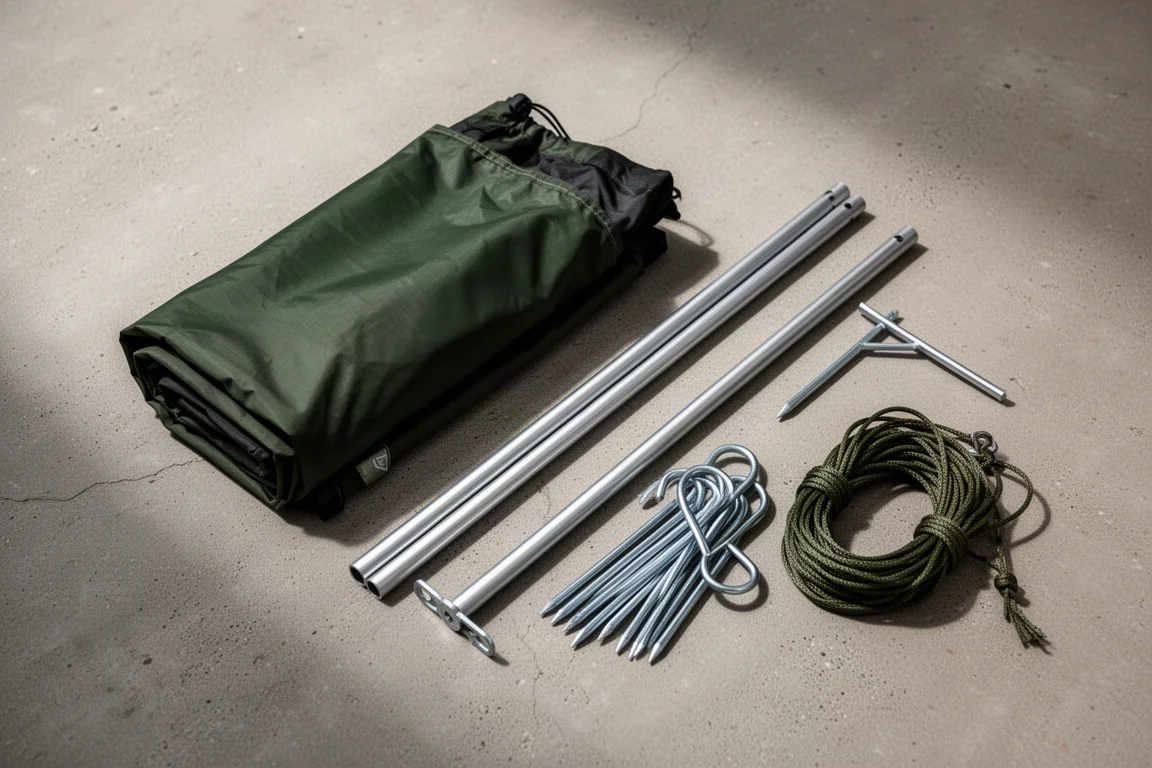
The tent arrives in a storage bag with a carry handle and a drawstring closure. Inside are the tent body, the fly, a set of fiberglass poles, steel shepherd hook stakes and pre-attached guy lines.
The pole set is simple: two long sections for the body and one short crossmember. The stakes are notably heavy for their size, and the fiberglass poles set the overall tone. Nothing here feels premium, but nothing is missing either.
Setup and Real-World Dimensions
Pitching the body is straightforward. The poles run through sleeves and seat into grommets at each corner, and the short crossmember adds width across the middle. Attaching the crossmember before raising the body makes the process easier.
The fly is the fiddly part. It does not clip or attach to the poles from the inside, so it sits on top of the structure and relies on staking at the front, the sides and the back to pull into position. Get the staking order wrong and the fabric will not pull evenly across the tent. It is manageable, just not elegant.
Main Strengths: Space, Airflow, and Design
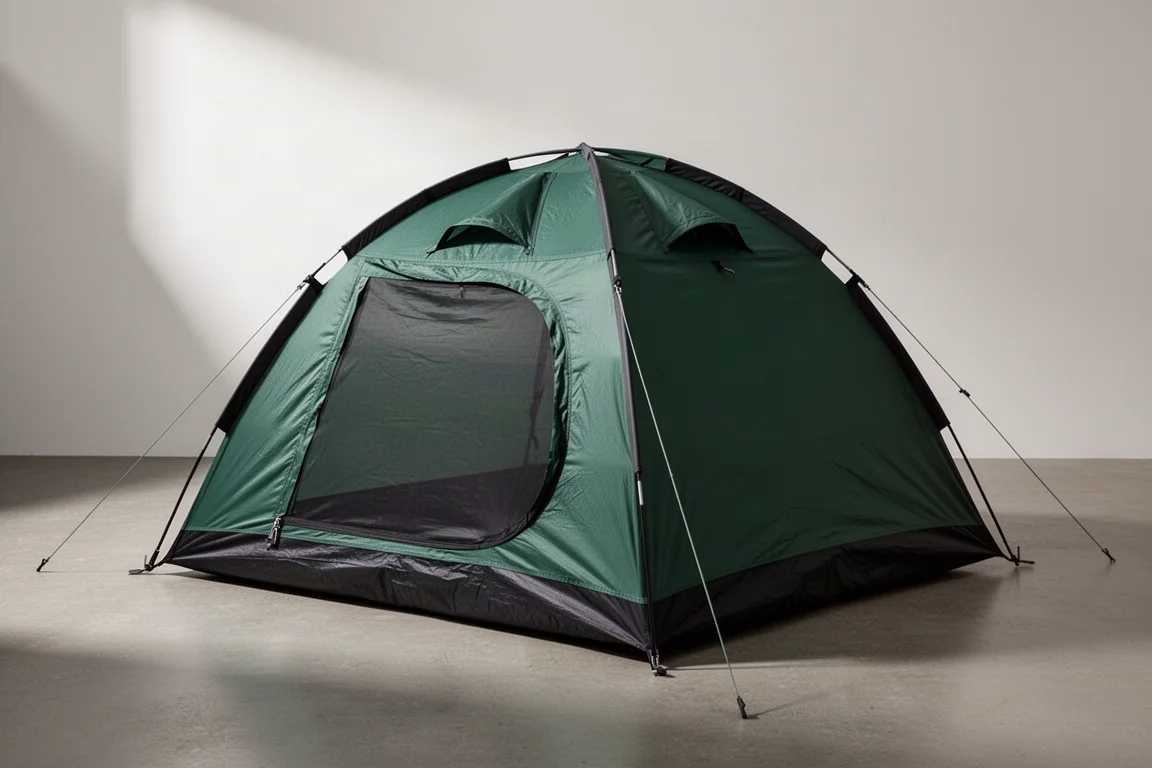
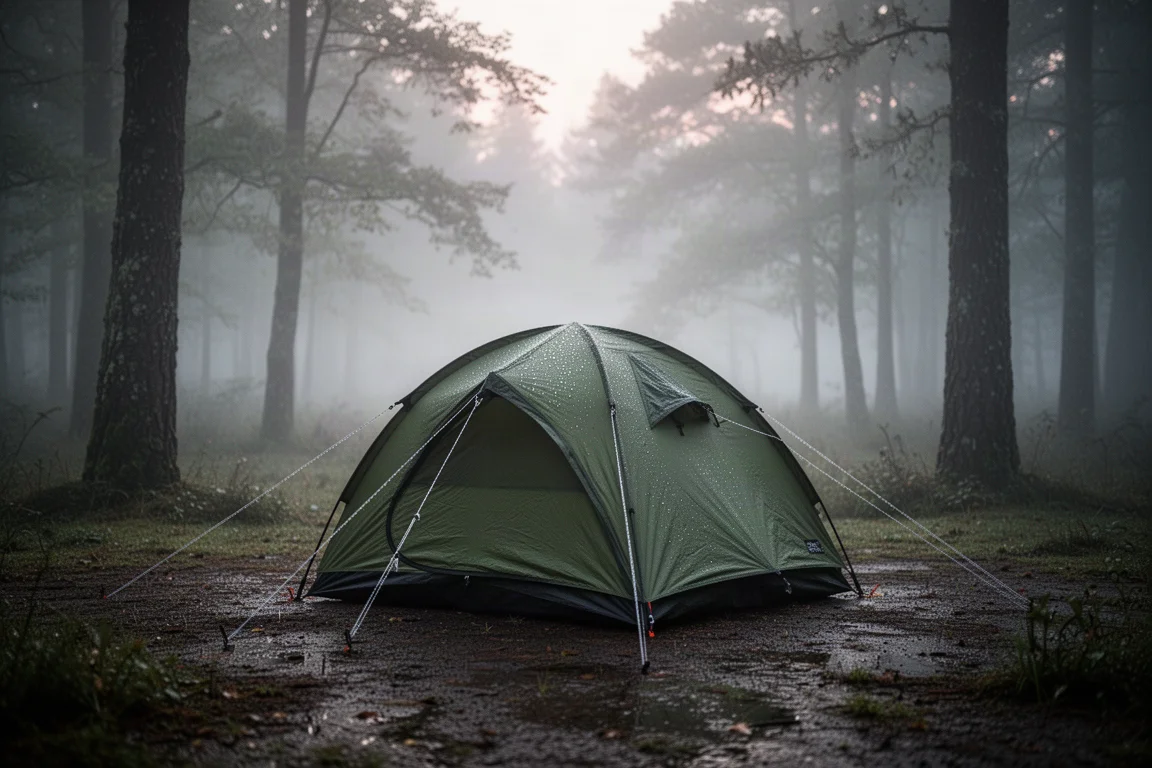
The Apex 1 uses a geodesic dome structure, and the design is the most convincing part of the package. The interior is long and tall, the door is large and easy to move through, and there are two mesh pockets and a hanging loop at the top. The bathtub floor is a welcome detail at this price.
Ventilation is genuinely strong. There is a large amount of mesh in the body, and the fly stands away from the inner rather than pressing against it, which helps move condensation away from the sleeping area. The fly adds three separate vents, three pre-attached guy lines and a storm flap over the zipper. The door can be tied back, the fly seams are taped, and the zippers run smoothly. The green and black colour combination looks good pitched.
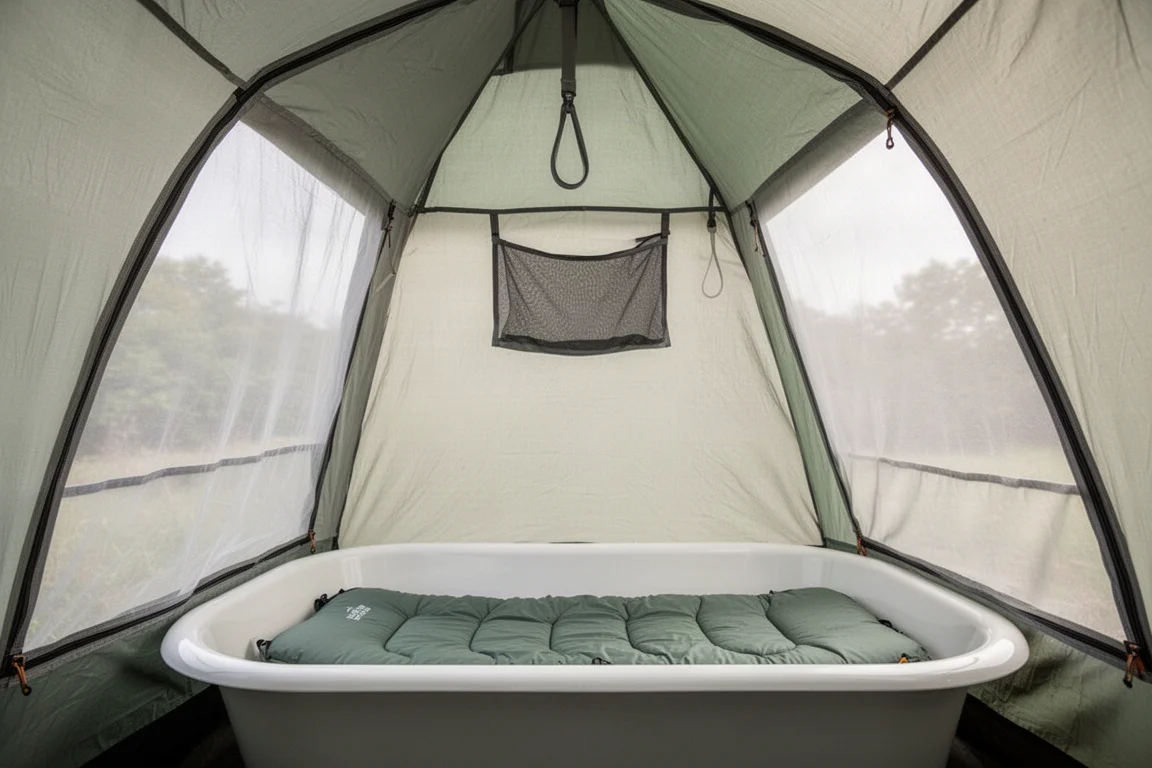
Three vents and a stand-off fly are features that usually appear further up the price range. Combined with the mesh-heavy body, they give the tent a real advantage in warm, humid conditions where airflow matters most.
Weather Protection and Waterproofing Questions
The floor and fly are made from polyester with a PU coating and sealed seams. The outer carries a 3,000 mm hydrostatic head rating and the floor is rated at 4,000 mm, both high numbers on paper.
There is one clear gap. The bathtub floor is not seam taped, apart from a small stitched section, which leaves a weak point where water can creep in from below. Seam sealing the floor before a wet trip is the sensible precaution. Until then, waterproofing remains the biggest open question about this tent.
Things to Consider Before Buying
The materials are cheap, and they feel it. There are loose threads and a couple of small runs in the mesh. Nothing is failing yet, but this is clearly a low-cost build.
The brand describes the tent as freestanding. It is not, in practice. Because the fly does not attach to the poles, it has to be staked out or it will lift away. Plan on a full stake-out every time.
Handling also matters. Forcing the fiberglass poles through the sleeves, or seating them roughly into the grommets, risks tearing fabric or pulling a grommet out. This is a tent to set up gently rather than wrestle into place. At 5.1 pounds with heavy steel stakes, it is also not a light option.
The value question is worth weighing honestly. Around $53 buys a lot of usable tent here. At the €100 the brand’s own site asks, the same materials and the same missing floor seam tape look considerably less appealing. Whether the brand is aware of the discounted listings is an open question.
Build Quality and Care
A few habits will extend the life of a tent like this. Slide the poles through the sleeves without forcing them, seat the grommets gently, and avoid dragging the body across rough ground when packing up. Store it dry, and check the mesh panels and stitching occasionally for small damage before it grows.
The guy lines are a pleasant surprise. The cordage is good quality rather than the thin, stretchy line often bundled with budget tents, and it holds tension well. Treat the rest of the tent as delicate and it should hold up for the kind of occasional use it is built for.
Buying Advice
At roughly $53, the Grand Canyon Apex 1 is an easy tent to justify as a spare, a car-camping shelter or a first tent for fair-weather trips. The space, airflow and vented fly are the reasons to consider it, and they are genuinely useful rather than marketing filler.
Buyers should set expectations around the build. Budget a little time for seam sealing the floor, plan to stake the fly out fully every time, and handle the poles and grommets with care. If a light, durable, fully weather-tested shelter is the priority, this is not the tent to build a kit around. If the goal is a roomy one-person tent at a very low price for occasional trips, it makes a reasonable case.
Conclusion
The Apex 1 is a $53 tent that feels and looks like a $53 tent, and that is the fairest way to describe it. Its strengths are real: a spacious interior for one person, excellent ventilation, three fly vents, taped fly seams and a fly that stands off the inner. Its weaknesses are just as clear: budget materials, a floor that needs seam sealing, and a fly that must be staked out because it does not attach to the poles.
For occasional camping in mild conditions, that trade-off can work well. For anything demanding more, the money is better spent elsewhere.
Product link
View more details for Grand Canyon Apex 1
This product is mentioned in the review. Check the specifications, options, and compatibility before buying.
View more details for Grand Canyon Apex 1Further reading
Related Reviews
Camping Tents
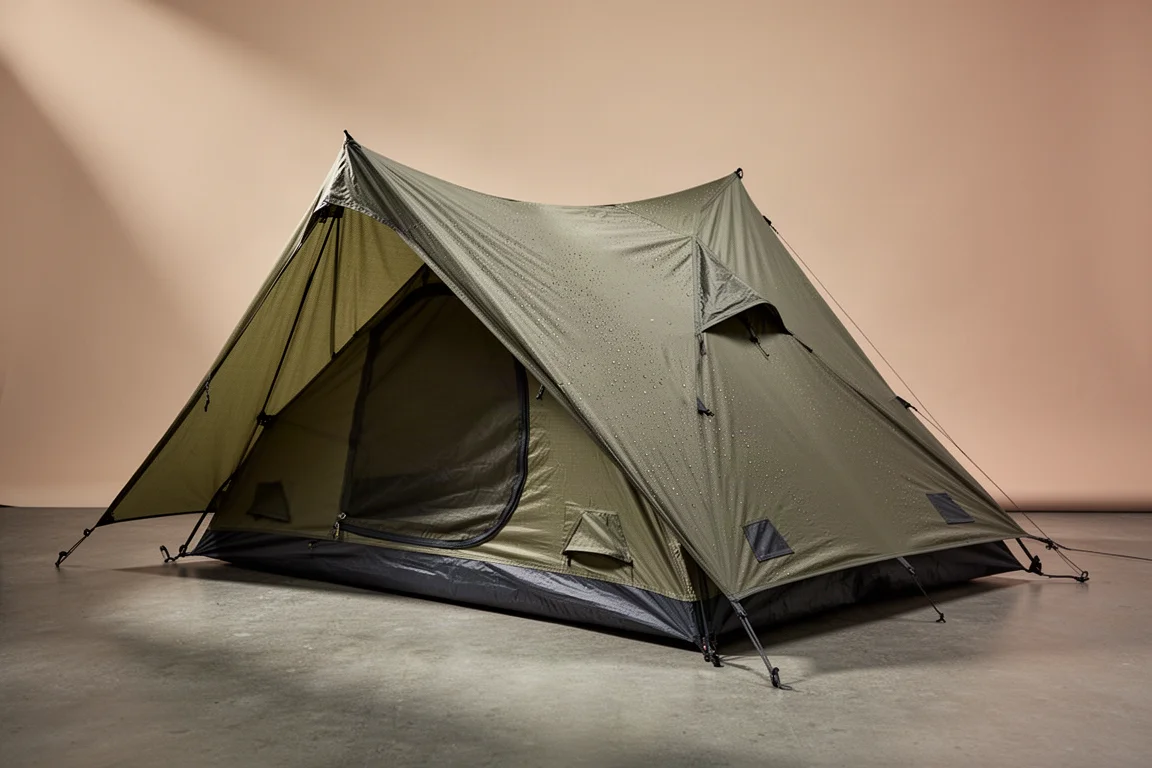
3F UL Gear Taiji Two-Person Tent Review: Field Waterproofing Results and Buying Advice
The Taiji pairs an attached fly with a removable inner, but sustained rain exposed untaped vent seams that need sealing before this shelter can be trusted.
Camping Tents
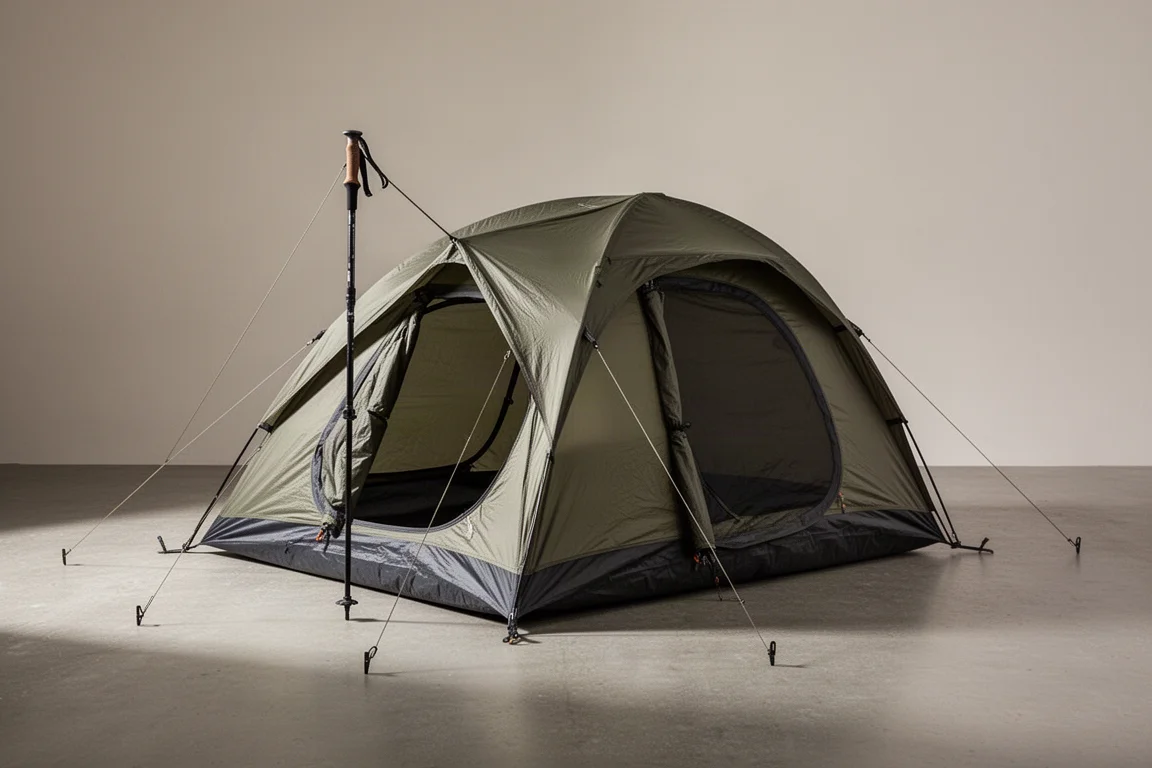
3FUL Gear Lanshan 2 Pro 4-Season Review: A Sub-$200 Single-Wall Trekking Pole Tent
An early look at the 3FUL Gear Lanshan 2 Pro 4-Season, covering its straightforward pitch, generous interior space, and the condensation and seam-sealing questions that come with any single-wall shelter.
Camping Tents
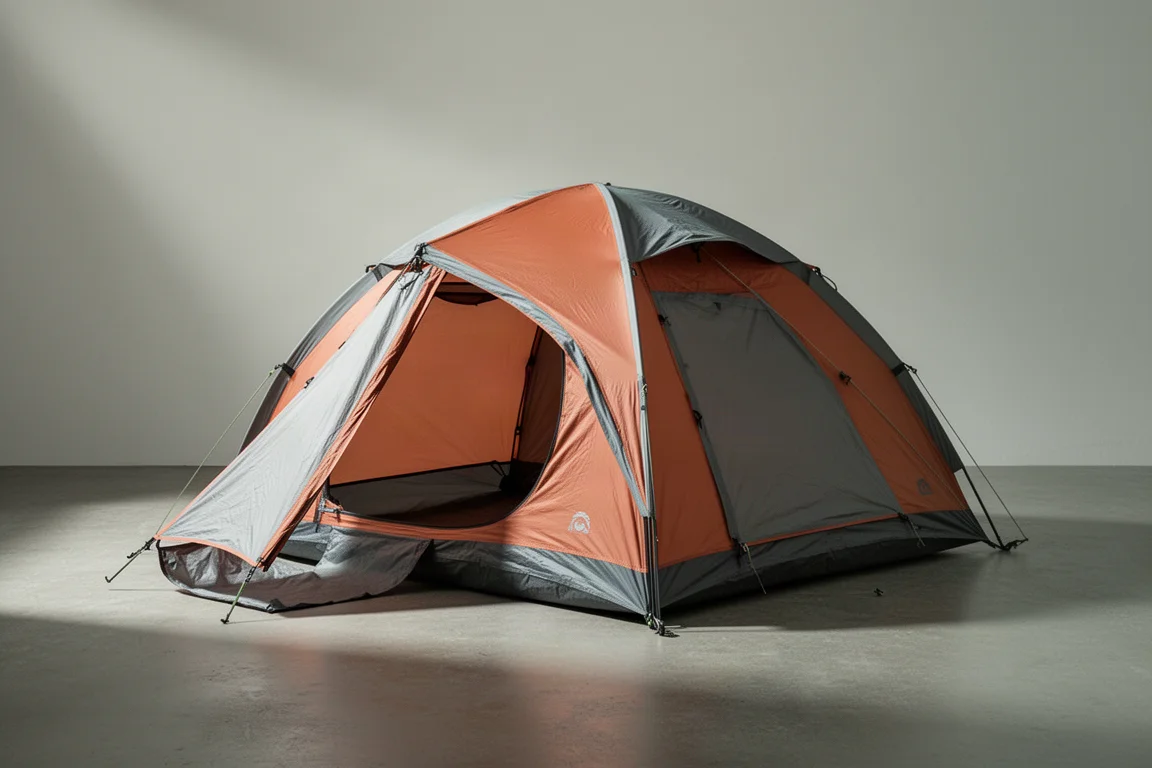
Alps Mountaineering Lynx 1-Person Tent Review: Big Value in a Small Budget Tent
A close look at the Alps Mountaineering Lynx 1-Person Tent, covering real interior dimensions, materials, setup time, ventilation limits, and who should buy it.