Hi-Fi Speakers
Graham Audio Chartwell LS6F Review: BBC Heritage in a Floorstanding Speaker
A compact British floorstander with classic BBC monitor tonality, deeper bass than a stand mount, and real demands when it comes to setup and partnering equipment.
Introduction
Graham Audio builds its loudspeakers in Newton Abbot, a small market town in Devon in southwest England, where each pair is hand assembled and tested on site. The company was founded more than twenty years ago by Paul Graham, a professional musician, broadcaster and recording engineer, with a clear purpose: to preserve the legacy of the BBC sound while using modern components and modern production methods.
The Chartwell LS6F is the floorstanding version of the LS6 stand mount, and it belongs to a range with genuine BBC lineage. The company’s designer, Derek Hughes, has spent over two decades shaping the Graham Audio line, having worked in the BBC’s audio and video departments and later designed alongside his father, Spencer Hughes, at Spendor. The LS6F is, in effect, a modern day big brother to the classic small monitor that made the BBC’s outside broadcast work so recognisable.
Who This Speaker Is For
The LS6F is aimed at listeners who like the idea of a classic British stand mount but worry that their room may be a little too large for one, or who want more bass extension without adding a subwoofer. It also appeals to anyone who values the natural, unforced presentation that BBC-derived monitors are known for, at volumes that stay sensible.
It is a speaker for small to medium sized rooms, and it is particularly well suited to late night listening, when the household is asleep and the volume has to stay low. Listeners who want to play so loud that their ears bleed, or who judge a loudspeaker purely on the quantity of bass it produces, should look elsewhere. This design is about quality rather than quantity.
Design and Build Quality
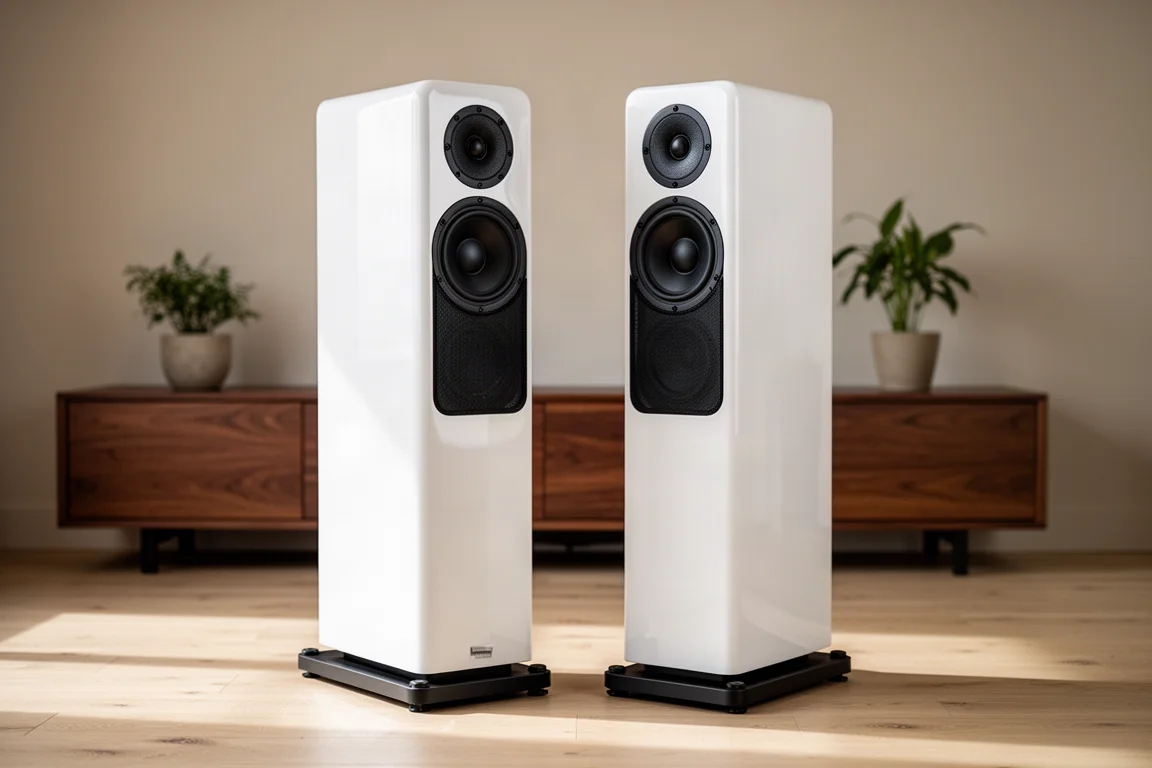
The cabinet follows the classic BBC thin wall approach, tuned with mass loaded panels so that resonances are pushed below the critical mid-range region. Each speaker stands 93.5 cm (36.8 inches) tall and weighs 21 kg (46.3 pounds). The 32 by 32 cm (12.6 inch) square plinth incorporates a forward facing port, which the company states makes the speaker more suitable for placement closer to a wall. Magnetic grilles lift off easily when you want to see the drive units.
The midwoofer is a 165 mm (6.5 inch) unit with a modern polypropylene cone, rather than the plastic cone material used in the classic BBC monitors of the past. High frequencies are handled by a 19 mm (0.7 inch) dome tweeter protected by a mesh grille, and its level can be raised by one or two decibels to suit the room, the partnering equipment or personal taste. At the rear there is a single set of gold plated binding posts, so bi-wiring and bi-amping are not options here.
Finishes are a strong point. Real wood veneers are standard, and custom colours are available at extra cost. The pair supplied for evaluation was a custom gloss white with black plinths, built for the UK distributor.
Sound Quality: Main Strengths
The mid-range is the heart of this speaker. It delivers the clarity and tonal richness associated with a classic British monitor, with acoustic instruments and vocals sounding natural and unforced, yet it avoids the overly warm character that some heritage designs carry. That combination is a neat trick, and it makes the LS6F equally comfortable playing jazz and rocking out.
Bass is where the LS6F separates itself from a stand mount. This is not a bass heavy floorstander, and a good reference stand mount can produce just as much mid-bass punch, but the Graham Audio digs down considerably further and delivers its low end more cleanly. Many listeners who would normally consider a subwoofer mandatory with a stand mount could reasonably live without one here.
Fine detail is where the LS6F gives up a little ground. Against the ProAc Response 1SC stand mount used as a long term reference in the same room, it can smooth over small cues such as the reverb that sits in the middle of a note. The leading edge of a note is crisp, but the decay at the end is more curtailed, and the tweeter is the most likely culprit. The speaker can also sound slightly dark, which is exactly where the treble adjustment earns its place: lifting the level by one or two decibels draws out more information, though the very best stand mounts at this price still have the edge when it comes to airiness on top.
Soundstaging is remarkably strong for a cabinet this size. Width and depth are slightly smaller than the reference stand mount, but nowhere near as much as the extra cabinet volume would suggest, and the ability to place instruments within a three dimensional landscape is as good as the very best stand mounts at this price.
Setup, Placement, and Partnering Equipment
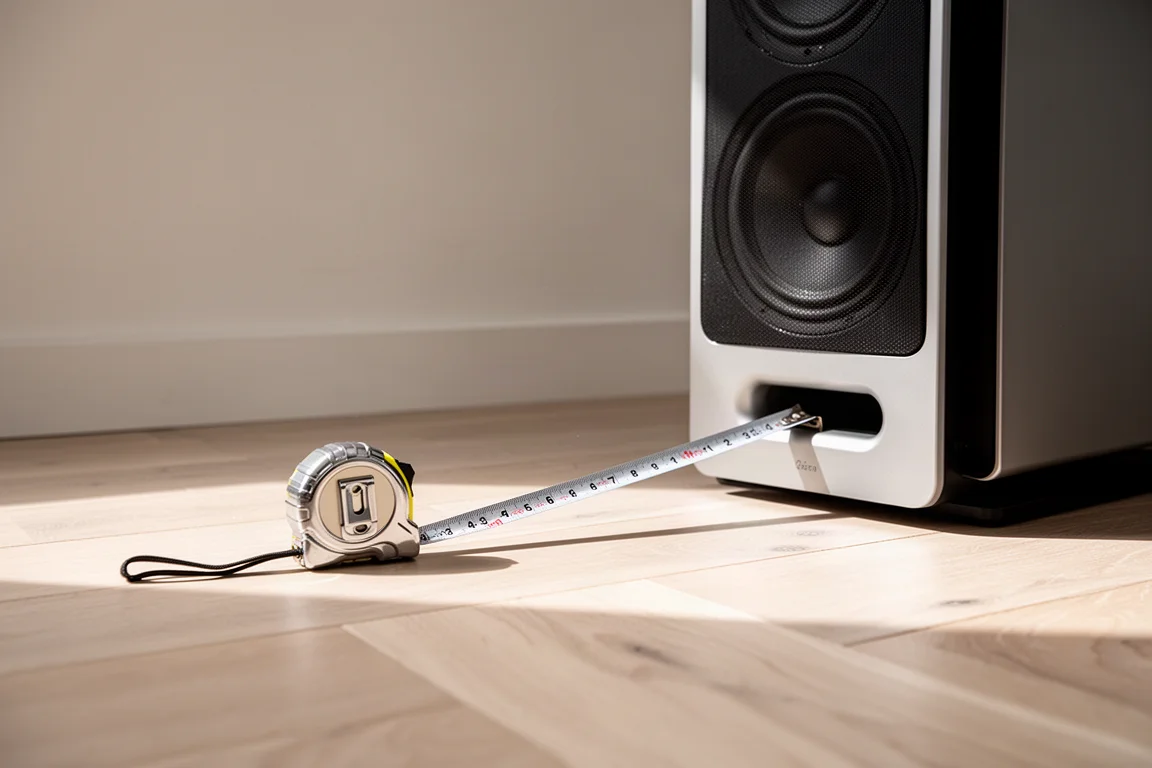
This is a speaker that rewards patience. It is more sensitive to positioning than most designs at this level, and the difference between a good and a great result comes down to time spent moving it around the room. In a well furnished space, the ideal position turned out to be just over one metre (three and a half feet) from the wall behind, measured from the front baffle, with the speakers as far apart as the room allows and toed in so the tweeters point directly at the listening position. Depending on the recording, the treble adjustment sat at plus one or plus two decibels. Aim for two to three metres (six to nine feet) between the speakers, forming an equilateral triangle with your ears.
Source quality matters. A streaming transport with an upgraded power supply feeding a Denafrips Venus 2 DAC proved a good match, and something in the region of a Denafrips Pontus 2 should be perfectly sufficient. If your source is closer to the level of a Denafrips Ares 2, it is probably time to think about an upgrade.
Amplification matters just as much. With an Exposure 2510 integrated amplifier, the LS6F sounded small and lost its snappy transient attack, most likely because the amplifier was running out of current. The extra current capability of a Hegel H190 showed what the speaker can do, and that is the kind of amplifier to pair with it: the combination had all the grip and control you could ask for, with fidelity and tonality close to a perfect match. Driving them with an Exposure 21 preamplifier and 18 super monoblocks opened the soundstage a little further, but it also drew attention to what was missing in microdynamics and top end extension.
Things to Consider Before Buying
The LS6F gives away a little fine detail and top end airiness to the best stand mounts at its price, and it can lean slightly dark on some recordings until the treble level is adjusted. Decay at the end of a note is shorter than the finest rivals manage, so subtle reverb inside a note can be masked.
There is no option for bi-wiring or bi-amping, which will matter to some buyers and not at all to others at this size and price.
Floorstanding speakers also bring more bass energy into a room than stand mounts do, and that makes them harder to accommodate in a shared family space. Positioning is critical, and a room with limited flexibility may not let the LS6F show its best. Finally, custom colours such as the gloss white finish pictured here cost extra on top of the standard real wood veneers.
Buying Advice
If you have always liked the sound of a classic British stand mount but worried about room size, or you simply want more bass extension without a subwoofer, the LS6F deserves a serious listen. It keeps the natural mid-range character of its ancestors while adding low end reach that a small monitor cannot match, and it does so without becoming a bass heavy speaker.
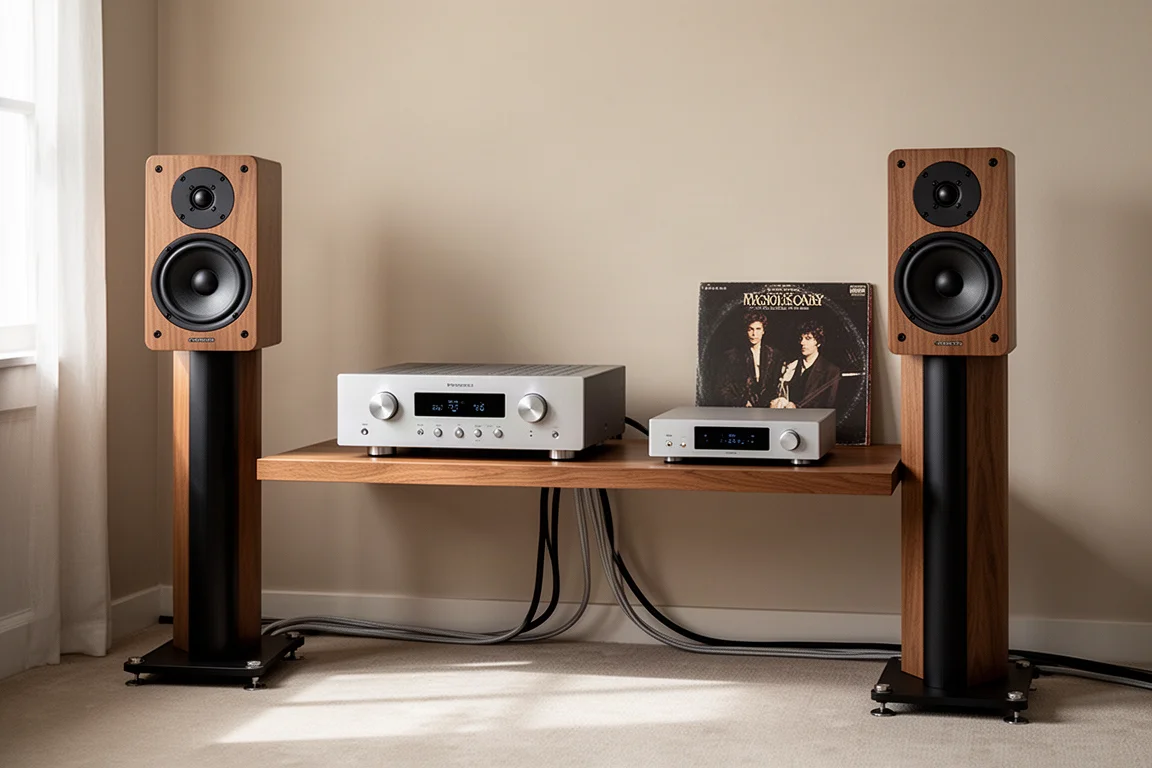
Match it with an amplifier that has genuine current delivery, give it room to breathe, and budget time for positioning rather than assuming it will work wherever it lands. In small to medium sized rooms, with two to three metres between the speakers and the tweeters aimed at your ears, it will play as loud as anyone needs without strain. Expect it to tell you plainly if your source or amplifier is not up to the task, because this is a revealing speaker in the best sense.
Conclusion
The Chartwell LS6F is a legitimate spiritual descendant of the classic BBC monitors. It retains the natural presentation with vocals and acoustic instruments that would make its ancestors proud, while offering less coloration than a typical small BBC-derived monitor and enough bass extension to satisfy most listeners without a subwoofer.
It gives up a small amount of fine detail to the very best stand mounts at this price, and it asks for care in setup and partnering equipment. In return it delivers a balanced, honest and thoroughly enjoyable performance from a small family business with two generations of lineage back to the BBC. For listeners who want quality rather than quantity, it is an easy recommendation.
Product link
View more details for Graham Audio Chartwell LS6F
This product is mentioned in the review. Check the specifications, options, and compatibility before buying.
View more details for Graham Audio Chartwell LS6FFurther reading
Related Reviews
Hi-Fi Speakers
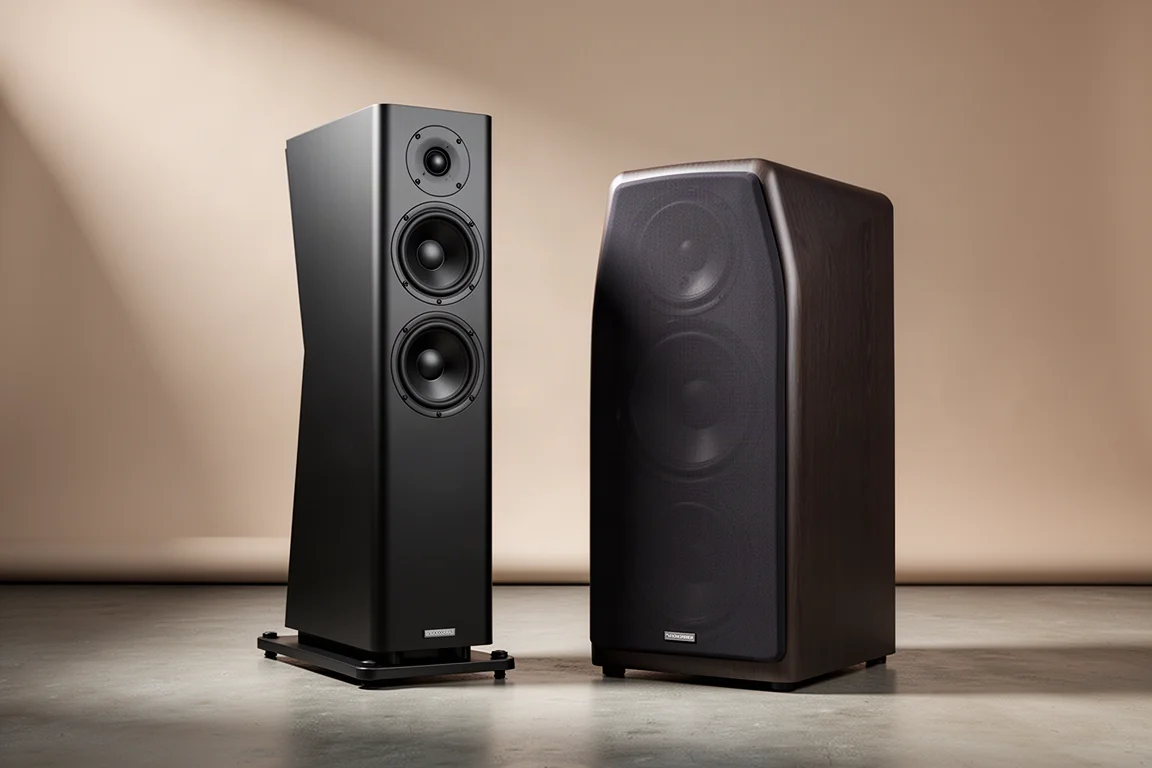
1723 THX Tower vs 1528 Bookshelf: Which Speaker Fits Your Room?
Two speakers at roughly the same price, built very differently. How the 1723 THX tower and the 1528 bookshelf compare on construction, bass, power needs, and sound.
Hi-Fi Speakers
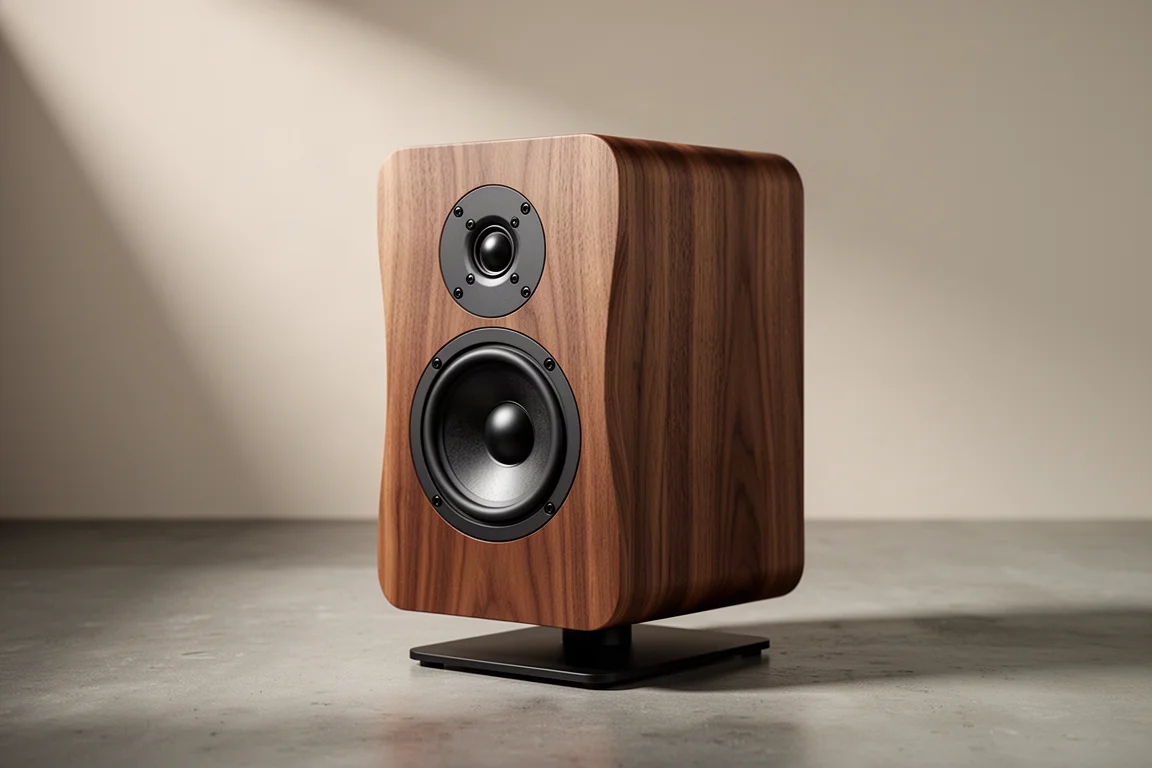
Acoustic Energy AE 300 Review: Deep Bass From a Compact Standmount
A two-way standmount with real wood veneer, surprising low-end weight, and a warm, easygoing character. Here is what to know before buying.
Hi-Fi Speakers
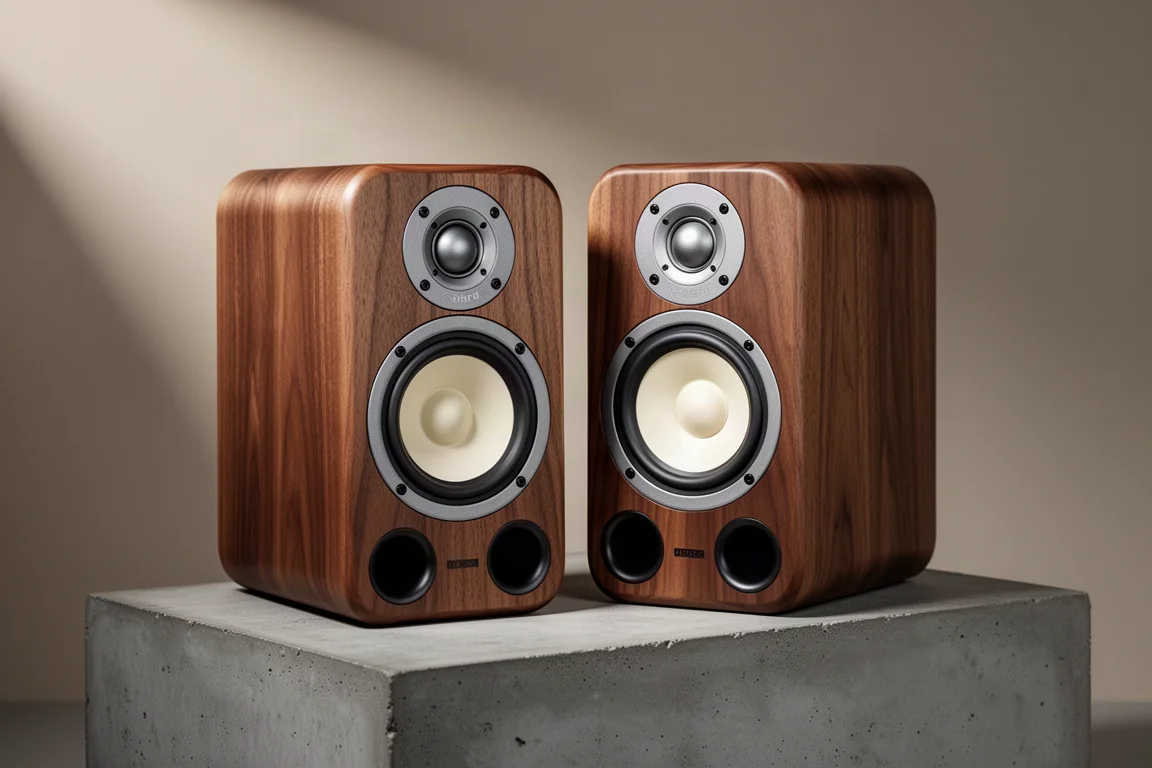
Acoustic Energy AE1 40th Anniversary Review: A Modern Take on a British Classic
A compact standmount that revives a 1980s favorite with all-new parts, a warm mid-centric balance, and a price of £1,499 per pair.