Hi-Fi Audio
GR Research XL Encores and Speaker Cables: First Impressions on a DIY Speaker Pair
A warm-voiced DIY speaker kit built with every available upgrade, plus GR Research speaker cables that made a clear difference in a direct listening comparison.
Introduction
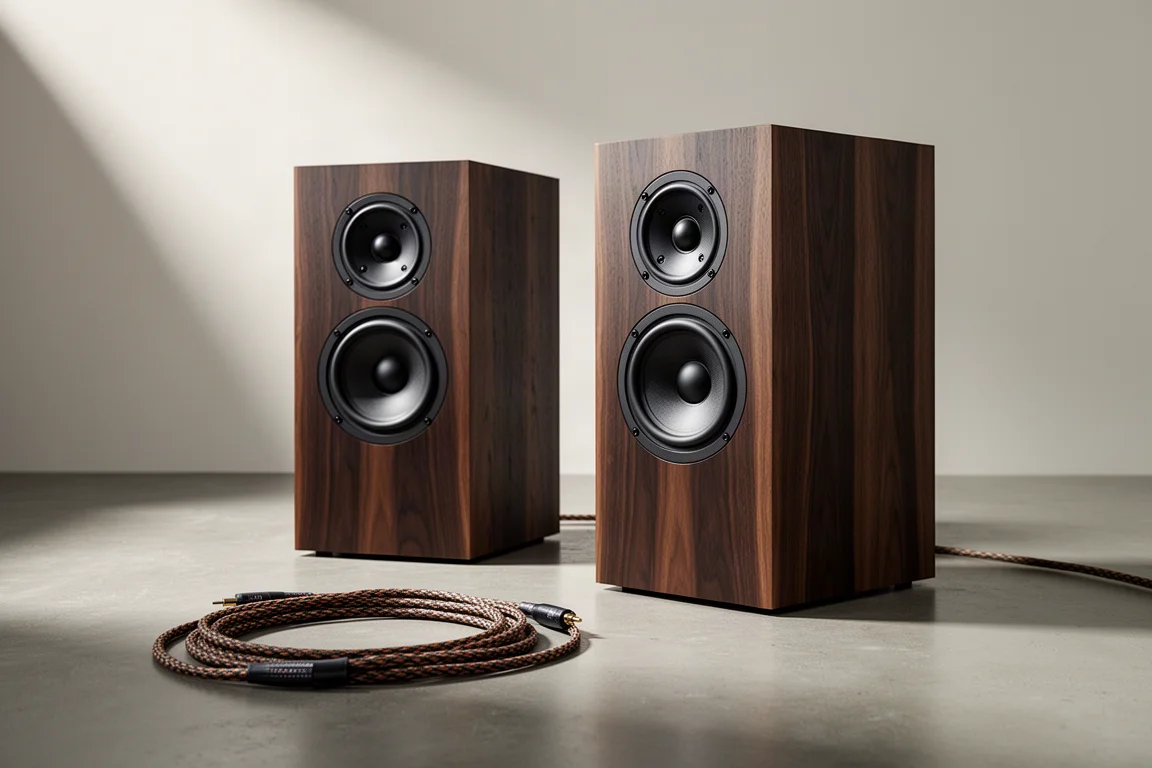
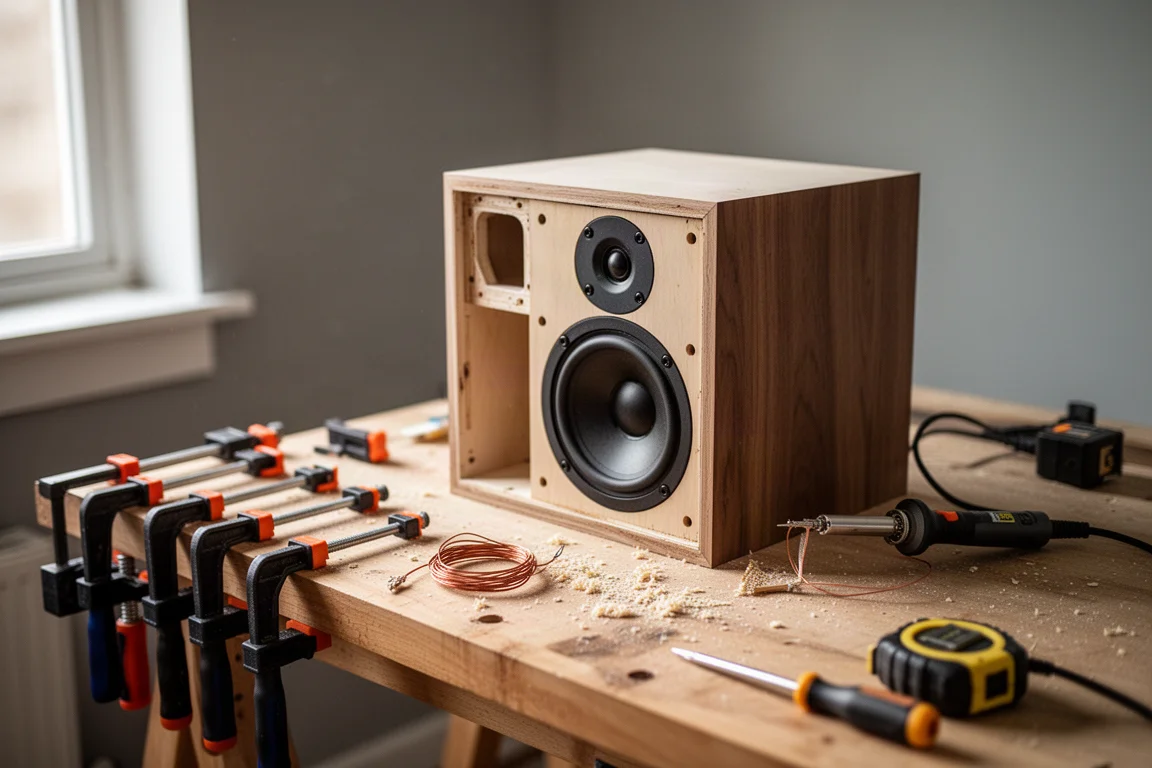
GR Research builds its reputation on DIY speaker kits, and the XL Encores are among the more ambitious designs in that lineup. The kit arrives as parts, drivers, and crossover components, and the buyer supplies the cabinet work, the assembly, and the finishing.
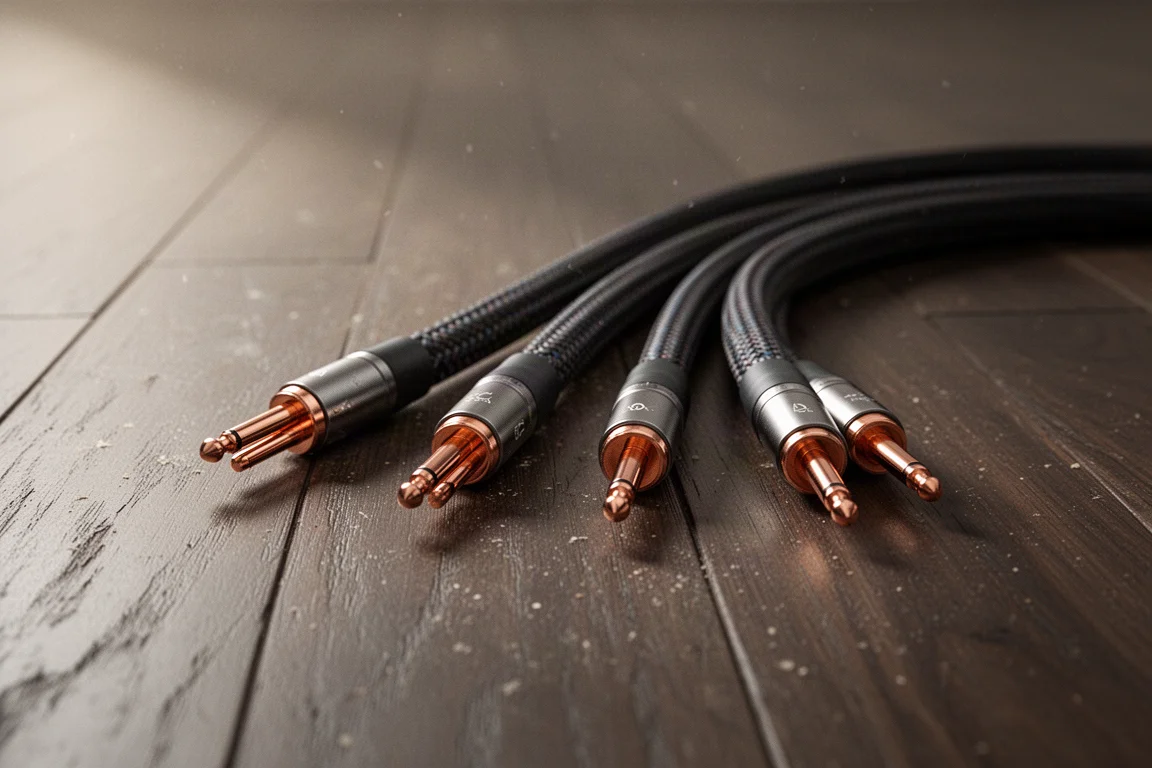
The pair discussed here was assembled by a third-party builder who sourced parts from several countries and specified every upgrade GR Research has ever offered for the design, including upgraded inductors and bypass capacitors. Along with the speakers, GR Research also supplied a pair of its own speaker cables, which use the company’s copper tube connectors.
Together they make a useful pairing to examine. One is a kit loudspeaker with a warm, lush voicing that holds its own against finished speakers in the $500 to $1,000 range. The other is a cable that costs several times more than a visually identical alternative. First impressions of both are positive, but the practical details matter just as much as the sound.
What the GR Research XL Encores Are
The XL Encores are a kit, not a finished loudspeaker. The kit is priced at about $780 before shipping, and that figure covers the drivers, crossover parts, and connectors. It does not cover cabinet materials, finishing, tools, or the hours of assembly work.
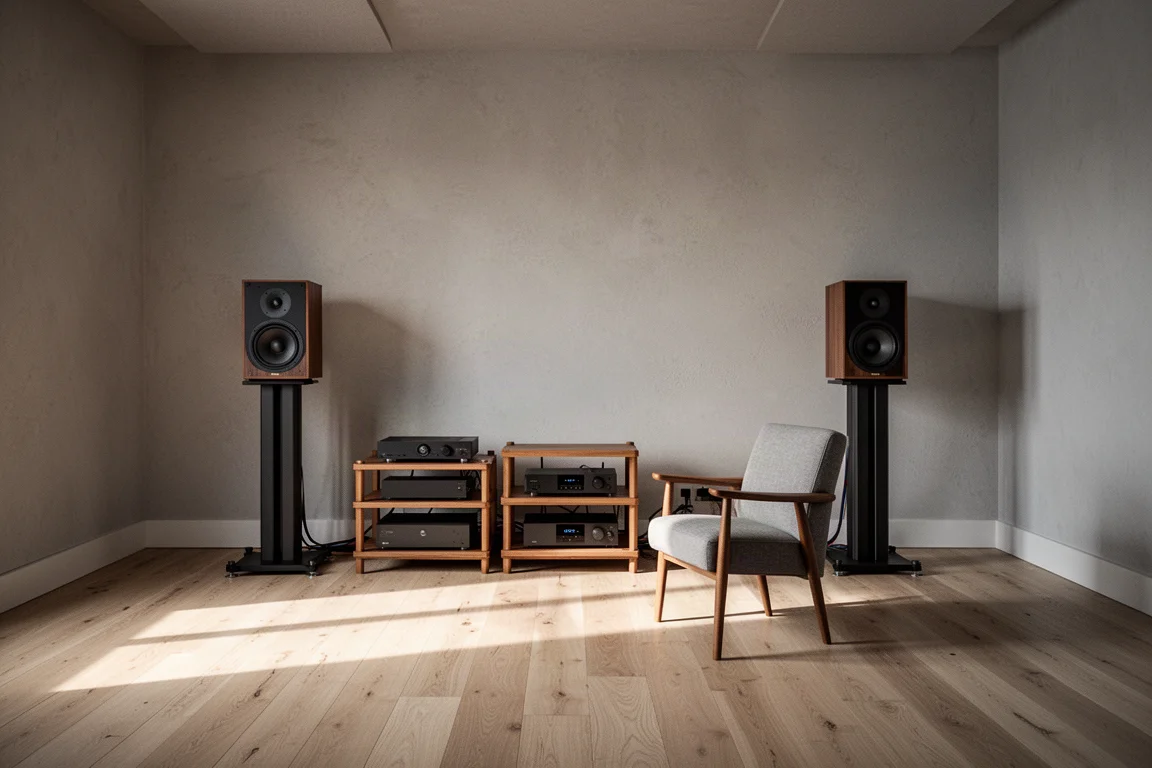
Because the design is sold as a kit, the final cost of a completed pair depends heavily on the choices a builder makes. Every upgrade offered for the design adds cost, and the pair here includes all of them. A fully specified build lands well above the kit price once materials, shipping, and labor are counted.
It is also worth noting that this pair was sent to GR Research before delivery to be measured and confirmed as voiced and measuring within spec. That step does not change the sound, but it does mean the assembled speakers matched the designer’s intended target rather than being an unknown quantity.
Cabinet and Build Quality
The cabinet is very inert and very well built. That matters more than it might sound. A rigid, low-resonance enclosure gives the drivers a stable platform and keeps cabinet vibration from smearing the midrange, so in a design like this the enclosure is a meaningful part of the result rather than a box that simply holds the parts together.
Building a pair to this standard is not a trivial exercise. Parts for this example were sourced from multiple suppliers worldwide because some of the standard components were unavailable at the time, and the fully upgraded specification pushes the cost of a completed pair well beyond the kit price.
Drivers and Crossover Components
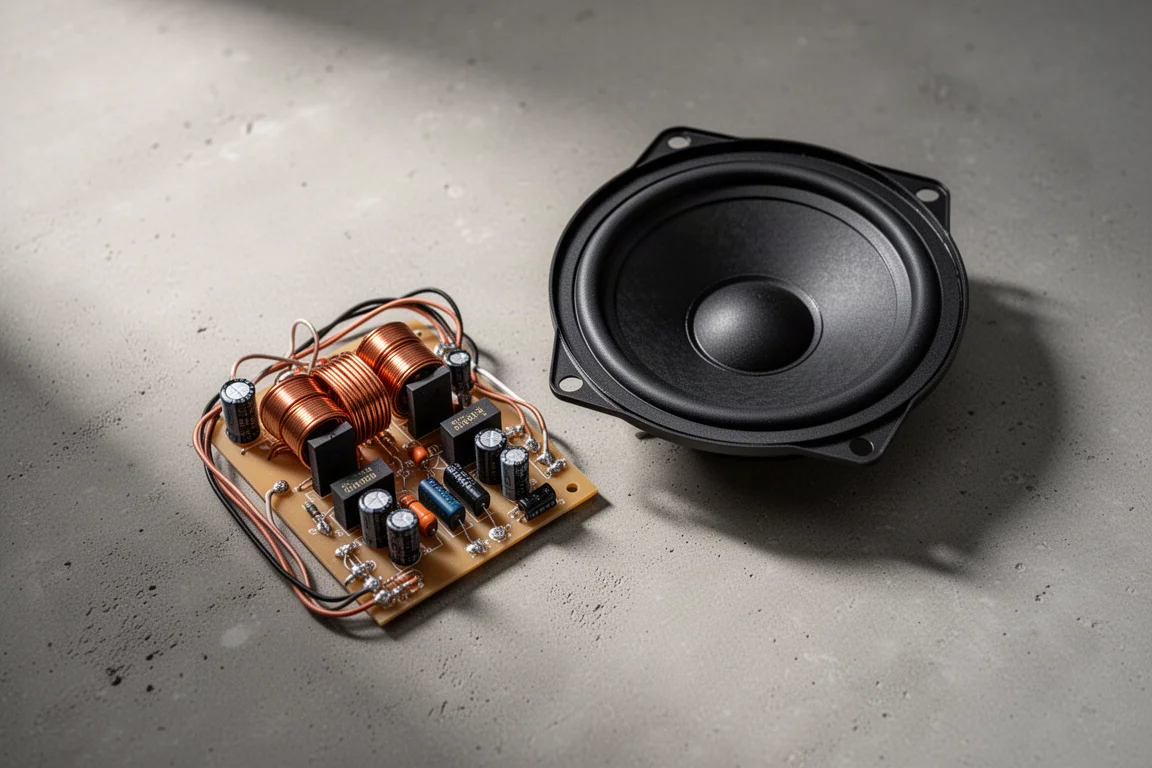
Take the drivers out and the picture becomes more mixed. The mid-bass drivers are noticeably light, light enough to hold with two fingers, and the frames feel plasticky. These are Peerless drivers with a retail price of roughly $40 each, which is modest for a speaker in this class.
That is not automatically a fault. Many finished speakers at similar prices use drivers that are no more expensive, and a skilled designer can achieve a great deal with modest parts. Lightness in a driver frame says something about material and construction, not about how the finished speaker will sound.
The crossover is where the money clearly went. This pair carries every upgrade GR Research offers, including upgraded inductors and bypass capacitors, and the crossover components are top notch throughout. The speaker also uses the company’s tube connectors, which are made from pure copper and are claimed to offer better conductivity than a conventional terminal.
Sound Signature and Listening Notes
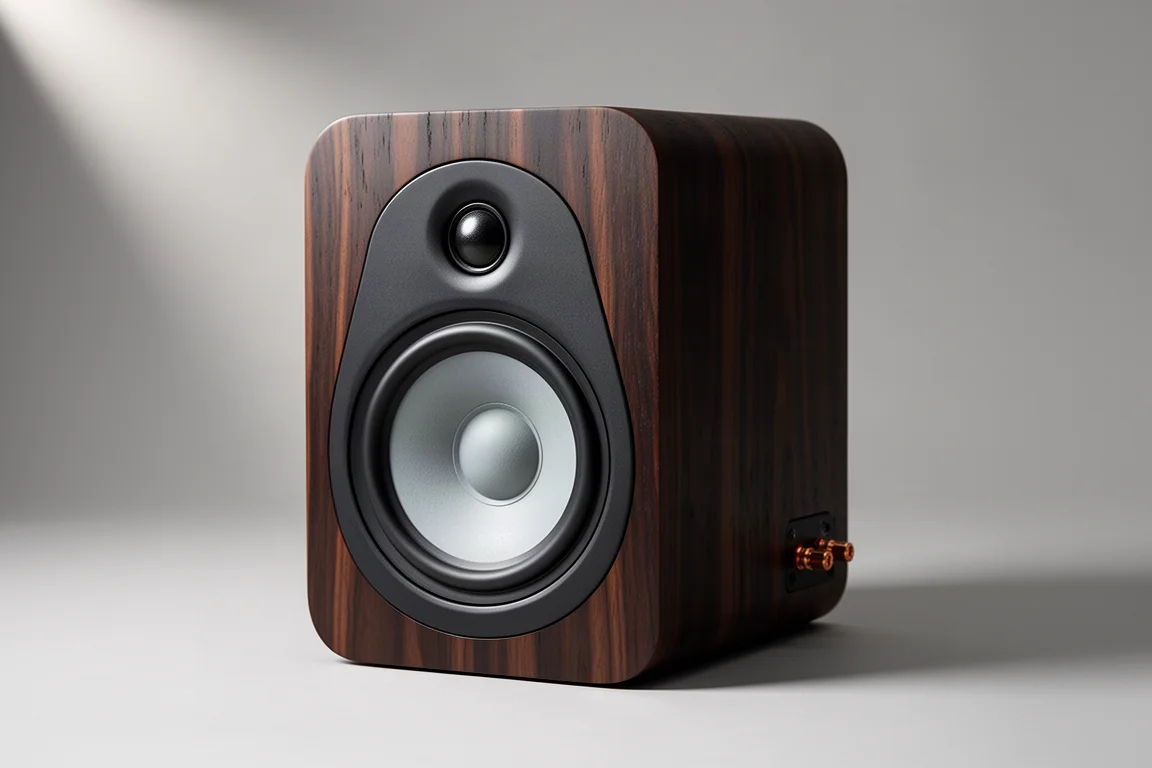
On sound, the XL Encores are genuinely appealing. The voicing is warm, with a lush midrange, and it lands close to the easy, non-fatiguing character many listeners look for in a long-term speaker. Compared directly with finished speakers in the $500 to $1,000 range, the kit holds its own and then some.
That result is a reminder that driver price and driver quality are not the same thing as implementation. A well-executed crossover and a stiff cabinet can do more for the listening experience than an expensive woofer sitting in a compromised box.
GR Research Speaker Cables: A Clear Difference
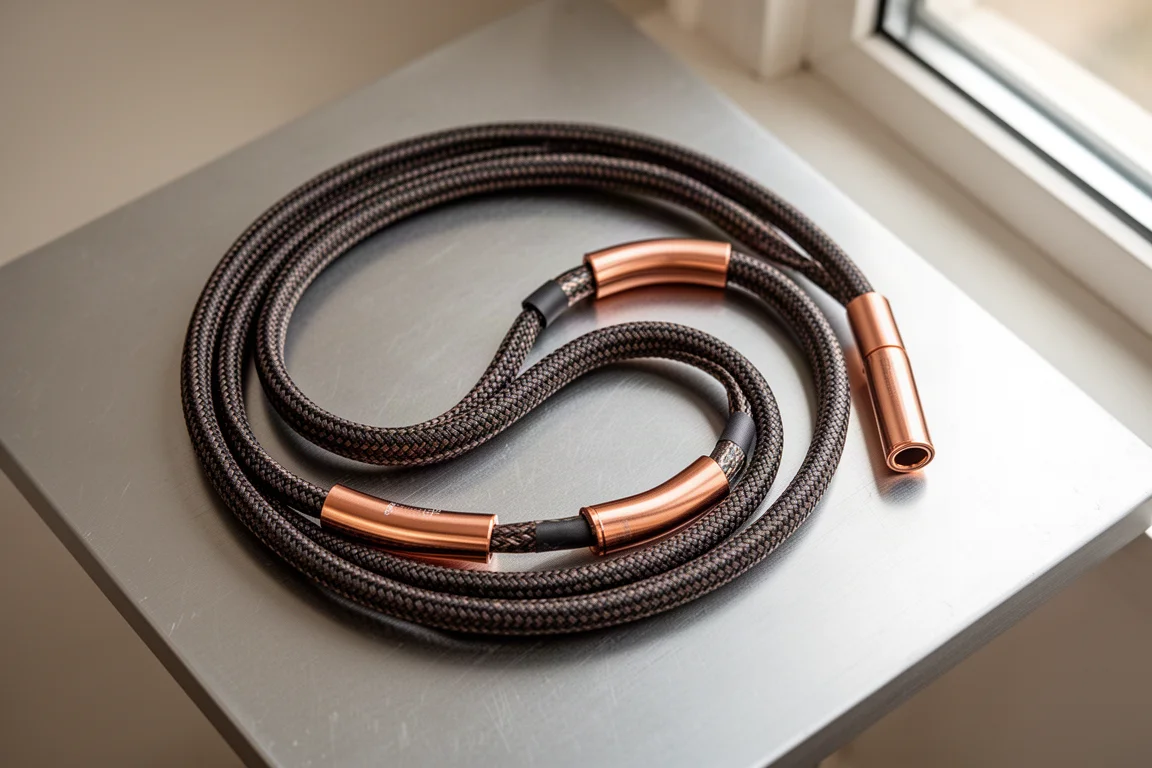
The cables are the more surprising part of the package. They use 12 strands per conductor, 24 strands per pair, and they terminate in the same copper tube connectors as the speakers. GR Research quoted roughly $500 to $600 for the pair, in the same length as a far cheaper alternative.
That cheaper alternative is worth describing, because it is the reason the comparison happened at all. A pair of cables bought for roughly $80 looks almost identical, with the same braided jacket, the same strand count, and the same polished copper banana plugs. The only obvious difference is that the GR Research cables are thicker, because the insulation running through the middle of the windings is larger.
In a direct listening comparison between the two, the difference was not subtle. With the GR Research cables in place, the sound was fuller, voices sounded sweeter, the soundstage opened up, and bass impact was clearly more present. A listener with no prior context, who did not know the brands involved and could not tell the two cables apart by sight, described the cheaper pair as flat and missing low-end weight, and heard the change immediately when the GR Research cables were connected.
That does not mean every cable swap will produce a difference of this size. The cheaper pair may simply be a poor example rather than proof of a general rule, and the honest answer is that the comparison needs more work. Blind comparisons against long-used reference cables are the next step, and until those are done, the fair conclusion is that a difference was clearly audible here, in this system, with these two specific cables.
Measurements and Ongoing Testing
GR Research publishes measurements for its designs above 200 Hz. The designer’s position is that long experience lets him predict low-frequency rolloff with reasonable accuracy, which is a fair argument, though it does leave the region below 200 Hz undocumented.
An independent anechoic measurement is planned, partly to see how the XL Encores behave below 200 Hz and partly to compare the results against the manufacturer’s own data. Measurements taken in different rooms and with different equipment will not match exactly, and that is expected. The goal is simply to add a second data point rather than to settle a dispute.
Blind A/B comparisons against finished speakers in a similar price range are also planned, along with comparisons against reference cables that have been in long-term use. Those results will matter more than any single measurement when it comes to judging value.
Overall Buying Advice
For the speakers, the decision comes down to how much of the build you want to take on. The XL Encores kit is around $780 before shipping, and assembling a pair takes more experience and patience than a simpler DIY kit. Cabinet construction, finishing, and crossover assembly are all on the buyer, and the upgrades that make this pair special add cost on top of the kit price.
If you are comfortable with that work, the reward is a warm, lush sounding speaker that competes with finished products costing considerably more, and one that can be refined over time. If you would rather unbox something finished, the same budget buys a conventional pair with no assembly risk.
For the cables, the practical advice is different. The $500 to $600 asking price is a lot for a cable, and the comparison here involved one specific inexpensive pair that may not represent cheaper cables in general. There is also a compatibility point to check first: the tube connectors are slightly thicker than a typical binding post, so they will not fit standard speaker terminals. Anyone considering these cables should confirm the connectors match their speakers before buying.
Conclusion
The GR Research XL Encores are a genuinely appealing kit loudspeaker. The warm, lush midrange and the inert, well-built cabinet do the heavy lifting, and the crossover in this pair is about as good as the design allows. The modest drivers are a fair talking point, but they do not stop the finished speaker from sounding excellent.
The speaker cables are a more complicated proposition. In one direct comparison they made a clear, repeatable difference, and a listener who heard them without any context heard it too. Whether that difference justifies the price is a question each buyer has to answer, and the planned blind testing should make that decision easier.
Further reading
Related Reviews
Hi-Fi Audio
Accuphase C-57 vs Allnic H-7000V: Two High-End Phono Stages Compared
A fully balanced solid-state phono stage with a pitch-black noise floor meets a tube design built for well-loved records. Here is how to choose between them.
Hi-Fi Audio
Active vs Passive Hi-Fi: Five Components for a Modern System
Five components that define modern active and passive hi-fi systems, with the strengths, trade-offs and setup details worth weighing before you buy.
Hi-Fi Audio
Advance Paris A10 Apex Review: A Hybrid Integrated Amplifier That Covers a Lot of Ground
A French hybrid integrated amplifier with a class A tube preamp stage, analogue power meters, and an internal DAC and phono stage good enough to make extra boxes unnecessary.