Speaker Cables
GR Research B24 Speaker Cable Review: Geometry, Connectors, and When It Pays Off
A practical look at the GR Research B24 speaker cable, from its cotton-core geometry and copper tube connectors to the room conditions that decide whether it is worth buying.
Introduction
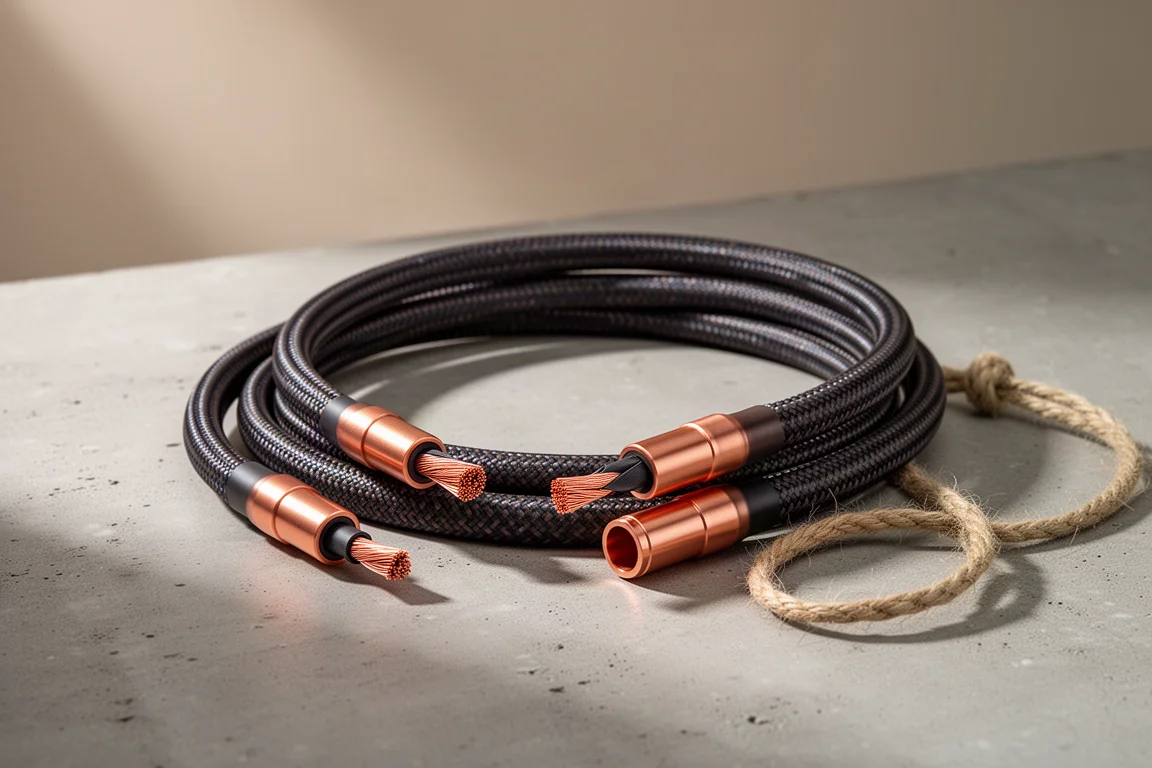
Speaker cable debates tend to stall in the same place. One camp treats wire as wire, and the other reports changes in openness and layering that no frequency response chart seems to capture. The GR Research B24 sits squarely inside that argument, and it is unusual enough to deserve a careful look rather than a slogan.
The B24 is a stranded copper speaker cable with a cotton rope running through the centre of the bundle. It terminates in solid copper tube connectors rather than banana plugs, and it uses a polyethylene dielectric instead of the PVC found on typical zip cord. A generic 16-gauge copper cable with banana plugs is the natural reference point, and it is the one most listeners already have in their system.
What follows is a practical breakdown: what the design actually does, where the differences show up, and the conditions under which this cable makes sense.
Who This Cable Is For
The most important variable here is not the cable. It is the room.
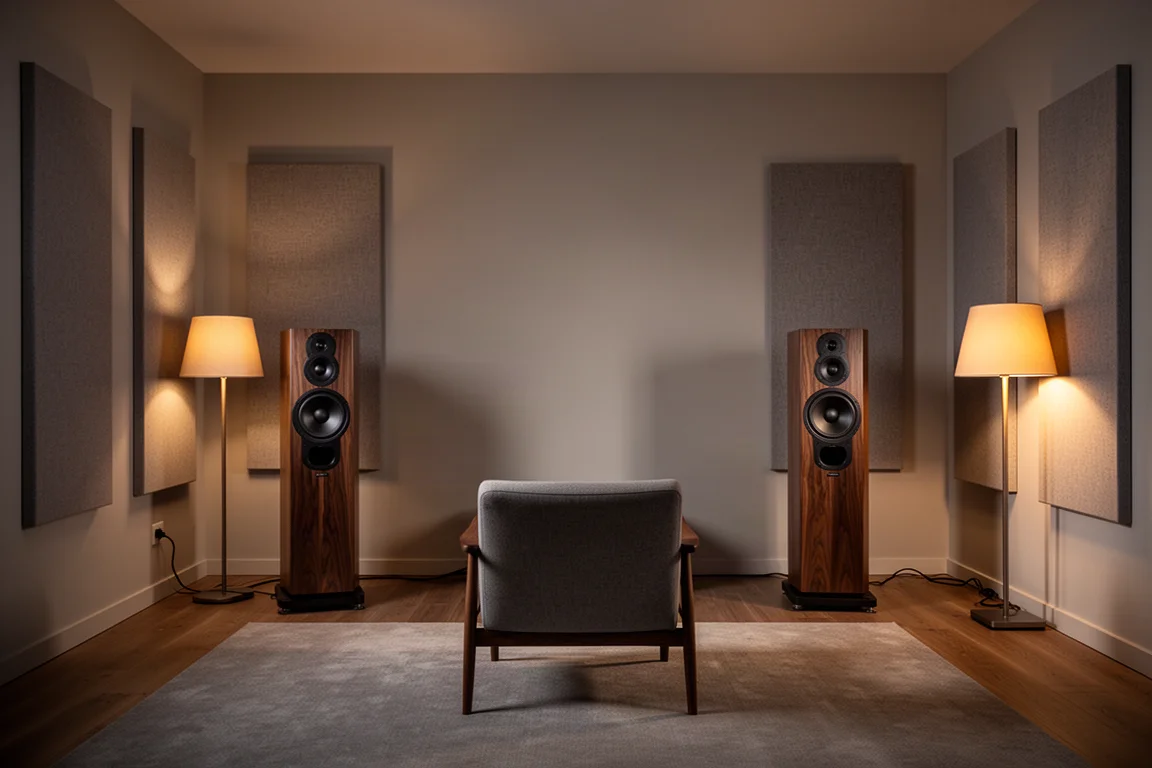
Differences in air, space, and layering are easiest to hear when speakers sit well out into the room, away from the wall behind them, in a space that has at least some treatment. In that setup, the change from a generic cable to the B24 is immediate on the right material: vocals become fuller and more open, and the decay of notes stays intact instead of collapsing.
Move the same speakers flat against a wall on desktop stands and the picture changes. An award-winning system can sound flat and wall-bound in that arrangement, and the cable differences that were obvious in a treated room become very hard to pick out.
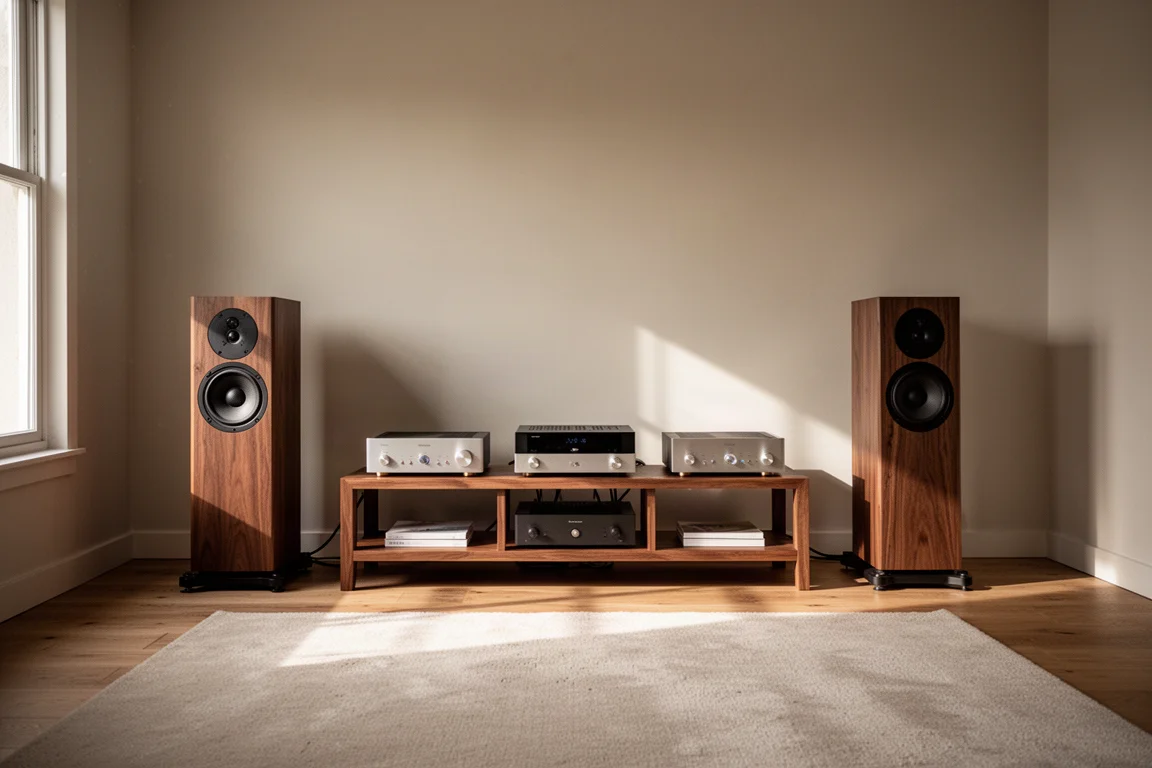
If your speakers are close to the wall and the room is untreated, room treatment and speaker placement are the better first spend. The B24 is designed for the stage after that.
Main Strengths
Conductor Geometry and Noise Rejection
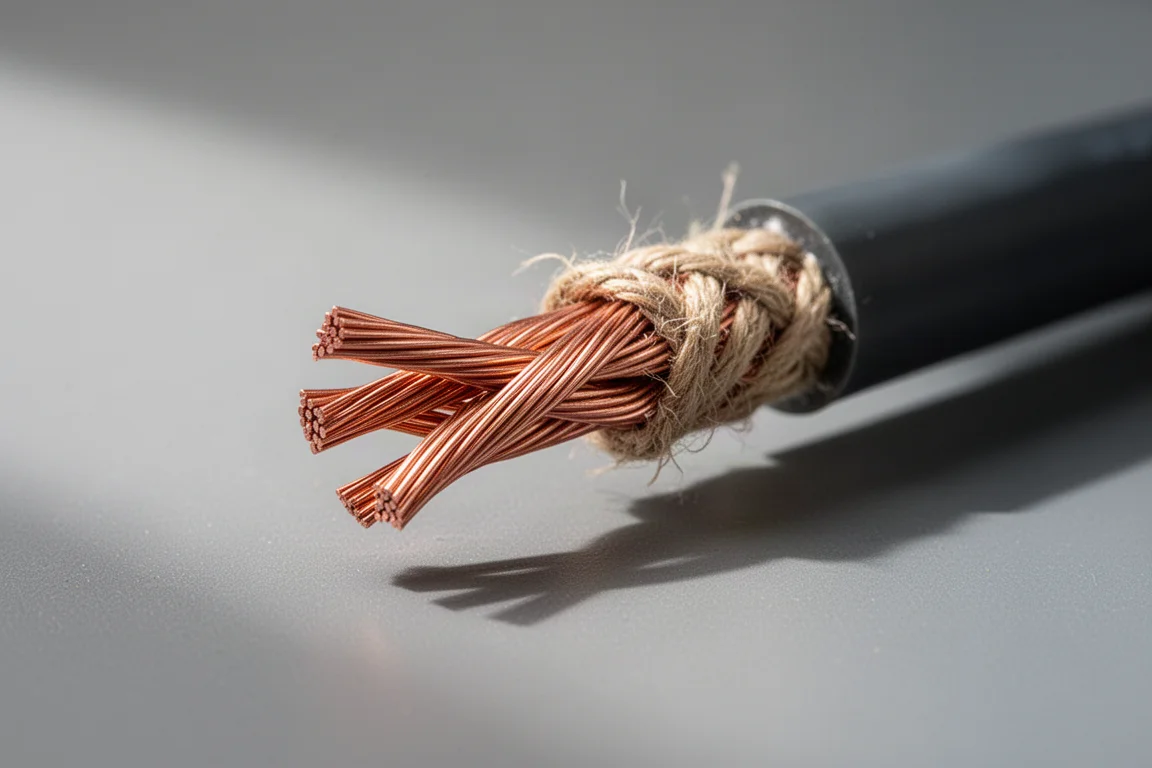
The B24’s conductors are laid in a crisscross pattern, and the cotton rope threaded through the middle changes that geometry. As the rope passes through, the strands open up toward a right angle, and that change is measurable: capacitance drops noticeably once the rope is in place.
The practical argument for the geometry is noise. A conventional cable can behave like an antenna, picking up RF noise that feeds back into the amplifier, including tube amps that use negative feedback. In the B24, the crisscrossing conductors are arranged so that the cable behaves more like a filter. Copper purity and the way the signal transfers through the conductor are the other half of the claim.
Tube Connectors Instead of Banana Plugs
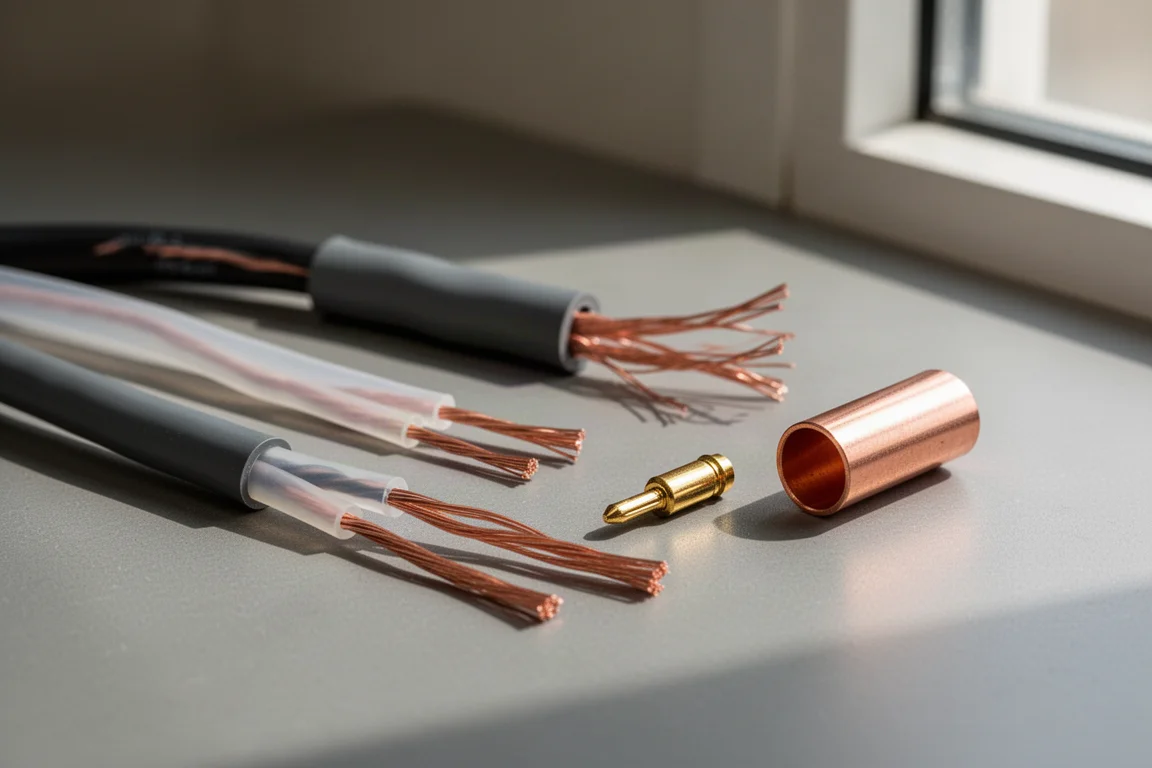
Termination matters as much as the wire in this design. The B24 uses solid copper tube connectors that are hollow all the way to the tip, so the conductor runs the full length of the connection. A banana plug, by comparison, makes contact further back and forces the signal through a brass section. Brass is used there because copper is too soft to hold the spring tension a banana plug needs.
With the tube connector, the spring mechanism lives in the female side of the connection, which is why the plug itself feels stiff. That stiffness is the trade-off for a shorter, simpler signal path.
Dielectric Material and Signal Purity
Insulation is not treated as acoustically neutral in this design philosophy. The B24 uses polyethylene, while typical zip cord uses PVC. Each material has its own dielectric absorption factor, and that factor can be measured. How those measurements translate into a wider or deeper soundstage is the part that resists a clean number.
This is where the design process becomes empirical. Capacitors, resistors, inductors, internal speaker wiring, and connector types were all compared repeatedly in matched systems, with two versions of a speaker or crossover measuring identically yet sounding different. The elements that preserved spatial cues, the sense of layering in a recording, were the ones that stayed.
What a Controlled Listening Comparison Showed
The most useful evidence is a blind A/B comparison run across ten tracks, with the listener unable to see which cable was connected and switching between a generic 16-gauge zip cord with banana plugs and the B24. The B24 was identified correctly eight times out of ten.
The misses are instructive. Dense, older studio rock recordings were the hardest, because the cues a listener relies on, air and space around instruments, were not present in the recording to begin with. Acoustic material with clear vocals was far easier, and on some tracks the difference was obvious within seconds.
Eight out of ten is a meaningful result, not a perfect one, and it reflects a real limitation: the cable does not add information that was never recorded.
Things to Consider Before Buying
- Placement dependency. The cable’s strengths show up in a room where speakers are pulled out from the wall. In a wall-adjacent setup, the differences shrink considerably.
- No single defining measurement. Properties such as capacitance and dielectric absorption can be measured, but openness, layering, and depth cannot be captured in a frequency response sweep. That frustrates anyone who wants a tidy number to point at.
- Connector fit. The tube connectors need to be pushed firmly into some binding posts, because the spring action sits on the receiving side. On certain amplifiers and speakers, a slightly slimmer profile would seat more easily.
- Listener variability. Some listeners hear no difference at all, and wanting to hear a difference is not the same as hearing one. A patient comparison in your own room is the only reliable test.
Buying Advice
A pair of these cables typically runs in the range of a couple of hundred dollars, which places them well above generic zip cord but far below the most expensive audiophile wire. Whether that is money well spent depends almost entirely on what the rest of the system is doing.
Start with the free steps. Pull the speakers out from the wall, treat the first reflection points, and listen to a familiar recording. If the soundstage opens up and you can hear depth and separation, your system is in a position to reveal what a cable like the B24 contributes. If the room is fighting you, fix the room first.
Then compare in your own space. Use material you know intimately, favouring clear vocals and acoustic instruments over dense mixes, and switch back and forth more than once before deciding. There is no penalty for concluding that your current cable is already fine.
Conclusion
The GR Research B24 is a deliberately unconventional design: stranded conductors arranged to filter rather than collect noise, a cotton core that changes the cable’s geometry and capacitance, copper tube connectors that carry the signal to the tip, and a polyethylene dielectric in place of PVC. In a blind comparison across ten tracks it was correctly identified eight times out of ten, a stronger result than most cable debates ever produce.
The honest caveat is that the cable is not a universal upgrade. It rewards a room that lets speakers breathe, and it is largely wasted on a system jammed against a wall. Get the placement and treatment right, listen carefully to recordings you know, and the decision becomes much easier to make.
Product link
View more details for GR Research B24 Speaker Cable
This product is mentioned in the review. Check the specifications, options, and compatibility before buying.
View more details for GR Research B24 Speaker CableFurther reading
Related Reviews

Backpacking Gear
Building a 10 lb Base Weight: An Ultralight Backpacking Gear List
A practical walkthrough of the ultralight pieces behind a 10 lb base weight, from a 765 g pack and a roomy one-person tent to a full camp chair and a dependable water filter.

Road Bikes
10 New Road Bikes Worth Watching: Aero, Titanium, Steel and Endurance Standouts
A practical roundup of 10 new road bikes, from aero flagships chasing single-watt gains to titanium, steel and endurance platforms built for real roads.

Bikepacking Gear
11 Bikepacking Essentials for Long-Distance Cycling
Eleven bikepacking essentials for long-distance cycling, from a steel gravel frame and a two-person tent to helmet lights, packable gloves, and a frame bag that puts weight in the right place.